



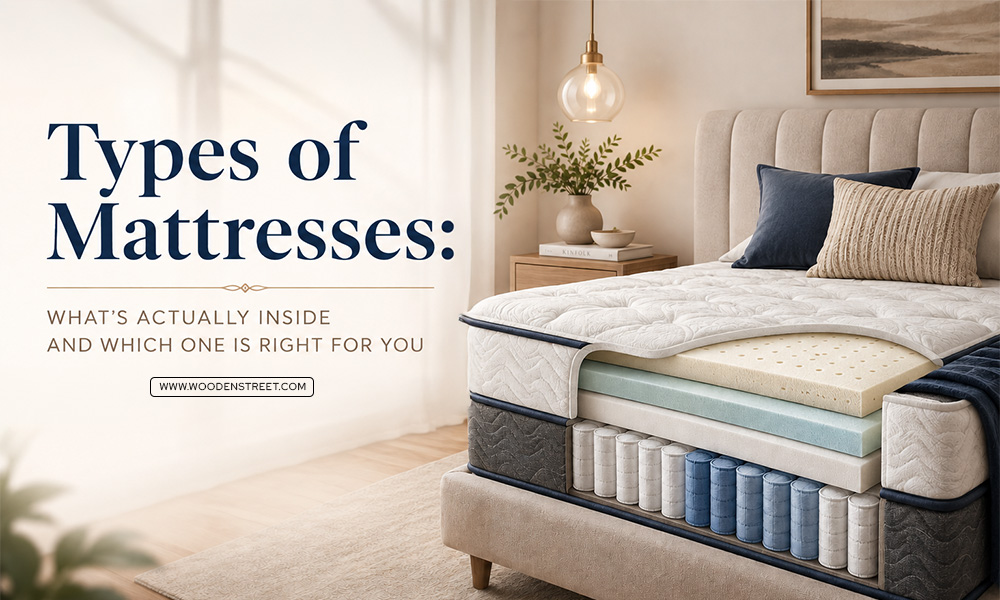
Not all mattresses feel or perform the same. This guide explores the most common types of mattresses, including memory foam, latex, spring, hybrid, and orthopedic options. Learn about different types of mattresses, their construction, comfort levels, durability, and how to choose the best type of mattress for your sleeping style and needs
You walk into a mattress store. The salesperson smiles wide. You lie down on three different beds, say "hmm" a lot, and walk out with something that felt great for five minutes, and then slowly wrecks your sleep for the next five years.
Been there?
Here's the thing nobody tells you upfront: picking a mattress is not about how it feels on day one. It's about what's stuffed inside it, and whether that holds up after 1,000 nights of your full body weight pressing into it, night after night.
There are so many kinds of mattresses out there, foam, spring, latex, coir, hybrid, gel, that most people just freeze and grab whatever's on sale or whatever the showroom guy pushes hardest. This guide cuts through all of that noise. By the time you finish reading, you'll know exactly which type of mattress fits your body, your budget, and yes, the brutal Indian summer.
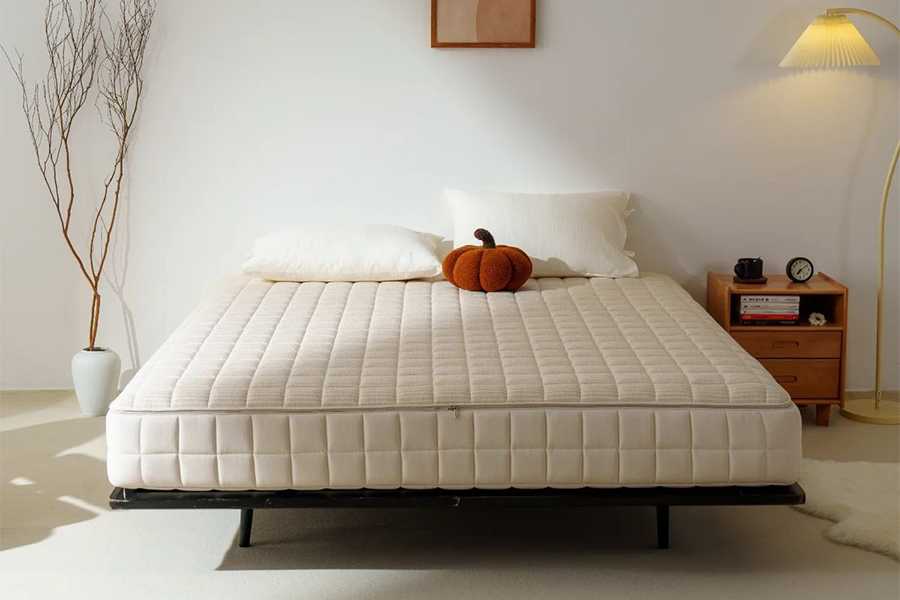
Most people think mattress shopping is about one thing: firmness. Soft, medium, or firm. Pick one. Done.
But here's the truth, firmness is just a feeling. Feelings change. What doesn't lie is the internal construction of the mattress. The materials inside decide whether your mattress still supports your spine properly in year three, or whether it's quietly turned into a body shaped ditch that leaves you waking up stiff every single morning.
A mattress can feel firm in the showroom and turn into mush by month eighteen. It can feel like a cloud in an air conditioned store, and trap heat like a pressure cooker the moment Indian summer rolls in.
So before you even think about firmness levels, pillow tops, or fancy brand names, understand what's actually inside that mattress. That is the real decision you're making.
Let's walk through each one. No complicated terms, no fluff, just what they are, how they actually work, and who they're suited for.
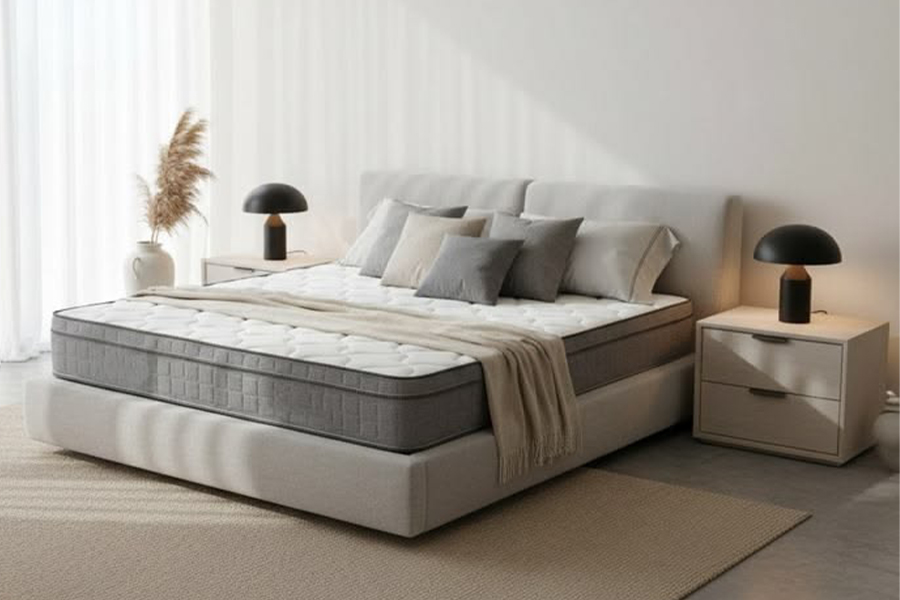
This is the oldest and most common mattress you'll find across India, inside budget hotels, guest rooms, and homes that haven't been updated since the early 2000s.
Bonell springs are interconnected coils joined together in a big grid. When one spring moves, every spring around it moves too. That's the whole deal with this design.
It's affordable, easy to find, and decent enough for one person sleeping alone. But the moment two people share it, every roll, every shift, every 3 AM bathroom trip, the other person feels it clear as day. Motion travels across the whole mattress like a wave.
Good for solo sleepers on a tight budget. Not great for couples, light sleepers, or anyone with back problems.
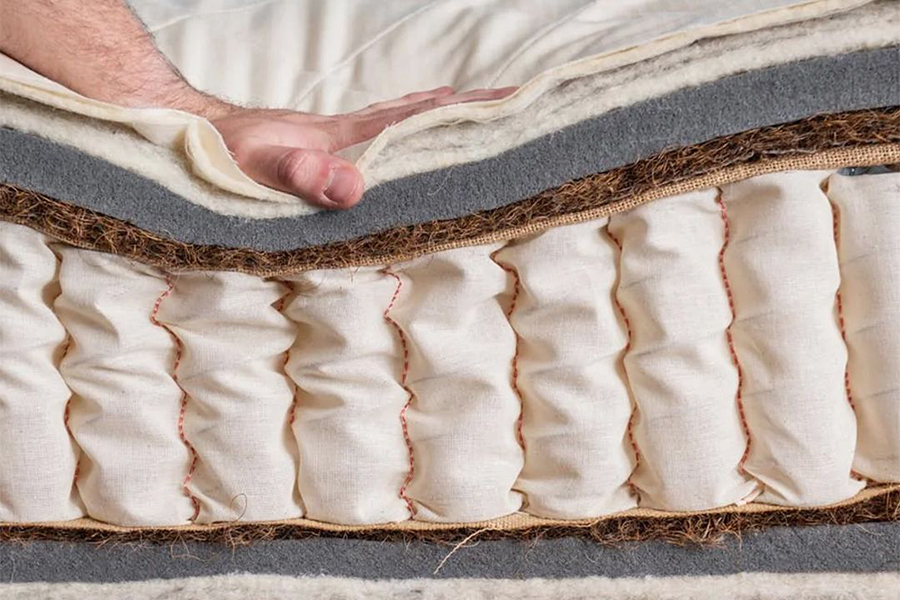
Think of this as the Bonell's smarter, more considerate cousin.
Instead of all springs connected in one big net, pocket sprung mattresses use individual coils, each one wrapped inside its own small fabric pocket. When one spring compresses under your weight, it moves on its own. The ones next to it? They don't move at all.
This changes everything for couples. Your partner gets up at 6 AM for an early flight? You don't feel a thing. You toss around during the night? They sleep right through it.
The motion isolation here is genuinely impressive. Each spring also responds to pressure independently, which means better body contouring overall.
Yes, it costs more than a Bonell. But for couples, it might honestly be the best investment you make. Your sleep, and maybe your relationship, will thank you.
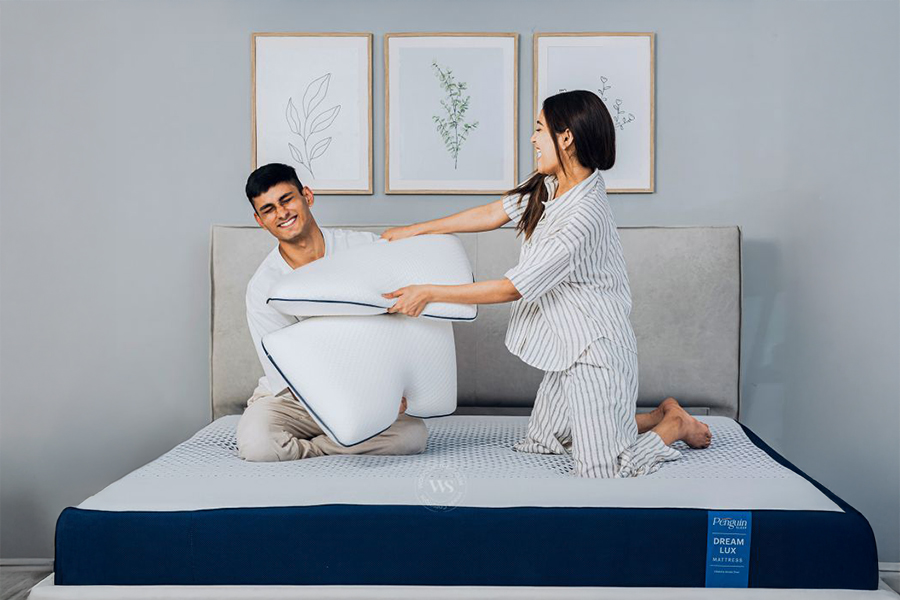
Memory foam is probably the most talked about mattress material of the last two decades, and it earned that attention for a real reason.
Originally developed by NASA (yes, actual NASA), memory foam works by slowly contouring to the exact shape of your body when it reacts to your heat and weight. It cradles every curve, every pressure point, hips, shoulders, lower back, rather than pushing back rigidly against them.
If you have joint pain, sleep on your side, or just want to feel like the mattress is hugging you, memory foam delivers on that promise.
The problem, and it's a serious one in India, is heat. Memory foam is dense. Dense materials trap warmth. In a properly air conditioned bedroom, it's manageable. But sleeping without AC through an Indian summer on memory foam? You'll wake up sweaty and tired, wondering what went wrong.
If the feel of memory foam mattress is exactly what you want but heat is a concern, keep reading. Gel memory foam, just a bit further down, was built specifically to solve this.
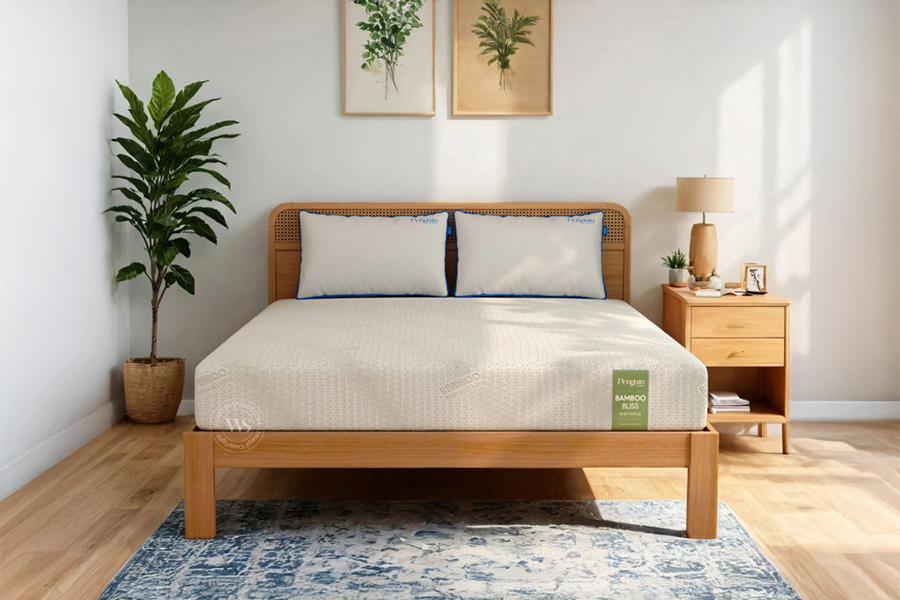
Natural latex comes from rubber trees, and it might just be the most underrated mattress material available in India right now, even though it's genuinely perfect for our conditions.
Latex has a naturally open cell structure. That means air flows through it freely, keeping the sleeping surface noticeably cooler than foam. It's also naturally antimicrobial and resistant to dust mites, which is a real advantage in India's heat and humidity where allergens thrive.
The feel is different from memory foam. Instead of slowly sinking in, latex gives you a buoyant, springy pushback, firm but not rigid, supportive but not hard. Many people who switch to latex say they sleep better within the first week and never look back.
The downside is the price. Natural latex is expensive, sometimes shockingly so. And finding genuine natural latex (not a synthetic blend passed off as natural) takes some research.
But here's the other angle: a quality natural latex mattress can last 12 to 15 years. Regular foam lasts 5 to 7 at best. Spread the cost over a decade, and natural latex often wins on value too.
For anyone who wants a temperature neutral, long lasting mattress and can handle the upfront cost, natural latex is the best type of mattress you can buy for Indian conditions. Full stop.
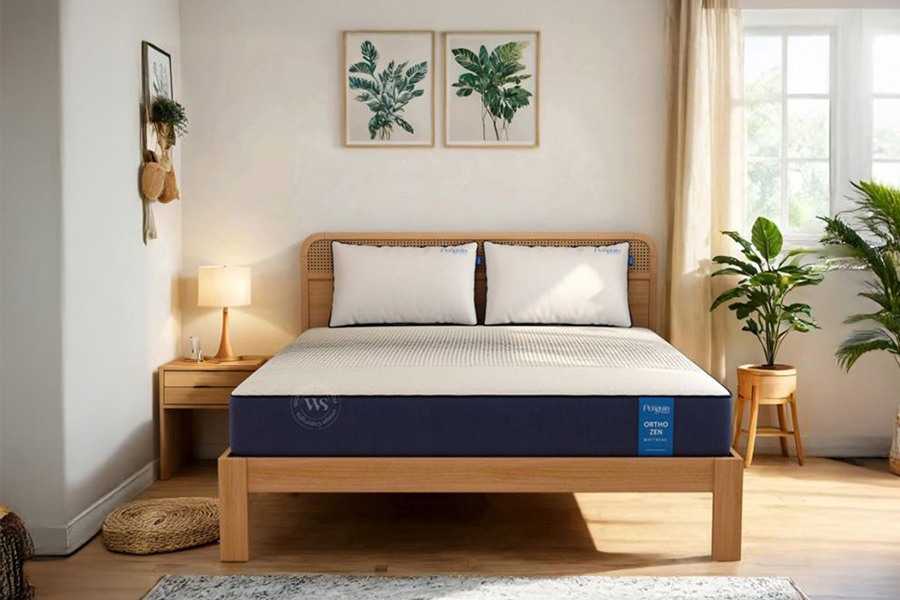
Quick reality check before you get swayed by the name: orthopedic is a marketing category, not a specific material.
There is no such thing as a unique material called "orthopedic foam." What orthopedic mattresses actually are is a firmness and density category, mattresses built with a firmer base, usually high density foam or a spring system, meant to support proper spinal alignment through the night.
The idea behind it is solid. A mattress that keeps your spine in a neutral position can help prevent the chronic lower back pain that builds up from years of sleeping on something too soft (spine sags) or too hard (pressure points dig in).
The problem is that any brand can print the word "orthopedic" on a label without it meaning much. So before buying, always check the actual foam density in kg/m³. A mattress with 40 to 50 kg/m³ foam will genuinely hold its shape and support you for years. A mattress with no density specs and a big "orthopedic" sticker? Walk away.
The label means nothing. The number means everything.
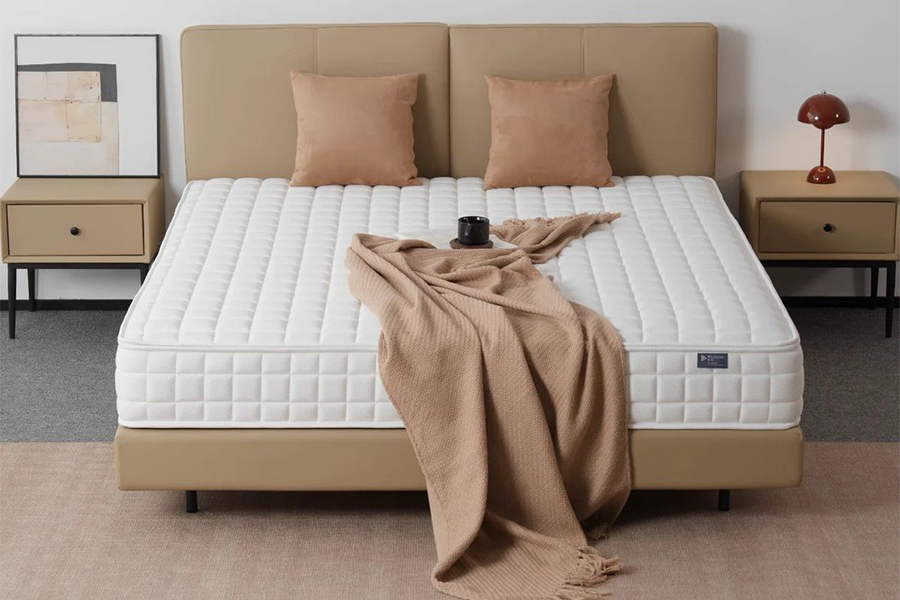
The name gives it away, a hybrid mattress combines two systems. Usually a layer of pocket springs at the base, with a foam or latex comfort layer sitting on top.
The springs handle support, bounce, and airflow from below. The foam or latex on top handles pressure relief and contouring. Together, they fix each other's weaknesses. The spring layer prevents heat from building up the way it does in a solid foam mattress. The foam layer prevents the motion transfer you'd get from a pure spring mattress.
The result is a mattress that works well across a wide range of sleepers and conditions. Good back support. Decent heat management. Strong motion isolation when the base uses pocket springs. Comfortable pressure relief on top.
Among all the different types of mattresses out there, hybrids tend to suit the most people the most consistently. They're more expensive than basic foam or spring options, but if the budget stretches, they're usually worth it as a long term buy.
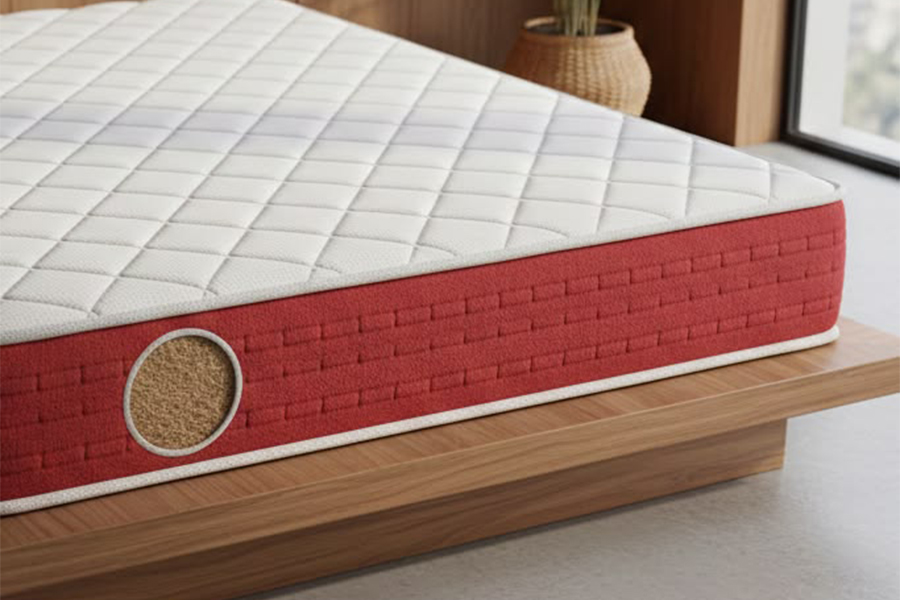
Coir mattresses are made from compressed coconut fibre. Very Indian, very practical, and genuinely smart for certain climates and budgets.
They're firm, much firmer than any foam mattress. They don't contour or cushion. But they breathe extremely well, which makes them a popular choice in coastal and humid regions of India where air circulation during sleep really matters.
For children and people who need flat, firm, consistent support, coir works well. For adults with joint pain, hip issues, or anyone who sleeps on their side, the lack of pressure relief gets uncomfortable quite fast.
Many Indian families solve this by placing a thin cotton mattress (gadda) on top of a coir base. That's a practical workaround that adds just enough cushioning without losing the firmness underneath.
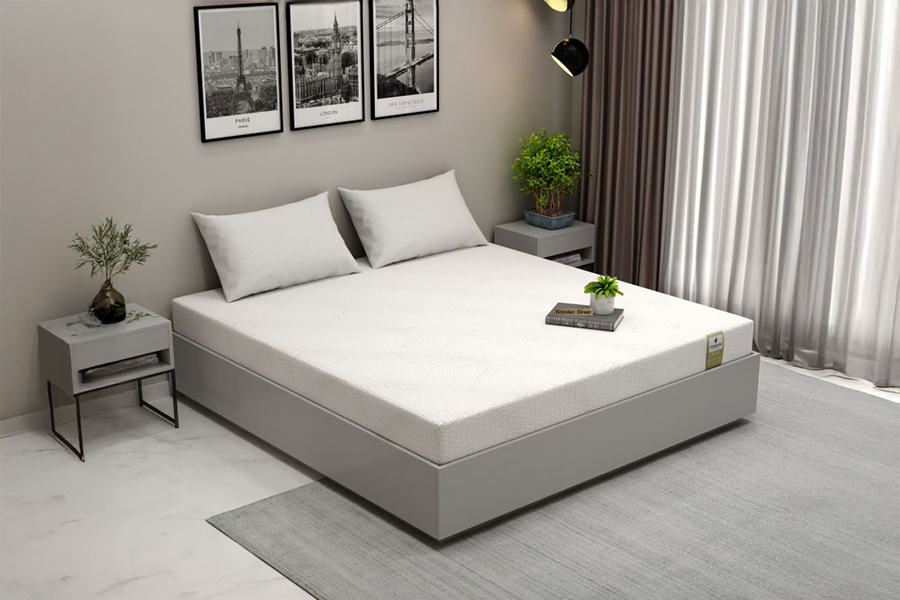
This is regular memory foam, but with its biggest flaw fixed.
Gel memory foam has tiny gel beads or a gel layer infused directly into the foam. These gel particles pull heat away from your body and disperse it instead of letting it pool around you. The contouring, the pressure relief, the body hugging feel, all of that is exactly the same as regular memory foam. The difference is that it stays noticeably cooler through the night.
For hot sleepers in India who love the feel of memory foam but can't deal with the heat, this is the sweet spot. It's not quite as breathable as natural latex, but it's a real and significant upgrade over standard memory foam, and it costs a lot less than a full latex mattress.
If the only reason you were avoiding memory foam was heat, cool gel memory foam mattress is worth taking seriously.
Now you know what's inside each type. Here's how to match the best type of mattress to your actual sleeping needs.
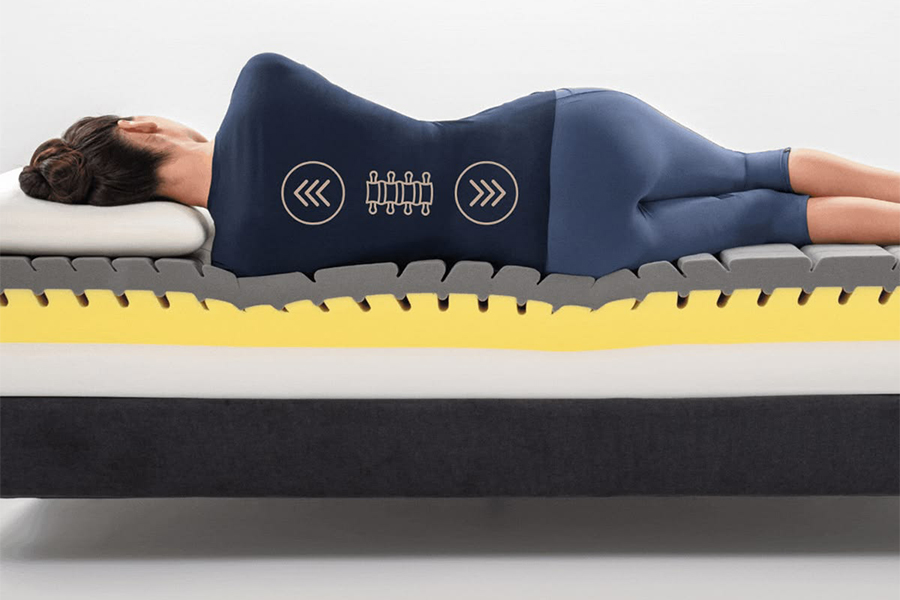
Go with a medium firm orthopedic mattress or hybrid mattress.
Too soft, and your heavier parts, hips, lower back, shoulders, sink in and pull the spine out of alignment. Too hard, and pressure builds up at those same spots with no cushioning to absorb it. Medium firm is the balance point: support without rigidity.
Hybrids work especially well here because the spring base holds spinal alignment while the foam top cushions pressure points at the same time. It's the best of both approaches in a single mattress.
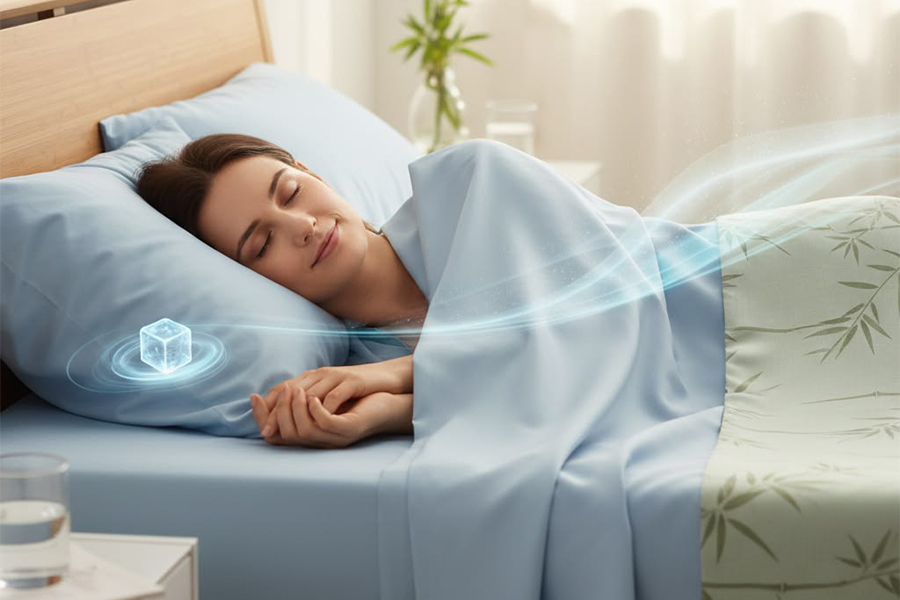
Natural latex or gel memory foam, those are your two picks.
Natural latex wins on raw breathability. Gel memory foam wins on being more affordable while still managing heat better than standard foam.
Both options are dramatically better than regular memory foam for anyone who wakes up warm or sweaty. If you're in a city with long summers and unreliable AC, don't even consider standard memory foam as your main mattress. You'll regret it deeply by April.
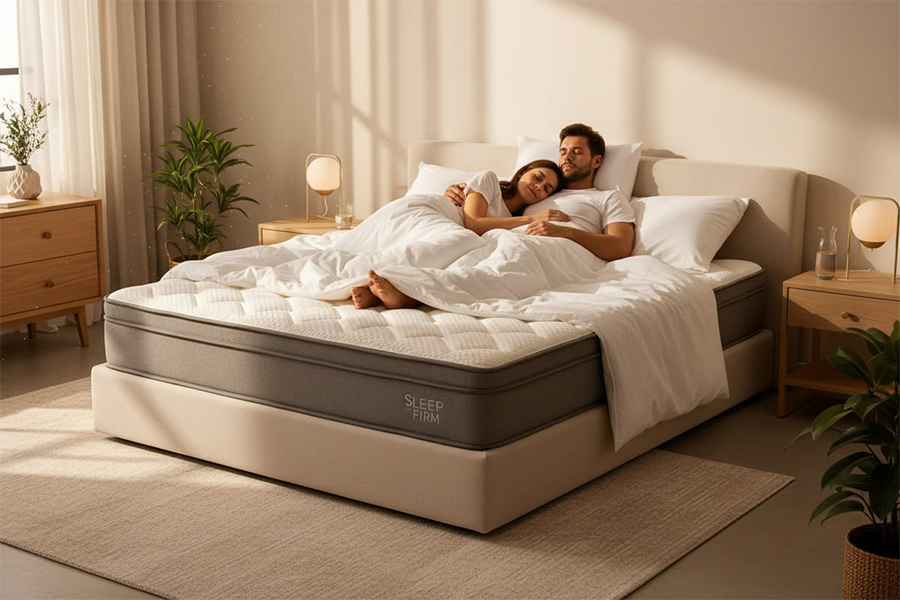
Pocket spring or hybrid, motion isolation is the thing that matters most here.
Pocket springs move independently, so your partner's 5 AM alarm routine doesn't drag you out of a deep sleep. Hybrid mattresses with a pocket spring base give you the same motion isolation, plus the comfort of a foam or latex top layer for both sleepers.
For two people with different schedules, different sleep habits, or different levels of how lightly they sleep, motion isolation isn't a luxury. It's the difference between rested mornings and grumpy ones.

Firm coir or a high density orthopedic mattress is the right call.
Kids' spines are still forming. They need even, consistent support, not a soft, contouring surface that lets their body sink unevenly during the night. Memory foam and plush mattresses feel cozy but don't give developing spines the stable base they actually need.
Coir is also breathable, which helps kids who sleep hot. A firm orthopedic foam mattress with verified density specs is the other solid choice.
Here's a number that matters more than almost any other detail on a mattress spec sheet: foam density, listed in kg/m³.
Most people walk right past it. Don't be most people.
Under 35 kg/m³, the foam will start compressing and losing its shape within 18 months. By year two, you'll feel like you're sleeping in a hole.
35 to 40 kg/m³, reasonable quality. Will hold up for 4 to 6 years under normal use.
50 kg/m³ and above, this is the solid stuff. Holds its shape for 7 to 10 years and supports you consistently throughout.
Most budget mattresses sold as "orthopedic" or "memory foam" either don't list foam density, or they bury it somewhere nobody looks. If a brand can't clearly tell you the density of the foam inside their mattress, that silence is the answer.
This single number is the gap between a mattress that still supports you in year five, and one that quietly destroys your sleep by year two.
Here's the honest summary: there is no single mattress that's perfect for everyone. The best type of mattress is the one that matches how you sleep, where you sleep, and who you sleep with.
If you run hot, latex or gel foam. If you share the bed, pocket spring or hybrid. If your back hurts, medium firm orthopedic or hybrid. If the budget is tight, a firm coir or a Bonell spring gets the job done for solo sleepers. If you want something that genuinely lasts, natural latex, high density foam, or a quality hybrid.
And whatever you choose, check the foam density. 40 kg/m³ and above. That one number tells you more about how long a mattress will actually last than any showroom sales pitch ever will.
Sleep is not a small thing. You spend roughly a third of your life in bed. The mattress under you during those hours quietly shapes how you feel for the other two thirds. It's worth getting right.
We will be back with the next blog soon. Till then, stay tuned!
Read More -
Air Mattress Alternatives: You've Used It Long Enough, Here's What to Get Instead
Image Source: Pinterest, Google, and Wooden Street
A A medium firm orthopedic or hybrid mattress works best. It supports spinal alignment without creating pressure points. Always verify foam density before buying
A Memory foam is a specific material that contours to your body. Orthopedic is a firmness category focused on spinal support, not a material itself
A Natural latex or gel memory foam. Both dissipate heat effectively. Regular memory foam traps warmth and becomes genuinely uncomfortable in Indian summers
A Depends on foam density. Under 35 kg/m³ lasts around 2 years. Above 50 kg/m³ easily lasts 7 to 10 years with basic care
Trending Products
Top Picks from EveryoneArticles you will love to read

Confused between latex vs memory foam mattress? Understand which mattress works better for back pain, spinal support, and daily sleep comfort.
Continue Reading
Looking for better sleep without buying a new mattress? Explore mattress topper benefits for comfort and back support.
Continue Reading
This blog guide breaks down queen size bed dimensions in feet, ideal room fit, mattress types, and buying tips. Learn how to choose the right size for comfort, space efficiency, and long-term value, whether upgrading your bedroom or purchasing your first queen mattress.
Continue Reading
Discover how to clean a mattress at home with simple step-by-step methods. Remove stains, odours, sweat marks, and keep memory foam, spring, and latex mattresses fresh, hygienic, and long-lasting.
Continue Reading