






Discover how to clean a mattress at home with simple step-by-step methods. Remove stains, odours, sweat marks, and keep memory foam, spring, and latex mattresses fresh, hygienic, and long-lasting.
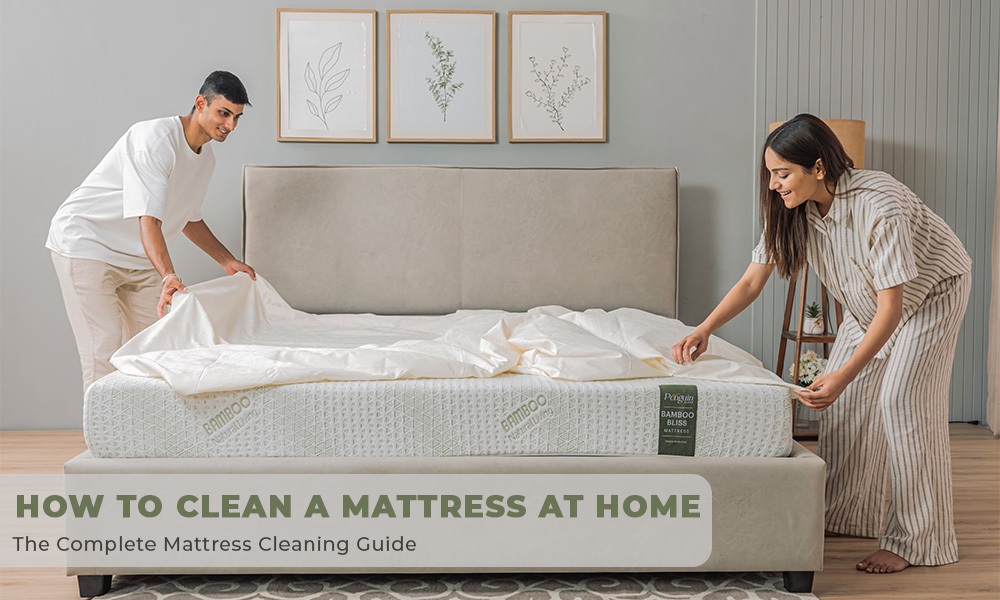
You spend roughly 7–8 hours on your mattress every single night. And most people will wash their pillow covers twice a week, their bedsheets once a week - and never, not once, actually clean the mattress itself.
Out of sight, out of mind. Until the smell hits. Or the stain appears. Or you flip it over one day and wish you hadn't looked.
Here's the good news: knowing how to clean a mattress at home is not complicated. It does not require expensive products or professional equipment. It requires the right approach, in the right order, with one rule running through all of it - minimal moisture, maximum drying time. Break that rule and you create a problem far worse than the one you started with.
Let's go through it properly.
This is not a step most guides bother with. But cleaning a memory foam mattress the exact same way as a spring mattress is how people damage both. So before anything else - know what you're working with.
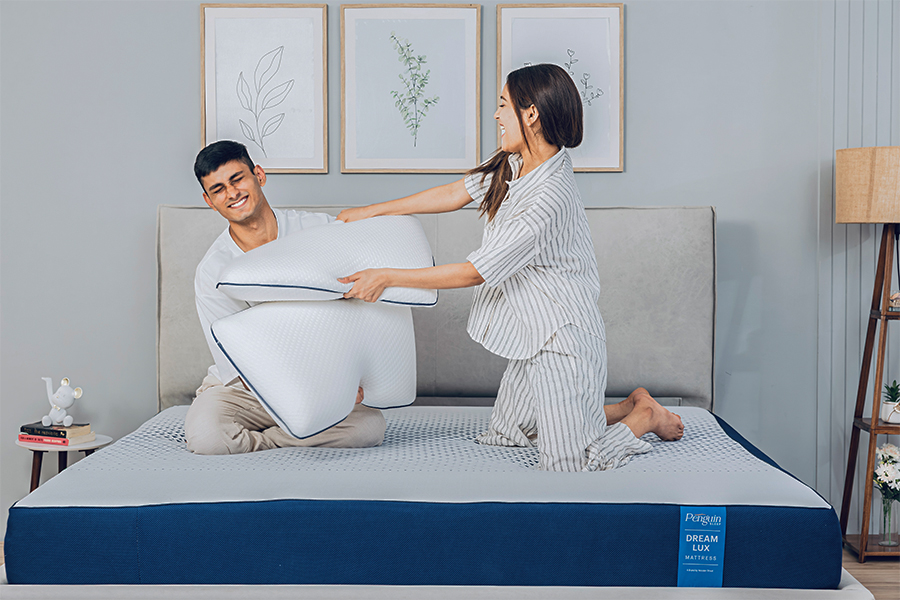
Memory foam mattress is the most sensitive of the three. No soaking, no steam, no machine wash - ever. Foam absorbs moisture deep into its core, and once it does, it can take days to dry out fully. The moisture you can't see or feel is the moisture that becomes mould.
The approach: spot clean only, with a barely damp cloth. Baking soda handles odour. Fan-dry for a minimum of 6–8 hours before putting any sheets back on.
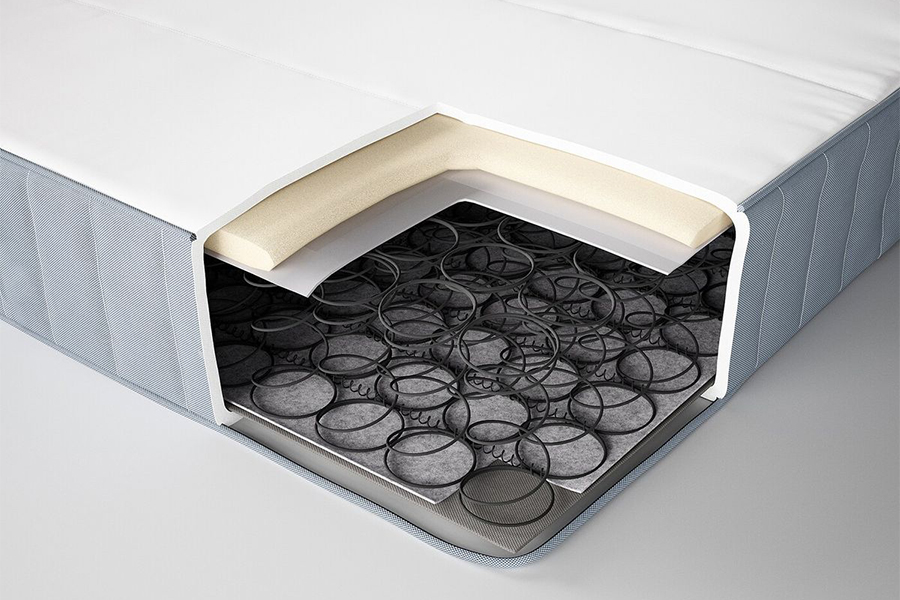
More forgiving than foam with moisture, but still - never soak it. A light vinegar mist works well for disinfecting the surface. The key word is light. Let it dry thoroughly with good airflow before covering.
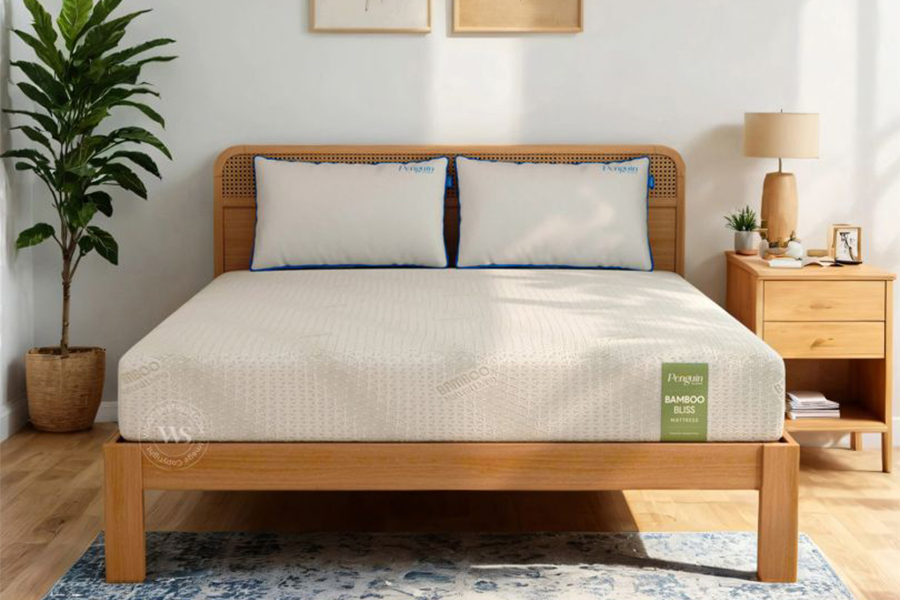
The most sensitive to cleaning agents. Stick to mild soap and water only. One specific thing to avoid: baking soda on natural latex. The alkalinity degrades the material over time. Skip it entirely for latex and use just the soap-and-water approach.
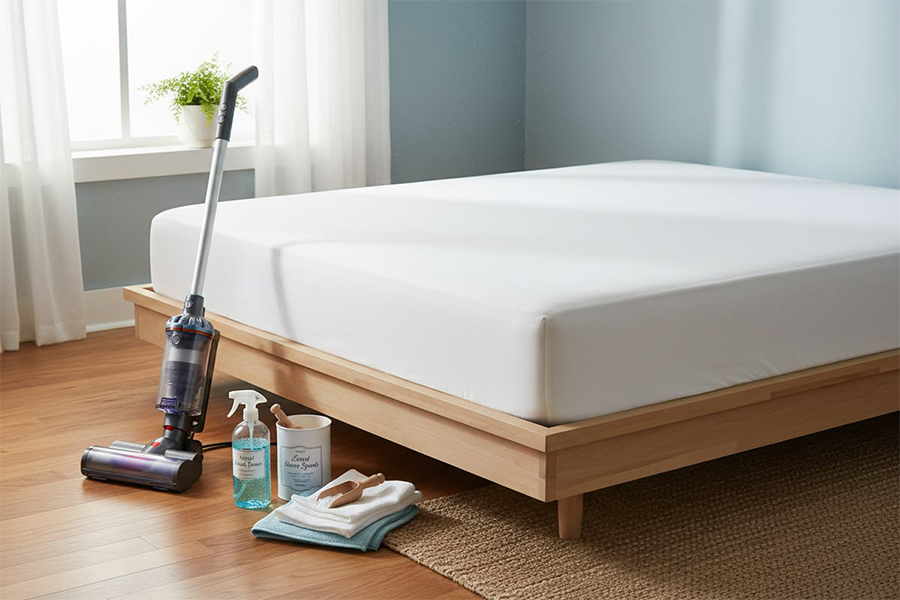
This is the full routine for how to clean mattress at home - whether it's a monthly maintenance clean or the first time you've done this in longer than you'd like to admit.
Step 1: Strip all bedding and wash it separately while you work on the mattress.
Step 2: Air the mattress near an open window for 20–30 minutes. If there's direct sunlight, even better - UV light does things no cleaning product can replicate. This step alone makes a noticeable difference.
Step 3: Brush along the seams and edges first. Dust, hair, and skin particles collect in those seams and a brush dislodges them before the vacuum.
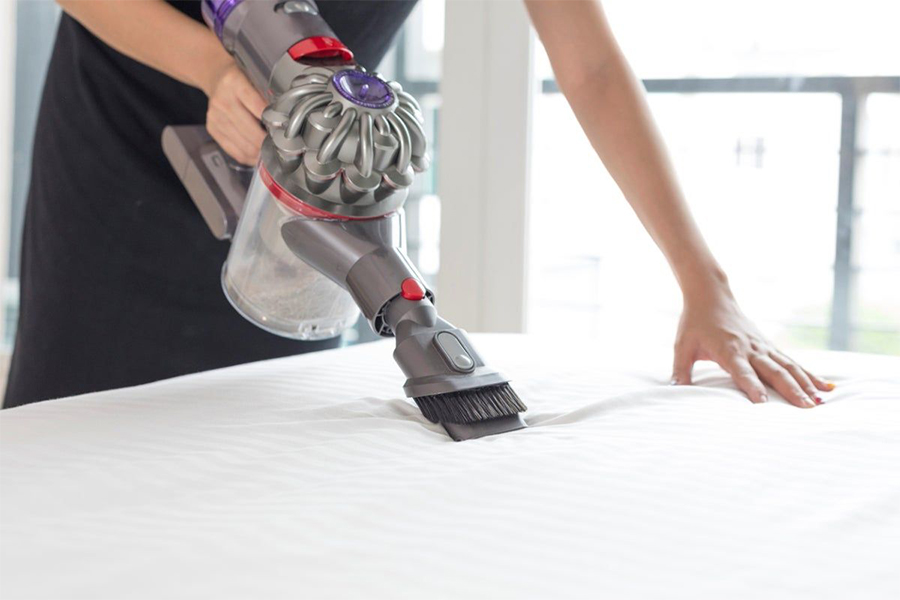
Step 4: Vacuum the entire surface slowly - including the sides. Don't rush this. If you don't have a vacuum, a firm-bristled brush followed by a lint roller gets the surface reasonably clean.
Step 5: Sprinkle baking soda lightly across the surface. Leave it for 4–6 hours minimum. In monsoon weather, go longer - humidity slows the absorption.
Step 6: Vacuum or brush the baking soda off completely.
Step 7: Spot clean any visible stains - the section below covers each stain type separately because the method changes with the stain.
Step 8: Dry fully before covering. This step is not optional. Cover a damp mattress and you're creating the exact conditions mould needs.
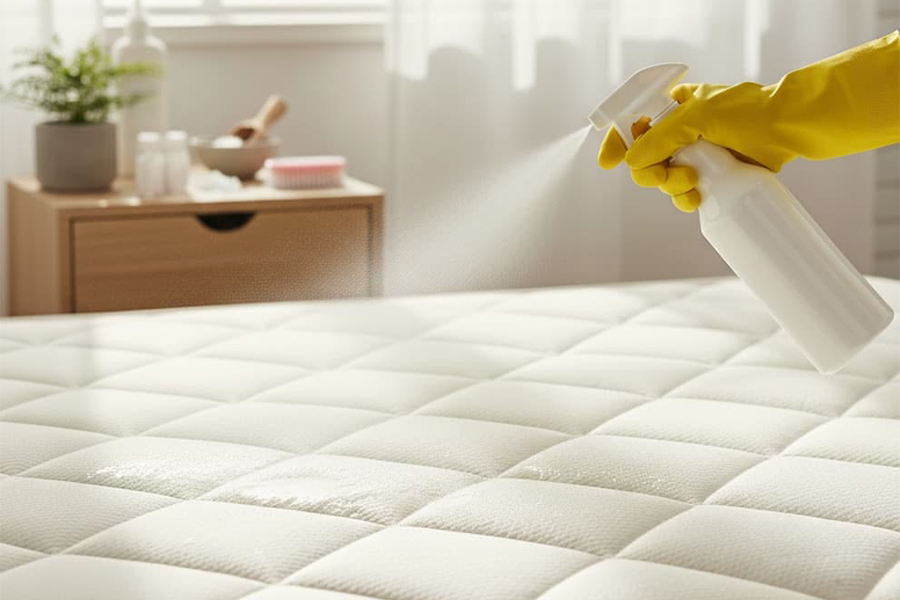
Using the wrong method on the wrong stain doesn't just fail - it can set the stain permanently. The stain type matters.
Mix one part mild dish soap with two parts cold water. Dab the stained area - never rub. Rubbing pushes the stain deeper into the fibres. Once the area is almost dry, sprinkle baking soda over it to lift whatever odour remains.
Yellow staining is oxidised sweat and body oils. With treatment, it fades. It rarely disappears completely - that's just the reality of it. But it goes from noticeable to barely visible.
Speed is everything here. The longer the stain sits, the more it bonds to the fabric. Blot immediately with a clean cloth to lift as much liquid as possible first.
Then: cold water and mild soap, dabbed in small circular motions starting from the outside of the stain and working inward. This stops the stain from spreading outward. Repeat until the stain lightens, then press a dry towel firmly on the area to pull out moisture.
Cold water only. This is the one non-negotiable rule for blood - warm water sets blood stains permanently. It's a chemical reaction and it cannot be undone.
Dab with a cloth soaked in cold water, changing the cloth frequently so you're lifting the stain rather than moving it around.
For older, dried blood stains: make a paste of salt and cold water, apply it to the stain, leave for 10 minutes, then dab away. It won't fully remove an old set stain but it lightens it significantly.
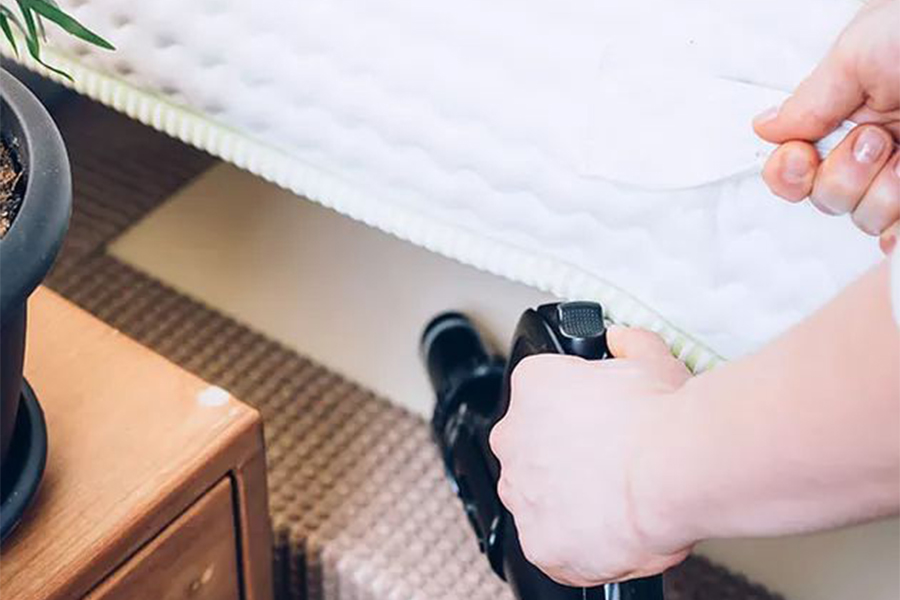
Routine cleaning handles surface hygiene. Deep cleaning is for after illness, after allergy season, or when there's been a longer-than-usual gap between cleans.
And the rule that applies absolutely: never steam a memory foam or latex mattress. The heat and moisture go straight into the core and take days - sometimes longer - to dry out. The damage this causes isn't visible immediately, which is what makes it dangerous.
An incompletely dried mattress develops mould inside the core. Often you won't see it. You'll smell it - that persistent, slightly musty smell that comes back within days no matter what you do. By the time it's visible on the surface, it's already much deeper inside.
Drying times vary with the season, especially in India:
The test before you put sheets back on: press a dry hand firmly on the cleaned area. If it feels even slightly cool or damp - not wet, just cool - it needs more time. A fully dry mattress feels room temperature to the touch.
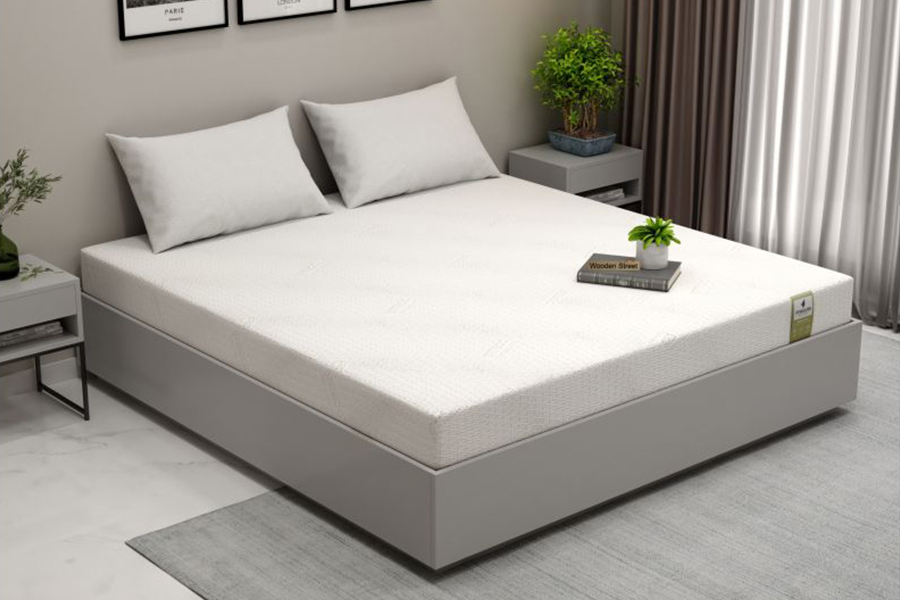
This is the part most guides skip entirely, but it's worth being honest about.
There are situations where no amount of knowing how do you wash a mattress or what products to use will fix the problem. The signals that tell you to replace rather than clean:
If you're at this point, the most practical thing is a replacement rather than another cleaning cycle.
A mattress protector is worth more than any cleaning product on the market. It blocks sweat, spills, and dust from reaching the mattress layers in the first place - which means far less cleaning and far longer mattress life. If you don't have one, get one.
A few habits that make a real difference:
A clean mattress isn't a luxury - it's just basic maintenance for something you use more than almost anything else you own. The process is simple once you know it. The part that trips most people isn't the cleaning - it's the drying. Give it the time it needs, and everything else follows.
We will be back with the next blog soon. Till then, stay tuned!
Image Source: Pinterest, Google, and Wooden Street
A Yes - for most mattress types. Sprinkle lightly, leave for 4–6 hours, vacuum off. Avoid using baking soda on natural latex mattresses as the alkalinity degrades the material.
A To remove urine smell from a mattress: blot the area immediately to absorb as much liquid as possible. Apply a diluted vinegar solution, let it sit briefly, then blot again. Cover with baking soda once slightly dry and leave for several hours before vacuuming. Dry fully before covering - residual moisture is what keeps the smell returning.
A Depends on the season. Summer: 3–4 hours. Monsoon: 8–12 hours minimum. Winter: 5–6 hours. Always do the hand-press test before covering.
A No. Steam is only suitable for spring mattresses used with short passes and kept moving. Never steam memory foam or latex.
A A basic clean every 1–2 months. A deeper clean every 6 months or after illness
A No. Memory foam cannot be soaked or steamed - spot clean only with a barely damp cloth, and allow 6–8 hours minimum drying time.
Trending Products
Top Picks from EveryoneArticles you will love to read

Are you confused about which type of Mattress would offer you restful sleep? Then scroll down as we have got the ultimate buying guide for you!
Continue Reading
Unlock the world of mattress size in India with our expert guide. From single to king size, explore dimensions, suitability, and essential factors to choose the ideal mattress for your sleep sanctuary.
Continue Reading
Confused between latex vs memory foam mattress? Understand which mattress works better for back pain, spinal support, and daily sleep comfort.
Continue Reading
Looking for better sleep without buying a new mattress? Explore mattress topper benefits for comfort and back support.
Continue Reading


