





Your TV placement affects comfort more than you think. This guide explains the perfect height for every TV wall design, including hall TV wall design, TV wall unit design, television wall design, and stylish TV panel design for bedroom and living room spaces to improve viewing and overall room aesthetics
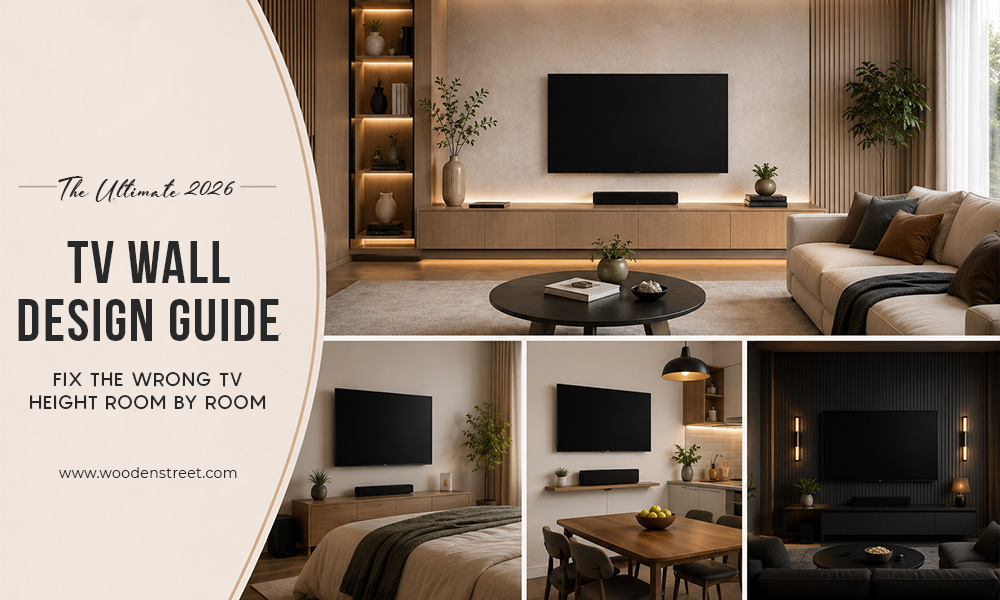
Before we get into materials and panels and accent walls, there's a number you need to check.
Measure from your floor to where your TV screen is centred right now. If that number is above 55 or 60 inches, your TV is too high. Most are. And it's causing real discomfort that people attribute to "bad sofas" or "neck tension" rather than the actual culprit, which is a screen that was mounted for a standing viewer in a room full of seated ones.
This is the thing every TV wall design blog skips over in a rush to show you inspiration pictures. So we're starting with the ergonomics, because if the height is wrong, no amount of beautiful panelling or backlit accent work will fix the viewing experience.
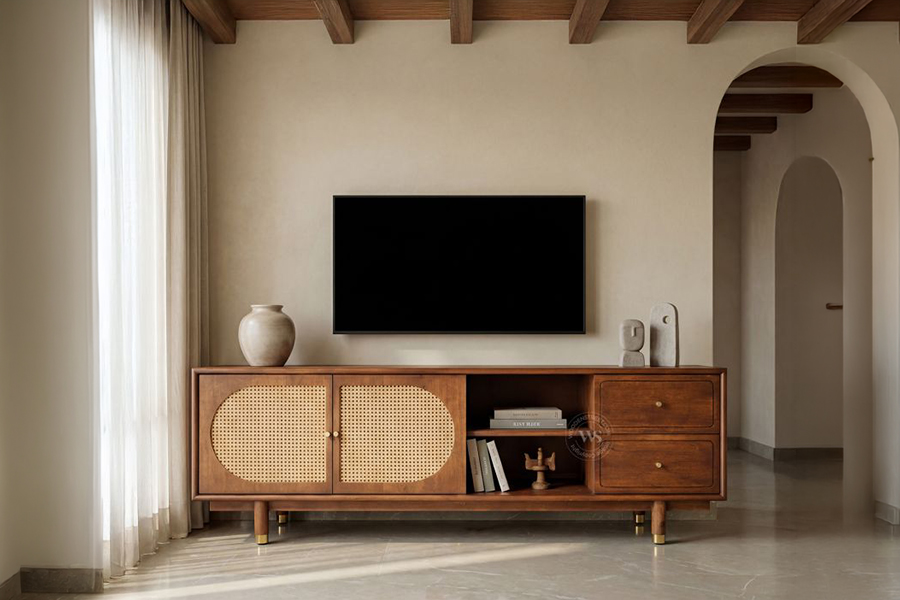
When a person is seated on a standard sofa, their eye level typically falls between 42 and 48 inches from the floor. That range accounts for different sofa heights and different body heights. The centre of your TV screen should hit somewhere within that range.
Not above it. At it.
When the TV centre is significantly above eye level, you're watching with your neck tilted upward for the entire duration. An hour of this creates tension. Two hours creates a dull ache. Over weeks and months of daily use, it becomes a chronic issue that most people never connect to their television wall design because they assume a wall-mounted TV is supposed to look that way.
The clean benchmark: seat yourself on the sofa you'll use most often in that room. Have someone mark the wall at your eye level. That mark is where the centre of your TV screen should be. For most Indian living rooms with standard sofas, this lands between 44 and 50 inches from the floor.
This one is simple. Take the diagonal screen size of your TV in inches and multiply by 2.5. The result is your minimum viewing distance in inches.
A 43-inch TV needs at least 107 inches, roughly nine feet, between the screen and the sofa. A 55-inch TV needs at least 137 inches, call it 11.5 feet. A 65-inch TV needs at least 162 inches, about 13.5 feet.
A lot of Indian living rooms, especially in flats under 900 square feet, have hall widths between 10 and 13 feet. Put a 65-inch TV in a 10-foot hall and you're sitting inside the minimum viewing distance for that screen size. The image looks fine when you're standing across the room. When you're three feet in front of the minimum, the picture starts to break down at normal resolution, and the sheer physical scale of the screen in the room creates a visual weight that makes the space feel smaller.
This is why the 55-inch screen often looks better in a compact Indian hall than the 65-inch one, even though the 65 seems like the obvious upgrade.
Walk into almost any flat in India where the TV has been wall-mounted by the interiors team or the contractor. In the majority of cases, the TV centre sits somewhere between 58 and 70 inches from the floor. This is because the person who mounted it stood in the room, eyeballed a height that looked balanced on the wall from a standing position, and drilled.
Standing eye level is 60 to 68 inches from the floor. Seated eye level is 42 to 48 inches. When you mount for standing eye level and then sit down to watch, you're looking up at roughly a 15 to 20 degree angle for every viewing session.
The fix is to re-mount lower or to redesign the wall so the TV sits lower as part of the unit. Neither is as difficult as it sounds. The section below covers how.
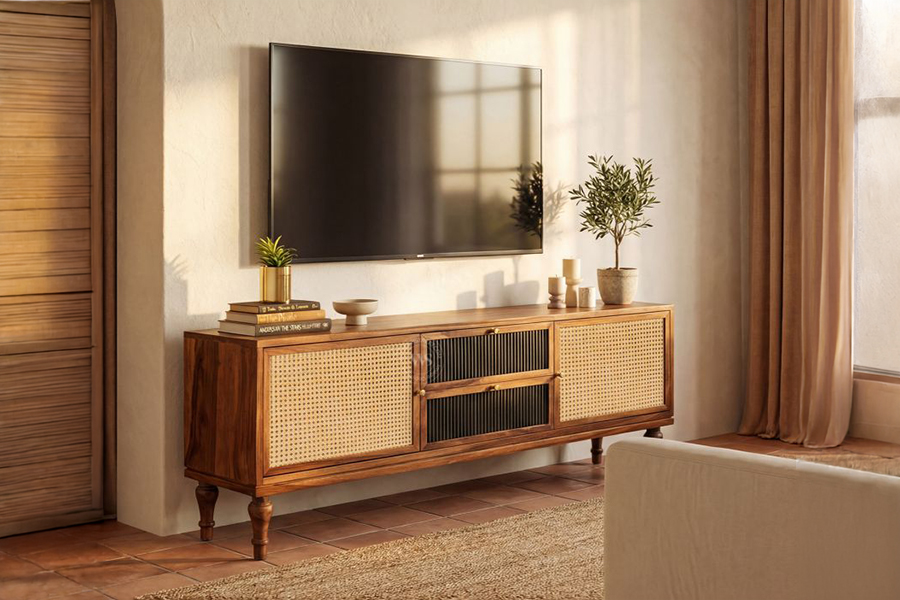
Not every TV wall unit design needs holes in the wall. A floating TV unit, a low-profile console on legs or on a raised base, places the screen at the right height without any drilling and without any commitment to a specific wall treatment.
For renters, this is the only approach that makes real practical sense. A wall-mounted TV leaves a hole and a wire trail in the wall that has to be dealt with at the end of a lease. A floating unit moves with you.
For homeowners who aren't ready to commit to a full wall treatment, a well-chosen TV console at the right height does most of the visual work that an elaborate tv panel design for living room would do, at a fraction of the cost and with none of the permanence.
The height consideration applies here too. A console that places the TV centre at 44 to 50 inches from the floor works. A console that places it at 60 inches doesn't solve the ergonomic problem just because it looks clean.
One of the most common questions when planning a TV wall is whether to panel the full wall or just the section immediately behind the TV.
The honest answer depends on the size of the room.
In a compact hall, 10 to 12 feet wide, a full-wall treatment behind the TV creates a heavy backdrop that the room doesn't have enough distance from to read properly. You're too close to it. A single accent panel, sized to roughly the width of the TV unit or slightly wider, gives the TV a visual anchor without the full-wall visual weight. The rest of the wall stays neutral and the room breathes.
In a larger room, 14 feet and above, a full-wall treatment works. The distance gives the eye enough space to take it in. In this case a partial panel can look underdone, like the decision was incomplete.
The room width drives the decision. Not the style you're drawn to.
This is the one decision that determines whether a TV wall looks finished or not, and it has to be made before anything else is done to the wall.
Surface-routed cables running down the wall from a wall-mounted TV to a console below immediately undercut every design decision made around them. A beautiful wooden panel, a carefully chosen TV unit, LED backlighting, none of it matters if a tangle of HDMI cables is visible along the right edge of the panel.
The solution is an in-wall conduit, a plastic channel or pipe run inside the wall through which all cables are threaded before the wall treatment goes up. This has to happen before the panel or cladding is installed. Doing it after means cutting into finished surfaces.
If the wall is already finished and retrofitting a conduit isn't practical, surface-mount cable channels that match the wall or panel colour are a reasonable alternative. Not invisible, but far better than loose cables. The point is to make the cable decision at the start of the wall design process, not after everything else is done.
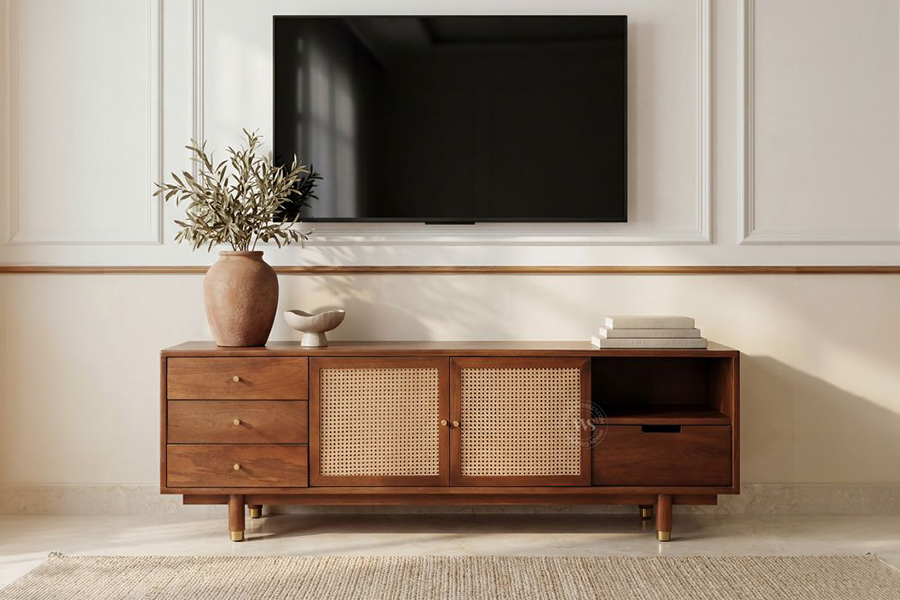
Wood is the most forgiving material for a tv wall design in an Indian living room. It's warm, it works with most sofa and flooring combinations, and it hides wire channels easily because the wood surface can be routed or drilled to accommodate cable runs without leaving a visible mark.
The acoustic benefit is real too. A wooden panel behind a TV absorbs some of the reflected sound from the speakers. It's not a studio-grade solution but in a living room with hard walls and tile floors, a wood-panelled TV wall noticeably reduces the echo quality of the sound.
Best pairing: rooms with fabric sofas and warm-toned flooring. Sheesham, mango wood, and walnut-finish panels all work in this context. Avoid very dark wood finishes in rooms that already have dark flooring, the visual density becomes heavy.
Stone and tile cladding on a TV wall looks striking in photographs and in well-funded new construction projects. In retrofit situations it's more complicated than it appears.
The weight is significant. Cladding a full TV wall with stone adds load to the wall that not all structures accommodate without additional support. The installation is permanent. Any wiring behind it is effectively inaccessible for the lifetime of the cladding. If a cable fails or an input needs to be added, the wall has to be partially demolished.
In a new construction project where the wiring is planned in-wall before the cladding goes up, these issues are managed. In a retrofit on an existing flat, the trade-offs are worth thinking through carefully before committing.
The lowest-cost route to a designed TV wall. A textured wallpaper or a painted accent panel behind the TV changes the visual register of the wall without any structural work.
For renters, this is the most practical option by a significant margin. Good quality peel-and-stick wallpaper is removable. Even standard wallpaper on an accent panel is a much smaller intervention than stone cladding or full timber panelling.
The honest limitation: wallpaper and paint panels have less visual depth than timber or stone. In a room with other strong design elements, a wallpaper TV wall can read as an afterthought. In a simple, minimal room it can be exactly enough.
LED strips mounted behind the TV on the wall, pointing backward so the light glows around the edges of the screen, have become a popular design feature. They look good. They also serve a real functional purpose that most people don't know about.
The effect is called bias lighting. When the room behind the screen is completely dark and the screen is bright, your eye has to continuously readjust between the bright screen and the dark surroundings. This is fatiguing over the course of a long viewing session. A soft glow behind the TV reduces the contrast between the screen and its background. Your eye doesn't have to work as hard. Eye strain at the end of a film or a match is genuinely lower with bias lighting than without it.
The colour temperature of the bias light matters. Warm white around 6500K, roughly matching a standard display's white point, works best for this effect. Coloured LEDs look interesting but don't serve the functional purpose as well.
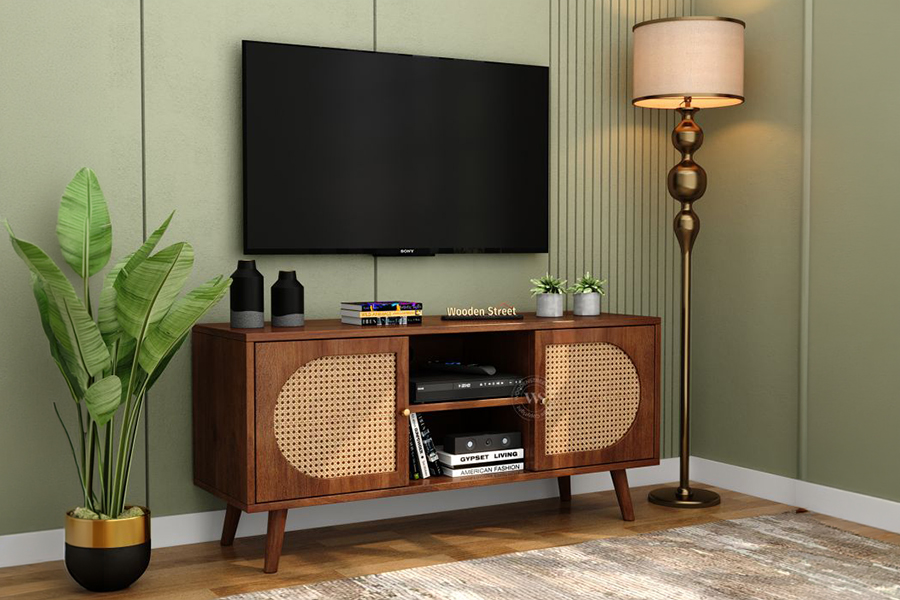
A hall that's 10 to 12 feet wide presents a specific set of challenges for hall TV wall design that wider rooms don't have.
The temptation in a narrow hall is to go big with the TV wall, full-height cabinetry flanking the TV, deep display shelves on both sides, a large screen. The intention is to make the wall feel designed and intentional. The actual effect in a 10-foot-wide room is to push the wall visually toward the viewer. The room feels smaller and more enclosed, not more designed.
The fix: keep the TV wall treatment horizontal rather than vertical. A low, wide TV unit that runs the width of the wall, without tall flanking cabinets, emphasises the width of the room and pushes the walls apart visually. A simple accent panel behind the TV rather than full-height cladding keeps the wall from feeling like it's coming toward you.
Screen size matters here too. Revisit the 2.5x viewing distance rule. In a 10-foot hall, a 55-inch TV is at the edge of comfortable. A 65-inch is too large for the distance. The wall treatment will look better and the viewing experience will be better with the appropriately sized screen.
In open-plan layouts where the living and dining areas share a continuous space, the TV wall anchors the living zone. How you treat it affects how the entire space reads.
A TV wall that is too visually complex in an open-plan layout creates competition between the two zones. The dining area and the TV wall end up fighting for attention. The room feels busy.
The better approach: treat the TV wall as the anchor without making it the loudest thing in the room. A clean wooden panel, a well-proportioned TV unit, minimal shelving. The sofa arrangement and the rug define the living zone spatially. The TV wall doesn't need to do the heavy lifting of separating the two areas.
This is a proportion rule that most tv panel design for living room guides don't mention and it makes a visible difference to how balanced a room looks.
When the TV unit or wall treatment is significantly wider than the sofa facing it, the furniture arrangement looks mismatched. The unit overwhelms the seating. The room reads as assembled from different scales rather than designed as a whole.
The TV unit should be roughly the same width as the sofa or slightly narrower. Not wider. If you have a three-seater sofa at 84 inches, the TV unit should ideally sit within that footprint. This keeps the visual weight on both sides of the room proportionate to each other.
The fireplace-under-TV layout is popular in Western interior design and it occasionally appears in Indian homes as an aspirational reference. In Indian conditions it has two real problems.
First, a fireplace in most Indian cities is non-functional for most of the year. The visual reference doesn't carry the same warmth it does in a cold-climate home. It tends to read as decorative to the point of affectation.
Second, if the fireplace is functional or if electric heaters are placed below the TV, the rising heat damages the TV's electronics over time. More significantly, a heat source below the screen forces anyone watching to tilt their eyes upward to see above the fire surround. Every ergonomic problem with high TV placement applies here, compounded by the visual obstruction of the fireplace itself.
A mirrored wall behind the TV sounds like a space-expanding trick that also makes the TV wall feel designed. In practice it doubles the glare on the screen. Every light source in the room, windows, overhead lighting, lamps, reflects in the mirror and appears on the TV screen as a competing image. Picture quality suffers significantly and cannot be fixed by adjusting the TV's settings.
If mirrors are part of the wall treatment, place them to the sides of the TV, not behind it. The space-expanding effect works from the sides. Behind the screen it causes problems it can't solve.
Floating shelves on either side of a TV are a clean, contemporary look in design references. In real homes they work for about a year and then they become a problem.
The issue is that floating shelves need to be styled deliberately and maintained deliberately. Without a visual anchor, a solid unit or a panel or a structural element that grounds them, they start to look unfinished as the styling on them shifts with whatever gets placed there over time. Books accumulate in uneven stacks. Decorative objects get replaced with functional objects. The deliberate styling from the first month gives way to whatever happens to be there.
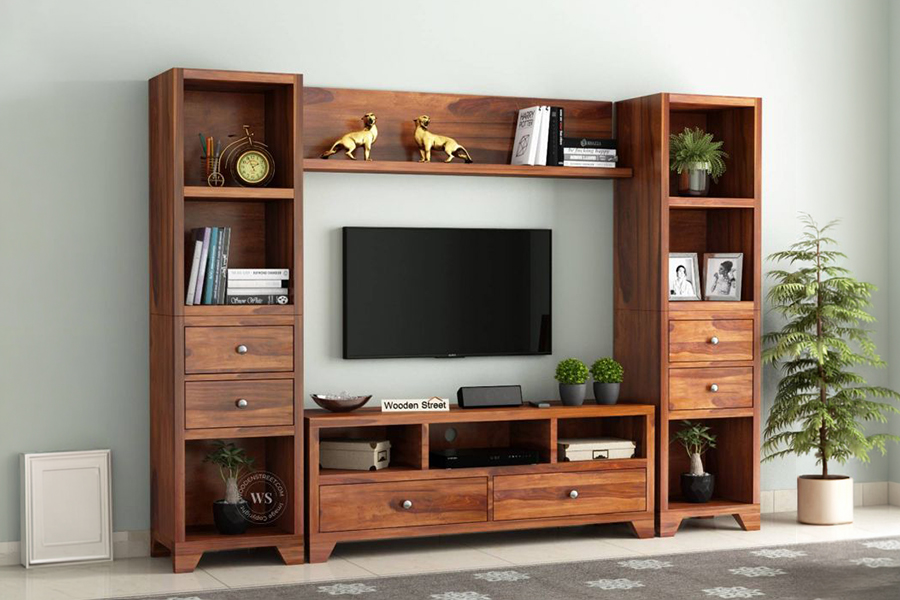
If you want shelves flanking the TV, build them into a panel or a unit that provides visual structure. Shelves as part of a designed system look intentional for years. Floating shelves as the only element on either side of the TV rarely do.
The TV wall is the most looked-at surface in most Indian living rooms. It's where guests' eyes go, it's what you face every evening, and it sets the register for the room around it.
The mistake most rooms make is treating it as a design problem when it's actually an ergonomics problem first. Get the height right, get the viewing distance right, manage the cables before anything else goes on the wall, and then choose the material and the treatment that suits the room's size and proportions.
A wall-mounted TV at the right height on a clean wooden panel in a room that's correctly proportioned for it will look and feel better than an elaborate full-wall design treatment on a screen that's mounted too high for the sofa in front of it.
Start with the measurement. The rest follows.
We will be back with the next blog soon. Till then, stay tuned!
Read More -
The Ultimate 2026 TV Table Guide for Indian Homes
Image Source: Pinterest, Google, and Wooden Street
Trending Products
Top Picks from EveryoneArticles you will love to read
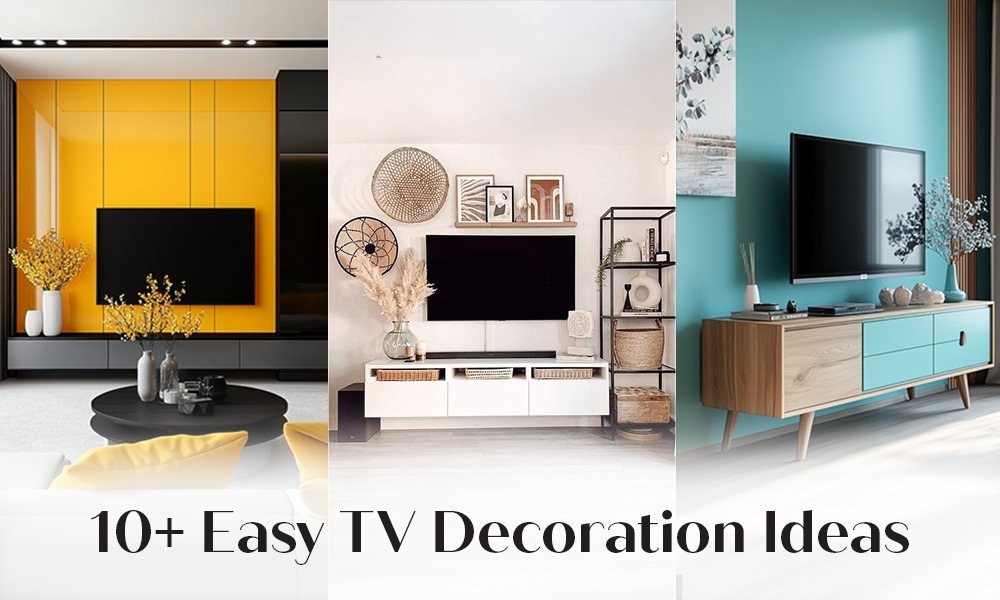
Looking for TV unit decor ideas? Explore 10+ easy and stylish ways wall and elevate your living room aesthetic.
Continue Reading
Find pooja room door designs that balance tradition and modernity. From wooden carvings to glass doors, explore ideas that bring positive energy home.
Continue Reading
Explore the ideal bedroom direction according to Vastu with practical insights and scientific reasoning. Learn the best bed placement according to Vastu, ideal sleep directions, and smart bedroom design tips to create a peaceful, balanced, and energy-aligned living space.
Continue Reading
Setting up your workspace the right way can completely change how you work from home. This blog on Vastu for office desk at home explains the best desk direction, seating positions, and simple adjustments that help improve focus and comfort. From choosing the right home office desk and chair to creating a balanced work from home setup, these practical tips make your home office feel more organised and easier to work in every day.
Continue Reading
The placement of your almirah plays a bigger role in your bedroom than you might expect. According to Vastu, the right direction can make your space feel more balanced, organised, and comfortable. This blog walks through the best directions for wardrobe placement, common mistakes to avoid, and simple, practical tips you can apply, whether you’re setting up a new room or adjusting an existing one while understanding wardrobe direction as per vastu and overall bedroom vastu.
Continue Reading


