




A complete guide to every type of chest of drawers, from tallboy and gentleman's chest to media chest and cane front designs, with practical advice on choosing the right one for Indian bedrooms of any size.
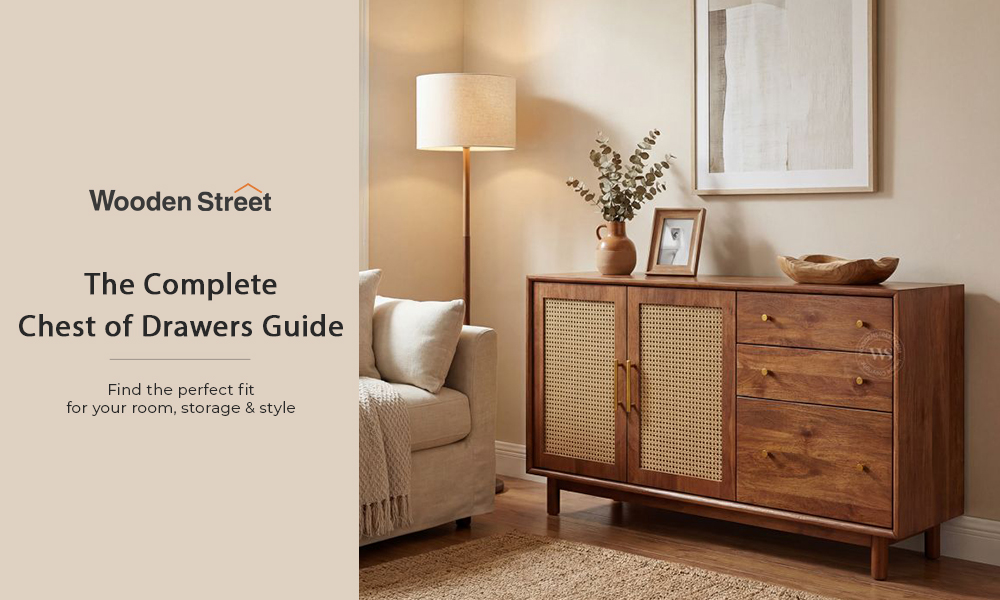
There is a particular kind of bedroom frustration that most people quietly live with for years. The wardrobe is full, the top shelf is buried under things nobody can see, and every morning involves a small hunt for whatever was supposed to be organized. The chest of drawers is usually the piece of furniture that fixes all of that, except most buyers pick one without really understanding what separates one type from another.
Walk into any furniture store or open any catalog, and the options multiply fast. Tallboy, lowboy, gentleman's chest, media chest, chest-on-chest. The names mean nothing without context, and most product pages do not offer much. This guide goes through each type properly, what the configuration actually is, what it can and cannot do, which room it belongs in, and what to check before spending money on one.
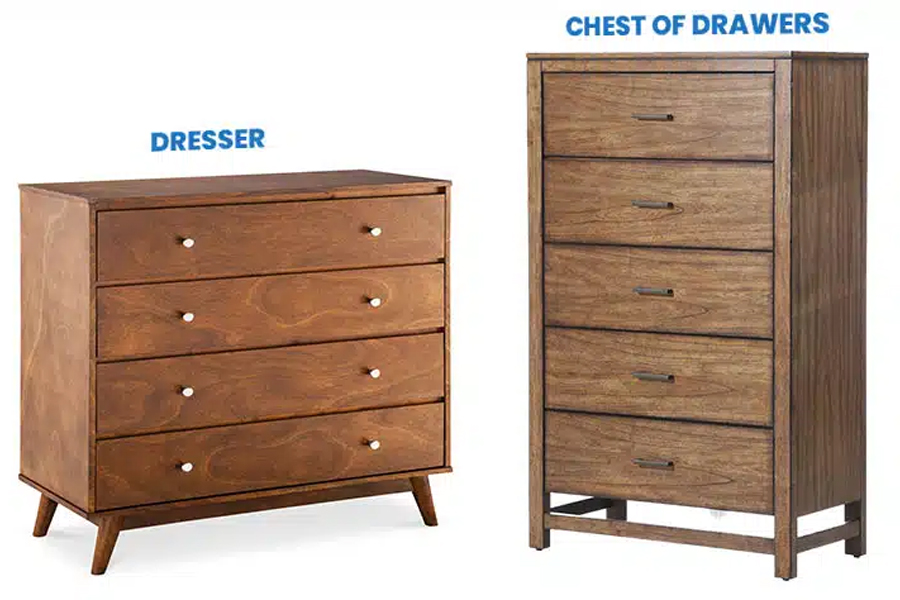
Before getting into configurations, this distinction needs to be sorted out because the terms get mixed up constantly, and they are not the same piece of furniture.
A chest of drawers is taller than it is wide. Drawers stack vertically. The floor footprint stays compact, and the storage capacity builds upward. It is the right piece for anyone prioritizing storage volume without giving up much floor area.
A dresser runs the other way, wider than tall, with drawers arranged horizontally and a broad flat top that typically pairs with a wall mirror. The surface area on top is generous. The storage per square foot is not.
The practical difference matters more than the naming. A chest of drawers makes sense for compact bedrooms and for anyone who needs serious drawer count in a tight space. A dresser belongs in a master bedroom with enough floor clearance to justify the width, especially when a display surface above is part of the plan.
In most Indian apartments, anything under 150 sq ft of bedroom space, the chest of drawers wins on pure logic. The dresser is a luxury of square footage.
Not every chest of drawers is built for the same purpose. The height, width, drawer count, and internal arrangement all shape what the piece is actually capable of, and which kind of room it genuinely belongs in.
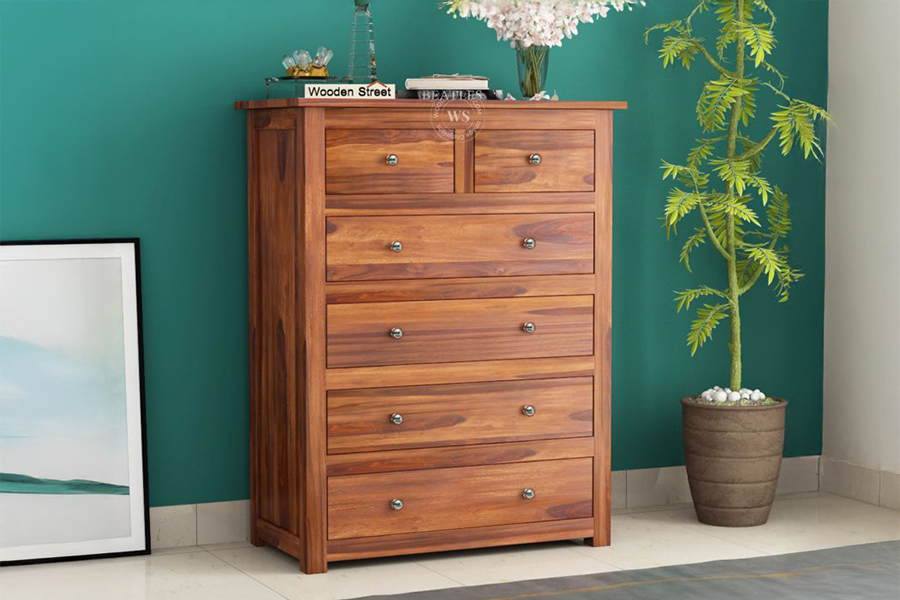
This is the configuration most people picture first, and for straightforward reasons. Four to six drawers stacked vertically, a clean rectangular frame, and dimensions that typically run between 80 and 110 cm tall and 45 to 70 cm wide. There is nothing complicated about it, which is exactly its strength.
The storage works out neatly: one drawer per category, shirts in one, trousers in another, and innerwear, socks, and seasonal items each getting their own space. For one person's complete clothing storage, a five-drawer chest covers everything without requiring any inventive organization. In a 10x10 Indian bedroom, it sits comfortably alongside a two-door wardrobe without blocking either the walking path or the wardrobe door swing.
Best suited for: compact bedrooms under 120 sq ft, children's rooms where storage needs shift constantly as they grow, and guest rooms where the chest handles basics without overwhelming the space.
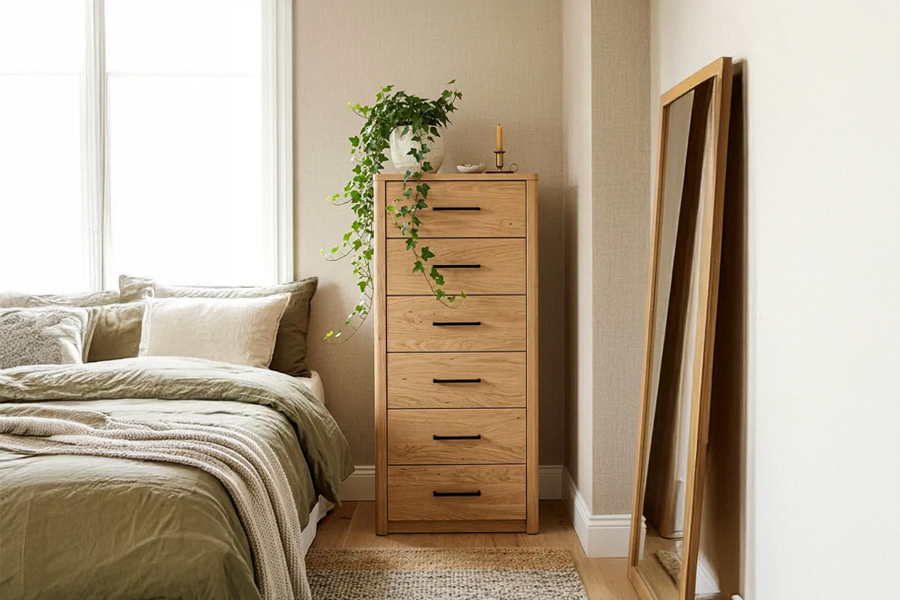
The tallboy takes the vertical logic of a standard chest and extends it considerably. Standing anywhere from 120 to 150 cm tall with a width that stays as narrow as 40 to 50 cm, it is built entirely around the idea of trading floor area for height. Six to eight drawers, stacked in a frame no wider than a bedside table.
For Indian bedrooms where the wall runs uninterrupted but floor clearance around the bed stays tight, the tallboy makes a genuinely practical case. The storage capacity is substantial. The floor area it occupies is not.
One honest trade-off: the top two or three drawers require a reach. Daily-use items, the things opened every single morning, belong in the middle drawers. Seasonal clothing, extra linens, and rarely touched accessories go up top. Treating it otherwise turns the tallboy from a practical piece into an inconvenient one.
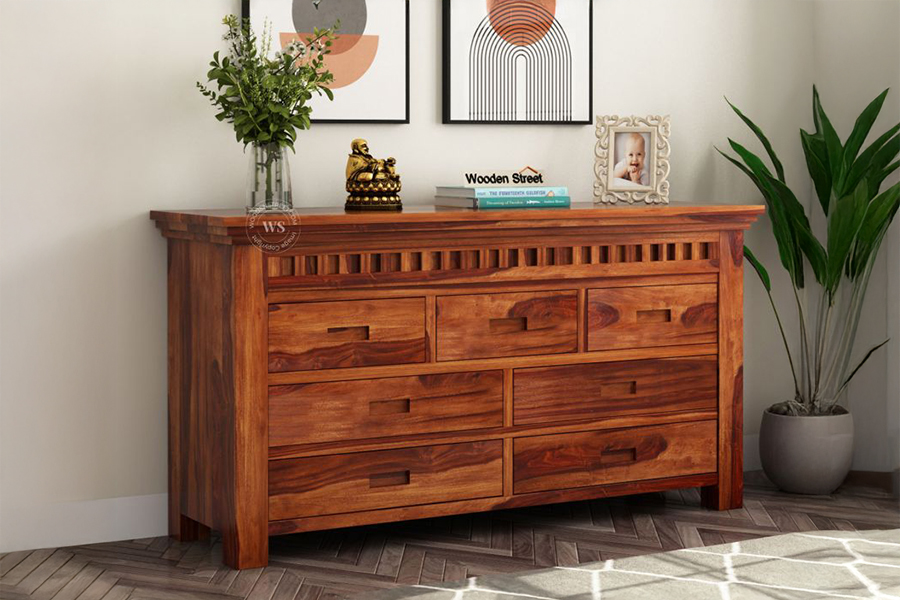
Shorter and broader than anything else on this list. The lowboy typically stands between 70 and 85 cm tall with a width ranging from 90 to 120 cm. Three to four drawers, a wide flat top, and a horizontal presence that reads very differently in a room compared to taller configurations.
The value here lies in the dual function. The broad top surface handles what a dresser top would, a lamp, a tray, a framed mirror, a small decorative arrangement. In a master bedroom with floor space to spare, the lowboy fills the role of both dresser and surface piece without requiring a separate mirror unit.
In smaller bedrooms where a standalone TV unit is not an option, the lowboy also works effectively as a TV console. Storage in the drawers below, screen on top, all from the same wall position. It is the kind of piece that earns its floor space twice over.
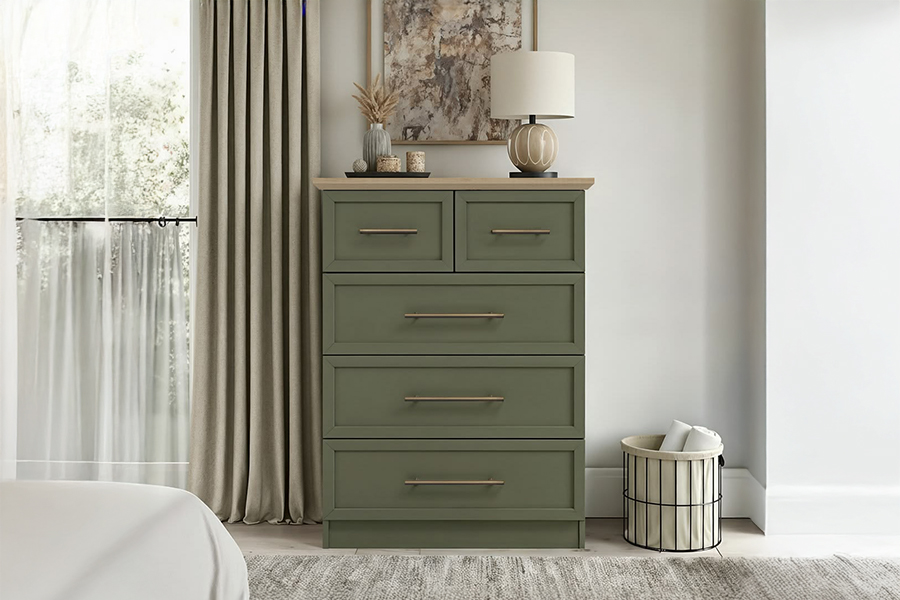
Two chest units, a full-height upper chest sitting directly on a lower chest base. What this creates is effectively two chests occupying a single wall position, which means the highest drawer count available in the smallest floor footprint of any configuration on this list.
Walk-in wardrobes and dedicated dressing rooms where the priority is maximum storage reach for this type first. Nothing else comes close to the volume per square metre.
The buying consideration that cannot be skipped: a chest-on-chest is inherently top-heavy. Wall anchoring is a safety requirement, not an optional recommendation. Any reputable retailer will flag this during purchase and supply the necessary fixings. If they do not, that is worth noting.
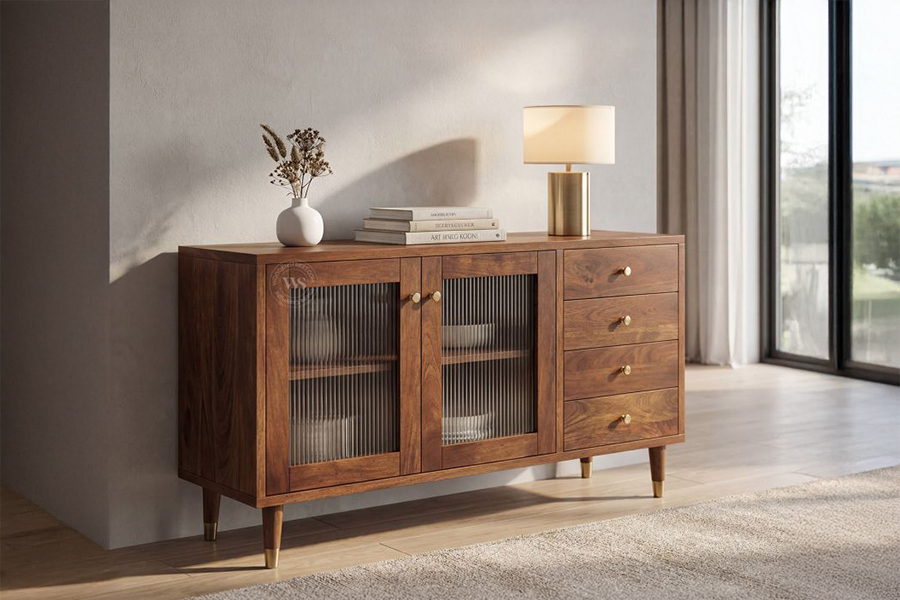
One side of this piece is a column of four to six drawers, standard depth and configuration. The other side is a tall cabinet section, either open shelves, a hanging rod, or a combination of both. The two sections sit within a single unified frame.
The logic is to handle both folded and hanging clothing from one unit. The hanging section accommodates shirts, jackets, and occasion wear on hangers. The drawers manage everything folded. For bedrooms where a full-height wardrobe is simply not possible but hanging storage is still necessary, the gentleman's chest bridges that gap without compromise.
It has become a notably popular choice in Indian 1BHK bedrooms, where every furniture piece is expected to carry more than one function. The gentleman's chest does two things from the same wall position, and does both of them reasonably well.
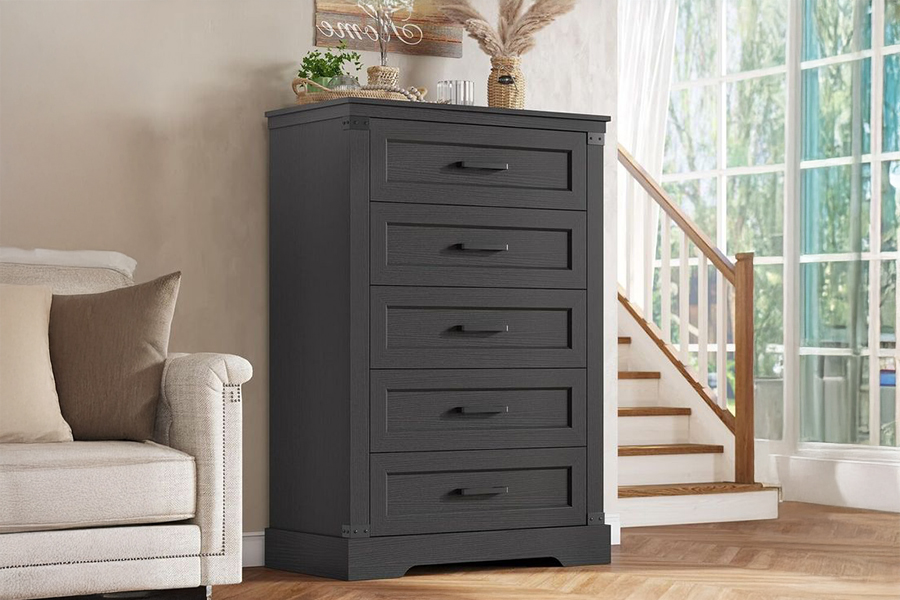
Narrow, tall, and built entirely around shallow drawers. Typically five to seven drawers, each only eight to ten centimetres deep, with a total width that stays under 45 cm. The shallow depth is intentional, this piece is designed for innerwear, jewellery, folded accessories, and delicate fabrics that get lost or creased in a standard-depth drawer.
This is a secondary storage piece, not a primary one. It belongs alongside a wardrobe or a full chest, not instead of either. The real value is the organisation it brings to items that are small, easy to misplace, and annoying to dig through. It also fits into gaps that nothing else can use, the narrow space beside a wardrobe, a corner of a walk-in closet, the wall section between a door and a window.
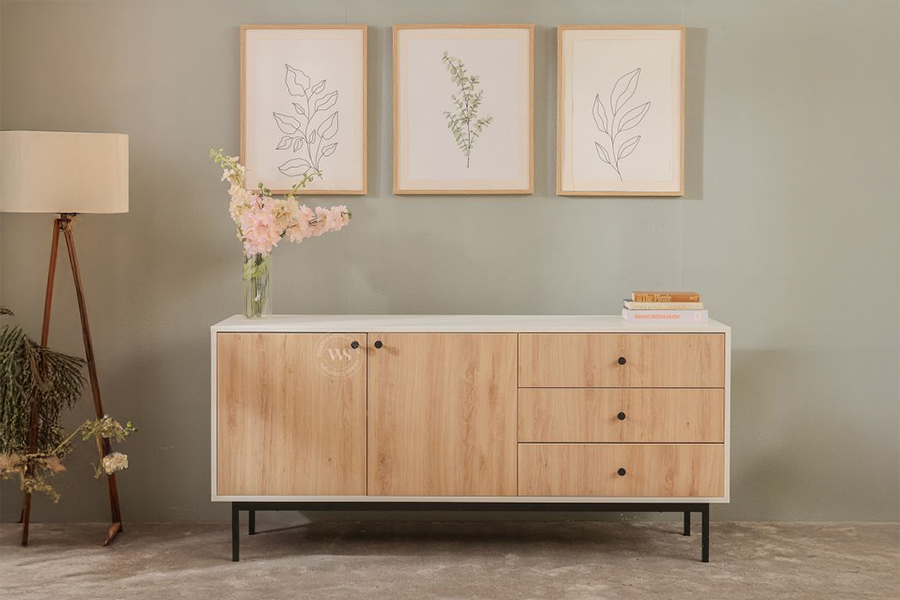
Drawers in the lower section, open shelving or a cabinet space above, the whole unit designed around placing a television at a comfortable viewing height. The media chest is the answer to a specific bedroom problem that comes up constantly in smaller Indian homes: when the storage wall and the TV wall are the same wall, one piece needs to handle both.
For guest bedrooms, studio apartments, and compact rooms where a separate TV console and a standalone chest of drawers would not both fit, the media chest consolidates the function into one piece without either side suffering for it. The television goes on top or within the upper section, the clothing goes in the drawers below.
WoodenStreet's chest of drawers range includes media chest configurations alongside standard bedroom pieces, available in sheesham and mango wood across multiple finish options.
If one element of chest of drawers design has been getting the most attention recently, it is the drawer front. The structural frame still matters, but the front panel has become the defining character of the whole piece, the detail that sets one chest apart from another in the same room.
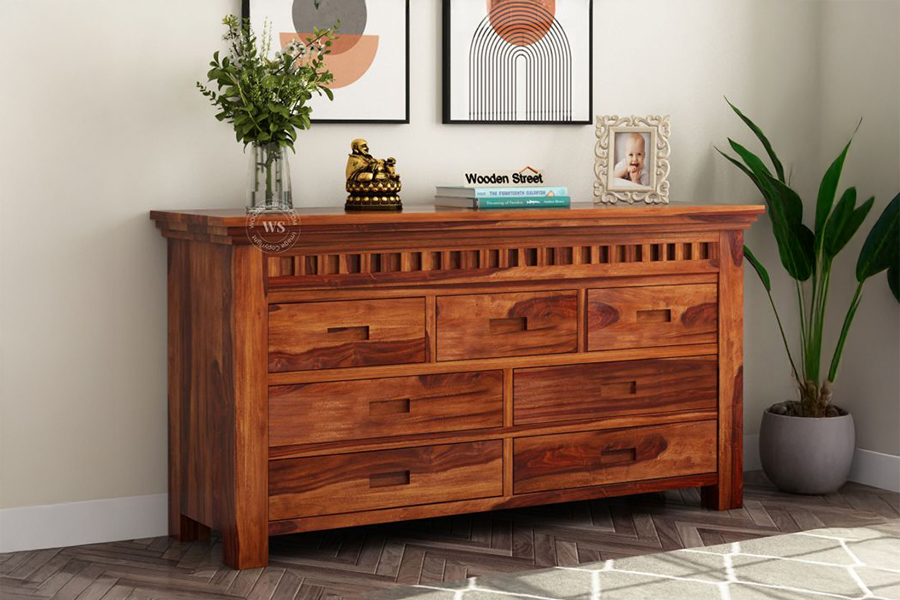
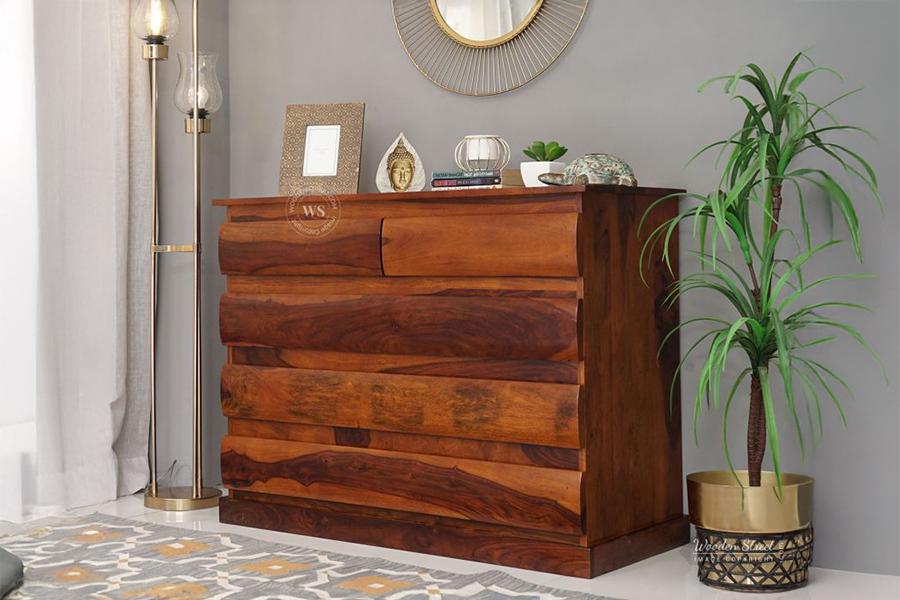
Sheesham, teak, mango wood, acacia, these have been the most dependable drawer front materials in Indian homes for a long time, and that has not changed. The grain variation across solid wood means no two fronts are identical. That natural irregularity, where the pattern shifts slightly from one drawer to the next, is precisely what gives solid wood pieces a quality that machined surfaces cannot replicate.
In traditional, transitional, and warm contemporary Indian interiors, solid wood fronts work well against almost any wall colour or flooring. They age into the room rather than out of it.
Flat drawer fronts with no visible hardware at all, no knobs, no pulls, no finger grooves. The drawer opens with a direct press on the front surface. This approach has become the default in contemporary interior design over the past few years, and that preference has carried over into chest of drawers design with considerable momentum through 2025 and into 2026.
One practical note that buyers frequently overlook: push-to-open mechanisms depend on spring tension that needs to hold its calibration across years of daily use. Quality mechanisms maintain that reliably. Budget versions lose spring response within twelve to eighteen months of consistent use. This is worth investigating before purchase, not after the drawer starts sticking.
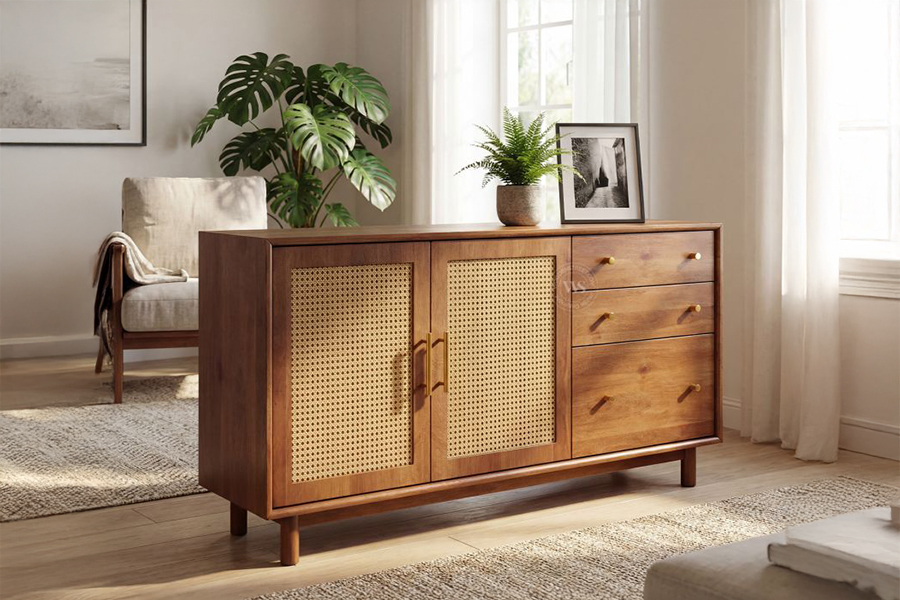
Woven rattan or cane panels replacing solid drawer fronts, the trend arrived gradually and then picked up speed significantly through 2025 and into the current year. The texture introduces warmth and a handcraft quality that flat surfaces simply cannot produce, and it reads well across more interior styles than might be expected: bohemian, coastal, and contemporary Indian interiors all carry it naturally.
Sheesham and acacia frames with cane fronts have been a particularly well-received combination in the Indian furniture market. There is also a practical angle to the cane surface beyond aesthetics: woven fronts allow air to circulate inside the drawers, which benefits natural fabrics, cotton, linen, and silk, stored through Indian summers and monsoon months alike.
|
What the Situation Calls For |
Best Type to Consider |
|
Maximum storage, minimum floor footprint |
Tallboy or Chest-on-Chest |
|
Display surface alongside drawer storage |
Lowboy / Wide Chest |
|
Replace a wardrobe in a compact room |
Gentleman's Chest |
|
Accessories, innerwear, and delicates only |
Lingerie / Slim Chest |
|
TV unit and bedroom storage in one piece |
Media Chest |
|
Primary clothing storage for one person |
Standard Vertical Chest (5–6 drawers) |
The table is a starting framework. The actual decision always narrows down to two things: how much floor area is genuinely available in the room, and whether the chest is meant to be the primary storage furniture piece or a supplementary one. Those two answers eliminate most of the options immediately and make the remaining choice far easier.
The drawer front catches the eye first. The material and finish hold attention next. Both are valid things to evaluate when buying a chest of drawers. But the drawer mechanism is what gets used every single morning and every single night, for years, and it receives almost no attention during most purchase decisions.
Soft-close drawer slides slow the drawer from roughly 10 cm out, bringing it to a gentle close without any impact. The practical benefit goes beyond the satisfying movement. It protects the drawer box, the drawer front, and the joint connecting the two from the cumulative damage of repeated slamming. Over three or four years, this difference in construction becomes visible in how well the piece holds together.
Standard slides work. Nobody would argue otherwise. But they are prone to the slam, and the joint between drawer front and drawer box loosens faster under repeated impact than most buyers anticipate when they are standing in a showroom.
One check that is genuinely worth doing before buying: pull the drawer all the way out and look at the corner joints of the drawer box itself. Dovetail joinery, the interlocking wood joint where both pieces interlock like puzzle teeth, indicates real construction quality. These joints tighten slightly under load rather than loosening over time. Stapled MDF corners at the same point indicate the opposite, regardless of how attractive the front design happens to be.
A A chest of drawers is taller than it is wide, with drawers stacked vertically to maximise storage in a compact footprint. A dresser is wider than it is tall, with a large flat top surface and a horizontal drawer arrangement. The chest of drawers suits compact bedrooms and anyone prioritising storage volume per square foot. The dresser suits larger bedrooms where surface area, a mirror arrangement, and accessibility across multiple drawers are all part of the requirement.
A Standard configurations run from three drawers to eight, depending on the type. A standard vertical chest sits at four to six. A tallboy can reach seven or eight. A lowboy typically carries three to four. The gentleman's chest combines a drawer column with a cabinet section rather than increasing drawer count alone, so the total drawer number varies by model.
A For bedrooms under 120 sq ft, the standard vertical chest or tallboy delivers the most storage for the least floor area. The tallboy in particular is the right call when floor clearance around the bed is the real constraint and wall height is available. For 1BHK bedrooms where a full wardrobe is not practical, the gentleman's chest handles both folded and hanging clothing from a single wall position.
A A tallboy is a chest of drawers configuration that is taller and narrower than standard, typically standing between 120 and 150 cm in height with a width of 40 to 50 cm. The narrow base and extended height allow six to eight drawers in a very small floor footprint. It is the right choice when ceiling height is available but floor clearance around other furniture is restricted.
A A gentleman's chest combines a column of standard drawers on one side with a tall cabinet section on the other, designed to manage both folded and hanging clothing within a single unit. The hanging section typically accommodates shirts, jackets, and occasion wear. It functions as a practical hybrid between a wardrobe and a chest of drawers, particularly suited to Indian bedrooms where full-height wardrobe installation is not possible.
A Sheesham and teak are the most consistently proven materials across India's range of climates. Both are naturally dense, resistant to warping through humidity shifts, and maintain structural integrity across seasonal temperature changes. Sheesham is the more widely available option in the current Indian market and performs reliably across both dry northern and humid coastal climates. Mango wood is a well-regarded alternative, it handles the climate well and is considerably lighter in weight, which makes it easier to move and reposition.
Trending Products
Top Picks from EveryoneArticles you will love to read
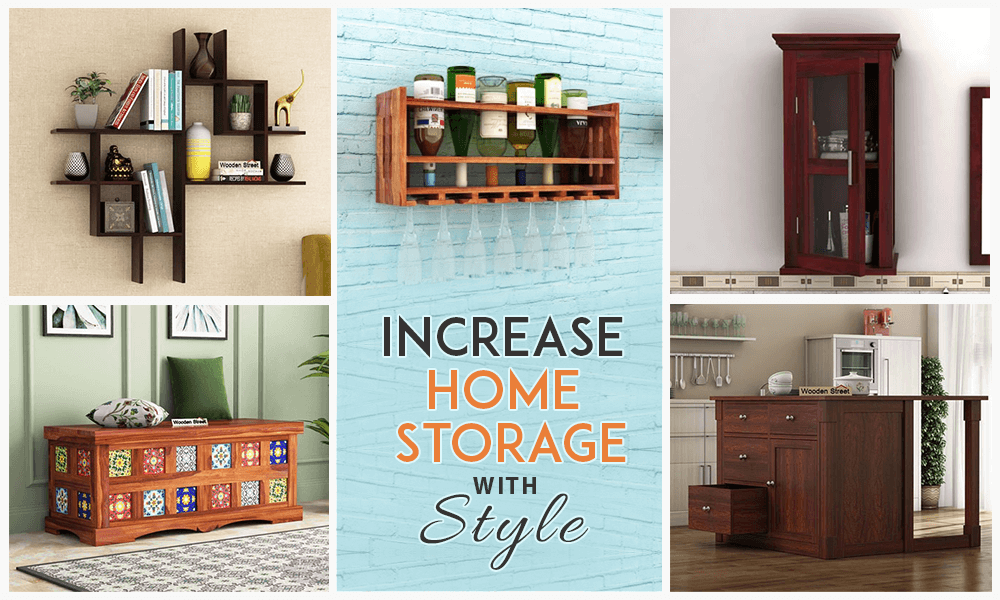
It is essential to go with style even when it comes to storage. This blog sheds light on 5 main furniture pieces that always take storage and décor styling hand in hand.
Continue Reading
Discover the key difference between a shoe rack and a shoe cabinet to choose the perfect storage for your home. This guide explores their pros, cons, and design options—helping you find stylish, space-saving, and practical shoe storage furniture that fits your lifestyle and décor.
Continue Reading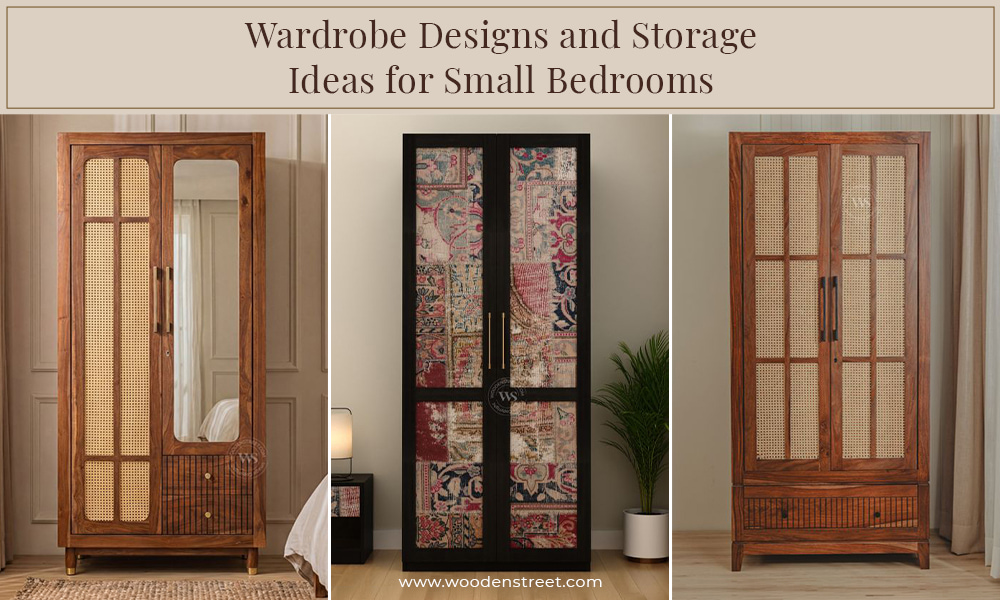
Explore smart wardrobe designs for small bedrooms with stylish layouts and clever storage solutions to maximise every inch.
Continue Reading
Explore the complete history of Indian furniture design: from Mughal takhts and colonial planter’s chairs to modern sheesham and mango wood furniture in Indian homes today.
Continue Reading


