





The right frame can transform how artwork and photographs look in your home. This guide explores different types of picture frames, materials, finishes, and design styles. Learn about types of photo frames, kinds of photo frames, and kinds of picture frame options to confidently choose the best frame for any space
Here's something that happens more often than anyone admits. You buy a print you love. You find a frame that looks fine in the store. You hang it up. And somehow, the image you were excited about looks smaller, duller, or just off in a way you can't quite explain.
The frame did that.
Not the print. Not the wall. The frame.
A wrong frame doesn't just fail to help an image, it actively undermines it. And because most people spend 95% of their decision making energy choosing what to frame and almost none choosing how to frame it, this is a mistake that happens constantly in Indian homes.
This guide fixes that. Every major type of picture frame, every display style, every glass option explained clearly, so you stop guessing and start choosing with intention.
It's tempting to think of a frame as neutral. A container. Something that holds the image and stays out of the way.
It isn't. The frame sets the entire relationship between the artwork and the wall around it. It tells the eye where to stop. It affects how large the image feels, how important it seems, and whether the artwork breathes or feels trapped.
A wrong frame weakens a strong image and makes it look smaller, cheaper, or mismatched with the space it's meant to anchor. A right frame elevates an ordinary image gives it presence, context, and a reason to hold attention.
The frame is never just a border. It's half the visual decision.
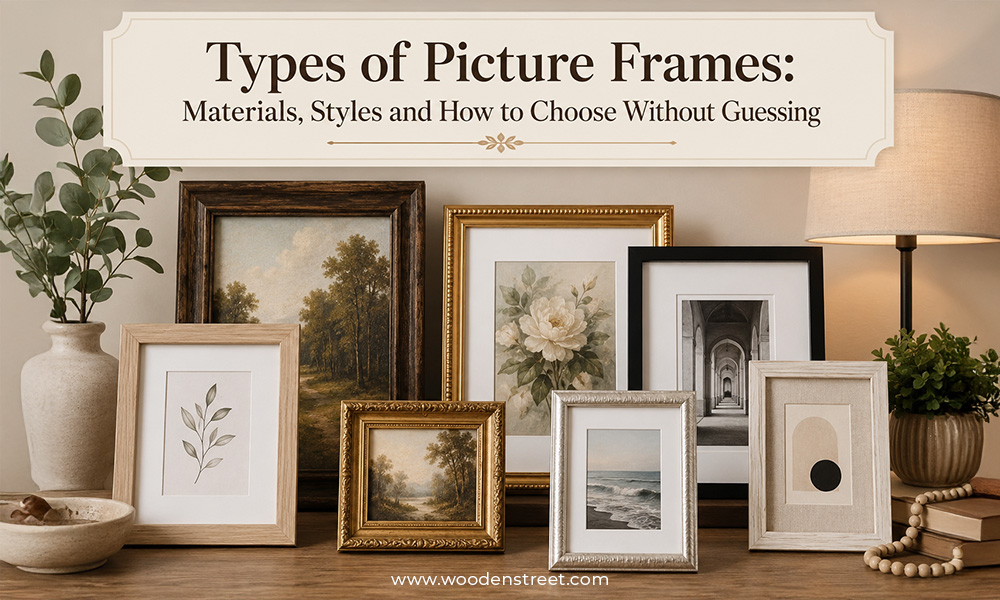
The material of a frame determines its character, what it communicates, what interiors it suits, and how it behaves in Indian conditions over time.
Wood is the most versatile frame material available. Natural grain adds warmth and texture that no metal or plastic frame can replicate and that warmth is why wooden frames work across such a wide range of subjects and spaces. Photographs, art prints, watercolours, mirrors and wood suits all of them without looking like it's trying too hard.
The range within wooden frames is enormous. A light, raw oak frame reads as Scandinavian and minimal. A dark walnut frame reads as rich and considered. A distressed white frame reads as relaxed and coastal. A painted black wooden frame reads as contemporary without the coldness of metal. The same material, radically different personalities.
For Indian homes specifically, wooden frames hold up well in humidity when properly sealed better than MDFcore frames passed off as "wood" in budget ranges. Check that the frame is solid wood or quality engineered wood with a proper finish, not raw pressed board with a woodlook wrap that will start peeling at the corners by the second monsoon.
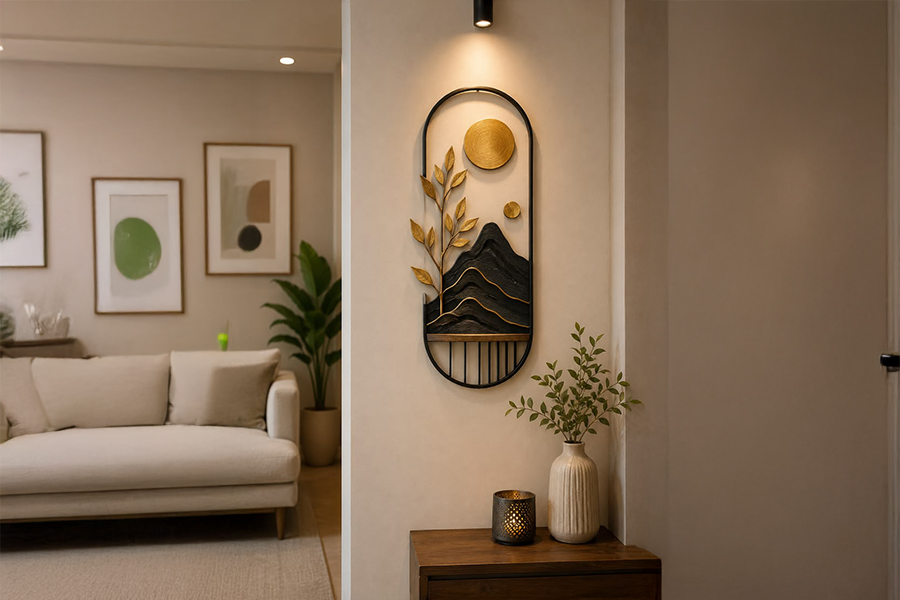
Where wooden frames add warmth, metal frames subtract it and sometimes that's exactly the right choice.
Aluminium and steel frames have a thin, precise profile with a clean edge that doesn't compete with the image inside. They sit back visually and let the artwork speak. In modern apartments, industrial lofts, home offices, and Scandinavian-style interiors, metal frames feel completely at home. In traditional or maximalist spaces, they tend to look cold and out of place.
Among the types of photo frames available at most price points, metal frames are also among the most consistent in quality. There isn't much that can go wrong with a wellmade aluminium frame, no warping, no grain variation, no finish that chips. They age cleanly.
Black metal frames in particular have become something of a default for contemporary gallery walls and they earn that popularity. A black aluminium frame is genuinely one of the most reliable ways to make almost any photograph look considered without spending a lot of money.
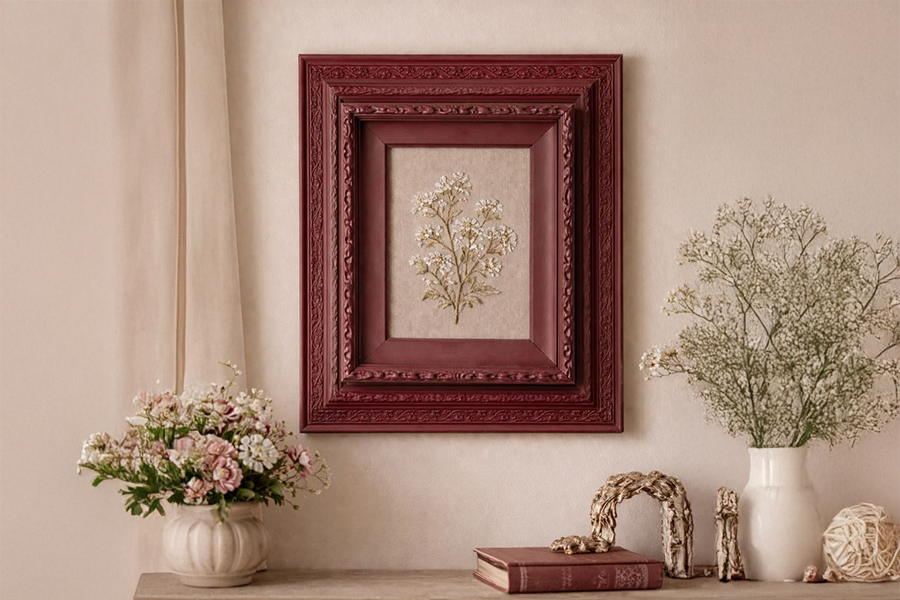
The ornate frame is not subtle. Heavy moulding, detailed carving, gold or silver leaf finish announces itself before you've even looked at what's inside it.
This is not a flaw. For the right image in the right space, an ornate frame is the correct choice. Oil paintings, especially portraits, landscapes, and traditional figurative work need the visual weight an ornate frame provides. The heavy moulding holds the artwork's scale. Without it, a large oil painting on a plain frame can look oddly unfinished, like a painting that hasn't been fully dressed.
In classical interiors, heritage homes, and maximalist spaces with rich textiles and layered decor, ornate frames feel native. In a minimal modern apartment with white walls and cleanlined furniture, they feel imported from a different century which can work intentionally as a contrast statement, but needs to be done with real confidence or it looks accidental.
The practical warning: ornate frames visually overpower smaller images. A 5x7 photograph in an ornate frame doesn't look important, it looks lost. Reserve carved and decorative frames for substantial artwork where the frame's visual weight is earned.
The floating frame is one of the most contemporary kinds of picture frame design available, and it works on a simple visual principle. Instead of the artwork sitting against a backing that fills the frame completely, there's a visible gap usually 5 to 10 mm between the edge of the image and the inner edge of the frame.
The artwork appears to float. Hence the name.
This works particularly well for Canvas Wall Art, canvas prints, and artwork on board, where the image already has dimensional quality. The gap creates a shadow line that adds depth. The image looks like it occupies space rather than just sitting flat against a wall. For contemporary art, abstract prints, and photographic prints with clean edges, the floating frame adds a gallery quality feel at a fraction of gallery framing costs.
It's one of the kinds of photo frames that consistently gets reactions in a room. People notice it without necessarily knowing why the effect reads as intentional and considered even to people who don't think about framing at all.
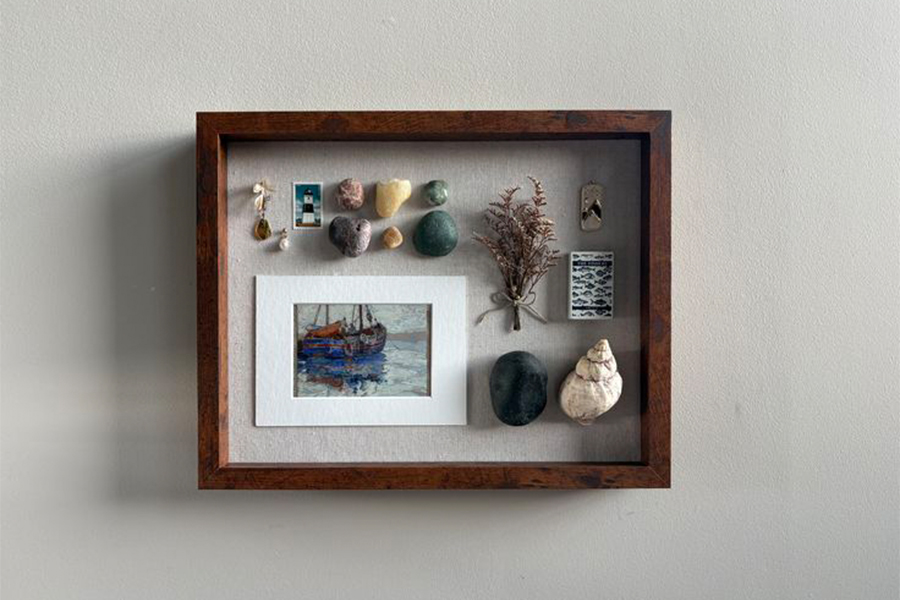
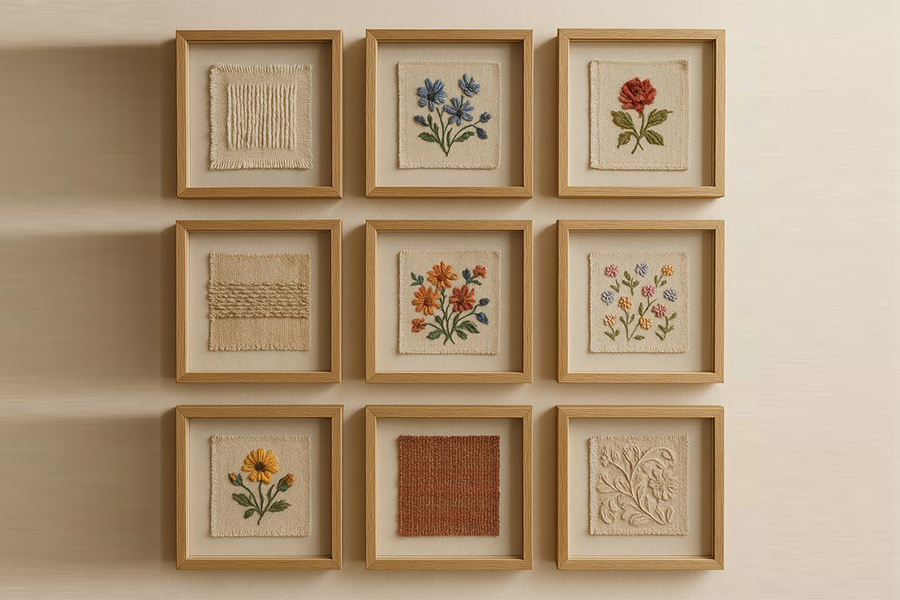
A shadow box frame has significant depth sometimes two to four inches between the glass front and the backing inside. That space is the entire point.
Shadow box frames are designed for things that aren't flat. Sports medals. A fabric swatch from a meaningful occasion. Pressed flowers. A child's first pair of shoes. Concert tickets and a photograph from the same night. Military insignia. Anything three-dimensional that deserves to be displayed rather than stored in a box somewhere.
The depth of the shadow box lets objects sit inside the frame without being compressed against the glass. It creates a proper stage for the object and the glass front protects it while keeping it visible.
In Indian homes, shadow boxes are underused given how much meaningful memorabilia families accumulate across generations. A shadow box with a grandfather's medals, or one marking a child's milestone with a few meaningful objects, these become the most genuinely personal things on a wall, far more so than any purchased print.
The type of frame matters. So does how you display it. These are the main approaches and each one produces a very different result on the wall.
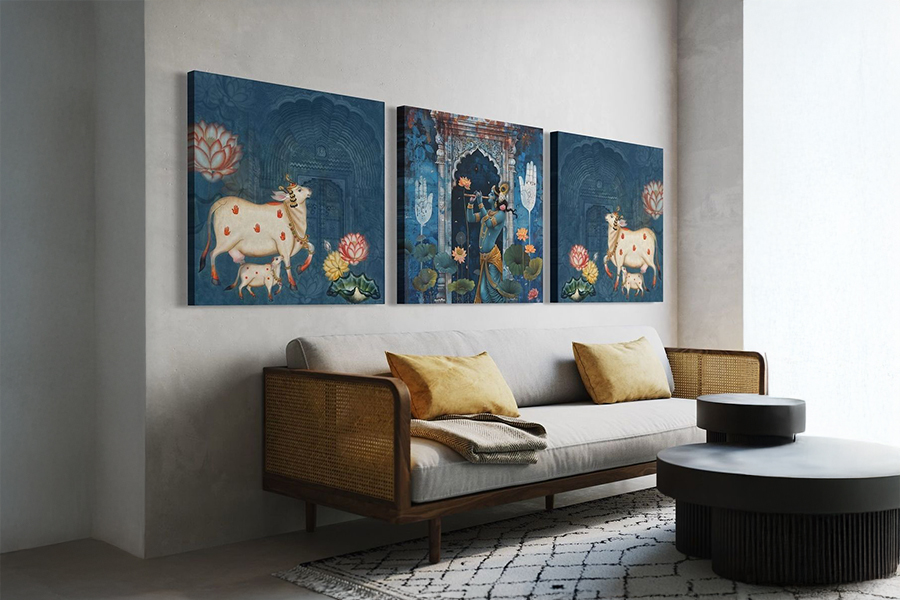
One large frame. Strong image. Properly sized for the wall it anchors.
The single statement frame is the most confident display choice it says this image is worth your full attention, on its own, without supporting players. When it works, it's the most powerful thing you can do on a wall. One photograph that genuinely stops people, properly framed and lit, beats a cluttered gallery wall every time.
When it doesn't work when the image isn't strong enough, or the frame is the wrong size for the wall, or the placement is off there's nothing else to carry the wall. The failure is very visible.
The image has to earn this treatment. Not every print does. But for the ones that do portraits with real presence, landscapes with scale, artwork with a commanding composition this is the right call.
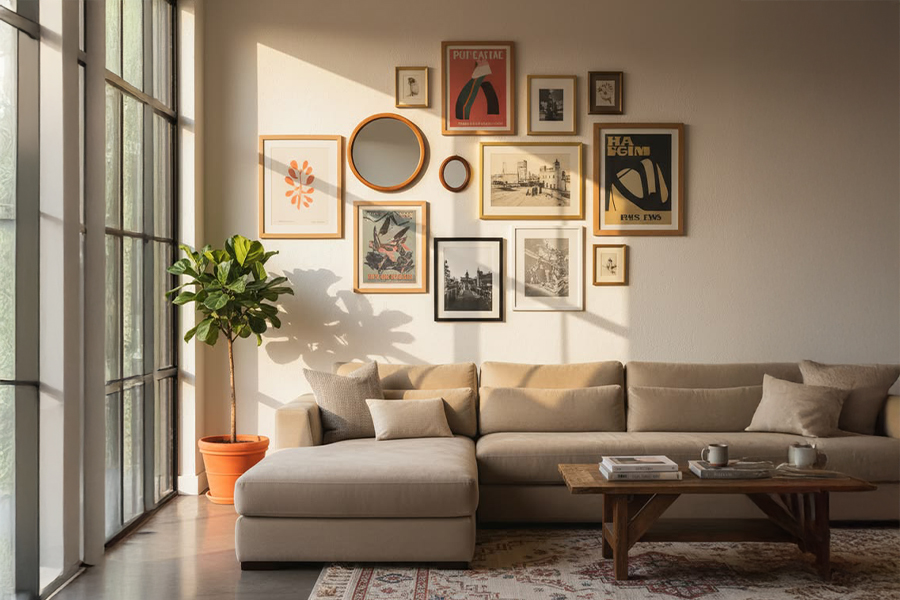
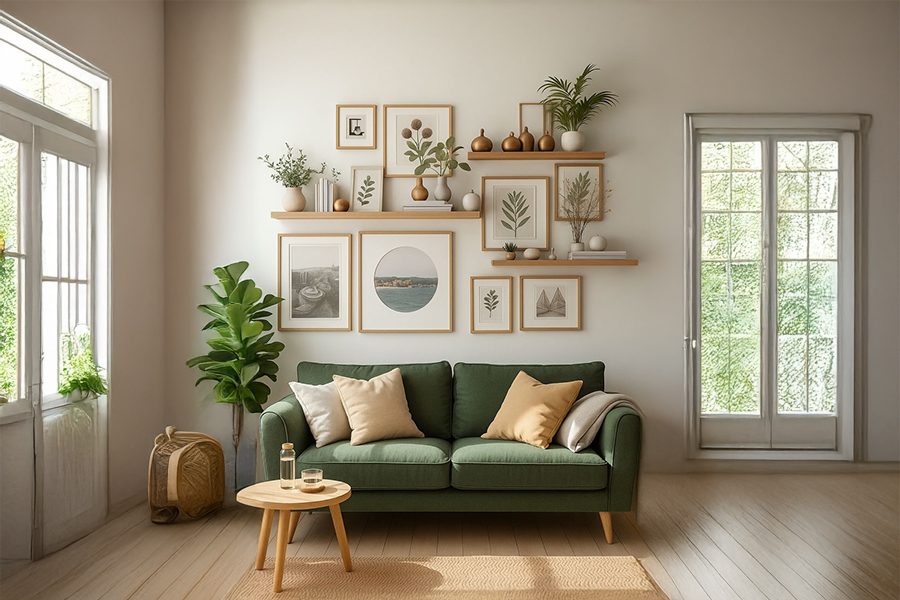
A gallery wall turns the arrangement of frames itself into the artwork. Done well, a wall of varied frames, varied subjects, and varied sizes creates something richer than any single piece a visual story, a collection, a personality.
The mistake most people make is buying frames in matching sizes and spacing them with rulermeasured precision. Everything is uniform. Everything equidistant. It looks planned in a way that feels corporate rather than personal.
What actually works: mixing sizes deliberately one larger anchor piece and several smaller ones grouped around it. Mixing frame styles and materials with one consistent thread tying them together (all black frames, or all wood tones, or all the same mat colour). And arranging them in a shape rather than a grid, a loose horizontal rectangle, or an asymmetric cluster that follows the shape of the sofa or staircase below it.
Among the types of picture frames that get most attention in interior conversations, gallery walls are consistently popular because when they work, they make a wall feel completely alive.
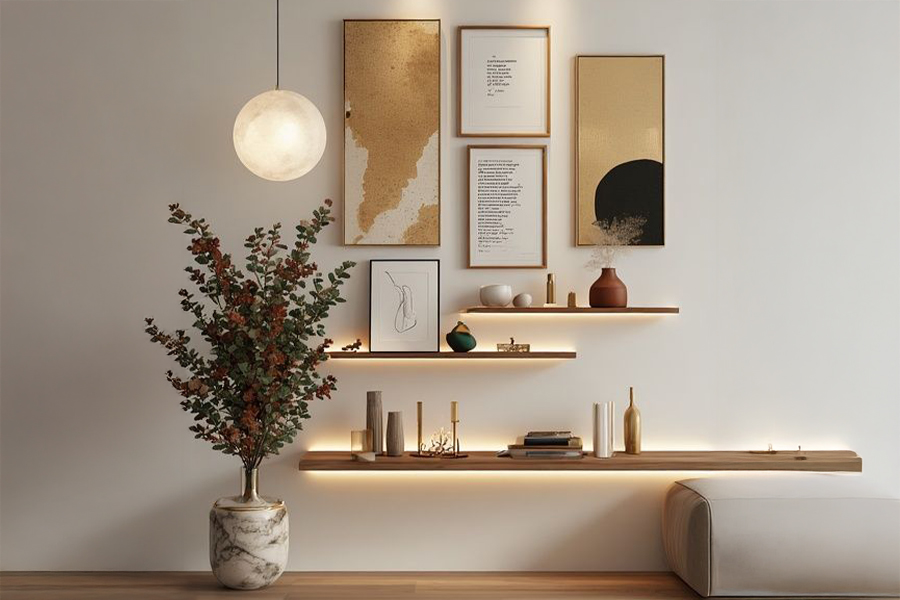
A picture ledge is a narrow shelf mounted on the wall frames leaning against it rather than hanging from it. This one change makes an enormous difference in how you interact with your art.
No holes in walls beyond the two for the ledge itself. No measuring, no levelling, no thenailisonecentimetreoff situations. When you want to add a frame, swap one out, or rearrange the whole composition you just do it. No tools. No planning. No commitment.
For renters, for people who change their minds about decor, for anyone building a collection incrementally over time, ledge display is significantly more practical than hanging individual frames. It also creates a layered, relaxed quality that mounted frames don't naturally produce. Frames overlap slightly, props can sit in front of them, small plants or objects can mix into the arrangement.
It's the most living display format, always slightly in progress, always easy to change.
The glass on a picture frame is not decorative; it protects the image and determines how well you can actually see it. It's worth getting right.
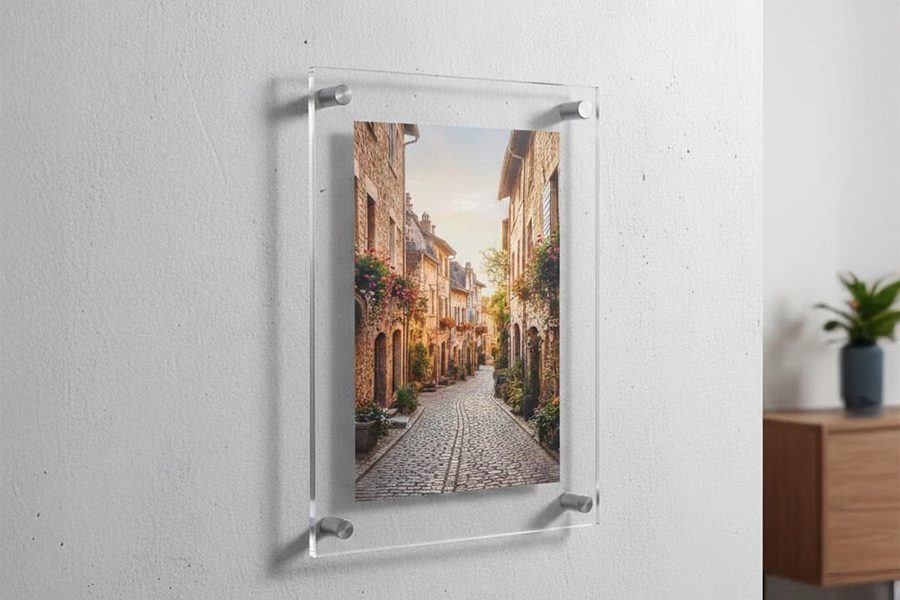
Standard clear glass is what comes with most frames by default. It's affordable and does the basic protective job keeps dust and fingers off the print. The limitation is light. Standard glass reflects ambient light sources windows, lamps, ceiling lights creating glare that sits over the image and makes it harder to see properly. In a welllit Indian living room with windows on multiple sides, this can be genuinely frustrating.
Fine for prints in lowlight spaces or anywhere glare isn't a factor. Not ideal for rooms with strong natural light or multiple light sources pointing at the wall.
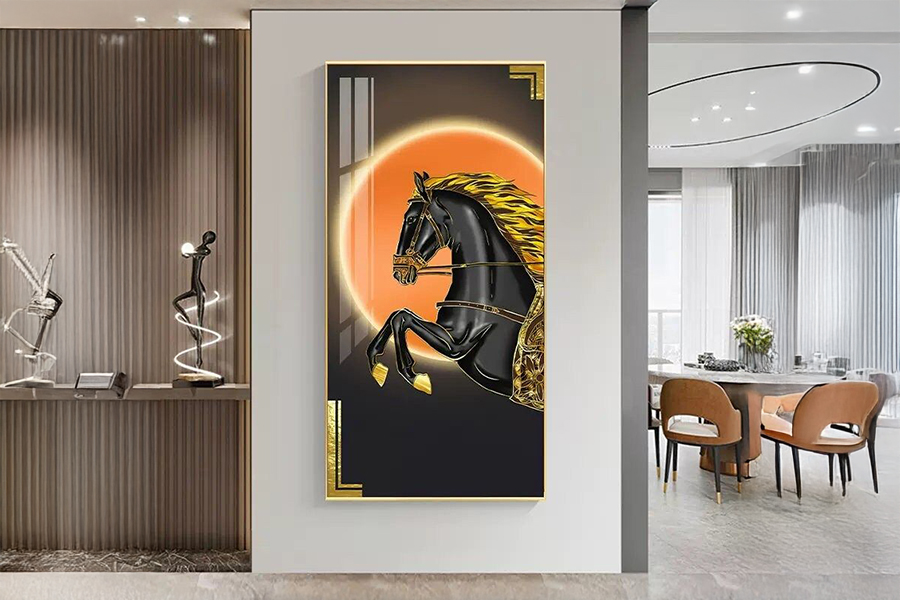
Antireflective glass sometimes labelled museum glass or nonglare glass has a coating that eliminates almost all reflection. Standing in front of a print behind antireflective glass, the glass essentially disappears. All you see is the image.
For photographs where colour accuracy and detail matter, and for rooms that get strong natural light through the day, this is the clear upgrade. It costs significantly more on larger frames but the difference in how the image reads in a real room is noticeable immediately.
If you've ever been frustrated by a print that looks washed out in certain lights, or walked around a frame trying to find the one angle without glare, antireflective glass solves that completely.
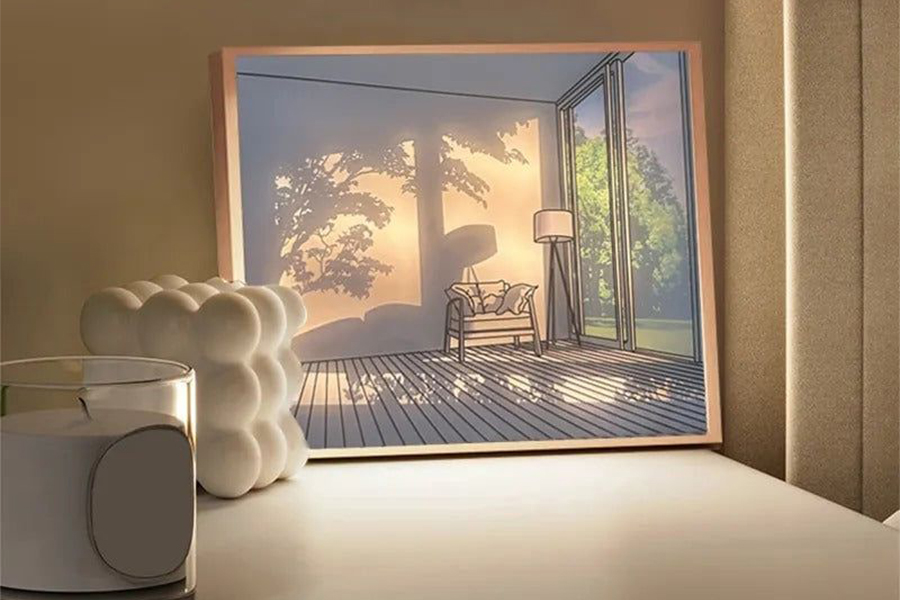
Acrylic is lighter than glass and doesn't shatter which makes it the practical choice in two specific situations: large frames where glass weight becomes a structural concern, and any room where breakage is a real risk (children's rooms, playrooms, areas with high foot traffic).
The tradeoff is surface quality over time. Acrylic scratches more easily than glass and can develop static that attracts dust. For large prints where these issues are manageable it's absolutely the right call. For smaller, displayquality frames where you want the best visual result glass is usually worth the extra care.
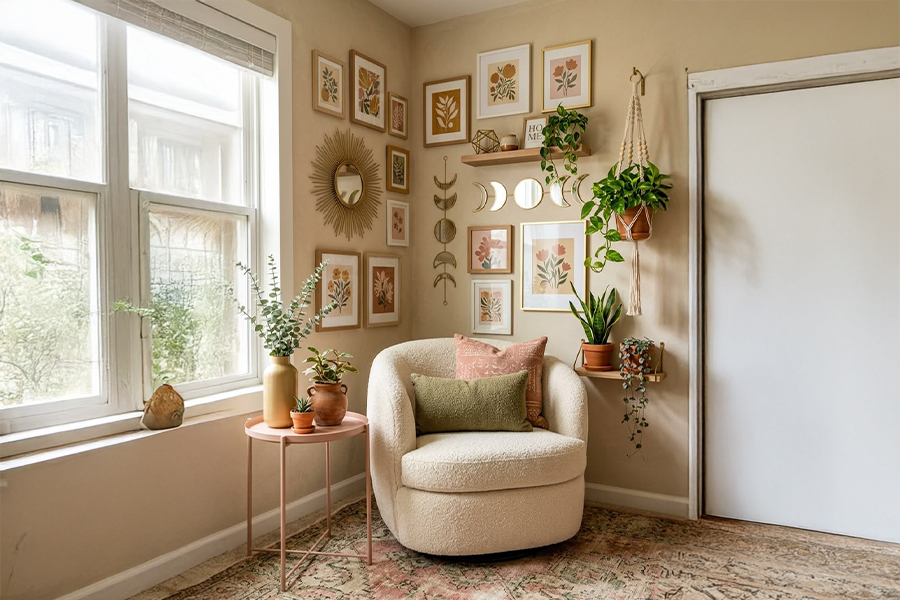
Walk into most Indian homes and you'll see the same two mistakes happening in opposite directions.
Small prints in oversized frames the image drowns in mat board and moulding, looking uncertain about whether it deserves to be on the wall at all. Large prints in frames too small for the wall they're on the image have presence but the frame looks like it gave up trying to contain it.
The correct relationship is between the frame and the image not between the frame and the wall. The frame should complement the image size, giving it appropriate breathing room without overwhelming or shrinking it.
A standard mat border of 2 to 3 inches around an image is usually right for most print sizes. Larger images sometimes benefit from a narrower mat because they already have presence. Smaller images a 4x6 photograph, a small botanical prints need a generous mat to give them visual dignity, not a tight frame that makes them look like a stamp.
Get this ratio right and the wall size takes care of itself. Get it wrong and no amount of repositioning will fix it.
The frame is not an afterthought. It is not something to figure out after the print is already bought and leaning against the wall waiting to be hung. It's half the decision.
Material first wood for warmth and versatility, metal for clean modern spaces, ornate for substantial traditional artwork, floating and shadow box for specific contemporary and dimensional needs. Display style next one strong statement, a curated gallery grouping, or a flexible ledge arrangement depending on how committed you want the wall to feel. Glass last antireflective if you care about seeing the image properly, acrylic if size or safety makes it practical.
Then check the sizing. Frame the image, not the wall. And hang it at eye level which in India, where most frames go up about six inches too high, means lower than your first instinct.
A well framed image on a wall doesn't just look good. It looks done. And done is the hardest thing to achieve in a room.
We will be back with the next blog soon; till then, stay tuned!
Read More :
Want to Hang Pictures Perfectly
Image Source: Wooden Street, Google, Pinterest
A There are different types of photo frames to choose from: Wooden frames, collage frames, digital frames, acrylic frames, and canvas prints
A Acrylic is shatter-resistant, while plastic is flexible. Acrylic frames are strong and unlikely to break, whereas glass is damaged easily.
A Most trending picture frames are made of eco-friendly materials such as reclaimed wood, recycled metals, and biodegradable plastics. Currently, minimalist frames are gaining popularity due to their clean look and use of neutral colors.
A The best photo frame material depends on your decor style. Wooden frames add warmth and beauty, metal frames offer a modern touch, and acrylic or glass frames provide a sleek and minimalist appeal while protecting your pictures.
Trending Products
Top Picks from EveryoneArticles you will love to read

Fix all your issues implementing these 8 decor ideas for small space living room.
Continue Reading
How to make your home a Dream Home? With picture perfect Interiors. To do this, dive into the pool of designs available online, deal with labour, buy raw materials, visit markets themselves, supervise… or simply choose Wooden Street. A home that feel
Continue Reading
When Mr. Ramanathan, along with his wife, decided to get the interior done for their apartment, they started scanning many online as well as offline furniture stores. His Indian-made solidwood furniture love brought him to WoodenStreet.com.
Continue Reading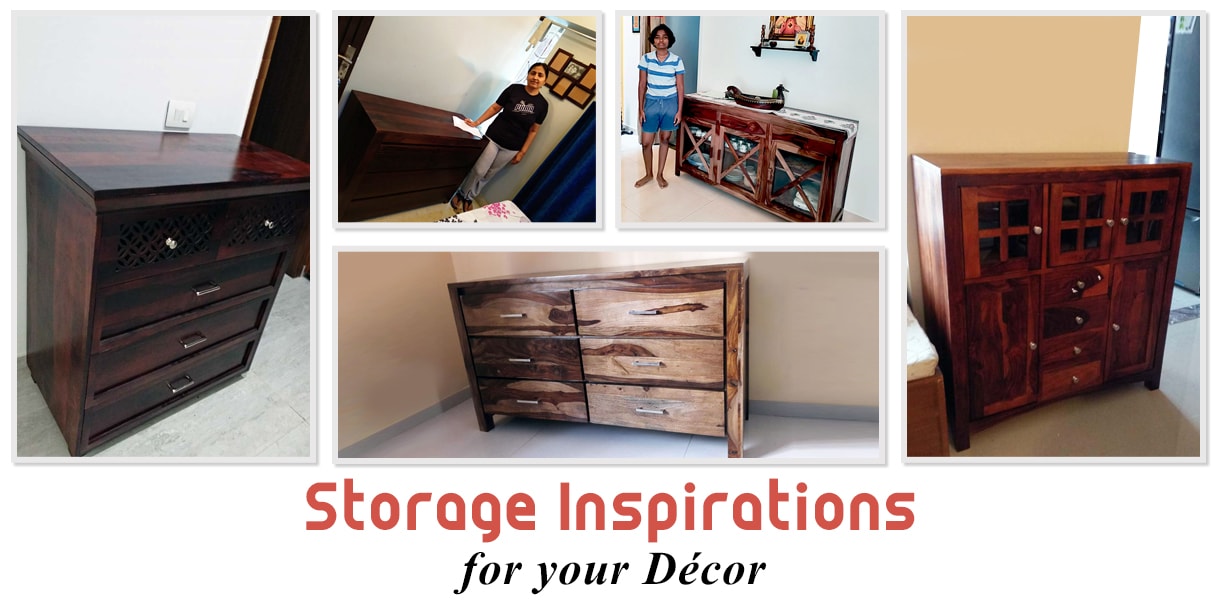
Wooden Street brings some stunning storage solutions in the form of sideboards and chest of drawers, so you can multiply your storage without investing in more space. See and get inspired by our ingenious clients who enhanced their storage with style
Continue Reading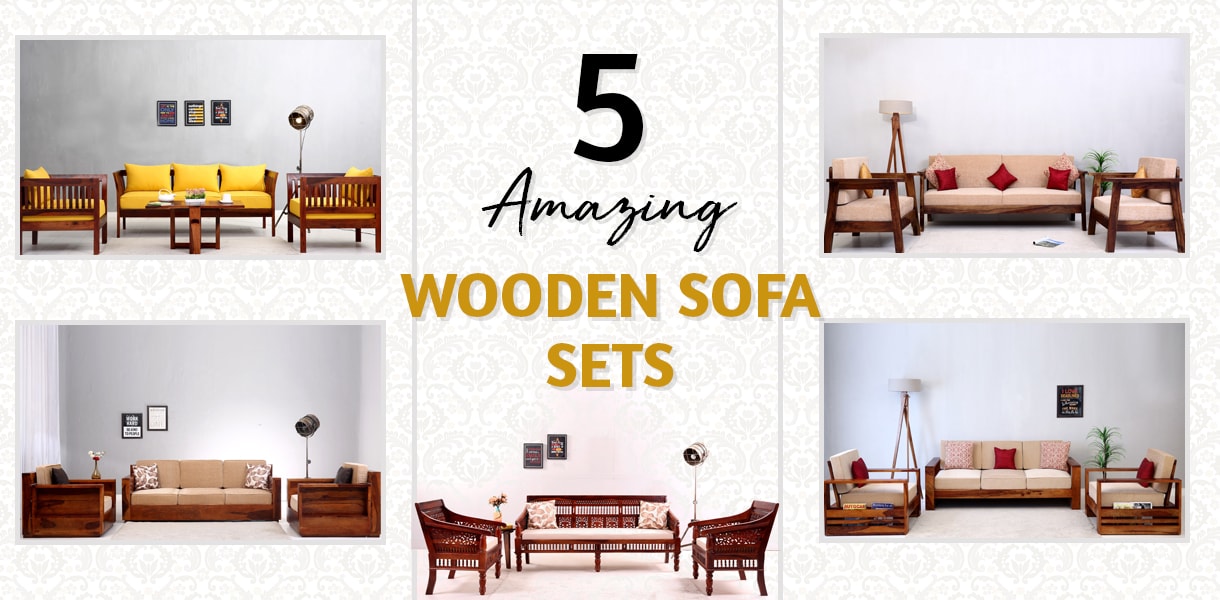
Today’s décor concept is a fusion of classic traditional and stylish contemporary furniture, making solid wood furniture a core component. Wooden Street brings a list of five amazing sofa sets that can accentuate the beauty of your living room décor.
Continue Reading