



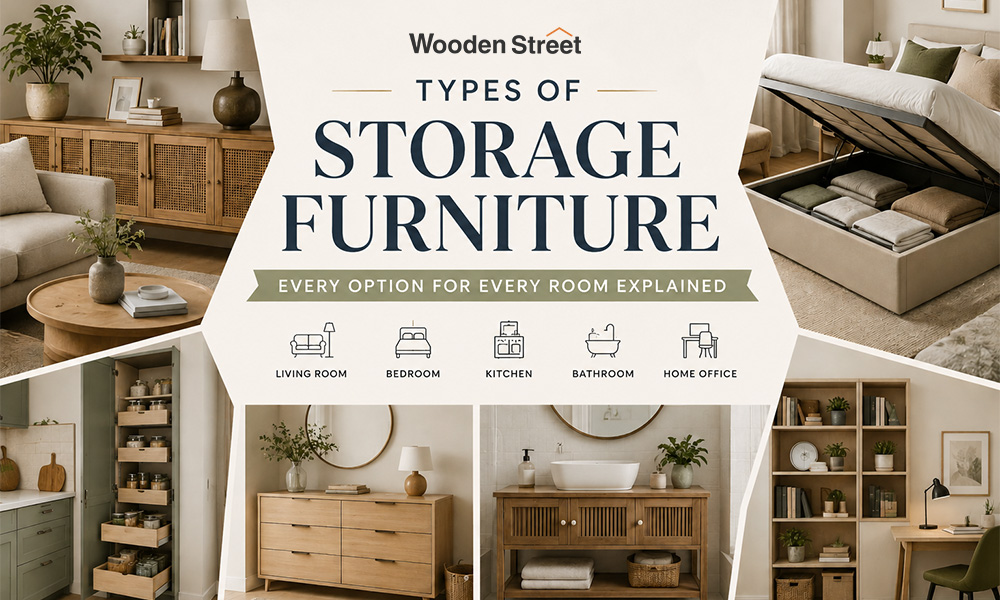
From cabinets and sideboards to storage beds and shelving units, understanding the different types of storage furniture can help maximize space and reduce clutter. This guide explores storage solutions for every room, highlighting their uses, benefits, and key considerations to help you choose the right furniture for your home.
You buy a new home. You unpack your things. And within three months - somehow - there is stuff everywhere.
The problem is almost never the amount of things you own. The real problem is that you don't have the right types of storage furniture for the right rooms. One wrong piece and your home looks chaotic. One right piece and suddenly everything has a place.
This guide breaks down every major storage furniture option, room by room. No fluff. No filler. Just what each piece actually does, who needs it, and whether it belongs in your home.
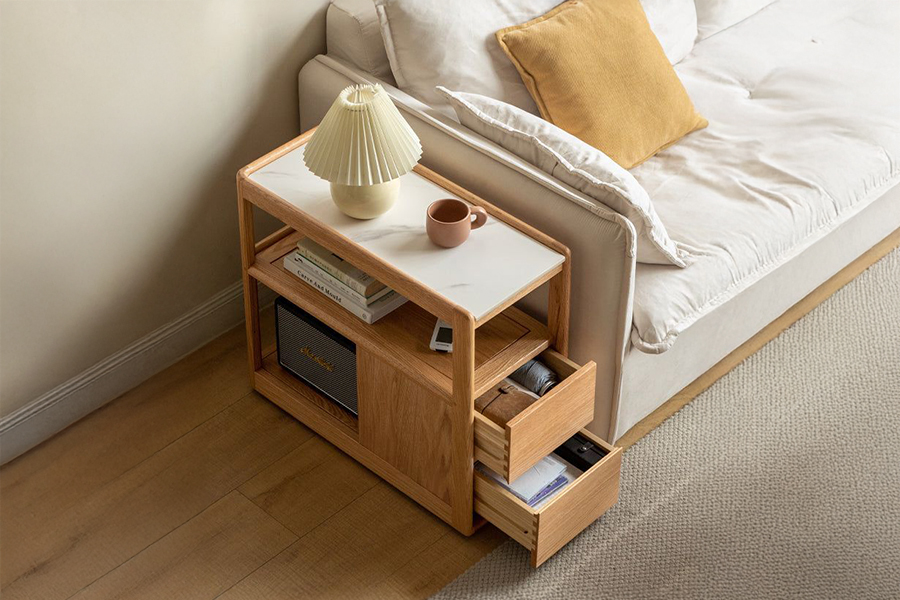
It splits into three jobs - concealing clutter, displaying what you own, and doing both simultaneously.
This sounds simple. But most people buy storage furniture without thinking about which job they actually need done.
A bookshelf and a wardrobe are both storage furniture. But one shows everything on it. The other hides everything inside it. Put the wrong one in the wrong room and you've made your problem worse, not better.
Before you buy anything, ask yourself one question: do I want to hide this, display this, or both?
That single question will save you a lot of regret - and a lot of money.
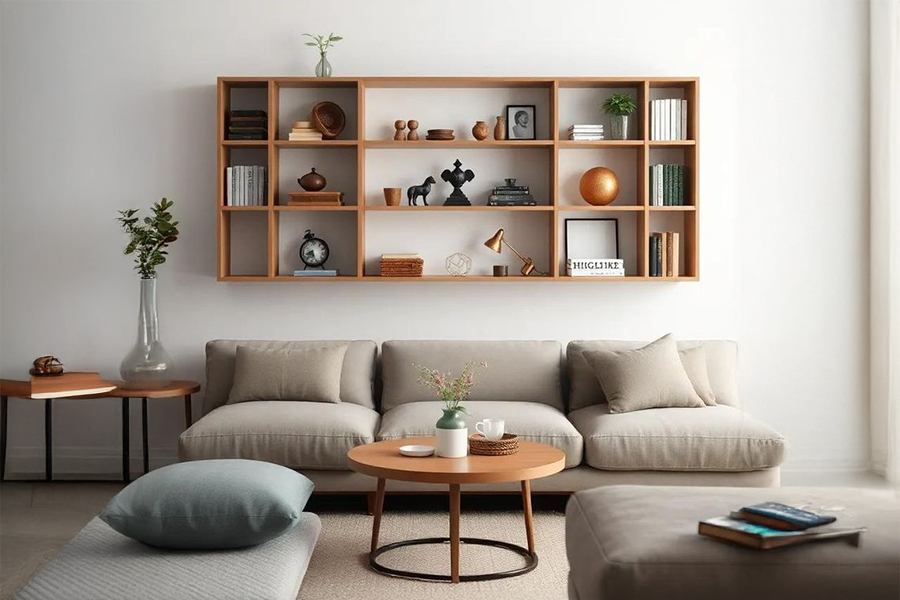
The living room is the most watched room in your home. It's where guests sit. Where your family spends time. Which is exactly why bad storage choices here hurt more than anywhere else.
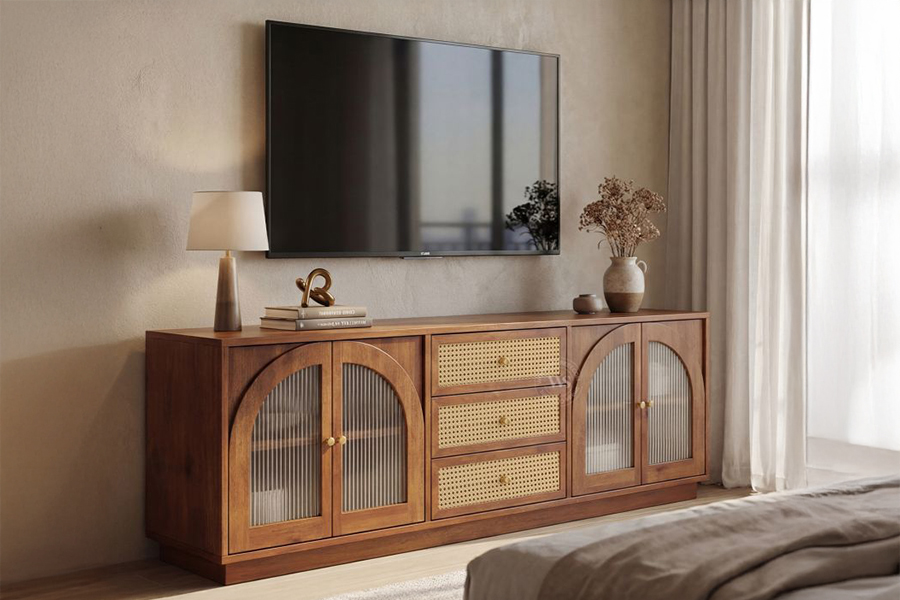
The TV unit is the most used storage piece in Indian living rooms - drawers and shelves built around the entertainment wall.
Every living room has one focal point: the television. The TV unit is built around that. And the smart ones come loaded with storage - drawers for remotes, cables, and miscellaneous junk; shelves for set-top boxes, gaming consoles, and the router you wish was invisible.
In India especially, the TV unit does a lot of heavy lifting. It holds the things you use daily but never want to see. A well-chosen TV unit with closed storage drawers can make even a medium-sized living room look surprisingly clean.
What to look for: at least two closed drawers, adjustable shelves, and a cable management provision. The piece that most people ignore until they're frustrated - and most grateful for once they have it.
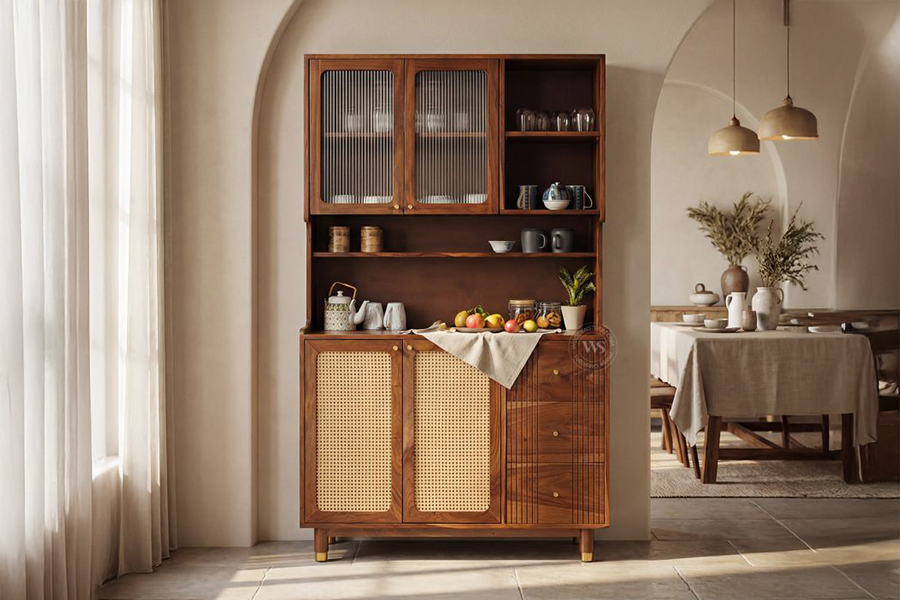
Glass-front storage that displays curated items while keeping them dust-free.
This is the show-off piece of the living room. The crockery unit or display cabinet is designed specifically for things you want people to see - good crockery, decorative items, trophies, or anything that deserves to be visible but protected.
The glass front keeps dust out while keeping the view in. The closed sides give it a finished, considered look.
One warning: this piece will expose exactly how curated your collection is. If you put mismatched things inside, it will look messier than an open shelf. But if you're intentional about what goes in - it can genuinely make a living room look expensive.
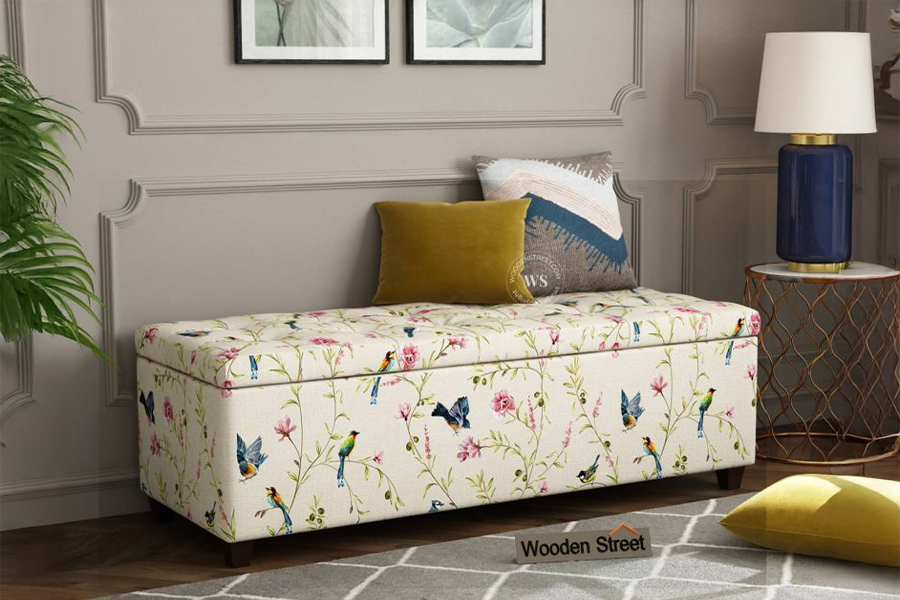
A surface, a seat, and a hidden compartment - three functions in one footprint.
If there's one piece of furniture that earns its space more than anything else in a small living room, it's the storage ottoman.
It's a coffee table. It's extra seating when guests come over. And it has a lid - under which you can hide blankets, cushion covers, kids' toys, or whatever the living room keeps collecting.
Three functions. One footprint. For smaller apartments where every square foot is negotiated, this is close to a cheat code. Look for one with a firm, flat top if you want to use it as a surface.
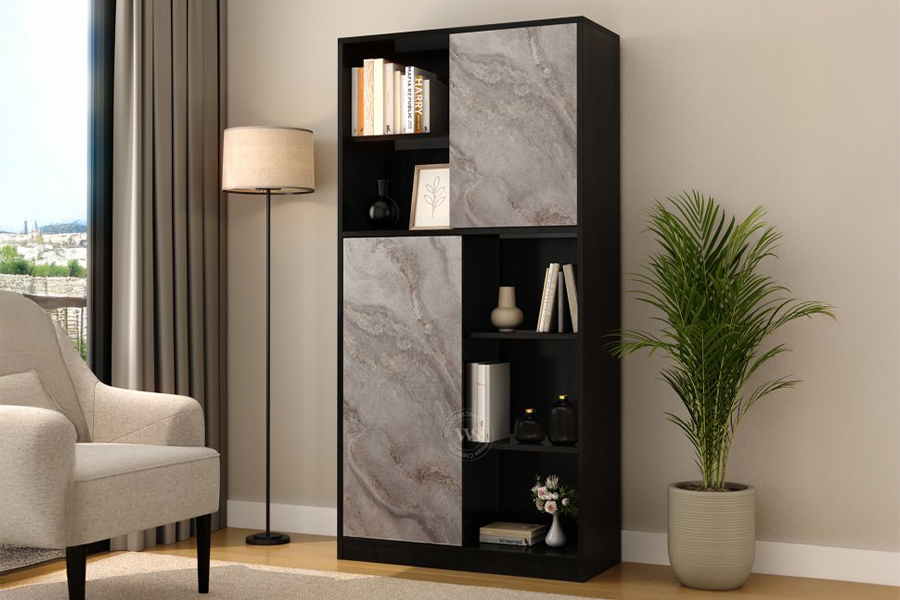
Open storage that makes organisation visible - works only when the collection is curated.
Let's be honest about bookshelves. They are not clutter storage. They are display storage. Everything on an open bookshelf is visible - which means a disorganised bookshelf makes the entire room look disorganised.
But a well-arranged bookshelf? It adds character, warmth, and personality to a room in a way almost nothing else does.
The rule with bookshelves is simple: only put things on it that you're okay with people seeing and judging. Books, obviously. A few plants. Some selective décor. Not the random stuff that doesn't have a home yet.
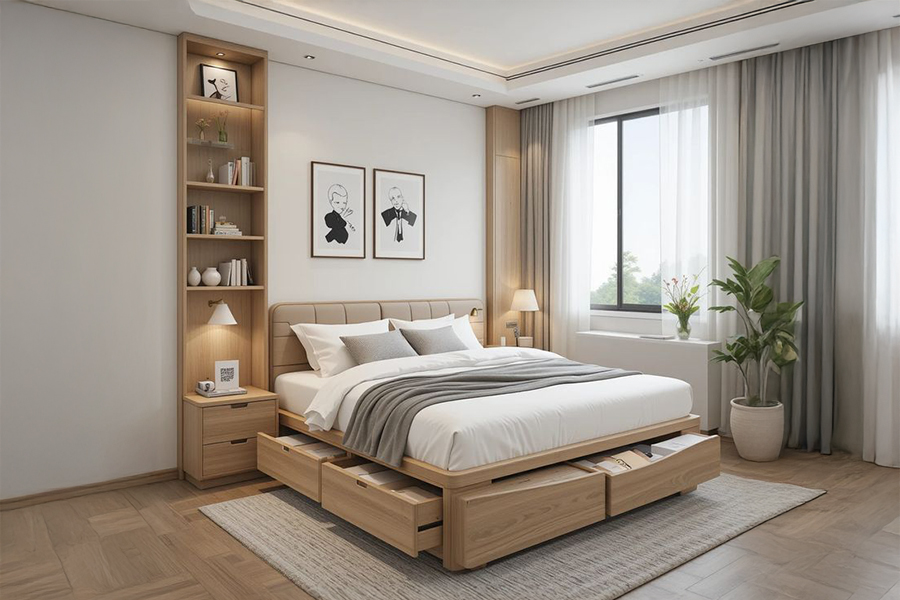
The bedroom is your private space. Which means the storage furniture here has a different job - not to impress, but to function. Quietly, efficiently, every single day.
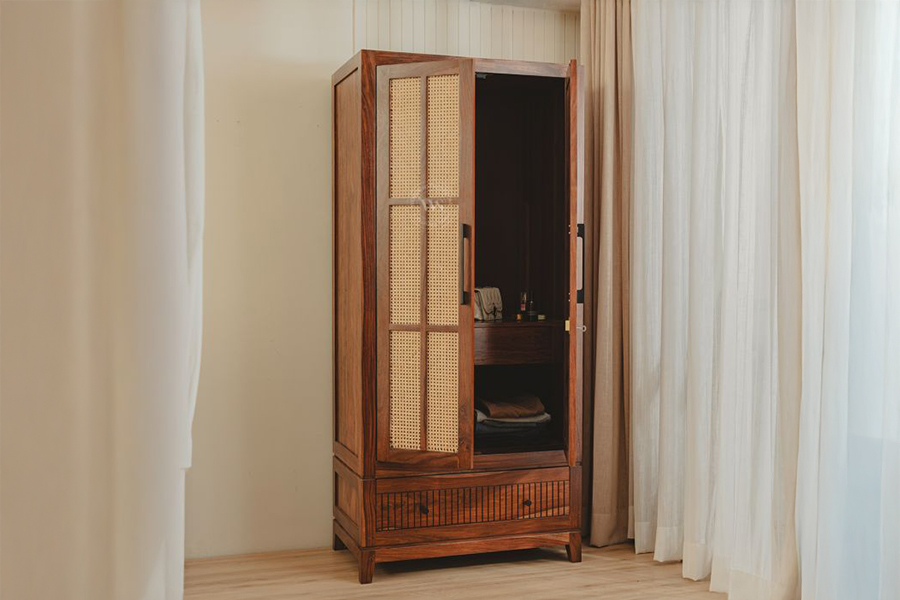
The primary clothing storage system - door type and internal layout matter more than external design.
The wardrobe is the centrepiece of bedroom storage. Everything else in the bedroom plays a supporting role to this one piece.
Most people spend too much time thinking about the outside of a wardrobe and not enough time thinking about the inside. A beautiful wardrobe with a poorly organised interior is just an expensive headache. Think about how you store things - do you hang more, or fold more? Do you need deep shelves for sarees or more short-hanging space for shirts?
Sliding doors work better in smaller bedrooms where a swing-door wardrobe would eat into floor space. Hinged doors give you full visibility of everything at once. That decision alone is worth thinking about before you buy.
Supplementary bedroom storage for folded items - works alongside a wardrobe, not instead of one.
A chest of drawers is not a wardrobe replacement. It is a wardrobe partner.
This is the piece that handles the overflow - folded clothes, innerwear, accessories, winter woolens. If your wardrobe is at capacity and you're pulling things out every morning just to find what you need, a chest of drawers will quietly solve a surprising amount of that frustration.
It also works as a surface - for a mirror, a few décor items, or a lamp. Keep it beside the wardrobe or across the room. It will earn its place.
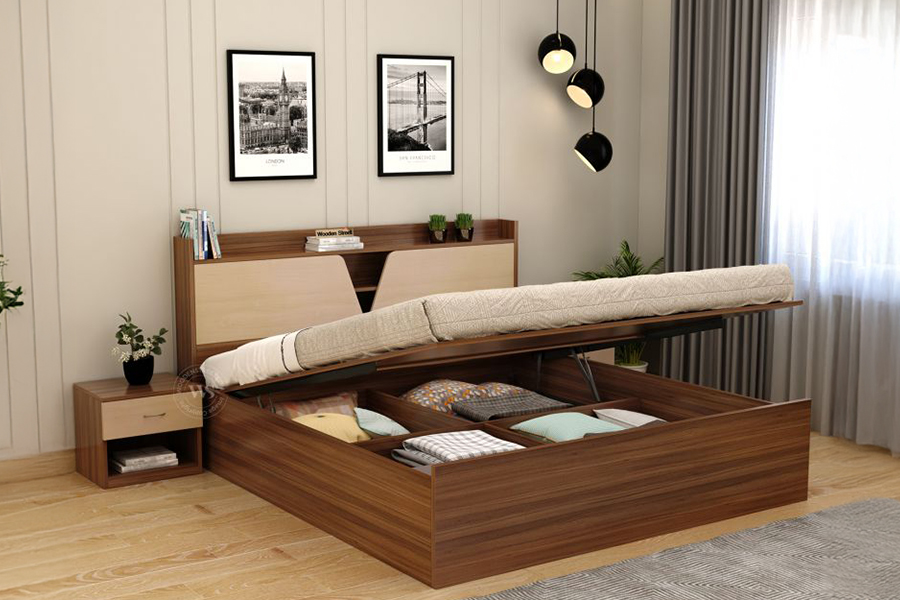
Hydraulic or drawer base - recovers the largest unused storage volume in any bedroom.
Here is the most underused storage space in most Indian homes: underneath the bed.
A standard bed with a storage base - either hydraulic lift or pull-out drawers - converts that dead space into what is often the largest hidden storage volume in the entire bedroom. Seasonal clothes, extra bedding, suitcases, anything bulky that doesn't need daily access.
Hydraulic beds are easier to use because you lift the mattress as one piece. Drawer-base beds are more accessible but harder to manage if the bed is pushed against a wall.
If you're buying a new bed and storage is an issue - this decision is a no-brainer.
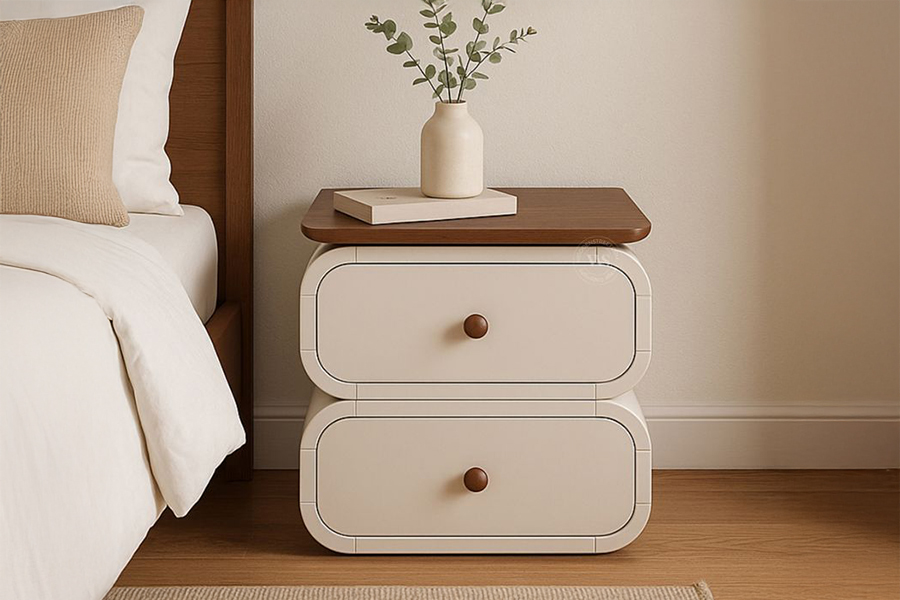
Replaces an open nightstand and hides daily-use items within arm's reach.
The open nightstand with a shelf is a trap. Everything you put on that shelf becomes visible clutter - books, chargers, glasses cases, medicines, water bottles.
A bedside table with drawers solves this immediately. Same footprint. But now all of that goes inside. The top surface is clean. The bedroom looks 40% tidier without you changing a single habit.
It's a small upgrade with a disproportionate impact on how the bedroom feels.
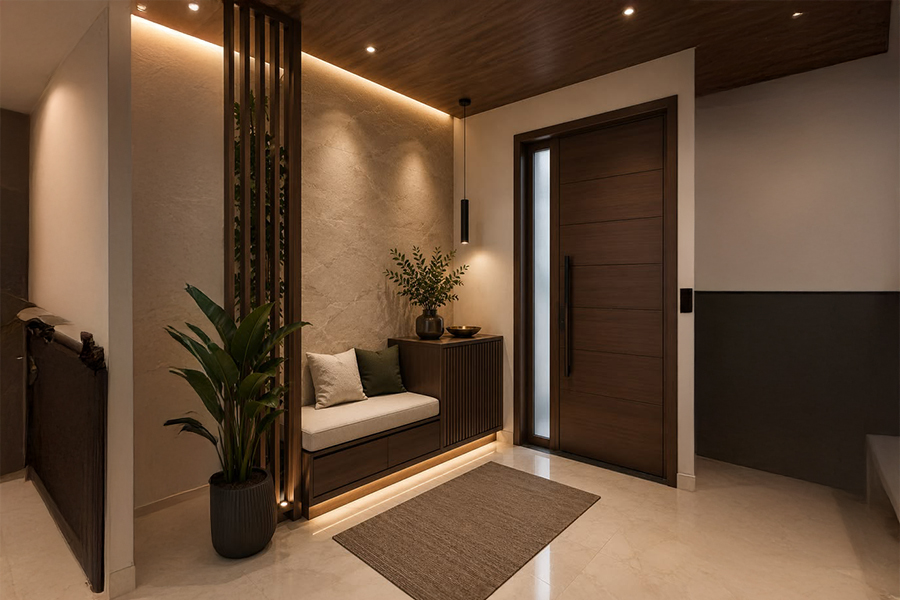
The entryway is the first thing people see. And in most Indian homes, it's the most neglected storage zone. Get this right and your entire home feels more put-together the moment anyone walks in.
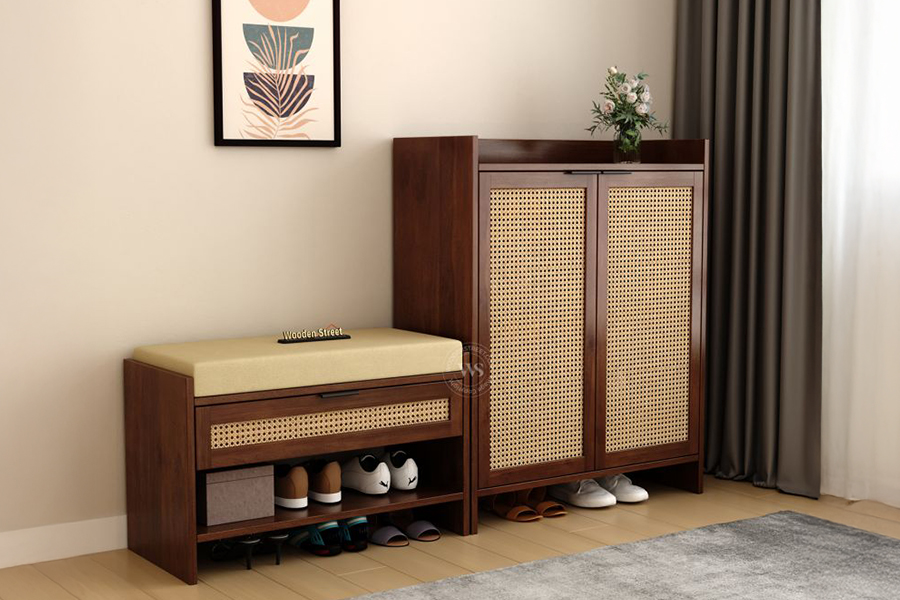
Open rack for daily pairs; closed cabinet for a clean entryway aesthetic.
Shoes at the entrance are unavoidable. How they look is a choice.
An open shoe rack is practical and cheap - but every pair of shoes is visible, which means any mess is on full display. For homes where footwear changes frequently and cleanliness is maintained, this works fine.
A shoe cabinet with closed doors does something an open rack cannot: it makes the entryway look done. Nothing visible. Nothing messy. Just a clean surface.
If aesthetics matter to you and you don't want to be disciplined about arrangement every single day - go with the closed cabinet.
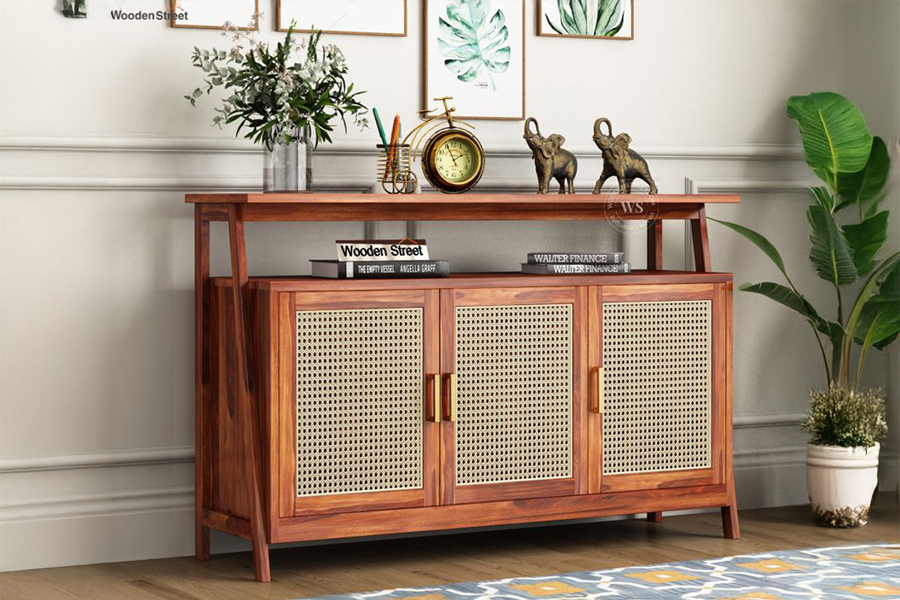
Narrow profile, surface on top, drawers or shelves below - the most space-efficient entryway piece.
The console table is the entryway's most versatile piece. Its narrow profile means it doesn't eat into floor space. The top surface is for keys, a small plant, or a mirror. The drawers or lower shelf handle everything else - documents, masks, sunglasses, things you grab before leaving.
In tight entryways, this one piece can replace a whole wall of smaller organising solutions. If you're dealing with a narrow foyer and a lot of entry-exit chaos, start here.
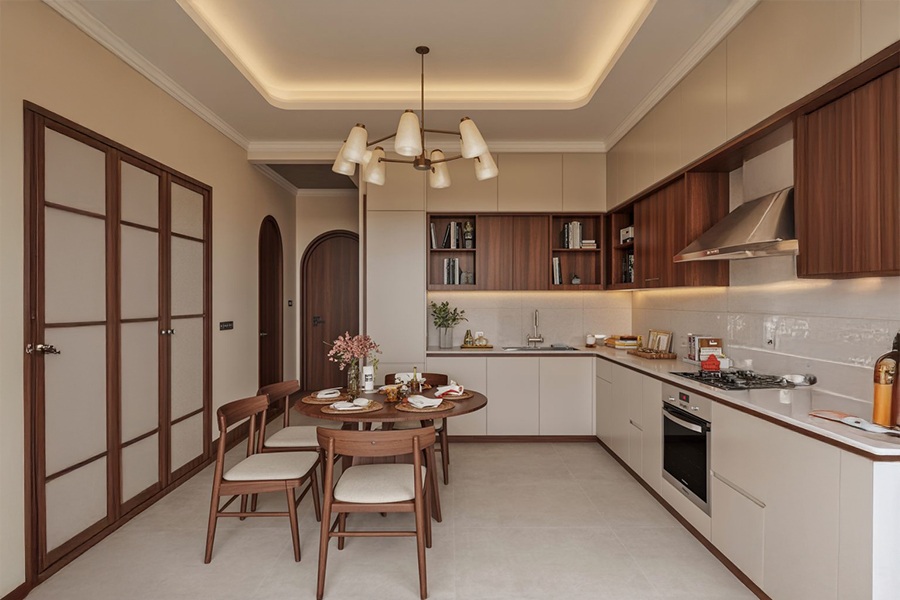
Kitchen storage is often built-in - modular kitchen units, overhead cabinets, and so on.
But there are two types of freestanding storage furniture that fill the gaps beautifully.
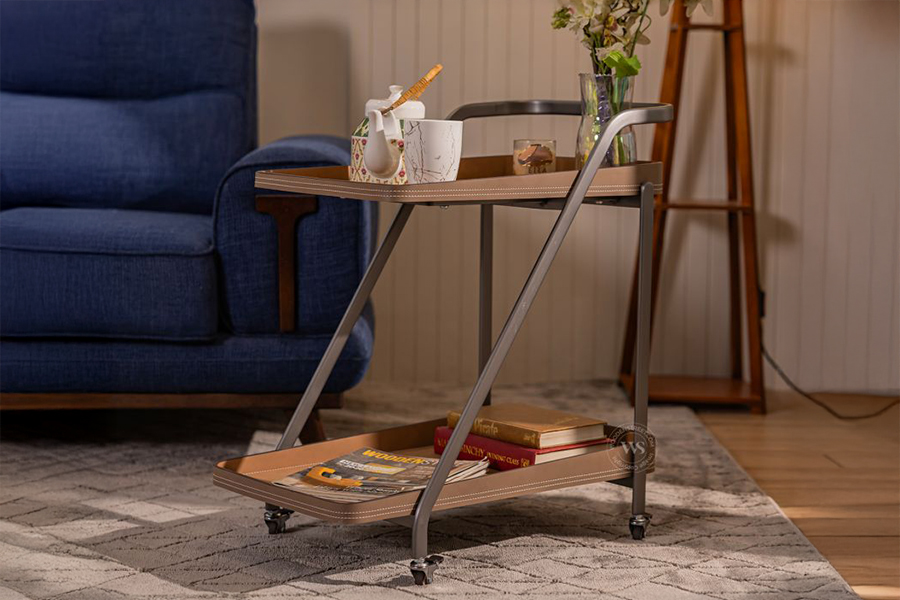
Movable prep surface and storage combined - the most flexible kitchen addition.
The kitchen trolley is the most underrated piece of kitchen furniture in Indian homes. It's a prep counter. It has shelves or drawers for utensils, spices, and small appliances. And it moves - which means it goes where you need it, then tucks away when you don't.
For kitchens that feel cramped or short on counter space, this is often the fix that doesn't require renovation. It costs a fraction of a kitchen upgrade and solves the problem just as well on most days.
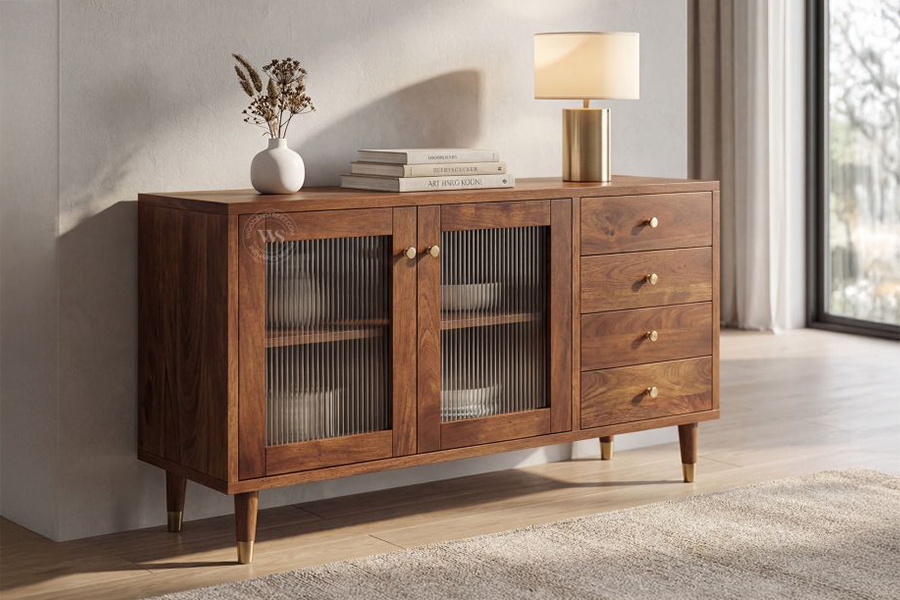
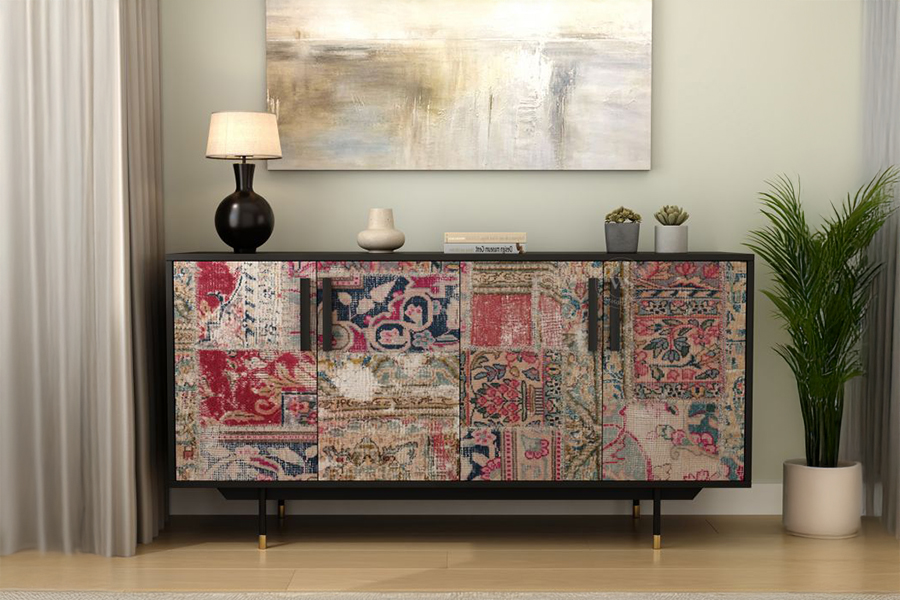
Dining room storage for linen, cutlery, and serving ware - doubles as a display surface.
The sideboard (also called a buffet) is the unsung hero of the dining room. It stores everything the dining table needs but shouldn't hold - extra crockery, table linen, cutlery, serving bowls. During a dinner, it becomes the surface from which food is served. On regular days, it's a surface for a decorative piece or a centrepiece.
It grounds the dining room. It adds storage without adding visual weight. And compared to a crockery cabinet in the living room, it keeps things more accessible when you need them during a meal.
Closed storage hides clutter; open storage displays it - choose based on how disciplined your organisation habits actually are.
This is the rule nobody tells you.
Open shelves look beautiful in magazine photos. In real homes, they look beautiful for about two weeks. After that, they collect random things that don't belong - because every open surface, shelf or not, becomes a landing zone for stuff.
Closed storage is more forgiving. It hides the mess behind a door or a drawer. It asks less of you. And in a busy household, that matters.
The honest question to ask yourself before choosing between open and closed storage: how often am I actually willing to reorganise this?
Answer that honestly. Then buy accordingly.
Storage furniture is not about buying more furniture - it's about creating a home where everything has a designated place. The right storage solution can make a compact apartment feel spacious, reduce daily clutter, and improve how every room functions.
Whether it's a storage bed that unlocks unused space, a wardrobe designed around your lifestyle, a sideboard that keeps dining essentials organised, or a shoe cabinet that transforms a chaotic entryway, each piece serves a specific purpose. The key is choosing storage furniture based on what you need to store, how often you access it, and whether you prefer to display or conceal it.
Before making a purchase, think beyond the design and focus on functionality, capacity, and placement. A well-planned combination of storage furniture can help you maximise space, maintain organisation, and create a home that feels cleaner, calmer, and easier to live in every day.
We will be back with the next blog soon. Till then, stay tuned!
Image Source: Pinterest, Google, and Wooden Street
A A bed with storage base is the single most impactful choice - it recovers large hidden volume without occupying additional floor space.
A Both are essentially the same - low, long storage cabinets for dining rooms.
A A hydraulic storage bed paired with a slim bedside table with drawers maximises storage while keeping the floor area clear.
Trending Products
Top Picks from EveryoneArticles you will love to read
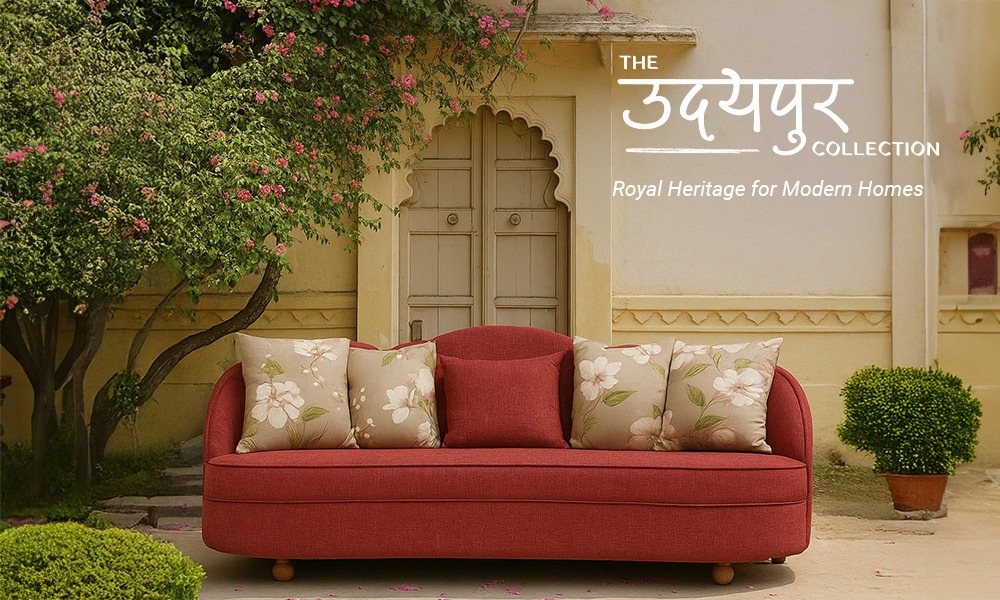
The Udaipur Collection by Wooden Street redefines luxury furniture with a royal heritage touch. Featuring heritage furniture and exclusive furniture pieces, this royal collection blends Rajasthan’s artistry with modern furniture convenience. Perfect for transforming living rooms, dining spaces, and bedrooms into elegant retreats.
Continue Reading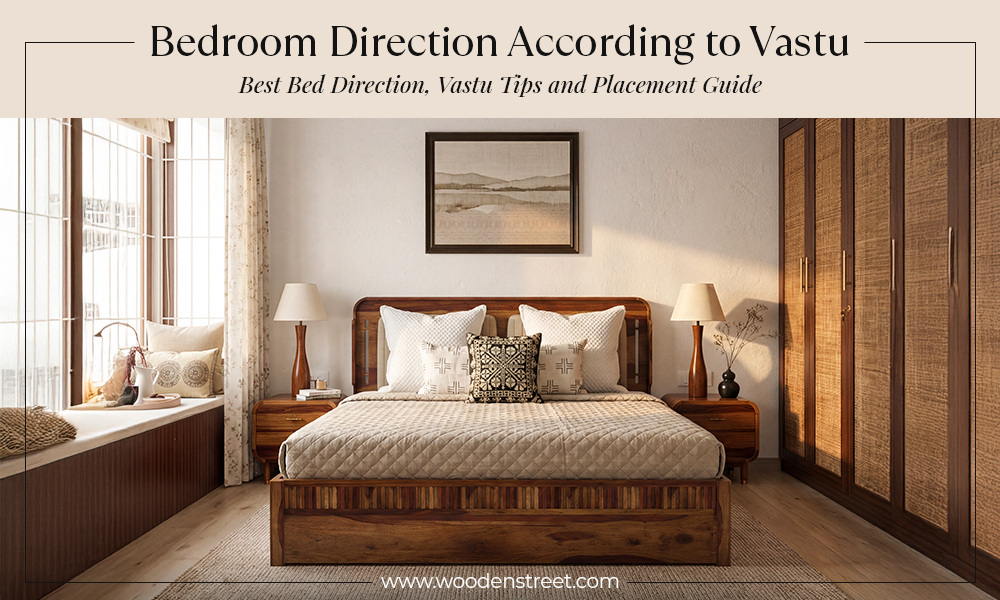
Explore the ideal bedroom direction according to Vastu with practical insights and scientific reasoning. Learn the best bed placement according to Vastu, ideal sleep directions, and smart bedroom design tips to create a peaceful, balanced, and energy-aligned living space.
Continue Reading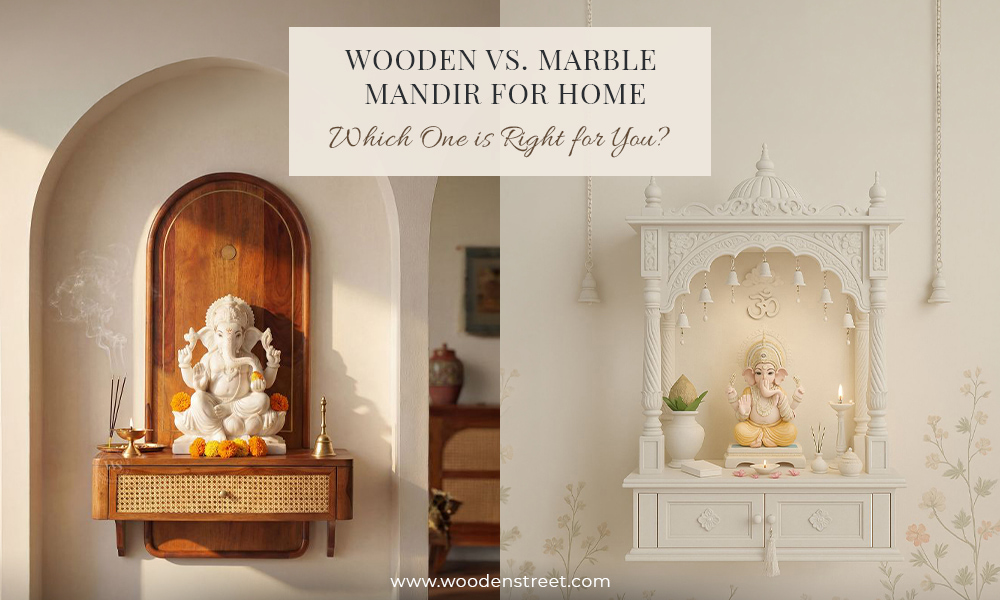
Choosing between a wooden and marble mandir depends on your budget, style, and maintenance needs. From elegant marble designs to durable Sagwan mandir options, this guide helps you understand the pros and cons of each to find the perfect fit for your home.
Continue Reading
Discover small garden ideas on a budget for balcony and terrace. Get layout tips, plant ideas, furniture, and lighting solutions for compact spaces
Continue Reading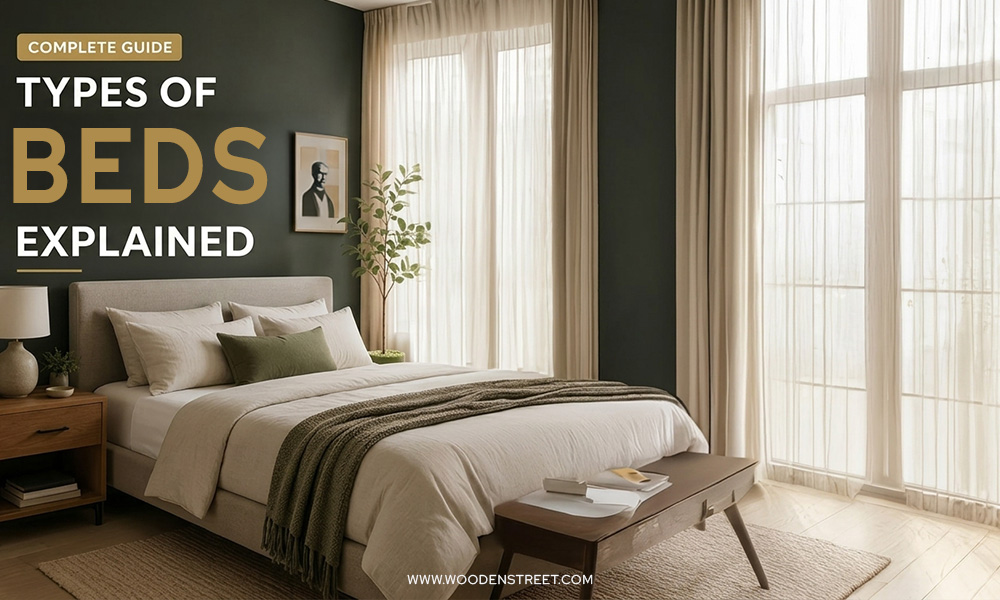
Choosing the right bed involves more than just size. This guide explores all types of beds, including storage, platform, canopy, bunk, and upholstered designs. Learn about different types of beds, varieties of bed styles, and the names of beds that best suit your room layout, lifestyle, and storage needs.
Continue Reading


