



Discover the real meaning behind 7 horse vastu beliefs, including ideal 7 horse painting vastu direction, placement rules, and 7 horse painting with sunrise benefits. This guide explains seven horses vastu symbolism, running horse vastu tips, and common mistakes people make while placing lucky seven horses painting in home interiors
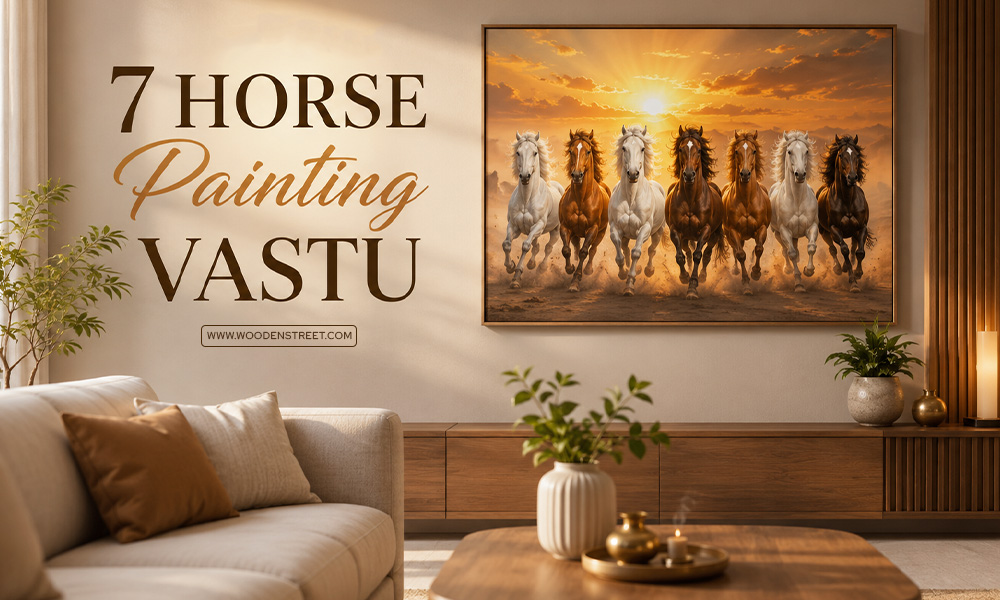
You've probably seen it in every second Indian home that painting of seven horses galloping together, full speed, manes flying. Some homes swear by it. Others put it up because a relative told them to and left it at that.
But here's the thing most people placing a 7 horse painting vastu piece in their home have no idea why it's 7 horses specifically. Not 6. Not 8. Seven. And that "why" is actually the whole point.
Let's get into what most blogs won't tell you.
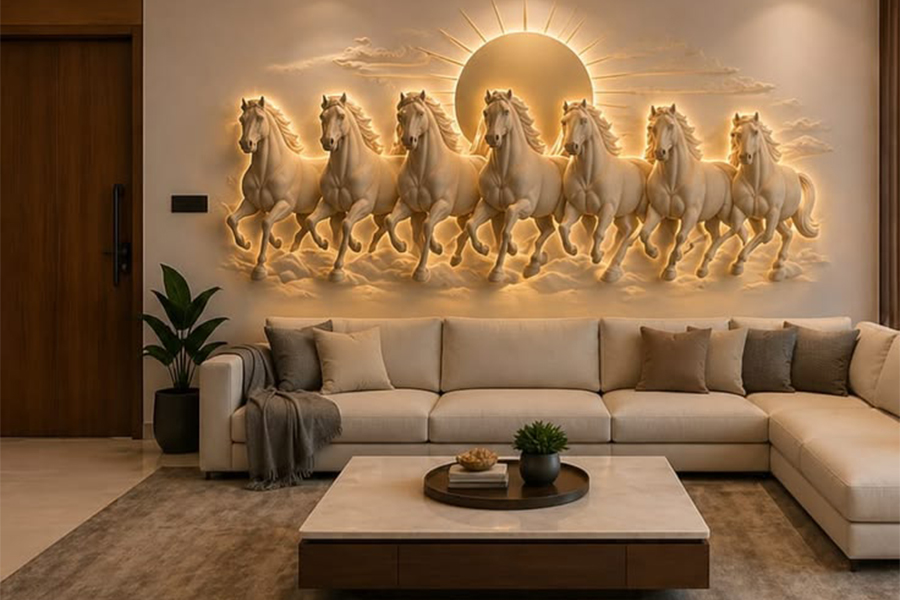
This isn't random numerology. It comes directly from Hindu cosmology.
Surya Dev the Sun God rides a chariot pulled by seven horses. Each horse has a Sanskrit name: Aruṇa (who leads), followed by Ārohana, Jaya, Vijaya, Prabhava, Prabhu, and Śambhu. Each one represents a different quality of solar energy. And together, they represent the seven colours of visible light (VIBGYOR) and the seven days of the week.
This is why the 7 horse vastu painting isn't just decorative. It's considered an active energy piece believed to invoke Surya's qualities in your home: vitality, clarity, authority, and forward movement. That's a very different thing from putting up a nice picture of horses because they look powerful.
No other number carries this mythological weight. Six horses? Incomplete chariot. Eight? Doesn't exist in this tradition. Seven is the number, and the reason is specific.
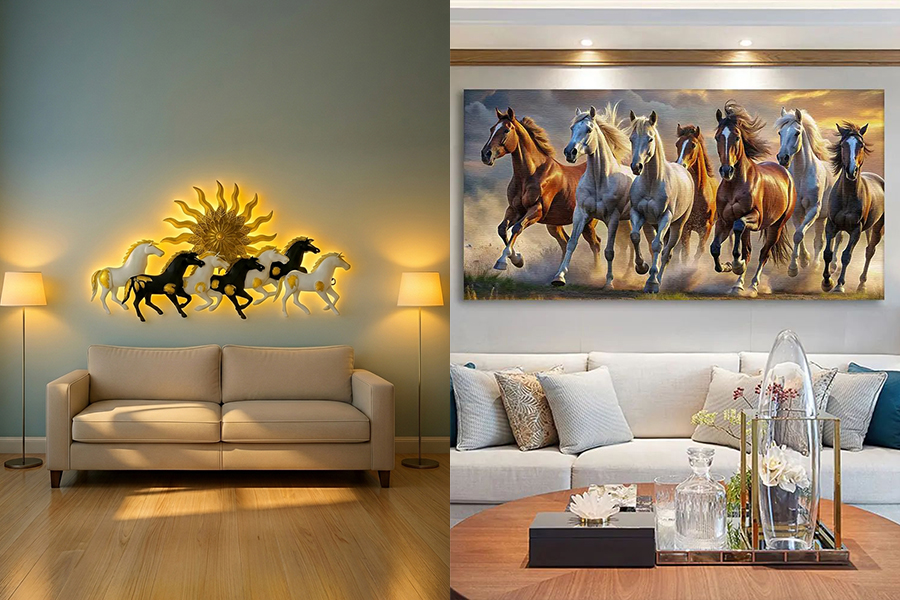
This is probably the most searched version of this topic and almost nobody answers it properly.
Here's the honest answer: traditional Vastu texts don't specify the medium. The symbolism, the direction, and the quality of the image are what matter not whether it's a printed canvas or a vastu 7 horse wallpaper on your wall.
That said, each format has real practical differences worth knowing.
The one rule that applies regardless of medium and this is non negotiable in Vastu: the image must be complete, undamaged, and clear. A peeling wallpaper, a faded print, a torn corner in Vastu terms, that's considered worse than having no painting at all. If your current 7 horse painting is looking worn, replace it. Don't leave it up out of habit.
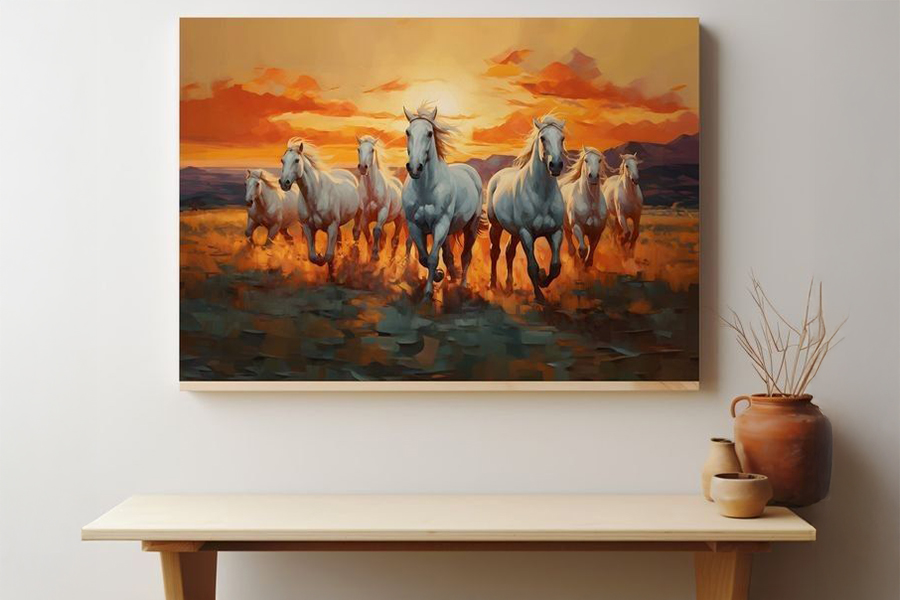
This is where most people go wrong they hang the painting and never think about the wall. The seven horses painting direction in your home is not a small detail. It changes what the painting is supposed to do for you.
South is governed by Yama, the deity of dharma and justice. Placing seven running horses here is believed to build reputation, authority, and recognition. This is the placement for professionals, business owners, and anyone working toward a position of public standing or career advancement.
If someone told you to put a 7 horse painting on the south wall without explaining why, this is why.
East is where the sun rises. Placing your 7 horses painting here aligns the painting's solar origins with its directional source they reinforce each other. This placement is considered especially good for new beginnings, health, and incoming opportunities. Younger households or families in a growth phase tend to benefit most here.
North is governed by Kubera, the deity of wealth. The seven horses as per vastu placed here is specifically linked to financial prosperity and stability. If financial growth is your priority over recognition, north is your wall.
Here's the practical question nobody answers: what do you do when the south wall has a door, a window, or a TV unit?
First alternative: the east wall. The solar connection is strong enough that east works as a very close second.
If both south and east are occupied, the key principle shifts the direction the horses face matters more than the wall they hang on. The horses should always face inward into the room. They should never face outward toward a road, a gate, or an exit.
Regardless of which wall you choose, avoid: directly above a sofa where people rest their heads, directly opposite a bathroom door, and any wall that opens externally toward a gate or street.
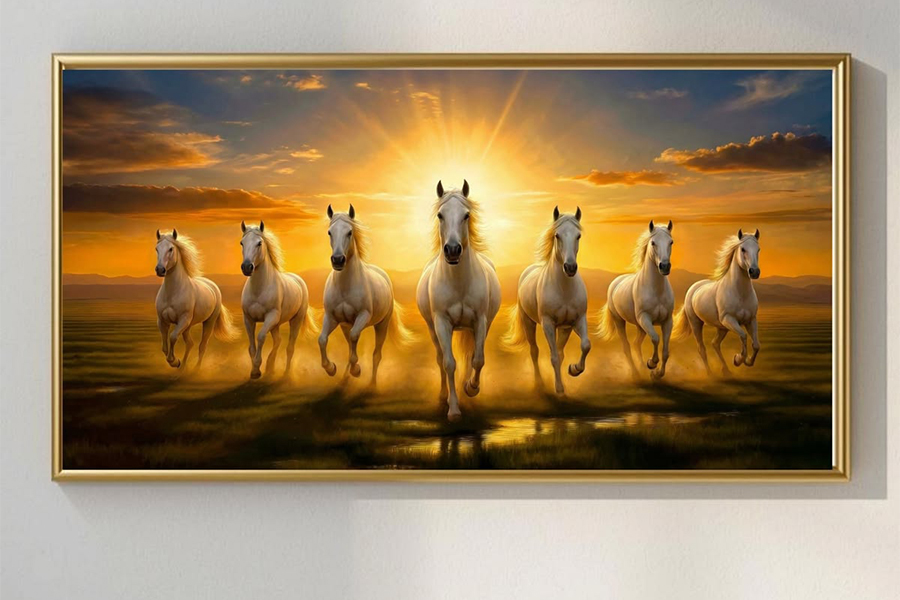
The 7 horse painting with sunrise benefits is one of the most searched topics in this whole subject and it gets a single throwaway sentence on most pages. Let's actually explain it.
A sunrise background combines two of the most powerful solar symbols in Hindu cosmology at once: Surya's chariot and the moment of solar ascent. That combination is considered especially potent for specific life situations.
The sunrise represents beginning, not peak. This matters. A midday sun background represents power at its height. A sunrise background represents power building which makes it specifically beneficial for new ventures, new homes, phases of rebuilding, and fresh starts. If you're starting a business, moving into a new home, or going through a period of change, the sunrise variation is the more meaningful choice.
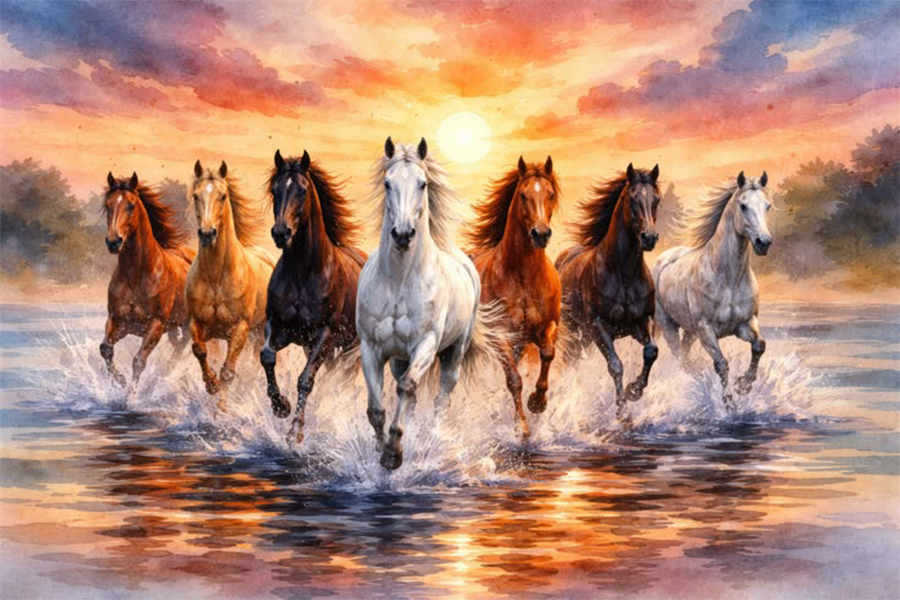
All 7 running horses in the painting must be in full gallop hooves off the ground. That's non negotiable. Hooves in the air means active forward movement. Trotting or walking horses aren't inauspicious, but they're significantly less energising the symbolism is dulled.
Rearing horses (standing on hind legs, aggressive posture) are considered unsuitable for home placement. Avoid them regardless of direction.
The background of your lucky seven horses painting isn't just an aesthetic choice it interacts with the directional energy of the wall.
The key principle: the background colour should complement the wall's directional energy. A red background painting on a north (Kubera) wall creates conflicting energies. Match the colour to the direction and the direction to what you want.
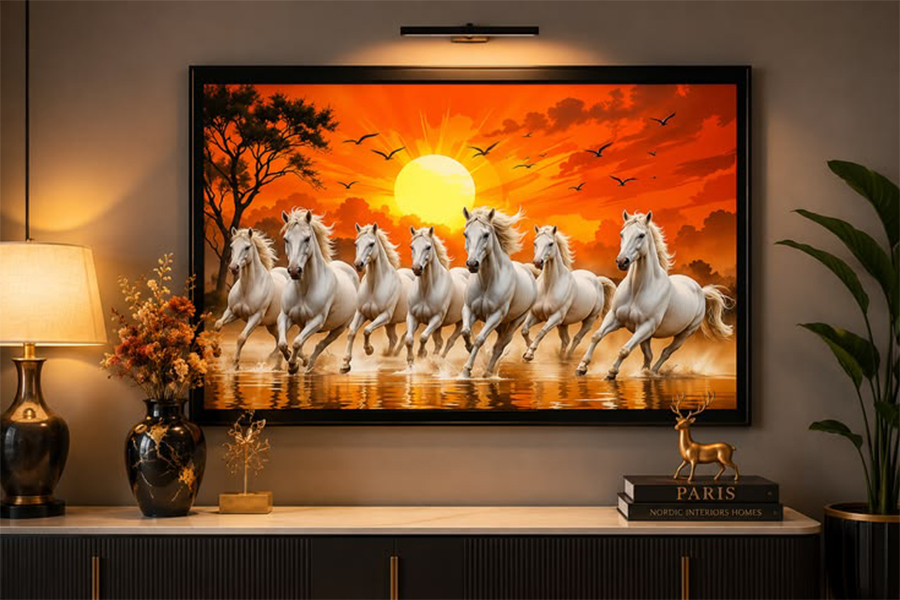
A 7 horse painting placed correctly is genuinely one of the most intentional things you can put in a home. Placed carelessly, it's just a picture. The difference is knowing the why behind every single decision the wall, the direction, the background, the height, the light.
Now you know.
We will be back with the next blog soon. Till then, stay tuned!
Read More -
How to Paint Wood Furniture at Home: A Beginner's Guide to Chalk Paint and More
Image Source: Pinterest, Google, and Wooden Street
A The horses should always face inward into the room. The south wall is the most recommended for placement, followed by east and north.
A Yes - traditional Vastu doesn't specify medium. What matters is that the image is complete, undamaged, and clear
A A sunrise background combines solar and beginning energy - it's specifically beneficial for new ventures, new homes, and phases of rebuilding or fresh starts
A No. Horses carry active, kinetic energy that conflicts with the rest energy a bedroom needs.
A The painting should cover 60–75% of the wall width it hangs on. Centre it at 57–60 inches from the floor.
A Depends on the wall. Golden/sunrise for east, red for south, blue for north or east, silver for northwest.
A The seven colours of visible light, the seven days of the week, and seven distinct qualities of solar energy - each named and each purposeful.
Trending Products
Top Picks from EveryoneArticles you will love to read
The placement of your almirah plays a bigger role in your bedroom than you might expect. According to Vastu, the right direction can make your space feel more balanced, organised, and comfortable. This blog walks through the best directions for wardrobe placement, common mistakes to avoid, and simple, practical tips you can apply, whether you’re setting up a new room or adjusting an existing one while understanding wardrobe direction as per vastu and overall bedroom vastu.
Continue Reading
Explore the complete history of Indian furniture design: from Mughal takhts and colonial planter’s chairs to modern sheesham and mango wood furniture in Indian homes today.
Continue Reading
Discover complete Vastu rules for mandir placement in home setups. From northeast direction guidelines to bedroom, kitchen, and living room temple placement tips, this guide covers everything
Continue Reading
Discover timeless and modern arch design for home interiors that improve flow, style, and functionality. From hall small arch design ideas to kitchen arch design and living room new arch design inspiration, this guide explores practical ways to use arches beautifully in every part of your house design arch layout.
Continue Reading


