




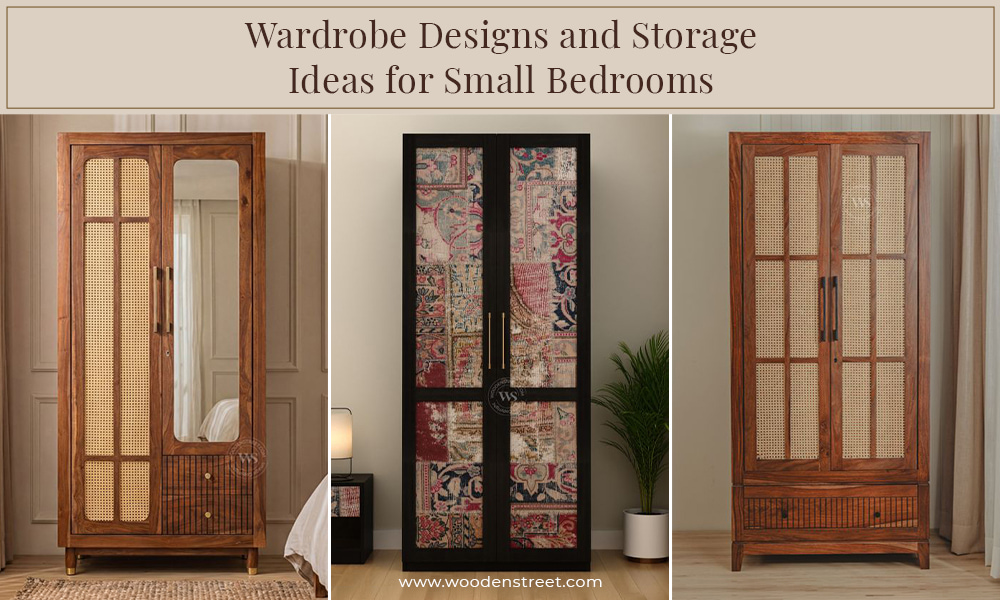
Explore smart wardrobe designs for small bedrooms with stylish layouts and clever storage solutions to maximise every inch.
Small bedrooms get blamed for a lot of things that aren't really their fault.
"There's just no space." "I can't fit everything." "The room always looks messy no matter what I do." Sound familiar? Most people who say these things have a bedroom that's perfectly workable. What they don't have is a plan that actually uses it well.
A small bedroom doesn't have a storage problem. It has a storage planning problem. And those two things are very different.
One means you're stuck. The other means you have options you haven't tried yet.
This guide is about those options. Specifically, wardrobe designs for small bedrooms, how to think about door types and wardrobe height, how to configure the inside so it holds far more than a standard setup would, and all the storage ideas for small rooms that most people walk past every single day without realising what they're leaving on the table. No DIY jugaad, no Pinterest hacks that fall apart in two weeks. Just actual furniture decisions that work.
Most people skip this completely. They measure the wall, they look at wardrobes in that size range, they pick one they like the look of, and then they spend the next few years fighting with a wardrobe that was never configured for how they actually live.
Before you buy anything, sit down and answer three questions honestly.
First one: how much of your clothing hangs and how much gets folded? This sounds basic but it's actually the most important question you can ask. The inside of a wardrobe is essentially a ratio of hanging rail space to shelf space. If most of your clothes are shirts, jeans, and casuals that fold, you want shelves and drawers. If you wear a lot of formal wear, kurtas, or dresses, you need more rail. Most people don't think about this and end up with whatever the standard configuration happens to be, which rarely matches how they dress.
Second question: Is this wardrobe for one person or two? Shared wardrobes need two distinct zones. Not one wardrobe where two people fight for space and everything ends up mixed together. Two clear sections, planned before the wardrobe is ordered, not worked out afterwards.
Third: what else needs to live in this wardrobe beyond clothes? Luggage. Extra bedding. Seasonal items. These things are large and awkward and in a small bedroom they have absolutely nowhere to go unless you plan for them. So they pile up on top of the wardrobe, slide under the bed, or take up a corner of the room. All of which creates the cluttered feeling that most people blame on the size of the room rather than the lack of planning.
Come out of this audit with a rough list. How many feet of hanging space do you need. How many shelves. How many drawers. Take that list into your wardrobe purchase. Not just a wall measurement.
In a small bedroom, the door type on your wardrobe is not just a style decision. It is a spatial one. Get it wrong and you'll either be squeezing past a door that swings into your walking path, blocking the bed every morning, or living with a wardrobe you can barely open properly.
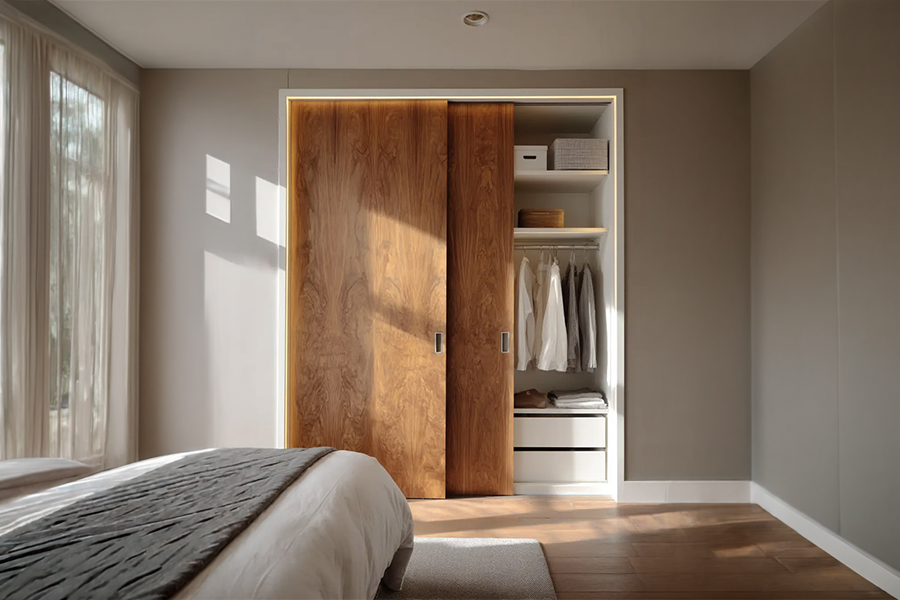
The sliding door wardrobe is the go-to choice for small rooms, and for good reason. It needs zero clearance in front of it. The door slides within its own width. The floor space in front stays free. Simple as that.
In rooms where the wardrobe and the bed share a wall or face each other directly, a sliding door is often the only type that doesn't create a problem. You don't have to think about swing radius or whether the door will hit the bed frame. It just works.
The one thing to keep in mind: you can only access roughly half the wardrobe at a time. Left door slides right, right side is blocked. Right door slides left, left side is blocked. It's not a dealbreaker, but it means the inside of the wardrobe needs to be organised more carefully than if everything was accessible at once. Things you use daily should be reachable without needing both sides open.
Best for: Rooms under 120 sq ft, and anywhere the wardrobe faces or sits beside the bed.
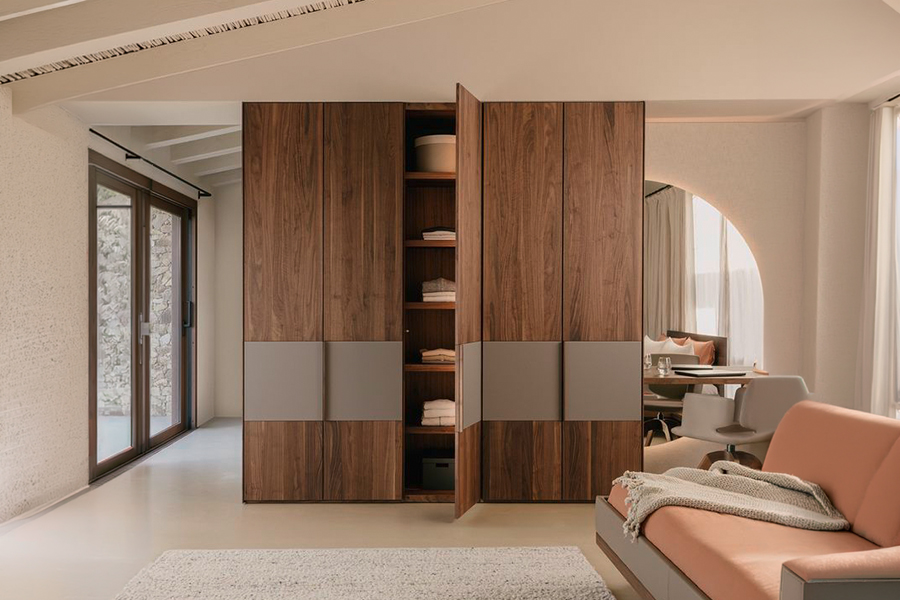
Full-width access. That's the main advantage. When a hinged door wardrobe is open, you can see everything at once. For two people getting ready at the same time, that matters.
But here's the trade-off. Each door panel needs 18 to 24 inches of clear space to swing open fully. In a small bedroom, that space has to come from somewhere. Usually it comes from your walking area, which means a narrow path between the wardrobe and the bed that gets even narrower every time you open it.
Hinged doors work fine in rooms that have the space for them. In a room that doesn't, they become a daily frustration.
Best for: Rooms 12 by 12 feet and above, where the wall opposite the wardrobe has enough distance that the doors open cleanly.
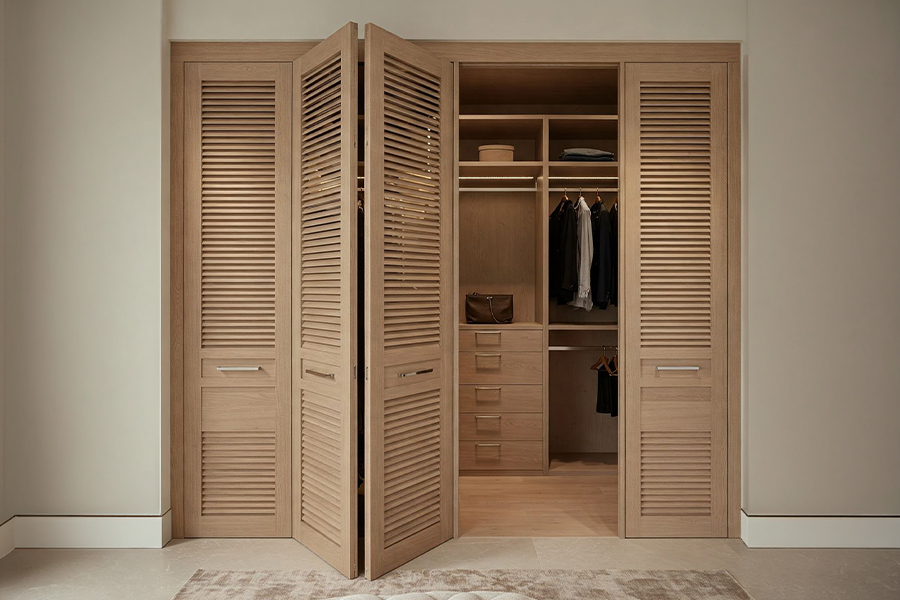
Bifold doors fold inward in pairs. Less clearance than full hinged, more access than sliding. It sits in the middle and is honestly underused in Indian homes considering how practical it is for wardrobes in the four to six feet range. Worth a look if the other two options both feel like compromises for your specific room.
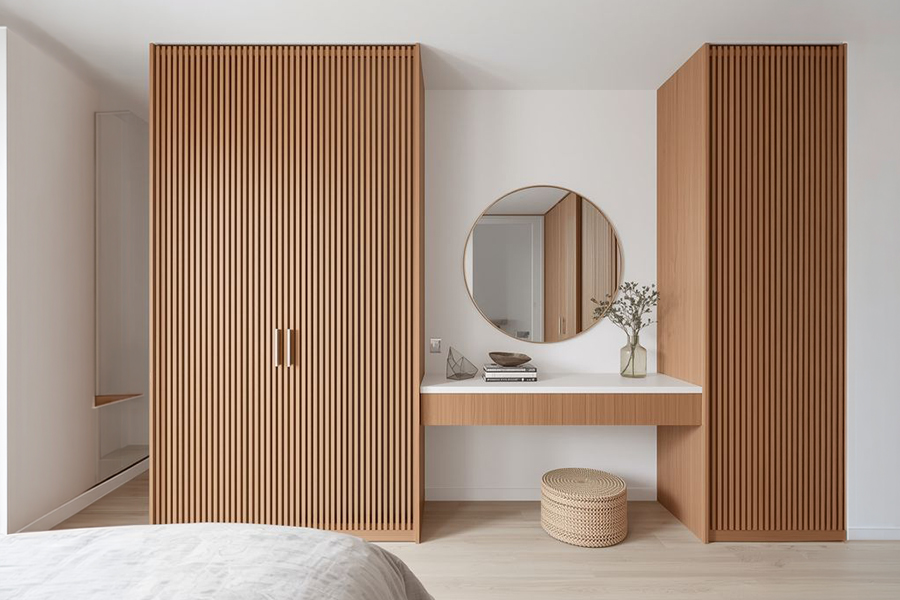
Standard wardrobes in India usually stop at about seven feet. Most apartment ceilings sit somewhere between nine and ten. That two to three foot gap at the top gets ignored by nearly everyone, and it quietly does three things that hurt the room.
It collects dust. The top of a wardrobe that doesn't reach the ceiling is one of the most neglected surfaces in any home. It gathers thick layers of dust that spread every time you place or remove something up there. Most people clean it maybe once a year. Some never.
It shrinks the room visually. That gap breaks the vertical line of the wall. Your eye catches it and the ceiling feels lower, the room feels smaller. A wardrobe that runs all the way to the ceiling blends into the wall and lets the room read taller.
And it wastes real storage volume. Four to six large storage boxes worth of space is sitting above a standard wardrobe doing nothing. Suitcases. Seasonal clothes. Extra linen. All of it could live up there.
Floor-to-ceiling wardrobes solve all three problems at once and they look considerably more built-in and intentional than a standard wardrobe floating below the ceiling.
If replacing the wardrobe isn't on the table right now, a simpler fix works well. A closed storage unit placed on top of the existing wardrobe closes the gap, recovers the space, and cleans up the visual break without a full replacement.
Two wardrobes can have identical external dimensions and completely different storage capacity depending on what's inside. A badly configured wardrobe wastes 30 to 40 percent of its usable volume. That's not a small difference. That's a meaningful chunk of storage that disappears because of how the shelves and rails were laid out.
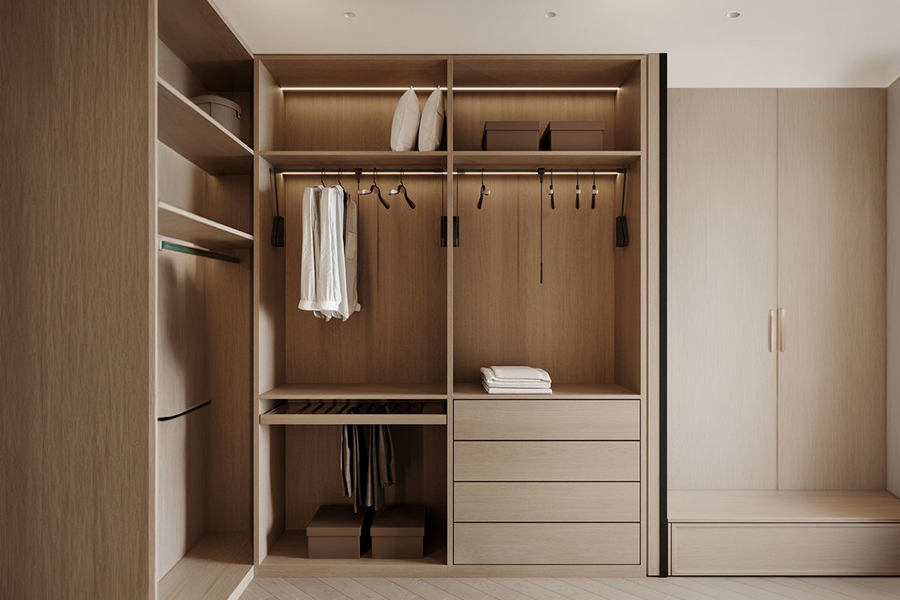
Short hang items, shirts, jackets, blazers, need about 40 inches of vertical clearance. Long hang items, full-length dresses, trousers hanging by the waist, need at least 60 inches.
The default in most Indian wardrobes is one long hang section running the full height on one side. For someone who mostly wears shirts and kurtas, the bottom third of that section is permanently empty. Wasted.
The better setup is double-hang on one side. A rail at the top, another rail below it, both at short-hang height. Same vertical space as one long hang section, nearly double the number of items that can hang there. Combine that with one full-length hang section on the other side for dresses and trousers, and the wardrobe suddenly holds significantly more than it did before.
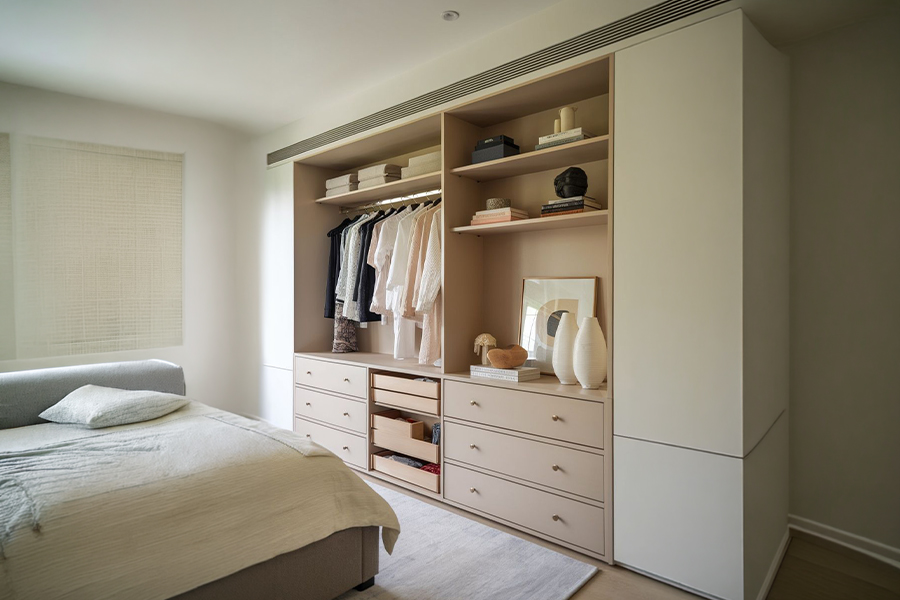
Open shelves at the base of a wardrobe look great on day one. By day seven, folded clothes have shifted, stacks are leaning, smaller things have slid under larger things, and the whole section is something you root through rather than use.
Drawers hold the organisation together. Items stay where you put them. Nothing falls onto something else. When a drawer is open, you can see everything in it at the same time. The difference in how tidy a wardrobe stays over weeks and months, between open base shelves and internal drawers, is significant.
If you're configuring a new wardrobe, switch at least half the base shelving to internal drawers. The cost difference is usually not dramatic. The payoff in sustained organisation is.
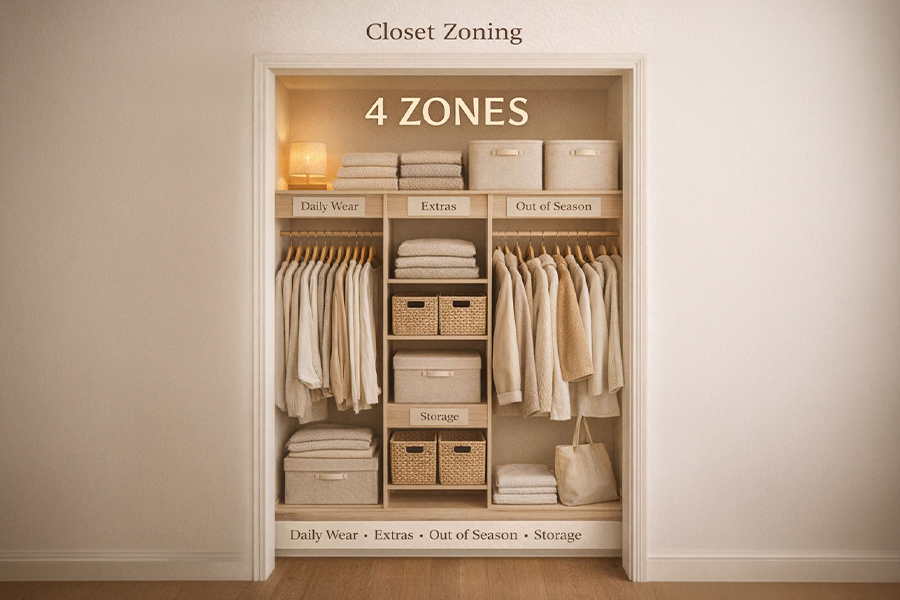
Plan the luggage zone before the wardrobe is ordered, not after. The top shelf needs to be deep enough to lay two or three large suitcases flat or stack them. A dedicated linen section with three or four medium-depth shelves handles bedsheets and covers without taking space from clothing. A shoe zone at the base, either pull-out or fixed shelves with five to six inch spacing per pair, keeps footwear off the floor and out of the bottom of the wardrobe.
These zones feel like extra planning effort. In practice they're what separates a wardrobe that works from one that's just a large box things disappear into.
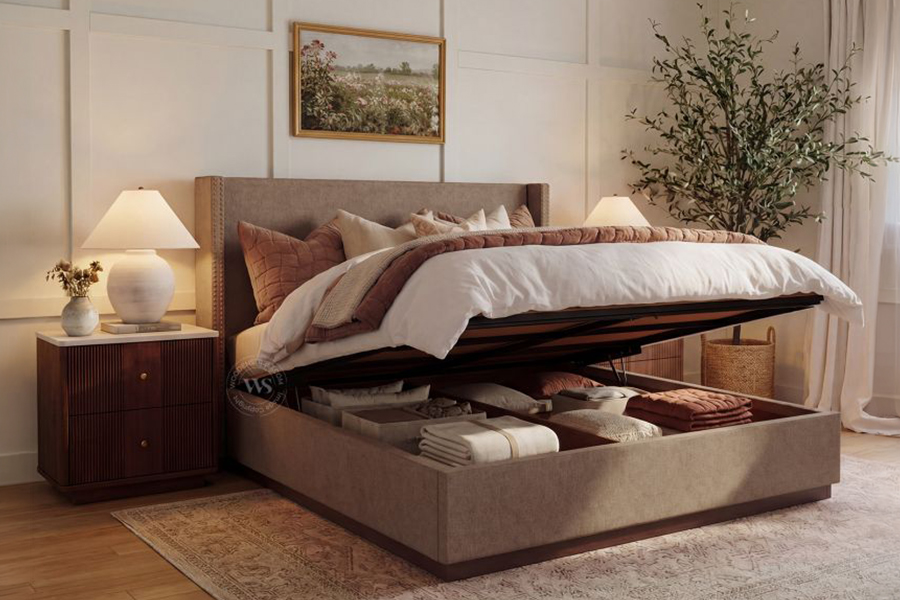
The floor area under the bed is the single largest unused storage volume in most small bedrooms. It's also the one people seem least motivated to use well.
A hydraulic storage bed lifts the entire mattress base on gas pistons. Underneath is a deep cavity the full size of the bed footprint. This is the right place for seasonal items, spare linen, suitcases, anything that needs a home but doesn't need to be accessed every day or even every week.
A drawer storage bed has pull-out drawers on one or both sides of the frame. Better for things you access more regularly because you don't have to lift the mattress every time. Off-season clothes, extra pillows, whatever you want within reach but not visible.
No built-in storage on your current bed? Rolling storage boxes designed for low-clearance spaces work perfectly well under open-base beds. Not a permanent or beautiful solution but a functional one.
One thing worth being honest about: under-bed storage is not convenient storage. It's a reach-down and dig operation. Use it for things you need a few times a month, not a few times a day.
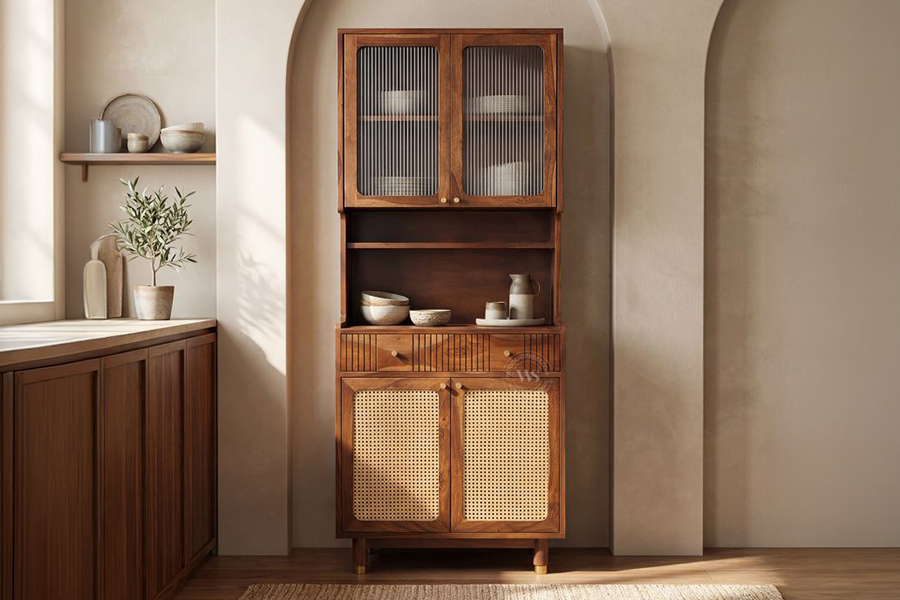
Above five feet in most small bedrooms, the walls are empty. That's a lot of vertical surface doing nothing.
Floating shelves above the headboard are a practical and genuinely good-looking use of that space. Books, plants, a lamp, small things you want within arm's reach at night. Keeps the bedside table clear without giving up accessibility.
The wall above the door frame is probably the most consistently wasted spot in any bedroom. A floating shelf spanning the full door width, placed close to the ceiling, is barely visible at eye level. You need a step stool to reach it. That's fine for seasonal items, spare boxes, bags you use a few times a year. The space is real and the shelf is cheap.
Wall-mounted closed cabinets above the door do the same thing but keep everything hidden, which makes the room look cleaner.
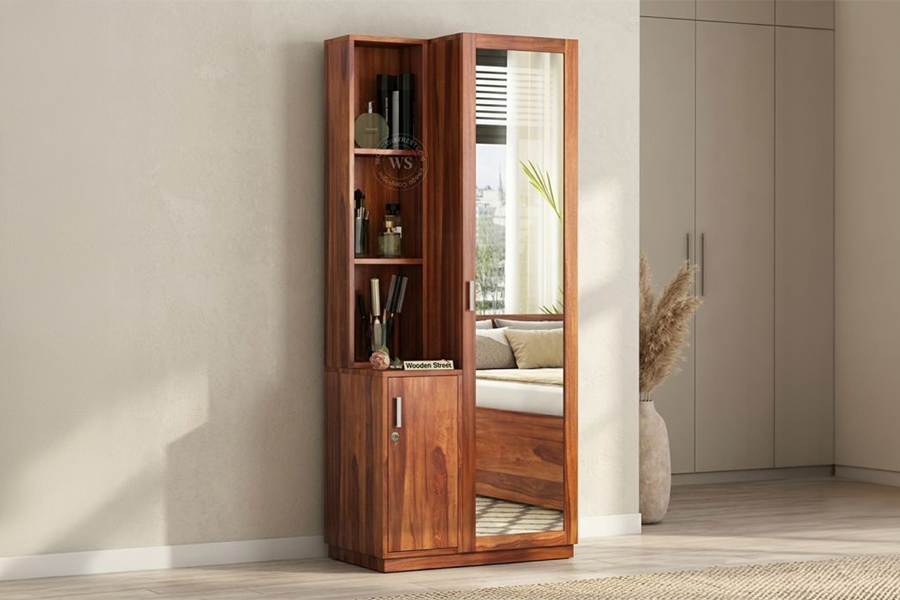
The narrow wall strip beside a door tends to sit empty in most bedrooms. A slim cabinet or shelving unit in that strip, even eight to ten inches deep, fits in a space that appears too small for anything. It usually isn't. Eight inches holds folded items, books, small accessories.
The back of the door itself is usable surface. An over-door organiser on the bedroom door or the inside of the wardrobe door adds shelf space without any floor area. Not glamorous, but it works.
A full-length mirror with storage behind it is worth knowing about. Essentially a door that looks like a mirror, opens to reveal shelves. Two functions, one wall footprint. The mirror is usable as a dressing mirror. The shelves hold whatever you need without it being visible when the mirror is closed.
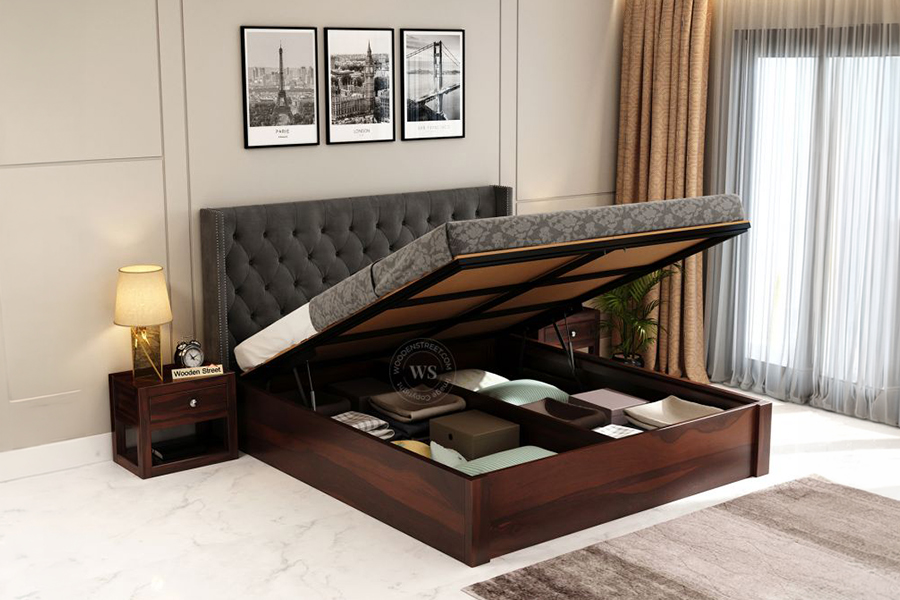
Every piece of furniture in a small bedroom should be doing more than one thing, or it should be doing its one thing exceptionally well. These are the pieces that earn their floor space.
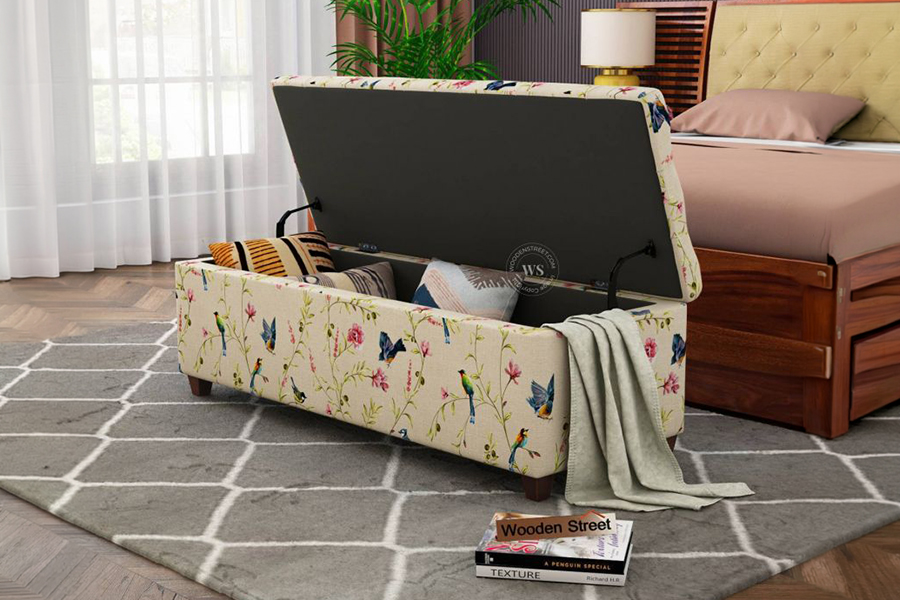
Small bedrooms always have a few awkward narrow spaces where standard furniture doesn't fit. Most people accept that these spaces will just stay empty. They don't have to.
The gap beside a wardrobe, even a few inches wide, fits a pull-out tower or a slim drawer unit designed for tight spaces. Some go as narrow as six inches. That sliver of wall was collecting dust before. Now it's organised storage.
An architectural recess or alcove, if your bedroom has one, is genuinely a gift for small bedroom storage ideas. A built-in shelf unit or a wardrobe fitted exactly to the recess dimensions wastes nothing. Every centimetre is used and it looks intentional.
The corner of the bedroom is the least functional part of most room layouts. A corner shelf unit stacked vertically, or a corner wardrobe if the room allows it, turns the part of the room that usually holds nothing into actual usable storage.
A wardrobe that visually dominates a small bedroom makes the room feel like storage that someone put a bed in rather than a bedroom that has storage in it. Three finish decisions change this significantly.
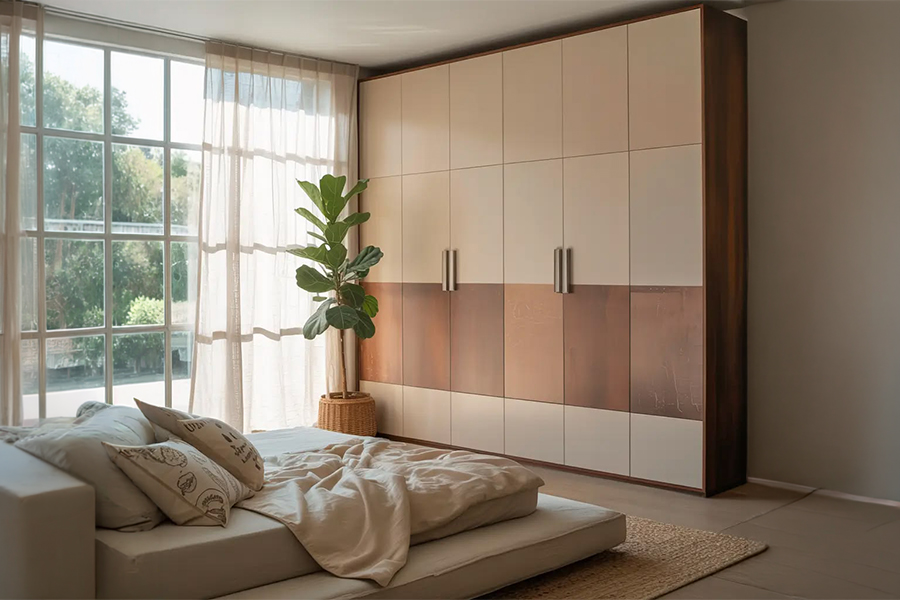
Matching the wardrobe finish to the wall colour is the single most effective thing you can do for a small room. When the wardrobe is close in colour to the wall behind it, it stops reading as a large object and starts reading as part of the wall. The room immediately feels larger because there's no obvious visual block drawing the eye.
Mirror panels on sliding doors reflect the room behind you, creating a sense of depth that makes the space feel wider. They also function as a full-length dressing mirror, which removes the need for a separate freestanding mirror taking up additional floor area.
High contrast wardrobe fronts, a dark wardrobe against a light wall, create a visual block that makes the room feel divided and smaller. In a small bedroom the wardrobe should blend in as much as possible, not stand out.
We will be back with the next blog soon. Till then, stay tuned!
Read More -
Bedroom Walk-In Closet & Wardrobe Designs: Stylish Storage Solutions That Work
Standard Wardrobe Sizes: Dimensions & Space Guide
Image Source: Pinterest, Google, and Wooden Street
A Sliding wardrobes are ideal for small bedrooms because they save floor space and provide a sleek look. Hinged wardrobes work better when you have enough room for door clearance.
A Use multifunctional furniture, wall-mounted shelves, under-bed storage, and compact wardrobes. Vertical storage solutions and smart organisers help maximise every inch without making the room feel cramped.
A Yes, floor-to-ceiling wardrobes maximise vertical space and provide extra storage for seasonal items, luggage, and accessories while keeping the room organised and visually clutter-free.
A Under-bed storage is perfect for seasonal clothes, extra bedding, shoes, storage boxes, and rarely used items. Use covered organisers to keep belongings dust-free and neatly arranged.
A Use shelf dividers, hanging organisers, baskets, and drawer trays to separate clothing and accessories. Fold items vertically and declutter regularly to maintain a functional wardrobe space.
A Storage beds, chest of drawers, clothing racks, modular cabinets, and wall-mounted shelves are excellent options for bedrooms without wardrobes, offering practical organisation without occupying excessive space.
Trending Products
Top Picks from EveryoneArticles you will love to read

Glam up your wardrobe with modern two colour combination designs! Discover trendy wardrobe colour combinations for a fresh, vibrant bedroom look.
Continue Reading
Confused about where to place your wardrobe? Don’t let any kind of bad vibe enter into your dream space. Go ahead and find the ideal wardrobe direction as per Vastu.
Continue Reading
Confused about wardrobe sizes? This guide covers standard dimensions, measurements, and space planning tips to help you design a wardrobe that fits perfectly and maximizes storage.
Continue Reading
Looking for bedroom walk-in closet ideas? Explore practical and stylish walk-in wardrobe designs that suit every Indian home.
Continue Reading
Explore 21 stunning Sunmica design ideas that blend aesthetics with functionality. From wardrobe Sunmica design options to modern kitchen and door finishes, discover durable, stylish solutions that enhance everyday usability while elevating the overall look of your modern home interiors.
Continue Reading


