



From Shekhawati carvings to Jodhpur’s bold designs, this blog explains how local culture shapes Indian Rajasthani furniture across regions. Learn what defines authenticity, craftsmanship, wood selection, and styling so you can identify genuine pieces before buying for your home or commercial space.
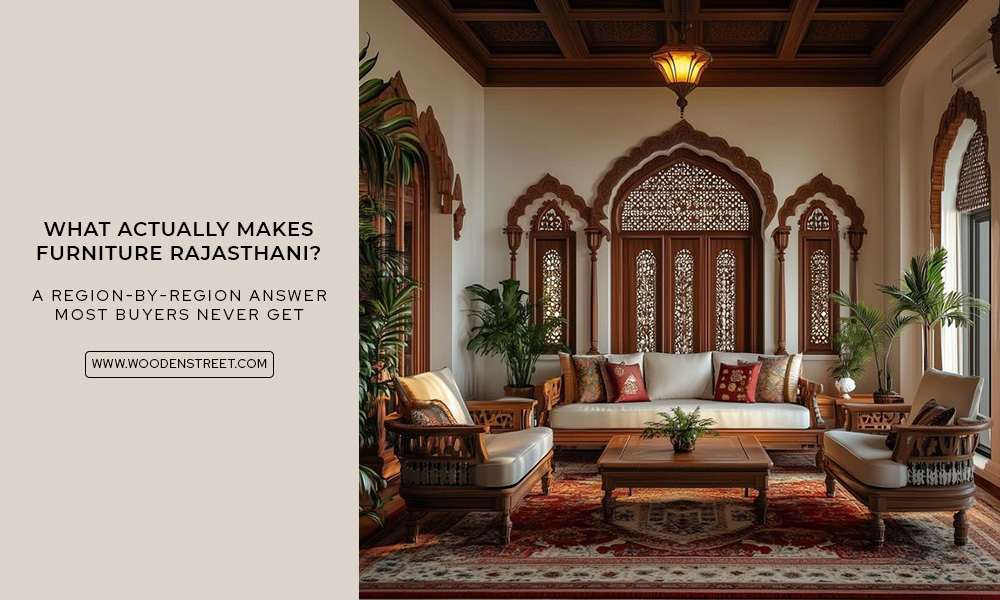
Walk into any furniture store in India and you'll see a "Rajasthani collection." Carved wood, maybe some colour, a jali pattern somewhere. The tag says Rajasthani. The salesperson nods confidently.
But here's the thing. Rajasthan is not one place with one aesthetic. It's a state the size of several European countries combined, with at least four completely distinct furniture-making traditions that differ from each other in material, technique, colour philosophy, and cultural origin. A Shekhawati painted cabinet and a Jodhpur blue-lacquered chair and a Jaipur inlay dining table are all "Rajasthani furniture" the same way a Hyderabadi biryani and a Kashmiri wazwan are both "Indian food." Technically true. Practically, not the same thing at all.
Most buyers never get this breakdown. Most blogs don't give it. This one will.
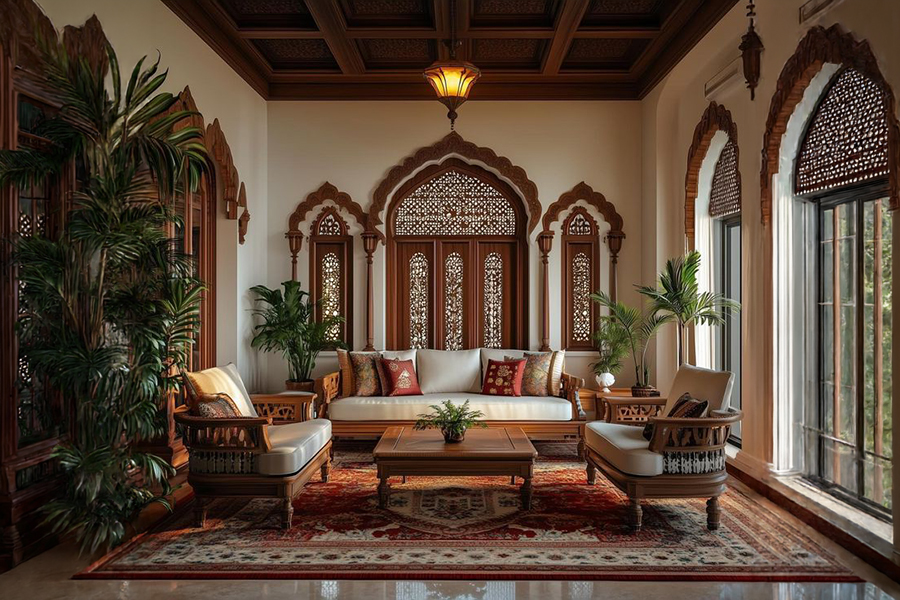
Shekhawati is the northeastern belt of Rajasthan, covering towns like Mandawa, Nawalgarh, Fatehpur, and Jhunjhunu. If you've ever visited the havelis there, you already know the signature: every surface painted. Walls, ceilings, pillars. Narrative scenes pulled from mythology, from history, from daily life in a way that felt almost journalistic.
That same impulse carried directly into Rajasthani furniture from this region. Shekhawati pieces, particularly beds, cabinets, and storage chests, treat the wooden surface as a fresco panel. The motifs are earthy, ochre-heavy, terracotta, raw sienna, muted greens, the palette of the desert landscape itself. You'll see elephants, peacocks, hunting scenes, figures from the Ramayana and Mahabharata, and sometimes surprisingly secular imagery including traders, camels, and royal processions.
What makes Shekhawati furniture recognisable even without a label is the density of the painting. There's rarely blank wood. The decorated surface is the point, not an accent on the structure. The wood underneath is typically mango or sheesham, solid and simple in form, because the form is never the focus. The painting is.
If you see a Rajasthani bed or cabinet with painted panels in earthen colours and narrative scenes that look hand-rendered rather than stencilled, you're looking at Shekhawati lineage. The irregularity of the brushwork is the tell. Each figure is slightly different from the last because each was painted by a human hand, not reproduced by a machine.
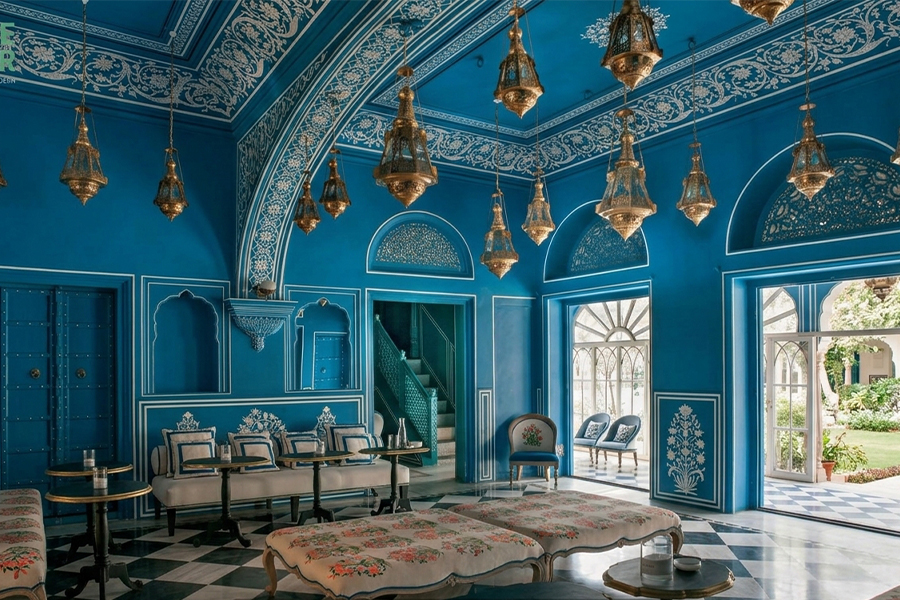
Jodhpur's blue is one of the most photographed things in India. Every travel blog has the picture. What almost no travel blog explains is why the houses were blue in the first place.
The traditional answer is caste marking. Blue indicated Brahmin households. But a more functional explanation that craftsmen in the region still reference is the lime-indigo mixture used in the paint. Lime is a natural termite and insect repellent. Indigo deepens the colour and acts as a binder. In a desert city where timber was expensive and insect damage was a genuine structural threat, painting wooden furniture, doors, and window frames with this mixture was practical preservation, not just aesthetics.
That's why the Rajasthani chair and sofa tradition from Jodhpur specifically uses blue-lacquered finishes so heavily. It wasn't decorative first. It was protective. The decoration came after people realised the colour was beautiful.
Jodhpur furniture has a heavier, more architectural quality than Shekhawati pieces. The forms are bolder. The carving is deeper, with pronounced geometric patterns and stylised floral motifs that suit the lacquer finish. The blue sits in the recesses, making the raised carving pop in a way that paint on a flat surface never could. Jodhpur sofas especially, the low wide frames with carved wooden arms, have a solidity that reads as structural confidence rather than decorative ambition.
The other thing worth knowing about Jodhpur craftsmanship is the wood. Jodhpur workshops have long favoured recycled timber from old havelis and demolished structures, wood that has already dried and settled over decades. This is part of why antique Jodhpur pieces are particularly stable. The wood isn't going anywhere because it stopped moving a hundred years ago.
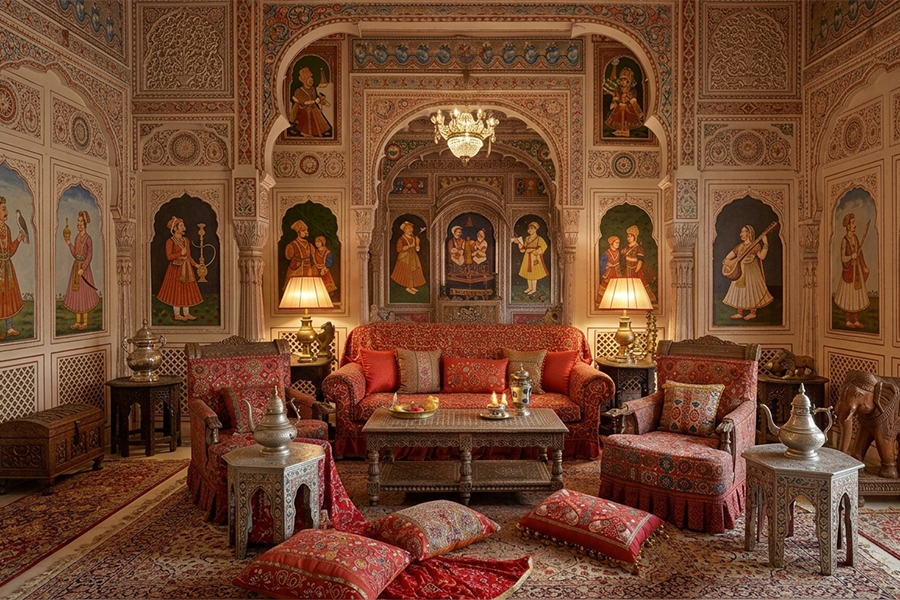
Jaipur has been a centre of gem cutting and stone inlay work for centuries. The Mughal tradition of pietra dura, stone inlay on marble and stone surfaces, found a home in Jaipur and was eventually adapted by local craftsmen into wood furniture as well.
Rajasthani dining tables from Jaipur are the clearest expression of this. Marble-top dining tables with geometric inlay patterns in coloured stone, semi-precious in higher-end pieces, synthetic in commercial versions, are almost entirely a Jaipur product. The inlay work follows a strict geometry, stars, hexagons, floral medallions, executed with a precision that reflects the gem-cutting training of the artisans.
Beyond marble, Jaipur furniture also uses brass inlay on sheesham surfaces. Thin wires or cut pieces of brass are hammered into channels carved into the wood, creating patterns that catch light differently from every angle. On a Rajasthani dresser or a storage cabinet, brass inlay gives the piece a richness that reads as expensive without being loud.
The colour palette of Jaipur furniture is cooler than Shekhawati and quieter than Jodhpur blue. The wood tone does most of the work. The inlay is accent, not coverage. This is actually why Jaipur pieces tend to blend most easily into contemporary interiors. They bring craftsmanship without demanding a specific room aesthetic around them.
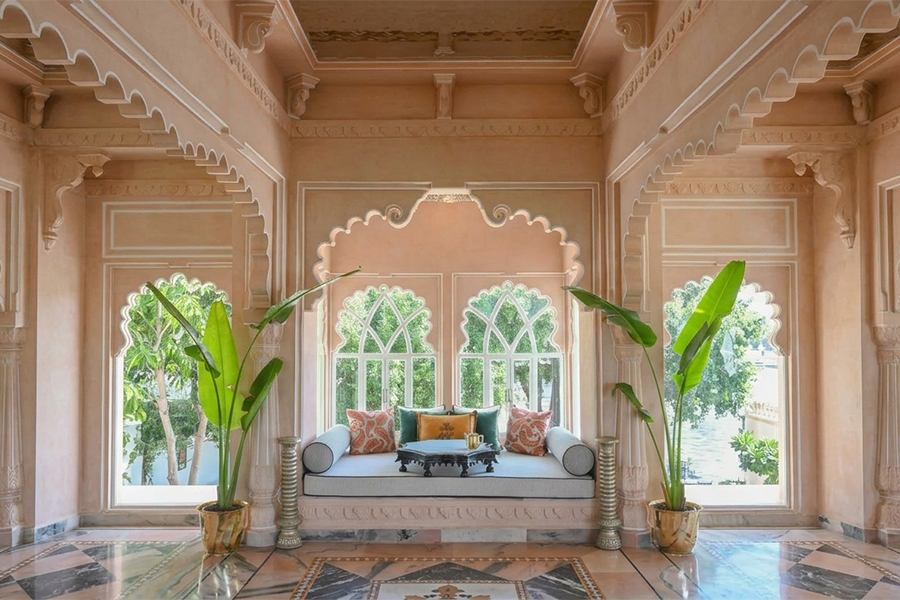
Udaipur is where Woodenstreet was founded, and the furniture tradition from this part of Rajasthan is the one we know most closely from the inside.
Mewar craftsmanship is defined by what it doesn't do. It doesn't paint over the wood. It doesn't inlay stone. It doesn't lacquer. The wood, typically sheesham, is the point. The grain, the weight, the warmth of the material. The Udaipur Collection goes into the structural work: the hand-turned legs, the carved details that follow the natural lines of the timber, the joinery that holds the piece together without hiding how it was made.
The marwari jhoola, the traditional swing, is one of the clearest expressions of this philosophy. The frame is solid wood, often with turned spindle work on the back and arms. The proportions are generous. There's no paint to distract from the structure. What you're looking at is the craftsmanship itself, not a decorative layer on top of it.
This tradition is also where the elevated bed leg comes from in its most refined form, which leads us to the next section.
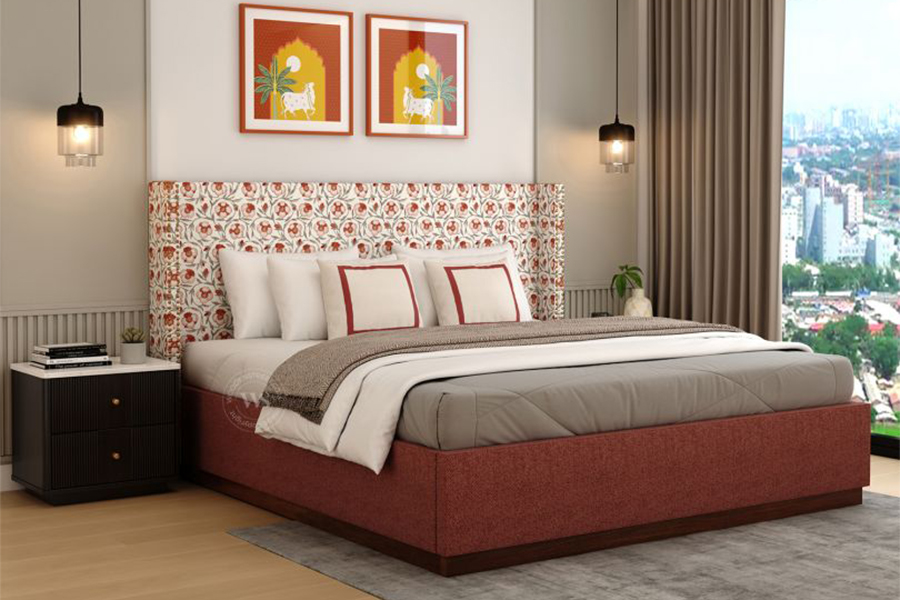
The elevated legs on a traditional Rajasthan wooden furniture bed are not an aesthetic choice. They're a survival response.
Desert floor sleeping is genuinely dangerous in a way that urban life has made easy to forget. Scorpions, snakes, and other desert fauna that gravitate toward warm spaces make floor-level sleeping a real risk. Elevation was protection. A bed that sits eight to twelve inches off the floor on carved legs creates clearance that matters when you're in a mud-structure home in Thar desert conditions.
The carved headboard developed separately, as a status marker. The intricacy of the carving told you something about the household. Simple geometric carving indicated a working family. Deep relief carving with narrative scenes and fine detail indicated wealth and access to skilled craftsmen. The headboard was, in a very literal sense, a calling card that visitors would see from across the room.
Contemporary Rajasthani beds carry both of these elements forward. The legs are still elevated, now for comfort and storage access rather than desert survival. The headboard is still the most carved part of the piece, because the grammar of the design hasn't changed even if the reasons behind it have.
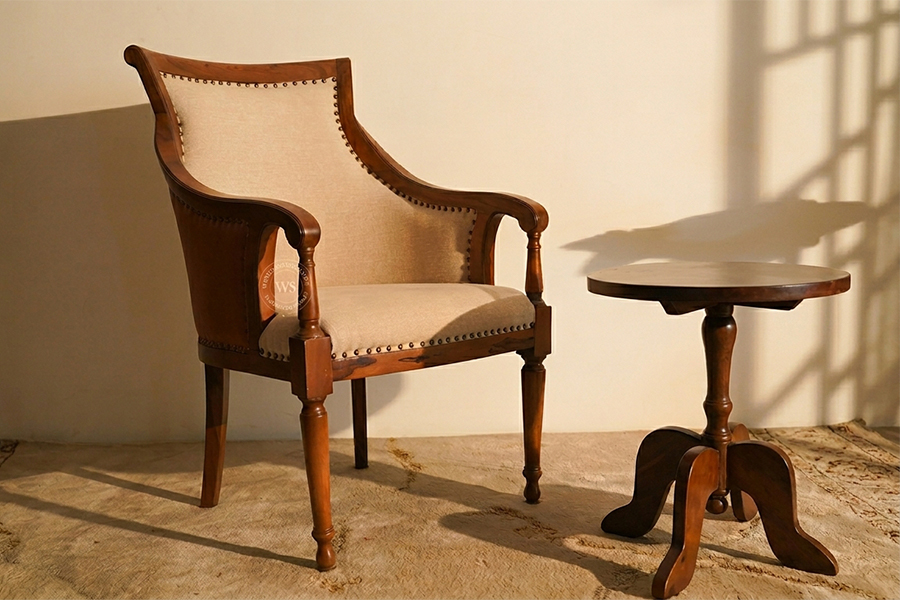
There are two distinct Rajasthani chair types and they're often confused with each other.
Jali-back chairs have a latticed or pierced back panel. The jali pattern, geometric or floral, is cut through the wood so air passes through. In a hot climate this was practical, not decorative. Jali-back chairs are lighter in visual weight and tend to work better in spaces where you don't want the furniture to dominate.
Solid-back chairs have a carved but uncut back panel. Heavier in presence, more architectural, more obviously a statement piece. Traditional solid-back Rajasthani chairs with rope-weave seats, the woven cane or cotton rope seat on a solid wood frame, are the older form. The rope seat breathes, doesn't retain heat, and was originally preferred precisely because sitting on fabric in Rajasthani summers was uncomfortable.
Cushion-seat versions are more recent and more comfortable for long sitting. Both are authentic in their own way but they're from different periods of the tradition.
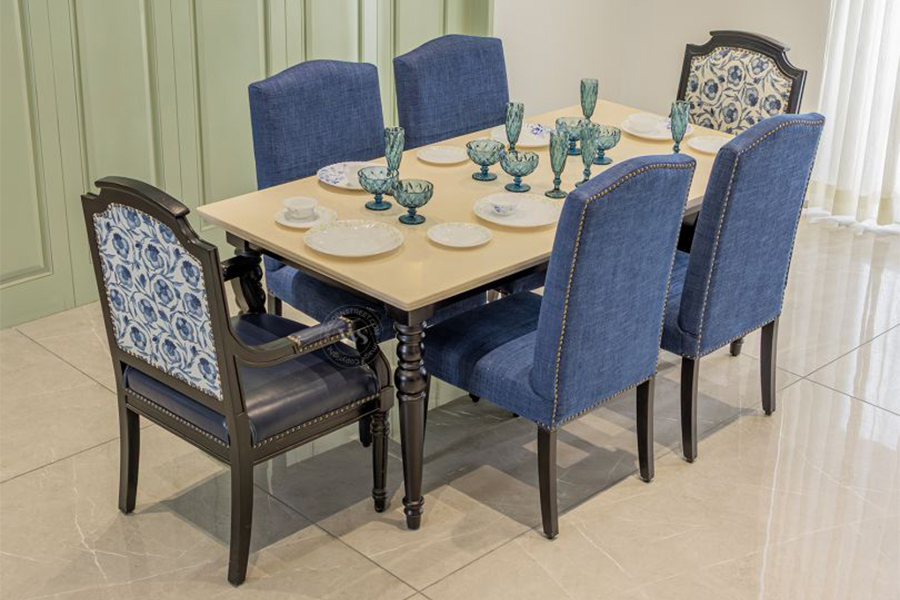
Two types. Very different from each other.
The chamfered-edge sheesham Rajasthani dining table is a solid wood table where the top edges are bevelled at an angle rather than left square. The chamfer is a functional detail that protects the edge from chipping and also gives the table a finished, intentional quality from any angle. These tables are typically left in the natural wood tone, sometimes lightly stained, and the grain of the sheesham does the aesthetic work.
The marble-top inlay dining table is the Jaipur variant described earlier. A stone or marble top with geometric inlay work, set into a carved wooden base. More formal, more ornate, more demanding of the room around it. A marble-top Rajasthani table sets the room's register. Everything around it needs to be considered against it.
Both are genuinely Rajasthani. They just belong to different regional traditions and suit different kinds of homes.
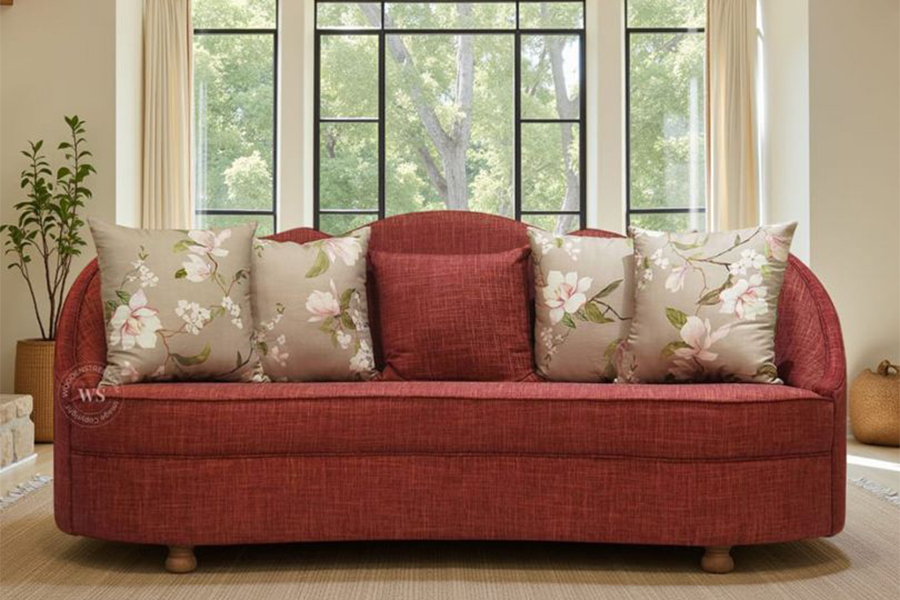
The traditional Rajasthan sofa is not a sofa in the Western sense. It's a diwan: a low, wide platform with cushions, sometimes with a carved wooden back and arms, sometimes with no back at all. The seating position is lower than a standard sofa, the width is generous, and the whole form encourages a way of sitting that is less formal and more relaxed than upright sofa seating.
The fully upholstered Rajasthani sofa frame with carved wooden arms is a later development. The carved wooden frame, often in Jodhpur style with blue lacquer or in natural sheesham, supports fabric upholstery in rich jewel tones, deep reds, mustard, teal, the colours that show up in Rajasthani textiles. These are more practical for living rooms in the contemporary sense but they carry a different character from the pure diwan form.
This is the question most buyers want answered before they spend serious money. Here's what to actually look for.
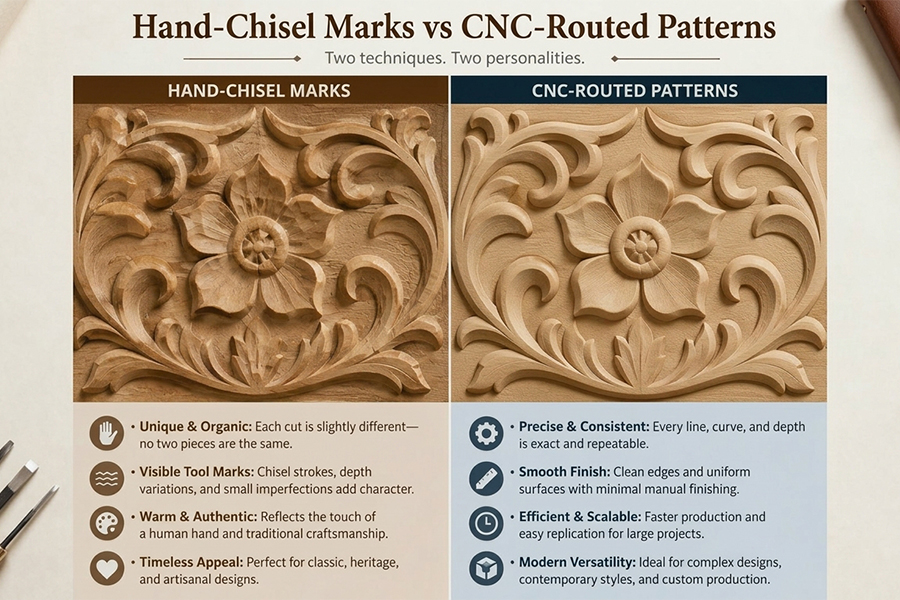
Run your finger along a carved surface. A hand-chiselled carving has slight irregularities. The depth of the cut varies slightly from one repeat to the next. The edges of the motif are clean but not perfectly uniform. No two leaves in a carved floral pattern are identical twins.
A CNC-routed pattern, produced by a computer-guided machine, is perfectly uniform. Every repeat is mathematically identical. The depth is precisely consistent. The edges are sharper than a human hand typically produces.
Neither is necessarily inferior as a product but they're not the same thing. If you're paying for authentic Indian Rajasthani furniture craftsmanship, know which one you're getting. Ask directly. Look closely. The irregularity of hand work is not a flaw, it's the signature.

Traditional Rajasthani painted furniture used natural pigments, mineral-based colours mixed with a binder. Over years these pigments oxidise in a specific way. The colour becomes richer in some areas and slightly faded in others, not uniformly, not predictably. The result has depth that looks aged without looking damaged.
Synthetic paint ages differently. It fades more uniformly. In some cases it chips or cracks in ways that natural pigment doesn't. On a new piece, the test is harder. Look at the colour in different lights. Natural pigment-based paints have a slight variation in tone even in the same painted area. Synthetic paint is flat and uniform in a way that natural pigment isn't.
On older or antique pieces, look for the oxidation pattern. If the colour has aged in a way that looks organic and layered rather than uniformly faded, you're likely looking at traditional pigment work.
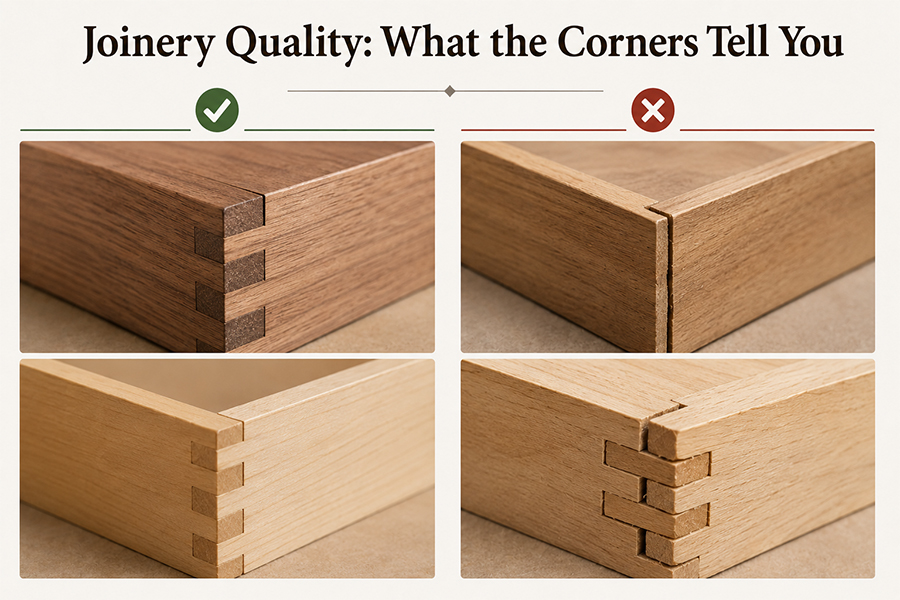
Turn the piece over or look at where two structural elements meet. Three types of joinery appear in Rajasthan wooden furniture and they tell you a great deal about how the piece was made and how long it will last.
Mortise-and-tenon joinery is the traditional standard. One piece of wood has a projecting tenon, the other has a cut mortise that receives it. When glued and sometimes pegged, this joint is extraordinarily strong and has been used in furniture construction for thousands of years. A mortise-and-tenon joint on a well-made Rajasthani piece will outlast the wood around it.
Dowel joinery uses cylindrical wooden pegs inserted into aligned holes in both pieces. Weaker than mortise-and-tenon but still a legitimate wood joint when done well. Common in mid-range furniture.
Stapled or bracket-joined furniture, where the joint is held by metal staples or L-brackets visible at the corner, is a factory shortcut. Fine for inexpensive furniture. Not appropriate for anything claiming to be traditional craft. If you see metal brackets holding the structural joints together on a piece marketed as handcrafted Rajasthani furniture, that's your answer.
This is the part most people get wrong after they've bought a beautiful piece. They bring it home, put it in the room, and it either looks lost or it turns the entire room into a Rajasthani theme park. Neither is the goal.
One hero Rajasthani piece per room. The rest of the room, around 70 percent of it, neutral.
This isn't a compromise. It's actually how the best-looking rooms work. A Rajasthani dining table in sheesham with chamfered edges becomes extraordinary when the chairs around it are simple and clean and the walls behind it are a quiet off-white. It would become competing noise if every other piece in the room was also carved, also painted, also demanding attention.
The Rajasthani piece needs space around it. Give it that space and it does the work. Crowd it with other strong pieces and nothing lands properly.
Some Rajasthani furniture integrates into a modern home without asking much of the room around it. A sheesham dining table with carved legs but a relatively clean top surface works in almost any dining room. A Rajasthani chair with a jali back placed as a reading corner accent works in most living rooms.
Others need more commitment. A fully painted Shekhawati bed with narrative fresco panels and earthy ochre coverage is a room-defining piece. You're not placing it into a room. You're building the room around it. The wall colour, the flooring, the textiles, the lighting, all of it needs to be chosen in conversation with the bed. If you're ready to do that, the result can be extraordinary. If you just want a nice bed, it might be too much.
The fully blue-lacquered Jodhpur sofa with carved arms sits somewhere in between. It's a strong piece but the blue, depending on your room's existing palette, can either anchor beautifully or clash badly. Test the colour relationship before committing.
Sheesham is a warm wood. Reddish-brown, golden undertones in direct light. It pairs best with flooring that doesn't compete with it: light grey stone, off-white marble, pale wood like pine or ash. Dark flooring under sheesham furniture flattens both. The wood loses its warmth and the floor loses definition.
Mango wood is slightly lighter and cooler in tone than sheesham. It has more flexibility. It works with terracotta floor tiles in a way that sheesham can sometimes clash with. It also pairs well with whitewashed or limewash walls, which give the natural grain of the wood a clean backdrop.
For walls, the safest background for any Rajasthan wooden furniture is warm white, cream, or a very muted terracotta. These colours let the wood read as warm without competing. Strong wall colours, deep blues, forest greens, dark greys, work only if chosen deliberately in response to the specific wood tone of the piece.
One pairing that consistently works: Jodhpur blue furniture against warm white or off-white walls. The blue pops without clashing because white is neutral enough to carry it.
Wooden Street started in Udaipur. The craftsmen we work with come from the Mewar tradition, the hand-turned legs, the sheesham grain, the joinery-forward approach that lets the wood do the talking. Every piece in our Indian Rajasthani furniture range is built from solid wood, not MDF with a Rajasthani finish. The carving is hand-done. The joinery is mortise-and-tenon where it matters.
If you've read this far, you know what to look for. And you know that what we make is the real thing.
Trending Products
Top Picks from EveryoneArticles you will love to read
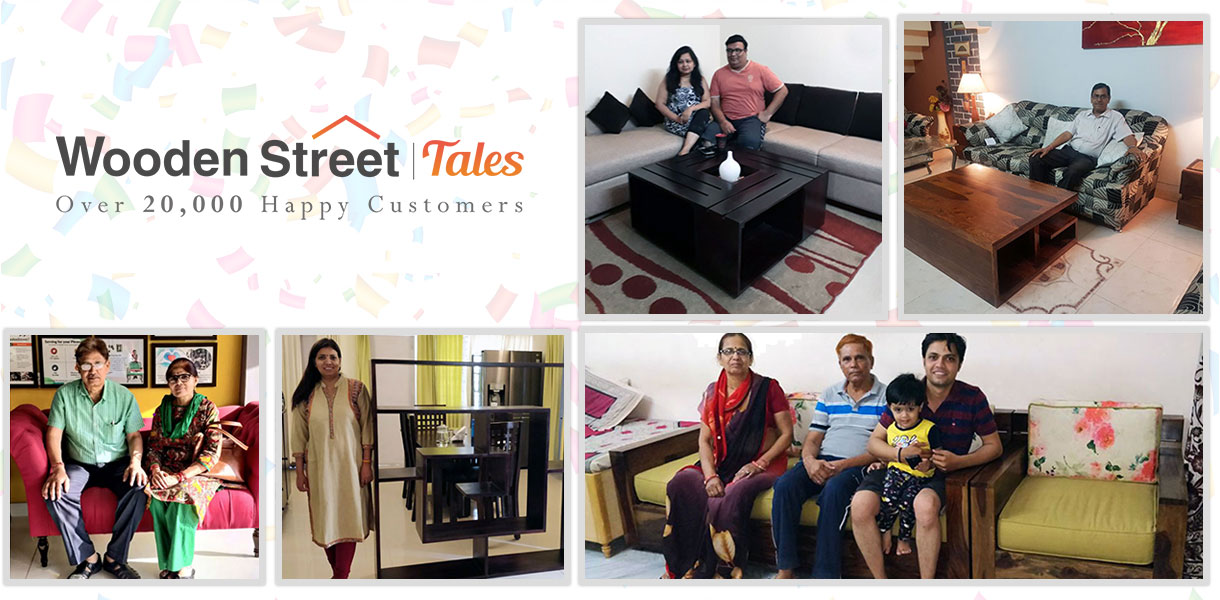
Jaipur is the hub of furniture industry in Rajasthan. In our journey of listening to the customers, when we moved towards Jaipur, the lively people of this lively city opened their hearts while sharing their experience with Wooden Street.
Continue Reading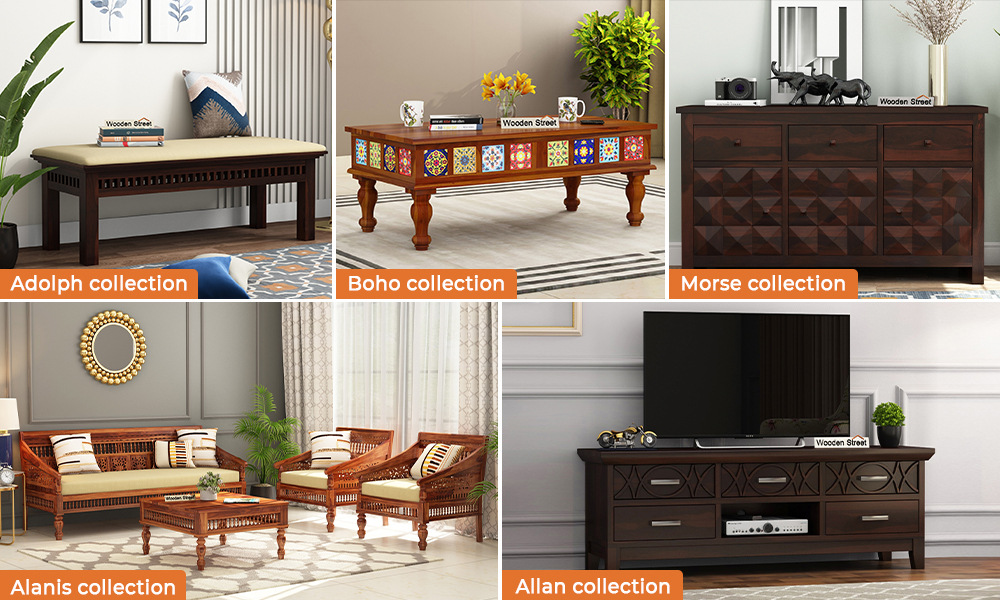
This blog presents you with the best collection of furniture only at woodenstreet. To pick out your favourite, check the collection given below:
Continue Reading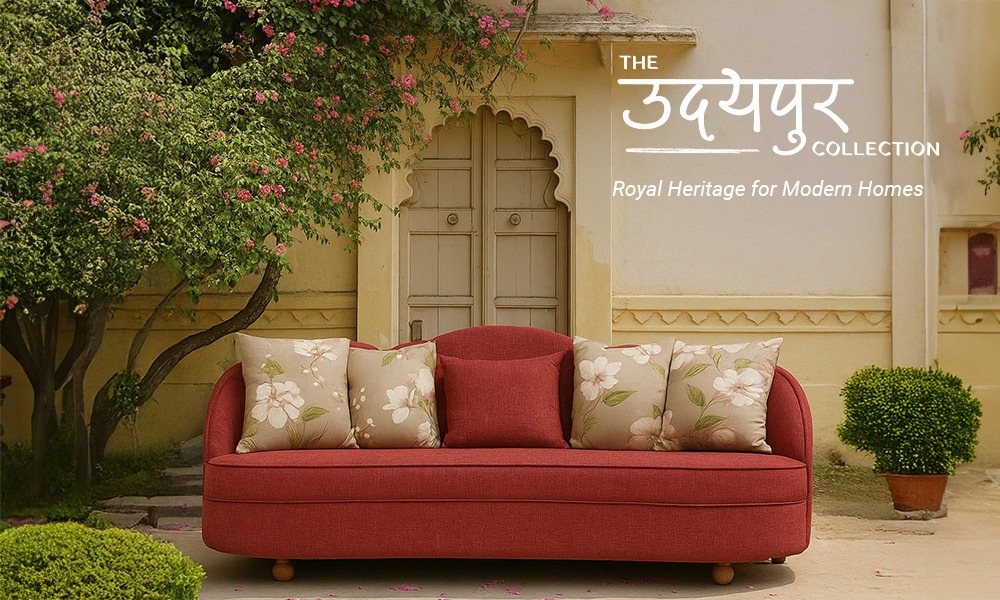
The Udaipur Collection by Wooden Street redefines luxury furniture with a royal heritage touch. Featuring heritage furniture and exclusive furniture pieces, this royal collection blends Rajasthan’s artistry with modern furniture convenience. Perfect for transforming living rooms, dining spaces, and bedrooms into elegant retreats.
Continue Reading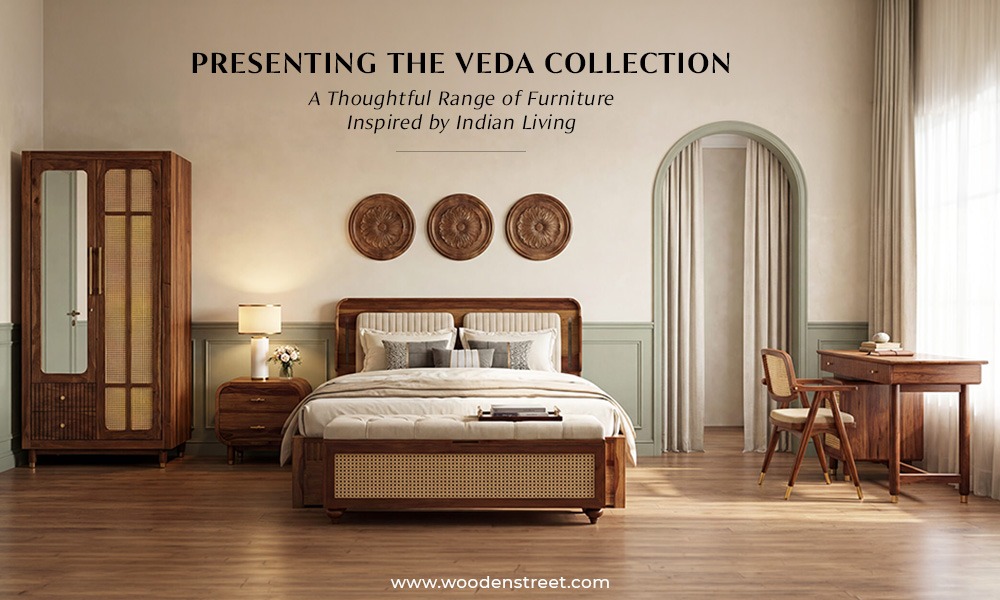
The Veda Collection by Wooden Street brings together furniture inspired by Indian design values. Crafted using solid wood, cane, and brass, the collection focuses on balance, comfort, and everyday functionality across living, dining, and bedroom spaces.
Continue Reading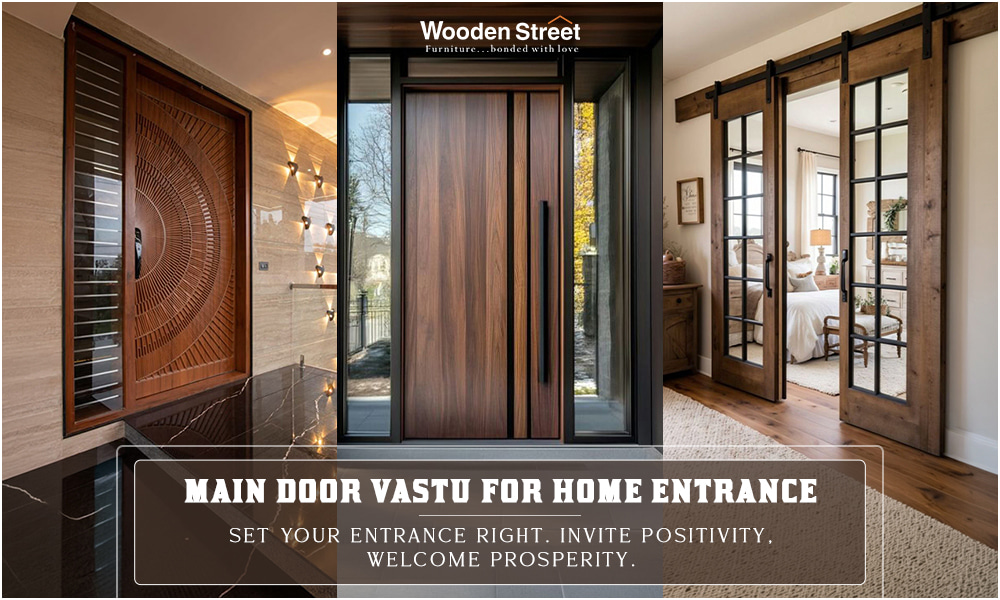
Find the right main door design for home with vastu tips for 2026. Learn about entrance direction, vastu-friendly colours, wooden doors, and common mistakes to avoid.
Continue Reading


