




Discover timeless and modern arch design for home interiors that improve flow, style, and functionality. From hall small arch design ideas to kitchen arch design and living room new arch design inspiration, this guide explores practical ways to use arches beautifully in every part of your house design arch layout.
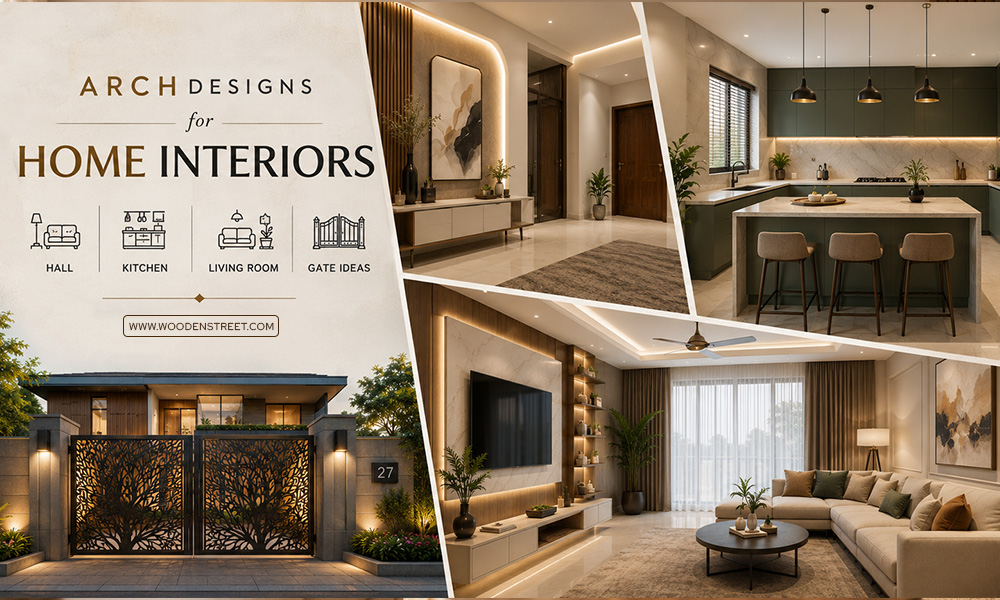
You know that moment when you walk into someone's home and you just stop - not because of the sofa or the paint, but because of that one arch that just frames everything so beautifully? Yeah. That's the power of a good arch design for home interiors, and it's wildly underused in most Indian homes.
Whether you're doing a full renovation or just want to add that one detail that ties everything together - arches are it. But here's what nobody tells you before you call the carpenter: not all arches are the same, and picking the wrong one (or putting it in the wrong place) can make a beautiful room look like a construction mistake.
Let's get into it.
Before anything else - this one point can save you serious money and headaches.
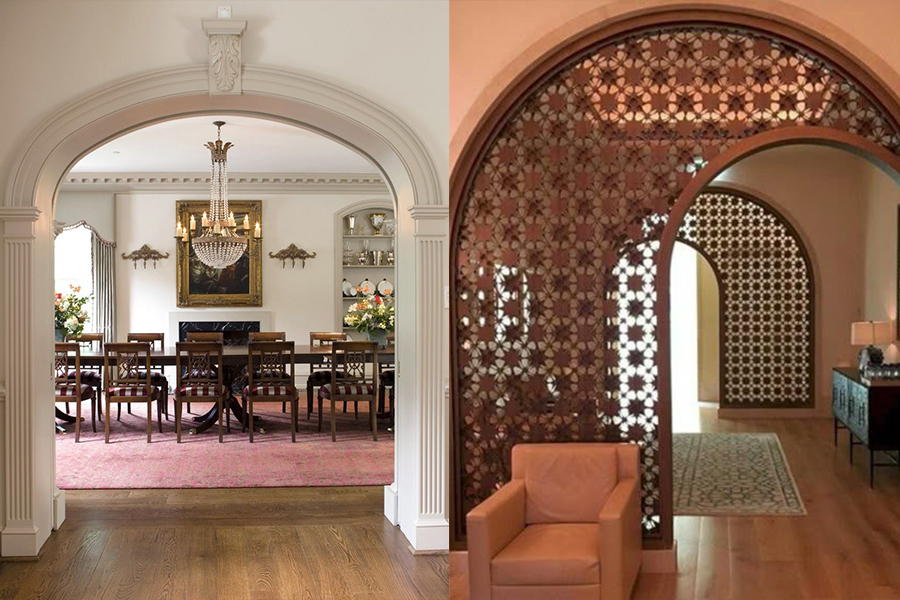
A structural arch actually bears the load of the wall or floor above it. If you have one of these, you cannot touch it, modify it, or "prettify" it without an engineer's sign-off. Full stop.
A decorative arch, on the other hand, is purely a finish treatment. It sits over an existing opening - a doorway, a passage - and adds visual character without touching the structure. This is what every carpenter, interior designer, and YouTube tutorial is showing you. This is also everything covered in this guide.
Knowing this upfront means you won't accidentally start chipping at a load-bearing wall because it looked like "just an arch."
Material options that matter:
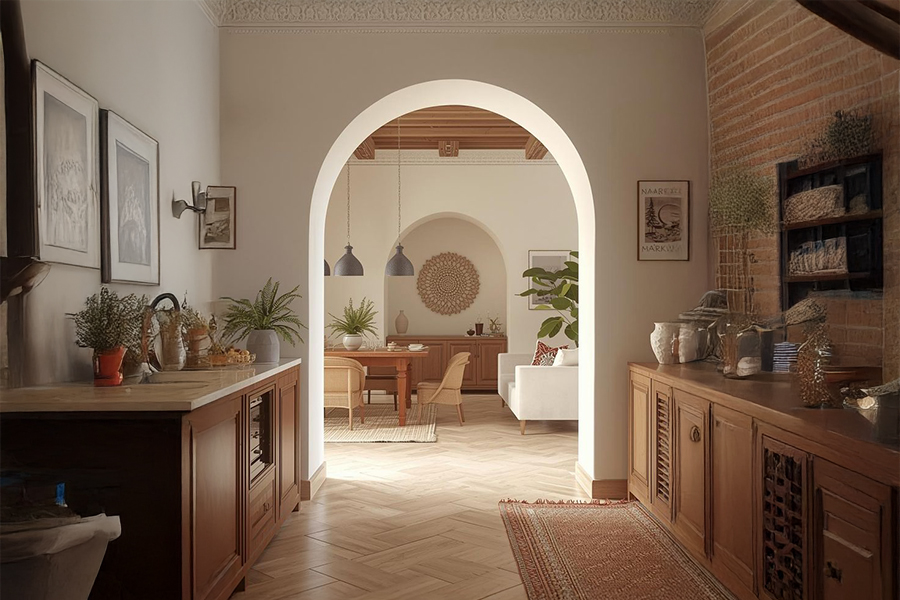
If you're going to add one arch in your entire home, put it in the hall. The hall arch design is the first thing anyone sees when they walk in - it sets the tone for everything else inside.
The opening width is everything here. Between 3 to 5 feet is the sweet spot. Go narrower and the arch starts looking squeezed. Go wider and a single arch looks a little lost - you'll need a compound treatment or a double arch.
Working with an opening under 3.5 feet? Keep it clean.
A simple semicircular or slightly pointed arch in POP or MDF is your best friend here. The proportions stay balanced, the opening doesn't feel compressed, and you can still add a little magic with a recessed LED strip running along the inner curve of the arch - it adds depth without adding any visual bulk.
What you want to avoid with a small hall arch design: multi-layered, heavily detailed arches. When the opening is small, all that ornamentation fights with the opening itself. The arch loses, and so does the room.
Got a wider hall opening? Now you can have some fun. Here are the three arch design for hall options that are genuinely trending right now:
Horseshoe arch with a jaali inset - A CNC-cut MDF panel sits inside the arch curve, creating a beautiful privacy screen between two spaces while still letting light through. It's dramatic without being heavy.
Layered compound arch - Two concentric arch profiles in contrasting finishes - an outer POP arch and an inner wood-finish MDF arch. The depth this creates is genuinely striking.
Fluted arch columns - Pair the arch with vertical fluted panels on either side. This is honestly the most searched hall arch aesthetic going into 2025, and it works with both modern and contemporary Indian interiors.
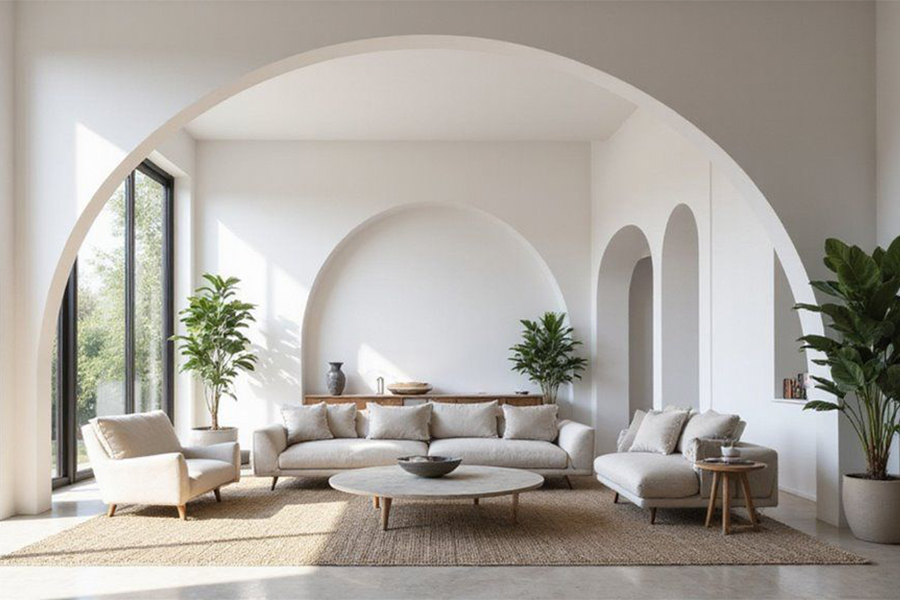
Here's a problem a lot of homes in India have - especially apartments under 900 sq ft: the living room and dining area bleed into each other, and you can't quite tell where one ends and the other begins.
An arch fixes this better than a partition wall. A living room new arch design between the two spaces defines separate zones, maintains the flow, and doesn't eat into your floor area. It's the most space-smart design decision you can make in a compact home.
Opening width guide:
Plywood is the most practical choice for a living room arch. It can be routed into clean curves, veneered to match your furniture finish, or laminated in any colour or wood tone you like.
The real advantage? Plywood holds screws and fixtures. So you can integrate shelving, LED strip lighting, or a decorative niche right into the arch structure - a living room plywood arch design with a built-in niche for a vase or an idol is probably the single best combination of function and aesthetics in arch design. One arch, two jobs done.
This one is simple and incredibly effective. An arch framing the TV wall creates a dedicated focal zone - your entertainment area feels intentional and designed rather than just "a wall with a TV on it."
One rule: the arch width should match the TV unit width as closely as possible. A wider arch makes the unit look undersized and a little orphaned. Match the widths and everything clicks.
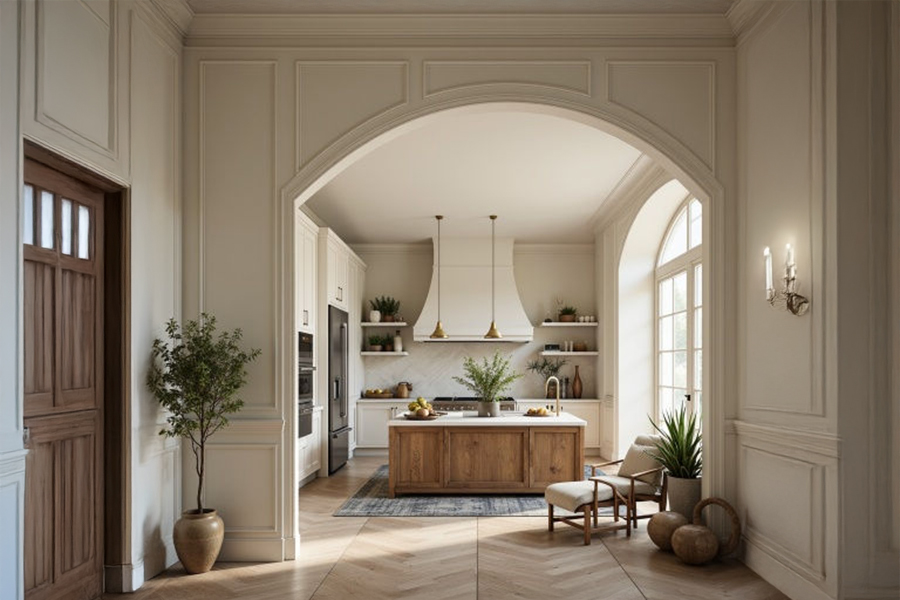
Let's be honest - the kitchen arch is almost always a passage arch. It's the opening between your kitchen and the hall or the dining area, and it gets used constantly.
That changes what you need from it.
The most important number here is clear width - minimum 32 inches, 36 inches if you can manage it. You're moving through this opening with kadhai in hand, with groceries, sometimes with appliances. An arch that tightens this passage even slightly becomes a daily annoyance very quickly.
Also - and this is practical advice that doesn't get said enough - avoid POP near a kitchen. Grease settles into the surface texture and it becomes near-impossible to clean. An MDF arch with a laminate or enamel paint finish wipes clean. That's the only finish worth using here.
For the typical Indian kitchen-to-hall opening of 2.5 to 3.5 feet, a shouldered arch (flat top, curved shoulders on either side) is the best choice. It maximises your clear opening width while still giving you that soft architectural detail.
Deep arch profiles on kitchen openings are a mistake - they reduce the usable passage width and collect cooking residue in every recess.
For a kitchen hall small arch design, a tile or stone veneer finish on the arch ties it visually to your kitchen backsplash - it makes the transition feel considered rather than decorative for its own sake. That coherence is what separates a good interior from a great one.
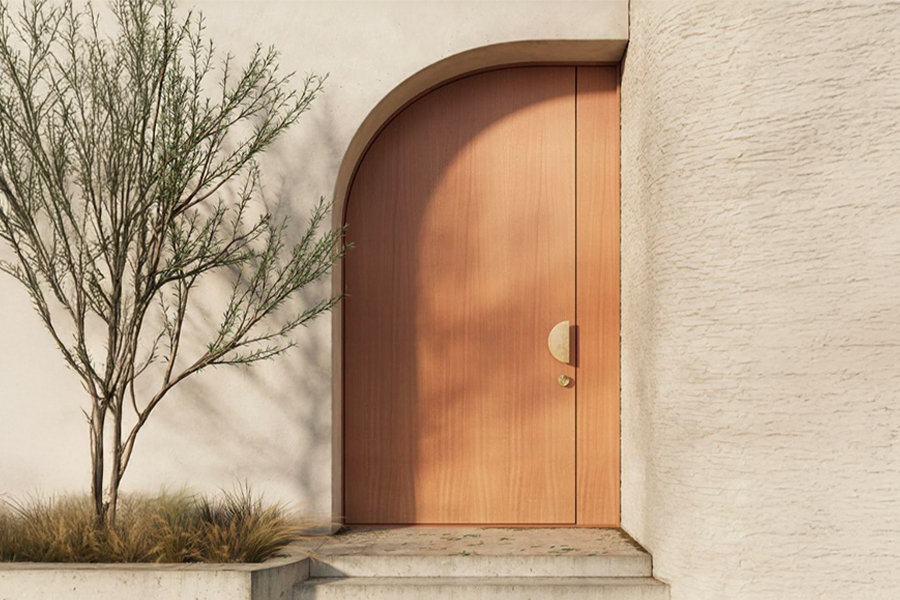
Everything changes when you go outside. A gate arch faces sun, rain, humidity, and it also bears the visual weight of the gate itself. The materials that work beautifully indoors - POP, MDF - simply do not work here without extensive waterproofing treatment. And even then, you're taking a risk.
Brick and stone are your go-to materials for a gate arch. They're durable, low-maintenance, and they look better with age rather than worse.
One proportional rule that's worth memorising: the arch height should be at least 1.5 times the gate width. A flat or shallow arch over a wide gate opening looks structurally unconvincing - like it's about to sag. Get that height right and the arch looks solid and intentional.
One detail most gate arches miss entirely: lighting. Recessed ground uplighters or arch-mounted spotlights extend the visual impact of the arch into the evening. Your home's entrance looks finished and considered after dark, not just during the day.
One arch in the wrong style can make an entire interior feel slightly off. Here's a quick cheat sheet:
An arch is one of those details that seems small in a floor plan but transforms how a space actually feels to live in. Whether it's a house arch design for a grand entrance, a compact kitchen passage, or your home's front gate - get the proportion right, pick the material that suits the location, and the result will speak for itself.
We will be back with the next blog soon. Till then, stay tuned!
Image Source: Pinterest, Google, and Wooden Street
Read More -
Furnishing Mistakes First-Time Homeowners Make
Trending Products
Top Picks from EveryoneArticles you will love to read
From timeless classics to bold contemporary choices, discover the best color palettes, tips, and trends to elevate your home's exterior.
Continue Reading
Kitchen colour as per Vastu Shastra plays a vital role in balancing energy and ensuring health, wealth, and harmony at home. This blog explores the most auspicious colour combinations to make your kitchen vibrant, positive, and aligned with prosperity.
Continue Reading
Discover simple and effective ways to restore shine to your furniture using natural ingredients. This guide explains how to polish wood furniture at home while also introducing safe alternatives like natural door polish for long-lasting results without harsh chemicals.
Continue Reading
Discover small garden ideas on a budget for balcony and terrace. Get layout tips, plant ideas, furniture, and lighting solutions for compact spaces
Continue Reading
Discover smart small house interior design ideas for Indian homes with space-saving furniture, layout plans, lighting tips, and décor ideas for compact flats and apartments.
Continue Reading


