




Choosing the right bed is essential for comfort, sleep quality, and bedroom aesthetics. This comprehensive bed buying guide covers the advantages of different bed styles, popular bed types, materials, storage options, and important factors to consider before making a purchase. Whether you're furnishing a new home or upgrading your bedroom, this guide helps you find the perfect bed to match your space, lifestyle, and budget.
Here's something most people never stop to think about. They'll spend weeks researching a sofa. They'll visit three stores, compare fabrics, sit in every single option, and negotiate hard on the price. All for something they sit on for maybe two or three hours a day.
And then they'll spend about forty minutes choosing a bed.
A bed that they will use for seven or eight hours. Every single night. For the next ten to fifteen years.
It doesn't quite add up, does it?
A wrong bed choice is not just a décor mistake. It affects how well you sleep, how your back feels when you wake up, how efficiently your bedroom uses its space, and honestly, how you feel for a significant portion of your waking life too. Sleep quality touches everything.
So this guide exists to help you slow down and actually think it through. We're covering the real differences between bed types, what each advantage actually means for your day-to-day life, how to match a bed to your room size and lifestyle, and what to look for in materials so you're not replacing the whole thing in four years.
Let's start from the beginning.
A lot of people treat a bed like a single product. You pick a frame, you put a mattress on it, done. But that's not really how it works.
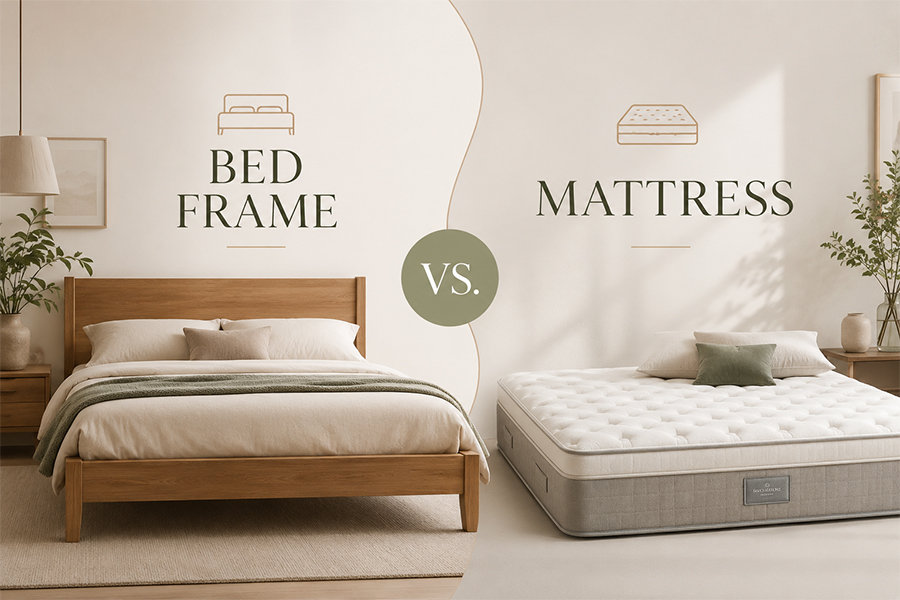
A bed is a system. The frame, the base, as well as the mattress all work together. And when one part of that system isn’t right, then the whole thing starts to underperform. A great mattress on a poor base will sag faster than it should. A beautifully built frame with the wrong mattress will still give you a bad night’s sleep.
The most common mistake that people make is choosing a bed frame first and then figuring out the mattress later. The frame you pick up directly affects which mattresses will work well on it. Platform beds have a flat, solid abse that works best with foam or latex mattresses. Box spring beds are designed in a way so as to sit on a spring base, which changes the feel along with support. Divan bases are upholstered platforms that offer you a clean, hotel-like look plus work with most mattress types.
None of these is better than the others in every situation. The right one depends on your mattress preference, your bedroom aesthetic, and your storage needs.
One more thing that barely anyone checks: the weight rating of the bed frame. It's listed in almost every product specification, and almost everyone ignores it. For a single sleeper, it rarely matters. But for couples, or for heavier sleepers, a frame that isn't rated for the combined weight will flex, creak, and weaken significantly faster than one that is.
Worth two minutes of your time to check.
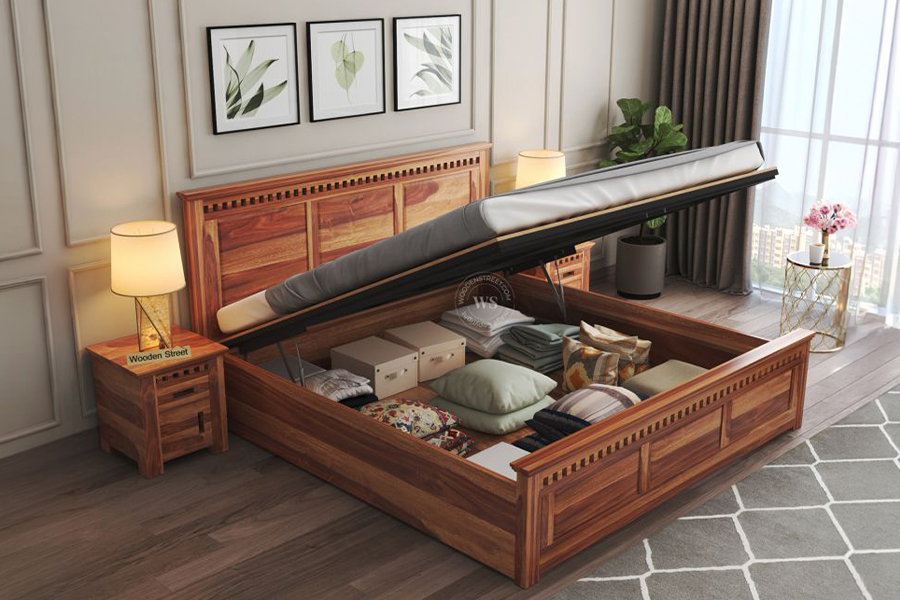
If you live in an Indian city, you already know the problem. There is never enough storage. The wardrobe is full. The loft is full. The area under the bed is being used for random boxes and things you haven't touched in two years.
A storage bed turns that underbed space into something actually useful.
There are two main formats. The hydraulic lift bed has a base that lifts up on gas pistons, revealing a large cavity underneath the entire mattress. This is the better option for things you don't access daily. Seasonal clothes, extra linen sets, suitcases, bedding for guests. The cavity is deep and the full floor area is usable.
Drawer storage beds have pull-out drawers on one or both sides of the frame. These are better for everyday items because you don't have to lift the mattress to reach them. Books, extra pillows, chargers, whatever you keep within arm's reach of bed.
The one thing to be careful about here is the quality of the hydraulic mechanism. Cheap pistons lose their pressure within a year or two. The lid becomes heavy, hard to lift, and eventually won't stay open on its own. When buying a hydraulic storage bed, always ask about the piston quality and whether replacements are available.
Best for: Apartments under 1,000 sq ft, children's rooms, and guest bedrooms that do double duty as storage.
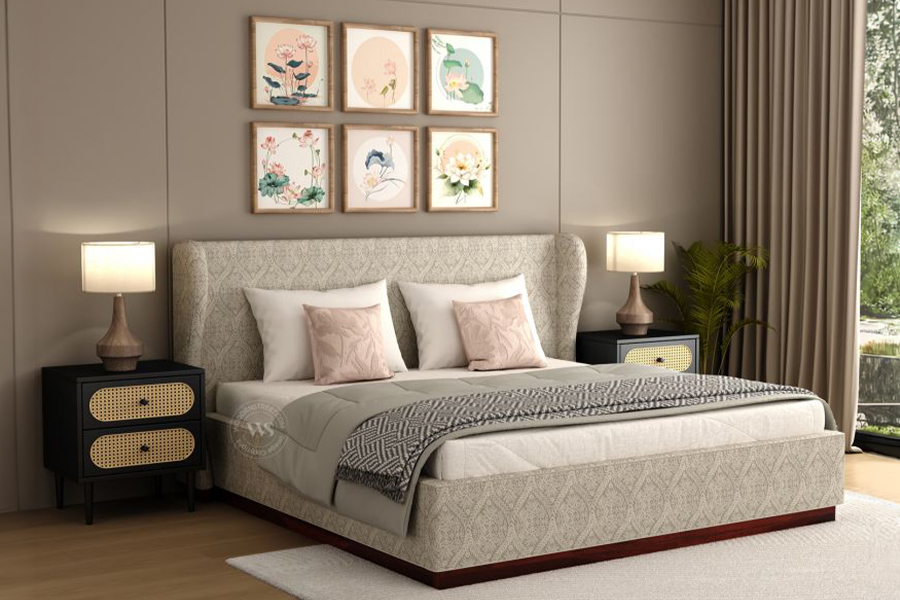
Walk into almost any hotel room that feels well put-together, and you’ll notice the same thing. A large, paaded headboard. Well-defined lines. The kind of bedroom that looks like The kind of bedroom that looks like someone actually designed it, rather than simply filled it with furniture.
That’s the power of an upholstered bed. The headboard is the visual anchor of a bedroom. It sets the tone for the entire room. And a well-chosen fabric or leatherette headboard can genuinely make even a simple bedroom feel like it was designed intentionally.
But it's not just about looks. If you read in bed, watch content on a laptop, or work from your bedroom occasionally, an upholstered headboard gives you something a wooden panel headboard doesn't: real back support. The padding takes the pressure off your lower back when you're sitting up, which makes a difference if you spend any meaningful time propped up against it.
Fabric upholstery is softer, more breathable, plus generally more comfortable to actually lean against. But it stains, as well as it absorbs dust over time. Leatherette is wipe-clean and easy to maintain, but it retains heat and can feel slightly sticky in warm weather.
When we talk about Indian climates, especially in cities with hot summers, fabric tends to be more comfortable. Leatherette makes more sense if you have young children or pets, plus easy cleaning is a priority.
Best for: Master bedrooms, hotel aesthetic interiors, and anyone who spends time sitting up in bed.

This is the option that costs more upfront and makes complete sense over time.
A solid wood bed made from genuine hardwood, sheesham or teak or acacia, is not just a piece of furniture. It's a long-term fixture. A well-built sheesham bed will outlast three or four mattresses. It will not warp. It will not swell in humidity. It will not develop that hollow, flexing sound that MDF beds develop after a few years of use.
The weight of a solid wood frame is actually an advantage that people don't always think about. A heavier frame moves less. There's no vibration when your partner shifts position at 2 AM. The entire sleeping surface is more stable, which matters more than most people realise until they experience it.
Each piece of solid wood has its own grain, its own character, its own look. No two beds are identical. That's something engineered wood and MDF simply cannot replicate, no matter how realistic the printed finish looks.
Maintenance is minimal here. A Light oiling once or twice a year keeps the wood from drying out. That’s genuinely all it needs. Compare that to an MDF bed that might start showing edge swelling or surface damage within three to five years, especially in kitchens or bathrooms nearby, plus the value equation becomes pretty clear.
Best for: Anyone who wants a bed they won't need to replace, buyers who value natural aesthetics, and light sleepers who benefit from a stable, non-vibrating frame.
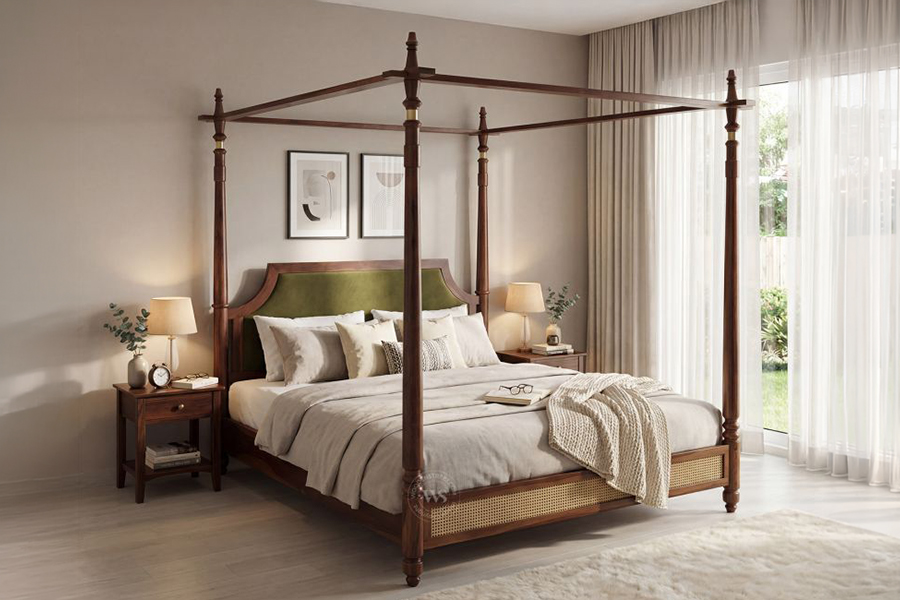
A poster or canopy bed is the kind of furniture that turns a bedroom into an actual room rather than just a place where a bed happens to exist.
The four-poster frame creates a visual boundary around the sleeping area. In a large room, this is more than just decorative. It makes the space feel warmer, more enclosed, more intentional. A big room with nothing to anchor it can feel cold. A canopy bed fixes that without changing the walls or the floor.
And in Indian homes specifically, the frame is genuinely functional. You can hang a mosquito net from it, which is still a real concern in many parts of the country. You can add curtains or drapes for privacy and light control. You can string fairy lights across the top. The frame gives you something to work with that most beds don't.
Best for: Large master bedrooms, traditional or heritage-style interiors, and anyone building a maximalist bedroom that leans into drama rather than away from it.
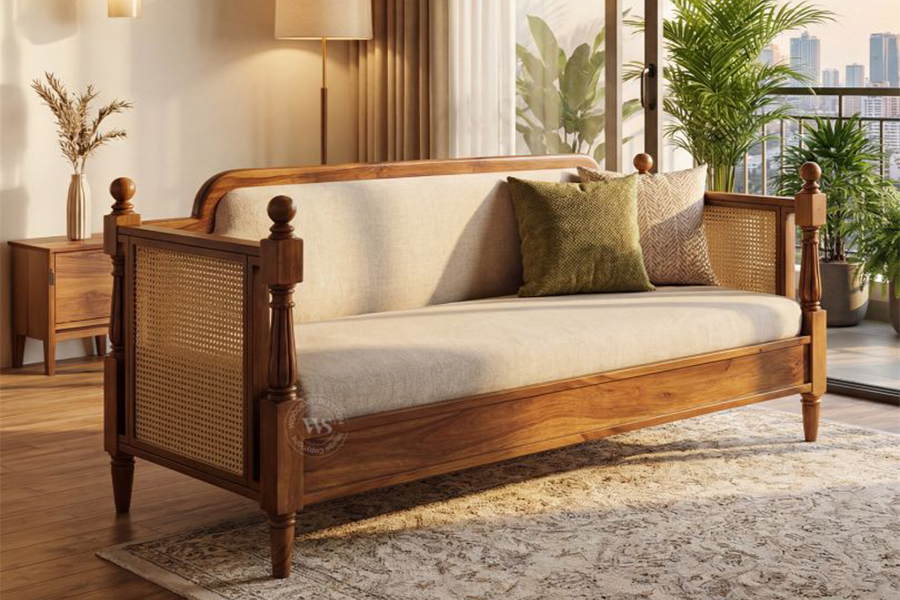
The diwan might be the most underrated piece of furniture in Indian homes right now.
By day, it's a sofa. You sit on it, lounge on it, read on it. It holds cushions, it looks like living room furniture, and it takes up a fraction of the space a sofa-plus-bed combination would. By night, the cushions come off, and it's a perfectly functional single bed.
For studio apartments and compact 1BHKs where the living area and sleeping area are effectively the same room, this is not a compromise. It's genuinely the most intelligent spatial solution available.
The one spec worth checking carefully before buying: how deep a mattress the diwan can accommodate. Some diwans have a very shallow frame that limits you to thin mattresses, which means limited comfort options. A diwan with a deeper frame gives you more flexibility and better long-term comfort.
Best for: Guest rooms, teenage rooms, studio apartments, and homes where one room needs to serve more than one purpose.
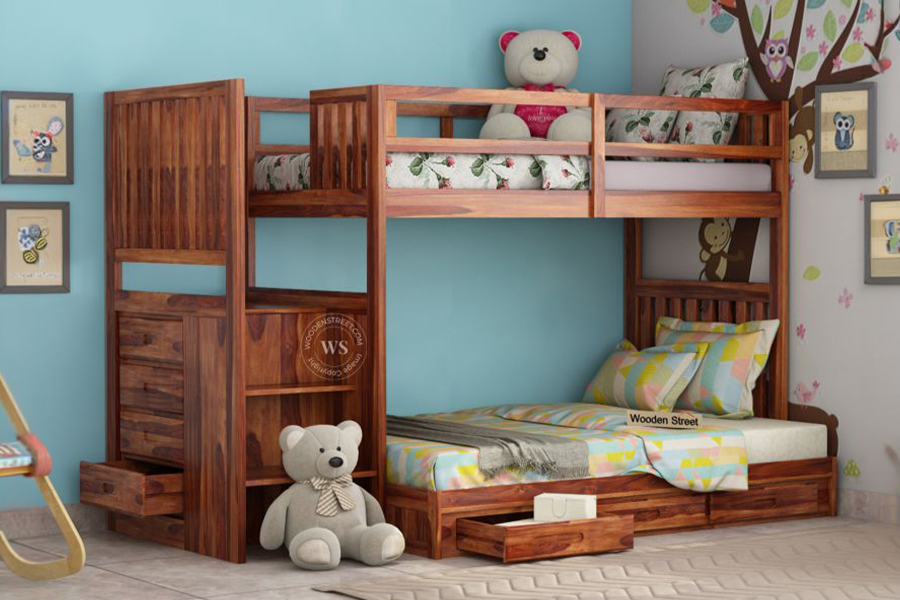
Bunk beds are not just for kids anymore, which is something worth knowing if you're furnishing a shared apartment or a compact home.
The obvious advantage is vertical space use. Instead of two single beds taking up double the floor area, a bunk uses roughly the same footprint as one. In a room where floor space is the real constraint, that's a significant win.
L-shaped bunk configurations take this even further. The lower section can be a study desk or a lounge area rather than a second sleeping surface. Some of the better configurations give you a dedicated workspace and a sleeping area in what would otherwise be a single-bed-sized footprint.
The one thing to get right with bunk beds is structural integrity. Always check the weight rating of the upper bunk specifically, not just the overall frame. And the ladder quality matters more than most people think; a wobbly ladder gets used multiple times a day and becomes a real annoyance and a real risk over time.
Best for: Children's rooms, siblings sharing a space, and compact homes where going vertical is the only way to add sleeping capacity.
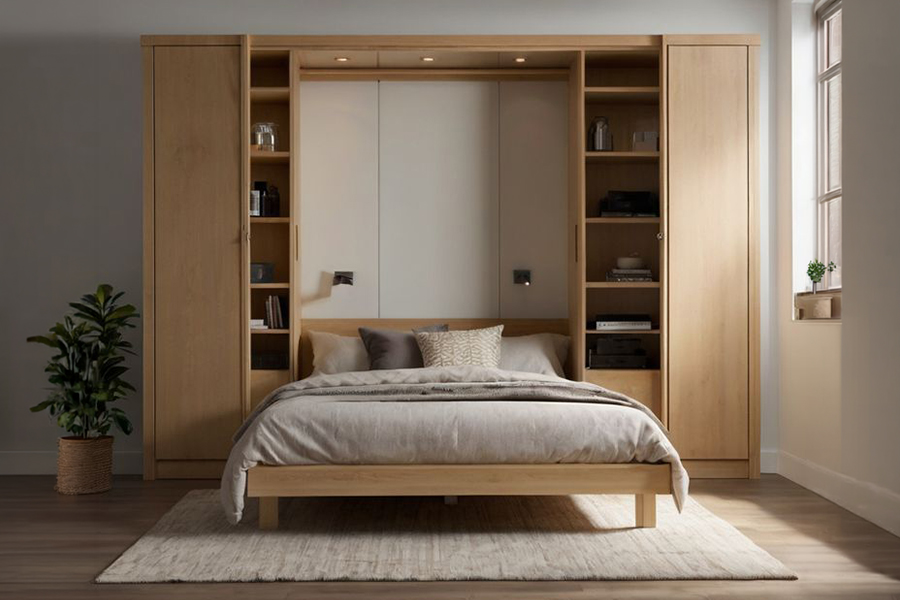
A Murphy bed folds flat against the wall when not in use. The entire floor area of the room comes back during the day. It's a simple idea that makes an enormous practical difference.
For studio apartments where the bedroom and the living area are the same room, this is genuinely transformative. In the morning, the bed folds up, the room becomes a living space, and the square footage you paid for is actually usable for more than sleeping.
The best Murphy bed setups are integrated with shelves and desks on the same wall unit. When the bed is folded up, the wall looks like a built-in shelving system. When it folds down, there's a complete, comfortable sleeping surface. No compromises on either end.
Best for: Studio apartments and home offices that need to double as a guest room.
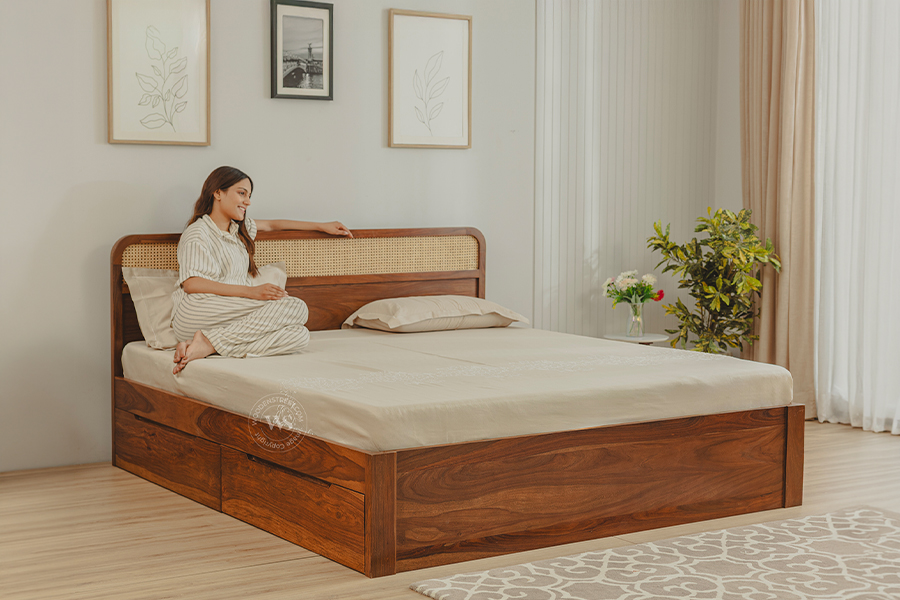
Getting the size wrong is said to be one of the most common bed-buying mistakes. Either people buy too small because they underestimate about how much they move in sleep, or buy too large and then the room has no space left for you to even breathe.
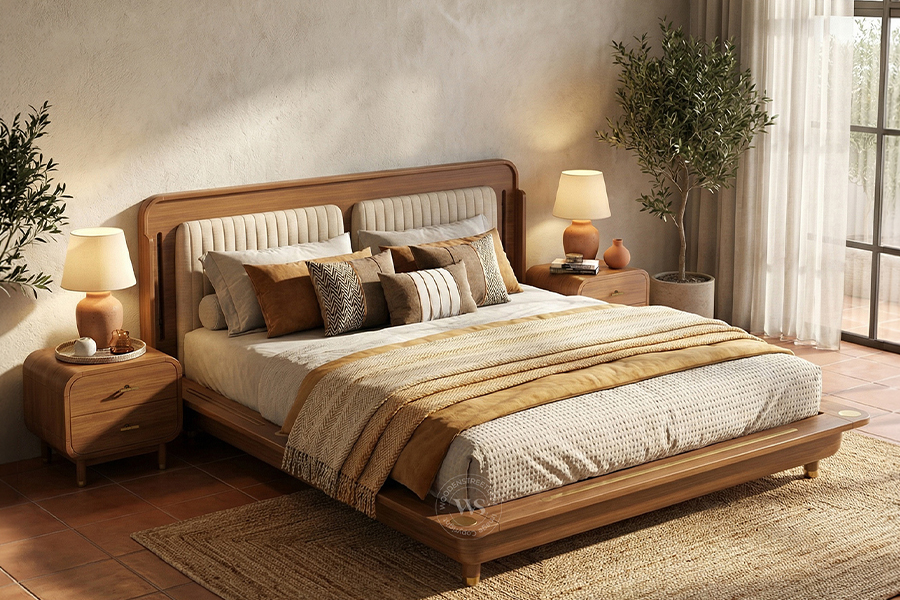
There's a difference between a bed that looks like solid wood and a bed that actually is solid wood. It matters more than the price difference suggests.
Wooden Street builds beds from genuine hardwood, sheesham, acacia, and mango wood, not MDF wrapped in a wood-look finish. The difference plays out over years of use. A Wooden Street sheesham bed bought today will still be structurally sound fifteen to twenty years from now. It will not swell, warp, chip at the edges, or develop joint weakness the way engineered wood alternatives do.
The customisation options are worth knowing about too. You can choose the size, the storage type, the headboard design, the wood finish, and if you're going with an upholstered bed, the fabric colour and texture. So if your bedroom has a specific colour palette or if you need a non-standard size, there's flexibility to make it work.
Wooden Street also has a room planner tool that lets you visualise the bed in your actual room dimensions before you commit. It's a genuinely useful step before buying a large piece of furniture, and it takes about five minutes.
We will be back with the next blog soon; till then, stay tuned!
Image Credit: Google, Pinterest, Wooden Street
Read More -
Queen Size Bed Dimensions Complete Guide
15 Stunning Bedroom Wall Colour Combination Ideas
A Storage beds, foldable beds, and platform beds are ideal for small bedrooms because they maximise floor space, provide extra storage, and create a clean, uncluttered appearance.
A Solid wood is considered the most durable bed material due to its strength, long lifespan, timeless appeal, and ability to withstand regular wear and heavy usage.
A Yes, hydraulic storage beds are worth buying because they offer easy-access storage, save space efficiently, and help keep bedrooms organised without compromising comfort or style.
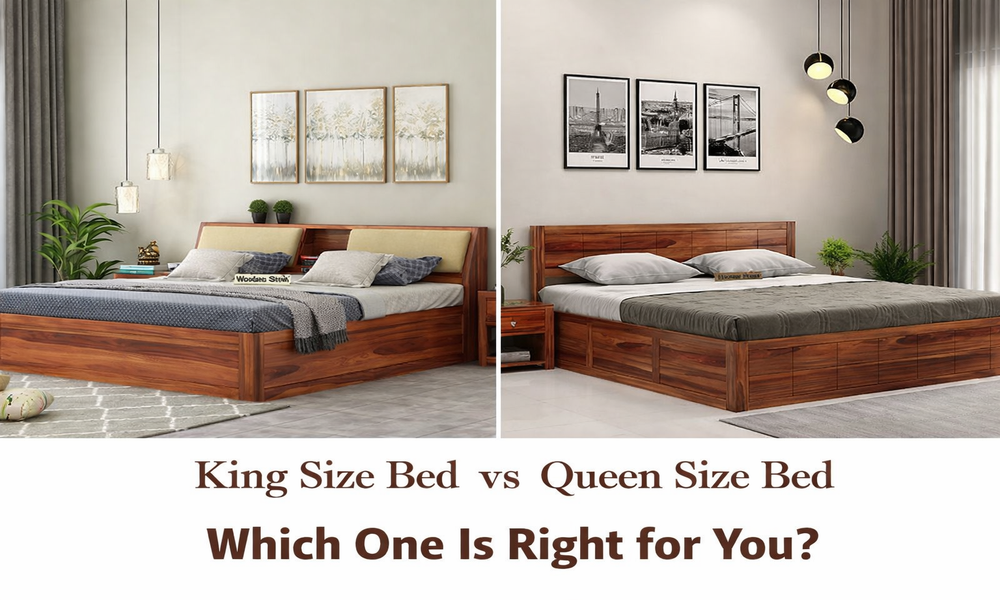
A A queen size bed is smaller and suitable for compact rooms, while a king size bed offers more sleeping space and comfort for larger bedrooms and families.
A Yes, many furniture brands offer customised bed frames based on room dimensions, mattress size, storage needs, material preferences, and overall bedroom interior design requirements.
A A high-quality solid wood bed can last 15 to 25 years or longer with proper care, regular maintenance, and protection from moisture, termites, and excessive weight.
Trending Products
Top Picks from EveryoneArticles you will love to read

Sofa-cum-beds are the perfect utilitarian furniture units, and at Wooden Street, we have a wide range of sofa-cum-beds in different sizes, finishes and designs. Check the looks of various sofa cum beds, that will help you in choosing the one for you
Continue Reading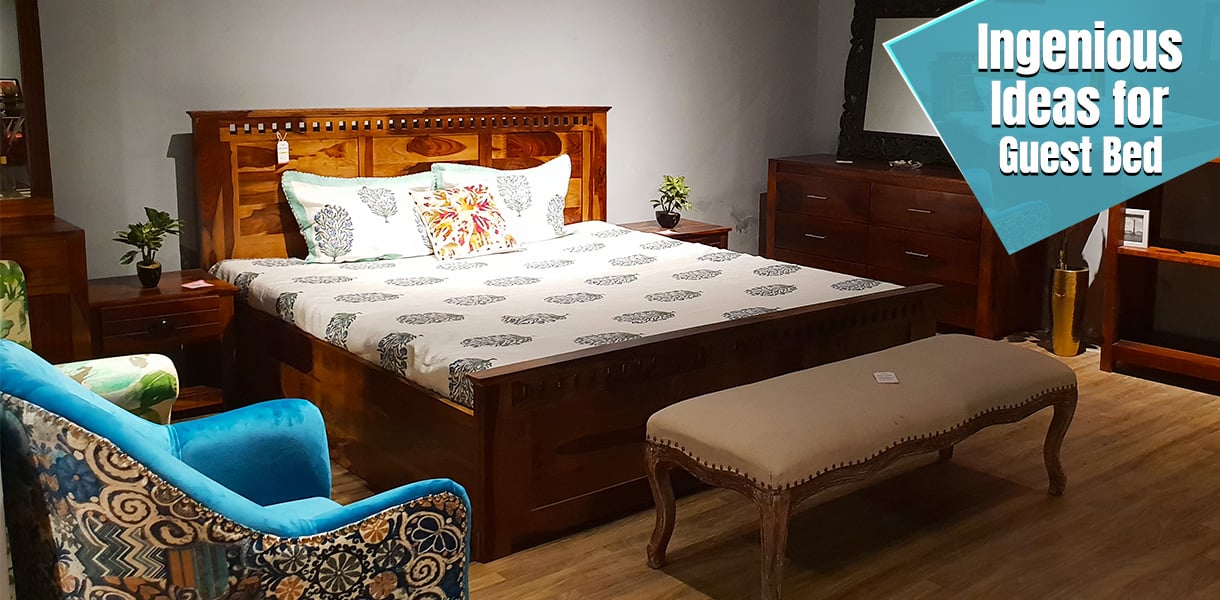
There is no form of hospitality which doesn’t include understanding. Being a host, it is essential to make our guests feel relaxed and comfortable during their stay. We suggest some ideas that can help you in providing your guests with a sound sleep.
Continue Reading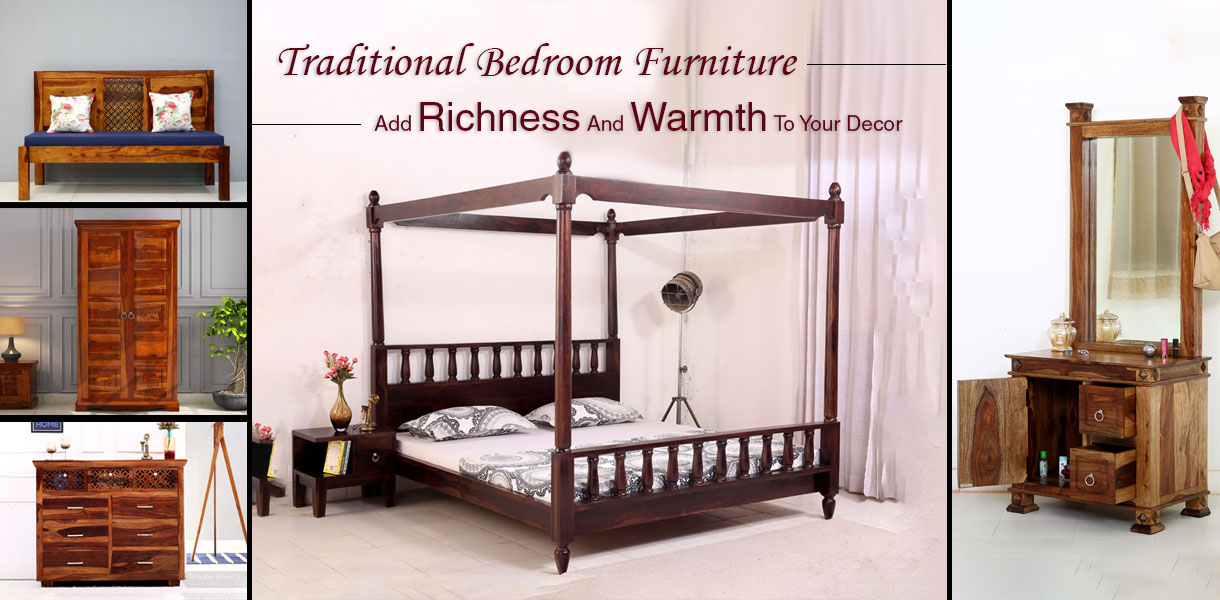
Are you someone who is rooted in tradition when it comes to decorating your personal space? And someone who always wanted to add classic and timeless design to your bedroom? Then this blog is for you, which includes tradition bedroom furniture units
Continue Reading
Dressing table is that one piece of furniture which can offer a chic look to your bedroom décor. These aren’t just for storage or for personal grooming, but also act as a platform to showcase your personality by embellishing it.
Continue Reading
Are you thinking to replace your old mattress? Or want a companion for your new bed? It may sound like a simple question- but it is usual to be distracted by different types of mattresses when you're looking for a new one. From size, material and com
Continue Reading


