





Buying the wrong office chair can lead to discomfort, poor posture, and wasted money. This guide explains the most common office chair buying mistakes, essential ergonomic features, material choices, sizing tips, and practical factors people often overlook before selecting a chair for work, study, or long daily sitting hours
Most office chair buying guides tell you to look for lumbar support, adjustable armrests, and a breathable back. That's fine advice and it's also the reason people end up with a ₹15,000 chair that collapses within two years, leaves them with lower back pain by noon, and scratches their floor in the process. The real mistakes happen before you even open a product page. This guide covers what the brands don't tell you, the specs they bury, and the questions you need to ask before buying anything.
The entire office chair industry designs to a default: a 5'9" Western male. That's not the average Indian adult. Seats are too deep, backrests too tall, armrests too wide. Buying without your own numbers first is guessing and usually guessing wrong.
Three measurements. Take them before you look at a single chair.
Knowing how to pick an office chair means knowing which numbers actually matter and knowing that most brands won't show them to you unprompted.
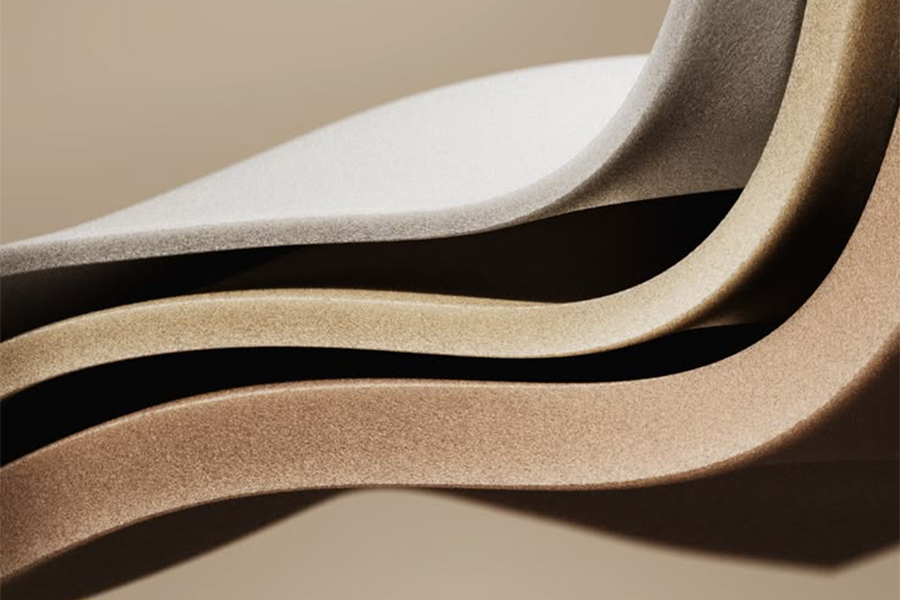
This single spec determines how long your chair lasts more than any other factor.
Brands rarely publish this number. Quick field test: press the centre of the seat firmly with your palm. If it compresses more than 2cm without much effort, the foam density is almost certainly below 35 kg/m³. Walk away.
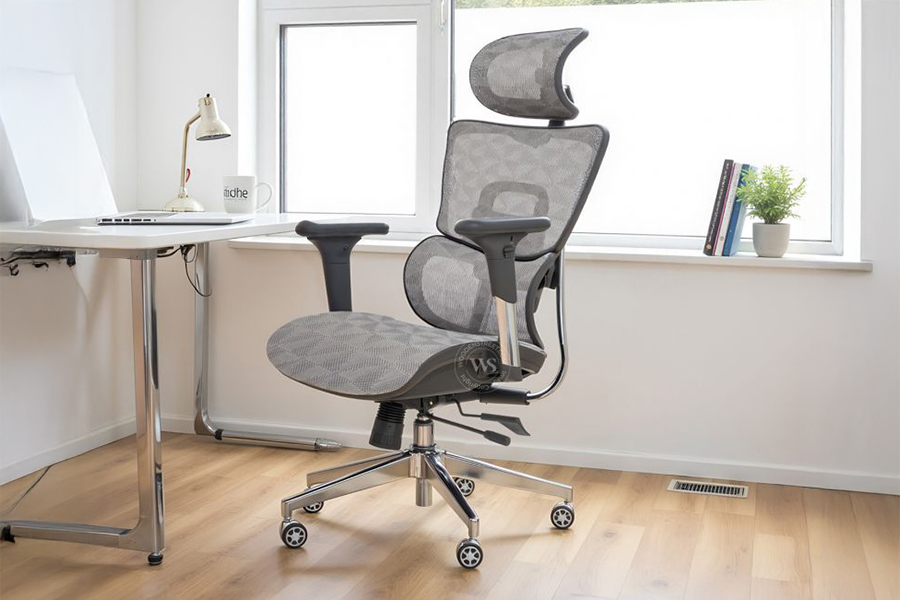
The gas cylinder controls seat height and it's where budget chairs cut corners most aggressively.
Almost no listing mentions this. Ask specifically before buying. If the seller doesn't know, that's your answer.
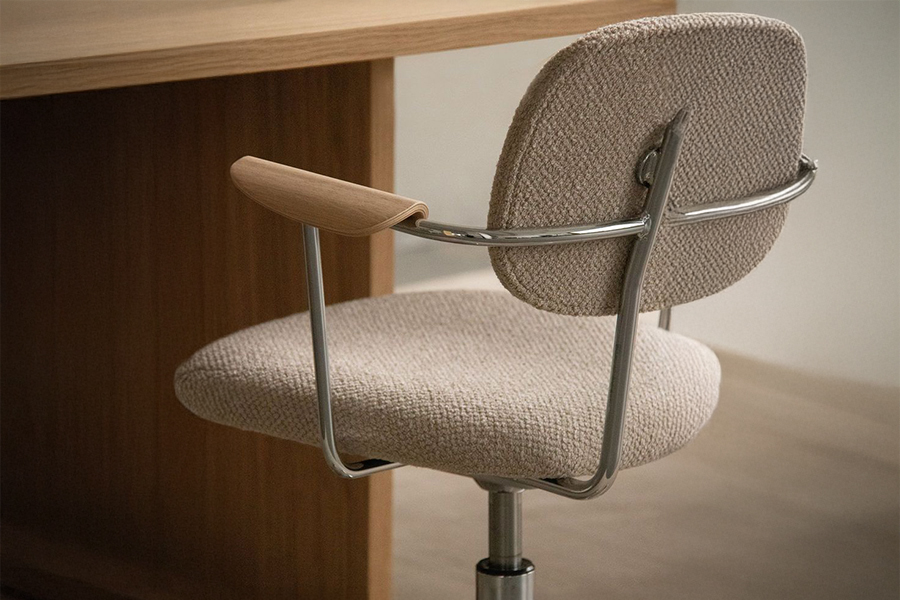
Indian homes and offices have almost all hard tile floors. This matters more than most people realise.
The casters that ship on most budget office chairs are 65A hard nylon designed for carpet flooring office setups and not for Indian tile floors. On Indian tile, they scratch the floor, roll uncontrollably on the slightest incline, and create noise with every shift in weight.
What you need: 50A soft polyurethane casters. They roll smoothly on hard tile without scratching, and they grip properly so the chair doesn't drift. Not a single Indian furniture listing I've seen mentions this. Ask for soft roll casters explicitly, or plan to replace them after purchase they're inexpensive and make an immediate difference.
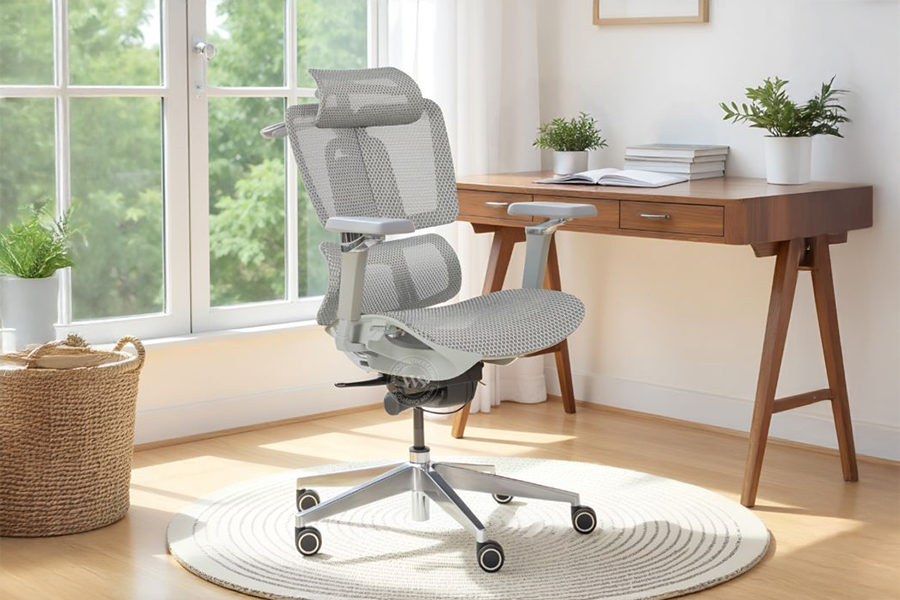
Here's something the industry will never advertise: the word "ergonomic" has no legal definition. Any manufacturer can print it on any chair, regardless of what the chair actually does. A plastic stool with a curved back could legally be sold as ergonomic.
A genuinely ergonomic chair one that actually supports different body types in different positions has all five of these simultaneously:
Quick test for the lumbar specifically: if the lumbar support only moves up and down but doesn't push in and out, it cannot actually fit different spinal curves. It's a visual feature, not a functional one. A chair with only up down lumbar adjustment is not ergonomic regardless of what the label says.
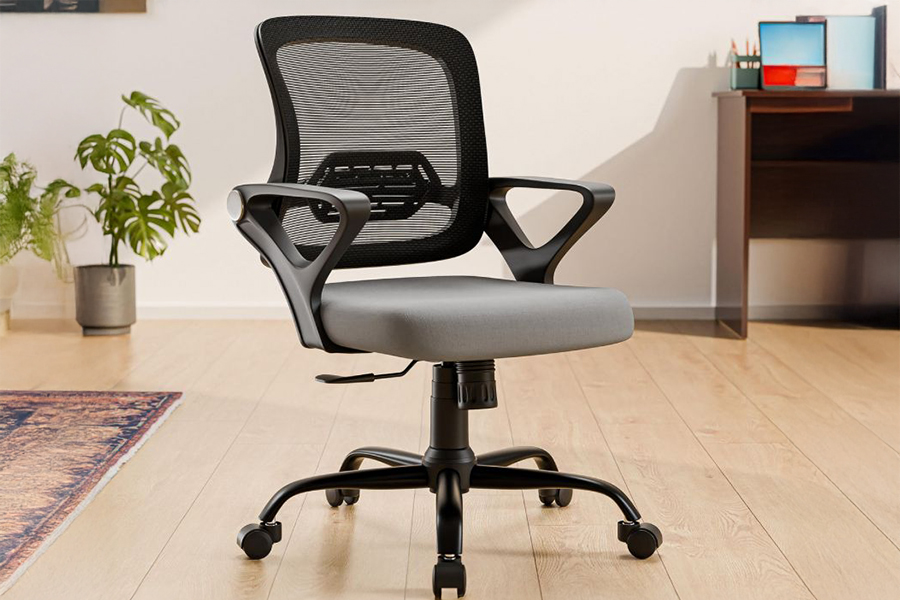
You've heard the 90-90-90 rule hips, knees, and ankles all at right angles, spine upright. It's been repeated in every office ergonomics guide for decades. It's also based on research from the 1970s.
Current biomechanical research tells a different story. A 100-110° hip angle a very slight recline reduces intervertebral disc pressure significantly more than sitting bolt upright. The numbers are striking: sitting at a strict 90° upright posture places approximately 140% of your body weight through your lumbar discs. Reclining to 135° brings that down to around 99% equivalent to standing.
A chair that supports a gentle working recline isn't a lazy chair. It's medically the better option. If you're choosing how to choose an ergonomic chair and the backrest locks you into 90°, that's a design flaw, not a feature.
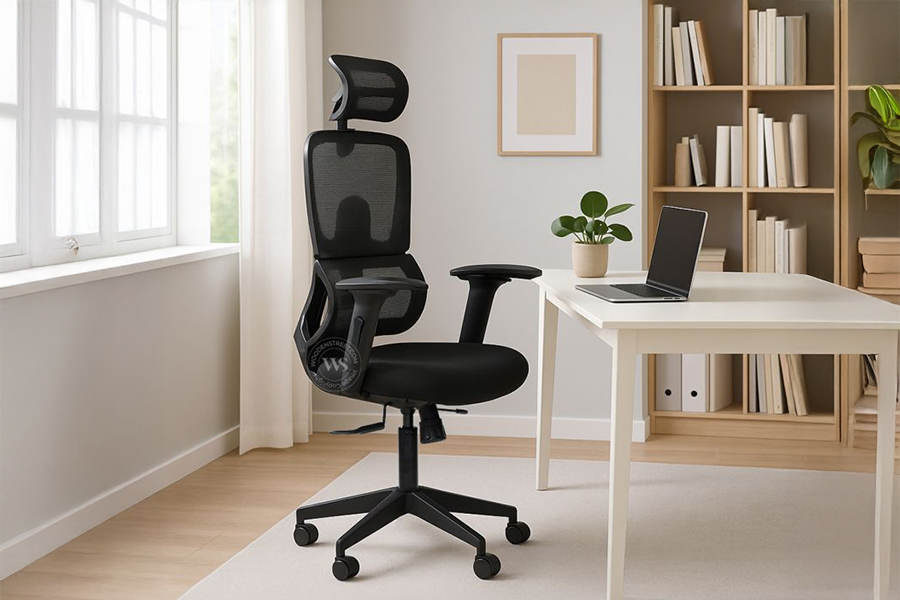
You can buy a perfect chair and still be uncomfortable every day because nobody checked whether it works with your desk.
Most Indian desks both home office and commercial sit at a fixed height of 730-750mm. The correct seat height for a desk at that height is the desk height minus 280-300mm, leaving room for your thighs to sit under the desk without your elbows rising above desk level.
For a standard 730mm desk: your chair needs a seat height range that includes 430-450mm. Check the product's minimum and maximum seat height before buying. Many chairs particularly taller models designed for the Western market don't go low enough to be used correctly with a standard Indian desk. This is not something sellers will flag. You have to check it yourself.
| Budget | Hidden Reality |
| Under ₹5,000 | Foam under 25 kg/m³, Class 1 cylinder replace within a year |
| ₹5,000-₹12,000 | Foam 25-35 kg/m³, basic lumbar manageable for under 4 hours daily |
| ₹12,000-₹25,000 | Foam 35-50 kg/m³, Class 4 cylinder the real sweet spot for daily use |
| ₹25,000-₹50,000 | 50+ kg/m³ foam, aluminium base, 8-10 year lifespan |
| ₹50,000+ | Engineering grade build justified for medical needs or executive use |
The ₹12,000-₹25,000 range is where the equation genuinely shifts. GreenSoul chairs, available through WoodenStreet's office chair collection, hit the Class 4 cylinder and adjustable lumbar benchmark in the ₹10,000-₹20,000 range which is a harder combination to find at that price than most buyers expect.
A good office chair isn't about brand names or how impressive it looks in a showroom photo. It's about foam that doesn't collapse in 18 months, a cylinder that holds its height, casters that don't scratch your floor, and a backrest that actually fits your spine not the spine of a hypothetical Western buyer. Most people overspend on features they don't need or underspend on the specs that actually matter. Now you know which is which. Measure your body, ask the right questions before you buy, and treat the ₹12,000-₹25,000 range as the real starting point for anything you're going to sit in for 6 hours a day. Your back five years from now will appreciate it.
We will be back with the next blog soon. Till then, stay tuned!
Read More cms
Types of Chairs A Road to the Journey Of Chairs
Image Source: Pinterest, Google, and Wooden Street
A Minimum 35 kg/m³ for occasional use, and 50+ kg/m³ if you're sitting for 6 or more hours daily. Below 35 kg/m³, the foam compresses within a year or two and you're left sitting on the base frame with no cushioning or support.
A The gas cylinder controls the pneumatic height adjustment of your chair. Class 4 is the highest standard for consumer office chairs - it holds the set position under load for years without drifting. Class 1 and 2 cylinders, common in budget chairs, begin to sink within 6 to 12 months of daily use
A 50A soft polyurethane casters. Most chairs ship with 65A hard nylon casters built for carpeted floors - on Indian tile, these scratch surfaces and roll unpredictably. Soft polyurethane casters grip tile properly, roll quietly, and don't damage flooring
A Check for all five simultaneously: lumbar that adjusts both height and depth, seat depth adjustment, 3D or 4D armrests, tilt tension control, and a backrest that moves independently of the seat. If any one of these is missing,
A Not 90°. Current research supports a 100-110° hip angle - a slight recline - as the posture that places the least pressure on lumbar discs. A strict upright 90° position actually increases disc load. Your chair should allow and support a gentle working recline, not lock you upright
A Almost always foam density. Low-density foam compresses permanently under body weight within months - the chair looks the same from the outside, but the support is gone. If your chair felt good when new and doesn't anymore, the foam has degraded. It can't be reversed; the chair needs to be replaced or the seat cushion upgraded
Trending Products
Top Picks from EveryoneArticles you will love to read

Enhance your dining experience with our handpicked collection of stylish dining chairs. From sleek modern designs to classic wooden finishes, these chairs bring comfort, elegance, and timeless style to your home. Find the perfect seating solution to elevate every meal.
Continue Reading
Hours of sitting causing sciatica pain? Here’s your complete guide to the best office chairs with lumbar support, cushioning, and posture-friendly designs for true comfort.
Continue Reading
Planning to upgrade your living space? This guide reveals expert tips to choose the perfect 3 seat recliner couch, covering comfort, materials, mechanisms, and interior styling. Learn how to balance functionality with aesthetics to create a cozy, modern, and space-efficient home setup in 2026.
Continue Reading
Setting up your workspace the right way can completely change how you work from home. This blog on Vastu for office desk at home explains the best desk direction, seating positions, and simple adjustments that help improve focus and comfort. From choosing the right home office desk and chair to creating a balanced work from home setup, these practical tips make your home office feel more organised and easier to work in every day.
Continue Reading
Find the best fabric for couches based on your lifestyle, budget, and home setup. Easy tips, real examples, and no confusion
Continue Reading



/87.jpg)