


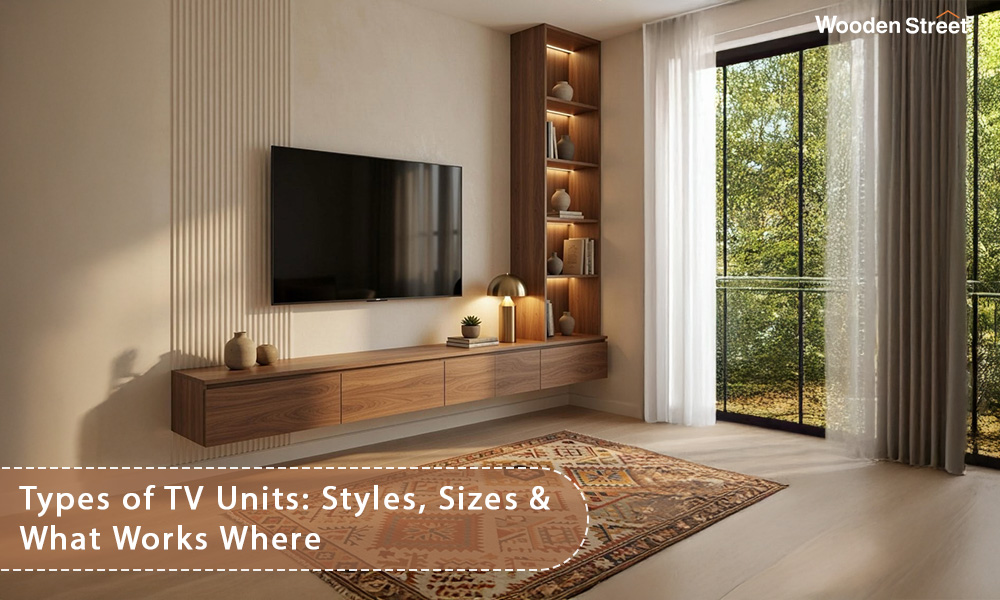



Understanding the various types of TV stands and entertainment units can help you create a functional and organised living space. This guide compares wall-mounted panels, floating units, and floor-standing designs, highlighting where each style works best based on room size, storage needs, and layout
Most people buy the TV first. Then they measure the wall. Then they look for a TV unit that fits what's left over.
That's the wrong order and it's why so many Indian living rooms have a TV unit that looks like it was chosen as an afterthought, because it was.
The TV unit is not a shelf you put under the TV. It's the anchor of the entire living room wall the piece that determines how the room is organised, how cables are hidden, how much storage the space actually has, and how the wall looks as a whole. Getting it right before the TV goes up changes the entire result.
There are more types of TV units than most buyers realise, and each one fits a different room size, wall layout, and lifestyle. Here's how they break down and what to look for in each.
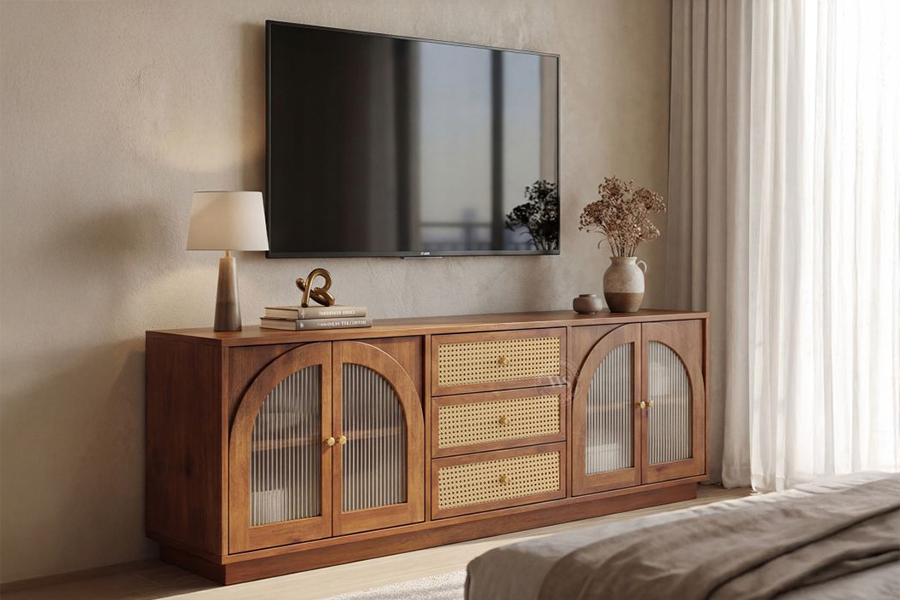
Here's something worth sitting with for a moment: the television is not the most important decision on that wall. The unit is.
The TV itself is a black rectangle. Its size, height, and position are what the eye adjusts to and those three things are determined by the unit below it, not the other way around.
When you choose the unit first, you decide the visual weight of the wall, the storage it provides, the height at which the screen will sit, and the relationship between the TV and everything else in the room. When you choose the TV first and find a unit to fit under it, you're solving a puzzle backwards and the solution is almost always a compromise.
The unit should determine the TV size and wall layout. Not the other way around. That single shift in thinking changes what you end up with.
The first decision is how the unit sits in the room whether it touches the floor, hangs on the wall, or uses a corner. Each has a different visual effect and suits different living room types.
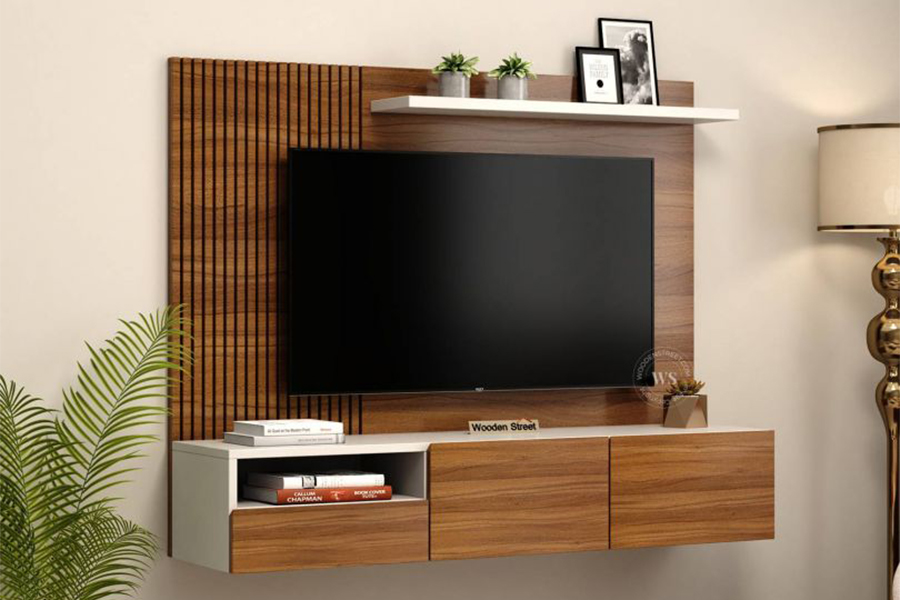
A floating TV unit is fixed directly to the wall with no legs and no floor contact. The floor runs completely underneath it, visible from one side of the room to the other without interruption.
That visual continuity is what makes floating units the most popular choice in modern Indian apartments. When the floor is uninterrupted, the room reads as larger the eye travels further without stopping. In compact living rooms where every visual trick for making space feel bigger matters, a floating unit does real work.
It also makes the floor easier to clean no legs to manoeuvre around, no gap that becomes a dust trap. Cables can be routed through the wall behind the unit rather than trailing across the floor, which results in a cleaner wall overall.
The trade off is installation. A floating unit needs to be fixed into the wall properly into studs or with appropriate anchors rated for the unit's weight plus everything stored on it. In Indian apartments with RCC walls, this is usually straightforward for a professional. DIY installation without confirming the anchor points is a risk not worth taking with a heavy unit full of equipment.
Among the types of TV stands and units available today, floating wall-mounted panels are consistently the most requested in urban Indian homes and the results justify the installation effort.
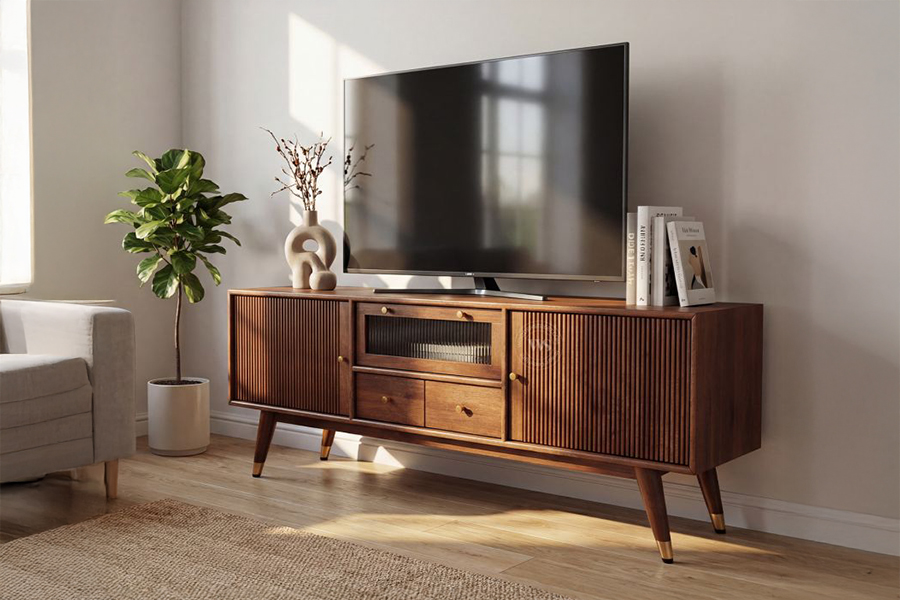
The floor-standing unit is traditional furniture in the truest sense four legs or a base, sitting on the floor, requiring no wall fixing at all.
The practical advantages are real. No drilling means no damage to walls, which matters enormously in rented apartments. Relocation is possible without patching holes or repainting. In homes where the layout changes or the TV wall isn't permanent, a floor-standing unit offers flexibility that a wall-mounted one simply doesn't.
Visually, floor-standing units suit traditional Indian interiors homes with wooden furniture, heritage pieces, and decor that doesn't subscribe to the clean floating panel aesthetic of modern apartments. A solid sheesham floor-standing unit with carved detailing looks completely at home in a traditional setting and completely out of place in a minimalist one.
The limitation is floor visibility. A floor-standing unit, by definition, sits on the floor which visually breaks the room at that point. In smaller living rooms, this can make the space feel more divided and less open than a floating unit in the same position.
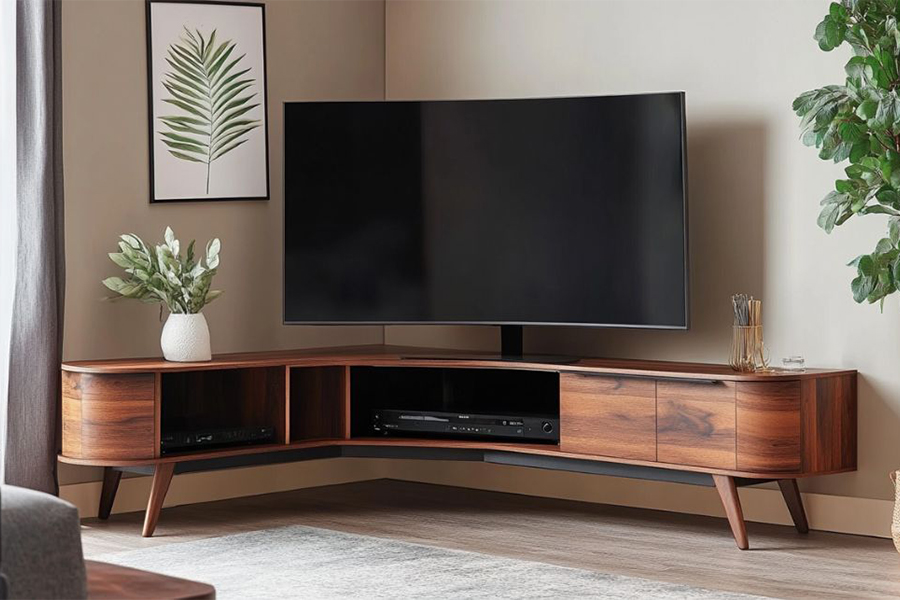
A corner TV unit is angled for diagonal placement sitting where two walls meet rather than flat against a single wall.
In rooms where there is no natural dominant viewing wall an awkwardly shaped room, a layout where the seating area sits in the middle with walls on multiple sides a corner unit solves a real problem. It positions the TV so it's visible from the main seating area without requiring the furniture to be rearranged around a wall it doesn't naturally face.
It also recovers dead space. The corner of a living room is one of the most consistently underused areas in Indian apartments too narrow for a sofa, too enclosed for open shelving, too visible to leave empty. A corner TV unit turns that unused space into a functional anchor.
The limitation is scale. A corner unit is inherently smaller than a full wall unit the diagonal placement limits how wide it can be. For large TVs or rooms that need significant storage, a corner unit may not provide enough of either.
Once the mounting style is chosen, the next decision is how the unit handles storage which depends almost entirely on the household and how the living room is actually used.
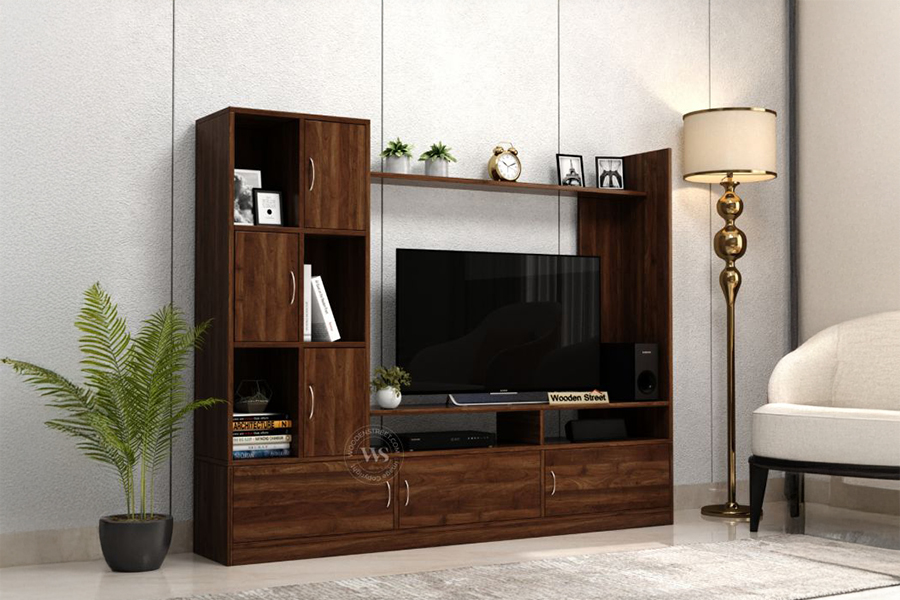
An open shelf TV unit has no doors books, decor objects, devices, remotes, and everything else are visible at all times.
The upside is display. Open shelves invite curation a row of books with a plant in front, a speaker beside a framed photograph, a small sculpture at eye level. When a shelf is thoughtfully put together, it adds personality to a room in a way that closed cabinets never can.
The downside is maintenance. Open shelves require the discipline to keep them looking intentional rather than accumulated. In Indian living rooms with cables, devices, remotes, medicines kept within reach, children's toys, and the general accumulation of daily life open shelves often start curated and become cluttered within a month.
They work for people who genuinely maintain them. For everyone else, closed storage is more honest.
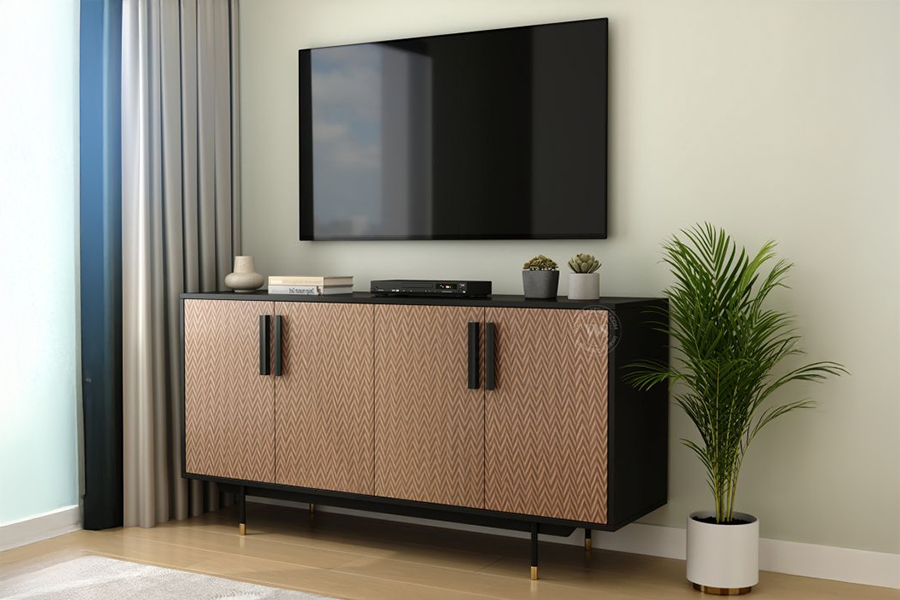
Closed cabinet TV units have doors push-to-open, handle-pull, or shutter-style that conceal everything inside.
This is the most practical configuration for most Indian families. Cables behind the TV, set-top boxes, gaming consoles, the remotes for four different devices, the accumulated paperwork that inevitably lands on the nearest flat surface all of it goes behind the doors. The room looks clean regardless of what's inside.
Closed storage also protects contents from dust, which in Indian conditions is not a small consideration. Electronics stored in open shelves collect dust significantly faster than those in closed cabinets.
The trade off is that everything becomes equally hidden the things you want to display and the things you don't both disappear behind the same doors. For people who want to show books, objects, or decor on the TV wall, an all closed unit loses that opportunity entirely.
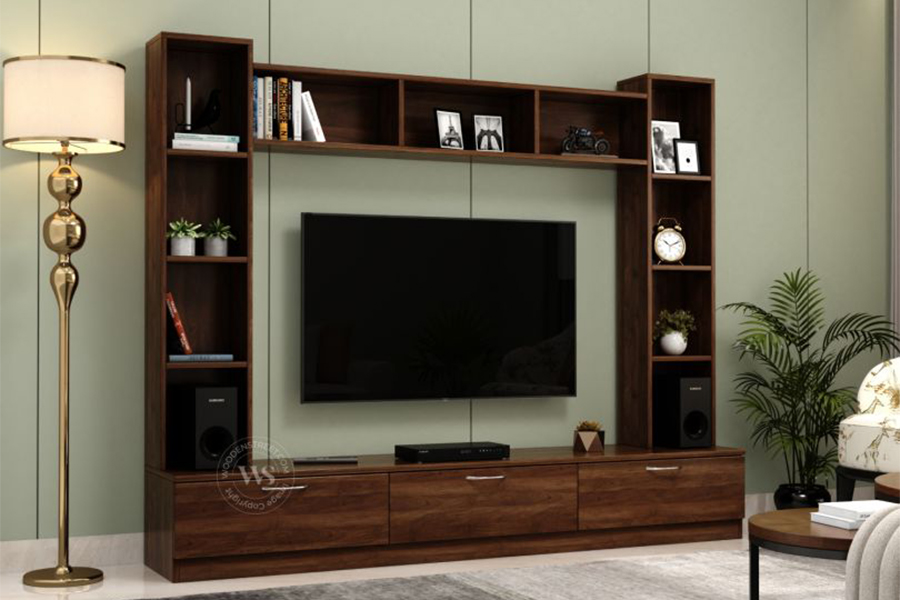
Mixed storage typically open shelves in the upper section, closed cabinets at the base is the most versatile configuration and the most commonly recommended for Indian living rooms.
The logic is practical. Open shelves at eye level and above are where curated items live the things you've chosen to display because they add something to the room. Closed cabinets at the base are where everything else goes devices, cables, the things that need to be accessible but not visible.
Display what you want seen. Hide what you don't. The wall looks considered without requiring the discipline of a fully open unit, and the storage is more useful than a fully closed one.
Among all the types of TV units by storage configuration, mixed storage suits the widest range of households and lifestyles which is why it's the default recommendation for most living room setups.
The third dimension of choice is how much of the wall the TV unit occupies which determines whether the TV is the centrepiece of the wall or one element within a larger composition.
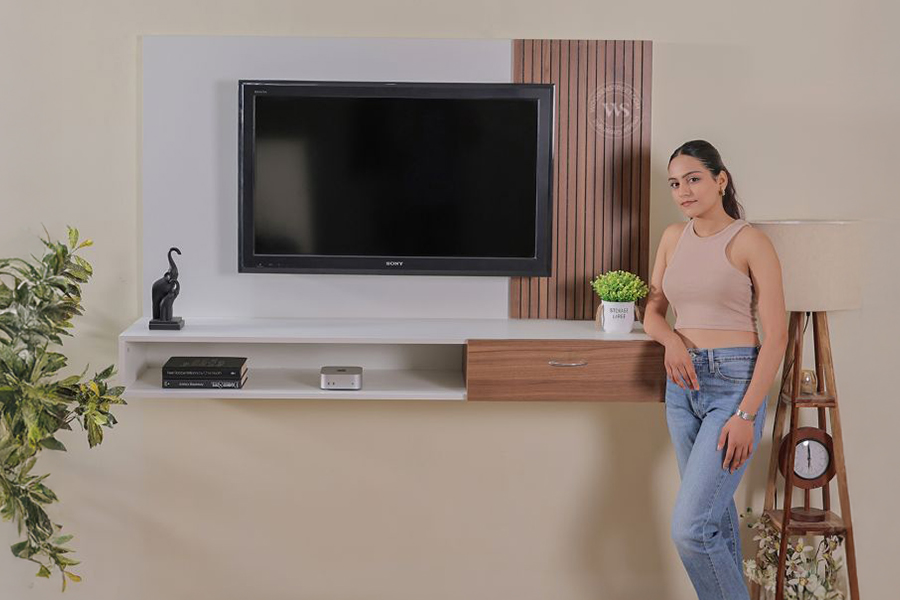
A compact TV unit typically 90 to 120 cm wide holds the TV and a limited amount of storage on either side. The TV wall around it remains mostly empty.
This works when the TV is not the primary focal point of the room when the living room is set up more for conversation, reading, or general use than for media viewing, and the TV is a secondary element rather than the anchor.
It also suits rooms where other furniture a large bookshelf, a sideboard, an accent wall treatment is already doing significant work on the TV wall or adjacent walls, and a full-width unit would compete rather than complement.
For very small living rooms where wall width is limited, a compact unit is sometimes the only practical option. In those cases, floating it and keeping the floor visible underneath helps prevent it from feeling too small for the space.
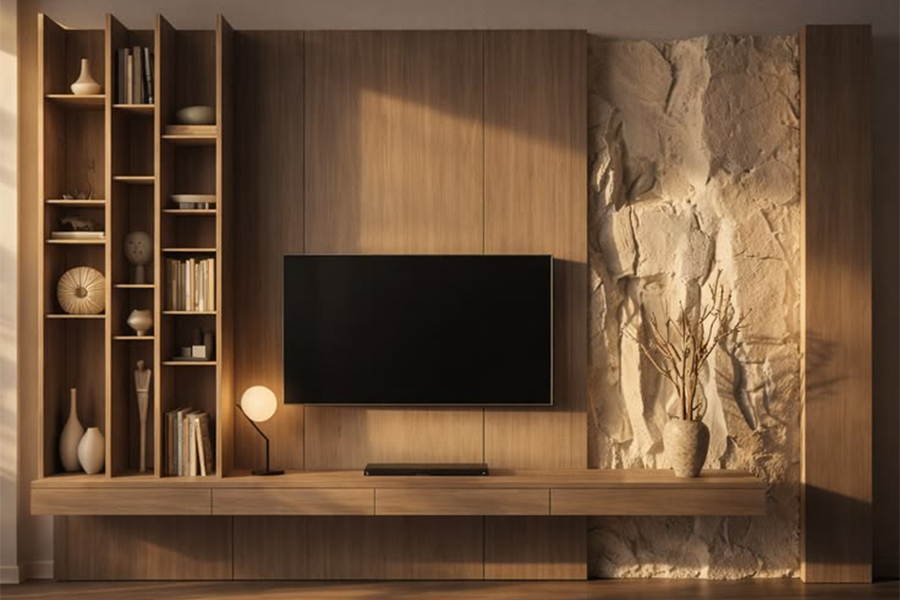
A full entertainment wall spans the entire width of the TV wall from one side to the other with the TV as one element within a larger system of shelves, cabinets, and display areas.
This is the most impactful single furniture decision in any living room. Done right, a full entertainment wall transforms the room the TV wall becomes an intentional composition rather than a TV with some shelves around it. Storage increases dramatically. The room feels designed rather than furnished.
The TV in a full wall is no longer the only thing you look at it becomes part of a wall that earns attention as a whole. Books, objects, lighting within the unit, plants, artwork integrated into the shelving all of it contributes to a wall that works whether the TV is on or off.
The investment is real a properly designed full entertainment wall, custom built or from a quality modular system, costs significantly more than a standalone unit. But for families who spend significant time in the living room and need genuine storage alongside media it's the most functional and visually rewarding version of this wall in the home.
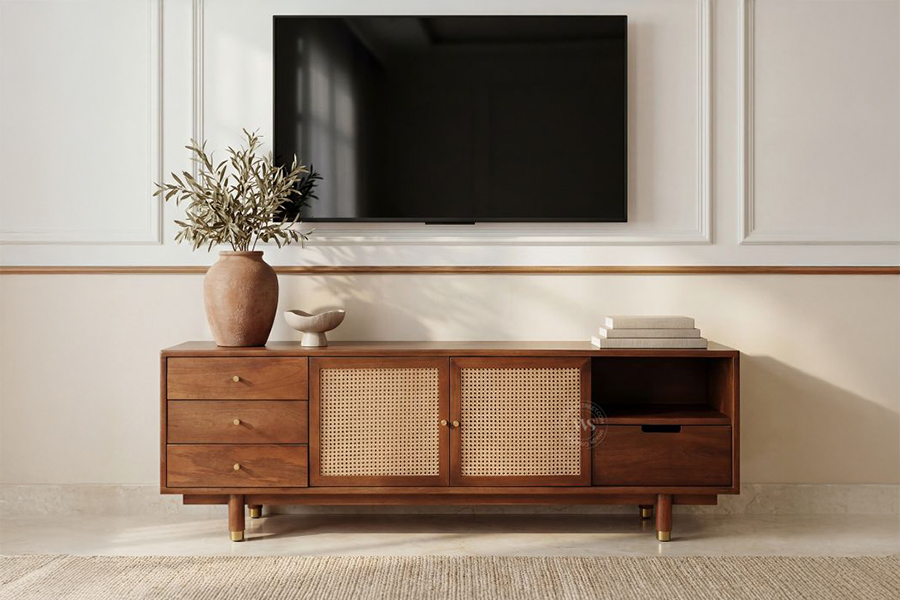
This is the single most consistently ignored rule in Indian TV unit placement and the one that causes the most physical discomfort over time.
The centre of the TV screen should sit at seated eye level approximately 100 to 110 cm from the floor for a standard sofa height. This means the middle of the screen lands roughly at the eye level of someone sitting normally on the sofa.
Most TV units in Indian living rooms place the screen higher than this. The TV unit sits at a standard furniture height, the TV goes on top of it, and by the time the screen is mounted, its centre is at 130 or 140 cm from the floor. For someone sitting on a sofa, that means looking upward at the screen for every minute of viewing.
Looking upward at a screen for one episode is fine. Looking upward for two hours every evening, seven days a week, over months that's the setup for chronic upper neck strain and the kind of persistent headache that people blame on screen time rather than screen position.
Check the height before the unit is fixed or the TV is mounted. Measure from the floor to seated eye level. That's where the screen centre should land. Adjust the unit height or the TV mounting position not your posture to make it work.
The TV unit is not the last thing to figure out after the TV is bought and the sofa is placed. It's the first because everything else on that wall follows from it.
Mounting style first: floating for modern apartments and smaller rooms, floor-standing for rentals and traditional interiors, corner for rooms without a natural viewing wall. Storage configuration next: open shelves for curated displays, closed cabinets for practical families, mixed for the most households. Scale last: compact when the TV is secondary, full entertainment wall when the living room wall deserves to be taken seriously.
And then check the height before anything is fixed. The screen centre at 100 to 110 cm. Seated eye level. Not TV stand height plus TV height seated eye level.
A TV unit chosen in this order, for the right reasons, doesn't just hold the television. It organises the room.
We will be back with the next blog soon; till then, stay tuned!
Read More :
Is Your TV Mounted Too High? Most Homes Get This Wrong
Image Source: Wooden Street, Google, Pinterest
A A wall-mounted floating unit - it keeps the floor fully visible, makes the room feel larger, and doesn't add visual bulk at floor level.
A The TV screen centre should sit at 100 to 110 cm from the floor - at seated eye level - to avoid neck strain during extended viewing.
A A TV unit holds the TV with limited surrounding storage. An entertainment wall spans the full wall width, integrating the TV into a larger storage and display system.
A A floor-standing unit avoids drilling entirely. If a floating unit is preferred, discuss it with the landlord first - most RCC walls patch cleanly when you leave.
Trending Products
Top Picks from EveryoneArticles you will love to read
Discover 30+ interior design ideas to elevate your home with modern aesthetics and smart functionality. From stylish living room makeovers to creative space-saving solutions, explore trendy and budget-friendly inspirations to revamp your space effortlessly with Wooden Street’s expert design collection.
Continue Reading
Explore vibrant orange colour combinations that suit every space and are perfect for adding warmth and energy to your furniture. Find smart yet stylish orange furniture ideas for every interior.
Continue Reading
Explore blue colour combination ideas for living rooms, bedrooms, and kitchens. From a blue sofa set to cupboards, pair shades with white, gray, yellow, or turquoise for stylish interiors.
Continue Reading
Kitchen colour as per Vastu Shastra plays a vital role in balancing energy and ensuring health, wealth, and harmony at home. This blog explores the most auspicious colour combinations to make your kitchen vibrant, positive, and aligned with prosperity.
Continue Reading
Find smart home renovation ideas, from kitchen makeovers to sofa renovation, and transform your house with stylish, functional, and budget-friendly upgrades.
Continue Reading


