




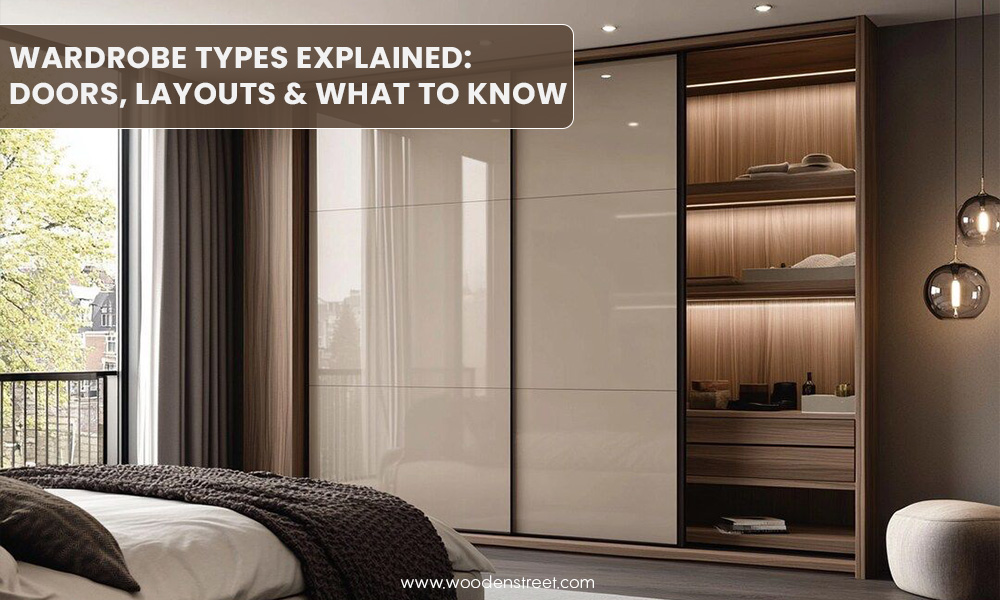
Not all wardrobes are created equal. This guide breaks down the most popular types of wardrobes, compares wardrobe material types, and explains door mechanisms, storage configurations, and space-planning considerations. Learn the pros, cons, and hidden factors buyers often overlook before investing in a wardrobe for their home
You stand in a furniture showroom, eyeing a beautiful wardrobe. The finish is perfect. The handles look sleek. You imagine it sitting in your bedroom and think yes, that's the one.
Three weeks later, the wardrobe arrives. The doors need 22 inches of clear floor space to open. Your bed is 20 inches from the wall. Congratulations you now own a wardrobe you can barely open.
This happens more often than any furniture brand will admit. And the fix is simple: understand the types of wardrobes before you fall in love with one. That is exactly what this guide does.
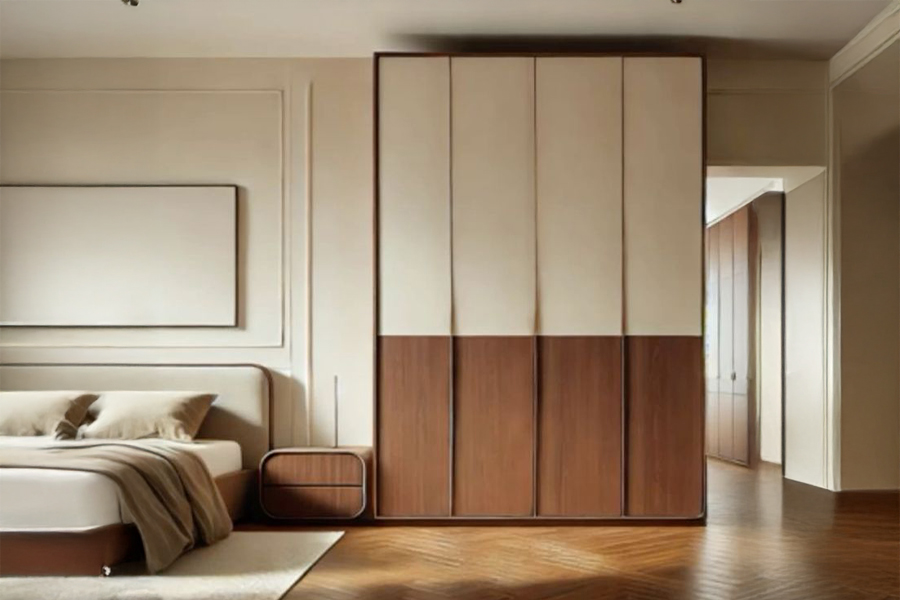
Walk into any furniture store and the first thing they will show you is the finish the laminate colour, the handle style, the mirror placement. All of that is secondary. Before any of it matters, two questions determine whether the wardrobe will actually work in your room:
Most people answer these questions after they have already chosen the wardrobe. That is the wrong order. Get the door type and internal configuration right first. Then choose the colour.
The door is not just a door. It is a spatial decision. Different types of wardrobe door mechanisms demand very different amounts of room and getting this wrong means a wardrobe that works against you every single day.
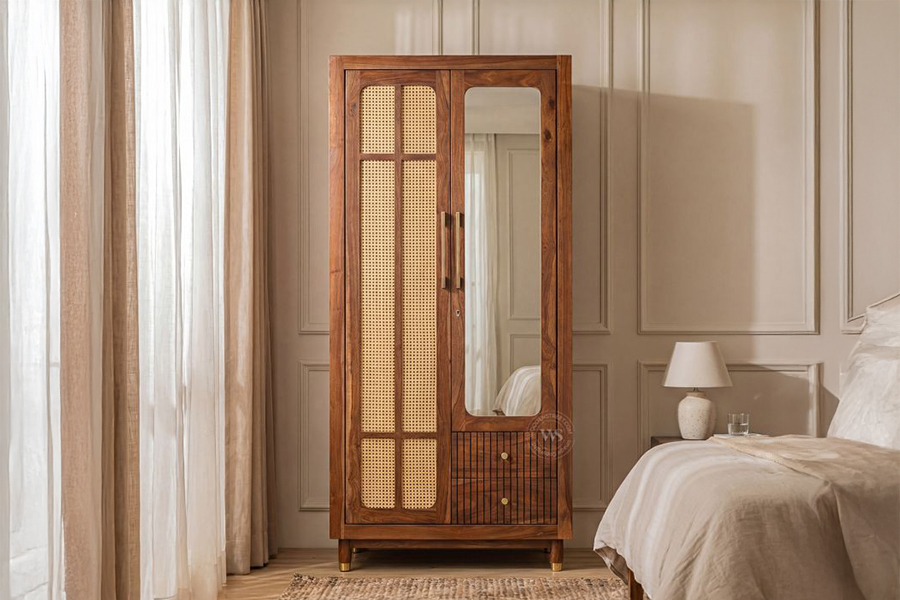
Full access, all at once. Open both doors and every shelf, rail, and drawer is visible and reachable at the same time. For someone who keeps things organised and wants to see everything in one glance, this is the ideal setup.
But the access comes at a cost space. A hinged door needs 18 to 24 inches of clear floor area directly in front of it to open fully. That is floor space that cannot have a bed, a chair, or anything else sitting in it.
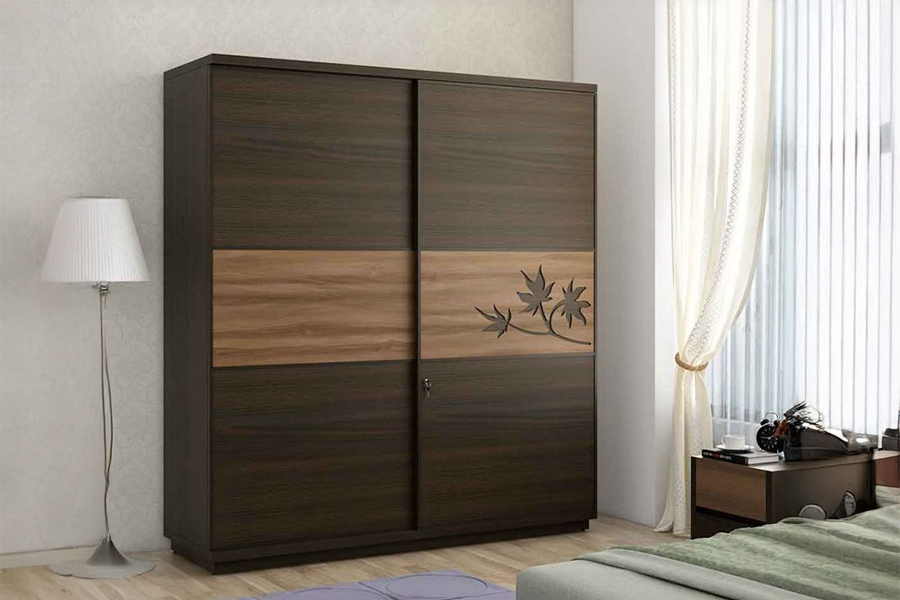
Zero swing clearance. The doors slide along a track no floor space required in front. For compact bedrooms, this is not just a preference, it is often the only practical option among all the types of wardrobes available.
In bedrooms where the bed, the side tables, and the wardrobe are all sharing a limited floor plan, a sliding door wardrobe genuinely reclaims the room. The trade off is access you can only reach one half at a time. The left door slides right, the right door slides left, and there is always a section blocked.
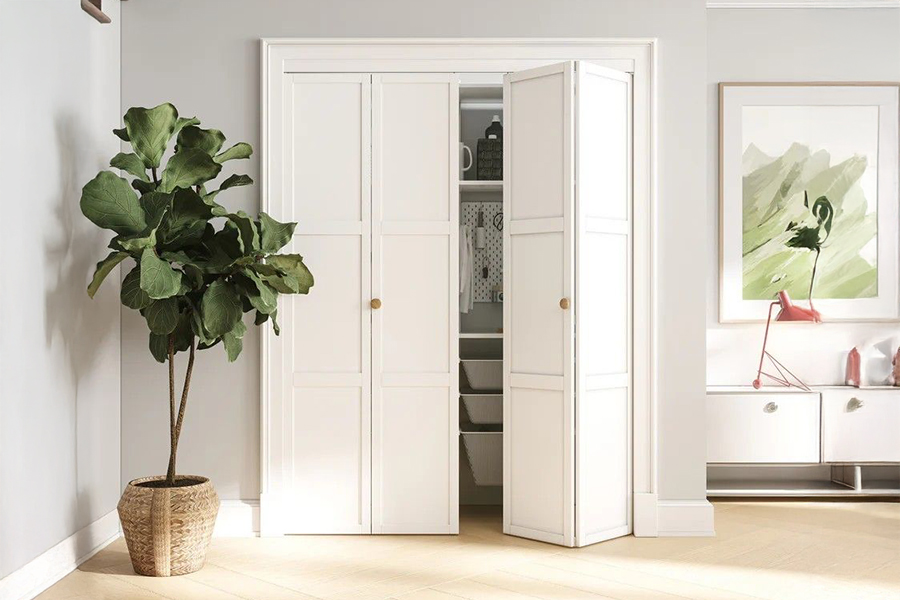
The middle ground between hinged and sliding and honestly, an underrated option that most buyers overlook entirely. Bifold doors fold in half when opened, so they need less clearance than a full hinged door but give more access than a sliding door.
You can see most of the wardrobe interior at once without needing a full 22 inch swing zone. For rooms that are not tiny but not spacious either, bifold wardrobes sit in a useful sweet spot.
Once you have sorted the door type, the next question is size and layout. The different types of wardrobes by configuration tell you not just how wide the piece is, but how it divides up inside and whether it actually matches how you live.
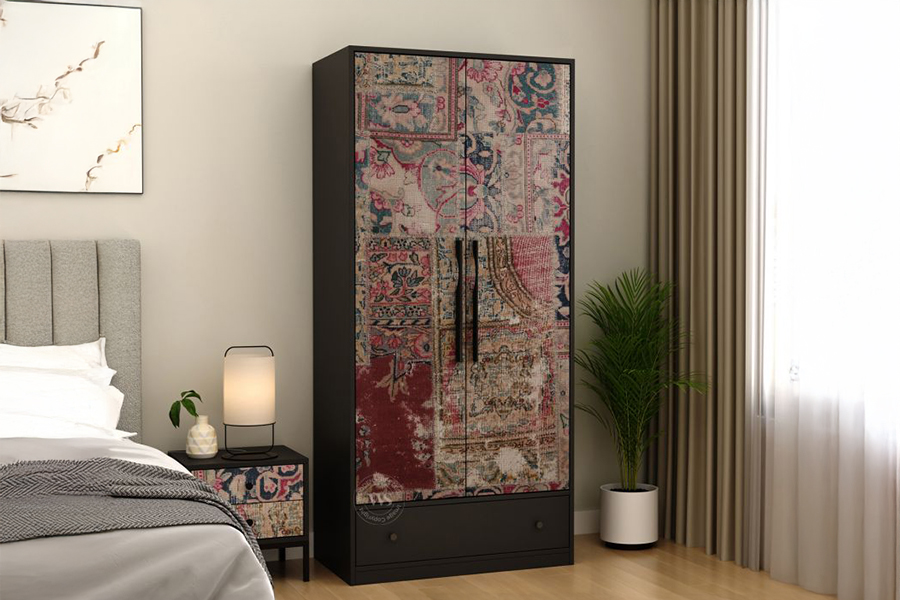
Compact, simple, and done in. The two door wardrobe has a fixed role it works well for children's rooms, single occupants with minimal clothing, or as a secondary wardrobe for one person in a couple's bedroom.
If two people are sharing a two door wardrobe, give it about three months before it is completely overflowing. It is not a storage problem it is a space problem. A two door wardrobe simply does not have the width to hold two full adults' wardrobes with any functional breathing room. Buy accordingly.
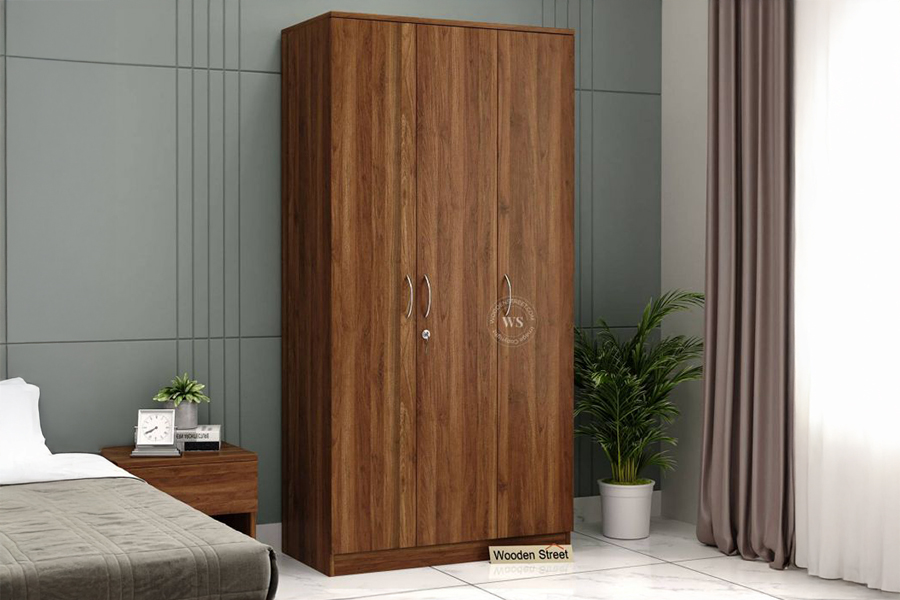
The sweet spot for most Indian master bedrooms. Wide enough to create distinct sections one for hanging clothes, one for folded items, one shared or for the other person without requiring a wall to itself.
The three door wardrobe is the most practical middle ground configuration in the entire types of wardrobes category. It is not too wide for mid size rooms, not too narrow for two people, and the three section layout naturally encourages better organisation.
When configuring a three door wardrobe for two people, assign one full door section to each person and use the middle section for shared items bedding, seasonal clothes, accessories. This simple division prevents the slow wardrobe takeover that happens in most shared bedrooms.
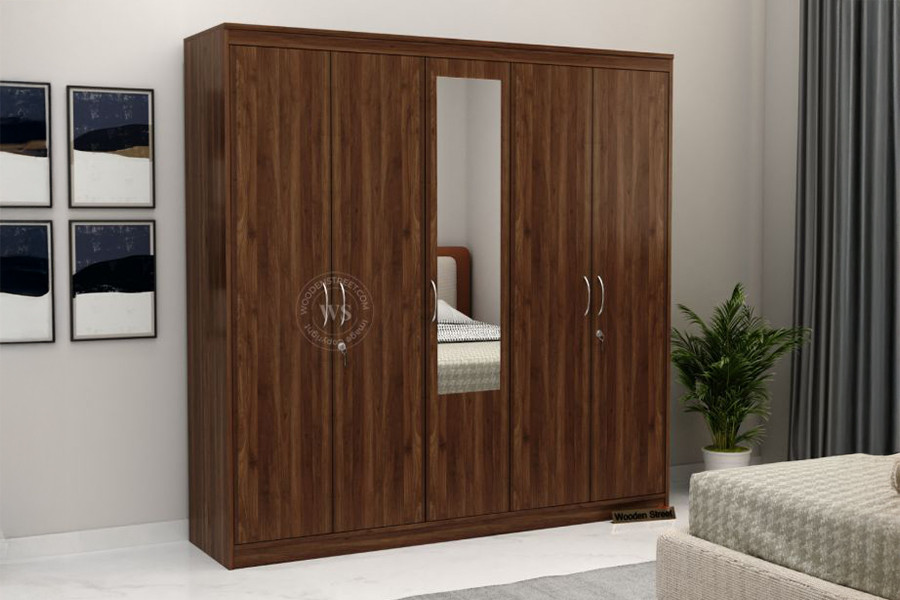
For larger bedrooms and larger storage needs. A full wall wardrobe changes the feel of a room completely it is no longer just furniture, it is an architectural feature. Done right, it looks intentional and high end. Done wrong, it just looks like too much brown laminate.
The key decision here is the door mechanism. A four door hinged wardrobe in a room that is not deep enough creates the same clearance problem described earlier but multiplied across the full width. Four hinged doors simultaneously open is an enormous amount of swing space.
For four door or full wall configurations, the sliding door version solves the clearance problem entirely. You lose simultaneous full access, but in a room 12x14 feet and above, the sliding mechanism keeps the space feeling open and functional. This is one of the most common wardrobe material types and configurations in larger Indian master bedrooms today.
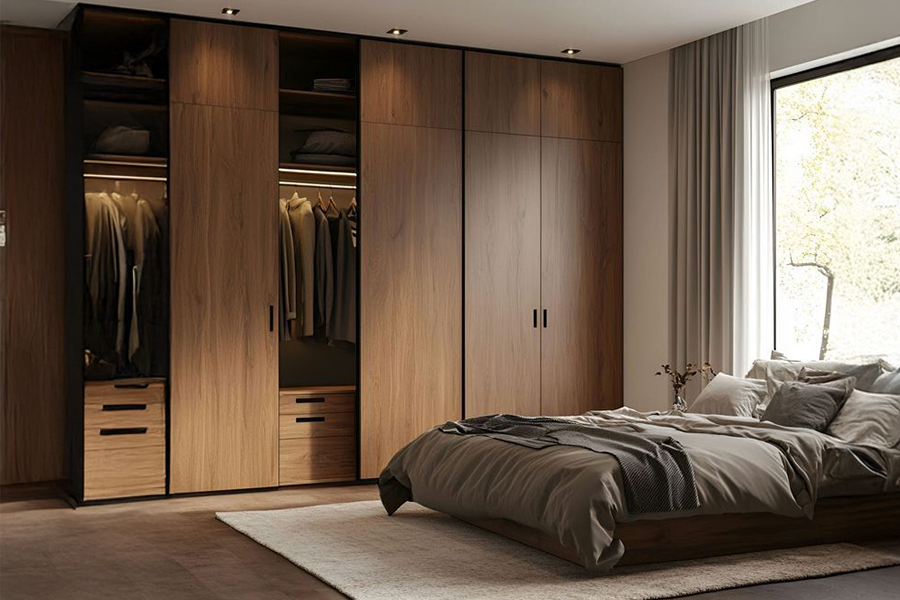
Here is the upgrade most people skip because of the slightly higher cost and almost everyone who skips it regrets it later.
A standard wardrobe stops at around 7 feet. The ceiling is at 9 or 10 feet. That gap at the top collects dust, stores nothing, and makes the room feel lower than it actually is. A floor to ceiling wardrobe eliminates all three of those problems at once.
Out of all the types of wardrobe configurations available, this is the one where the cost difference is most clearly justified. It is worth paying extra for almost every bedroom.
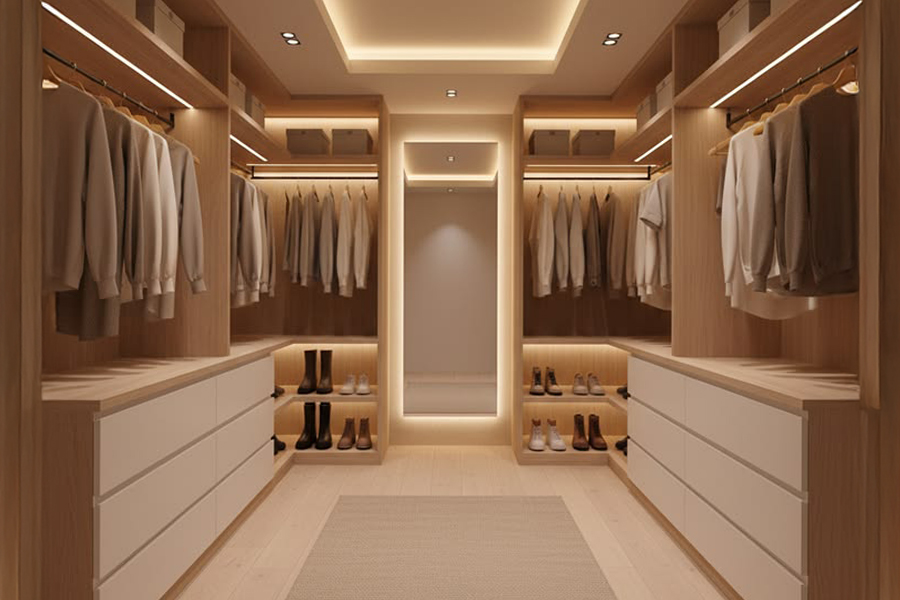
The dream setup for anyone who has ever wanted to stop treating their bedroom like a storage room. A dedicated space shelves on three sides, a central island if the space allows, a full length mirror, and all your clothes visible and accessible at once.
But a walk in wardrobe is only as good as the space it has to work with. And here is the number most people do not know before planning one:
A walk in wardrobe needs a minimum of 4 feet of clear central walking space to function properly. Less than that and you are not walking in you are squeezing in sideways. That is not a wardrobe, that is just a narrow room with clothes on the wall. Count the depth of the shelving on both sides, then make sure 4 feet remains in the middle.
Lighting in a walk in wardrobe is non negotiable. Without proper lighting ideally LED strips under each shelf and a ceiling light in the centre colour matching becomes guesswork. Navy and black look identical in poor light. Whites and creams are indistinguishable. Plan the lighting at the same time you plan the layout, not after.
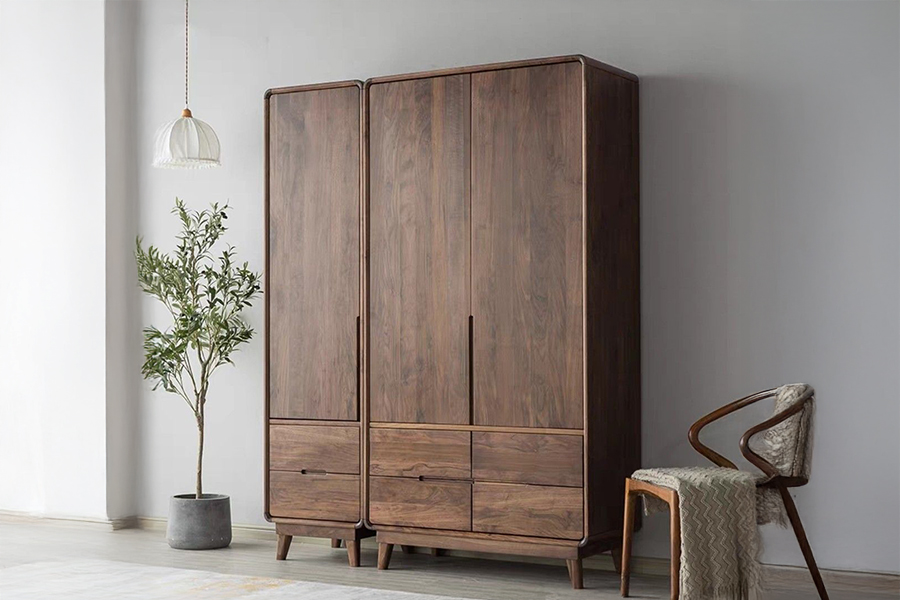
The only genuinely flexible option in the wardrobe world. No drilling, no permanent installation, no carpenter required. You buy it, you assemble it, you move it if needed. For renters, it is often the only realistic choice.
Freestanding does not mean unsecured. A tall freestanding wardrobe that is not wall anchored is a tipping risk especially with children in the house, or if someone opens a heavy drawer while the wardrobe is not on level ground. Wall anchoring a freestanding wardrobe with a simple L bracket takes ten minutes and should always be done regardless of what the instructions say.
Among all the types of wardrobes, freestanding options have improved dramatically in recent years. Many now come with internal drawer systems and adjustable shelving that rivals built in options. Do not write off freestanding just because it sounds like a compromise.
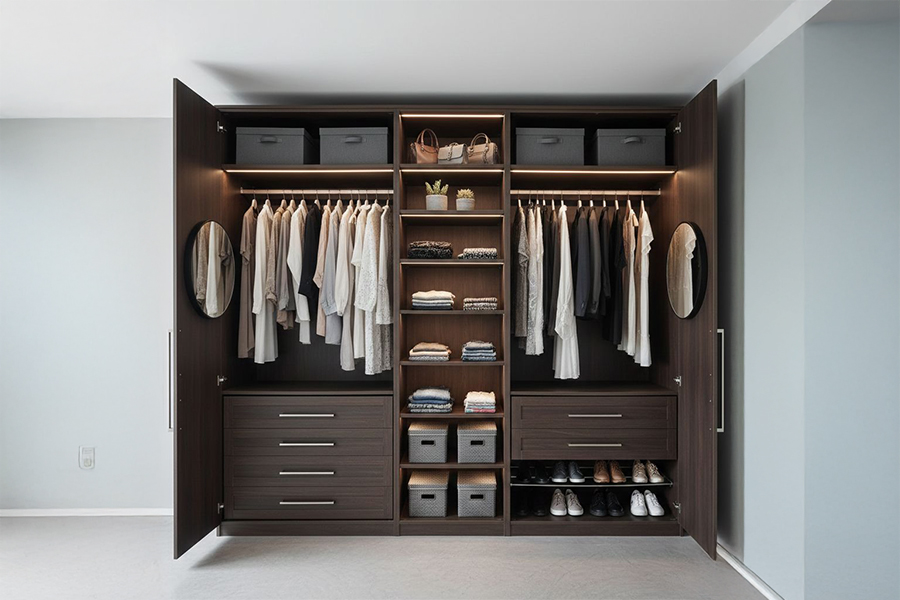
You can have the right door type and the right size and still end up with a wardrobe that drives you mad every morning. Why? Because the internal layout was an afterthought.
The inside of the wardrobe determines daily usability more than anything on the outside. Three questions to answer before you finalise any wardrobe regardless of the type of wardrobe material or door style you have chosen:
One more thing and this is the change that makes the biggest difference to daily organisation:
Replace at least half your base shelving with internal drawers. Folded clothes stacked on open shelves look organised on day one. By week two, you are pulling things from the bottom of the stack and the whole pile has collapsed. Drawers keep folded items contained, searchable, and actually stay tidy. This is the single most impactful internal upgrade you can make to any wardrobe across all wardrobe material types and configurations.
Cut through the options. Find your situation and you have your answer.
| Situation | Best Wardrobe Type |
| Bedroom smaller than 12x12 ft | Sliding Door Wardrobe |
| Single person, limited clothes | 2 Door Wardrobe |
| Couple sharing one wardrobe | 3 Door or 4 Door Wardrobe |
| Want maximum storage volume | Floor to Ceiling Wardrobe |
| Large bedroom 12x14 ft and above | 4 Door or Full Wall Wardrobe |
| Dedicated dressing room available | Walk In Wardrobe |
| Renting, cannot do permanent work | Freestanding Wardrobe |
| Mid size room, hinged doors possible | Bifold Door Wardrobe |
Still unsure? Go back to the two questions from the top: What is my door clearance situation? And what does the inside need to hold? Every right answer flows from those two.
The wardrobe that fits your room on paper but fails in real life wrong door swing, cramped walk in, collapsing open shelves is one of the most frustrating furniture mistakes to live with. Because you see it every single day.
The good news is that it is completely avoidable. You now know the types of wardrobes, what each one demands from your room, and what the inside needs to actually stay functional. Most buyers skip exactly this research and then remodel within three years.
Do the thinking upfront. Measure your clearance. Answer the three internal questions. Then pick your wardrobe. In that order.
Now over to you!
Which wardrobe type do you have right now and is the internal layout actually working for you? Or are you planning a new wardrobe and stuck on a specific decision? Drop it in the comments below.
Read More -
Wardrobe Designs and Storage Ideas for Small Bedrooms: Make Every Inch Count
Image Source: Pinterest, Google, and Wooden Street
We will be back with the next blog soon. Till then, stay tuned!
A Sliding, without question. Hinged doors need 18 to 24 inches of clear floor space - small bedrooms simply do not have that
A Yes. It adds 4 to 6 boxes of storage, eliminates dust buildup on top, and makes the ceiling feel higher. Almost always worth it
A Answer three things: hanging vs folded ratio, one person or two, and what stores beyond clothes. Build the layout around those answers
A You need 4 feet of clear central walking space after shelving on both sides. Less than that and it stops functioning as a wardrobe
A Yes - freestanding wardrobes work without drilling. Still anchor them with an L-bracket for safety. Tipping risk is real
Trending Products
Top Picks from EveryoneArticles you will love to read

Looking for bedroom walk-in closet ideas? Explore practical and stylish walk-in wardrobe designs that suit every Indian home.
Continue Reading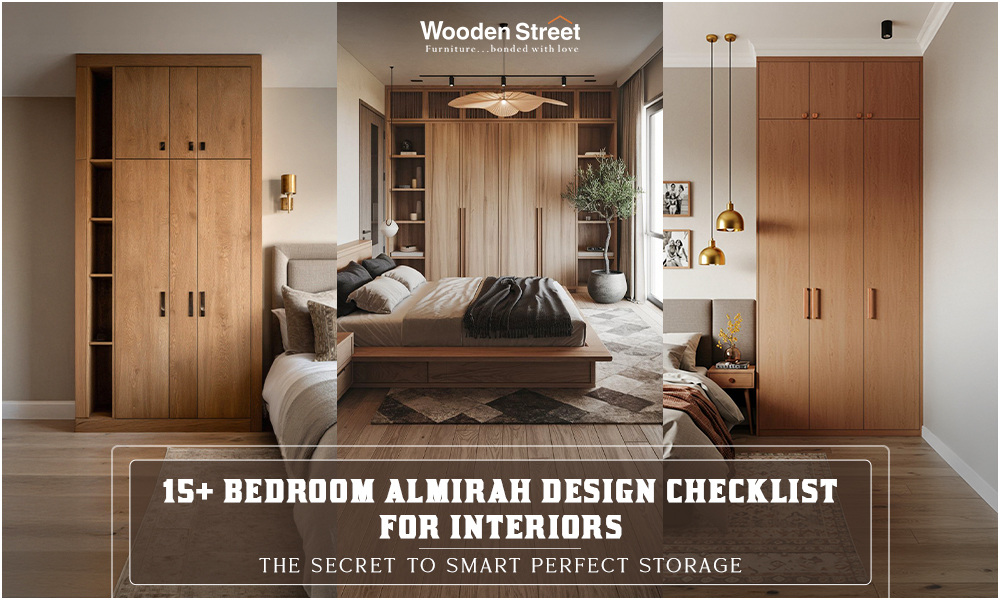
Choosing the right wooden almirah for bedroom requires careful planning. From plywood quality and finishes to storage layout and durability, this checklist reveals 15+ expert material secrets to help you select a wardrobe that blends style, strength, and smart functionality for modern living.
Continue Reading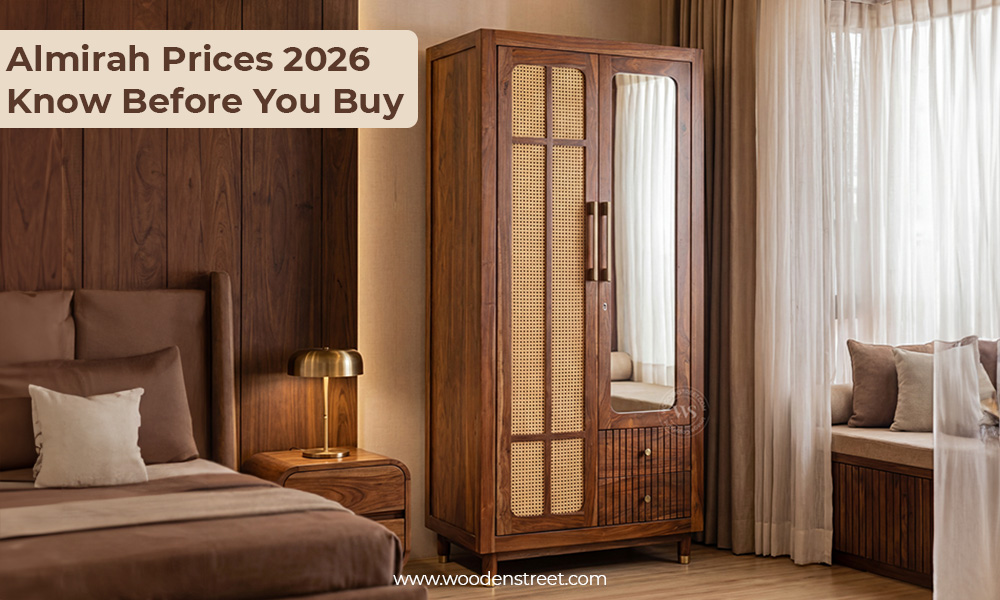
Discover updated almirah prices for 2026, including insights on types, materials, and design choices. This guide helps you compare options and understand key factors influencing wardrobe price, making it easier to choose the perfect storage solution for your bedroom needs.
Continue Reading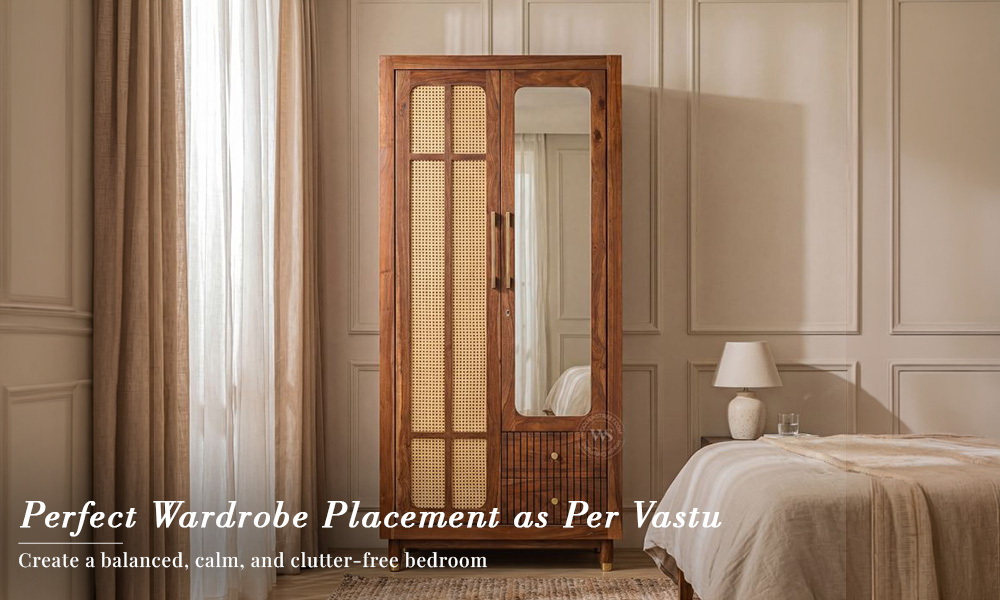
The placement of your almirah plays a bigger role in your bedroom than you might expect. According to Vastu, the right direction can make your space feel more balanced, organised, and comfortable. This blog walks through the best directions for wardrobe placement, common mistakes to avoid, and simple, practical tips you can apply, whether you’re setting up a new room or adjusting an existing one while understanding wardrobe direction as per vastu and overall bedroom vastu.
Continue Reading


