





The bed is the largest and most influential piece of furniture in any bedroom. Its size, style, and placement affect everything from circulation space and storage options to bedside furniture and décor choices. This guide explains why settling on a bed first makes the rest of the room easier to plan.

Most people furnish a bedroom like they are filling a form, bed, wardrobe, side tables, maybe a dresser. They buy each piece separately, in no particular order, and then wonder why the room feels crowded or awkward or like the furniture is competing rather than working together.
The reason is almost always the bed. Not the wrong bed necessarily, just bought in the wrong sequence or without thinking through what it actually commits you to.
The bed is the largest piece in the room. It determines where the wardrobe can go. Its size affects how much clearance is left for everything else. Its height affects how the room feels visually. Its storage type, or lack of it, determines whether the rest of the room feels organised or chaotic.
Buy the bed first. Settle these questions before you settle anything else.
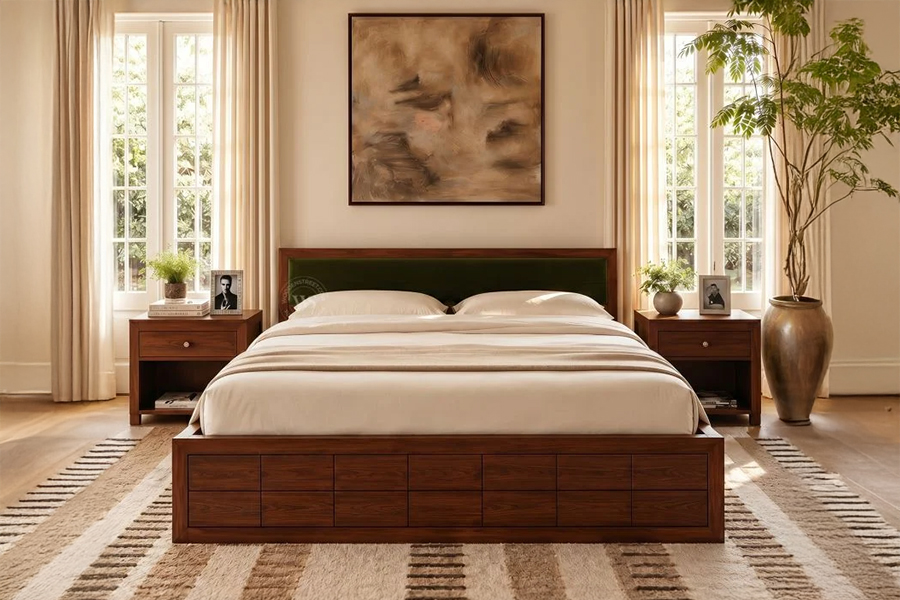
The bed size determines wardrobe placement, a king-size bed in a medium room may leave only one wall for the wardrobe rather than two. The bed type determines storage options, a bed with a hydraulic base or drawers means the space below is functional rather than dead. The bed height determines how the room reads visually, a low platform bed makes a room feel more spacious and contemporary; a high traditional bed frame with visible legs makes the room feel taller.
These are not afterthoughts. They are consequences of the bed choice. Make them deliberately.
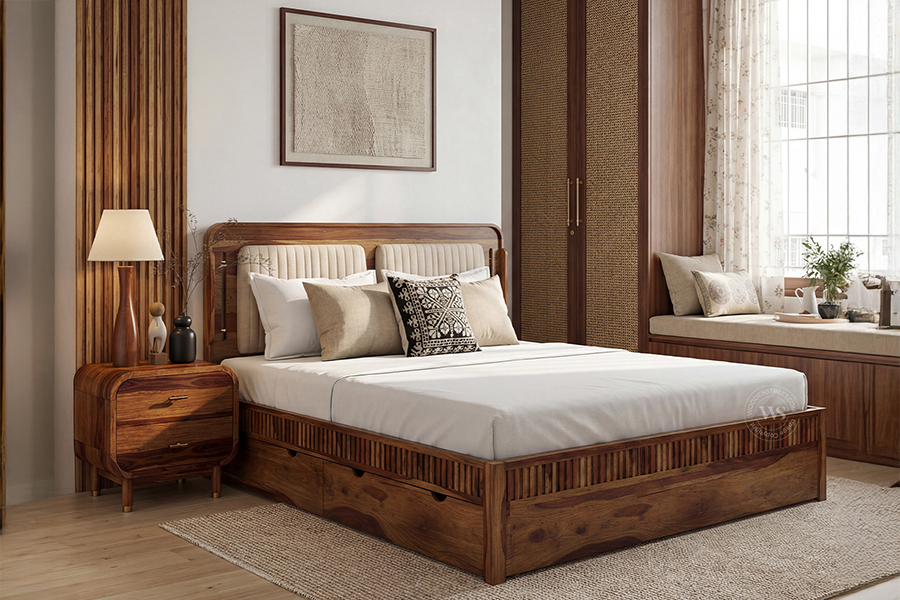
The question is not whether the bed fits. A bed will physically fit in almost any room if you are willing to push it against the walls. The question is whether the room works after the bed is in it.
Minimum clearances that make a bedroom livable: 60 cm (approximately 24 inches) on each side of the bed for dressing, sitting on the edge, and making the bed. 90 cm (36 inches) at the foot of the bed so you can walk across the room without turning sideways. These are minimums, comfortable living prefers 75 cm on the sides.
In a 10x12 foot room (roughly 300 x 365 cm), a king-size bed at 180 x 200 cm leaves approximately 60 cm on each side if the bed is centred. There is no room for side tables without reducing that clearance further. This is not a deal-breaker but it is a real constraint that deserves a deliberate decision rather than a post-delivery realisation.
Measure the room. Mark the bed footprint on graph paper or use a room planning tool. Then add the clearances. What you are left with is the real available space for everything else.
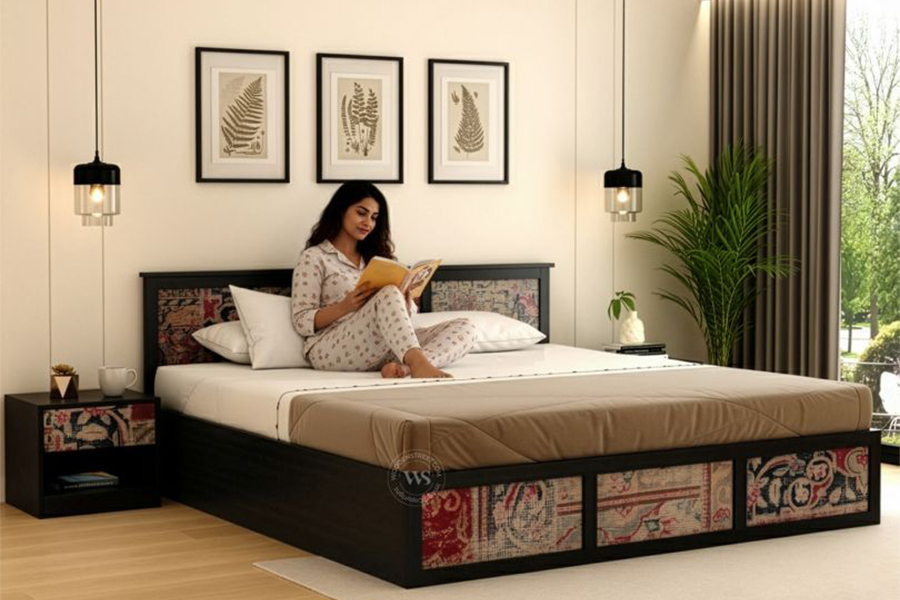
A king-size bed for two people who both move significantly during sleep is worth every centimetre of floor space it takes. At 180 cm wide, a king gives each person 90 cm, roughly the width of a single bed, which means movement on one side does not disturb the other.
A king bed for one person who sleeps relatively still, or for a couple in a genuinely compact room, is a floor space decision masquerading as a comfort decision. A queen at 160 cm wide is 16 cm narrower but frees up 16 cm of floor space per side, noticeable in rooms where clearance is tight.
Be honest about this. Most people size up because a larger bed feels like a better purchase. Sometimes it is. Sometimes it is just more bed.
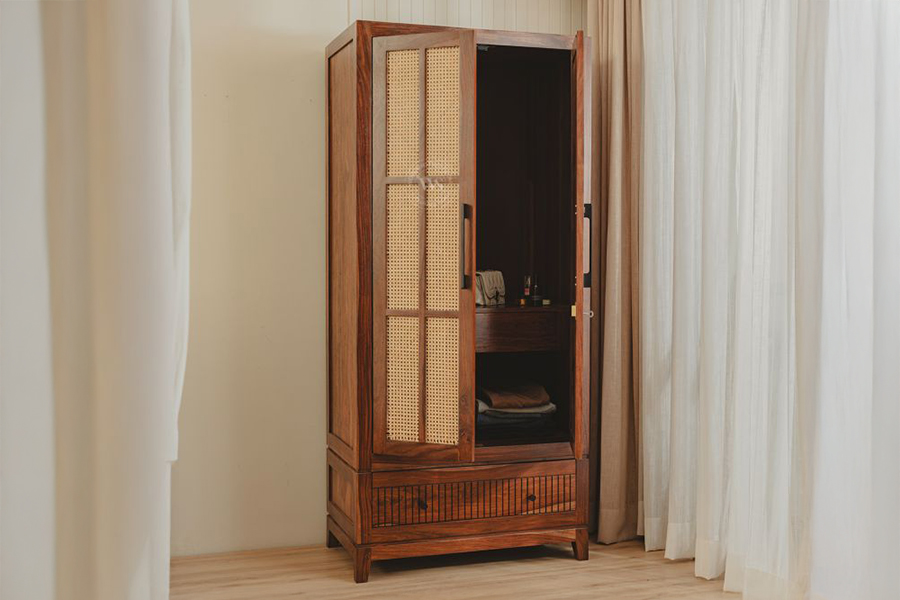
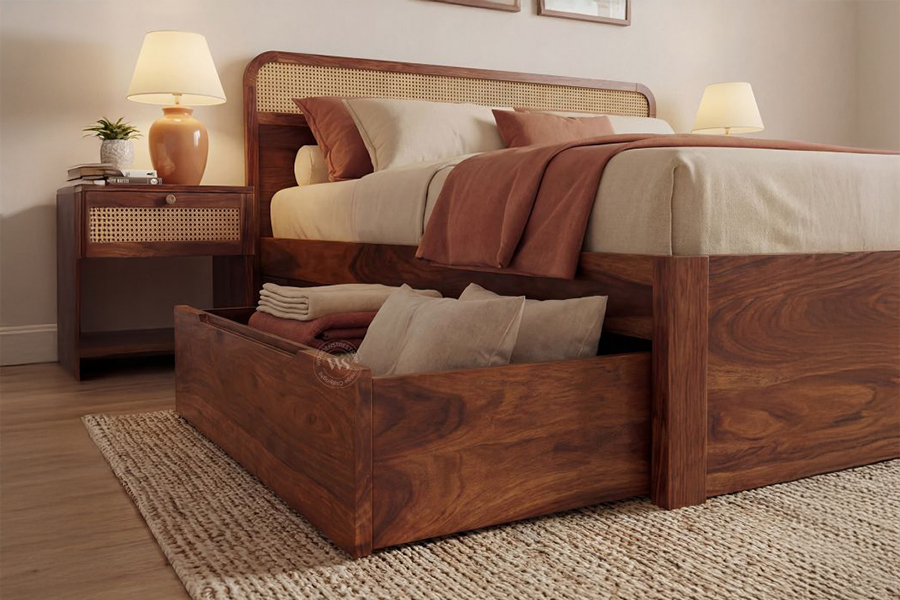
Indian apartments are not generous with built-in storage. If the bedroom has a small wardrobe, or no dedicated storage wall at all, the space under the bed is the most practical storage area in the room.
In that context, a hydraulic storage bed is not a luxury upgrade. It is the most useful decision you can make for the room. The cavity under a standard queen or king hydraulic bed holds seasonal clothing, extra linen, suitcases, and bulky items that would otherwise take wardrobe space or accumulate in corners.
If the room has ample wardrobe space, this calculation changes. Under-bed storage is less critical when dedicated storage is generous. But if wardrobe space is limited, and in most Indian city apartments it is, solve the storage problem with the bed.
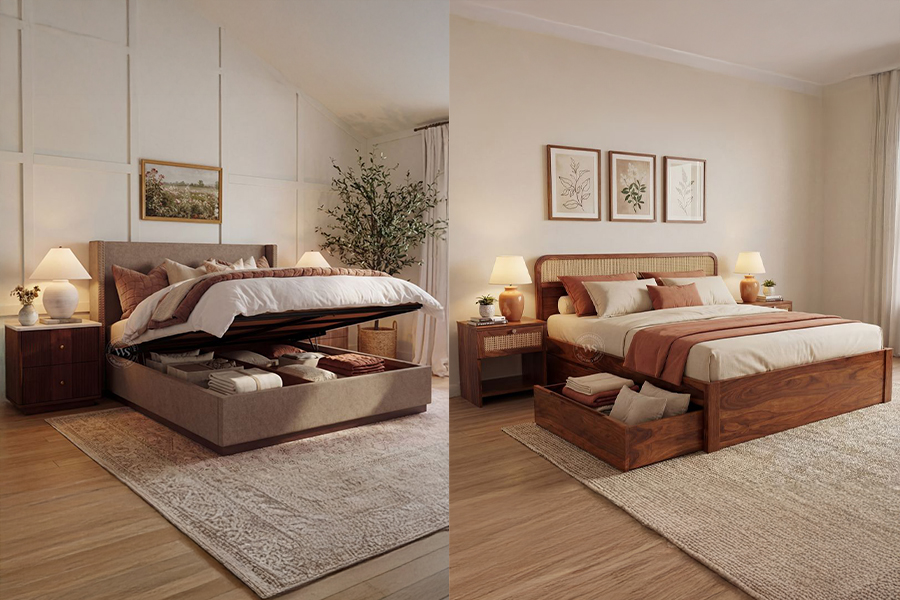
These solve different problems and most buyers pick one without realising they actually need the logic of the other.
Hydraulic storage, a gas-lift mechanism that raises the entire mattress platform to reveal a large open cavity below, is ideal for bulk and seasonal items. Think extra blankets, seldom-used luggage, winter clothing in summer. The access is not fast, you lift the mattress, retrieve the item, lower it, so it works best for things you do not reach for daily.
Drawer storage on the sides or foot of the bed is for daily or weekly access. Drawer beds typically offer less total volume but far more convenience. The right answer for most households with a storage need is a hydraulic bed. The right answer for someone who wants easy daily access to frequently used items is drawers, or a bed where one of the design priorities is accessibility.
Buy based on what you are actually storing and how often you will need it.
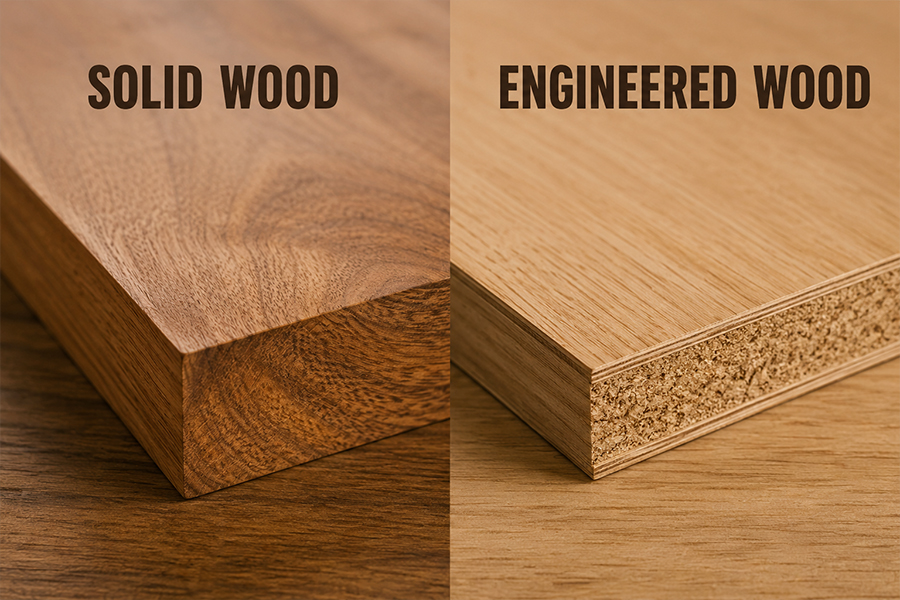
This is a longevity decision and the single most common place where buyers regret choosing on price rather than material.
A solid wood bed, sheesham, teak, mango wood, is structurally robust in a way that engineered wood simply is not over a decade of daily use. The joints stay tight. The frame does not flex or develop noise. A good solid sheesham bed bought today will still be structurally sound when the second or third mattress needs replacing.
Engineered wood, MDF, particleboard, is not a poor material for all furniture. For certain applications, it performs adequately. But a bed frame takes daily cyclic loading, every time someone sits down, lies down, turns over, gets up. Over two to three years this loading begins to show in engineered wood as loosening joints, slight flex in the slat supports, and in some cases cracking at screw points.
The price difference between a solid wood and engineered wood bed in the same style is typically 30 to 50 percent. For a piece that is expected to last a decade or more, it is a reasonable premium. Ask directly what the frame material is. "Solid wood" on a label does not always mean what it suggests, sometimes it means a solid wood veneer over an engineered core.
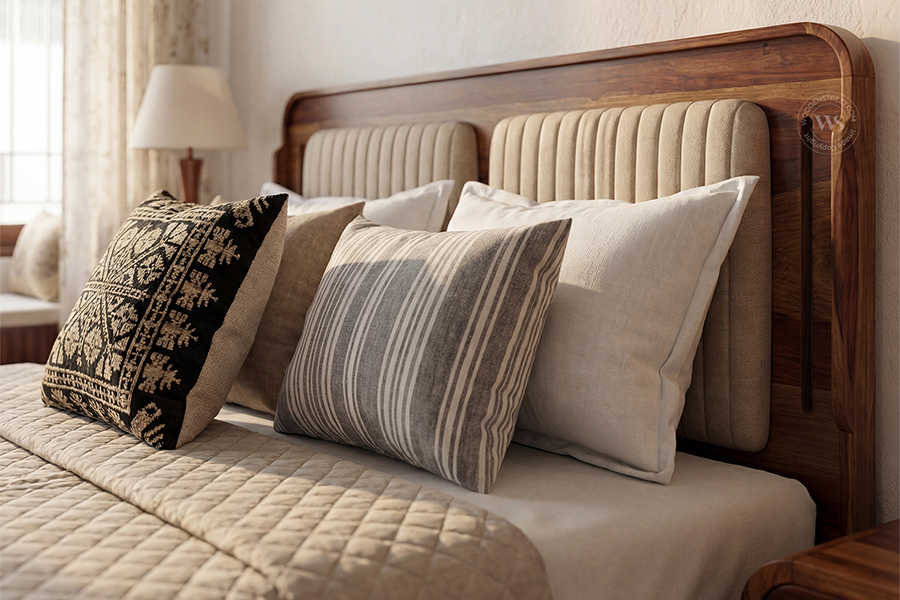
A headboard is not decorative when you read, scroll, or work in bed. It is a back support, and it should be evaluated as furniture rather than as art.
An upholstered headboard, medium-firm padding over a solid backing, provides comfortable back support for extended periods. A thin, purely decorative wooden or metal headboard does not. Leaning against a hard flat headboard for thirty minutes is noticeably less comfortable than leaning against a properly upholstered one.
If you spend significant time sitting up in bed, the headboard height matters too. A headboard that ends at shoulder height when you are seated upright is not doing its job. Look for headboards that reach at least 60 to 70 cm above the mattress surface, enough to support the full back and the head.

The internal dimensions of the bed frame must match the mattress dimensions exactly. Not approximately, exactly.
A gap of even 2 cm between the mattress edge and the bed frame allows the mattress to shift and causes the edge to sag over time, particularly with memory foam. A mattress that fits a frame correctly sits level, stable, and without movement.
Standard Indian mattress sizes are relatively consistent, single (75 x 190 cm), double (120 x 190 cm), queen (150 x 200 cm), king (180 x 200 cm), but there is enough variation between manufacturers that measuring the mattress and the frame independently before purchasing is always the right approach.
Slatted bases are the most common support platform in modern bed frames. The spacing between slats is critical, and almost never listed prominently in product specifications.
For spring mattresses, slat spacing up to 10 cm is generally acceptable. For memory foam and latex mattresses, slats must be no more than 7 cm apart. Wider spacing causes the mattress to sink between slats, a process that begins slowly, becomes noticeable within months, and is irreversible once the foam has taken its set.
If you are buying a memory foam or latex mattress, check the slat spacing on the frame before purchasing. If the spec is not listed, ask. A frame that voids the mattress warranty through inadequate support is an expensive lesson.
This point is at the end of every buying guide and gets ignored in every buying decision. It should be the first practical check.
Measure the front door width. Measure the bedroom door width. Measure the staircase width if the bedroom is not on the ground floor. Note any tight corners or narrow corridors in the path from the building entrance to the room.
A standard queen bed frame in flat-pack form will pass through most standard 80 cm doorways. A solid wood bed shipped assembled, particularly a king with a tall headboard, may not. Hydraulic bed frames often require specific installation sequences in the room itself because the mechanism cannot be folded for doorway access.
Ask the manufacturer or retailer what the delivery format is before ordering. Confirm the largest dimension of any assembled or semi-assembled component against your narrowest access point. A bed that cannot enter the room solves absolutely nothing.
Decide the size of the room first, not for the aspiration. Be honest about whether storage is a functional need or optional. Choose solid wood if the budget allows, this is the one-bedroom piece where material quality directly determines how long it serves you. Confirm slat spacing matches the mattress type. Measure the delivery path before placing the order.
The bed sets the rules for everything else in the room. Get this decision right, and the rest of the room follows logically.
What is the one thing you wish you had figured out before buying your current bed? Tell us in the comments section below.
We will be back with the next blog soon. Till then, stay tuned!
Image Source: Pinterest, Google, and Wooden Street
Read More -
Know about all types of mattresses
Articles you will love to read

Sofa-cum-beds are the perfect utilitarian furniture units, and at Wooden Street, we have a wide range of sofa-cum-beds in different sizes, finishes and designs. Check the looks of various sofa cum beds, that will help you in choosing the one for you
Continue Reading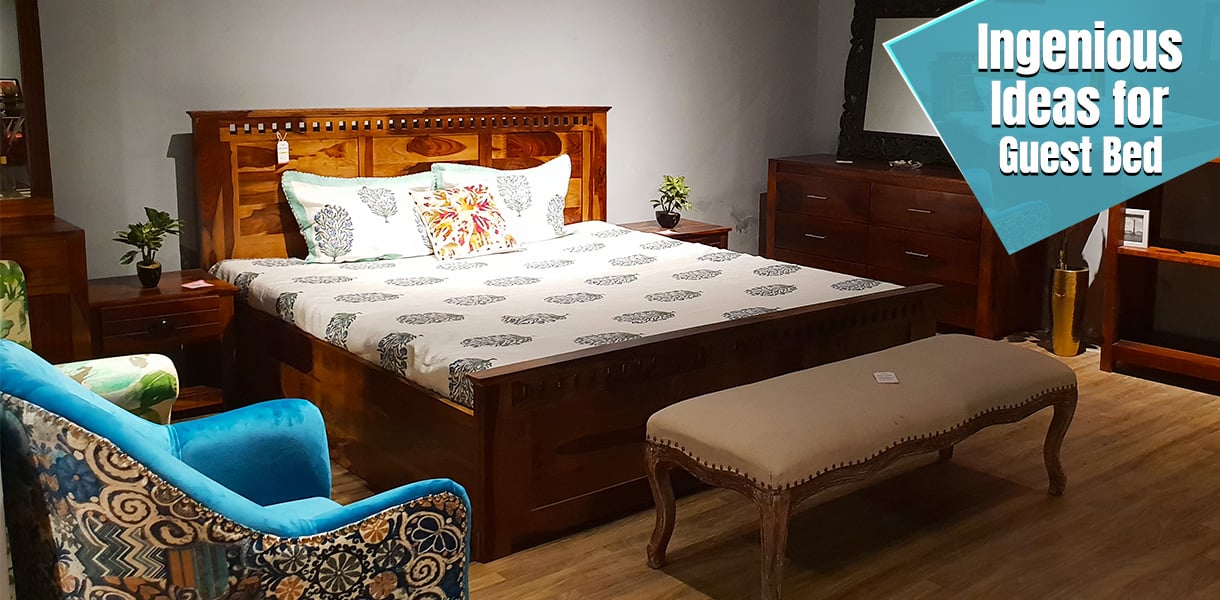
There is no form of hospitality which doesn’t include understanding. Being a host, it is essential to make our guests feel relaxed and comfortable during their stay. We suggest some ideas that can help you in providing your guests with a sound sleep.
Continue Reading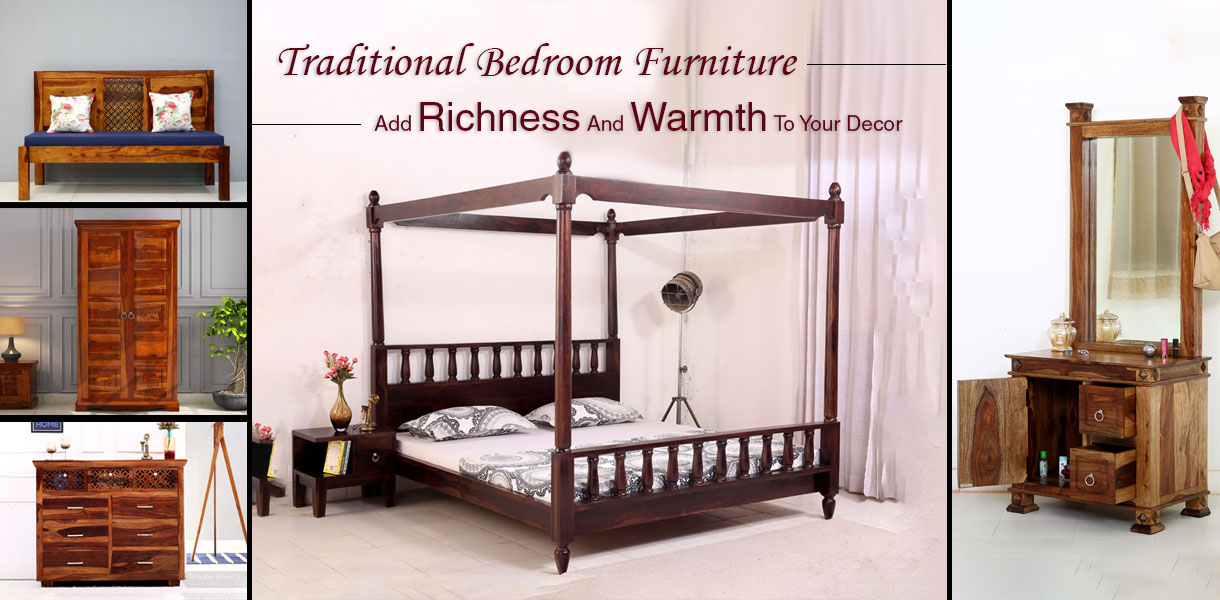
Are you someone who is rooted in tradition when it comes to decorating your personal space? And someone who always wanted to add classic and timeless design to your bedroom? Then this blog is for you, which includes tradition bedroom furniture units
Continue Reading
Dressing table is that one piece of furniture which can offer a chic look to your bedroom décor. These aren’t just for storage or for personal grooming, but also act as a platform to showcase your personality by embellishing it.
Continue Reading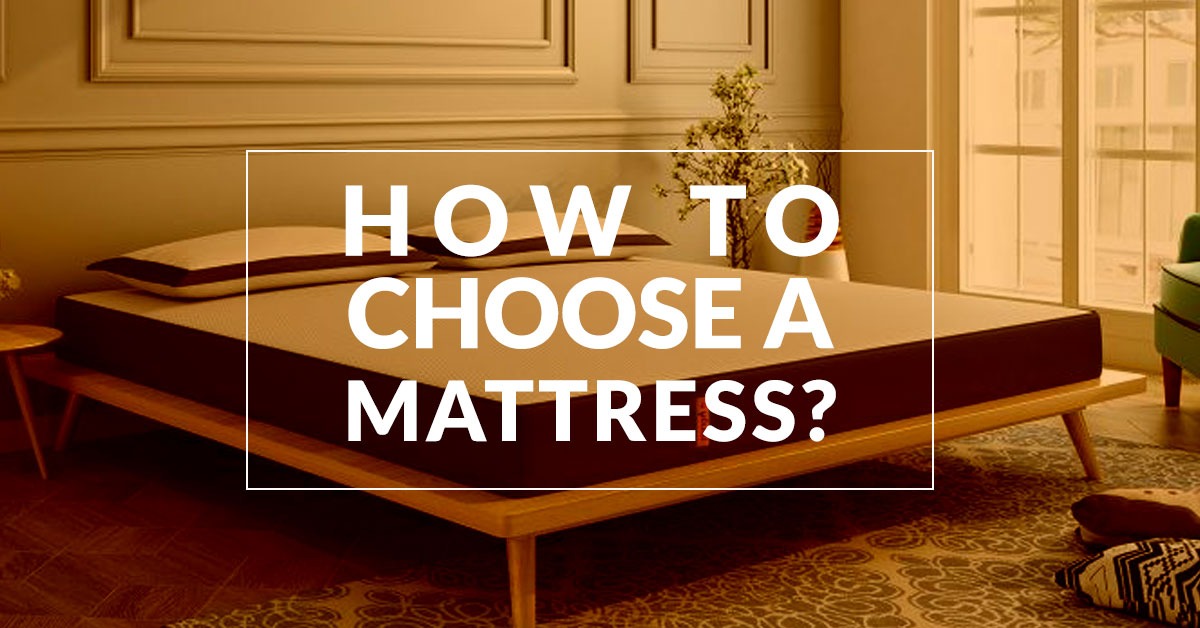
Are you thinking to replace your old mattress? Or want a companion for your new bed? It may sound like a simple question- but it is usual to be distracted by different types of mattresses when you're looking for a new one. From size, material and com
Continue Reading