





Planning a mandir for your home? This guide covers every type of home temple design, placement, material, and style, so you can pick what really works for your space
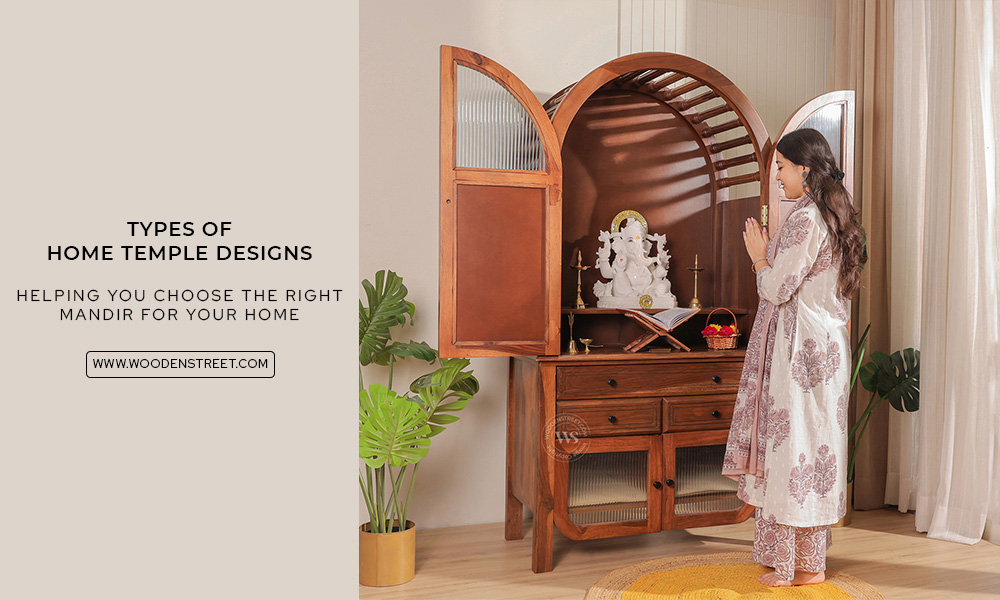
Before buying any mandir for your home, one question almost every Indian family asks is, "which type of home temple suits my space?" And honestly, this confusion is very common, because a home temple is not something you buy every few years. It stays with your family, holds your prayers, and becomes a part of your daily routine, be it the morning aarti or that quiet five minutes before leaving for office. That is why choosing the right one matters so much.
Many people worry about space, some worry about budget, and some are simply stuck between a wall mounted temple for home and a proper standalone unit. Homeowners also think about which material will really work for their home, whether it is a brass temple for home, a marble one, or even a silver mandir for home passed down from their grandparents. So in this blog, we are going to walk you through every single type of home temple there is, sorted by placement, material, door style, overall look, and even features. Here, have a look at what suits your home the best, and let's get started.
Where you place your mandir changes everything, from the vastu of your home to how comfortably you use it every single day. So before purchasing anything, it is important to understand the placement options first.
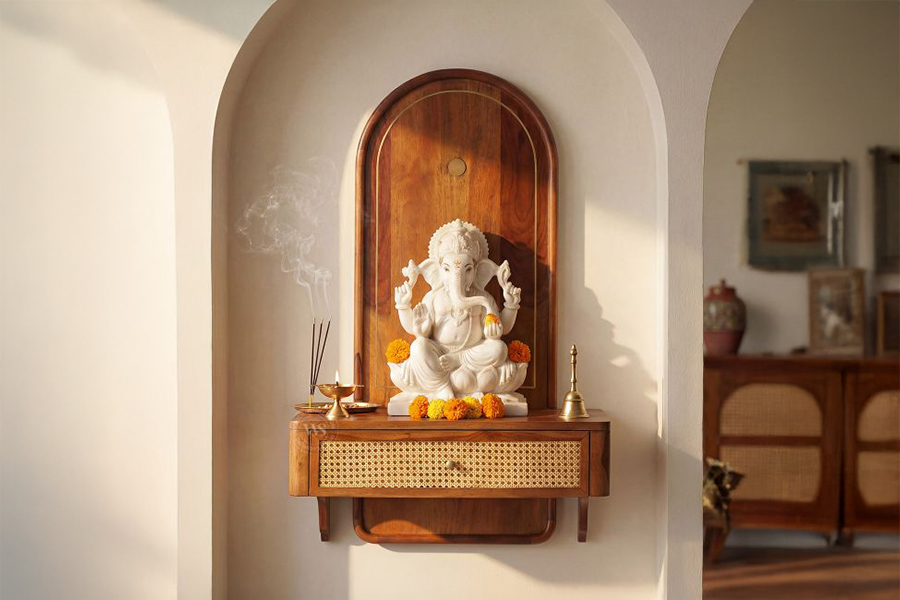
If your home is on the smaller side, a wall mounted temple for home is going to be your best friend.
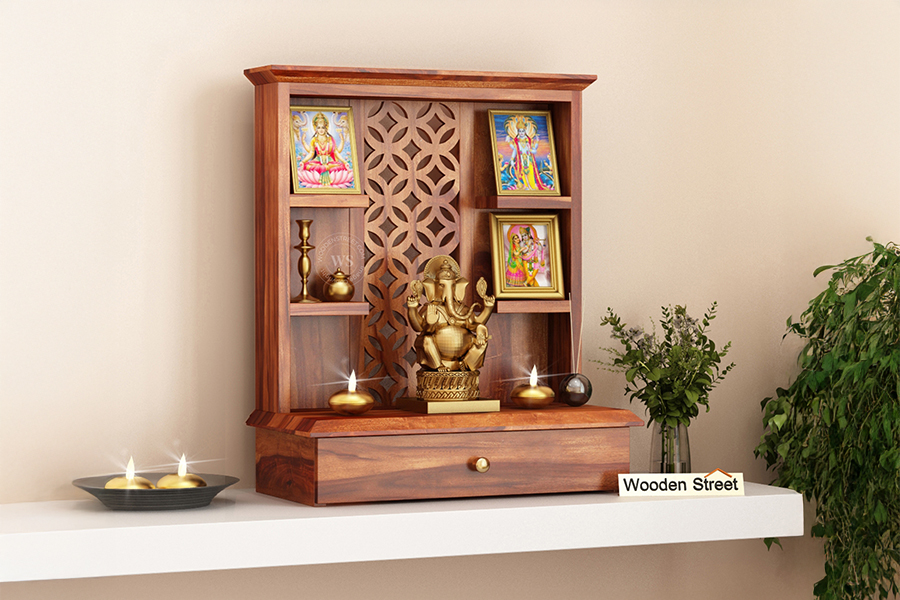
Corners in Indian homes are usually not used correctly, right? That is why a corner mandir for home makes so much sense.
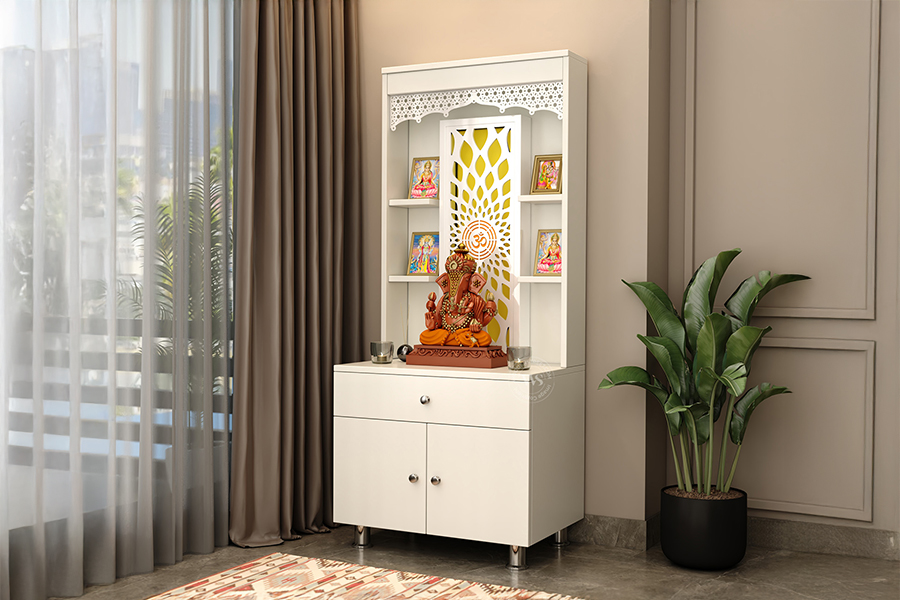
For families who want a proper, dedicated piece of furniture for their prayers, a standalone or floor-standing mandir works much better.
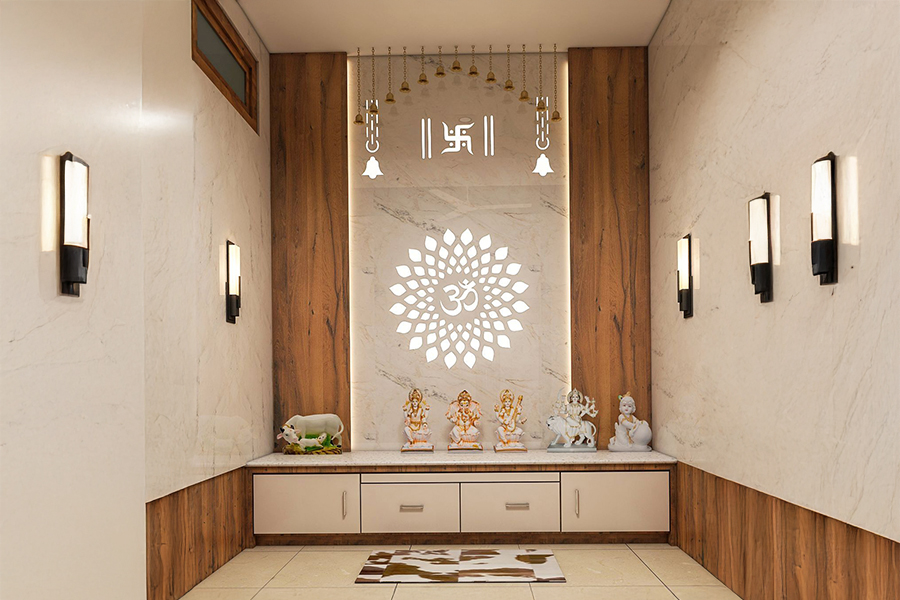
For people who have that extra room to spare, this is honestly the most complete option.
The material of your mandir decides not just the look, but also how long it lasts and how it feels to maintain. That is why picking the right one is a decision you should not rush.
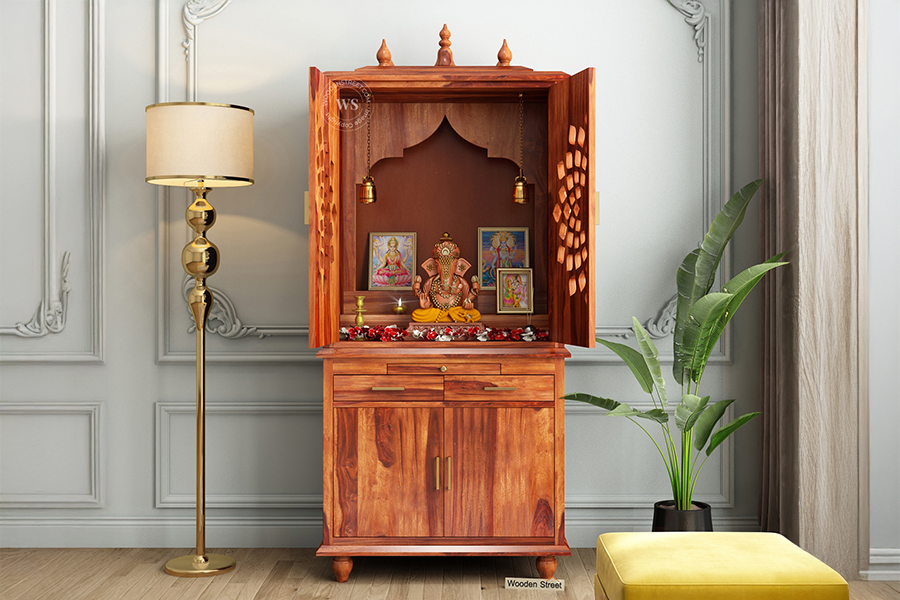
Solid Wood temple has always been the most trusted choice for a home temple, and honestly, that trust is well earned.
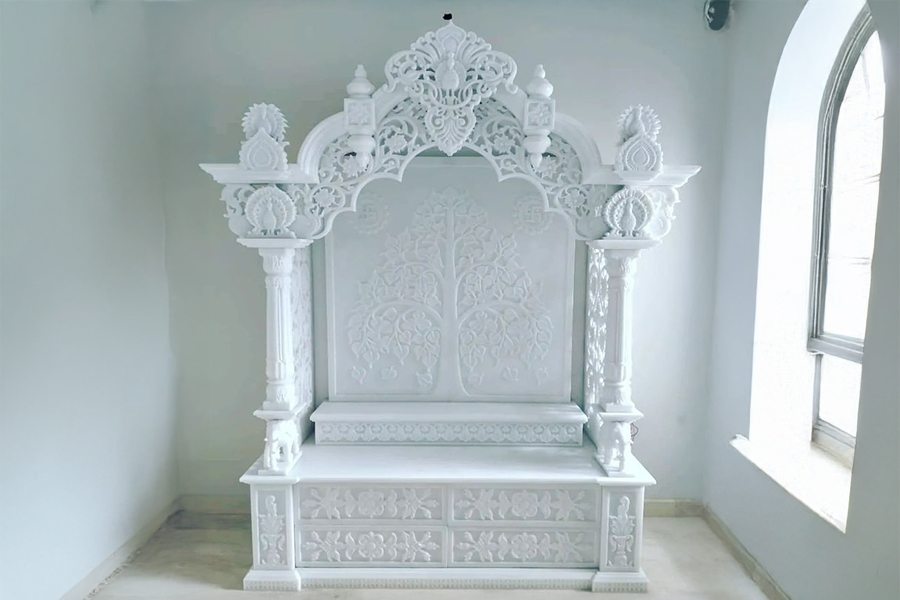
Nothing says grand quite like a marble mandir. A stone temple for home made from white marble, often carved with floral or temple motifs, brings that same aura you feel while visiting an actual temple.
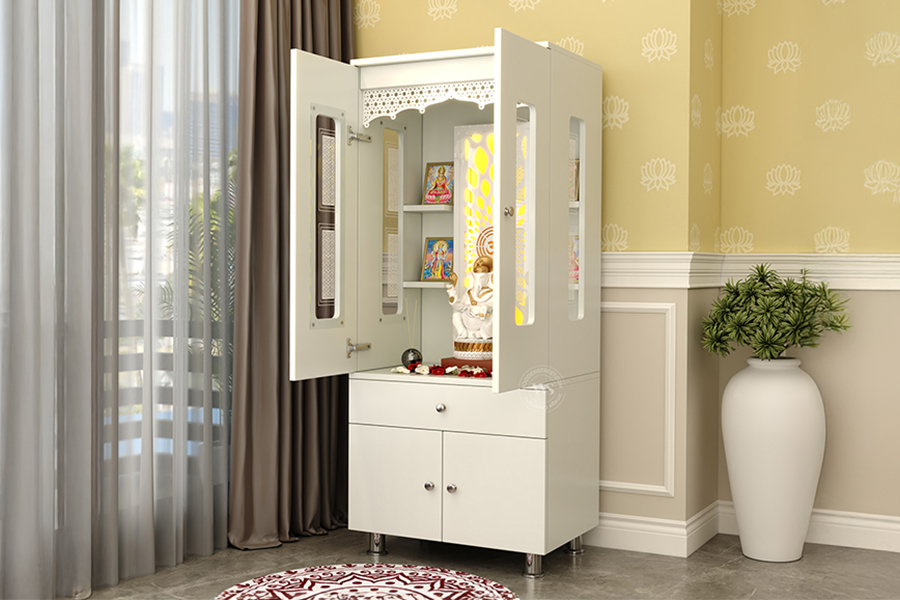
Now, not everyone wants to spend a lot on a mandir, and that is completely fine. Engineered wood temple or MDF mandirs are budget-friendly and still manage to look elegant with the right finish.
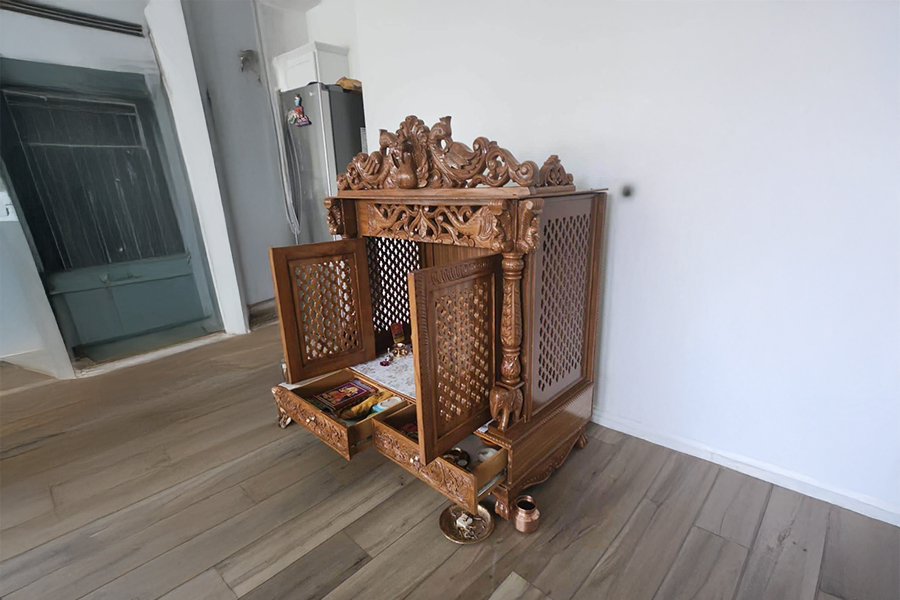
This is where things get interesting. Many modern Indian homes now prefer a mixed-material mandir, one that combines wood for the base, marble for the flooring inside, and a brass temple for home style dome or bell on top.
The door of your mandir is honestly not just a design element, it holds meaning too, almost like a smaller version of the mandir doors we discussed in our earlier blog. Here, have a look at the different styles you can pick from.
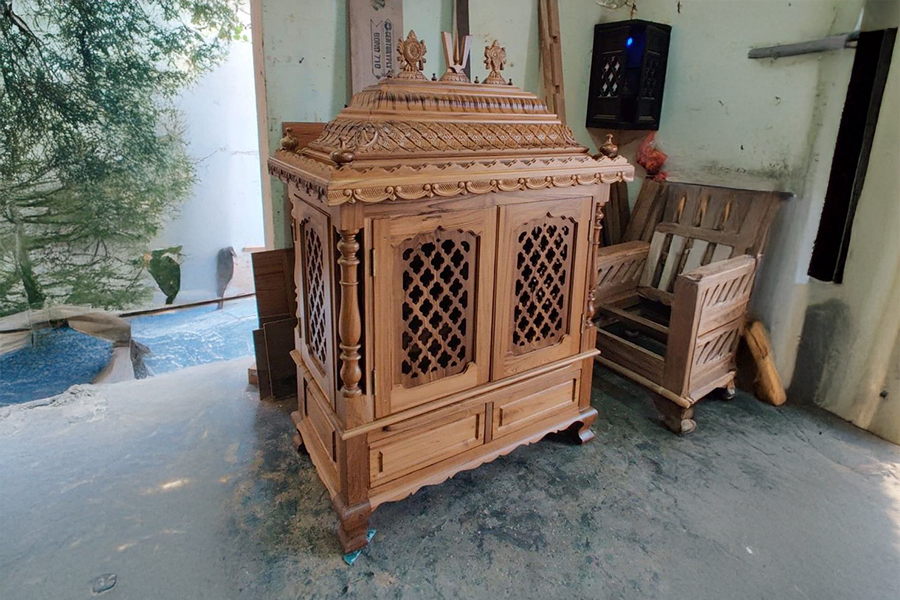
Carved doors with motifs of Om, Swastik, or deities like Lakshmi and Ganesh are the most traditional option there is.
These doors instantly remind you of temple architecture, especially when paired with a brass handle or hinge detailing. Whether it is a wall mounted temple for home or a bigger standalone unit, carved wooden doors add that timeless, devotional touch that never goes out of style.
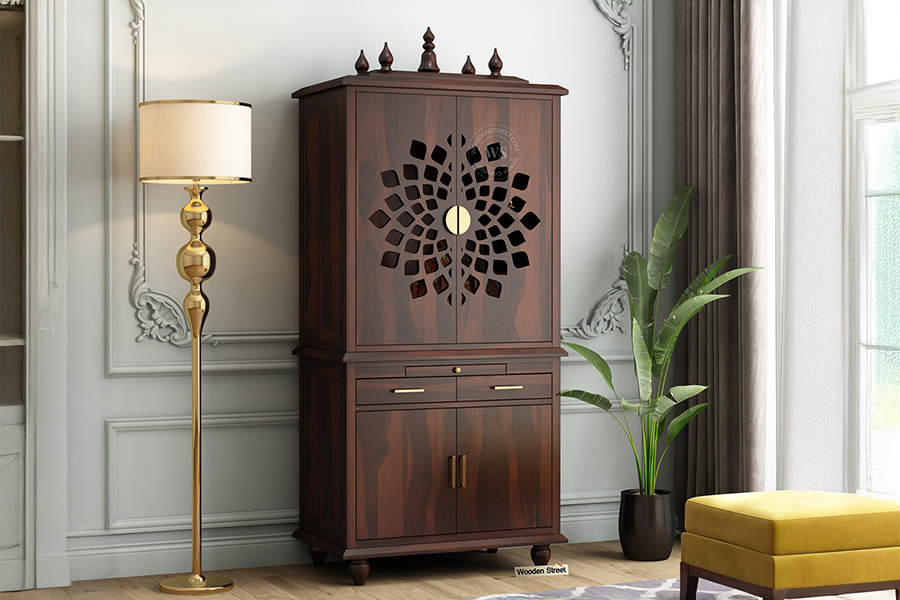
For homes that want detailing without the heavy, bulky look, jaali or CNC-cut doors work much better. Pooja Mandir with Doors allow airflow and a soft glow of diya light to pass through even when closed.
An acrylic temple for home with a CNC-cut jaali front looks surprisingly premium, and it is much easier on the pocket compared to hand-carved wood.
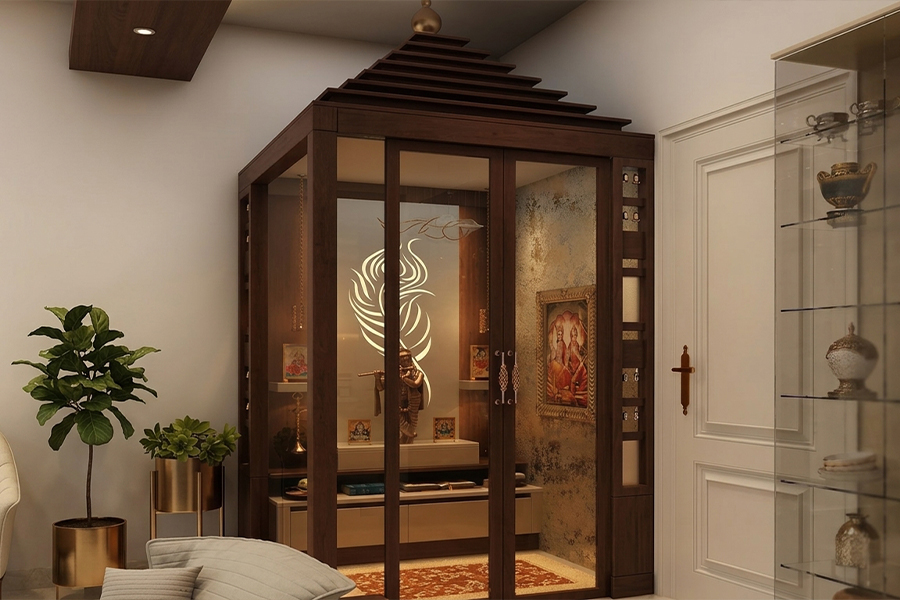
Modern homes are increasingly going for glass or frosted doors on their mandir, and honestly, it makes sense. A silver mandir for home paired with frosted glass doors gives a soft, glowing look during evening aarti, while also keeping dust away from your idols and photo frames.
This style works really very well for compact apartments where the mandir also needs to look like a piece of contemporary furniture.
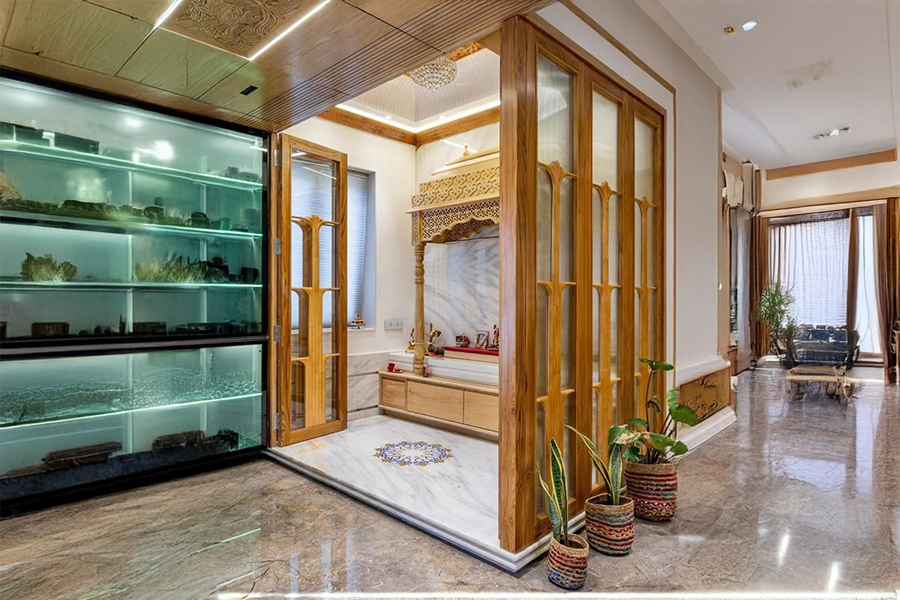
In smaller flats, especially where a corner mandir for home is tucked into a tight space, sliding or foldable doors become the practical choice. They do not need extra swing space, which means they can fit-up comfortably even in the tiniest corner.
Many families with this kind of setup in a hallway or near the kitchen prefer this style purely for how convenient it is.
Once placement, material, and doors are sorted, the overall style is what ties the whole mandir together. Let's go through the popular ones.
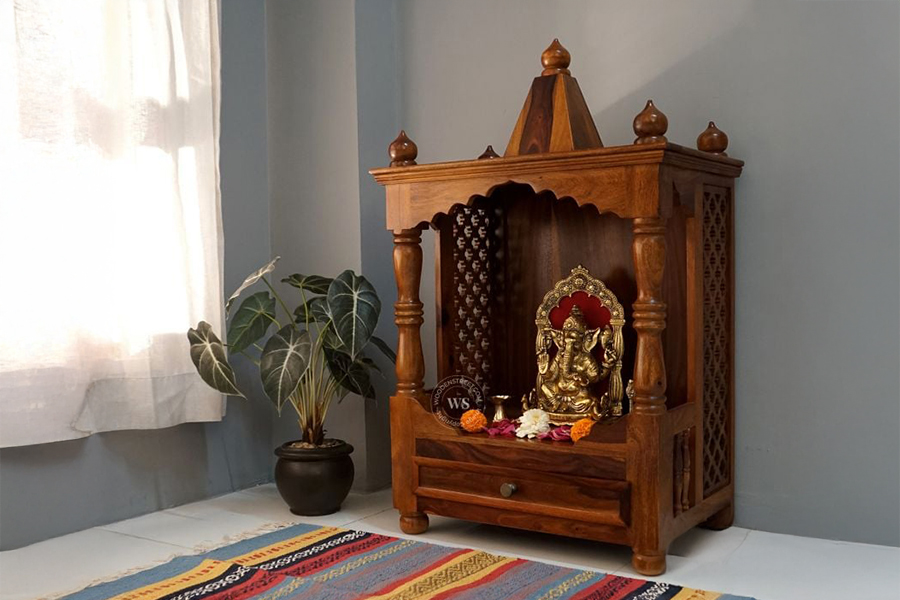
This style takes direct inspiration from actual temple architecture, complete with a small shikhara-style top, carved pillars, and a brass temple for home bell hanging outside.
Families who want their home temple to feel exactly like the mandirs they visit during Navratri or Diwali usually go for this look. It is heavy on detailing but honestly worth it for the devotional feel it brings.
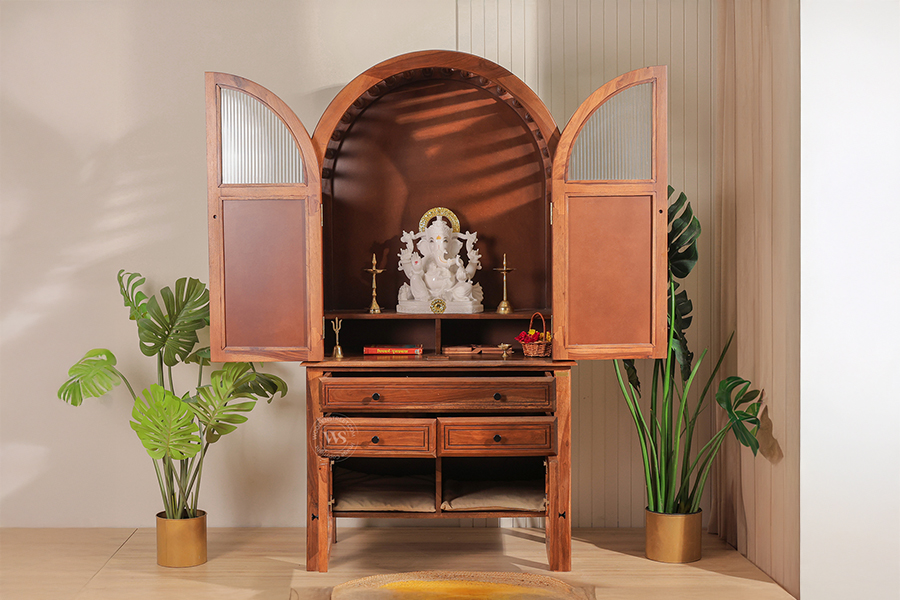
For younger homeowners or those with compact city apartments, modern minimalist mandirs are the go-to choice.
Clean flat panels, an acrylic temple for home finish, or even a silver mandir for home idol placed on a simple wooden shelf, all of this comes together without looking cluttered. Instead of heavy carvings, this style relies on subtle detailing and good lighting to create that divine feel.
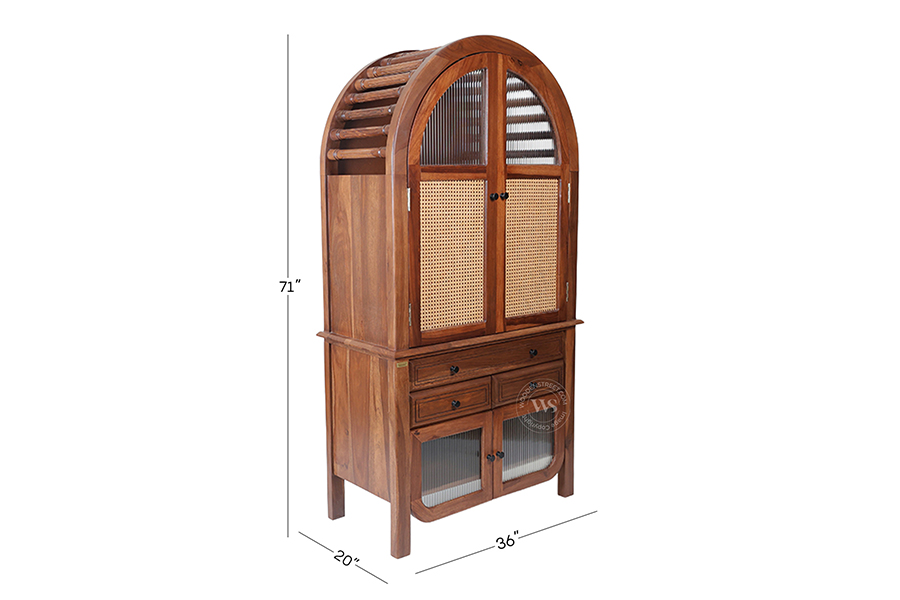
Fusion mandirs are honestly becoming quite popular these days, especially among homes that want both tradition and a contemporary look.
A wall mounted temple for home in this style usually combines a wooden frame, glass panelling, and brass accents like handles or a small bell, giving you the best of every world. It looks rooted, yet it still fits comfortably into a modern living room setup.
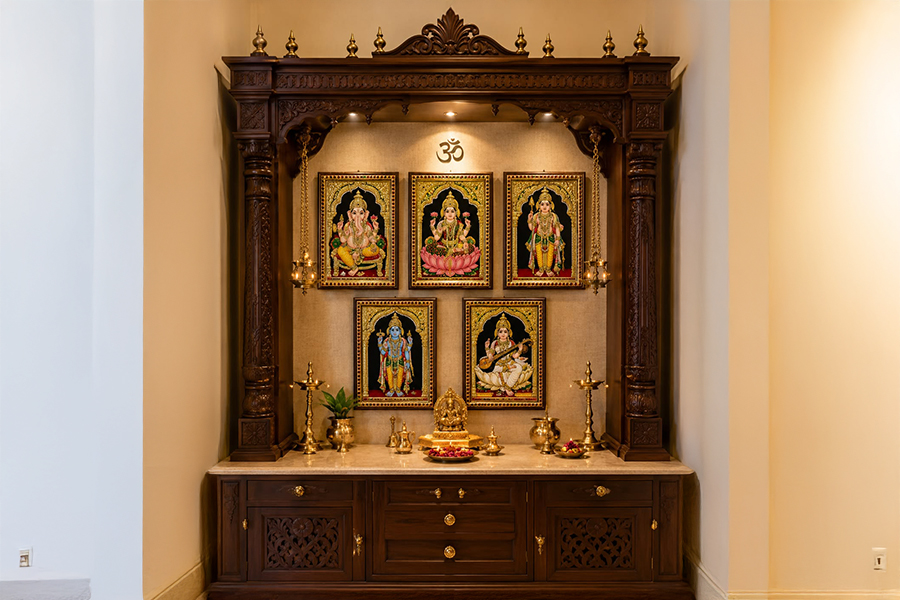
This style is inspired directly by South Indian temple towers, known as gopurams, with their layered, pyramid-like structure and intricate carvings.
A stone temple for home in gopuram style, often made from granite or marble, is a common sight in Tamil Nadu and Andhra homes. Even a smaller version of this style, done in wood or MDF, can bring that same grand, temple-like presence to homes outside South India as well.
Beyond looks, the little features of a mandir decide how convenient and functional it really is for daily use. Here, have a look at some of the popular ones.
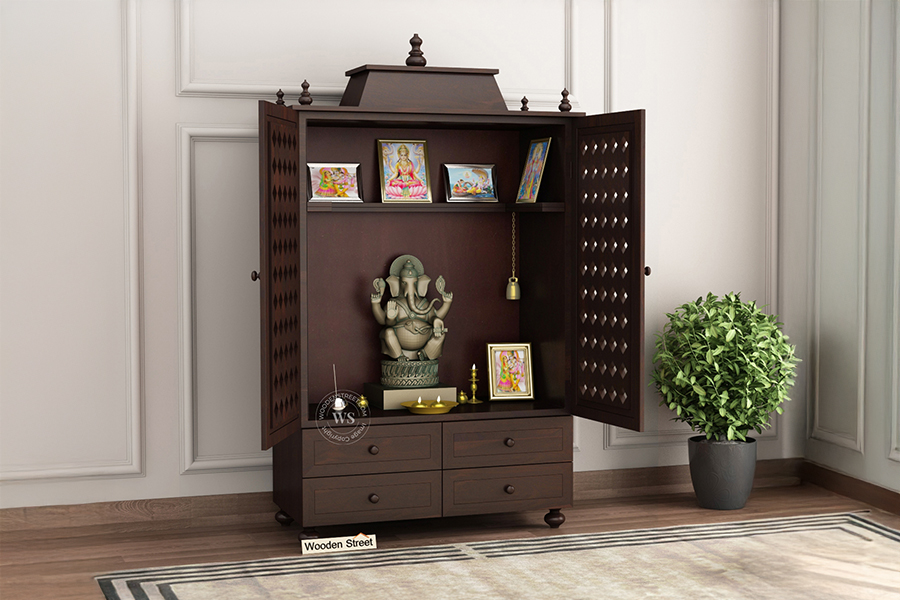
A corner mandir for home with built-in storage drawers is honestly a blessing for most Indian households. These drawers can hold everything from extra diyas and matchboxes to your silver mandir for home accessories like small bells, kalash, or coins used during puja.
Instead of keeping these items scattered, storage drawers keep the whole pooja corner organised and clutter-free.
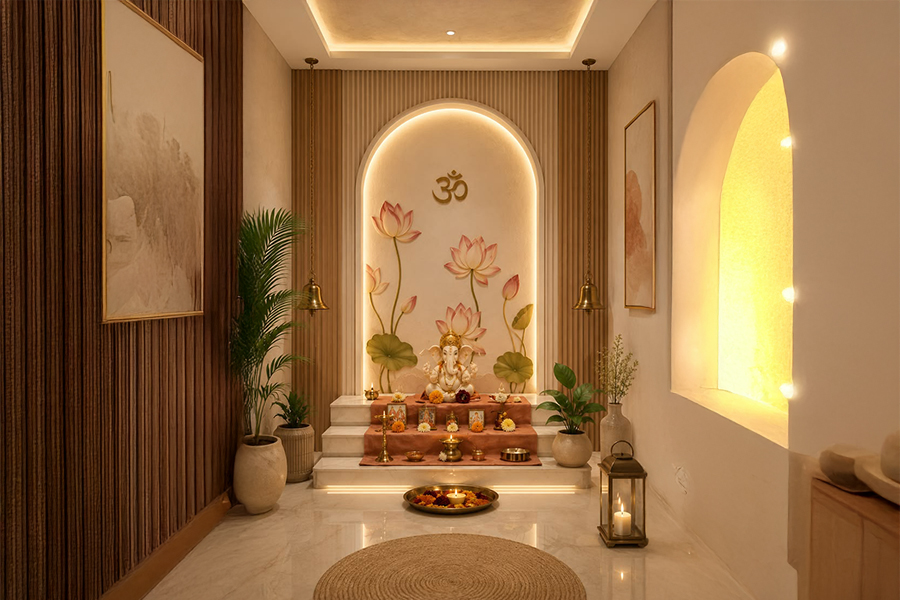
A backlit LED panel behind the mandir gives that soft, glowing effect you often see in premium homes and even in temples.
A wall mounted temple for home with a backlit panel looks especially beautiful during evening aarti, when the soft light highlights the idols without being too harsh on the eyes. This feature has genuinely become one of the most requested additions in modern mandir designs.
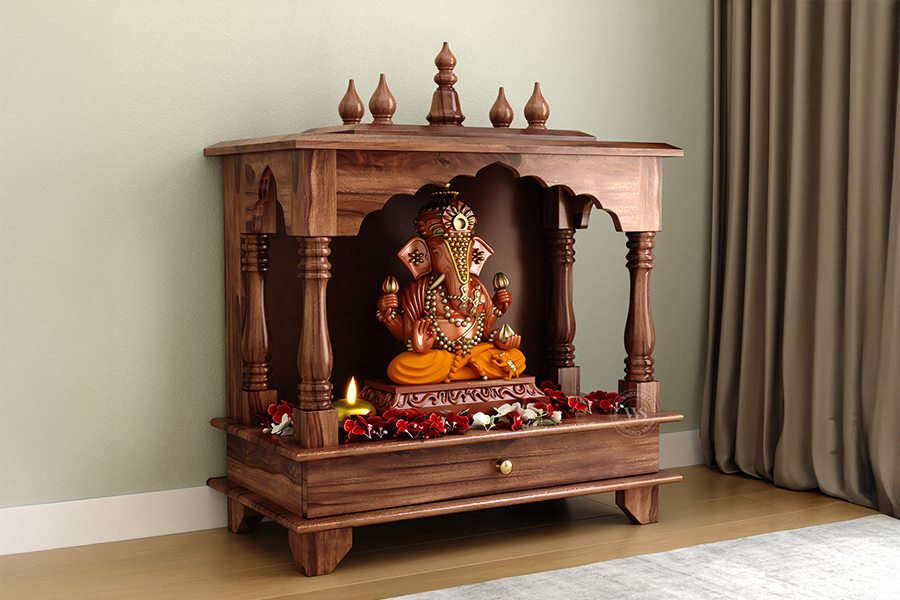
For people who travel often, live in rented flats, or simply want the flexibility to move their pooja setup around, a foldable or portable mandir works much better than a fixed one.
An acrylic temple for home in this foldable style is lightweight, easy to pack, and can be set up on a table or shelf within minutes. It is a practical option for students, working professionals, or families who shift homes frequently.
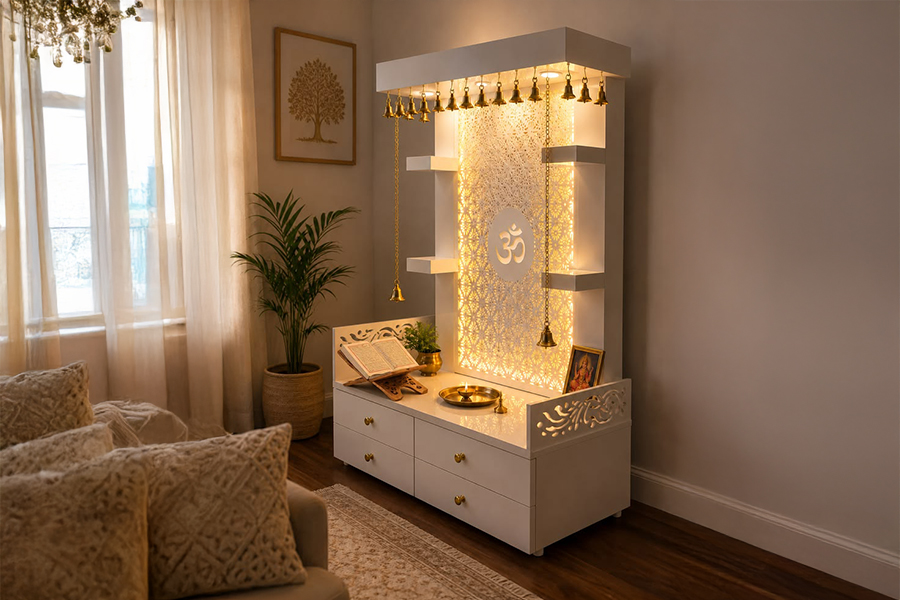
Yes, even mandirs have gone smart now. Some modern units come with built-in speakers for aarti and bhajans, timer-based LED lighting, and even sensor-based diya lights that switch on automatically in low light.
Such tech features paired with a traditional brass finish give you tradition and convenience together, which honestly is what most busy Indian households need today.
By coming this far, you may have got the idea that there is no single "best" type of home temple, because what works for one family may not work for another. A small corner mandir for home might be the perfect one for a compact flat, while a grand stone temple for home could be exactly what a bigger house needs. So whether you want to get a traditional brass temple for home or a modern silver mandir for home idol placed on a minimal shelf, the mandir should reflect your family's devotion and fits comfortably into your daily life.
So before purchasing your next home temple, take a moment to think about your space, your budget, and the style that truly feels like home to you, and explore Wooden Street’s whole wide collection.
We will be back with the next blog soon. Till then, stay tuned!
Read More :
Do you Know Mandir Placement as Per Vastu !
Image Source: Pinterest, Google, and Wooden Street
Articles you will love to read

Discover 12+ inspiring temple mandir colour combination ideas to infuse your pooja ghar with serenity and divine charm. This guide covers soothing shades, Vastu-friendly hues, and design tips to create a spiritually uplifting worship space at home
Continue Reading
Setting up your workspace the right way can completely change how you work from home. This blog on Vastu for office desk at home explains the best desk direction, seating positions, and simple adjustments that help improve focus and comfort. From choosing the right home office desk and chair to creating a balanced work from home setup, these practical tips make your home office feel more organised and easier to work in every day.
Continue Reading
Find the right main door design for home with vastu tips for 2026. Learn about entrance direction, vastu-friendly colours, wooden doors, and common mistakes to avoid.
Continue Reading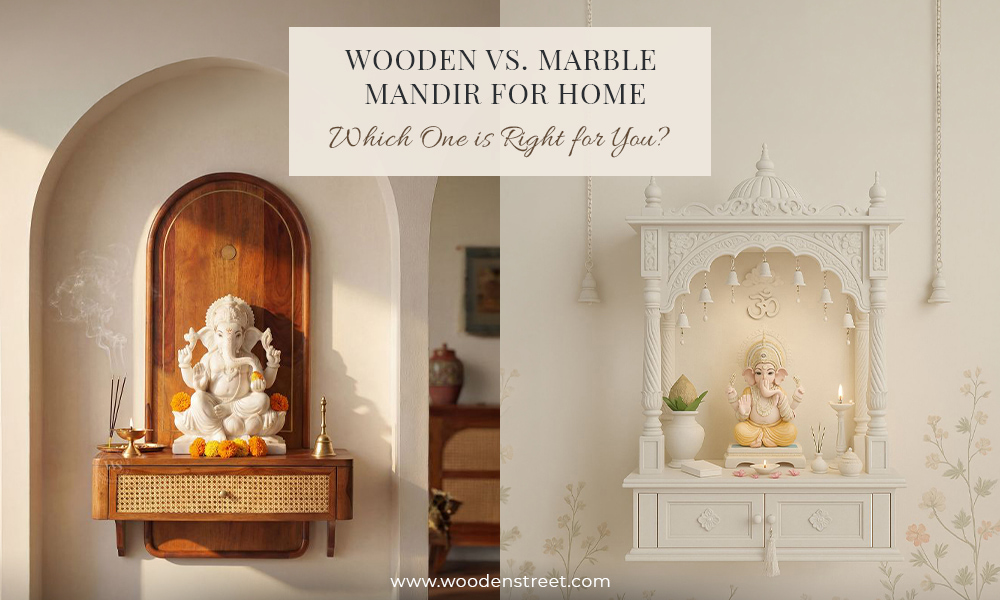
Choosing between a wooden and marble mandir depends on your budget, style, and maintenance needs. From elegant marble designs to durable Sagwan mandir options, this guide helps you understand the pros and cons of each to find the perfect fit for your home.
Continue Reading
Discover the real meaning behind 7 horse vastu beliefs, including ideal 7 horse painting vastu direction, placement rules, and 7 horse painting with sunrise benefits. This guide explains seven horses vastu symbolism, running horse vastu tips, and common mistakes people make while placing lucky seven horses painting in home interiors
Continue Reading