

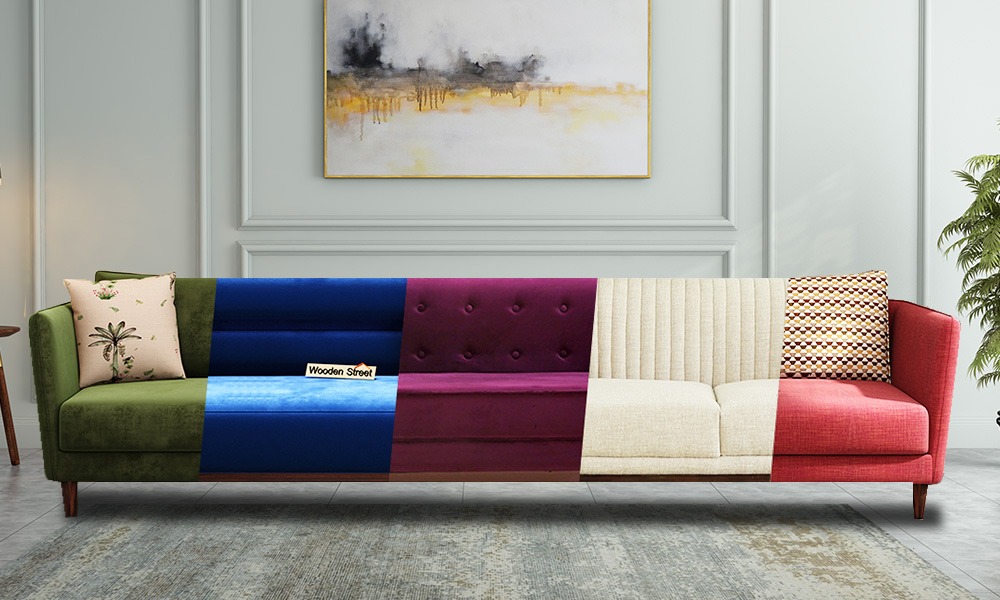




Learn how to choose sustainable furniture materials that balance durability, comfort, and environmental impact. This guide explores eco friendly furniture materials, sustainable upholstery fabrics, and eco friendly upholstery fabric options while explaining what to avoid when buying furniture made from sustainable materials for modern homes
Here's something the furniture industry doesn't want to talk about. Most of what gets sold as furniture today is designed to fail.
Not with malicious intent. Just with economics. MDF wrapped in a wood look laminate is cheap to produce, ships flat, looks decent in a photograph, and falls apart in three to five years. By then you've bought something new. The cycle repeats. The old piece goes to landfill. Nobody talks about it.
The word "sustainable" has been pasted onto this cycle so many times that it's starting to lose meaning. Brands describe flat pack furniture with recycled packaging as eco friendly. They call MDF "wood based" without mentioning the formaldehyde holding it together. They sell PU leather as an ethical alternative without disclosing that it peels within four years and goes straight to landfill.
This guide is an attempt to cut through that. What actually makes a sustainable furniture material defensible? Which materials hold up to honest scrutiny? And where is the sustainability story falling apart behind the marketing?
Four questions. Not one. Four.
How fast does the source replenish? A bamboo plant is harvestable in three to five years. A sheesham tree takes decades. Both can be sourced responsibly, but the renewal rate determines how much pressure harvesting puts on the ecosystem.
How long does the furniture last? This is the one everybody skips. A material producing furniture that lasts thirty years has a lower lifetime environmental footprint than a material producing furniture replaced every five, full stop. Durability is a sustainability credential. Often the most important one.
What happens during processing? Raw material origin is only half the picture. How much energy, how many chemicals, how much water goes into turning that raw material into a finished piece? Solid wood needs milling and finishing. MDF needs formaldehyde adhesives, heat pressing, and chemical surface coatings. Same starting point on paper, very different processing reality.
What happens at end of life? Solid wood can be repurposed, broken down, composted. MDF cannot be recycled because of the adhesive chemistry baked into it. PU leather goes to landfill. The disposal story is the part of sustainability that almost no brand brings up voluntarily.
Run any material through these four questions. The greenwashing becomes obvious quickly.
Wood is sustainable when the sourcing is responsible. That qualifier is doing a lot of work in that sentence.
Wood from cleared old growth forest is not sustainable regardless of how beautiful the grain is or how long the piece will last. Wood from FSC certified managed forests, where harvesting rates are controlled and replanting is built into the system, is one of the most genuinely eco friendly furniture materials available.
FSC is the Forest Stewardship Council. Their certification means a third party has verified the chain of custody from forest to finished product. It's not a perfect system but it's the most credible independent verification available. When a brand says "solid wood" without any sourcing documentation, that tells you something. When they can show FSC certification, that tells you something different.
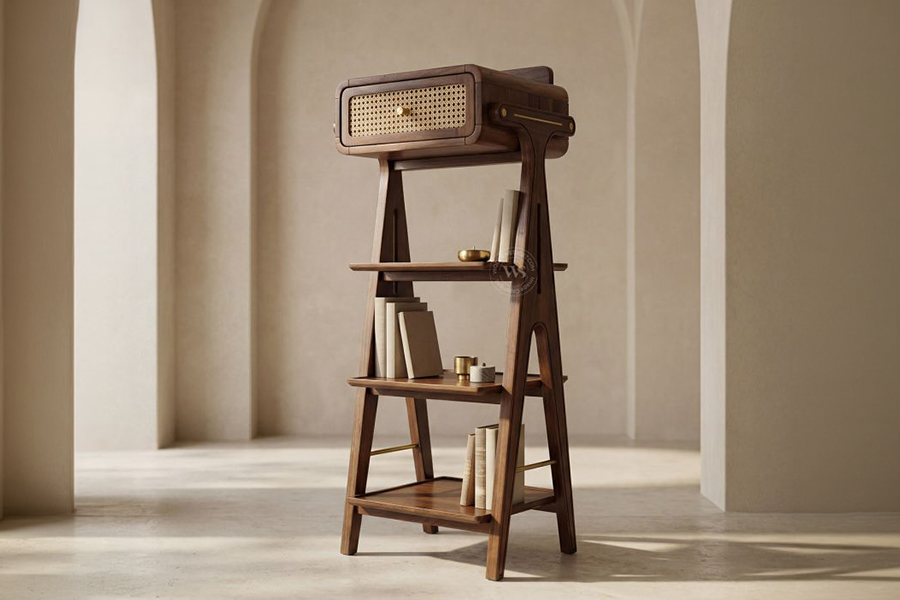
The durability case for hardwoods is straightforward. Sheesham, teak, acacia, mango wood. These are dense, stable, built to last. A well made sheesham table will outlast three or four MDF equivalents easily. When you measure environmental impact across the full lifespan of a piece rather than just the production moment, solid hardwood wins by a large margin. Every year you don't replace it is a year of raw material, processing, transport, and disposal that didn't happen.
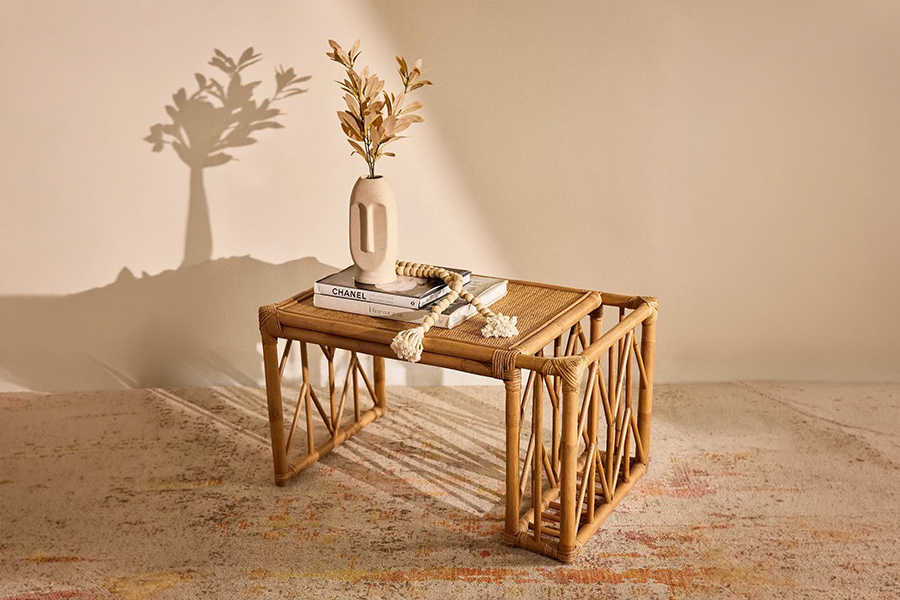
The renewability numbers are genuinely impressive. Three to five years to harvestable size. No pesticides under natural growing conditions. Thrives on rainfall. Sequesters carbon rapidly during its growth phase.
The hardness is comparable to oak. That surprises people. Bamboo doesn't feel like a compromise material once you've used it. Flooring, shelving, bed frames, it handles all of these without issue when the construction quality is there.
The honest caveat for Indian homes: bamboo needs proper sealing. In high humidity conditions, poorly sealed bamboo absorbs moisture and warps. This isn't a flaw in the material, it's a flaw in inadequate finishing. A well sealed bamboo piece handles Indian monsoon conditions without problem. An under finished one doesn't. Check the sealing quality before buying. If the seller can't tell you what finish was used, that's a red flag.
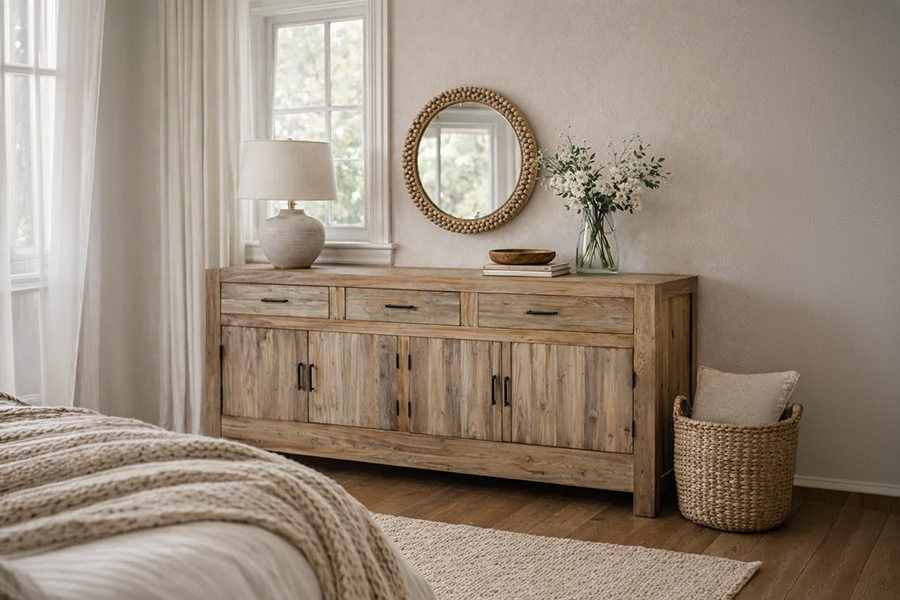
No new trees felled. No new raw material processed. Timber that already exists being used rather than wasted.
Reclaimed wood comes from demolished buildings, old railway sleepers, discarded industrial timber, decommissioned structures. The grain, the knots, the colour variation, the surface marks, all of it reflects decades of actual existence rather than a decorative finish applied in a factory. You cannot fake that character. New wood with a distressed finish is not the same thing and it doesn't pretend to be once you've seen both side by side.
The limitation is supply. Reclaimed timber doesn't come in standardised dimensions. Quantities are unpredictable. Sourcing a specific size for a specific piece is genuinely more involved than ordering from a regular timber supplier. For mass production this creates problems. For custom or artisan furniture it creates opportunities. If you can access a maker who works with reclaimed timber, from a sustainability standpoint it's the cleanest option in this entire list.
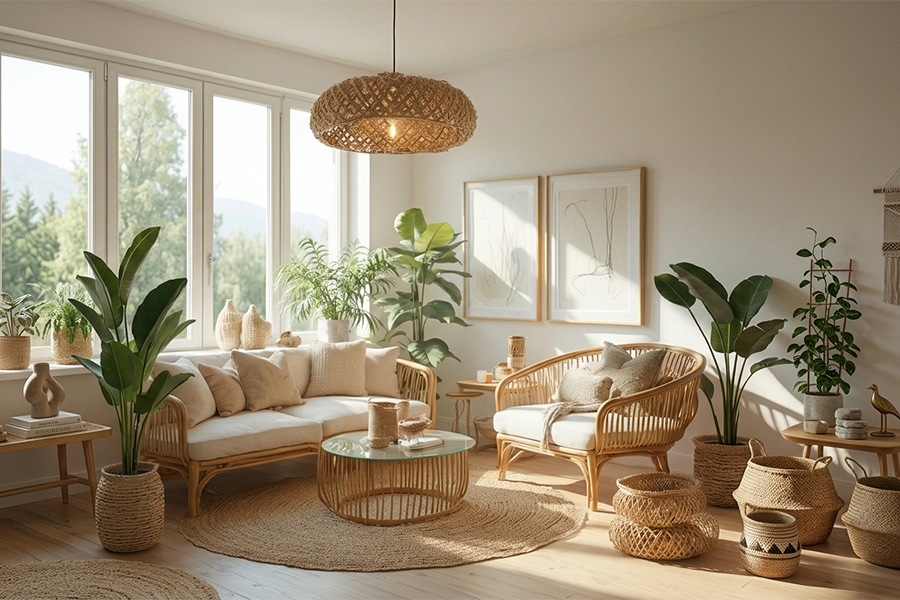
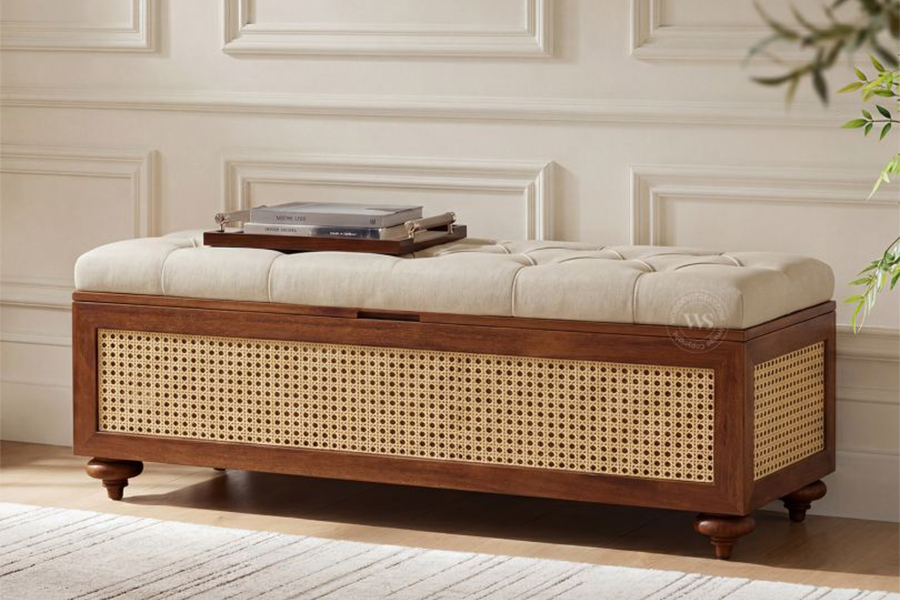
Both come from the rattan vine, a fast growing climbing palm that regrows after harvesting. Harvesting it doesn't clear land. It grows in forest understorey and its cultivation creates an economic reason to maintain forest rather than convert it to other uses. That's a genuinely unusual property for a commercial crop.
At end of life, fully biodegradable. Nothing goes to landfill.
For Indian homes specifically, the breathability is a practical advantage that goes beyond sustainability. Rattan doesn't retain heat the way foam or solid wood does. In a warm climate, that matters every single day of use. This is not a new observation. Cane seating has been part of Indian and South Asian interiors for a very long time, precisely because it works in the climate. It keeps returning because that functional reason doesn't go away.
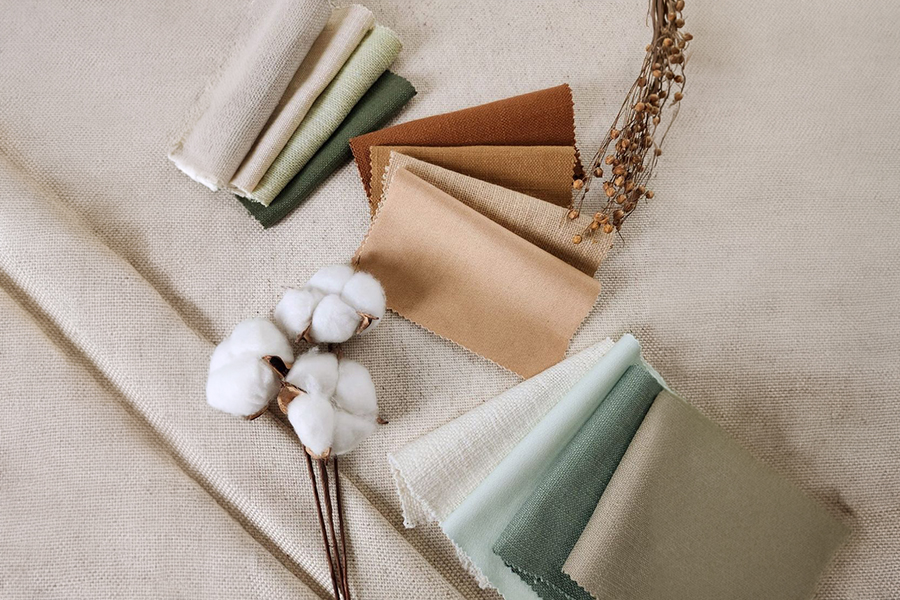
The frame is the obvious sustainability focus. The fabric covering it is equally part of the picture and it's where a surprising amount of supposedly sustainable pieces quietly fail.
Organic cotton grown without synthetic pesticides. GOTS certification, Global Organic Textile Standard, is what to look for here. The price reflects the more demanding growing conditions. The environmental gain is real: no pesticide runoff, better soil health over time.
Linen from flax. Needs significantly less water than conventional cotton. Less pesticide input. Durable in a way that gets better with washing rather than worse. Fully biodegradable. For eco friendly upholstery fabric that's also genuinely practical in Indian weather, linen is hard to argue with.
Recycled polyester, rPET, is made from post consumer plastic bottles. Not biodegradable, which is a genuine limitation. But diverting plastic from landfill during production has real value and the energy cost of producing recycled polyester is substantially lower than virgin polyester. It's better than conventional synthetic fabric even without a clean end of life story.
Jute and hemp are both fast growing, low input crops increasingly used in upholstery backing and accent applications. Both biodegradable. Hemp has a remarkably low water footprint relative to cotton.
And then there's PU leather. This one gets marketed as an ethical leather alternative, no animal product, kinder choice. The part that doesn't get mentioned: PU leather is plastic. It typically begins to peel and crack within three to five years. It cannot be recycled. It goes to landfill in its entirety. The absence of an animal product doesn't make a short lived plastic material sustainable. It just changes which ethical concern is being addressed.
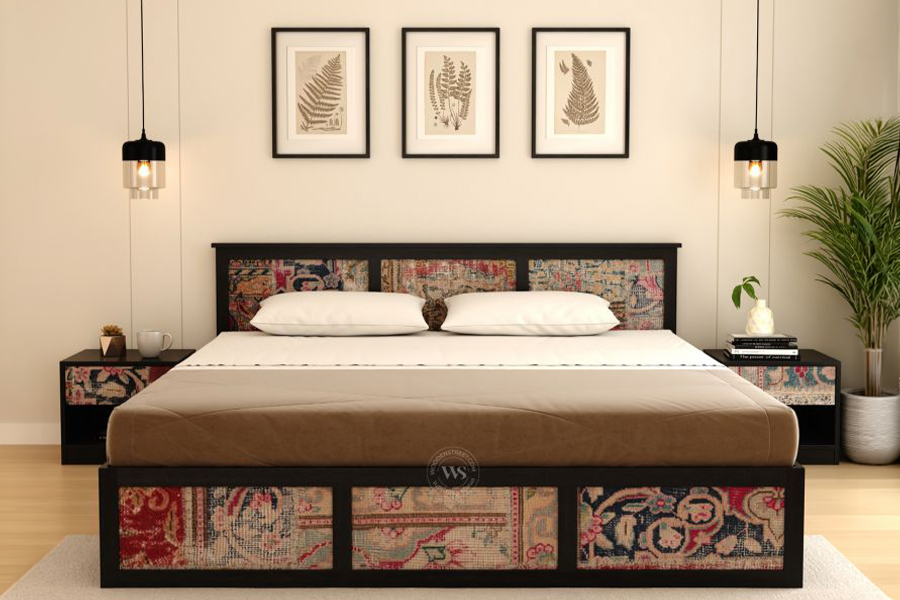
The origin story sounds fine. Wood waste, sawdust, offcuts that would otherwise be discarded, compressed and bound into usable panels. Using wood waste rather than felling new trees sounds like exactly the right instinct.
Then you look at the binder.
Formaldehyde based adhesives hold the wood fibres together. These chemicals off gas VOCs, volatile organic compounds, into indoor air for years after the furniture arrives in your home. The concentration is higher in the first year and decreases over time, but it doesn't disappear. Beyond the indoor air quality issue, the adhesive chemistry makes MDF impossible to recycle. The wood fibre cannot be separated from the chemicals at end of life. Every piece of MDF furniture is eventually landfill. There is no alternative pathway.
Add the durability problem. Moisture is MDF's enemy. A leak, a spill left too long, a humid room without ventilation, any of these causes irreversible swelling. Most MDF furniture fails within five to eight years under normal Indian conditions where humidity is a real environmental factor.
The origin story doesn't survive contact with the processing chemistry and the disposal outcome. Is solid wood more sustainable than MDF? Yes. Clearly and significantly yes.
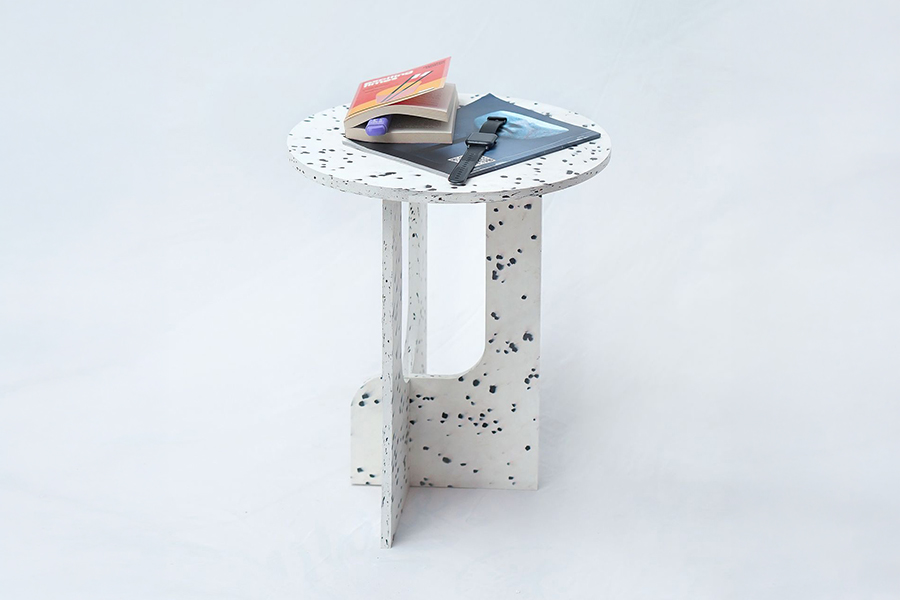
Genuinely recycled plastic outdoor furniture, high percentage recycled HDPE, is a legitimate choice. It diverts plastic waste, it's extremely durable outdoors, it doesn't rot. This is real.
The greenwashed version is furniture described as eco friendly or sustainable because it contains some percentage of recycled content, sometimes single digits, while the rest is virgin plastic and the piece itself is not recyclable at end of life. The sustainability claim is technically defensible and practically meaningless.
Two questions cut through this. What percentage of the product is actually recycled content? Is the piece recyclable at end of life? If neither answer is clear and documented, the sustainability claim is marketing.
Ask for certification before you buy. FSC for wood sourcing. GOTS for organic fabric. A documented, verified recycled content percentage for plastics. Sustainability claims without supporting third party documentation are unverified assertions. The certifications exist precisely because visual inspection of a finished product can't tell you where the materials came from or how they were processed.
Make durability part of the calculation. A solid wood dining table at twice the price of an MDF equivalent, lasting thirty years instead of six, costs less per year of use, requires no replacement purchase at year seven, and sends nothing to landfill at the point when the MDF version would be failing. The most eco friendly furniture is the piece you never have to buy again.
Choose solid over composite wherever possible. Solid sheesham, teak, acacia, and mango wood will outlast MDF and engineered wood alternatives by decades. This is true regardless of the sustainability language on the engineered wood packaging. The longevity difference is simply that significant.
Wooden Street builds from solid hardwood, sheesham, teak, acacia, and mango wood, specifically because furniture that doesn't need replacing is the most defensible sustainability position available. No certification can substitute for that.
We will be back with the next blog soon. Till then, stay tuned!
Read More -
What is Bamboo and Cane Furniture? A Complete Guide Before You Buy
Image Source: Pinterest, Google, and Wooden Street
Trending Products
Top Picks from EveryoneArticles you will love to read

Discover smart small house interior design ideas for Indian homes with space-saving furniture, layout plans, lighting tips, and décor ideas for compact flats and apartments.
Continue Reading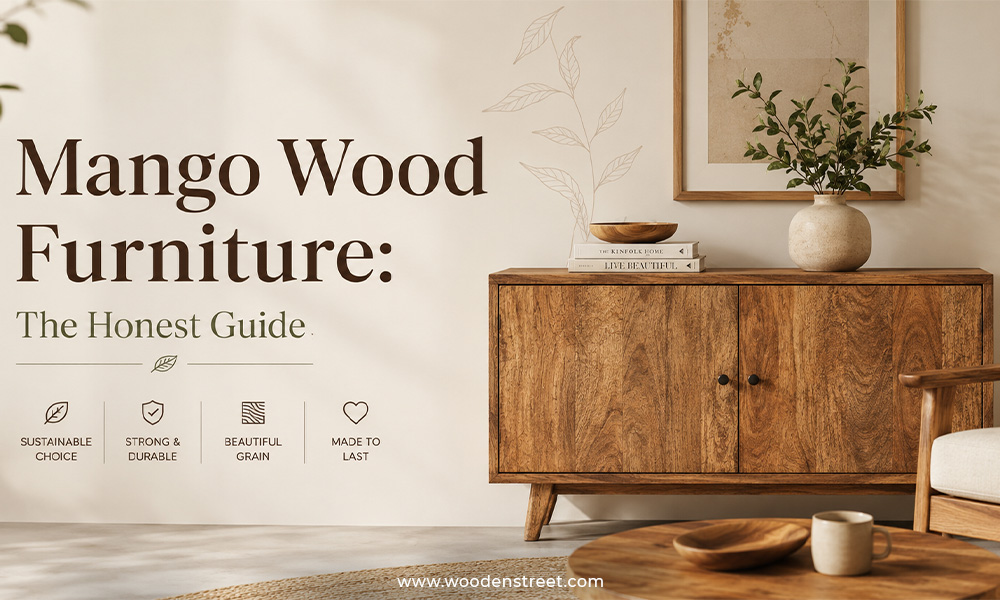
Explore the real pros, cons, durability, and maintenance of mango wood furniture in this honest guide. Learn why mango tree wood furniture, mango hardwood furniture, mango tables, mango stools, mango wood beds, and mango dining tables are becoming popular choices for stylish and sustainable homes.
Continue Reading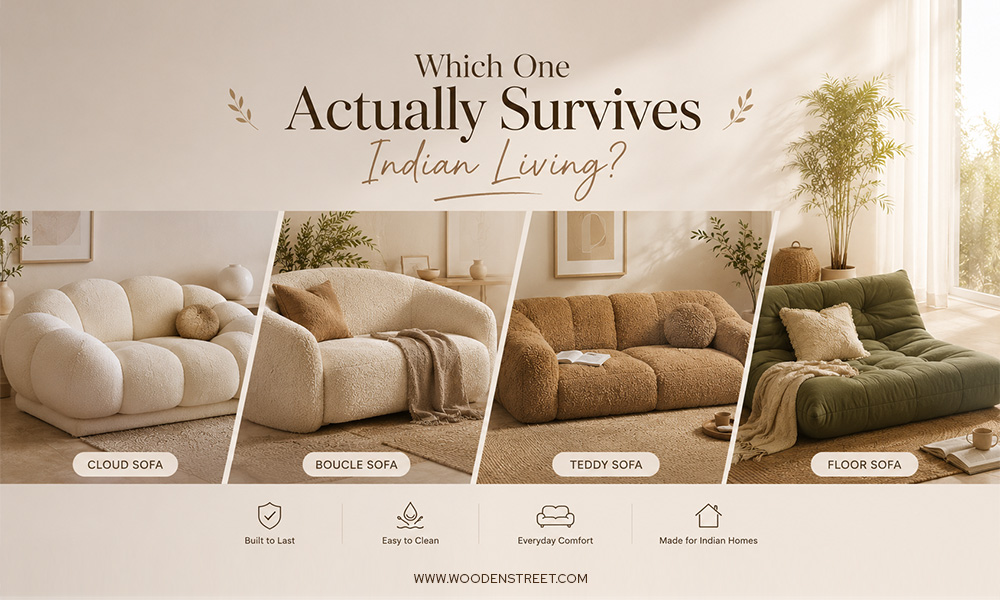
From the trendy cloud couch to practical floor sofa couches, this guide compares comfort, maintenance, durability, and everyday usability for Indian homes. Discover whether a boucle fabric sofa, teddy sofa, cloud sofa, or modern floor sofas can truly handle kids, guests, pets, heat, and daily living without losing style.
Continue Reading
Discover the latest bookshelf design trends for 2026, from floating shelves to library walls. Explore trendy modern bookshelf designs for Indian living rooms and compact homes
Continue Reading
Discover the real standing desk benefits backed by science, from lower back pain relief to better energy and blood sugar control. Learn how to use a standing desk correctly for Indian office and WFH setups.
Continue Reading


