






Standard desks are too high for the average Indian adult. Here is the exact formula to calculate your proper chair-to-desk ratio.
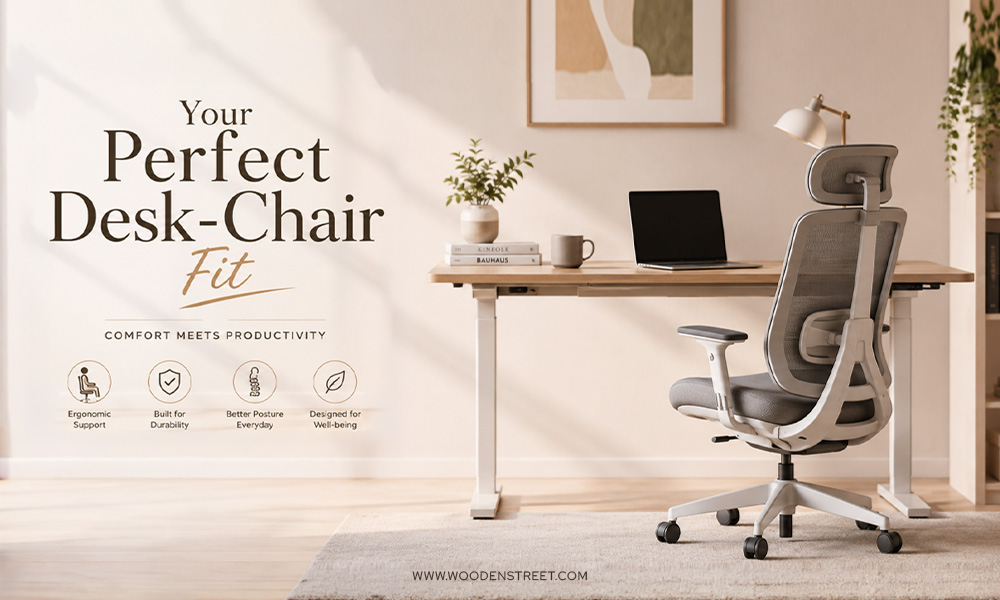
I am 5'4". I spent two years following ergonomic guides written for someone four inches taller than me, wondering why my shoulders ached by evening. Every calculator online gave the same numbers. None worked. So I measured myself properly, built the ratio from scratch, and what I have now is the first setup that has actually held up.
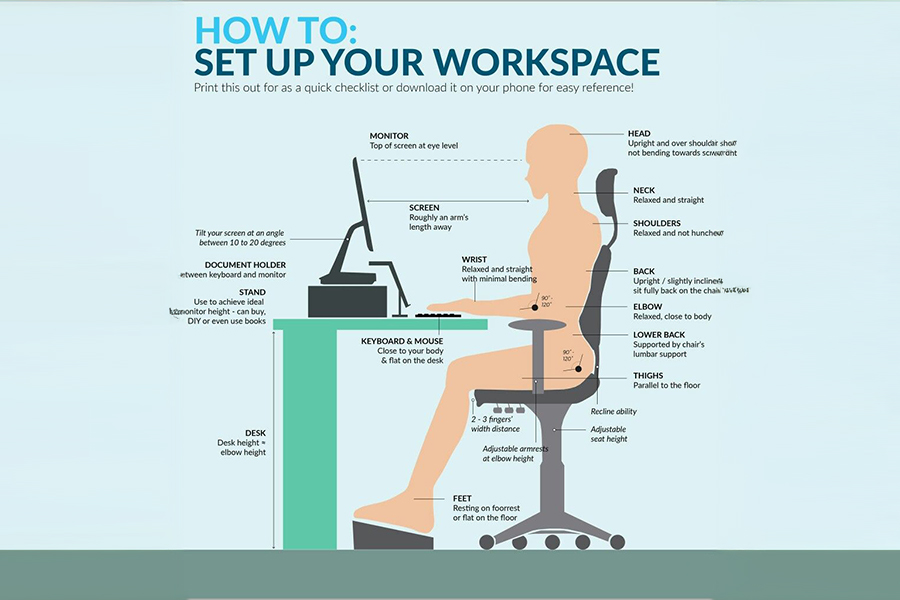
Most ergonomic guidelines are built around a reference height of 5'9" - the average used in Western research.
The average Indian adult male is 5'5". The average Indian adult female is 5'1". That gap sounds small. In office desk ergonomics, it is the difference between a setup that supports your posture and one that quietly destroys it.
A desk calibrated for a 5'9" person sits 4 to 6 cm too high for someone at 5'5" - enough to raise your shoulders all day until that compensation becomes chronic tension. This is the starting point for most WFH back and shoulder problems.
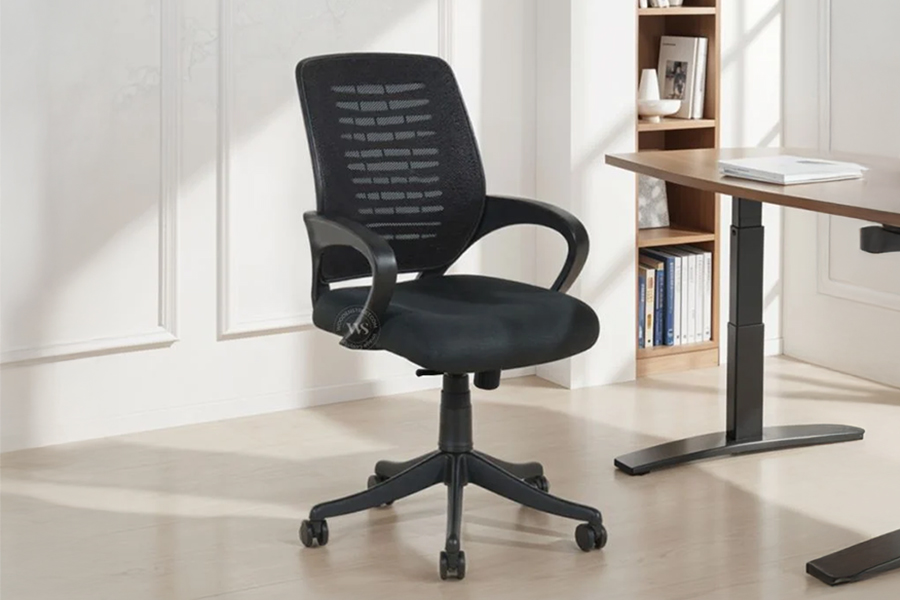
Popliteal height is the distance from the floor to the back of your bent knee when seated. Everything else is built from this number, and it takes sixty seconds to find.
Sit on a hard flat surface, feet flat, knees at exactly ninety degrees. Measure from the floor to the crease behind your knee. That number in centimetres is your popliteal height.
Mine is 39 cm. Before I measured it, my chair was set at 47 cm - the default I had never questioned. Eight centimetres too high. My feet barely touched the floor. My lower back compensated without me noticing.
Your popliteal height is your correct chair height. Not approximately - exactly. This is where the ratio starts.
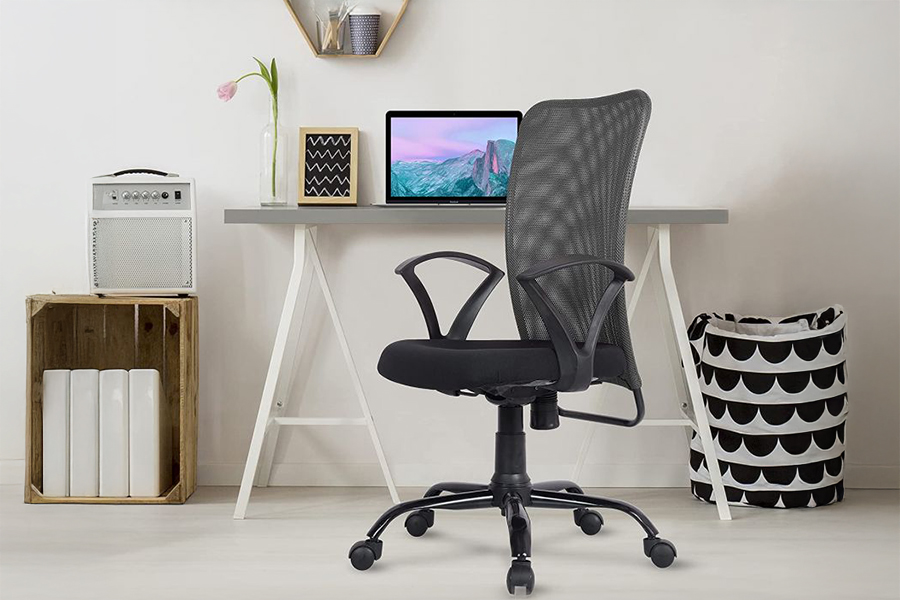
Add 27 to 30 cm to your chair height to get your desk height. This covers the vertical distance from seated elbow to thigh - the zone where forearms rest flat without raising your shoulders.
Monitor height closes the chain: top of screen at or just below eye level, 45 to 70 cm from your face horizontally.
The full chain across four height profiles:
Most standard Indian desks are fixed at 75–76 cm - already too high for anyone under 5'8". And the monitor is where most setups silently fail. A screen flat on the desk forces your chin down all day. A 10 cm riser changes that completely.
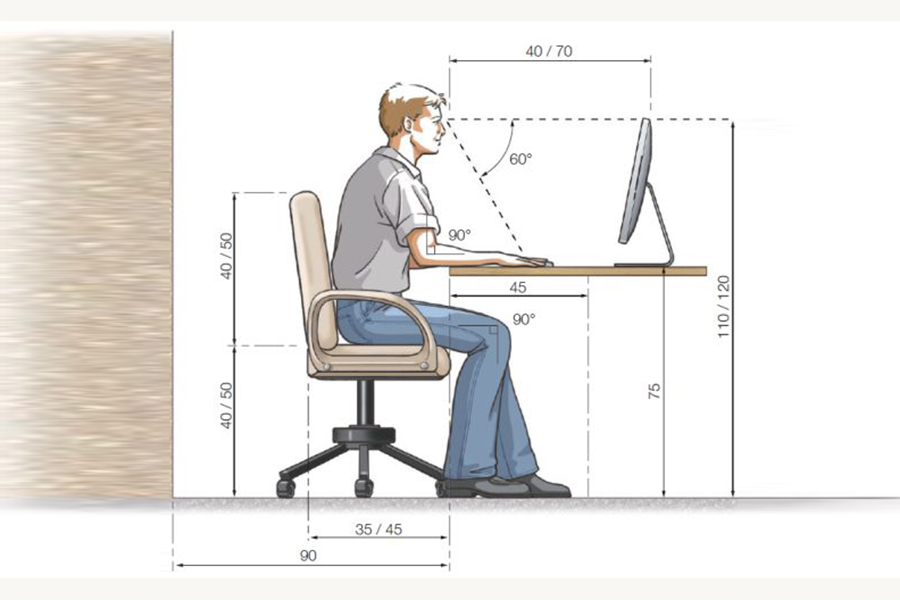
Most Indian homes have one fixed reality: the desk is not changing.
Adjust the chair height first until forearms rest flat on the desk without raising your shoulders. If your feet leave the floor, add a footrest - a firm cushion or thick book works. This step gets skipped constantly and causes more lower back strain than almost anything else. Raise the monitor last.
The point at which adapting stops working: when your chair is at maximum height and your shoulders are still raised. If the desk is more than 10 cm above your correct working height, no footrest fixes it. The desk must change.
Sit at your current setup. Arms hanging naturally, then bend elbows to ninety degrees. Where do your forearms land? Below the surface - chair too high. Above it - chair too low. Flat - correct.
Then close your eyes, sit naturally, open them. Where does your gaze land? Top third of the screen is correct. Looking down means monitor too low. Looking up means too high.
I did this on my old setup. Forearms landed 6 cm above the desk. Two adjustments - chair height and a monitor riser - fixed it in under ten minutes.
A For a 5'4
A Subtract 27–30 cm from your desk height to find correct chair height - that gap equals your seated forearm-to-thigh distance.
A Raise the chair first, then add a footrest to support your feet. If the gap exceeds 10 cm, the desk itself needs replacing.
A Monitor top should sit at eye level, 45–70 cm from your face - never flat on the desk surface, which forces your neck down all day.
Trending Products
Top Picks from EveryoneArticles you will love to read

Looking for smart small office interior ideas? Explore practical, space-saving designs that work well for home offices and compact workspaces.
Continue Reading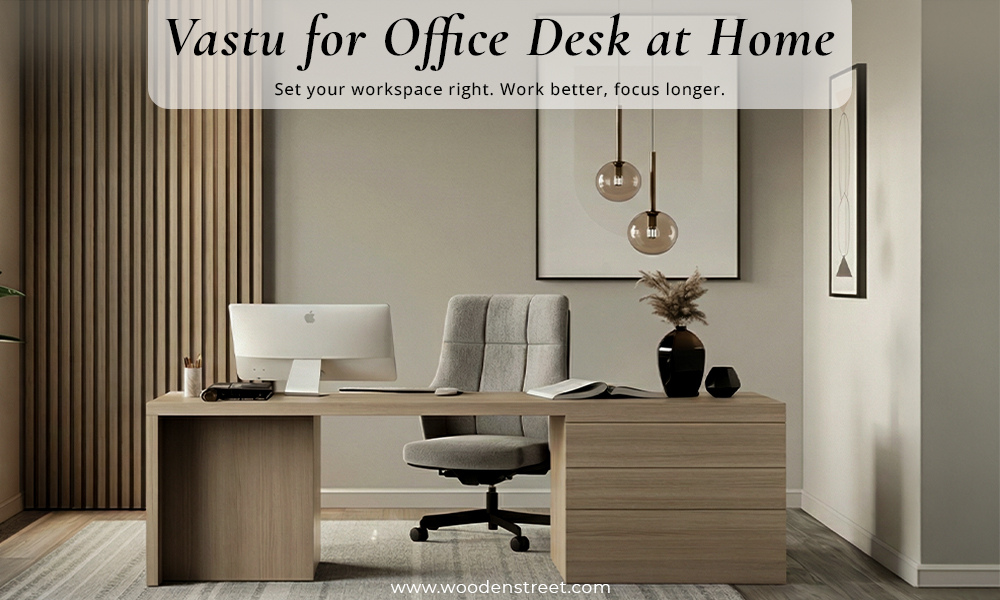
Setting up your workspace the right way can completely change how you work from home. This blog on Vastu for office desk at home explains the best desk direction, seating positions, and simple adjustments that help improve focus and comfort. From choosing the right home office desk and chair to creating a balanced work from home setup, these practical tips make your home office feel more organised and easier to work in every day.
Continue Reading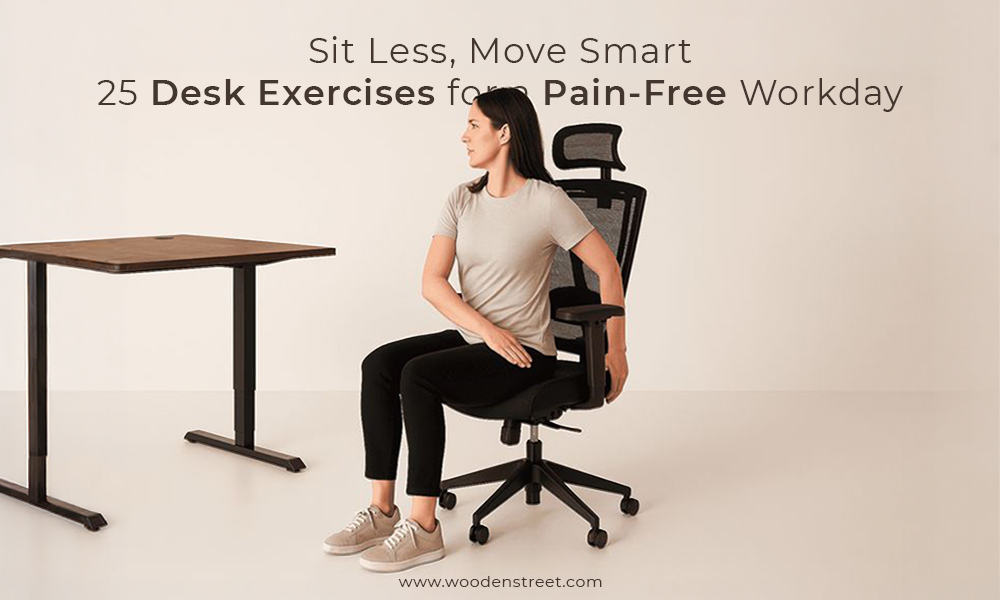
This blog shares 25 discreet and effective desk exercises designed for real office environments. From invisible seated moves to quick 5-minute breaks, it helps reduce back pain, neck stiffness, and eye strain without leaving your chair
Continue Reading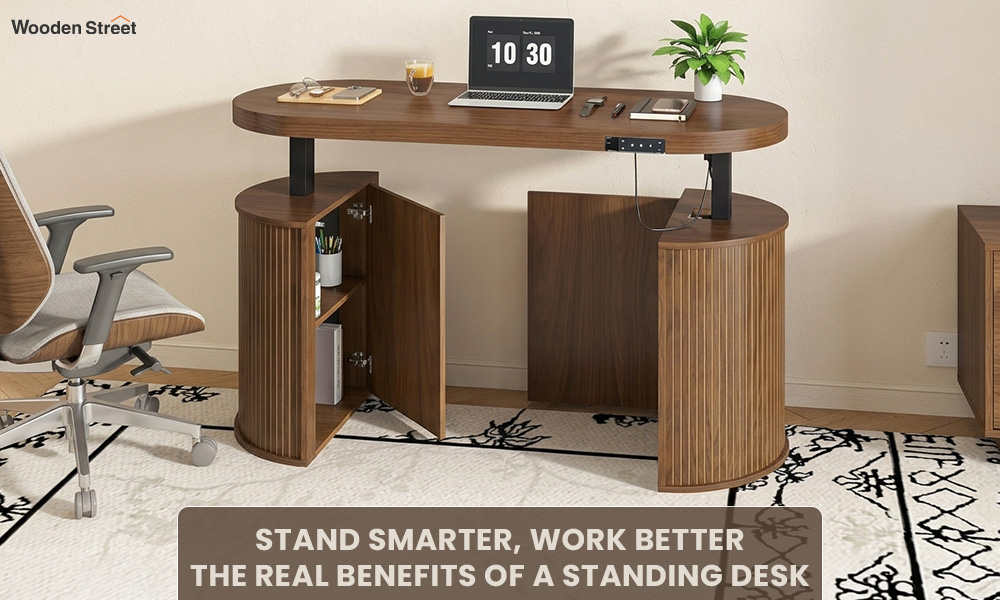
Discover the real standing desk benefits backed by science, from lower back pain relief to better energy and blood sugar control. Learn how to use a standing desk correctly for Indian office and WFH setups.
Continue Reading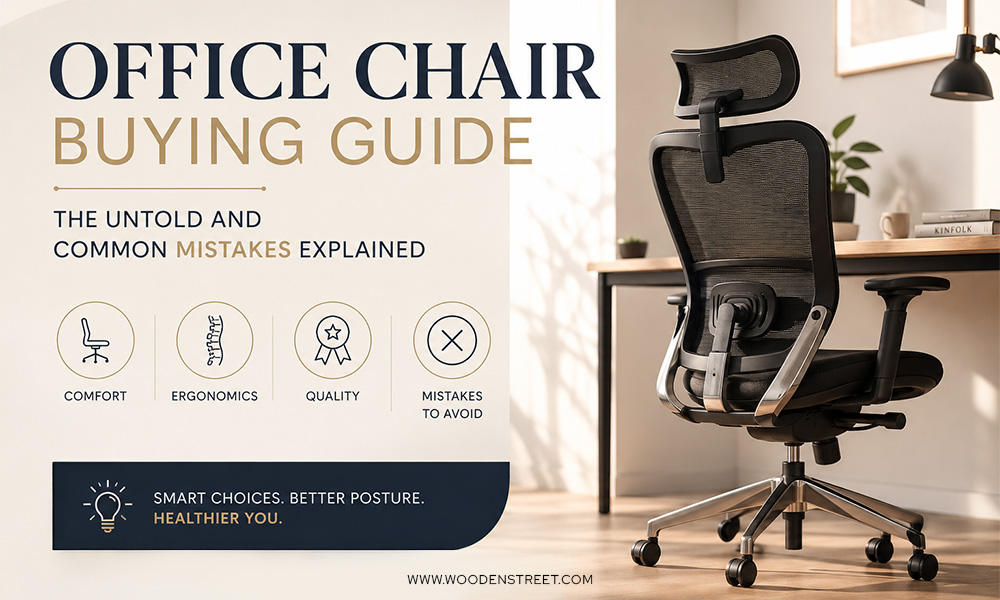
Buying the wrong office chair can lead to discomfort, poor posture, and wasted money. This guide explains the most common office chair buying mistakes, essential ergonomic features, material choices, sizing tips, and practical factors people often overlook before selecting a chair for work, study, or long daily sitting hours
Continue Reading


/31.jpg)