



Choosing the right curtains involves more than picking a color. This guide explores different types of curtains, popular fabrics, and practical functions for bedrooms, living rooms, and other spaces. Learn about window curtains types, hanging styles, light control options, and the kinds of curtains best suited to your home’s needs

You finally got the sofa you wanted. The walls are painted. The furniture is placed just right. And then you hang the curtains and something feels wrong. The room looks flat. Smaller. A little off.
And you cannot figure out why.
Nine times out of ten, it is the curtains. Wrong type, wrong length, wrong fabric for the room. The frustrating part? Nobody teaches you this stuff. You just walk into a store, point at something that looks nice, and hope for the best.
So let us fix that today. This is a full breakdown of every type of curtain by how they hang, by what they actually do, and by the fabric they are made from. Read this once and you will never buy the wrong curtains again.
Most people think of curtains as decoration. Something to add colour, cover the window, maybe tie in with the sofa cushions. And yes, that matters. But curtains are also doing two other jobs that most buyers completely ignore.
Those three jobs are: controlling light, giving you privacy, and making the room look good.
A living room facing a busy street needs privacy more than anything else. A bedroom needs darkness. A formal dining room mostly just needs to look beautiful. These are not the same requirements and treating them like they are is why so many homes end up with curtains that look fine but do not actually work.
Here is a simple habit that will save you money: before buying curtains for any room, decide which job matters most. Is it light? Privacy? Looks? That one question will point you straight to the right type. Everything else fabric, colour, pattern comes after.
The hanging style of a curtain is the first thing you notice and usually the last thing people research. Big mistake. How a curtain hangs affects how it looks on the rod, how smoothly it opens and closes, and how the room feels when the hanging curtains are drawn. Here are the four main kinds of curtains by hanging style.
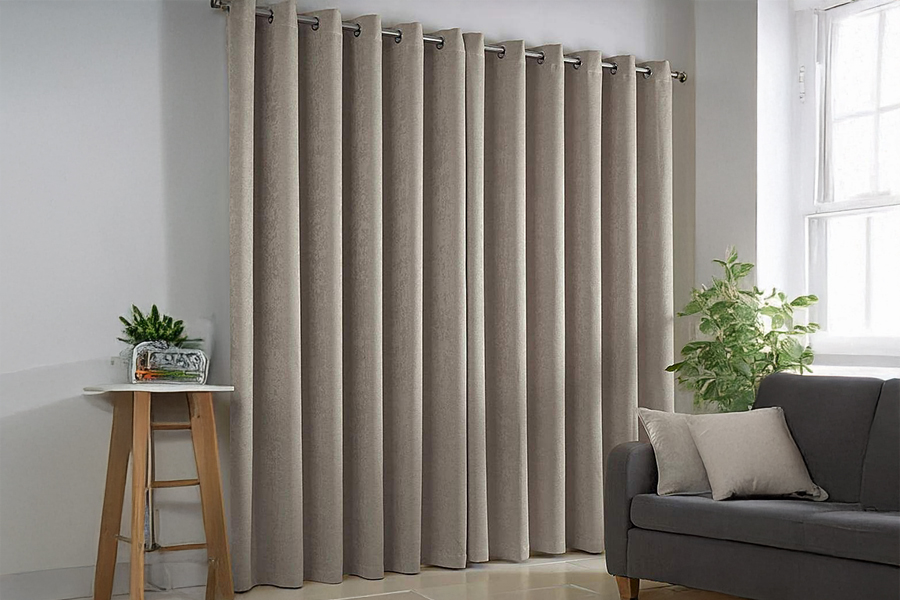
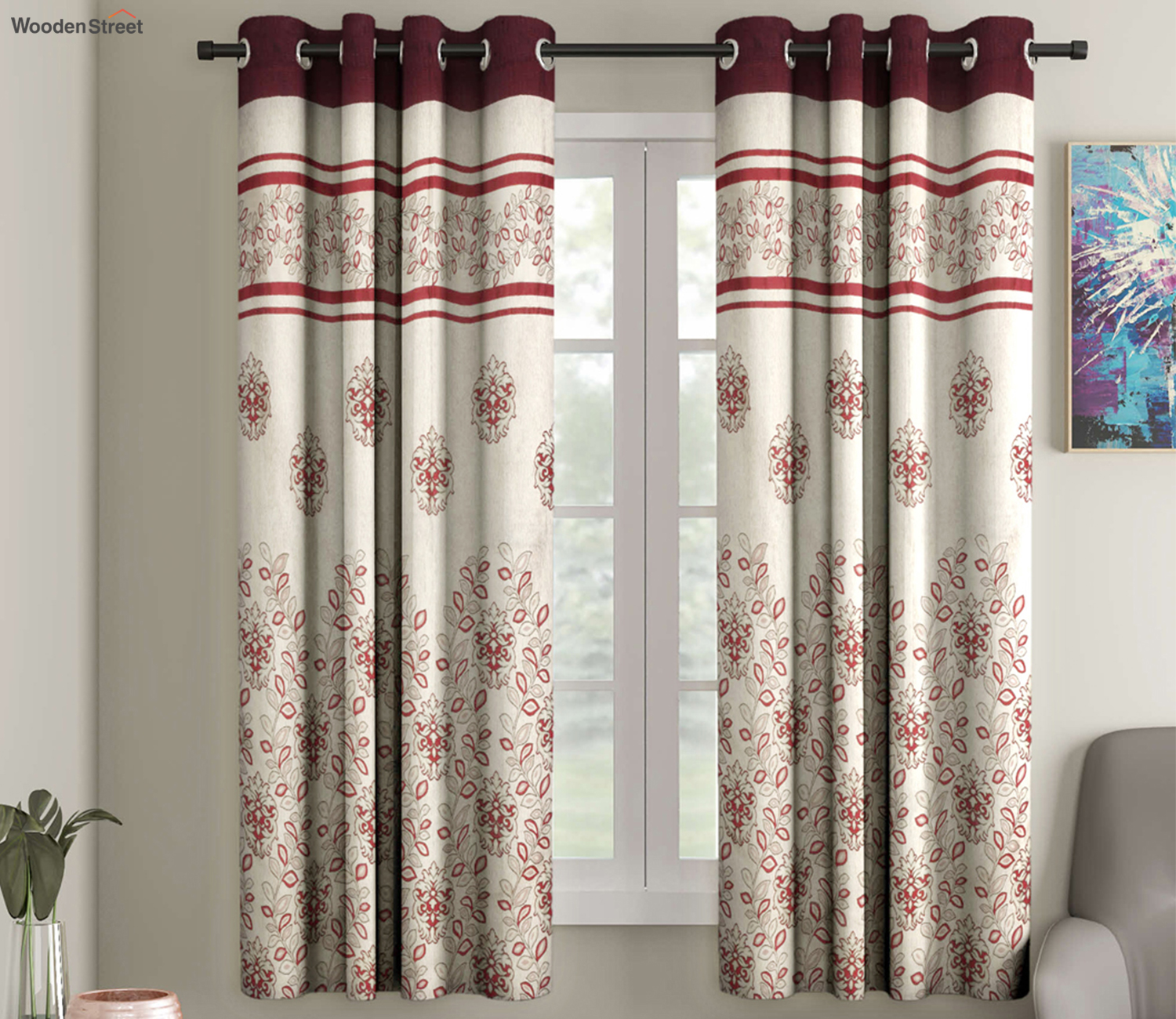
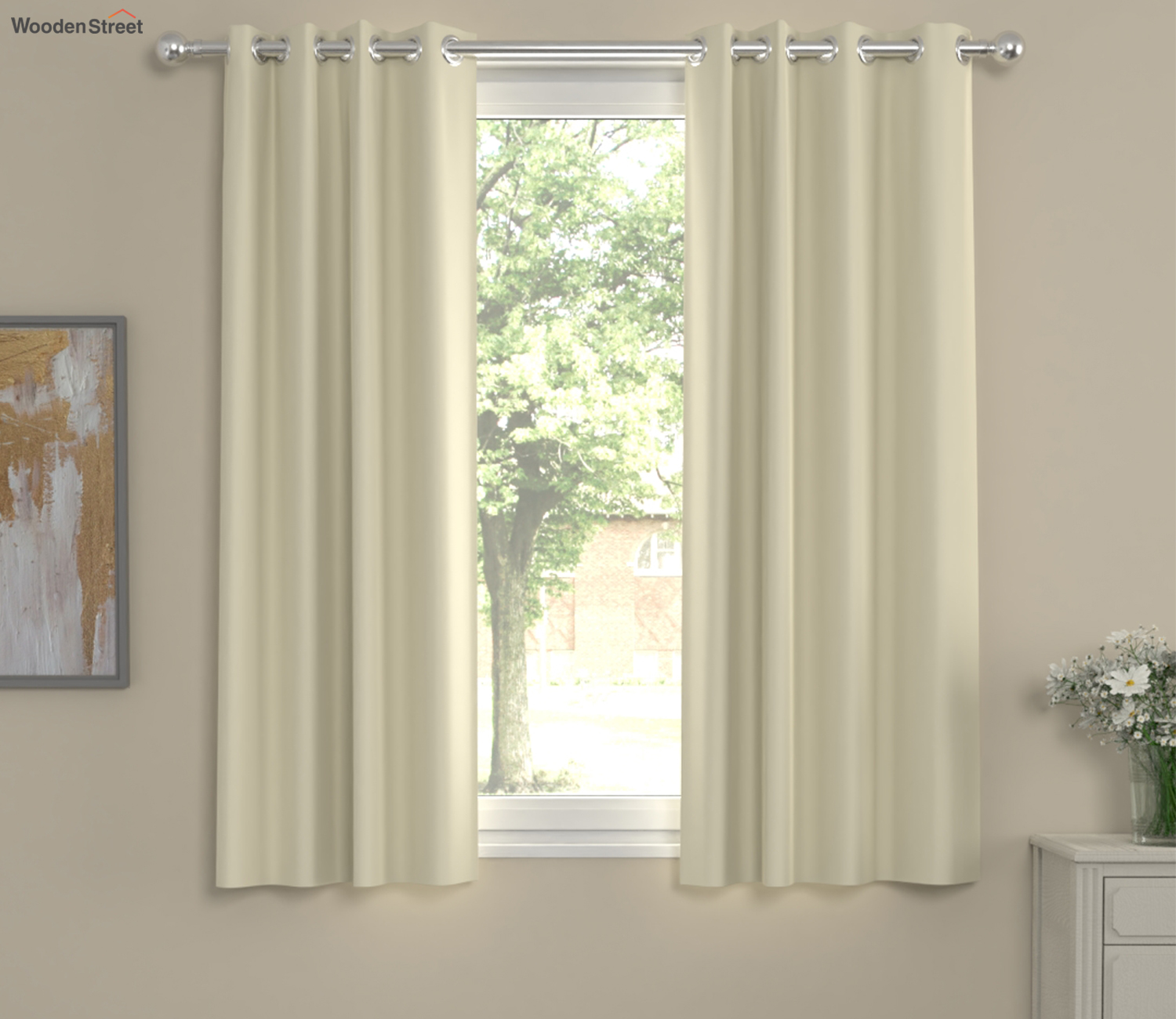
Eyelet curtains are probably the most common window curtain type in Indian homes right now, and the reason is simple they just look good without much effort.
Metal rings are punched through the fabric at the top. The curtain rod goes straight through those rings. When it hangs, you get these clean, even waves of fabric that look neat without being stiff or formal. No fumbling with hooks, no complicated track systems. You put the rod through the rings and you are done.
They open and close smoothly, which matters more than people think. If you are opening your bedroom curtains every single morning, you want something that glides. Eyelets do that.
One thing to keep in mind: the rod is fully visible with eyelet curtains since it passes through the rings. So make sure the rod itself looks good. A nice wooden rod or a matte black metal rod works really well. A plain silver tube rod is going to look a bit sad.
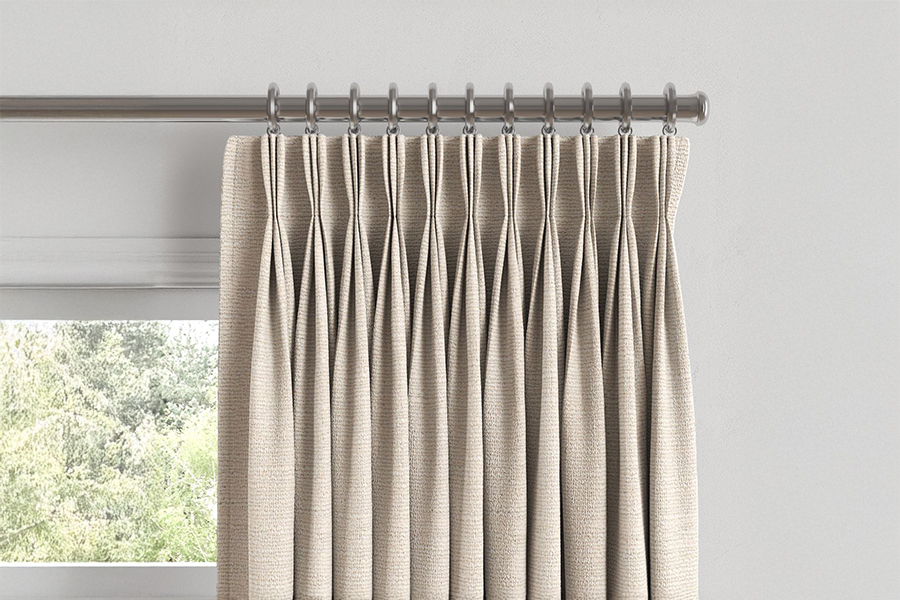
If eyelet curtains are the modern choice, pinch pleat curtains are the classic one. These are the types of curtains you see in five star hotels and heritage homes and there is a reason they have been around for so long.
The top of the fabric is gathered and stitched into pleats, usually two or three folds of fabric pinched together at regular intervals. This creates a very structured, tailored look. The curtain hangs in deep, even vertical folds that feel deliberate and expensive.
They are not the simplest curtains to hang. You need specific curtain hooks and a proper track. But the result is genuinely beautiful in the right space. A formal living room, a traditional drawing room, a bedroom in a heritage home pinch pleats belong here.
If you have stayed in a hotel and looked at the curtains and thought "why do these look so much better than mine?" this is almost always why.
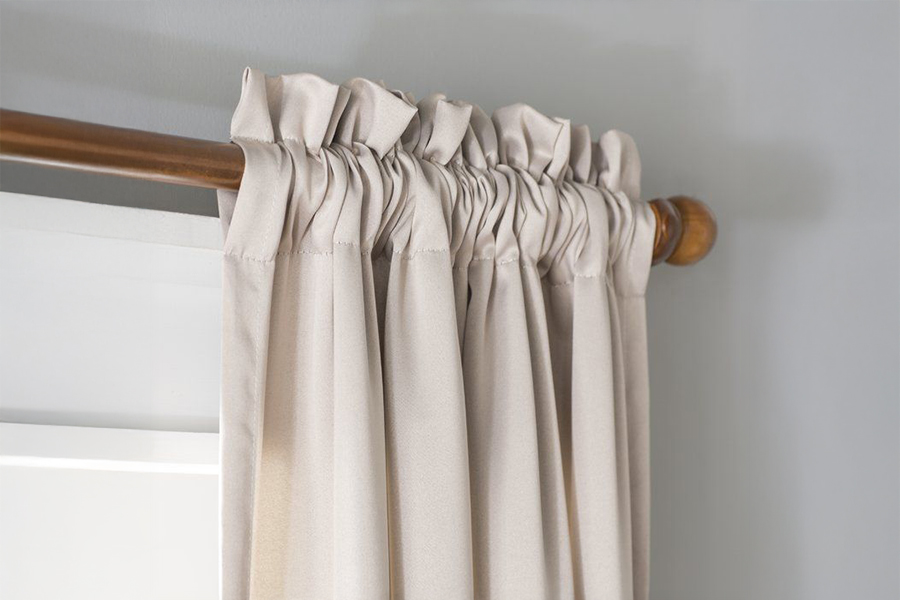
Rod pocket curtains are the most basic window curtain type out there. The top of the fabric is folded and sewn into a channel a pocket and the rod is threaded through it. The curtain gathers softly on the rod and stays put.
They look casual and cosy. They work well in kitchens, reading nooks, guest bedrooms, and anywhere that does not need the curtains to be opened and closed constantly. They are also easy to make and usually cheaper to buy.
The honest downside: they are terrible for daily use. Every morning when you pull the curtain open, you are dragging fabric along a rod. It bunches. It catches. The pocket wears out. After a few months, you will find yourself reaching for the middle of the curtain and yanking because the pocket has gotten too tight to slide.
For curtains that are mostly decorative that stay in one position and barely move rod pocket is fine. For any window you use every day, pick something else.
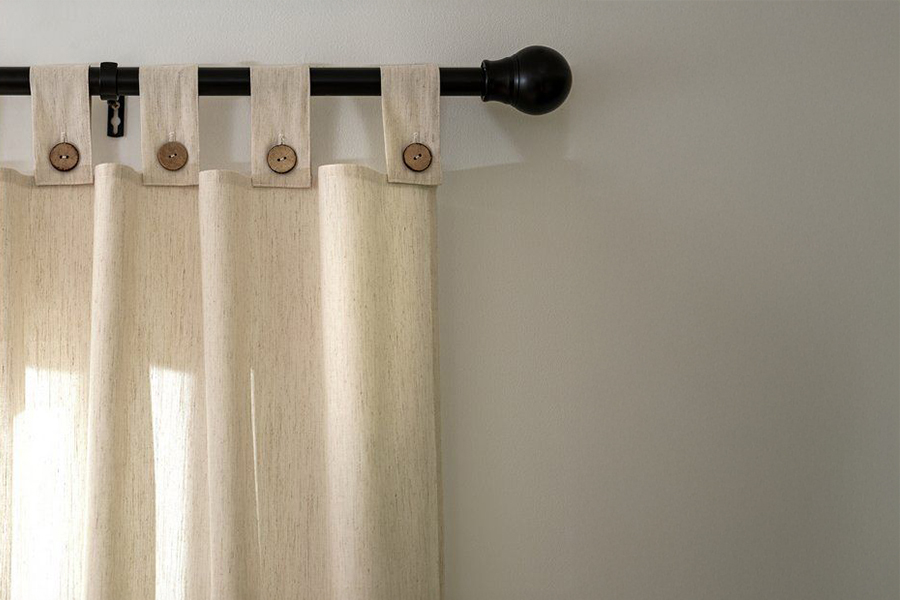
Tab top curtains have fabric loops stitched along the top, and these loops go directly over the rod. They hang lower than eyelet curtains because the rod sits inside the loop rather than at the very top of the fabric.
The look is relaxed and bohemian. Natural fabrics, earthy colours, handmade feeling spaces tab tops belong here. A linen tab top curtain in a studio apartment or a reading room looks genuinely lovely.
Two things to be aware of before buying. First, because the curtain hangs lower on the rod, it can make the ceiling feel lower too. In a small room this becomes noticeable. Second, like rod pocket curtains, the loops drag along the rod when you open or close them. Not ideal for a window you use every day.
Tab tops are best used where they can stay mostly in one position and look beautiful doing it.
This is honestly the most important section in this entire guide. And it is the one that gets skipped the most in buying decisions. The hanging style tells you how a curtain looks. The fabric tells you how it feels. But the function tells you whether it actually solves your problem.
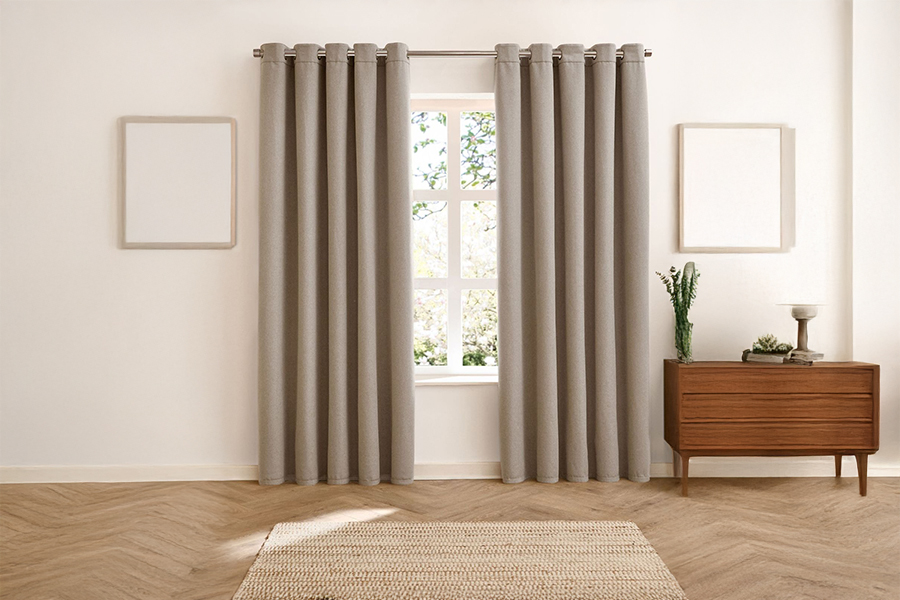
Let us be completely clear about what blackout curtains actually do: they block light. Not reduce it. Not dim it. Block it up to 95 or even 100 percent of incoming light, depending on the lining and how well the curtain covers the window.
If you have ever been woken up by the sun at 5:30 in the morning when you wanted to sleep until 7, you understand why these exist. If you have a child who will only nap in a dark room, you understand. If you have a home theatre that turns into a washed out mess the moment any sunlight comes through, you understand.
Blackout curtains are non-negotiable in bedrooms. They are very useful in children's rooms. They are essential in home theatres. And they are a genuine lifesaver for anyone who works night shifts and sleeps during the day.
One thing that catches a lot of people off guard: dark coloured curtains are not automatically blackout curtains. A deep navy cotton curtain will reduce light, but it will not block it properly. An actual blackout curtain has a specific dense lining, sometimes multiple layers built into it. Always check before you buy.
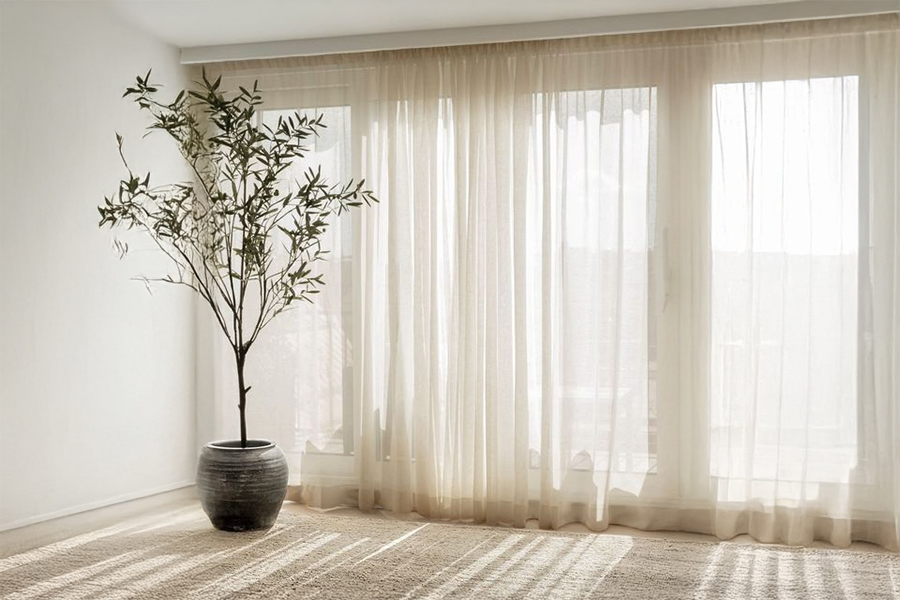
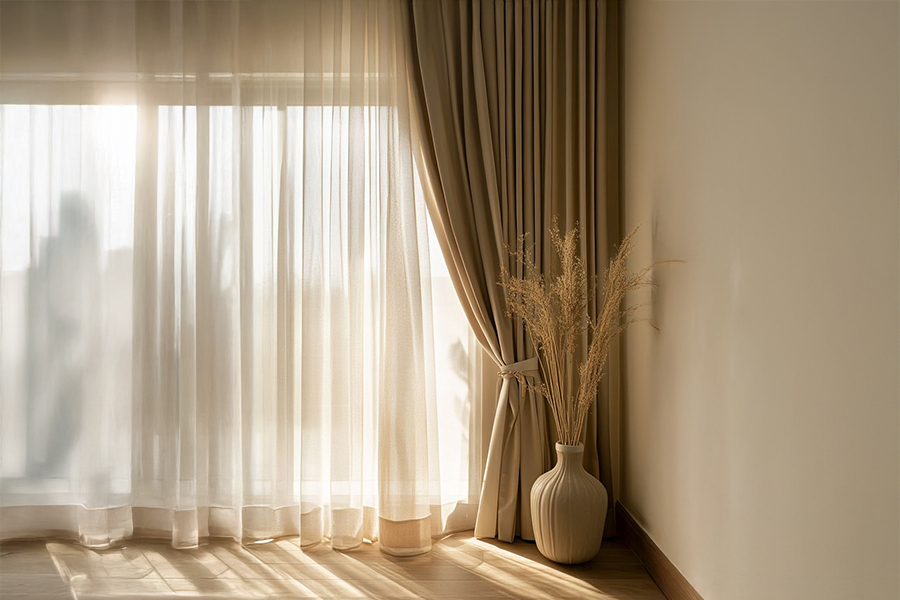
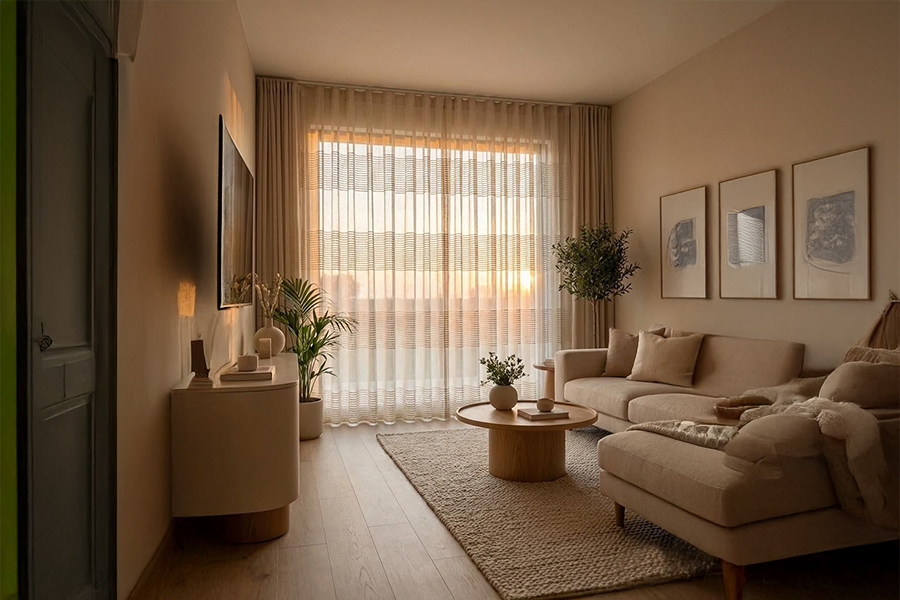
Sheer curtains are at the other end of the spectrum entirely. They are made from light, loosely woven fabric voile, chiffon, organza that lets light pass through. They do not block anything. What they do is soften it.
Light that comes through a sheer curtain feels warm and diffused rather than harsh and direct. It fills a room gently. This is why sheers are so popular in living rooms and dining areas they make the light feel considered rather than accidental.
Here is the privacy thing that surprises most people: during the day, sheer curtains actually do give you privacy. Because the light outside is brighter than the light inside, it is very difficult for someone standing outside to see through a sheer panel. But the moment you turn your lights on at night, this completely reverses. Now you are the bright thing and they are in the dark. A sheer curtain at night is basically a window with a soft filter. You can be seen.
The solution is layering a sheer panel for daytime light with a heavier curtain behind it that you close at night. This combination works so well in living rooms and bedrooms that it is honestly hard to go back once you have tried it.
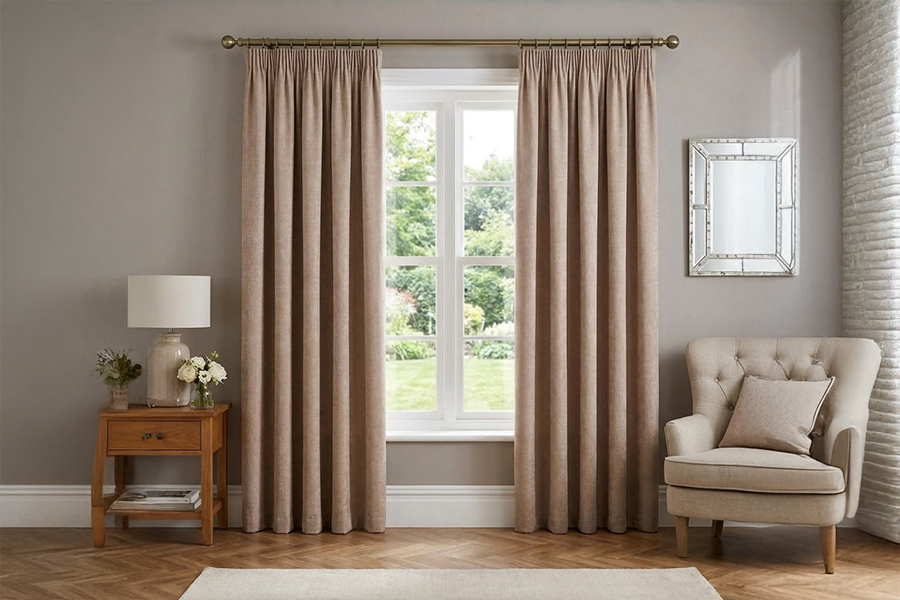
Thermal curtains are the most sensible and most ignored type of curtain for Indian homes. And it genuinely baffles me.
These curtains have a layered lining that slows down heat moving through the window. In summer, they keep the outside heat out. In winter, yes Indian winters do exist and they do get cold.They keep the warmth inside and stop drafts coming through the glass.
Here is the really practical part: if you run an air conditioner, thermal curtains reduce how hard it has to work. Less heat coming in means the AC reaches the set temperature faster and cycles off sooner. Over a summer, that adds up to real savings on electricity. In a country where electricity bills in peak summer months are already painful, this matters.
They look identical to regular curtains from the outside. The lining is on the inside, hidden. You can have thermal curtains in any style or fabric. There is no reason not to have them in rooms where you use an AC regularly.
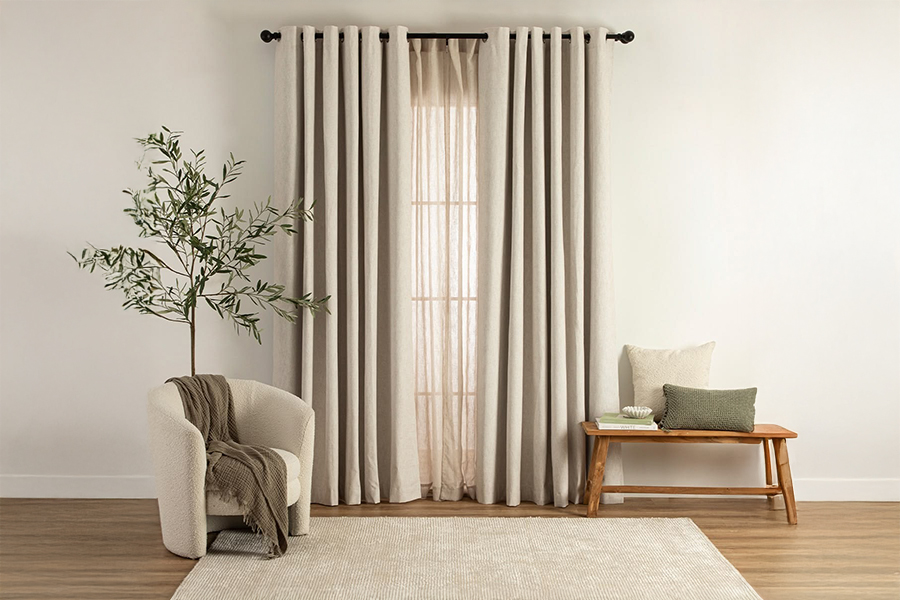
Let us manage expectations first: soundproof curtains do not make a room silent. They are not a substitute for actual acoustic treatment. What they do is reduce sound particularly high and mid frequency sounds like traffic noise, conversations from outside, and the general hum of a busy street.
They work because they are dense and heavy. Multiple layers of thick fabric absorb sound waves rather than letting them vibrate straight through. The denser the curtain, the more sound it absorbs.
If your bedroom faces a main road, if you live near a school, if you work from home and your window faces a noisy area these curtains will make a difference. Not a dramatic, silence falls difference. But a noticeable, you can actually concentrate on the difference.
Also worth knowing: because soundproof curtains are so dense, they tend to be very good blackout curtains too. You are essentially getting two functions in one.
For maximum effect, hang them wide and floor to ceiling with minimal gaps. The coverage matters as much as the fabric itself.
Most people start their curtain search with fabric. It is the most visible thing the texture, the way it drapes, the colour. And it absolutely matters. But the question to ask is not just "which fabric looks nice?" It is "which fabric is right for this specific room?"
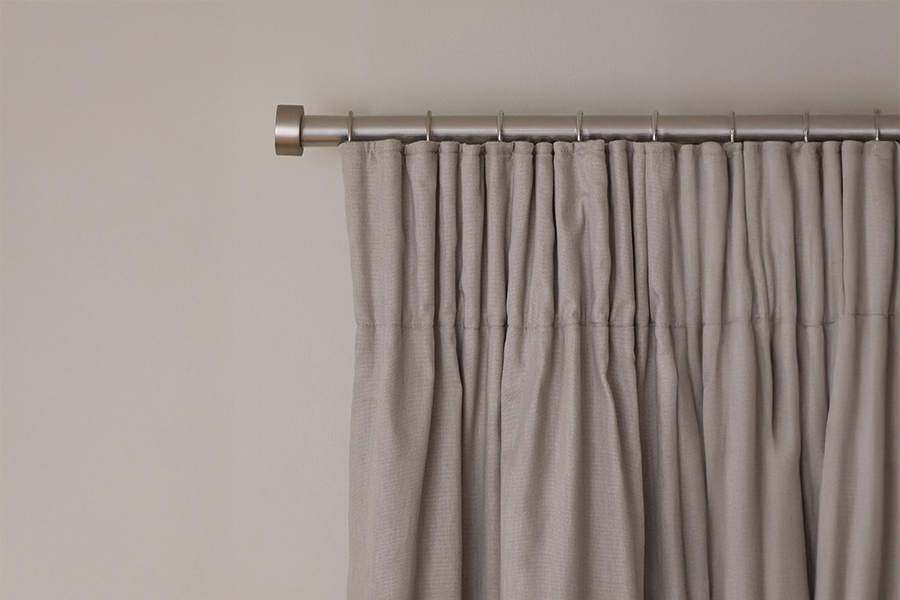
Cotton is the most practical curtain fabric for everyday Indian homes. Full stop.
It breathes. It washes well. It comes in every possible colour, print, and weave. It hangs naturally. It does not pill or pill badly. Block printed cotton, plain cotton, dobby weave cotton all of them work and all of them are easy to live with.
For Indian homes dealing with humidity, dust, and the need to wash curtains regularly, cotton makes the most sense. You can throw it in the washing machine, dry it, and hang it back up. No drama.
The one genuine weakness: cotton fades. Direct sunlight breaks down the dye over time and you will notice the colour shifting usually within a year or two in a sun heavy room. Lining helps, but if the window gets harsh afternoon sun, factor in that the curtains will lighten.
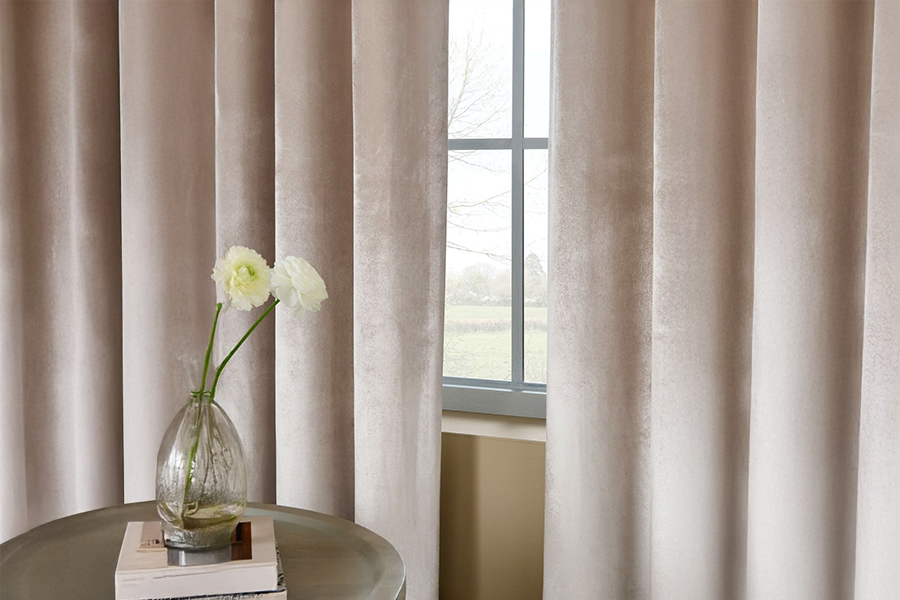
Velvet curtains are for people who want their curtains to be genuinely impressive. Not just "nice" or "well chosen." Actually impressive.
The fabric is heavy, deeply textured, and the way it catches light is unlike anything else. Rich colours burgundy, forest green, deep navy, burnt orange look extraordinary in velvet. The curtain becomes a feature of the room, not just a window covering.
Practically, velvet also does several useful things. It blocks light well. It insulates reasonably well. And the sheer weight of it gives a room a sense of warmth and enclosure that lighter fabrics cannot match.
The trade off is maintenance. Velvet curtains needs professional cleaning you cannot machine wash it. It is heavy, so your curtain rod and brackets need to be sturdy. And it is not a forgiving fabric in small, bright rooms where it will absorb light and make things feel darker.
In the right space a formal living room, a dining room with high ceilings, a bedroom that leans maximalist velvet is absolutely worth it.
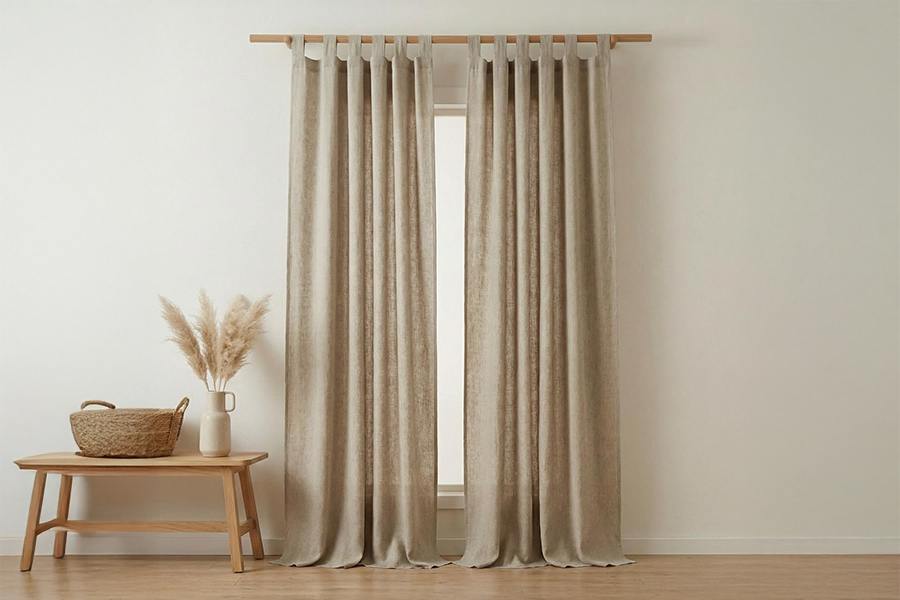
Linen has taken over Indian interiors and honestly it deserves every bit of its popularity.
The fabric has a natural, slightly rough texture that no synthetic can imitate. It drapes loosely and falls in soft, relaxed folds rather than crisp ones. There is something about it that feels both earthy and refined at the same time casual enough for a relaxed home, nice enough for a considered one.
Linen is also naturally slightly sheer. It lets in soft, filtered light while still providing a degree of daytime privacy. In rooms that get gentle morning or afternoon light not harsh direct sun this quality is genuinely lovely.
The wrinkles are real. Linen wrinkles. If you are the kind of person who will be bothered by this, linen curtains will frustrate you. If you see the wrinkles as part of the fabric's honest, natural character which is genuinely a reasonable position you will love them.
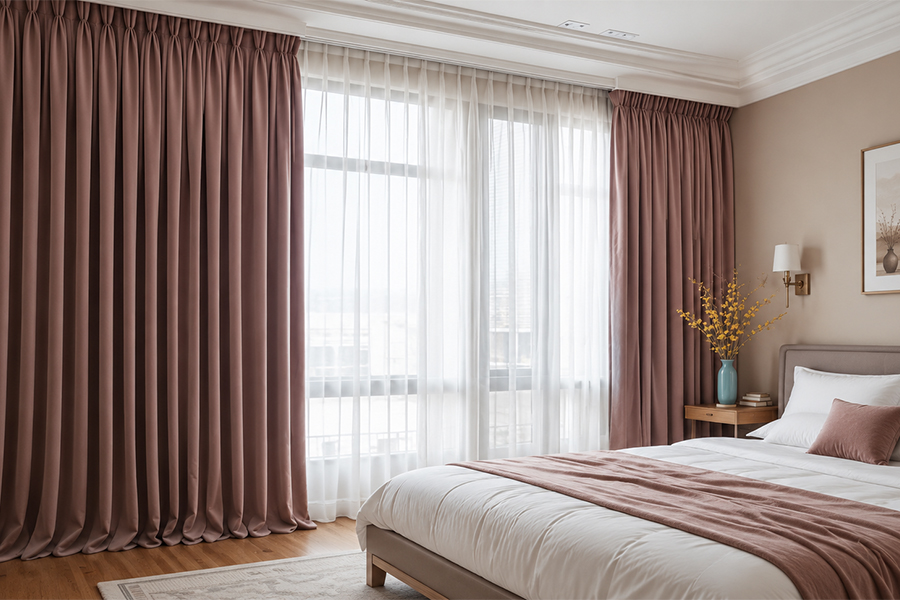
Polyester is not glamorous. But it is genuinely good at what it does, and more honest than people give it credit for.
It does not fade in the sun. It is machine washable and dries fast. It holds colour well for years. It is the most affordable option. And in high sun rooms a west facing room that bakes in afternoon sun, a kitchen window, a balcony door polyester will outlast cotton or linen without losing its colour.
The issue is breathability. Polyester does not breathe. In a room that is already hot with poor ventilation, polyester curtains can feel heavy and stuffy. In a room with good airflow or air conditioning, this is barely noticeable.
For rental homes where you do not want to invest heavily, for children's rooms where the curtains will need frequent washing, for any situation where practicality genuinely has to win over aesthetics polyester is the right call.
This one is short, but it matters more than most people realise.
Curtains should reach the floor. That is it that is the golden rule. They should either just touch the floor, or pool very slightly maybe 5 to 8 centimetres of extra fabric gathering at the base for a more luxurious, dramatic look.
What curtains should absolutely not do is hover. Curtains that stop four inches above the floor or worse, at sill height on a floor length window look unfinished. It does not matter how beautiful the fabric is or how well the colour works in the room. Hovering curtains cut the visual height of the room and make ceilings feel lower. Every single time.
This mistake happens for two reasons. People measure the window height instead of the full drop from rod to floor. Or they deliberately cut them short thinking it looks neat and tidy. It does not. It looks like someone ran out of fabric.
Measure from where the rod will sit to the floor. Order that length, plus a little extra. Do not trim. If anything, add length you can always let a hem out, but you cannot add fabric you have already cut.
Curtains are one of those things that seem completely straightforward until you actually start thinking about them. Then you realise they are doing a lot more work in your home than you ever gave them credit for.
But here is the good part: now you know. You know that types of curtains differ not just by how they look but by what they do. You know that eyelet curtains give you ease, pinch pleats give you elegance, and rod pockets look lovely but will drive you mad if you actually use them daily. You know that blackout and sheer curtains are not competing options they are partners. You know that linen wrinkles and that is fine and that polyester fades less than cotton and that velvet is heavy but worth it in the right room. And you know that hovering curtains are quietly ruining rooms everywhere and now you will never let that happen to yours.
Now we want to hear from you what kinds of curtains do you currently have at home? Are they doing their job, or are you now rethinking some choices after reading this? Team eyelet or team pinch pleat? Cotton, linen, or secretly polyester because life is practical? Let us know in the comments section below. Your experience might be exactly what someone else needs to make up their mind.
We will be back with the next blog soon. Till then, stay tuned!
Read More :
Types of Space Saving Furniture: What Actually Works and What Just Looks Good in Photos
Image Source: Pinterest, Google, and Wooden Street
A Blackout curtains are best for bedrooms they block 95–100% of light, ensuring better sleep regardless of outside lighting conditions.
A Sheer curtains allow diffused light and daytime privacy; blackout curtains block nearly all light. They serve opposite purposes and work best layered together.
A Cotton and linen are the best curtain fabrics for Indian summers - both are breathable, light, and handle heat and humidity well without trapping warmth..
A Curtains should reach the floor or pool 5-10 cm on it. Anything shorter makes the ceiling feel lower and the room look incomplete.
Trending Products
Top Picks from EveryoneArticles you will love to read
Choosing the right bed involves more than just size. This guide explores all types of beds, including storage, platform, canopy, bunk, and upholstered designs. Learn about different types of beds, varieties of bed styles, and the names of beds that best suit your room layout, lifestyle, and storage needs.
Continue Reading
Not all wardrobes are created equal. This guide breaks down the most popular types of wardrobes, compares wardrobe material types, and explains door mechanisms, storage configurations, and space-planning considerations. Learn the pros, cons, and hidden factors buyers often overlook before investing in a wardrobe for their home
Continue Reading
From cabinets and sideboards to storage beds and shelving units, understanding the different types of storage furniture can help maximize space and reduce clutter. This guide explores storage solutions for every room, highlighting their uses, benefits, and key considerations to help you choose the right furniture for your home.
Continue Reading
Not all mattresses feel or perform the same. This guide explores the most common types of mattresses, including memory foam, latex, spring, hybrid, and orthopedic options. Learn about different types of mattresses, their construction, comfort levels, durability, and how to choose the best type of mattress for your sleeping style and needs
Continue Reading
Understanding the types of wood for furniture can help you make a smarter investment. This guide compares popular furniture wood names, hardwood types for furniture, and other commonly used materials, explaining their appearance, durability, maintenance needs, and long-term performance so you know exactly what to expect before buying.
Continue Reading