





Not all space saving furniture delivers on its promise. This guide explores the most effective space-saving solutions, from multifunctional beds and foldable tables to smart storage units and compact furniture designs. Learn what genuinely improves everyday living and what may look impressive in photos but falls short in real homes
You've seen those Instagram reels. A tiny 300 sq ft apartment that somehow has a dining table, a home office, a guest bedroom, and a living room all in the same four walls. It looks brilliant. You save the reel. You feel inspired.
Then you go back to your actual 1BHK and wonder: is any of that real?
Some of it is. A lot of it isn't. The difference between space saving furniture that genuinely changes how a home feels and compact furniture that just looks clever in a styled photoshoot comes down to one simple question.
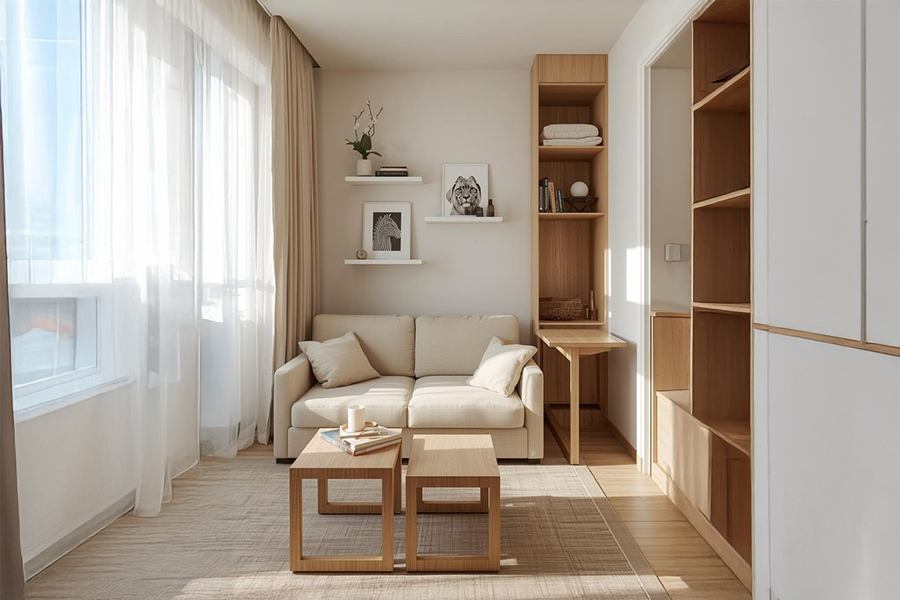
If a piece of furniture serves only one function, it isn't space saving. It's just small.
A slim sofa that only seats people? Small sofa. A tiny desk that only holds a laptop? Small desk. Shrinking furniture doesn't recover space it just makes everything feel cramped and sad.
Real space saving furniture does two or three jobs in the same footprint. It transforms, stores, or stacks. It earns its floor space by doing more than one thing well.
That's the filter. Run every piece through it before you buy.
These are the ones that change what a room does depending on the time of day or occasion.
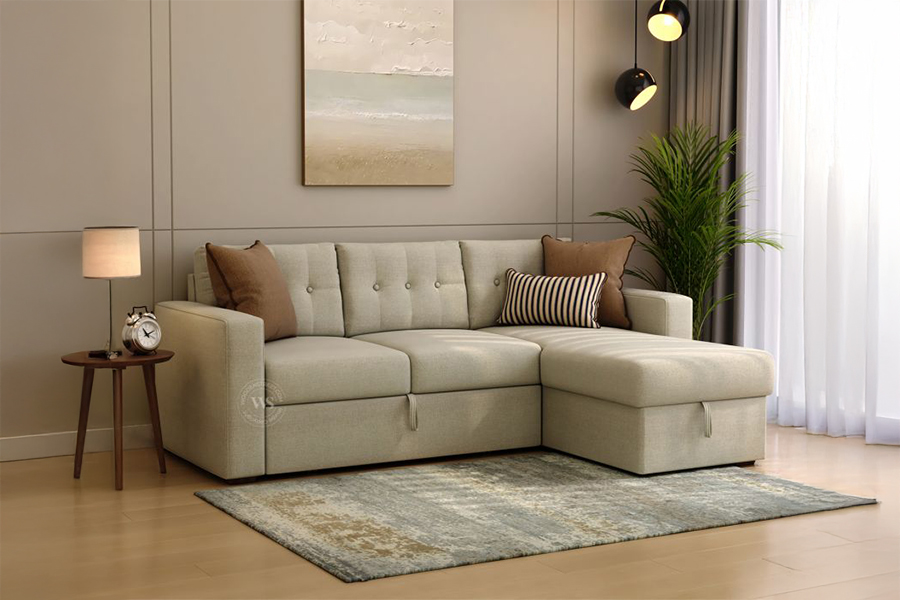
A sofa cum bed is exactly what it sounds like a sofa during the day, a proper sleeping surface by night. And it solves one of the most common problems in Indian apartments: the guest room that gets used three times a year but eats up a full room's worth of space all twelve months.
Fold down the backrest or pull out the base, and your living room becomes a bedroom. Fold it back in the morning and your guests have a place to sit over chai.
The real value isn't just the dual function it's what you don't need to have anymore. No separate guest bedroom. No single use bed frame sitting in a room that's dark for 340 days a year.
The key thing to check before buying: the mattress or sleeping surface quality. A lot of sofa cum beds have a fold mechanism that leaves a visible seam or ridge right in the middle of where you're sleeping. Test it. Lie down on it. If it's not something you'd actually sleep on comfortably for three nights in a row, keep looking.
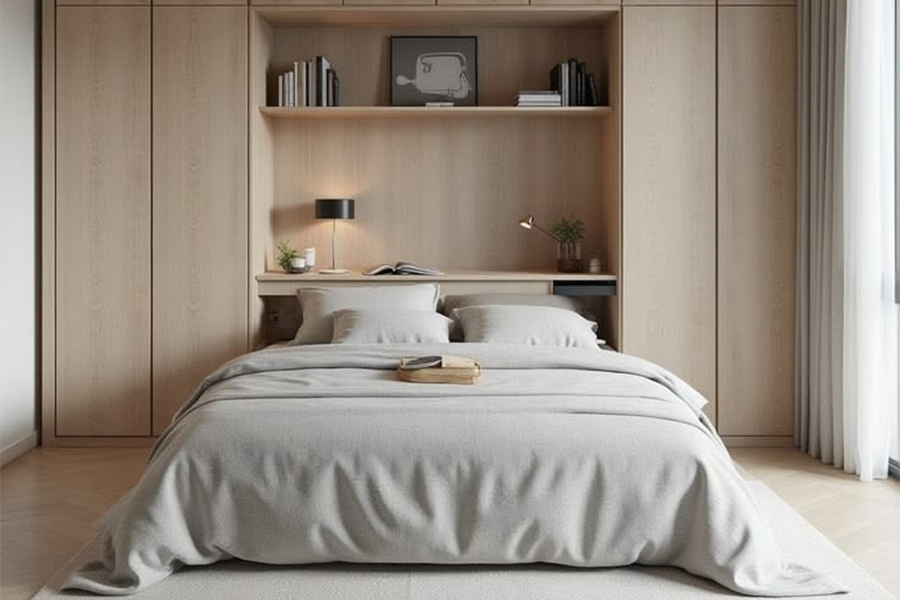
A Murphy bed also called a wall bed folds completely flat against the wall when not in use. When you pull it down, you have a full bed. When you fold it back up, that entire floor space is yours again.
Done right, this is one of the most dramatic space transformations available. A Murphy bed integrated with surrounding shelving on both sides turns a bedroom into a study, a yoga room, or a proper living space during the day and back into a sleeping room at night.
Done wrong, it's an expensive, awkward mechanism that hits the wall awkwardly, has nothing around it, and looks like a bed folded into a wall. Not the same thing.
The rule here: a Murphy bed only makes sense when it's designed as part of the surrounding wall unit. Standalone, it's just a bed with a complicated fold. With built-in shelves, cabinets, or a pull-down desk on the same panel it becomes a full room transformation.
Worth it for studio apartments and 1BHKs where the bedroom and living room are the same room.
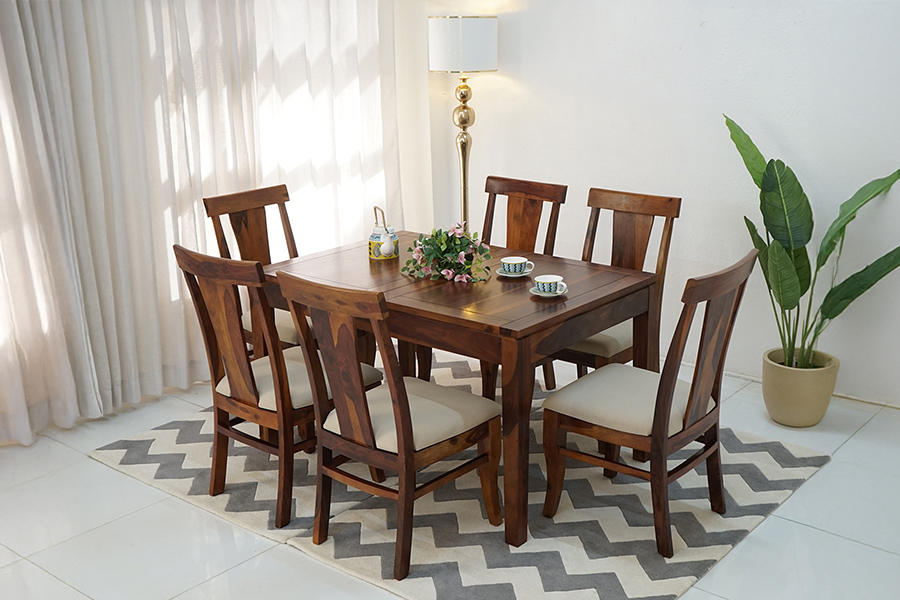
Most Indian families do not need a table for eight people on a Tuesday evening. They need a table for four. But they also don't want to drag in folding chairs and a folding table every time Diwali brings sixteen relatives over.
An extendable dining table solves this cleanly. It sits at its smaller size four seats, compact footprint for everyday meals. When you need it, you pull the leaves out from underneath or unlock a centre extension, and it becomes a six or eight seater.
The footprint you live with daily is the four person footprint. The larger footprint only appears when it's actually needed and someone is actually sitting at every chair.
This one is quiet, practical, and genuinely underrated as space saving furniture. It doesn't look dramatic. It just works every single time.
Look for extension mechanisms that lock firmly a table that wobbles at the extended size is worse than no extension at all.
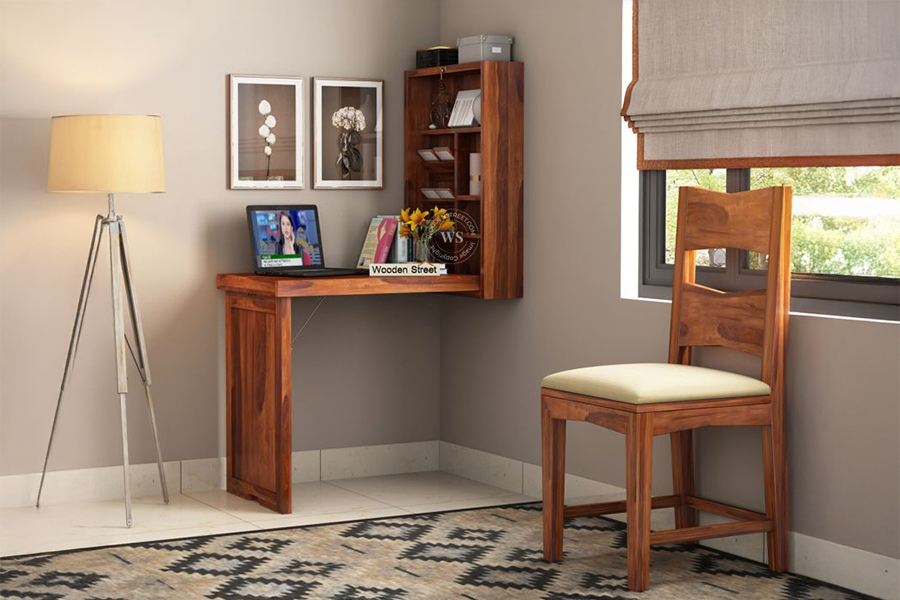
Post 2020, a huge number of people in India suddenly needed a home office. Most Indian apartments were not designed with a home office in mind. The result was a lot of dining tables doubling as workstations and a lot of bad posture.
A fold down wall desk is the cleanest solution for rooms under 100 sq ft or any room where you can't permanently sacrifice floor space to a desk and chair. It mounts to the wall. When you need to work, you fold it down instant desk. When you're done, you fold it up flush against the wall and the space is back.
It won't hold a multi-monitor setup or a full PC tower. But for a laptop, a notebook, a cup of coffee, and a few hours of focused work it's completely practical.
The bracket quality matters a lot here. A fold down desk that wobbles while you type is not a workspace it's a shelf you can technically sit in front of. Buy from brands that show the load rating clearly, and make sure the wall mounting goes into a stud or proper anchor.
These pieces don't transform dramatically they absorb clutter and eliminate the need for extra storage furniture.
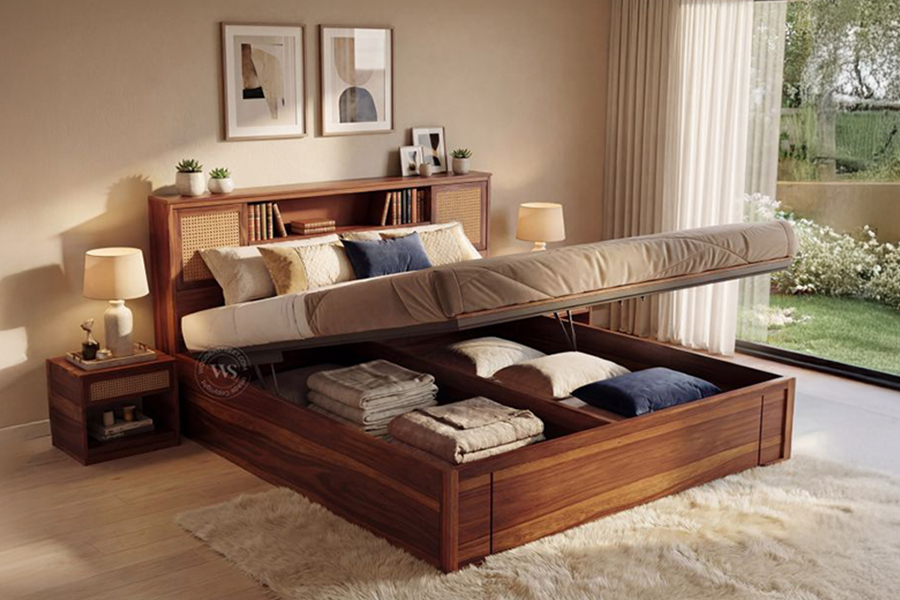
Look at any bed in a small apartment. Now look at the space underneath it. That's typically the single largest unused volume in the entire home and most people are using it to store dust.
A hydraulic storage bed lifts the mattress on gas-assisted pistons, revealing a deep storage cavity that runs the full size of the bed. Queen size bed means queen sized storage compartment. Doubles as a wardrobe extension, seasonal linen storage, luggage space, or a place to keep anything that doesn't need daily access.
The mechanism is smooth one hand lifts the mattress, it stays open on its own, you pull out what you need, and it closes just as easily. It's not complicated, and it doesn't break down if you buy decent quality.
For small bedrooms in particular, a hydraulic storage bed effectively gives you a second wardrobe without using any additional floor space. That's not a small thing.
One thing to check: the minimum clearance needed to open the bed. Some models need more headroom above the mattress than others. Measure before you order.
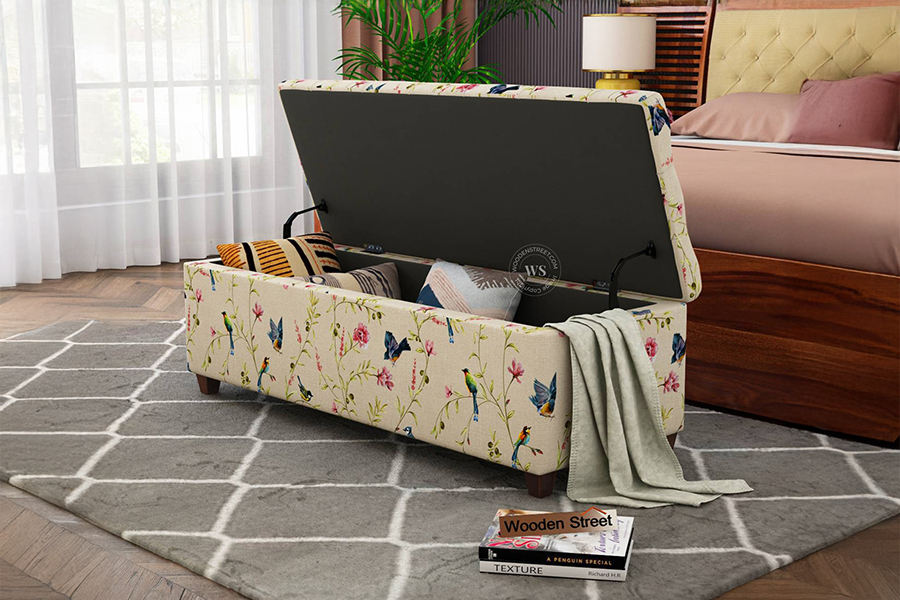
An ottoman that only works as a footrest is just a padded block on your floor. A storage ottoman is four things in one a seat, a footrest, a side table surface, and a hidden compartment for whatever you need within arm's reach but out of sight.
In living rooms, it replaces a coffee table (put a tray on top, same function). In bedrooms, it sits at the foot of the bed as a seating spot and swallows the extra blankets, pillows, and laundry you'd otherwise pile somewhere visible. In kids' rooms, it stores toys without looking like chaos.
The size range is broad enough to suit most spaces small cubes that work as occasional seats, large rectangular ones that replace a coffee table entirely. Fabric, leather, and faux leather finishes are all available, so matching the room's look isn't hard.
Compact furniture doesn't get more practical than this one.
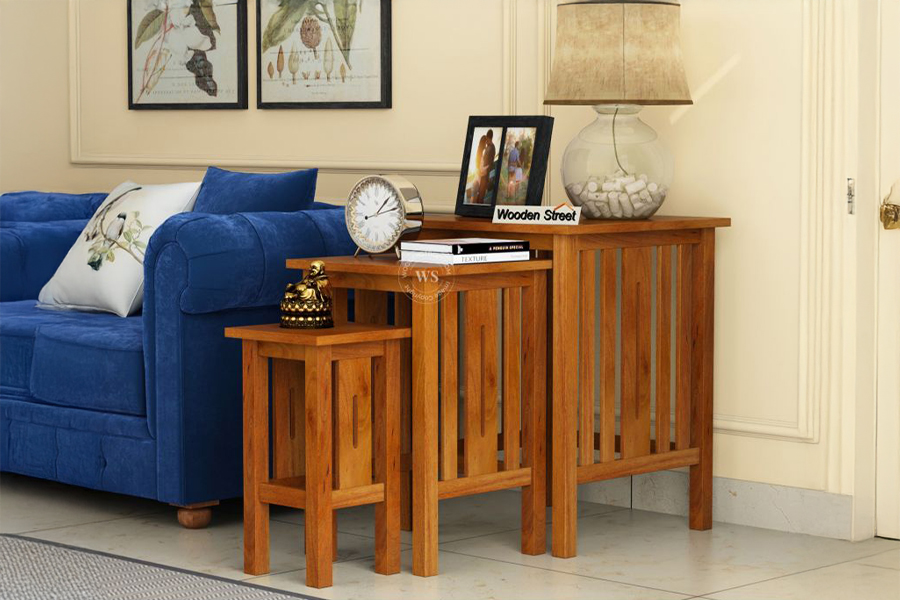
Two or three tables designed to stack one under the other in a single footprint. When you only need one one is there. When you need all three out for a gathering, you slide them apart and suddenly have three surfaces without having kept them all separate all year.
They're not dramatic. Nobody makes a reel about nesting tables. But in a small living room where a large coffee table takes up too much floor space but no table at all isn't practical nesting tables are the quiet, sensible answer.
They also work as side tables in a bedroom, occasional tables next to a reading chair, or extra surfaces during a meal. The footprint you live with is always just one table. The rest appear only when needed.
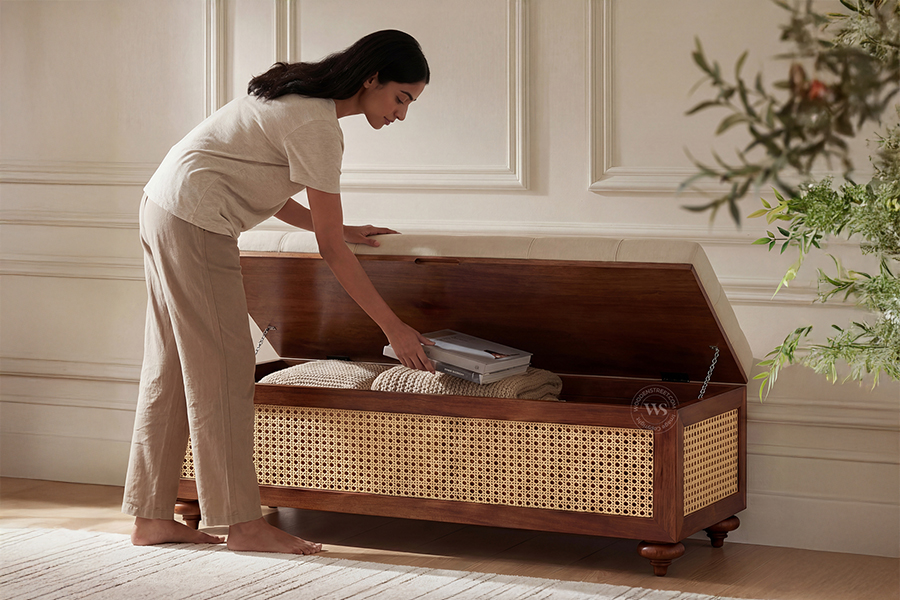
A bench at the end of a bed or inside an entrance usually just takes up space. A storage bench does the same visual job while hiding something inside shoes, extra linens, bags, seasonal items.
In an entryway, it replaces the need for a separate shoe rack. You sit down to take your shoes off, you store them inside, and you have a surface to drop keys on. Three functions, one piece, zero clutter at the door.
At the foot of a bed, it gives you a spot to sit while getting dressed and stores the extra blanket or those three throw pillows you take off the bed every night.
It's a simple swap that makes a real difference in both how much storage you have and how clean the room looks.
The most consistently wasted dimension in Indian apartments is not floor space it's wall height. Rooms that feel crowded at floor level often have two to three feet of completely empty wall above the furniture.
These pieces recover that vertical space.
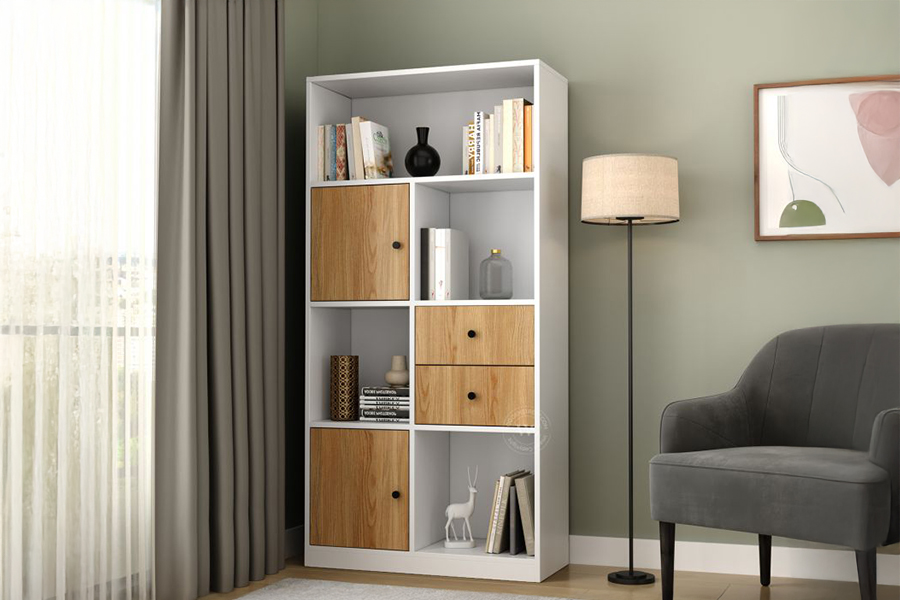
Most bookshelves stop at chest height or eye level. All the wall above that? Empty.
A floor to ceiling bookshelf uses the full height of the wall which, in a standard Indian apartment, is somewhere between 9 and 10 feet. That's almost double the storage of a standard shelf unit in the same footprint.
It doesn't just work for books. Decor, files, baskets, board games, electronics anything that needs a home gets one, vertically. The floor space occupied is the same as a half height shelf. The storage is dramatically more.
Visually, floor to ceiling shelving also tends to make rooms feel taller rather than more crowded especially when kept organised. It draws the eye upward instead of across.
Custom built is ideal if the budget allows. But well assembled modular systems like IKEA style units bolted to the wall work just as well and cost a fraction.
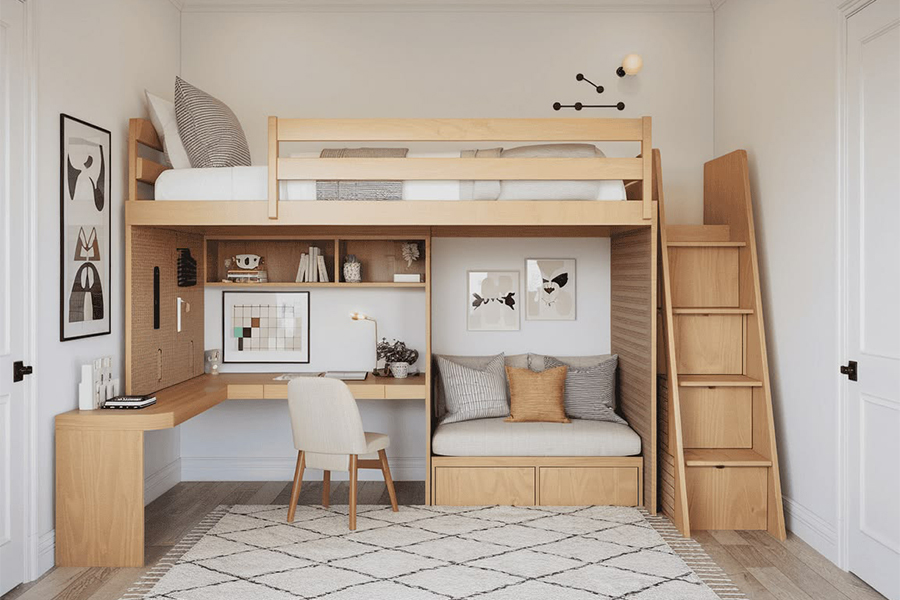
A standard bed takes up floor space and delivers one function: a place to sleep. A loft bed moves the sleeping area up near the ceiling, which frees the entire floor area below for something else a full workstation, a wardrobe, a reading nook, a small sofa.
For studio apartments, small 1BHKs, and children's or teenager's rooms, this is one of the most effective space transformations available. The room quite literally doubles in functional use without changing its size at all.
The practical check: ceiling height. Loft beds need at least 8 to 8.5 feet of ceiling clearance to work without making the person in the bed feel like they're sleeping in a bunk in a submarine. Measure twice, order once.
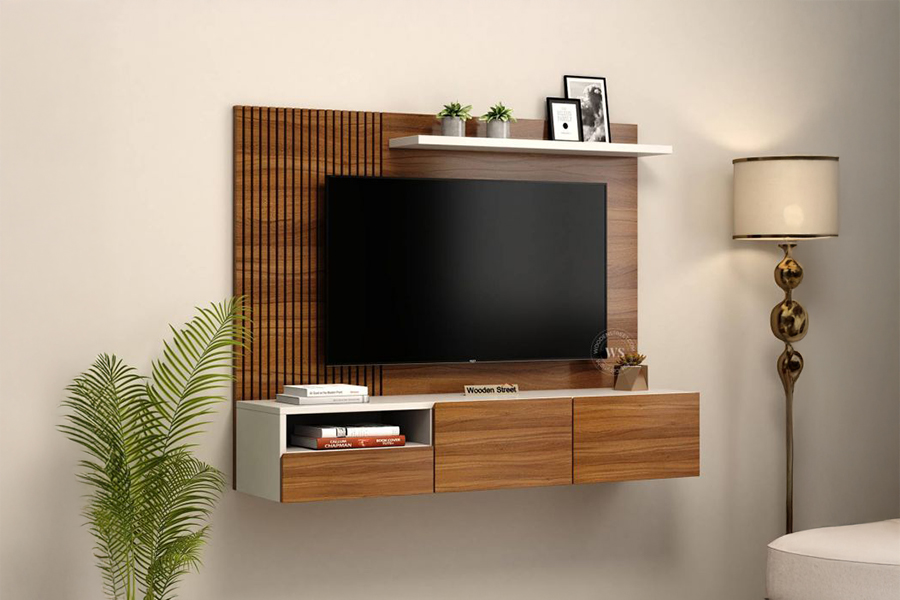
A traditional TV unit sits on the floor and typically takes up two to three feet of floor depth. A wall mounted TV unit moves everything up off the ground TV on a wall bracket, components on floating shelves or a narrow wall panel below.
The floor beneath it is clear. This does two things: the room feels more open and airy because you can see the floor running continuously without a big unit breaking it up, and you recover actual usable floor space that can go to something else or simply to open space, which in a small apartment is its own kind of luxury.
Cables are the only thing to plan ahead for. Route them through the wall or use a proper cable management channel before mounting. Visible cable bundles undo the clean look that makes wall mounted units worth doing.
This section matters as much as everything above it.
Space saving furniture cannot compensate for too much furniture.
If a room has ten pieces of furniture in it and three of them are multifunctional it still has too much furniture. The first step in making a small space feel bigger is always removal, not replacement. What can come out? What's sitting there doing one job badly? What hasn't been touched in six months?
Compact furniture added on top of clutter doesn't create space. It adds more things to a room that already has too many things.
Get that right first. Then replace what stays with pieces that work harder. In that order.
Space saving furniture works when it genuinely does more than one job transforms, stores, or stacks. When it just shrinks a standard piece down, it's not solving anything.
The pieces that consistently deliver: sofa cum beds for guest accommodation without a guest room, hydraulic storage beds for recovering the biggest dead space in a bedroom, fold down wall desks for home offices in tight rooms, floor to ceiling shelving for vertical storage, and extendable dining tables for flexible hosting.
The mindset shift that makes it all work: every piece you bring in should earn its floor space. If it can't explain itself in two functions, it probably shouldn't be there. Small apartments done right don't feel small. They feel considered.
We will be back with the next blog soon. Till then, stay tuned!
Read More :
Types of Storage Furniture: Every Option for Every Room Explained
Image Source: Pinterest, Google, and Wooden Street
Trending Products
Top Picks from EveryoneArticles you will love to read

Buying home pieces without planning can lead to expensive mistakes. This guide highlights 15 common errors people make when choosing furniture, from size issues to poor layout planning. Learn how to choose the right pieces, including wooden furniture, while balancing comfort, style, durability, and budget for your home.
Continue Reading
Explore every type of sofa with this complete guide. From L-shaped sectionals to sofa cum beds and recliners, find out which sofa type actually works for your room size, lifestyle, and daily use
Continue Reading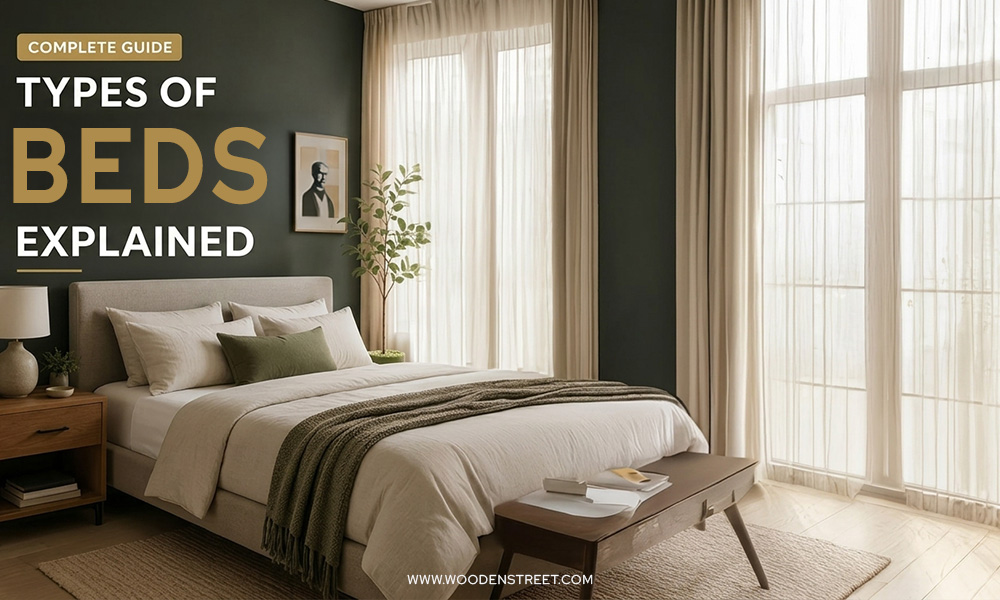
Choosing the right bed involves more than just size. This guide explores all types of beds, including storage, platform, canopy, bunk, and upholstered designs. Learn about different types of beds, varieties of bed styles, and the names of beds that best suit your room layout, lifestyle, and storage needs.
Continue Reading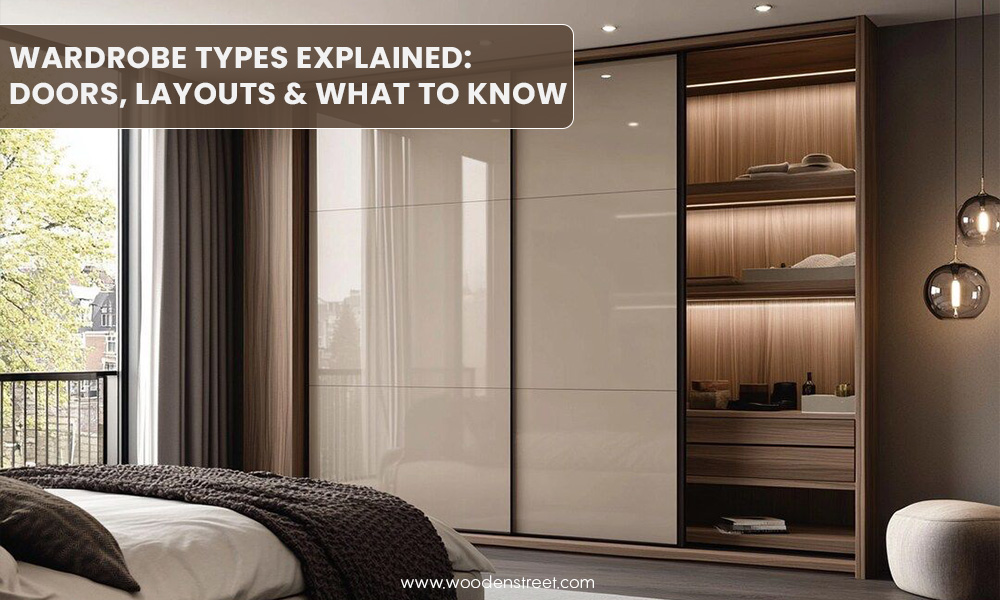
Not all wardrobes are created equal. This guide breaks down the most popular types of wardrobes, compares wardrobe material types, and explains door mechanisms, storage configurations, and space-planning considerations. Learn the pros, cons, and hidden factors buyers often overlook before investing in a wardrobe for their home
Continue Reading
Not all mattresses feel or perform the same. This guide explores the most common types of mattresses, including memory foam, latex, spring, hybrid, and orthopedic options. Learn about different types of mattresses, their construction, comfort levels, durability, and how to choose the best type of mattress for your sleeping style and needs
Continue Reading


