





The right shoe rack can keep your entryway organized and clutter-free. This guide explores different types of shoe racks, from open shelves and closed cabinets to stackable and multifunctional designs. Learn about popular shoe rack types and discover which option best suits your collection, available space, and daily routine.
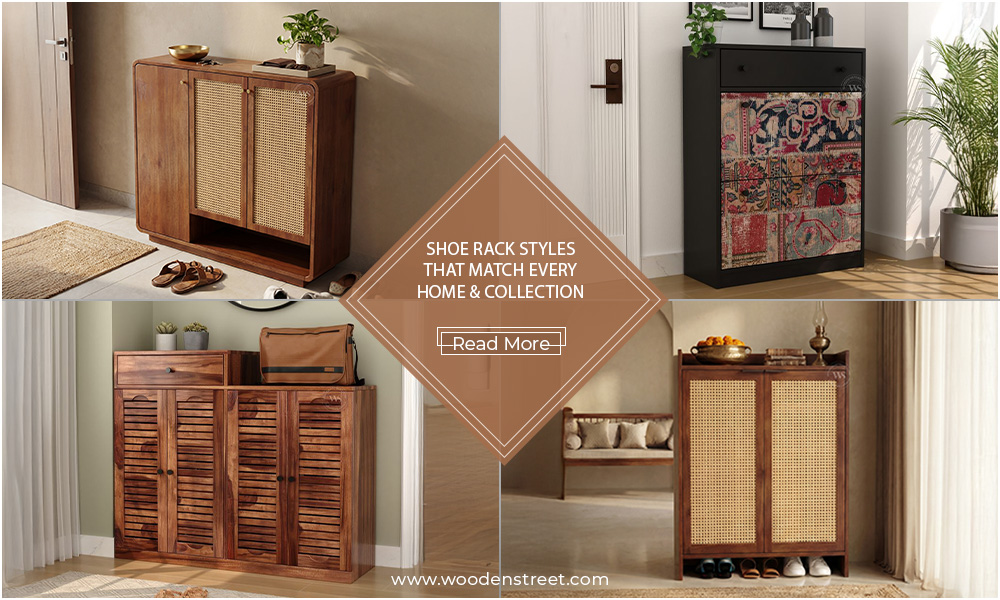
You bought a shoe rack. You assembled it. You put your shoes on it. And within three weeks, half the shoes are back on the floor anyway because the rack is either too small, too shallow, or the tiers are so close together that your heels do not fit and your boots are just leaning sadly against the wall.
Sound familiar? Yeah. It happens to almost everyone.
The problem is not that you bought the wrong brand. It is that there are genuinely different types of shoe racks built for different situations - and most people only ever see one kind in the store and assume that is the only option. It is not.
This guide covers every shoe rack type worth knowing about. Open racks, closed cabinets, space-saving options, the ones that hang on doors, the ones that spin, the ones that float on walls. All of it. Read this before you buy and you will get it right the first time.
Before you look at a single product, you need two numbers. Just two.
How many pairs of shoes do you own? And how much floor space can you actually give up in your entryway?
That is it. Those two numbers will immediately eliminate most of the options and point you toward the ones that make sense for your situation. Everything else - material, colour, design, price - is secondary. A beautiful shoe rack that holds 8 pairs when you own 24 is a waste of money. A massive rotating carousel in an entryway that is 3 feet wide is going to block your front door.
Count your shoes. Measure your space. Then keep reading.
Open shoe racks are the most common type and for most homes, they are the most practical starting point. No doors, no compartments - just shelves that hold shoes and let you see everything at a glance. Here are the three main shoe rack types within the open category.
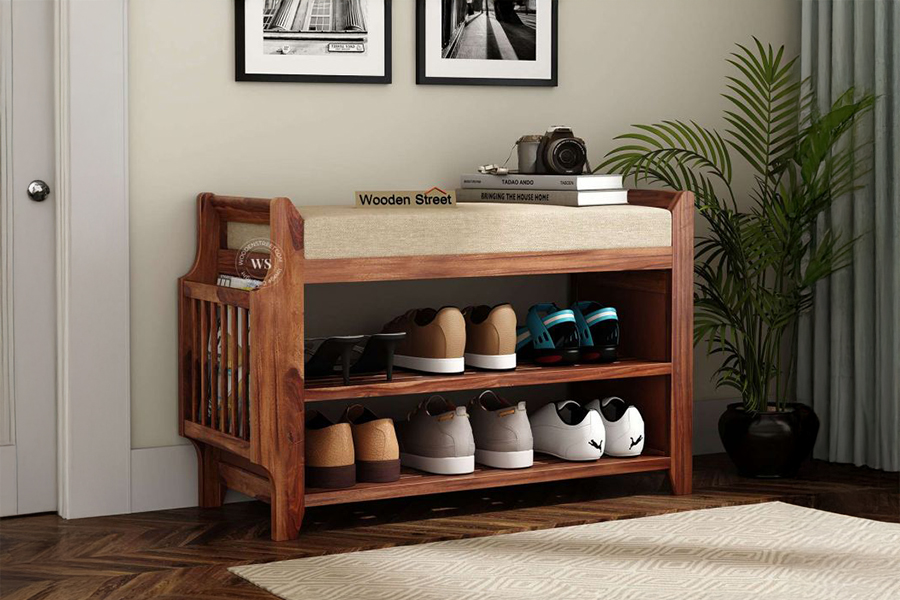
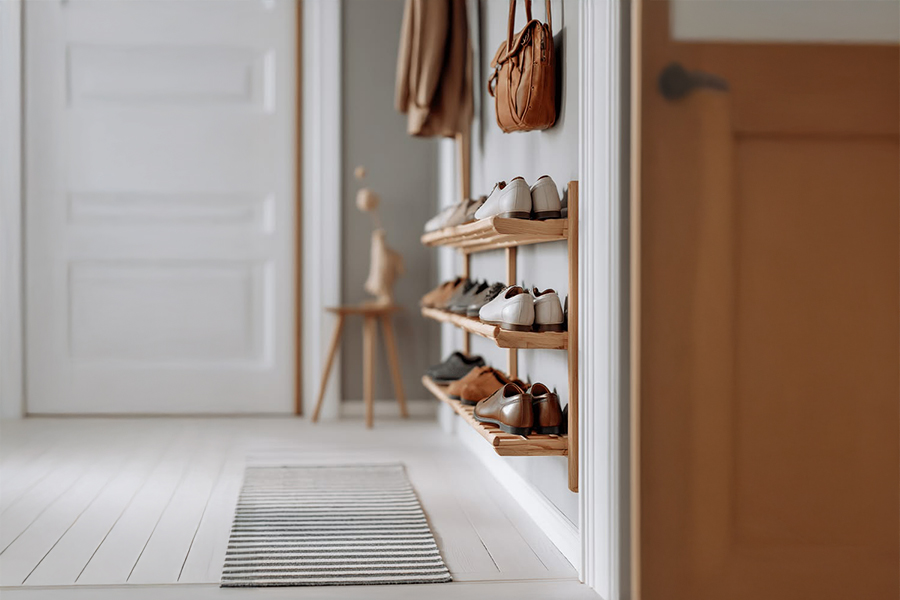
This is the rack everyone pictures when they hear the words "shoe rack." Horizontal shelves stacked one above the other, usually two to five tiers tall, holding two to four pairs per shelf depending on the width.
Flat tier racks are everywhere because they work. They are simple to assemble, easy to rearrange, available in every price range, and accommodate almost any shoe size from kids' shoes to large men's sneakers. You can find them in steel, plastic, bamboo, and wood.
The main thing to check before buying is the spacing between tiers. Standard racks are designed for flat shoes, sneakers, and most casual footwear. If you own heels above 3 inches or ankle boots, check the tier height first - more on this later in the guide.
For someone who wants a no-fuss, affordable solution that just works - flat tier is a solid starting point.
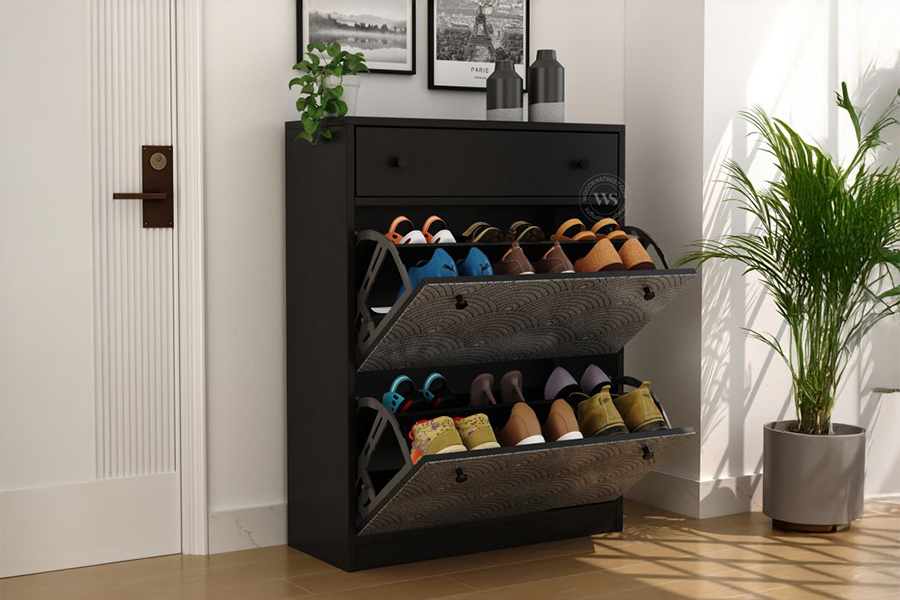
Same basic concept as a flat tier rack, except the shelves are tilted slightly rather than sitting level. Shoes rest at an angle - heel up, toe down - which does two things.
First, you can see the shoes better. The heel faces you when you look at the rack, which sounds small but makes a real difference when you are rushing out the door and trying to find a specific pair quickly. Second, an angled tier actually fits slightly more pairs per shelf than a flat one because of how the shoes nest together.
Angled racks tend to look a little more intentional than flat racks too. The presentation is neater. If you are putting a rack in a visible spot - near the front door, inside an open entryway - angled tiers make the collection look more organised than it probably is.
The downside: very tall shoes and boots do not sit well on angled shelves. The angle works for most footwear but can be awkward with anything that has significant height.
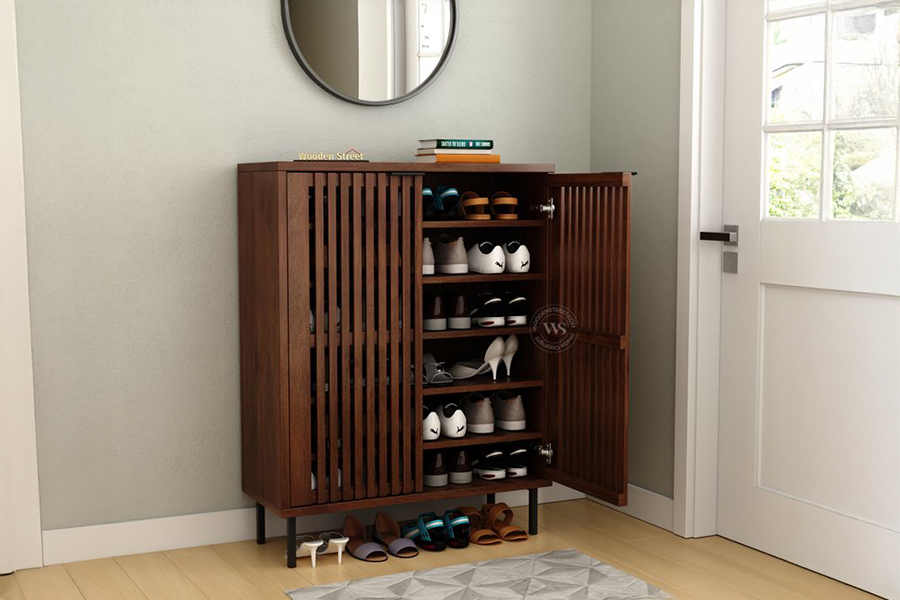
Stackable racks are sold as individual units - usually a single tier - that clip or slot onto each other vertically. You buy two or three to start, and add more as your collection grows.
This makes them genuinely useful for two types of people: those whose shoe collections are growing and do not want to keep replacing a whole rack, and renters who move frequently and need storage that can be disassembled, packed, and reconfigured in a completely different space.
The flexibility is the main selling point. A stackable rack in a small apartment bedroom can be three tiers. The same units in a bigger home can become six. Same purchase, different configurations.
The trade-off is stability. Stackable racks can wobble, especially at four tiers and above. They are also not always the most attractive option. But for practicality and adaptability, they are hard to beat.
Sometimes you do not want to see the shoes at all. Maybe the entryway is the first thing guests see. Maybe the collection is a bit chaotic and open shelves would just make that more visible. Maybe you just want things to look clean. Closed shoe storage solves all of that.
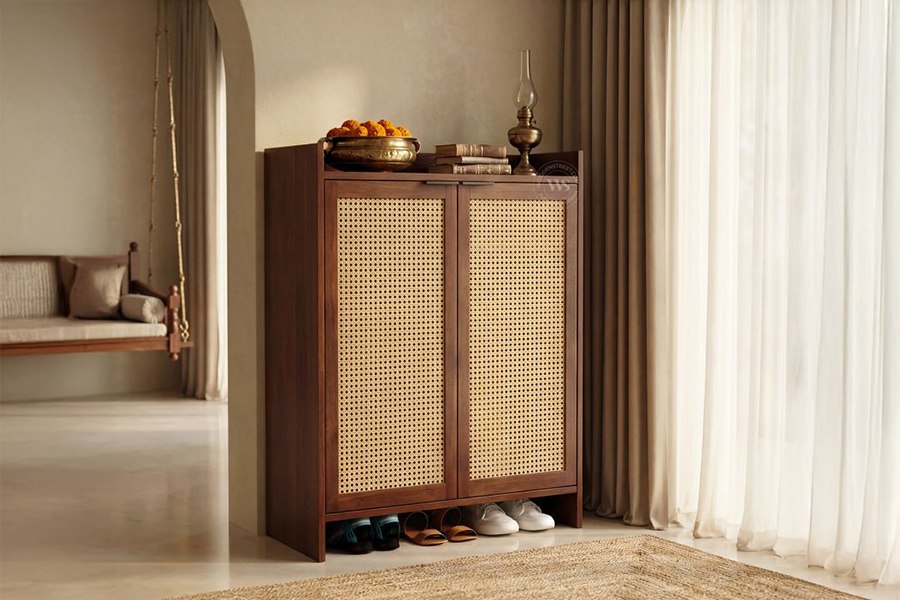
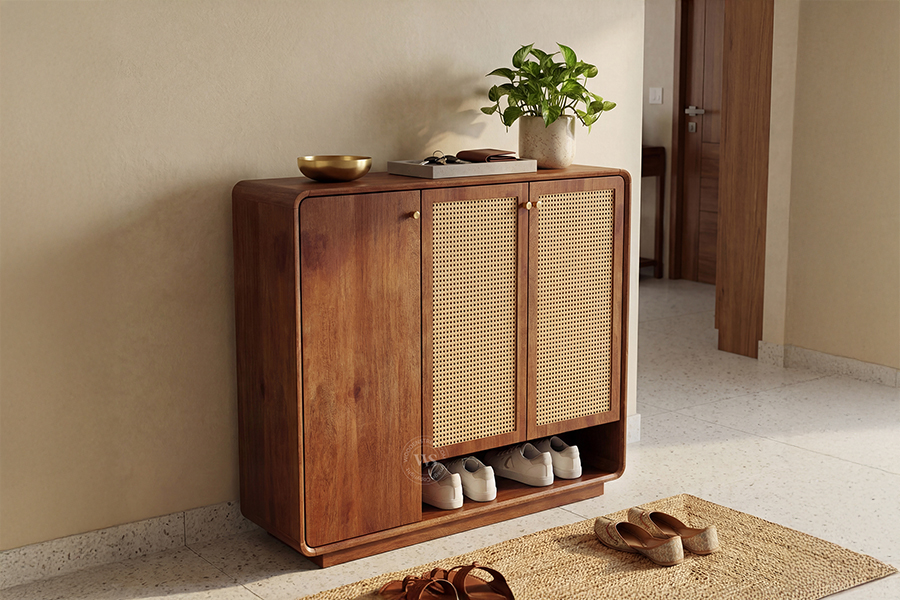
A shoe cabinet looks like a piece of furniture, not like a modular shoe rack. It has doors - usually flip-up, hinged, or sliding - that completely hide the contents. From the outside, it looks like a low sideboard or console. Open the doors and there are the shoes.
The result is the cleanest possible entryway aesthetic. No visible shoes, no clutter, no rows of heels and sneakers on display. Just a piece of furniture that happens to store your footwear.
Shoe cabinets require more depth than open racks - the shoes need to fit behind closed doors, which usually means the cabinet is 30 to 35 cm deep. In a narrow entryway, this matters. Measure the available depth before buying.
They also cost more than basic open racks. But if a neat, furniture-like entryway is what you want, a shoe cabinet delivers it in a way that open racks simply cannot.
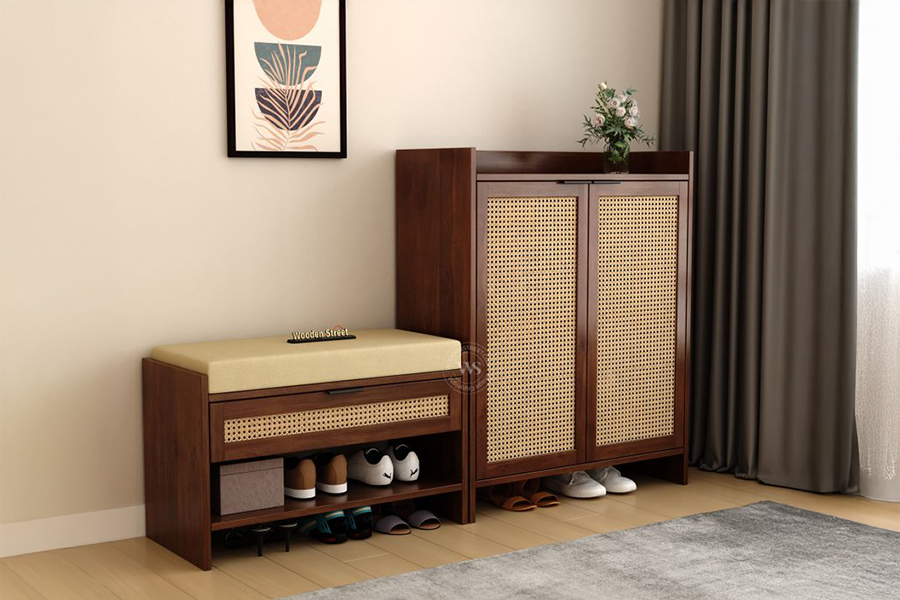
This one is genuinely clever and very underrated, especially for families.
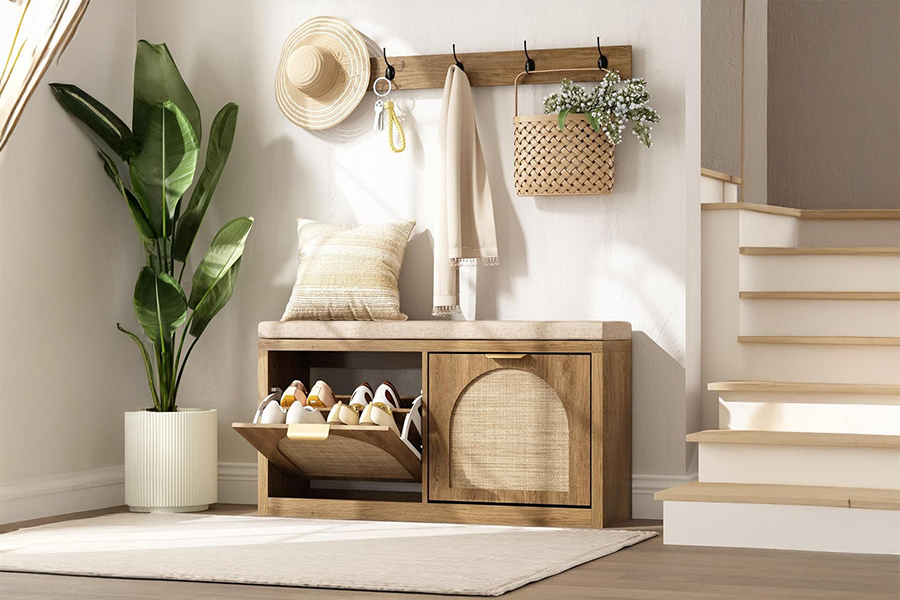
The bench has seating on top - upholstered or wooden - and open or closed shoe storage underneath. You sit on it to put your shoes on, and the shoes live directly underneath. Everything is in one place.
For homes with children, this is close to a perfect entryway solution. Kids can sit down instead of hopping on one foot trying to tie laces while standing. The shoes go straight into the cubby below. Getting out of the house becomes slightly less chaotic.
For adults living alone, it is still useful - particularly if you have a narrow entryway where a separate bench and a separate solid wood shoe rack would take up too much floor space. The bench with storage combines both into one footprint.
The storage compartments below are typically open cubbies, which means this is not the right choice if you want a hidden, tidy look. But for everyday practicality, it is hard to find something that does more in less space.
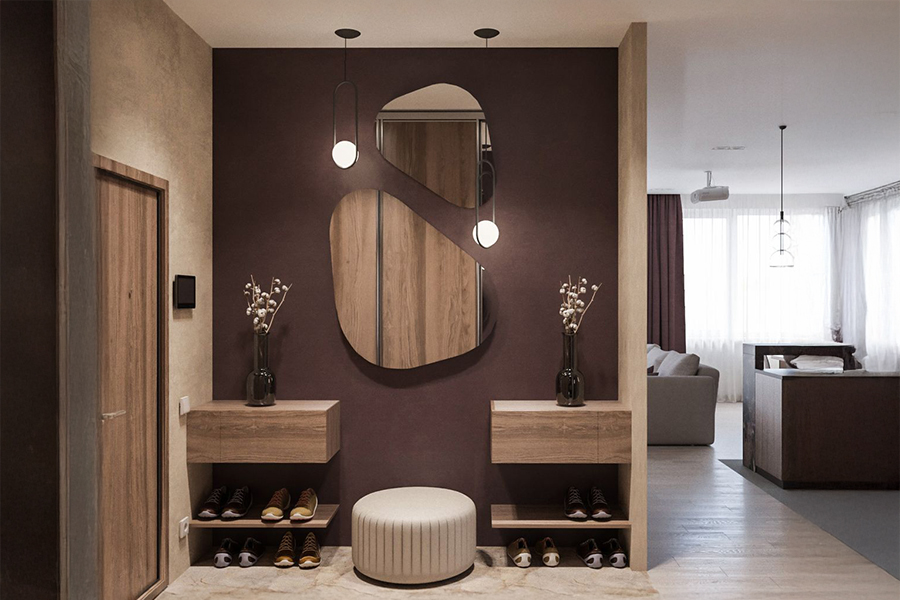
Everything a shoe cabinet does, plus a full-length mirror on the front door.
This is one of those ideas that is so practical it is surprising it is not more common. An entryway almost always needs a mirror - you want to check yourself before leaving the house. A shoe cabinet needs to be near the entryway because that is where shoes live. Combining both means one piece of furniture doing two jobs, which is a very good deal in terms of space.
The mirror door also makes the entryway feel larger. Mirrors do that. A narrow entryway with a mirrored shoe cabinet on one wall will feel noticeably more open than the same space without it.
If you are furnishing a compact apartment or a small entry hall, this is probably the single smartest piece you can buy. Shoes stored, mirror provided, space saved.
Some entryways are not really entryways at all. They are just the small patch of floor between the front door and the rest of the home. If this is your situation, you need storage options that take up as little floor space as possible - or no floor space at all.
This hangs on the back of any door. Two hooks go over the top of the door, and a fabric or plastic panel with pockets drops down. Each pocket holds one or two shoes.
Zero floor space used. Zero installation required. Completely portable.
The catch is capacity and shoe type. Over-door organisers work well for flat shoes, sandals, flip flops, ballet flats, and lightweight sneakers. They do not work for heels - the pocket angle is wrong and tall heels tend to fall out. They also do not work for boots or chunky trainers because the pockets are not deep enough.
If you have a collection that is mostly flat shoes and sandals and your entryway has literally no floor space to spare, an over-door organiser is a smart and inexpensive solution. Just go in knowing what it can and cannot hold.
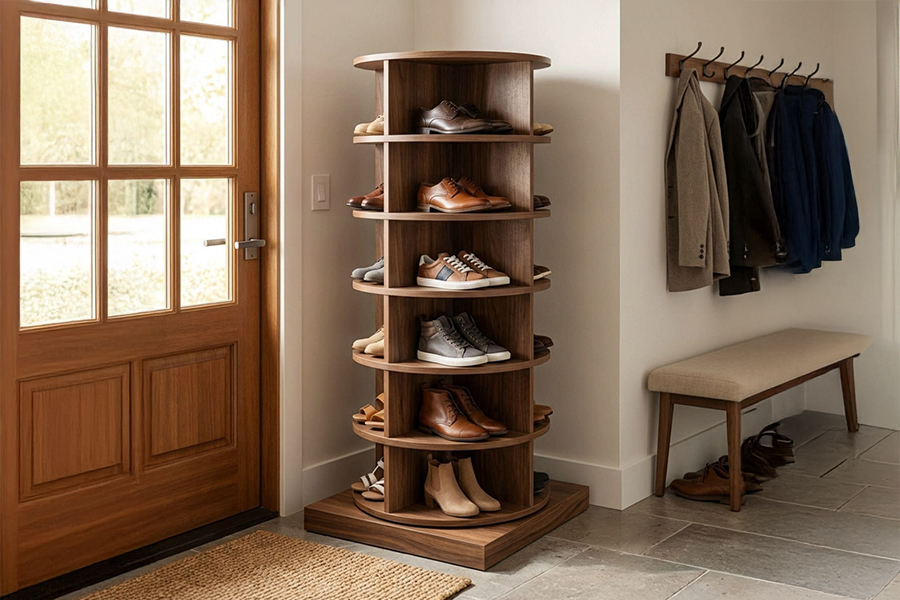
The rotating rack - sometimes called a shoe carousel - is a vertical tower that spins. You rotate it to bring the pair you want to the front, then spin it back. The whole structure sits on a very small circular footprint but holds a surprisingly large number of pairs because it uses vertical height rather than floor width.
This is genuinely one of the best options for anyone with a big collection and a small entryway. A rotating rack that is 150 cm tall and sits on a base of about 50 cm in diameter can hold 30 to 40 pairs. Try doing that with a flat tier rack in the same footprint - it is not possible.
They do tend to be more expensive than standard open racks. And the rotation mechanism needs to be smooth - a cheap one will stick after a few months. But if space is the main problem and the collection is large, a rotating rack solves both at the same time better than almost any other option.
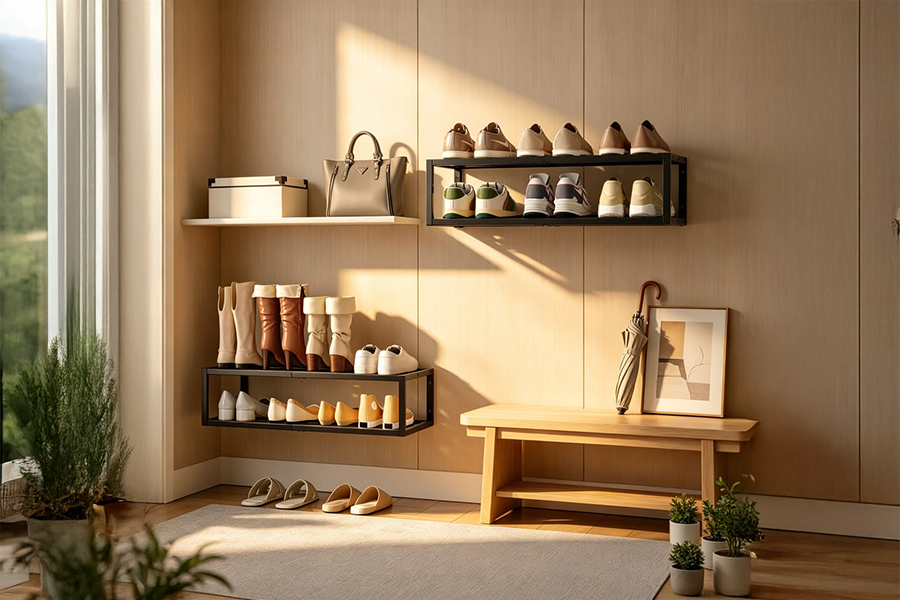
Instead of a floor unit, brackets are fixed directly into the wall and the shoes rest on them - toe pointing up, heel resting on the bracket. The floor underneath is completely clear.
The look is minimal and modern. Done well, a wall-mounted floating shoe rack looks more like an architectural feature than storage. It reads as intentional and considered.
The practical limitation is real though. Wall-mounted racks work best for shoes you wear frequently - the ones you reach for every day or two. Because mounting and unmounting shoes takes slightly more thought than just grabbing from a shelf, these racks are not ideal for storing a large mixed collection. They are ideal for keeping three to six pairs that are always in rotation within easy reach.
Also, you need to be comfortable drilling into walls. Renters, check your lease before going this route.
Here is the thing that sends shoe racks back to the store more than any other issue: heel clearance.
Most standard shoe racks - flat tier, angled, stackable - are designed with flat shoes in mind. The gap between tiers is typically 13 to 16 centimetres. That is fine for sneakers, loafers, flats, and most casual shoes. A heel that is 2 to 3 inches tall will just fit.
But a heel above 3 inches? It will not fit. The top of the heel will hit the shelf above before the shoe sits flat. You end up having to angle the shoe awkwardly, or the heel juts out over the front edge, or you just give up and put them on the floor.
If you own heels, check the tier spacing before buying anything. Look for racks that offer at least 18 to 20 centimetres between shelves, or racks where the tier spacing is adjustable. Some racks specifically market themselves as suitable for heels - take them up on it.
This sounds like a small detail. It is not. It is the reason why a perfectly good rack becomes useless for half your collection.
Here is the honest summary.
If your entryway has decent floor space, and you want a simple and affordable flat tier or angled tier rack. If your collection is growing or you move often, stackable. If you want the entryway to look clean and furniture-like, a shoe cabinet. If you have kids and want practicality above everything else, a bench with storage. If space is very tight and the mirror would help - a shoe cabinet with mirror. If you have almost no floor space at all, an over-door organiser or wall-mounted floating rack. If you have a big collection in a small space, a rotating carousel.
And whatever you buy - check the tier spacing if you own heels. Every time.
We will be back with the next blog soon. Till then, stay tuned!
Image Source: Pinterest, Google, and Wooden Street
Read More - Know all types of curtains
Trending Products
Top Picks from EveryoneArticles you will love to read

Explore every type of sofa with this complete guide. From L-shaped sectionals to sofa cum beds and recliners, find out which sofa type actually works for your room size, lifestyle, and daily use
Continue Reading
Choosing the right bed involves more than just size. This guide explores all types of beds, including storage, platform, canopy, bunk, and upholstered designs. Learn about different types of beds, varieties of bed styles, and the names of beds that best suit your room layout, lifestyle, and storage needs.
Continue Reading
Not all wardrobes are created equal. This guide breaks down the most popular types of wardrobes, compares wardrobe material types, and explains door mechanisms, storage configurations, and space-planning considerations. Learn the pros, cons, and hidden factors buyers often overlook before investing in a wardrobe for their home
Continue Reading
From cabinets and sideboards to storage beds and shelving units, understanding the different types of storage furniture can help maximize space and reduce clutter. This guide explores storage solutions for every room, highlighting their uses, benefits, and key considerations to help you choose the right furniture for your home.
Continue Reading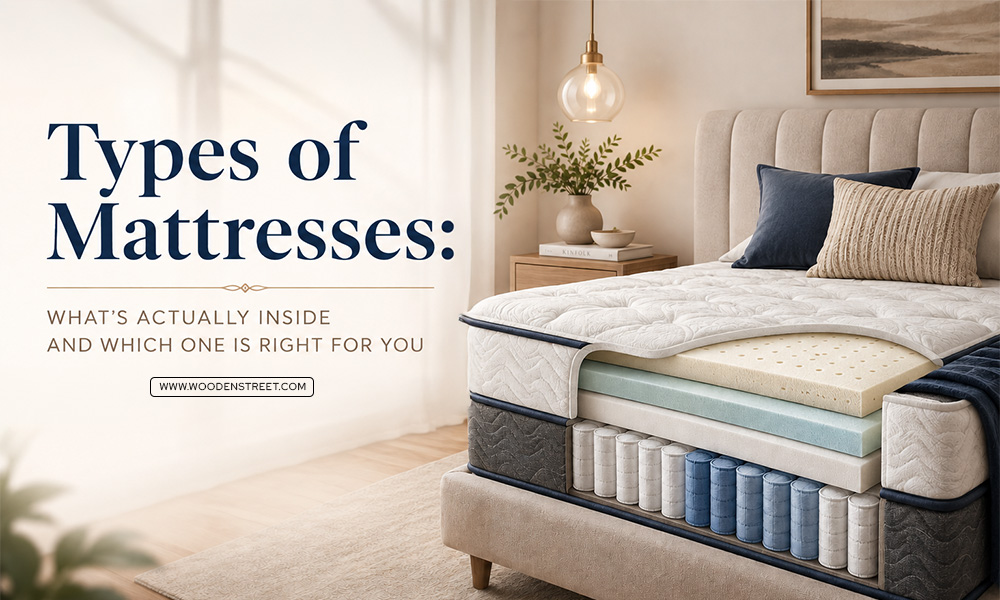
Not all mattresses feel or perform the same. This guide explores the most common types of mattresses, including memory foam, latex, spring, hybrid, and orthopedic options. Learn about different types of mattresses, their construction, comfort levels, durability, and how to choose the best type of mattress for your sleeping style and needs
Continue Reading


