





Discover the top 5 types of swing chair that combine comfort, style, and relaxation for your home. From cozy indoor designs to durable outdoor options, this guide helps you choose the perfect swing chair to create a calming space where you can truly swing, relax, and repeat.
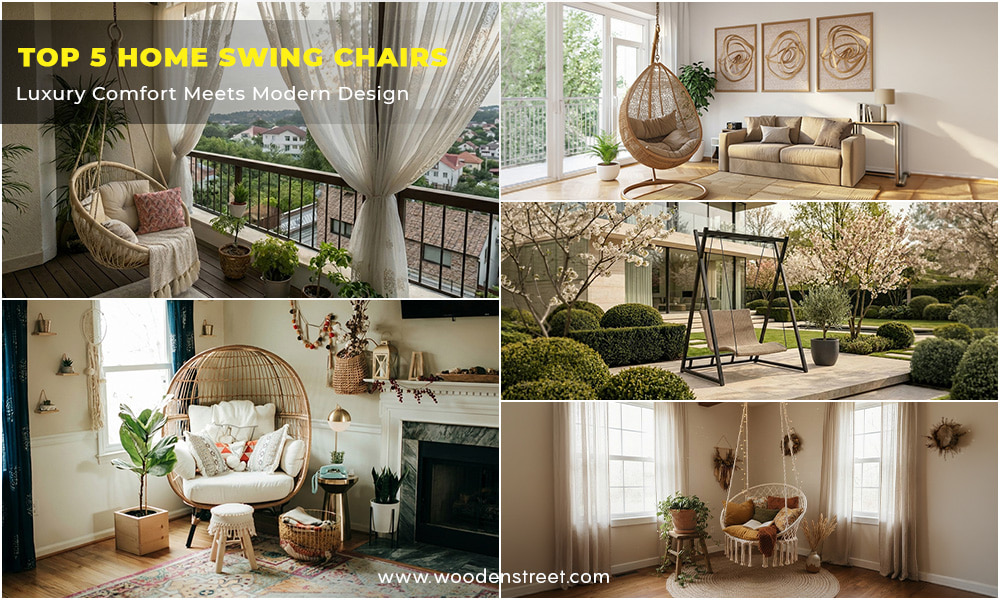
Honestly, swing chairs used to feel like something that only five-star resorts could pull off. You know the kind, such as that gorgeous rattan egg chair tucked into a corner of a hotel lobby, surrounded by plants, with perfect lighting. You’s sit in it for five minutes, feel completely at peace, and then go back to your ordinary chair at home and forget about it.
But things have changed now. A lot of Indian homes in the present time have got swing chairs - on balconies, in living rooms, in bedroom corners. And it makes total sense when you think about it.
There’s something about the gentle swinging motion that simply works. It’s not in your head either. The part of your brain that handles balance along with motion, the vestibular system, responds to rhythmic movement by calming down. Your heart rate starts to drop. Your thoughts slow down. You exhale properly, maybe for the first time all day. This is exactly why rocking chairs have existed for hundreds of years. Swinging does something for us that sitting still simply cannot.
So if you've been thinking about getting one but have no idea where to start, this guide is for you. We're covering the 5 best types of swing chairs, where each one works best in an Indian home, what to actually check before buying, and how to avoid the mistakes that lead to returns and disappointment.

Picture this. A lazy Sunday afternoon, warm light coming in through the balcony, a cup of chai in your hand, plus you’re sitting in a hammock swing chair that’s gently rocking you back and forth. That’s the life this chair promises. And it delivers as well.
The hammock swing chair is made from woven rope or macramé. The kind of knotted textile that looks like it belongs in a bohemian cafe or a coastal resort. It’s breathable, so that you won’t feel hot while sitting in it. It’s quite light in weight, so it doesn’t make your balcony or room feel heavy. And it has this relaxed, effortless charm that very few other furniture pieces can match.
What makes it really comfortable for long sitting sessions is the shape. It doesn't just support your seat. The whole cocoon-like structure wraps around your body. Your back, your sides, your legs, all held together in one gentle curve. It's the kind of chair you sit in for "just ten minutes" and then look up an hour later.
Best for: Balconies, reading corners, sunrooms, and spaces with a boho or coastal interior theme.
One thing to keep in mind - if your hammock chair is made from natural macramé, heavy rain will damage it over time. The fibres absorb moisture and weaken. If your space is exposed to direct rain, go with a synthetic rope version instead. It looks almost the same, but handles the outdoors far better.

There are furniture pieces that get popular because of trends. And then there are pieces that stay popular because they actually work. The cane egg chair is firmly in the second category. That enclosed, oval shape has been around for decades, and it still feels fresh and desirable in a way that very few designs do.
Part of the reason people love it so much is the privacy it offers. Sitting inside that egg-shaped shell feels like you've stepped into your own little world - even if you're in the middle of a shared living room. It muffles outside noise a little. It blocks out peripheral movement. You feel contained in the best possible way. A room within a room, as some people describe it.
The rattan frame adds a comfort layer that rigid metal simply can't give you. Rattan has a natural flex - a subtle give every time you shift your weight. The swing feels softer because of it. More responsive. More alive.
Best for: Living rooms, bedroom corners, and covered balconies.
Here's a simple styling tip - add a thick cushion pad inside and place a small side tray next to it. You've suddenly got a complete little setup. A reading nook, a WFH corner, or just your favourite place to be at the end of a hard day.
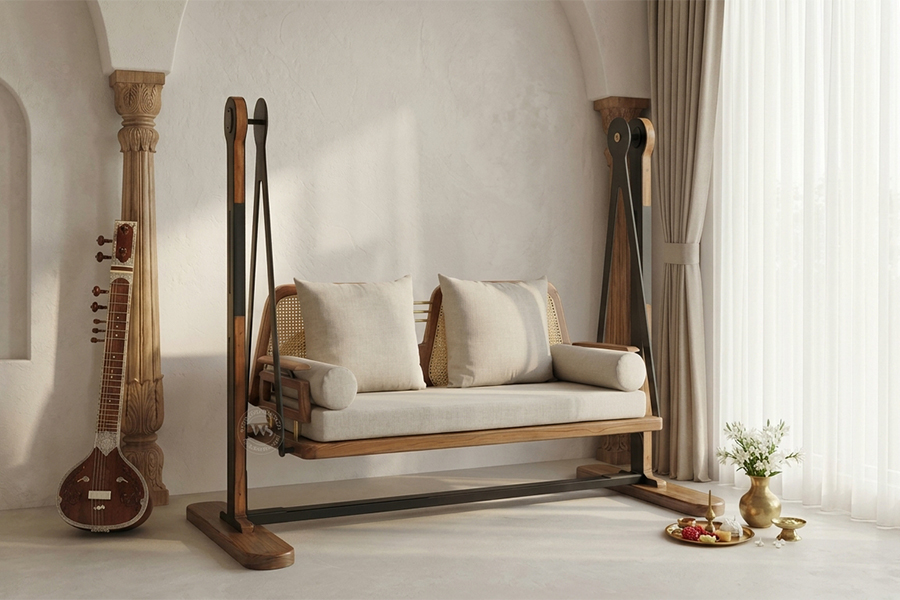
For a lot of us, a wooden jhula carries memories. A grandmother's veranda. A slow afternoon. The sound of wood creaking gently against the ceiling hook. There's an emotional warmth to the wooden swing chair that no other type quite replicates.
What's interesting is how well the jhula has evolved. Today's versions aren't the heavy, heavily carved pieces of the past. They're cleaner. Slimmer. The proportions work better with modern interiors - even minimalist ones. You get the same warmth and soul, just in a form that fits a contemporary flat as naturally as it fits a traditional home.
Material really matters here. Sheesham and acacia are the solid wood options worth going for. They're dense, stable, and built to last years - not months. MDF and hollow wood versions are cheaper upfront, but they wear down, they flex where they shouldn't, and they don't give you the same confidence when you're hanging them from a ceiling.
Best for: Living rooms, pooja rooms, verandas, and homes with traditional or transitional interiors.
And if you're planning a ceiling mount, the wooden jhula is genuinely the most structurally reliable option for Indian homes with concrete roofs. It distributes weight well and doesn't put unusual stress on the anchor point.
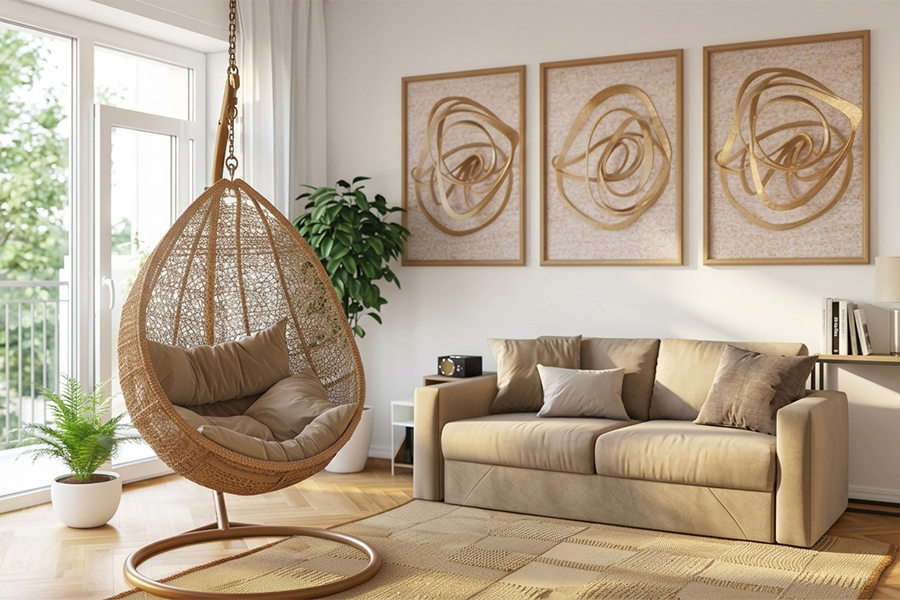
Some chairs you sit in. The hanging pod chair sort of swallows you whole - in a good way. The semi-spherical, fully enclosed design doesn't just support you, it surrounds you. You feel suspended. Cocooned. Completely cut off from whatever is stressing you out on the other side of the fabric.
It sits on a steel frame and is woven with either fabric or wicker - more structured than a hammock chair, more enveloping than an egg chair. The swing is smooth and steady. Perfect for anyone who wants to meditate, nap, or just zone out entirely.
Best for: Children's rooms, teenage spaces, meditation corners, and compact studio apartments.
Here's something many buyers don't think about until it's too late - not everyone can drill into their ceiling. Renters especially. If that's your situation, look for a stand-mounted cocoon chair. It has its own freestanding frame, so you can put it anywhere you want and take it with you when you move.
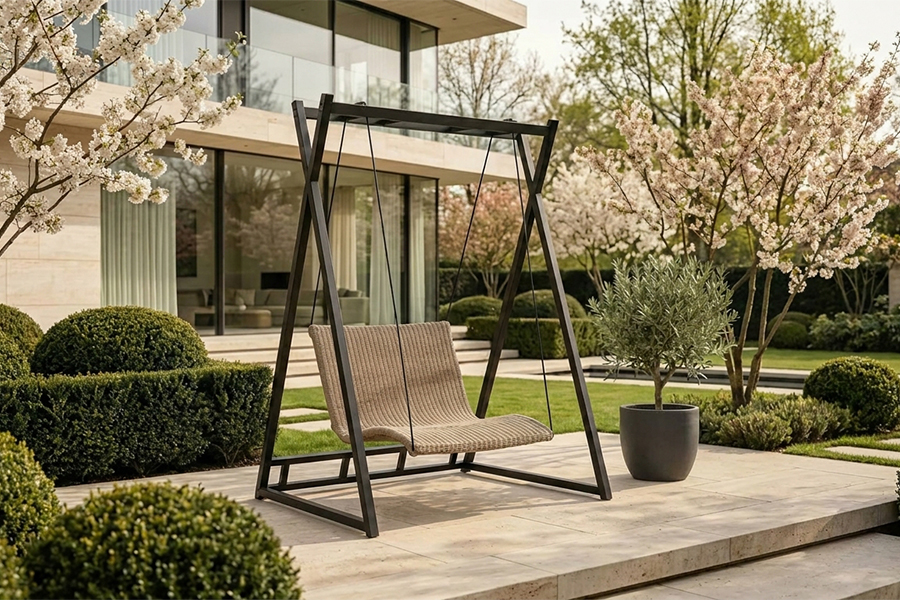
If you have any kind of outdoor space - a terrace, a garden, a lawn, even an open balcony - and you want a swing that the whole family can actually use together, this is the one to get.
The outdoor swing chair with frame is essentially a swing (single or two-seater) mounted on its own freestanding A-frame structure. No ceiling drilling. No installation headaches. No depending on your roof to hold anything up. You set it up, you sit down, and that's it.
Weather-treated teak and powder-coated iron frames are the two materials worth going for in Indian conditions. Both handle the monsoon season, the summer heat, and everything in between without falling apart or rusting through.
Best for: Terraces, gardens, lawns, and open balconies.
What makes the porch swing especially great for families is how naturally it becomes a gathering spot. Two people can sit together with enough room to actually be comfortable - not squeezed. You can have a conversation, watch the rain, or just sit quietly and enjoy the evening. It does the job of a swing and the job of outdoor seating at the same time.
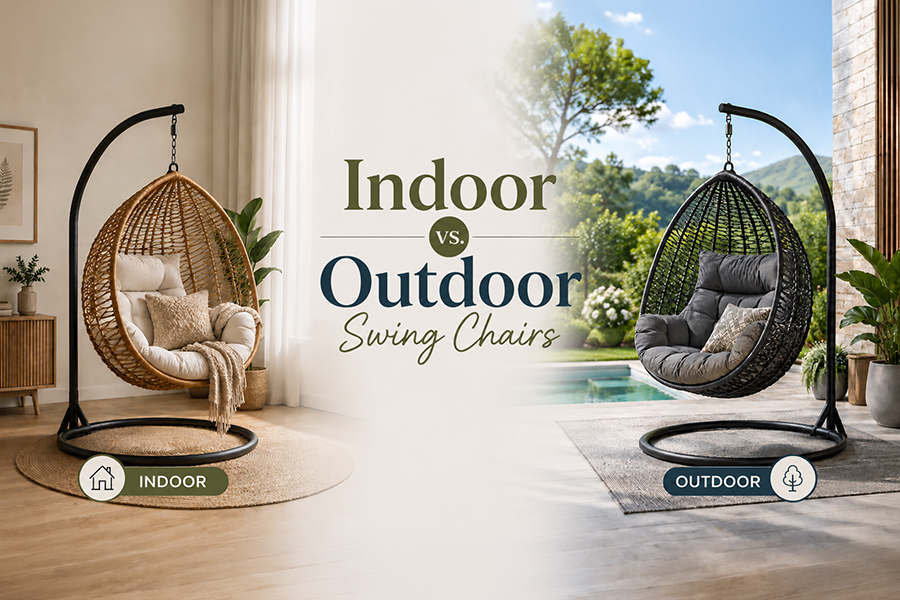
This sounds simple, but a lot of buyers end up with the wrong chair because they don't think it through carefully.
Indoor swing chairs are designed first for looks, then for comfort. The fabrics are richer, the finishes are more polished, and the designs tend to be more detailed. They're not made to handle rain, UV damage, or humidity - but inside a home, they don't need to be.
Outdoor swing chairs are built differently. UV-resistant fabric that won't fade in the sun. Rust-proof hardware so the chains and hooks stay intact through multiple monsoons. Weather-treated frames that don't warp, rot, or crack when the weather turns.
The covered balcony is the tricky middle case. If your balcony is well-covered and rain never reaches it directly, an indoor swing chair will generally do fine. But if rain comes in at an angle, or the afternoon sun beats down hard, you'll need something with at least some outdoor-grade treatment.
And if you ever want to move an indoor chair outside occasionally? Use a good UV-protective cover when it's not in use, and apply a furniture sealant to any wooden parts. It's not a permanent fix, but it'll significantly extend the life of the chair if you're only moving it outside every now and then.
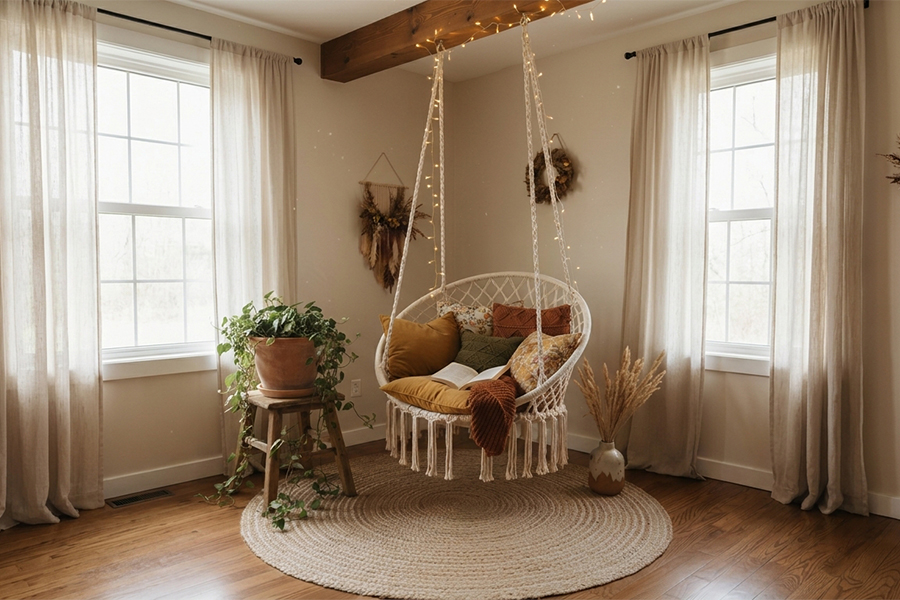
Here's what's actually happening when you swing. Your vestibular system - the part of your brain that processes balance and movement - gets activated by gentle, rhythmic motion. And when it gets that kind of steady, predictable movement, it sends calming signals across your nervous system. Anxiety drops. Muscle tension releases. Your breathing slows down without you having to try.
It's the same biology that makes rocking chairs work, that makes parents instinctively sway when holding a crying baby, that makes hammocks feel like sleep machines. Swinging taps into something very old and very deep in us.
In the context of Indian homes right now, swing chairs make more sense than ever. So many people work from home. Balconies have become actual living spaces, not just places to dry clothes. And there's a very real, very felt need for a corner in the house that's purely for rest - not work, not screens, not productivity. Just rest.
A swing chair creates exactly that. A decompression corner. A place your body and brain start to associate with letting go. And you don't need a large home for this - even a compact flat with one good swing chair on the balcony has that spot.
This is why we'd push back on the idea that a swing chair is a luxury. It's a functional piece of furniture that does something very specific and very valuable: it gives you a dedicated place to stop.
Ceiling height and anchor point strength - this is the one check that most people skip, and it's the one that causes the most problems. Before you buy any hanging swing chair, figure out what your ceiling is made of. Concrete is ideal. Wood beams are fine. Gypsum board, POP false ceilings, or grid ceilings are not - they cannot support the weight of a swing plus a person. Always anchor into the structural ceiling above. If you're not sure, get a professional to check.
Indoor vs. outdoor materials - for outdoor use, you need UV-resistant fabric, rust-proof chains and hooks, and a weather-treated frame. For indoor use, you have more flexibility, but still check that the fabric is durable and easy to clean.
Weight capacity - most standard swing chairs hold between 100 and 120 kg. Always verify this for the specific chair you're buying. Don't assume - check the product specifications.
Hanging hardware vs. stand-mounted - if you're renting, or if your ceiling type isn't suitable for drilling, go stand-mounted. If you own your home and have a solid concrete ceiling, direct mounting works well with the right hardware installed properly.
Chain length and seat height - the seat of your swing should ideally sit between 45 and 55 cm from the floor for comfortable use by most adults. Measure your ceiling height, decide on your seat height, and you'll know exactly how much drop your chain needs. Many chairs now come with adjustable chains - worth choosing if you have the option.
Most swing chair ranges you find online are designed for Western homes - taller ceilings, wider rooms, different structural realities. Wooden Street is built around Indian homes specifically.
Solid wood swing chairs from Wooden Street - in sheesham, acacia, and mango wood - handle India's climate the way metal and MDF simply can't. Humidity, monsoon moisture, temperature swings - solid wood holds its shape and its strength through all of it. Metal hardware rusts. MDF swells. Solid wood endures.
The collection covers handcrafted wooden jhulas, cane egg chairs, and balcony swing sets - all sized and designed to work within the ceiling heights and room dimensions of actual Indian flats and houses. And if you want something that fits your home exactly, customisation is available on seat width, rope length, cushion fabric, and wood finish.
Explore the full swing chair collection at Wooden Street
We will be back with the next blog soon. Till then, stay tuned!
Read More -
Balcony, Terrace & Home Garden Design Tips
Image Source: Pinterest, Google, and Wooden Street .
A A hammock swing chair in rope or macramé is your best option for a small balcony. It takes up very little floor space, feels light and open, and doesn't make a compact area feel crowded. A stand-mounted hanging pod is also a good choice if your balcony ceiling isn't suitable for drilling.
A Most standard hanging swing chairs are built to handle between 100 and 120 kg. Always check the exact weight capacity mentioned by the manufacturer for whichever chair you're buying — and build in a safety margin rather than sitting right at the limit.
A No — not safely. False ceilings made of POP, gypsum board, or grid panels are not structural. They will not hold the weight of a swing plus a person, and attempting to anchor into them is genuinely dangerous. Always drill into the structural concrete or beam above. If you have any doubt about what's above your false ceiling, call a professional or just get a stand-mounted chair.
A A hammock chair is open, made from woven rope or fabric, and wraps around you softly. It's breathable and very relaxed in feel. A cane egg chair has a rigid rattan frame in a closed oval shape, which is more structured, more enclosed, more like a defined private seat. Hammock chairs feel casual. Egg chairs feel like your own little room.
A Dust it regularly with a soft cloth or a brush. For cleaning, use a damp cloth with a small amount of mild soap; don't soak it. Keep it away from direct, prolonged rain and harsh sunlight. If the cane starts to look dry or lose flexibility, a light coat of linseed oil helps restore it. During long monsoon stretches, bring it inside or put a good cover over it.
A Yes, when installed correctly. A swing chair anchored into a solid concrete ceiling, within its stated weight limit, with proper hardware, is safe for daily use. The risks come from poor installation, such as wrong ceiling type, inadequate hardware, and incorrect anchor placement. Get the installation right, and the chair itself is very safe. When in any doubt, bring in a professional to do the mounting.
Trending Products
Top Picks from EveryoneArticles you will love to read

Check out the exclusive decor ideas for creating an ultimate outdoor space, where family meets happiness.
Continue Reading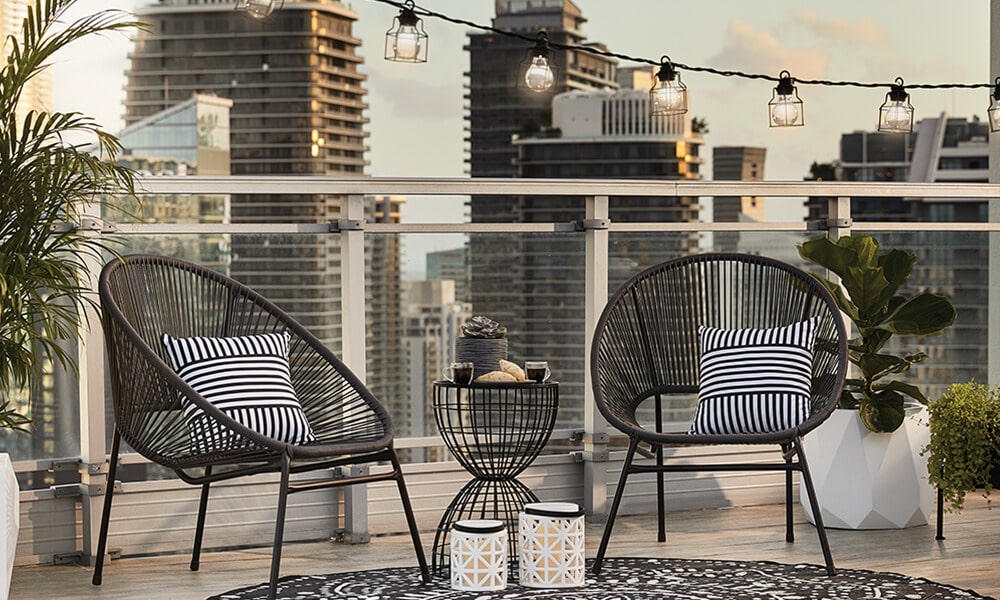
Make the best out of your outdoors to gear up the enjoyment of monsoon season. Check out these decor hacks below and jazz the vibe accordingly.
Continue Reading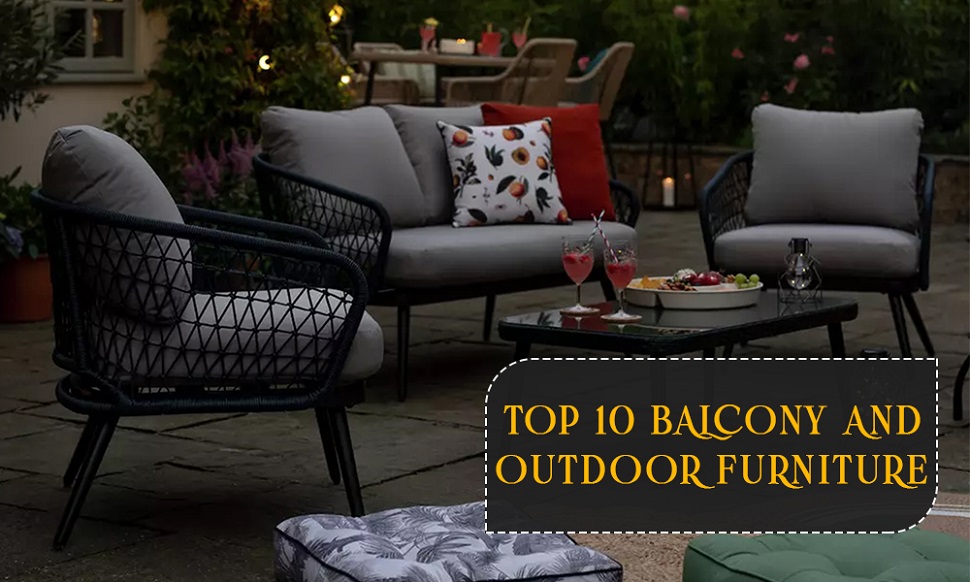
Check out our list of top 10 balcony and outdoor furniture pieces to give your space a comfy and stylish turn up on a budget.
Continue Reading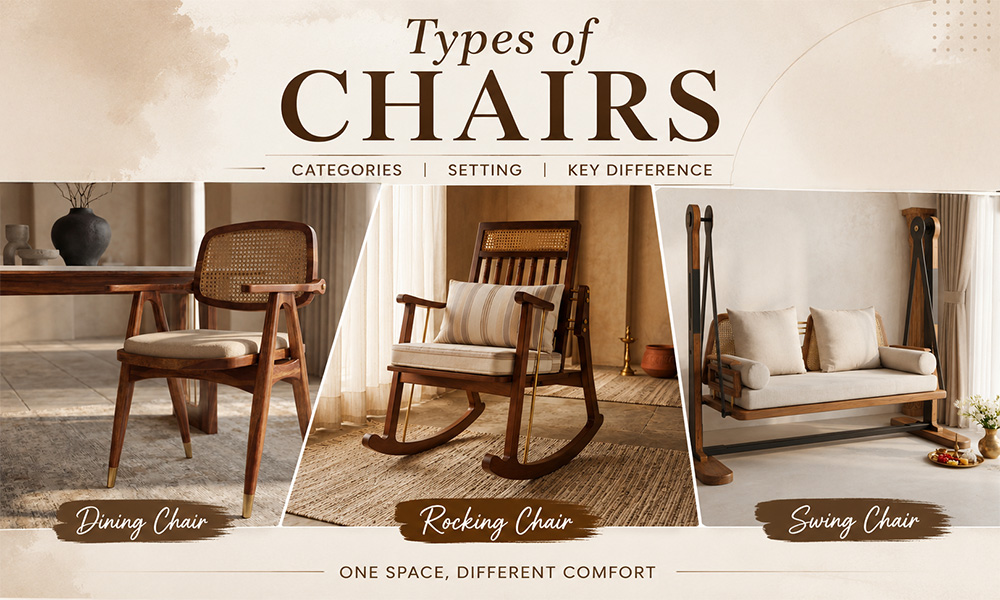
From living rooms and dining areas to offices and outdoor spaces, understanding the various styles of chairs helps you choose the right seating for every need. This guide explores chair categories, their defining features, and the practical differences that set them apart across residential and commercial environments
Continue Reading


