


A dining table may be the focal point of the room, but the surrounding space determines how comfortable and practical it feels. This guide explores the importance of clearance, chair movement, traffic flow, and room proportions, helping you create a dining area that functions as well as it looks.
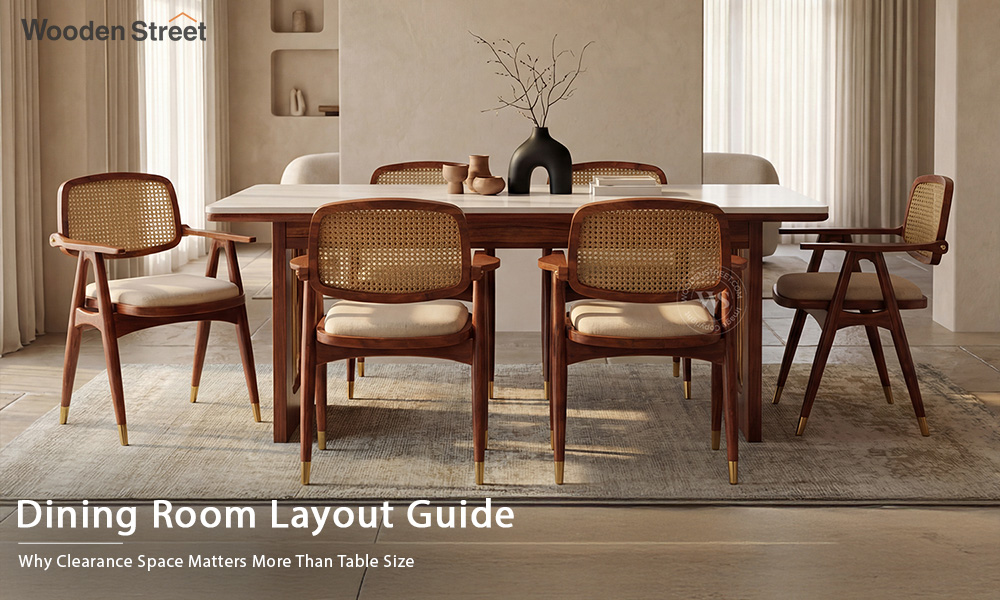
Buying a dining table feels like a straightforward decision until the table actually arrives. Then you realise the chairs do not pull out properly, one side is pressed against the wall, and getting to the kitchen means squeezing past whoever sat at the end. The table looked perfect in the showroom. The problem was never the table.
Most people spend their energy picking the right size, finish, and material. What they skip is the room itself. A dining table that seats six but leaves only 50 cm behind every chair is not a six-seater. It is an obstacle course, and it will frustrate you at every single meal.
Get the room right first. The table comes after.
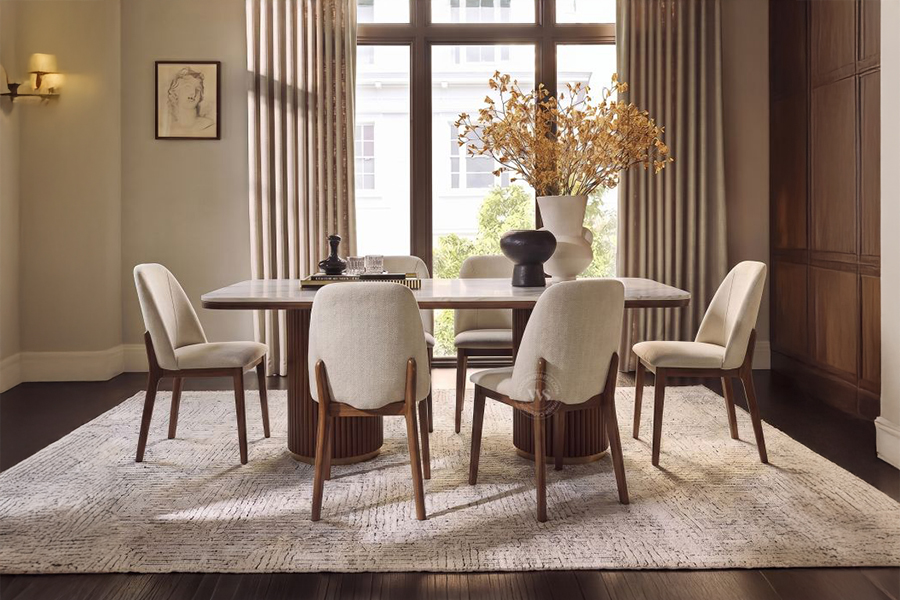
Before you look at anything online or walk into a furniture store, pick up a measuring tape and go back to the space where the dining table will actually live. Write down the full length and width of the room. Mark where the doors are, how far they swing open, and whether any cabinets, a crockery unit, or a kitchen counter reduces the usable area.
Those numbers matter more than anything on a product listing.
Keep this number in your head: 90 cm. That is the minimum gap you need between the edge of the dining table and the nearest wall or furniture piece. It sounds like a lot until you try living with less. Ninety centimetres lets a person sit down, push the chair back, stand up, and allow someone to walk past, all without anyone having to hold their breath or move furniture.
A lot of Indian apartments, particularly in cities, simply do not have generous dining areas. If 90 cm on all four sides is not realistic in your space, that is fine, but decide upfront which sides will be tighter and plan the seating arrangement around it. Do not leave it to chance.
A long, narrow room works with a rectangular table. The shapes complement each other and you retain walkable space along both longer sides. A square room suits a round or square table because no single side ends up dominating the layout. If your dining area is wider than it is long, both shapes work and you have real flexibility.
The pairing that consistently creates problems is a round table in a narrow rectangular room. The ends of the room become wasted corners and the table ends up fighting the space rather than fitting into it.
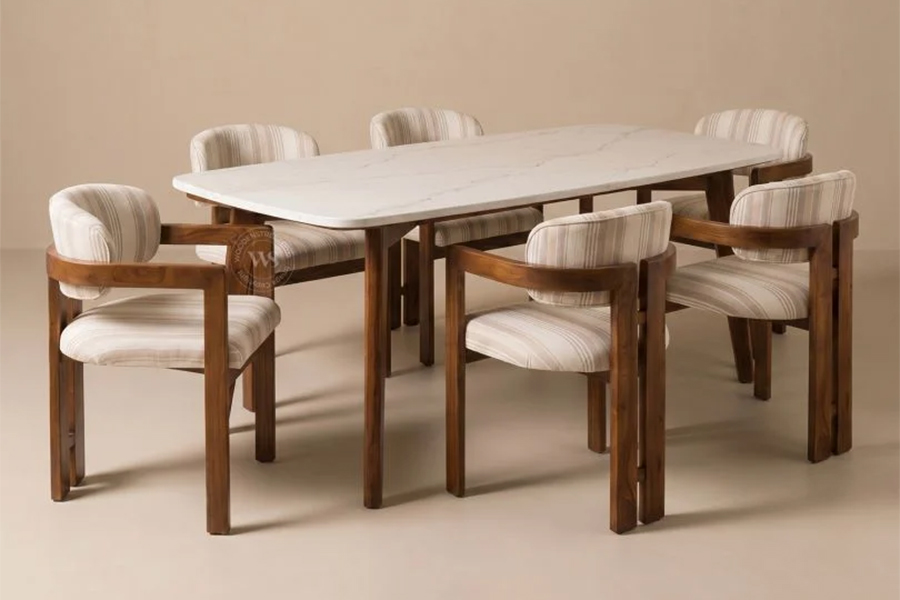
With the room measurements sorted, the table selection gets much easier.
Manufacturers are optimistic. A table listed as a six-seater can technically fit six people, but comfortable is a different matter entirely. The right way to think about it is 60 to 70 cm of table edge per person. That gives each person space for a plate, a glass, and enough room to use their arms without elbowing the person next to them.
Run that number against a standard 150 cm table and you will get four comfortable seats, not six. If six is genuinely what you need, look at tables in the 180 cm range and be clear about that from the start.
If you host more than four times a year, an extendable table is worth every extra rupee the mechanism costs. You get a compact table for daily use and a larger surface when the house fills up during festivals, birthdays, or those Sundays when relatives arrive without much notice.
What matters is the quality of the mechanism. Cheaper systems wobble when extended, develop an obvious seam down the middle, or become stiff enough that you stop using them. Before buying, extend and close the table yourself in the store. Both surfaces should sit flush with no wobble. If it already feels off in a showroom, it will feel worse at home six months later.
Four corner legs are the most common base style, but they create a real inconvenience for anyone sitting at the short ends of the dining table. That person has to work around a leg with their knees the whole meal. Pedestal bases and trestle frames keep the area under the table completely clear, so chairs can sit anywhere around the perimeter without any awkward positioning.
If children typically sit at the ends of the table in your home, this detail is worth paying attention to.
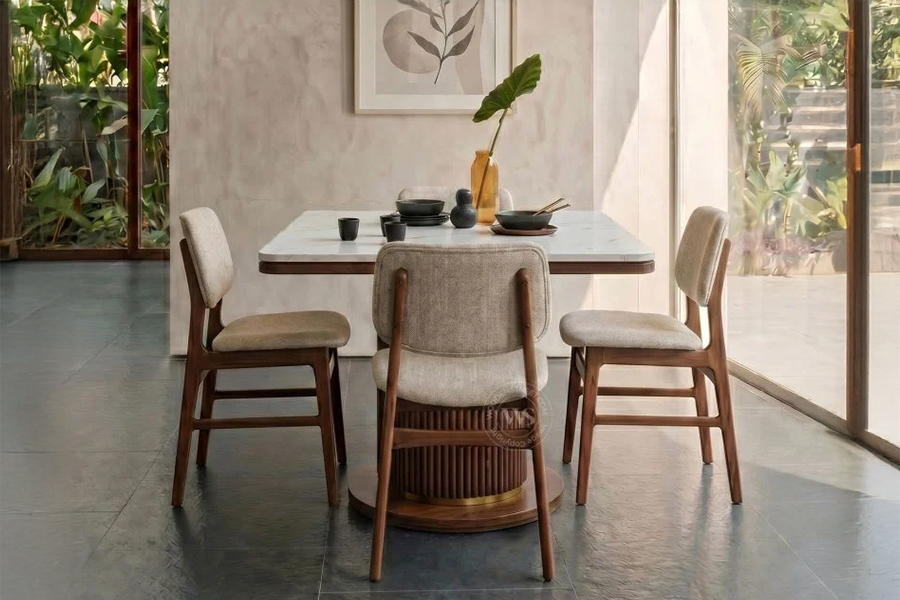
Showroom lighting is flattering. Every surface looks rich and flawless under those warm lights. The honest question is what that table will look like after three months of real use in your home.
In most Indian homes, the dining table is not just a dining table. It is a homework surface on school nights. It is a craft table during holidays. It is a workspace when someone needs to open a laptop or spread out documents. Then the weekend comes and it becomes a hosting surface again.
The material needs to handle all of those uses, not just look good for guests. A beautiful raw wood finish will not survive a water bottle left on it overnight, a child working with a compass, and a hot vessel placed on it straight from the stove.
Indian dining tables face a specific set of conditions that most general furniture advice does not cover. Hot vessels going directly onto the surface, wet glasses sitting for extended periods, and oil or masala spills that stain quickly if they are not wiped up fast.
Solid wood with a PU or varnish finish handles all of this well. The sealed surface resists moisture, stands up to moderate heat, and is easy to clean. Raw or lightly oiled wood is a different story. It looks organic and warm but absorbs heat marks, stains from spices, and moisture damage fairly easily. Engineered wood with a hard laminate top is a practical middle ground and easier to maintain day to day. Glass looks very contemporary but requires constant cleaning to stay presentable.
For a table in regular daily use, solid wood with a quality finish or a hard laminate surface is the sensible choice.
Before anything is finalised, ask yourself whether this table will still work for your family in five years.
The children who are eight today will be teenagers then, hungrier, louder, and taking up considerably more space. A household that currently hosts four people might be hosting twelve by the time the next festive season rolls around. Habits change, families grow, and homes sometimes change too.
A dining table bought with some thought should comfortably last ten to fifteen years. Buying one that fits today's routine without thinking ahead is one of the easiest furniture mistakes to make and one of the easiest to avoid.
The best dining table is not the one with the best finish or the lowest price. It is the one that keeps working for the people sitting around it, year after year.
We will be back with the next blog soon. Till then, stay tuned!
Image Source: Pinterest, Google, and Wooden Street
Read More - Know About All Types Of Dining Tables
A A dining room measuring 10x12 feet can comfortably accommodate a table for 4–6 people, typically around 36–42 inches wide and 60–72 inches long.
A Leave at least 36 inches of clearance around the table to allow chairs to move comfortably and ensure easy circulation throughout the dining area.
A Round tables are often better for small rooms because they improve traffic flow, eliminate sharp corners, and create a more open, spacious feel.
A Solid hardwoods like oak, teak, and walnut are among the most durable dining table materials, offering excellent strength, longevity, and timeless appeal.
Trending Products
Top Picks from EveryoneArticles you will love to read
Kitchen colour as per Vastu Shastra plays a vital role in balancing energy and ensuring health, wealth, and harmony at home. This blog explores the most auspicious colour combinations to make your kitchen vibrant, positive, and aligned with prosperity.
Continue ReadingDiscover the beauty of ancient temples made of wood that have stood strong for centuries. This blog explores their remarkable architecture, cultural significance, and enduring craftsmanship, highlighting how these wooden marvels continue to inspire with their resilience, artistry, and deep-rooted spiritual heritage across the world.
Continue ReadingMaster the basics of how to install wall shelves safely and securely with this practical guide. Learn floating shelf installation techniques, choose the right wall shelf brackets, understand wall shelf weight limits, and discover easy solutions for how to fix a loose shelf before it becomes a bigger problem
Continue ReadingDiscover the real meaning behind 7 horse vastu beliefs, including ideal 7 horse painting vastu direction, placement rules, and 7 horse painting with sunrise benefits. This guide explains seven horses vastu symbolism, running horse vastu tips, and common mistakes people make while placing lucky seven horses painting in home interiors
Continue ReadingFrom light surface marks to deep gouges, this guide explains how to get rid of scratches on wood using simple repair techniques. Learn how to fill scratches in wood, repair deep scratches in wood tables, remove scratches in wood surfaces, and even handle scratches on wooden floors effectively at home
Continue Reading