

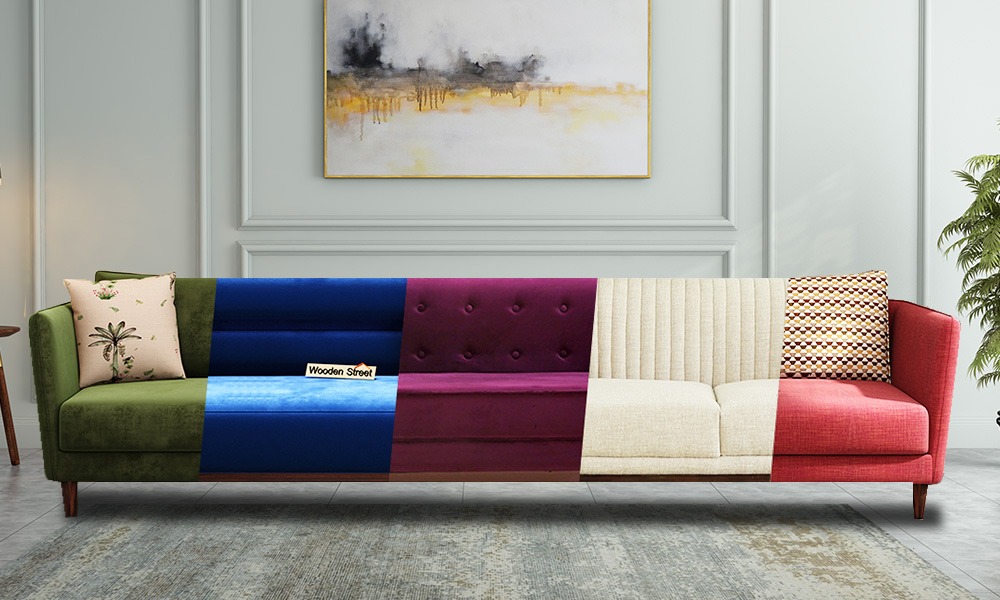




Buying a sofa involves more than choosing a design you like. This guide covers the most important factors people often overlook, including dimensions, upholstery, frame quality, seating comfort, maintenance, and room layout, helping you make a practical investment that suits your lifestyle and space

You walk into a furniture showroom, and the first thing you do is sit on the sofas you like. That is exactly backwards - and it is why so many people bring home a sofa that looks great in the store and creates problems the moment it arrives.
A sofa is the largest, most expensive, and most used piece of furniture in most living rooms. Getting it wrong is costly. Getting it right requires thinking about the room before thinking about the sofa. This guide covers everything worth considering - in the right order.
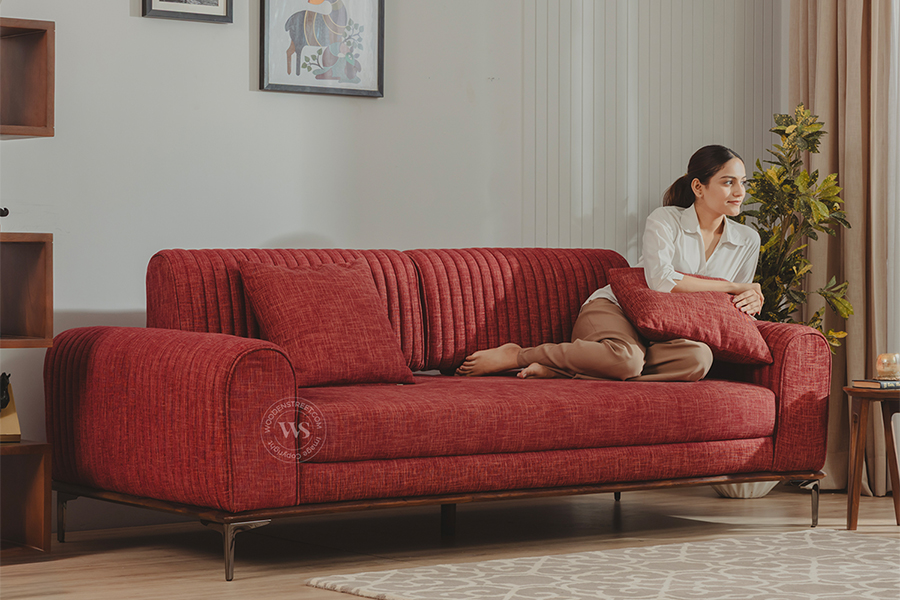
Most people arrive at a showroom with a style in mind. Velvet sectional. Tuxedo arm. Mid-century legs. That is fine, but it is the wrong starting point.
The right order is this: walk in with your room's measurements written down, your traffic flow mapped, and your light direction noted. A sofa that does not fit the space, blocks movement through the room, or fights the light will fail regardless of how good it looks on its own.
Before you look at a single sofa, know these three numbers: the length of the wall it will sit against, the distance between that wall and what faces it, and the width of your front door and any tight corners in the path between the entrance and the room. That last one alone has saved thousands of people from a delivery disaster.
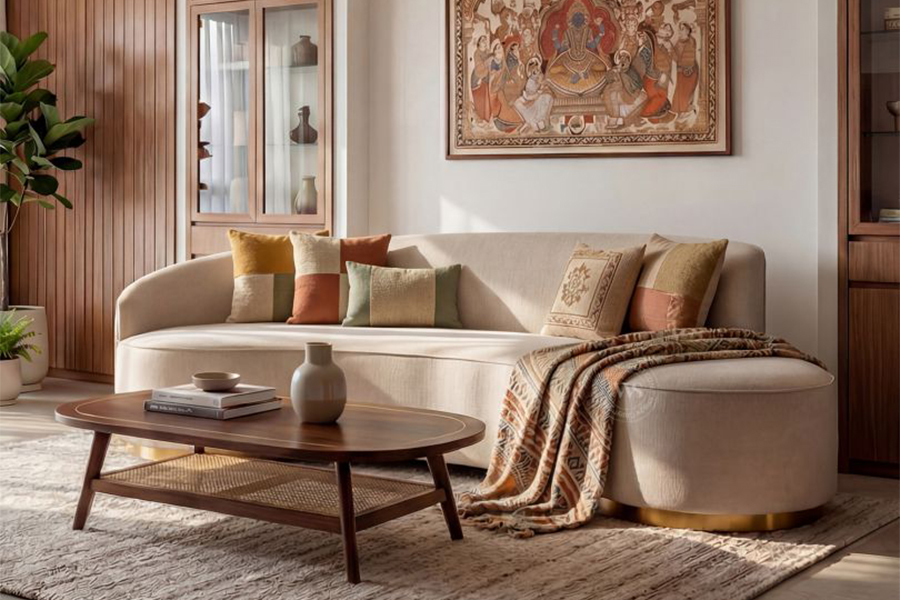
Traffic flow is the thing nobody maps, and everyone regrets ignoring. A sofa placed against the wrong wall can block the natural path between the entry, the kitchen, the balcony - wherever people in your household actually move.
Stand in your living room and watch where people walk. Where do they enter? Where do they exit? Where do they pass through to get somewhere else? The sofa placement should work with these paths, not across them. A sectional that looks perfect in a showroom photograph can make a real room feel like an obstacle course.
The sofa should face what the room is organised around. In most Indian homes, that is a TV unit. In others, it is a window, a balcony door, or a conversation area. This determines orientation before size - there is no point buying a three-seater if placing it to face the TV means it sits awkwardly off-centre.
Decide the orientation first. Then decide the size that works within that orientation.
Light is the variable most buyers completely forget about until the sofa arrives.
Match the fabric tone and material to the actual light conditions of the room, not how you imagine the room looking in a photograph.

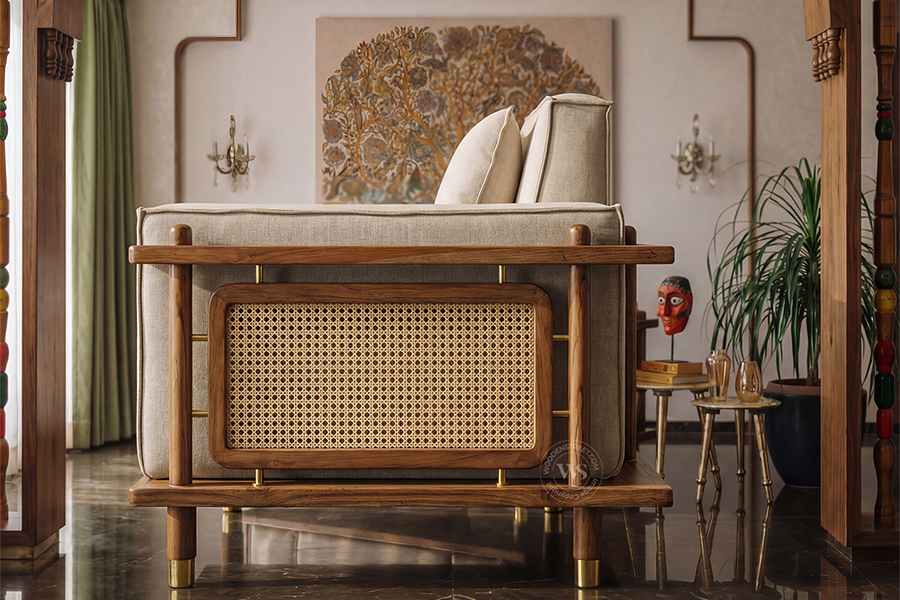
The frame is what you are actually buying. The cushions, the fabric, the legs - all of that can be replaced. The frame cannot.
Kiln-dried hardwood frames - teak, beech, rubberwood - last decades under normal use. The joints stay tight. The structure does not flex or creak. Sofas built on soft wood or MDF frames feel fine when new and begin loosening at the joints within two to three years of daily use. By year five you are sitting on something that shifts and sounds like it is disagreeing with you.
The quickest test at the showroom: knock on the frame with your knuckle. A solid hardwood frame sounds dense. An MDF or hollow frame sounds flat and slightly hollow. Ask directly what the frame wood is - a good manufacturer will answer immediately. Hesitation is a data point.
Standard sofa seat depth is 55 to 60 cm. For most average-height adults this is comfortable - you sit back into the cushion and your feet rest on the floor naturally.
If you are shorter, this depth becomes a problem. Sitting fully back means your legs extend horizontally with no floor contact, which cuts circulation and becomes genuinely uncomfortable within twenty minutes. If your legs are shorter than average, look for sofas with 50 to 52 cm seat depth, or plan to add a lumbar cushion to reduce the effective depth.
This is the single most important reason to sit in a sofa before buying. A sofa that photographs beautifully and costs well can be physically wrong for the people who use it every day. Sit in it. Sit in it properly - back against the cushion, shoes on, for at least five minutes.
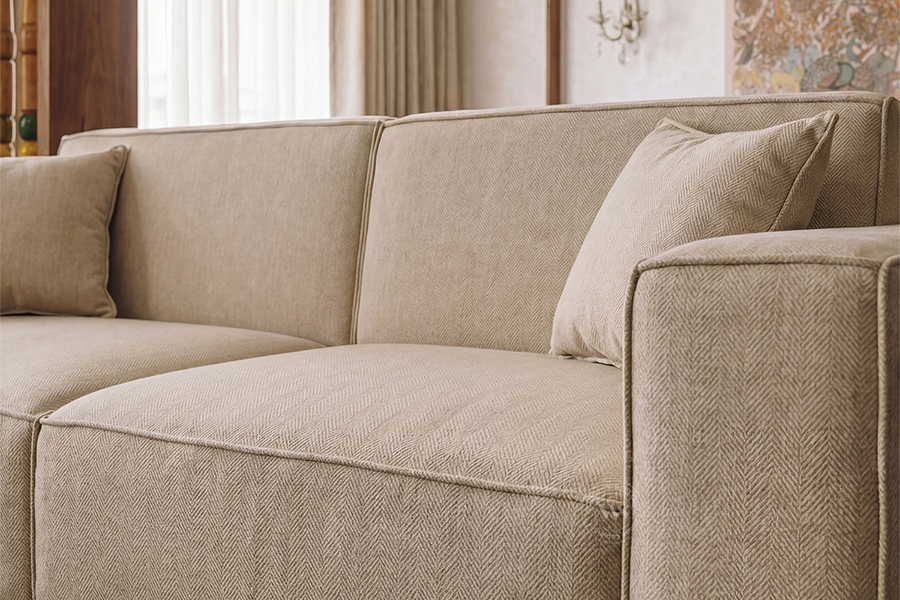
There are three meaningful options and they suit different households.
High-resilience (HR) foam holds its shape reliably, requires no maintenance, and suits families with children or anyone who does not want to think about their sofa. The density rating matters - foam rated at 40 kg/m³ and above is considered good quality for seating. Below that it compresses and sags faster than it should.
Feather and down fill feels genuinely luxurious - soft, enveloping, the kind of cushion you sink into. The trade-off is daily maintenance. Feather cushions need fluffing every day or they flatten unevenly and the sofa looks neglected. For a household where this will actually happen, feather fill is worth it. For most households, honestly, it will not.
Foam-fibre blend wraps an HR foam core in a layer of hollow-fibre fill. It looks plush and holds its shape adequately. The practical middle ground for most buyers.
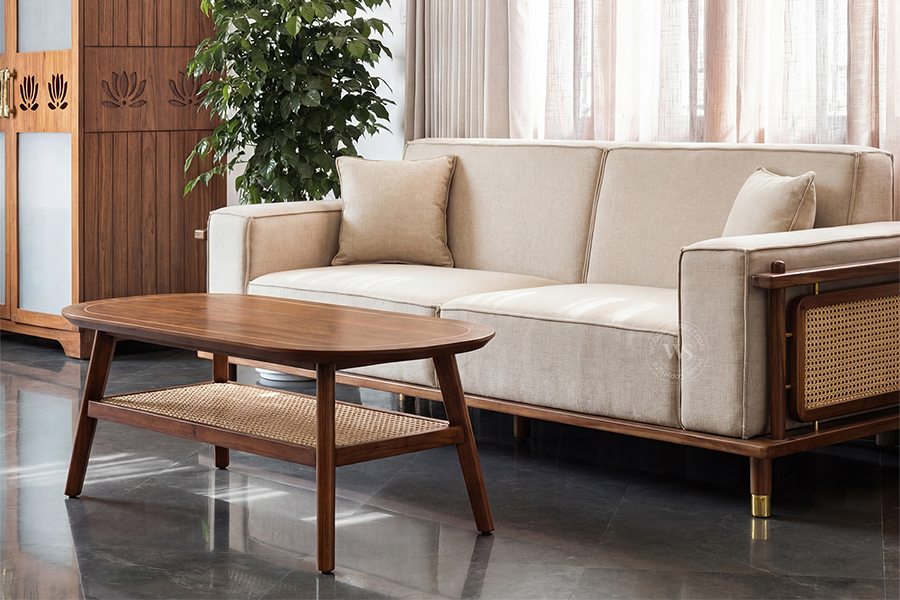
This is where many buyers make the costliest mistake - choosing fabric for how it looks in isolation rather than how it will perform in their actual household.
Linen and velvet are beautiful. They are also the worst choices for homes with children, pets, or anyone who eats on the sofa regularly. Linen marks and stains easily. Velvet shows pet hair relentlessly and is difficult to clean without affecting the pile.
Performance fabrics - tightly woven polyester, microfibre, solution-dyed acrylic - are built for real life. They resist staining, survive pet claws better than most natural fibres, and clean with a damp cloth rather than a professional. They do not look as luxurious as velvet up close, but they look far better than a stained velvet sofa six months after purchase.
If you want the look of a natural fibre with better performance, look for linen-polyester blends or performance velvet - woven versions that mimic the appearance with significantly better durability.
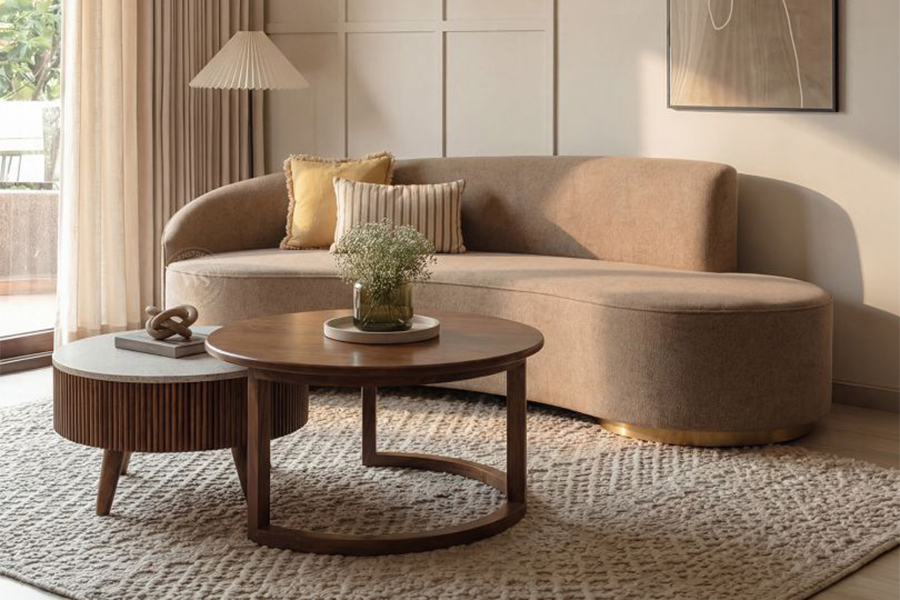
There are four questions that prevent four different disasters and almost nobody thinks to ask them.
Will this fit through my door? Measure your front door width and every tight corner or stairwell between the entrance and the room. Standard sofa widths are fine through standard doors. Sectionals and large three-seaters often are not. The delivery team cannot magic a sofa through a doorway three inches too narrow, and returns cost money.
What is the frame wood? Already covered - but ask it out loud. The answer tells you a great deal about the manufacturer's confidence in the product.
What is the foam density? Any foam above 40 kg/m³ in the seat cushion is a reasonable starting point for durability. A salesperson who does not know this number is selling on aesthetics alone.
Can the legs be removed for delivery? Legs add 10 to 15 cm to the height of a sofa. Removing them can be the difference between a sofa that fits through a doorway and one that does not.
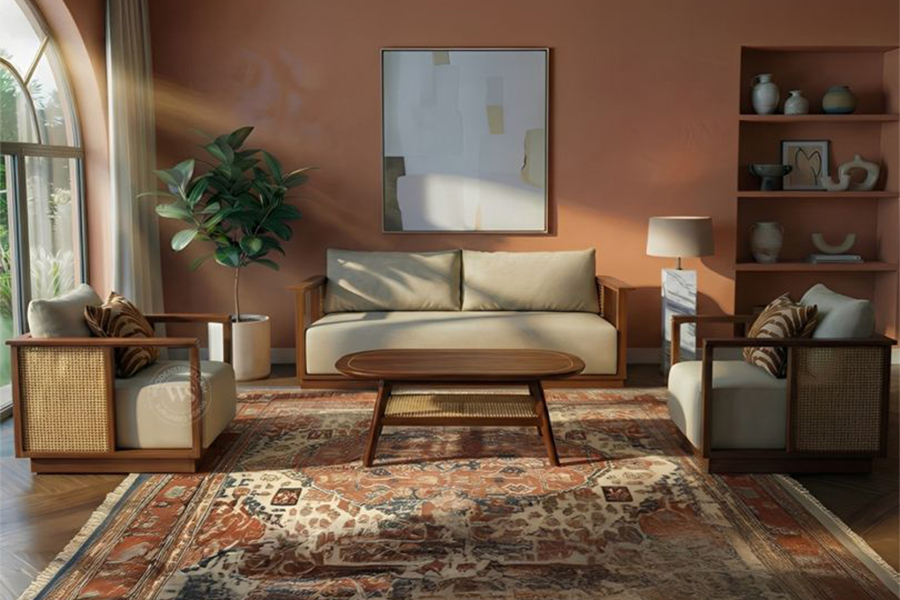
Everything else in this guide is important. This is the number that determines whether the room works.
Leave a minimum of 90 cm between your sofa and the opposite wall, coffee table, or piece of furniture facing it. This is the clearance needed for a person to walk through comfortably without turning sideways, and for the room to feel like a room rather than a corridor.
Most living rooms in Indian apartments are tighter than people realise. A 3-metre-wide room with a 90 cm deep sofa against one wall and a 40 cm deep TV unit against the other leaves exactly 170 cm - enough for a coffee table and circulation, but barely. Every additional centimetre of sofa depth or TV unit depth eats into that number.
Measure the clearance before you decide on sofa depth. Not after.
Measure the room and map the traffic flow before you start browsing. Match the fabric to the light conditions and to the reality of how the room gets used. Sit in the sofa before buying - properly, for five minutes. Ask about the frame wood and the foam density. Confirm the delivery path. Leave 90 cm of clearance on the facing side.
A sofa bought with these things considered will feel right every time you sit in it for the next ten years. One bought without them will feel slightly wrong in a way you can never quite explain.
We want to hear from you - what is the one thing you wish you had known before buying your current sofa? Let us know in the comments section below.
We will be back with the next blog soon. Till then, stay tuned!
Image Source: Pinterest, Google, and Wooden Street
Read More - Know how to choose the right sofa for your home
Trending Products
Top Picks from EveryoneArticles you will love to read
Whether you're furnishing a new space or replacing an existing piece, understanding the dimensions of 3 seater sofa models and other common configurations is essential. This guide covers standard widths, depths, heights, and clearance requirements to help you measure accurately and choose a sofa that fits comfortably
Continue ReadingLooking for space-saving furniture in 2026? This blog lists the top 10 sofa kam bed brands in India, highlighting build quality, comfort, styles, and value for money to help you find the ideal option for compact and modern living spaces.
Continue Reading
Learn how to clean a leather couch at home with simple steps, stain removal tips, and conditioning methods to keep your sofa looking new.
Continue Reading
From the trendy cloud couch to practical floor sofa couches, this guide compares comfort, maintenance, durability, and everyday usability for Indian homes. Discover whether a boucle fabric sofa, teddy sofa, cloud sofa, or modern floor sofas can truly handle kids, guests, pets, heat, and daily living without losing style.
Continue Reading
A well-designed living room needs more than just a sofa. This guide explores different types of living room chairs, from accent and lounge chairs to recliners and armchairs. Learn how various kinds of living room chairs and types of sitting room chairs add comfort, style, flexibility, and functionality to your space.
Continue Reading


