



The question of leather or fabric sofa which is better cannot be answered by materials alone. Your household, daily habits, maintenance preferences, and climate all play a role. This guide focuses on three key lifestyle factors that help determine the sofa option most likely to suit your home and long-term needs
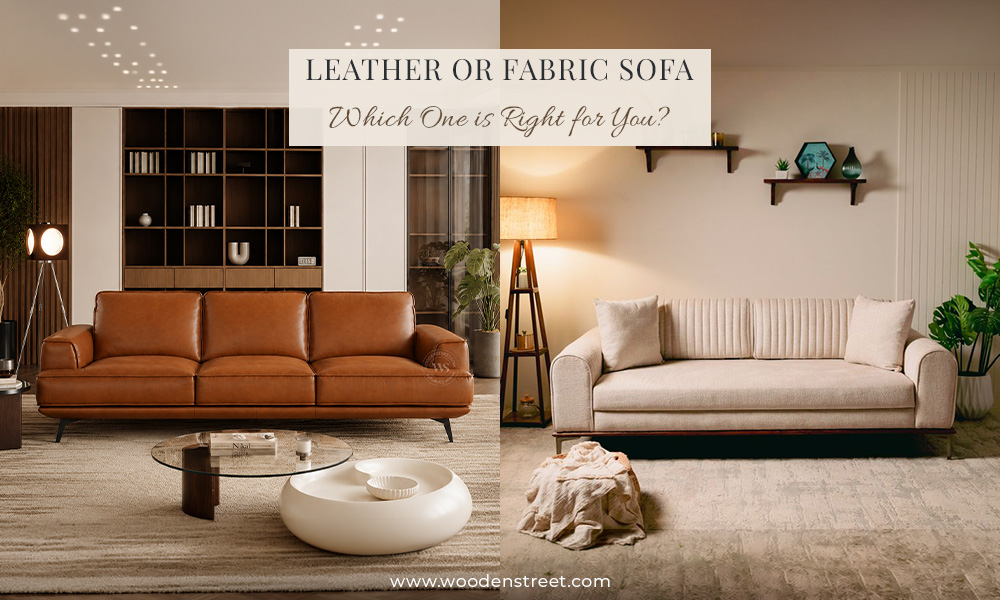
Every leather vs fabric article online ends the same way: "it depends on your lifestyle." Which tells you nothing useful. You came here with a real question which sofa is better, leather or fabric and you deserve a real answer. This guide will give you one. By the end, you will know exactly which sofa is right for your home, based on three things that actually decide it. No fence sitting, no balanced non conclusions.
Most comparisons are written to avoid being wrong. So they list every possible angle, hedge every claim, and leave you exactly where you started undecided. The honest answer to leather or fabric sofa which is better is not universal. But it is also not mysterious. Three factors decide it for most Indian buyers: your climate, your household, and what you are actually buying when a sofa is labelled "leather." Get those three right and the answer becomes obvious.

Most leather versus fabric guides are written for temperate climates. They do not account for what a Mumbai July or a Jaipur May does to furniture or to the person sitting on it.
Genuine leather in high heat and humidity behaves like a slow trap. It absorbs body heat, becomes tacky on bare skin, and in humid coastal cities, starts to feel clammy within minutes of sitting down. By peak summer, sitting on a leather sofa without AC is something most people actively avoid.
Fabric breathes. It does not trap heat against your skin the way leather does. In rooms that reach 35°C or above, fabric stays tolerable when leather becomes genuinely unpleasant.
In consistently AC cooled rooms, this changes. Controlled temperatures reduce the problem and leather becomes a comfortable choice. But the moment power goes or the room takes time to cool, fabric recovers faster.
For Indian buyers without consistent AC: fabric wins this round before any other factor is even considered. This is the question most global guides do not answer, because they were not written for someone sitting in a Rajasthan summer.
Homes With Children

Fabric stains and holds the stain. That is the honest starting point. Microfibre and tightly woven blends reduce the damage, but no fabric is genuinely stain proof long term with small children in the house.
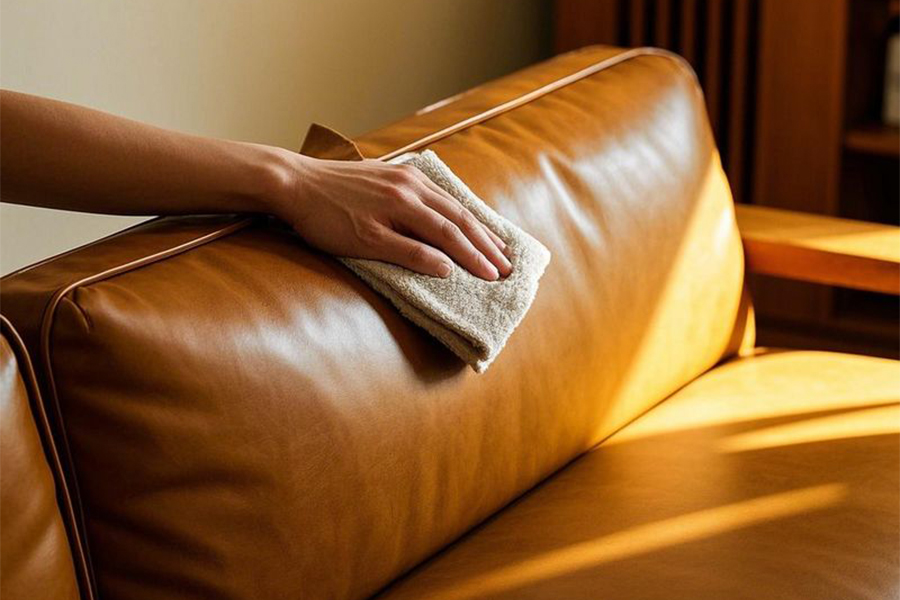
Genuine leather wipes clean. One damp cloth after a juice spill. No residue, no scrubbing, no lasting mark.
The recommendation: if the children are under ten and the sofa will be primary family seating, leather or PU leather is the more practical surface. Fabric requires too much maintenance in this phase. The sofa will show wear regardless; at least leather allows you to clean it without effort. For which sofa is best for home with children, leather edges ahead.
Homes With Pets
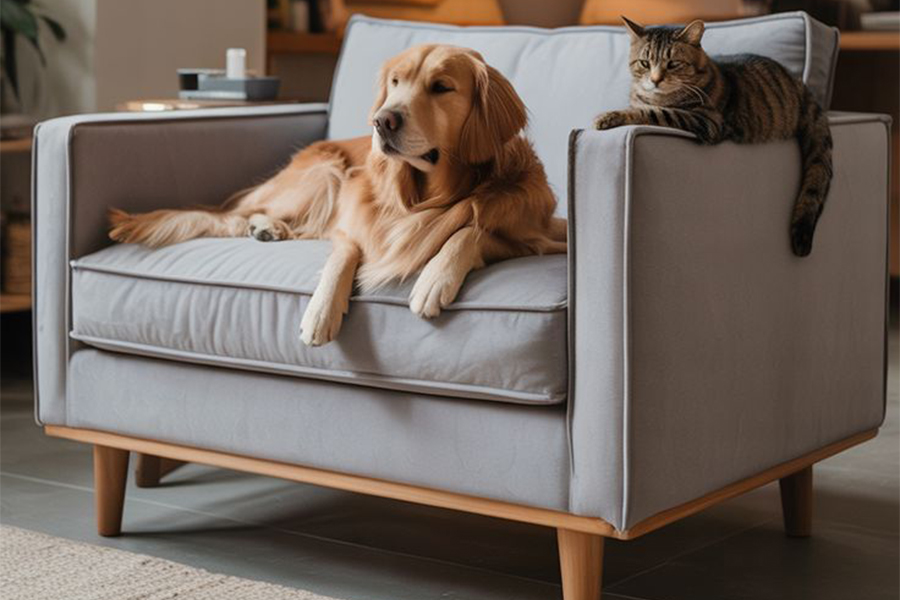
Pets expose the difference between leather types immediately. Claws scratch genuine leather but only mark the surface a scratch on full grain leather can be buffed or accepted as character over time. On PU leather, the same scratch peels the coating and exposes the base layer beneath. That damage does not recover.
Fabric collects pet hair deeply into the weave. It also absorbs odour in a way that leather simply does not.
The recommendation: neither is perfect. But if forced to choose tightly woven, dark coloured fabric beats PU leather every time. PU leather with pets is the worst material combination available and a regret most owners share within the first year.
Homes Without AC
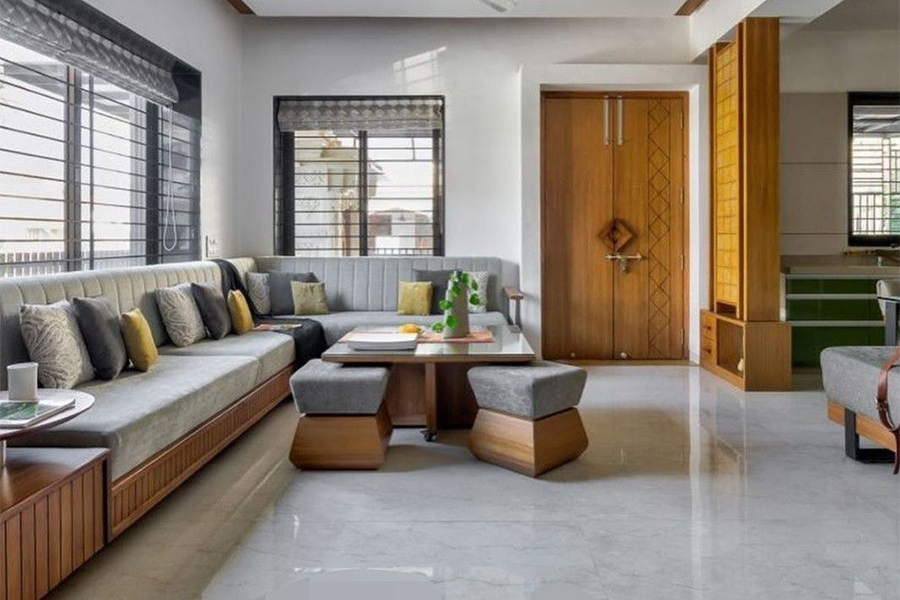
Above 32°C, genuine leather becomes uncomfortable. Above 35°C, most people stand up from it quickly.
Fabric does not heat up the same way. It may feel warm, but it does not trap body heat against your skin the way leather does.
The direct answer: if your living room does not have consistent AC and reaches peak summer temperatures, fabric is the only sensible choice for comfort. No other consideration overrides this one.
Buyers Thinking Long Term

At year five, well maintained genuine leather looks better than almost any fabric sofa at the same price. Leather develops a patina it ages with purpose. Fabric, even good quality fabric, begins to pill, thin, and lose its original texture by this point.
At year ten, genuine leather sofas are still presentable. Fabric sofas at the same price are usually replaced.
The cost per year calculation changes the picture. A ₹1,20,000 genuine leather sofa lasting twelve years costs ₹10,000 per year of ownership. A ₹40,000 fabric sofa replaced at year six costs the same annually. Long term, leather is rarely the expensive choice it appears to be at point of purchase the sticker price misleads most buyers. Most people comparing leather or fabric sofa costs are comparing a ten year product against a six year one without realising it.
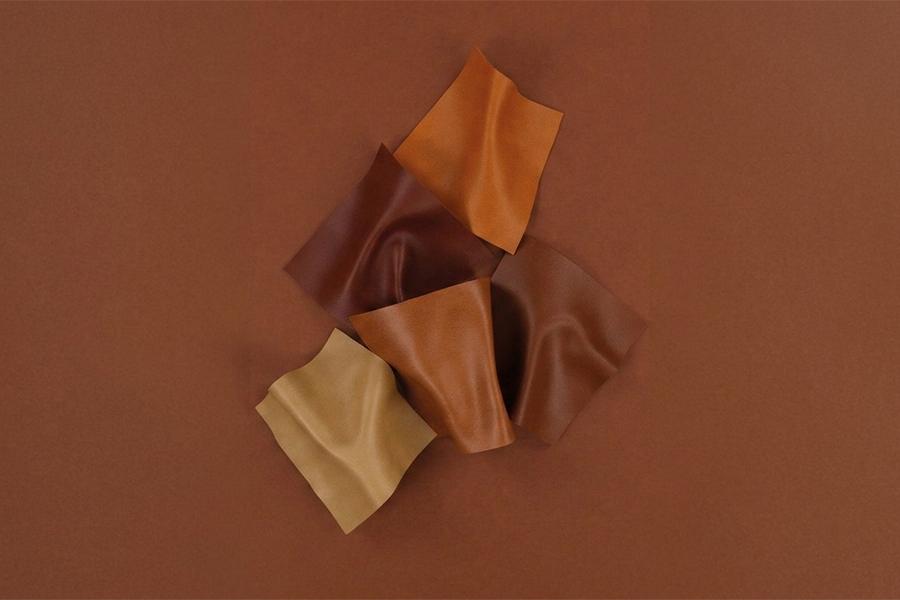
Most sofas sold as "leather" in India are not leather. They are PU leather a polyurethane coated material that looks convincing for the first two to three years, then begins to peel, crack, and flake at the seams and edges.
Bonded leather is worse. It is reconstituted leather scraps bound with adhesive and coated on top. It peels faster than PU and cannot be repaired or refinished.
Genuine leather full grain or top grain is a different product entirely. It costs more, ages well, and does not peel.
Before buying any "leather" sofa in India, ask these exact questions: Is this full grain, top grain, PU, or bonded? What is the backing material? Most retailers will not volunteer this information. If the answer is vague, assume PU. That single clarification changes the long term value calculation entirely and affects every recommendation in this guide. It is also the most important question an Indian furniture buyer can ask, because the market is full of PU sold confidently as leather.
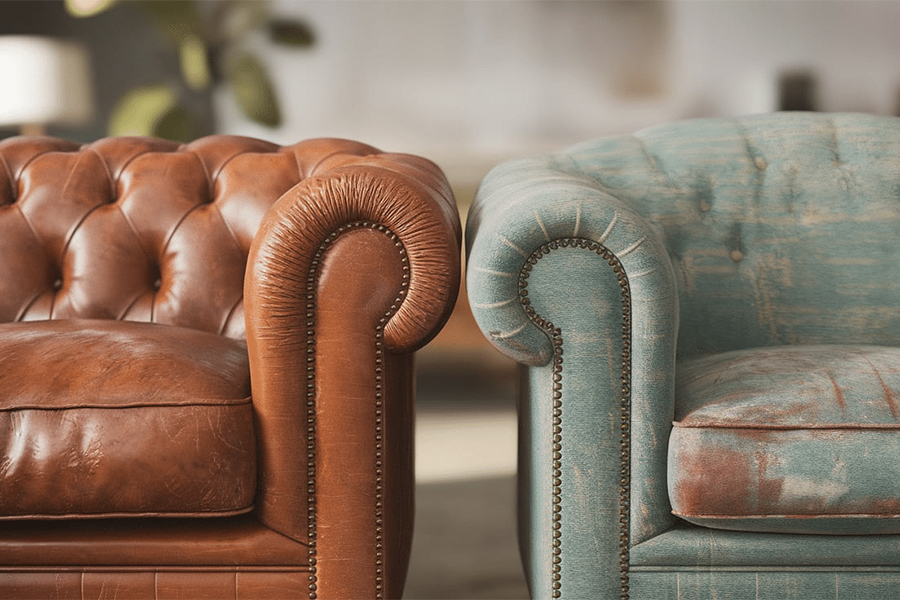
Homes with children under ten → Genuine leather or PU leather. Wipe clean surface is the only practical choice.
Homes with pets → Tightly woven fabric. PU leather with pets ends badly.
No AC, high summer temperatures → Fabric. Every time, no exceptions.
Long term investment buyer → Genuine leather only. Not PU, not bonded.
AC home, no children or pets → Either works. Let design preference decide.
Budget under ₹30,000 → Fabric. Genuine leather does not exist at this price point in India. PU at low prices degrades within three years.
This happens constantly the sofa you love comes in the wrong material for your home.
Fabric sofas with removable, washable covers solve most practical problems: stains, wear, seasonal changes, and shifting needs as the household evolves. Covers can be swapped when children grow up, when the room is repainted, or simply when you want a different look without replacing the sofa. A good fabric sofa with a spare cover set is often more adaptable than a mid range leather purchase, and gives you flexibility that leather in any form never offers.
We will be back with the next blog soon. Till then, stay tuned!
Read More :
Have you ever wondered: Cloud, Boucle, Teddy, or Floor Sofa - which one is right for you?
Image Source: Pinterest, Google, and Wooden Street
A Genuine leather lasts longer - up to twelve or more years with care. Fabric typically needs replacing or recovering within six to eight years
A Only in AC rooms. Without air conditioning, leather traps body heat and becomes uncomfortable above 32°C, making fabric the better choice
A Leather - genuine or PU - wipes clean with a damp cloth. Fabric absorbs spills and requires more effort, especially with children or pets
A No. PU leather is a coated synthetic that peels within three to five years. Genuine leather ages well and can last over a decade with care
A Tightly woven dark fabric. PU leather scratches and peels from claws. Genuine leather holds up better but still shows marks over time
Trending Products
Top Picks from EveryoneArticles you will love to read

Looking for stylish yet space-saving furniture? Discover the best budget sofa cum beds for small apartments in 2026 from Wooden Street. These multifunctional designs combine comfort, storage, and modern aesthetics - perfect for maximizing small spaces without compromising on style or affordability.
Continue Reading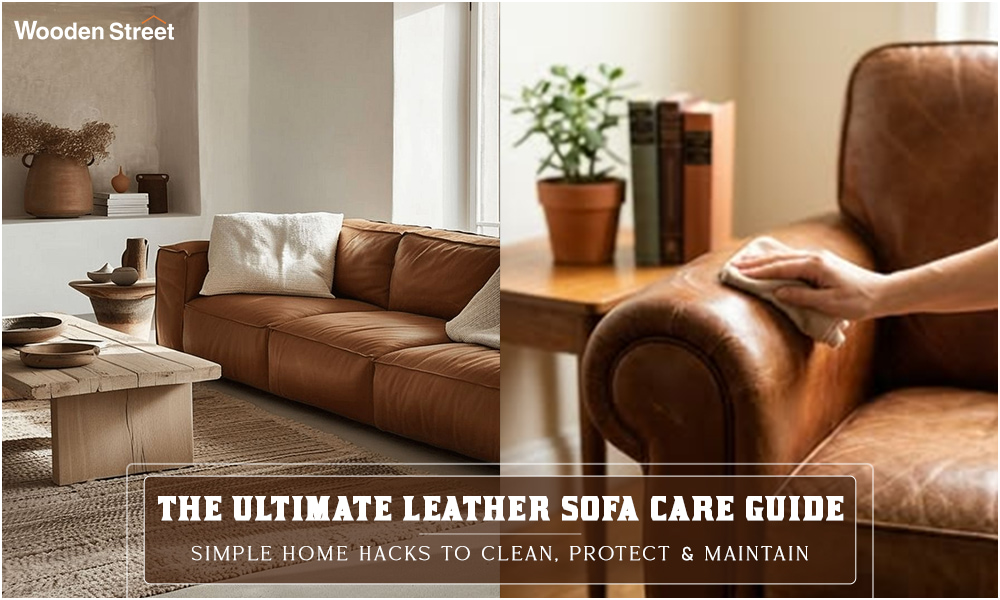
Learn how to clean a leather couch at home with simple steps, stain removal tips, and conditioning methods to keep your sofa looking new.
Continue Reading
Explore every type of sofa with this complete guide. From L-shaped sectionals to sofa cum beds and recliners, find out which sofa type actually works for your room size, lifestyle, and daily use
Continue Reading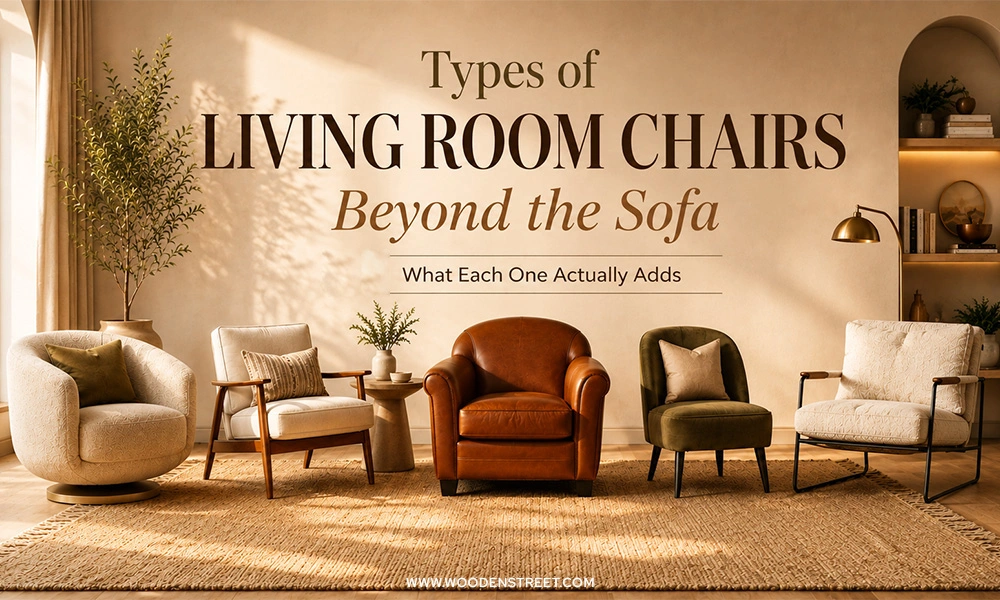
A well-designed living room needs more than just a sofa. This guide explores different types of living room chairs, from accent and lounge chairs to recliners and armchairs. Learn how various kinds of living room chairs and types of sitting room chairs add comfort, style, flexibility, and functionality to your space.
Continue Reading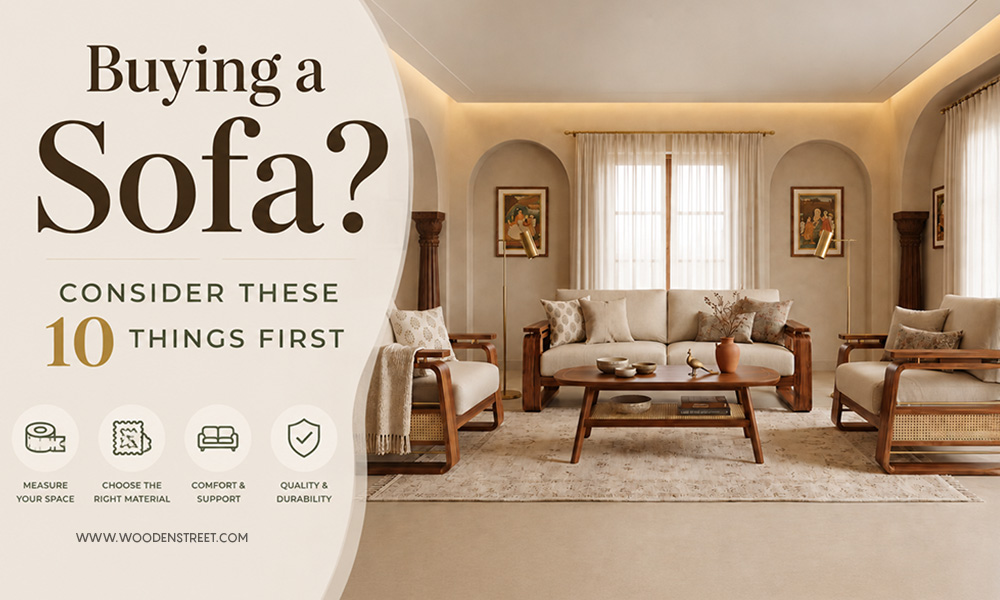
Buying a sofa involves more than choosing a design you like. This guide covers the most important factors people often overlook, including dimensions, upholstery, frame quality, seating comfort, maintenance, and room layout, helping you make a practical investment that suits your lifestyle and space
Continue Reading


