




From living rooms and dining areas to offices and outdoor spaces, understanding the various styles of chairs helps you choose the right seating for every need. This guide explores chair categories, their defining features, and the practical differences that set them apart across residential and commercial environments
A chair is one of the most common objects in any home. It's also one of the most misunderstood when it comes to buying.
Most people pick a chair based on how it looks in a photo or how it feels in thirty seconds at a store. Neither of those tells you whether a chair is actually right for the way you'll use it how long you'll sit in it, what position your body will be in, and what the chair needs to do for the room it lives in.
Get that match wrong and even an expensive, well made chair becomes something you avoid sitting in. Get it right and a chair becomes one of the most used, most appreciated pieces of furniture in your home.
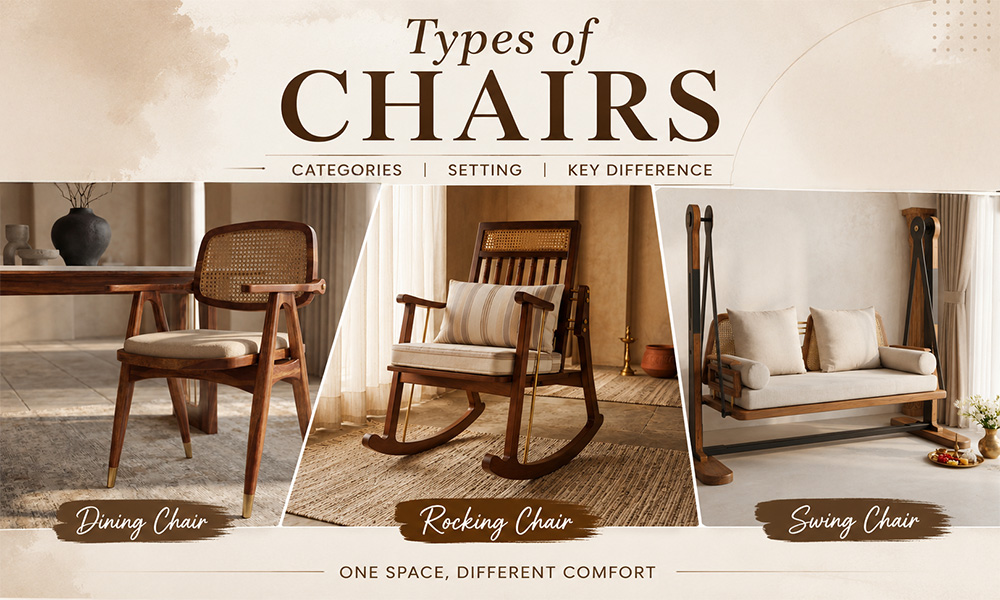
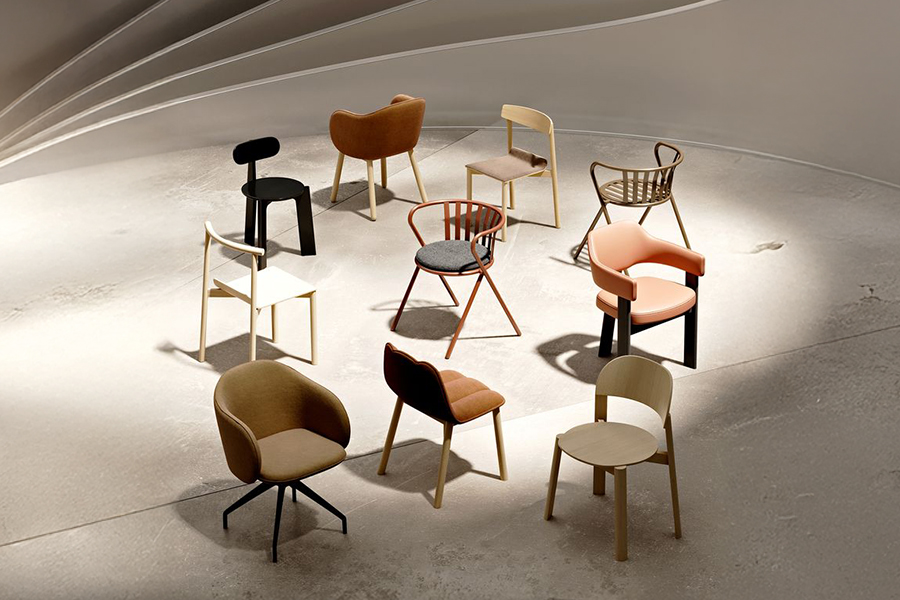
There are many different types of chairs dining chairs, office chairs, recliners, accent chairs, outdoor chairs, and everything in between. Each category was designed around a specific body position, a specific duration, and a specific purpose. This guide covers all of them clearly, so you know exactly what you're choosing and why.
Before getting into specific chair types, this distinction matters more than most buyers realise.
A dining chair and a lounge chair are both chairs. They both have four legs, a seat, and something supporting your back. But they are designed around completely different bodies, positions, and purposes.
A dining chair is designed for upright sitting back straight, feet flat on the floor, body oriented toward a table. You sit in it for 30 to 60 minutes, eat a meal, and leave. It doesn't need to be deeply cushioned because deep cushioning at a dining table is actually uncomfortable.
A lounge chair is designed for exactly the opposite reclined position, body at ease, sustained sitting over hours. If you sat in a dining chair for three hours the way you sit in a lounge chair, your back would know about it. If you tried to eat a meal in a lounge chair, your shoulders would be somewhere around ear level relative to a standard table.
Every chair type on this list was built around a specific use. Knowing that use before buying is what separates a chair that works from one that just fills space.
These chairs are designed for active, attentive sitting back straight, body oriented toward a task, engagement with something in front of you.
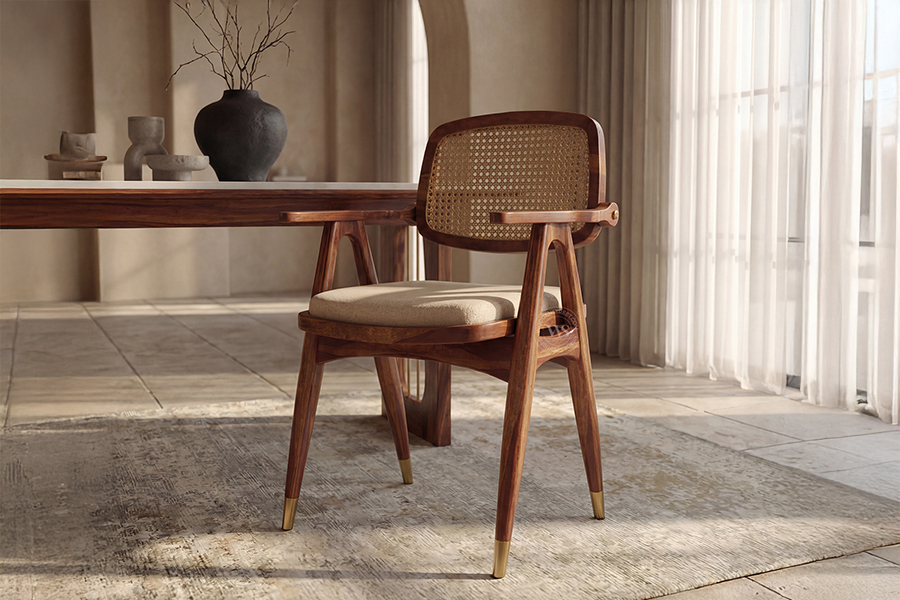
The dining chair has one specific job: to seat a person comfortably at a dining table for the duration of a meal.
That determines everything about its design. The seat height matches a standard dining table typically 45 to 48 cm from the floor. The back is straight or very slightly angled rather than deeply reclined, because a reclined position at a dining table puts your shoulders and elbows at awkward heights. The cushioning is firm enough to support upright sitting without creating the kind of deep sink that makes getting in and out of the chair difficult over a meal.
Dining chairs are not designed for extended lounging and when people complain that a dining chair is "uncomfortable," what they often mean is that it's uncomfortable for sitting in for three hours after the meal is over. That's not a failure of the chair. That's using the wrong chair for the wrong purpose.
For styles of chairs at a dining table, the range is genuinely wide upholstered and wooden, with or without armrests, Scandinavian, traditional, industrial, cane backed. The style choice is aesthetic. The seat height and firmness are functional get those right first.
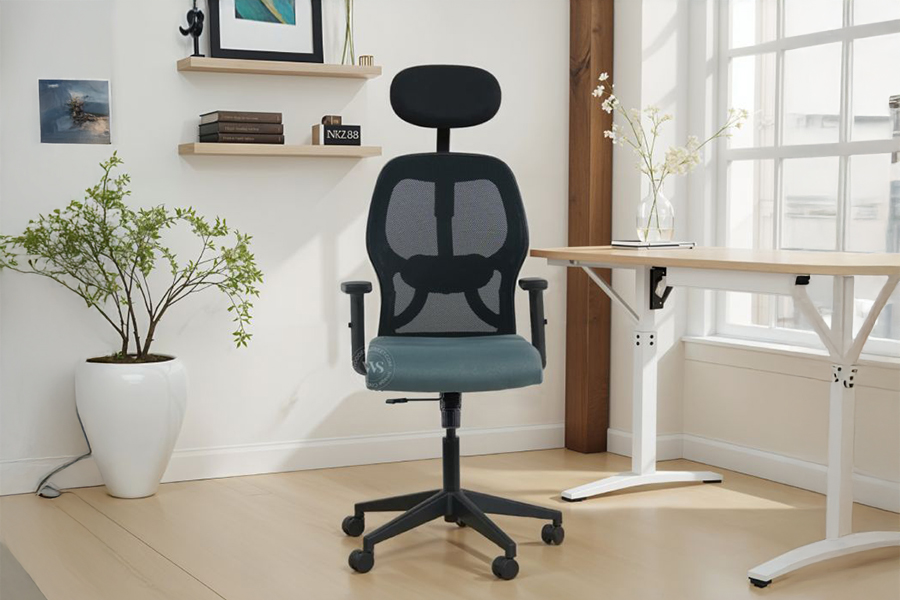
The office chair is the most mechanically complex chair in most homes and for good reason. It's the only chair type designed around 4 to 8 hours of continuous daily use.
Height adjustment is the baseline feature the seat needs to be set so your feet sit flat on the floor and your thighs are roughly parallel to it. Lumbar support matters because without it, the lower back rounds after an hour of sitting and the fatigue that follows compounds across a full working day. Wheels allow movement without constant standing and sitting in a home office or work setting, this is more useful than it sounds.
With so many people working from home in India now, the office chair has become one of the most important pieces of furniture in the home. And one of the most under invested in people spend significantly on desks and significantly less on the chair they sit in for eight hours a day, which is exactly backwards in terms of what affects their body.
Armrest height, seat depth, backrest angle all of these should be adjustable in a chair used for long working hours. A fixed position office chair is a compromise from day one.
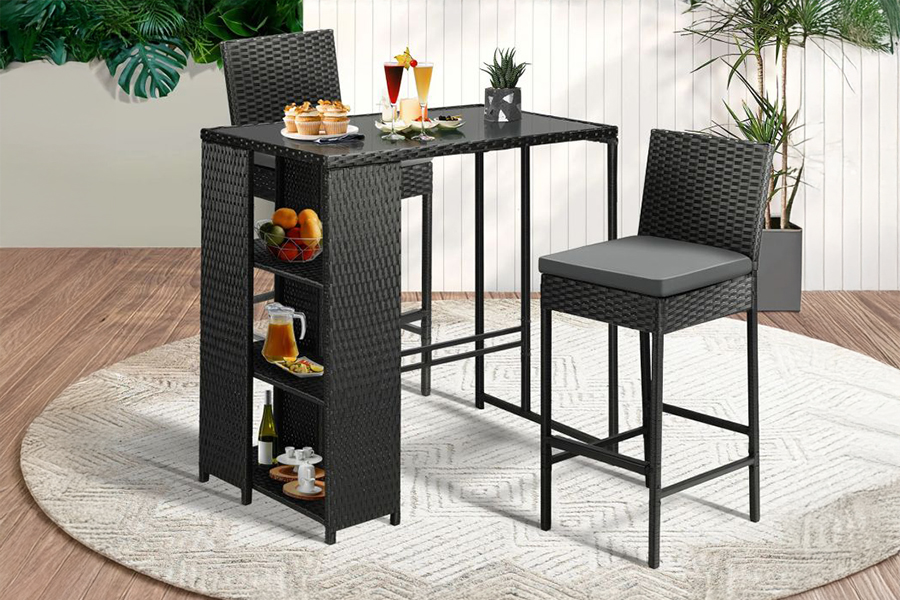
A bar stool is simply a chair with a tall seat height designed to match a kitchen counter, a bar counter, or a high dining table, rather than a standard dining table.
The seat height is typically 65 to 75 cm depending on the counter it's meant to pair with always measure the counter height before buying rather than assuming standard sizing will match.
Bar stools come with and without backs, and with and without footrests. The footrest position is more important than most buyers consider. When you sit at a tall counter, your feet don't reach the floor so the footrest is what your feet rest on. A footrest placed at the wrong height puts your legs at an angle that becomes uncomfortable within twenty minutes. Check that the footrest height works for the people who will actually be using the stool.
Backless bar stools look cleaner and take less visual space. Backed bar stools are more comfortable for extended sitting. Choose based on whether the stools are casual perch seating or everyday meal seating the duration determines which matters more.
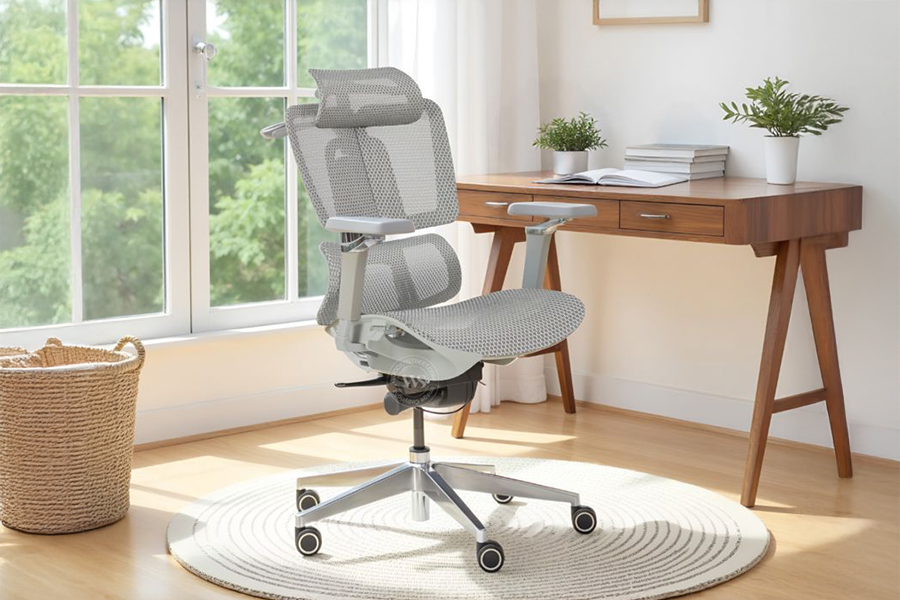
A study chair is close in design to an office task chair but typically simpler in its adjustability designed for a student at a fixed height desk rather than an adult in a customisable workstation.
The key priorities are still the same: seat height appropriate for the desk, back support that encourages upright posture rather than slumping, and enough cushioning for 2 to 4 hour sitting sessions without discomfort.
Where study chairs often fall short is lumbar support. Many chairs marketed to students prioritise price over ergonomics, resulting in a straight back panel that provides no curve support for the lower spine. For young people in formative years spending several hours daily at a desk this is worth taking seriously. A chair with basic lumbar contouring is not significantly more expensive and makes a real difference over a full academic year.
These chairs shift the body into a more relaxed position back angle opens, pressure distributes differently, the body moves from task mode into rest mode.
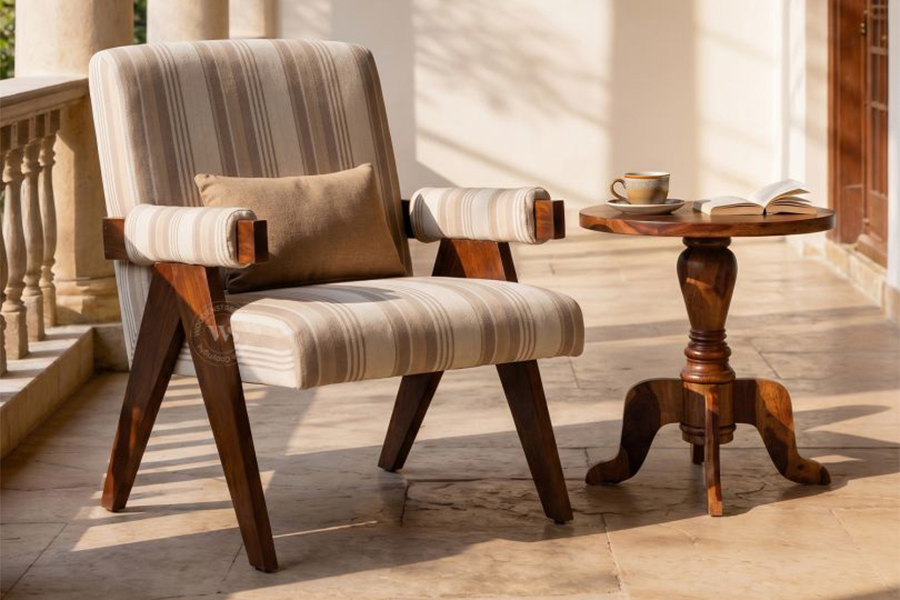
The lounge chair is the most committed relaxation chair in a home. Deep seat, generous cushioning, back angled noticeably further than upright everything is calibrated for extended sitting over hours rather than minutes.
It is not a chair you use to eat, work, or sit in attentively. It's a chair you settle into. Reading, unwinding, watching something at a distance the lounge chair is designed for the moments in a day when you genuinely stop doing things.
In living rooms, the lounge chair becomes a specific person's chair within weeks of arriving. The one spot in the room that belongs to one person, quietly and without negotiation. If you know that person's habits give them a lounge chair. It will be used every single day.
Pair it with a side table at arm height and a lamp positioned over the shoulder for reading. Give it some space from the main sofa grouping so it feels like its own zone rather than overflow seating. Positioned right, a lounge chair makes a room feel designed rather than simply furnished.
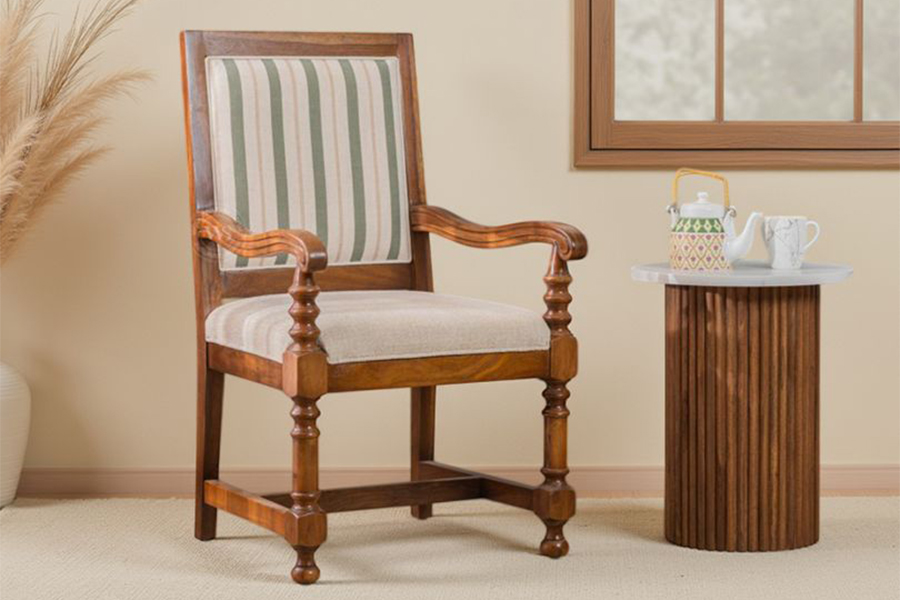
The armchair sits between a dining chair and a lounge chair in how it positions the body upright enough for conversation and alertness, but cushioned and supportive enough for extended sitting without fatigue.
Armrests are the defining feature. They allow the shoulders to drop and the arms to rest rather than hover which sounds small but makes a significant difference in how relaxed the body feels over time. A chair without armrests requires the shoulders to hold tension continuously. An armchair lets them go.
In living rooms, armchairs work as companion seating to a sofa one or two placed at angles to the sofa create a proper conversation arrangement rather than the theatre layout where everyone faces the TV in parallel. In bedrooms, a single armchair in a corner creates a reading spot that draws you away from the bed without leaving the room.
Among the different kinds of chairs in a living room, the armchair is the most versatile dressed up in a bold fabric it's an accent piece, in a neutral tone it's quiet background seating, in leather it's a statement. The shape is forgiving enough to carry almost any aesthetic direction.
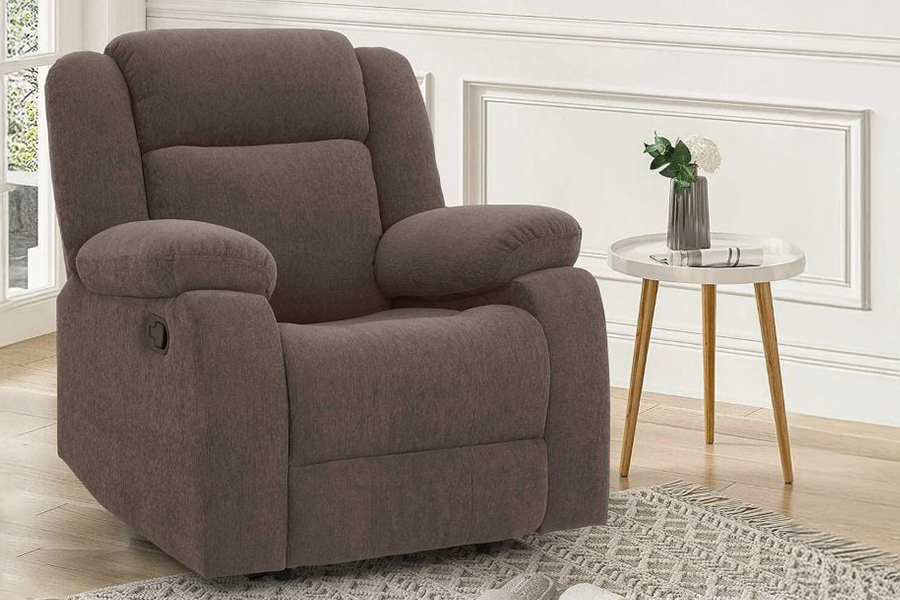
The recliner takes the lounge chair's comfort approach and makes it active rather than passive. The back angle adjusts mechanically. A footrest extends from the base. You can move from fully upright to nearly horizontal and stop at any point in between based on exactly what you want at that moment.
This active adjustment is what separates the recliner from every other chair on this list. A lounge chair gives you one comfortable position. A recliner gives you a continuous range upright for conversations, semi reclined for TV, fully back for an afternoon rest. All from the same piece.
The practical thing most people miss: recliners need clearance. The back of the chair needs space behind it to recline, and the footrest needs space in front of it to extend. A recliner pushed against a wall is permanently stuck upright. Measure your space and check the manufacturer's recline clearance specification before ordering it's usually 30 to 45 cm behind the chair at full recline.
Among the chairs different types of buyers specifically seek out, recliner shoppers are usually the clearest about what they want. They want maximum comfort for extended sitting. The recliner delivers on that consistently when sized and positioned correctly.
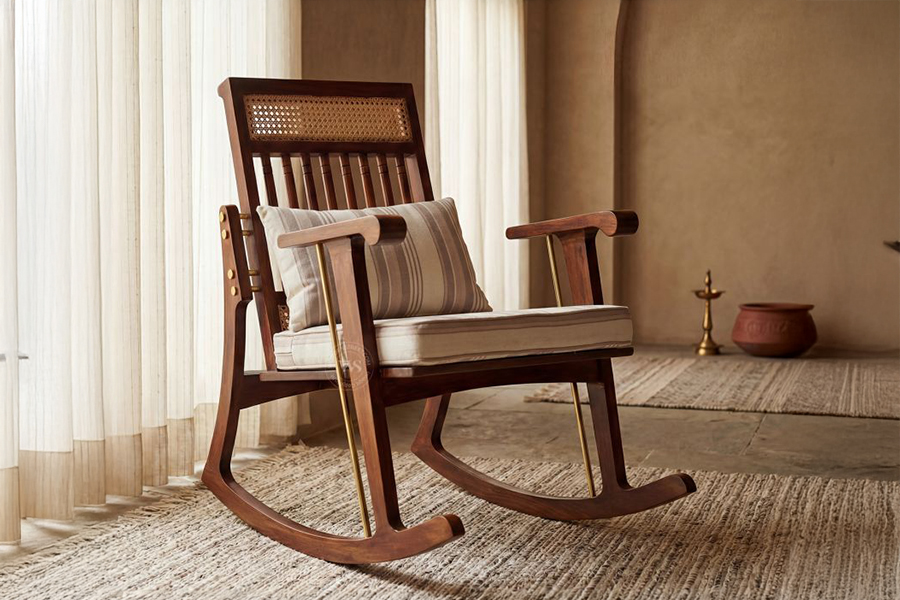
The rocking chair is built on a curved base that keeps the chair in constant gentle motion as long as you're sitting in it or gives it a push. It takes no effort to maintain. You simply sit and the motion continues.
That motion does something measurable. The rhythmic rocking activates the vestibular system the same mechanism that makes a moving car or a rocking boat feel calming. Stress reduces. Alertness softens. It is not coincidental that the same motion is used instinctively to soothe infants.
For reading corners, balconies, and verandas the rocking chair is one of the most underused choices in Indian homes. Most families have a clear memory of a rocking chair somewhere in their childhood a grandparent's home, an older house and yet it rarely makes it into modern apartments.
It suits both traditional wooden interiors and, in its contemporary forms, modern living rooms and outdoor spaces. A cane or moulded rocking chair on a balcony with morning light is one of the more genuinely pleasant sitting experiences available without leaving home.
These chairs are chosen as much for what they contribute visually to a room as for the seating they provide.
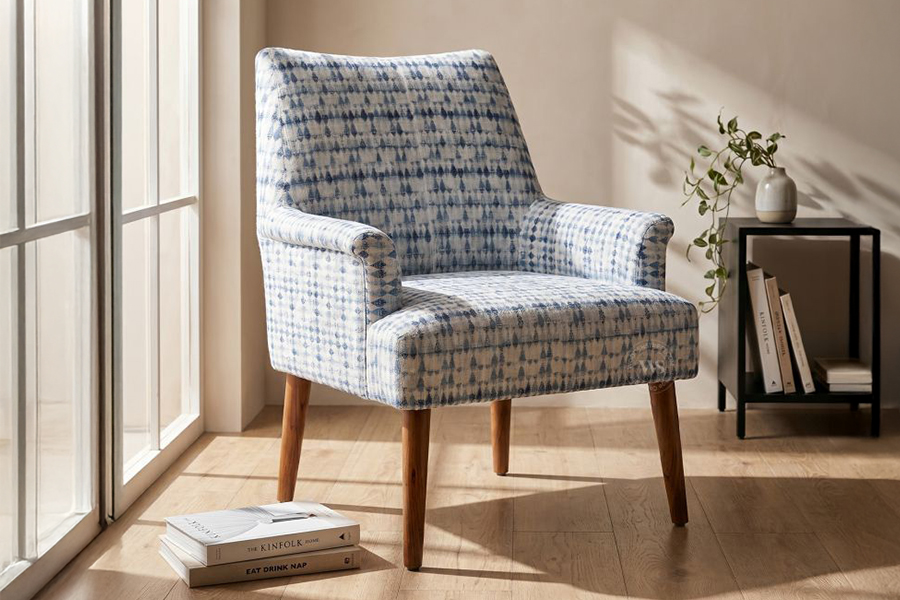
An accent chair is defined by its relationship to the rest of the room specifically, a deliberate contrast to it. Different colour from the sofa. Different material. Different style, sometimes even a different era. The accent chair is the room's conscious curveball, placed to create visual interest rather than visual uniformity.
Done well, one accent chair changes the entire character of a room. A grey sofa with a terracotta accent chair. A neutral sectional with a velvet occasional chair in deep blue. The accent chair is what separates a room that feels styled from one that just has matching furniture in it.
The rule for making it work: contrast in one quality, echo in another. Contrast the sofa's colour but pick up something from the rug. Contrast the material but maintain the general style era. One shared visual thread makes the contrast feel intentional rather than accidental.
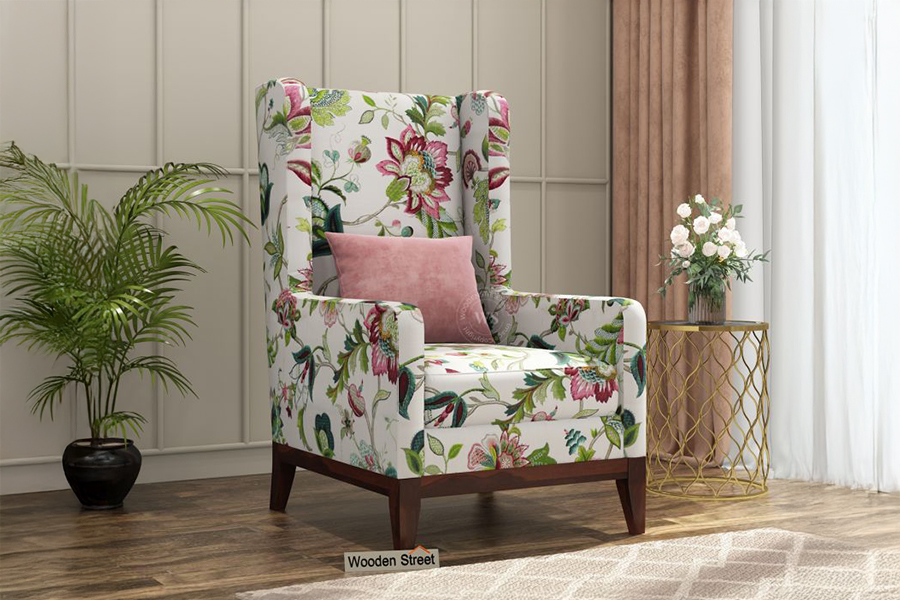
The wingback chair has a distinctive silhouette a tall back with panels that curve forward from either side, forming the "wings." Originally designed centuries ago to block cold draughts beside fireplaces in European homes, the shape has outlasted its original purpose entirely.
What the wings actually do in a modern room is create enclosure. Sitting in a wingback feels slightly more private than sitting in an open backed chair, even in a room full of people. The high back also gives the chair strong visual presence it holds a corner or a wall without needing anything around it.
In Indian living rooms, a wingback in a rich fabric a jewel toned velvet, a geometric block print, a textured solid placed beside a bookshelf or near a window is one of the most reliably effective accent chair choices. It doesn't need to match the sofa. It just needs to be placed with intention.
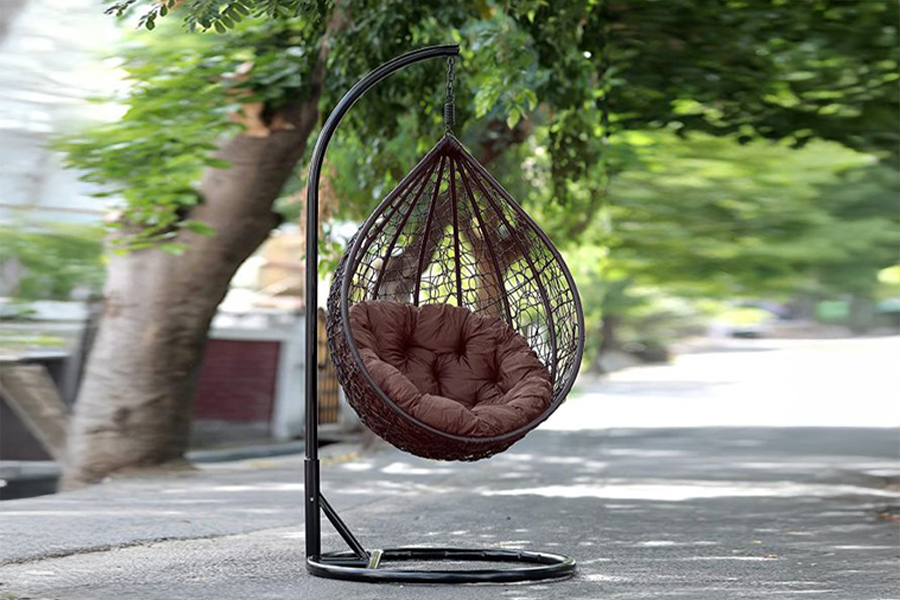
The egg chair takes enclosure further than any other chair type. The back wraps completely around the sitter over the head, down both sides creating a pod. A room within a room.
The effect is real. The enclosure softens ambient sound, reduces peripheral visual distraction, and creates a genuine sense of separation from the space around it even when that space is an open plan living room with other people in it. For someone who wants to read, think, or simply exist in their own world without physically leaving the room, the egg chair provides something no other chair can.
It is also unmistakably an object. There is no unobtrusive egg chair. It changes a room's identity the moment it enters which is either exactly the point or a reason to choose something else depending on what you want from the space.
These chairs are built for environments and occasions that indoor chairs aren't designed to handle.
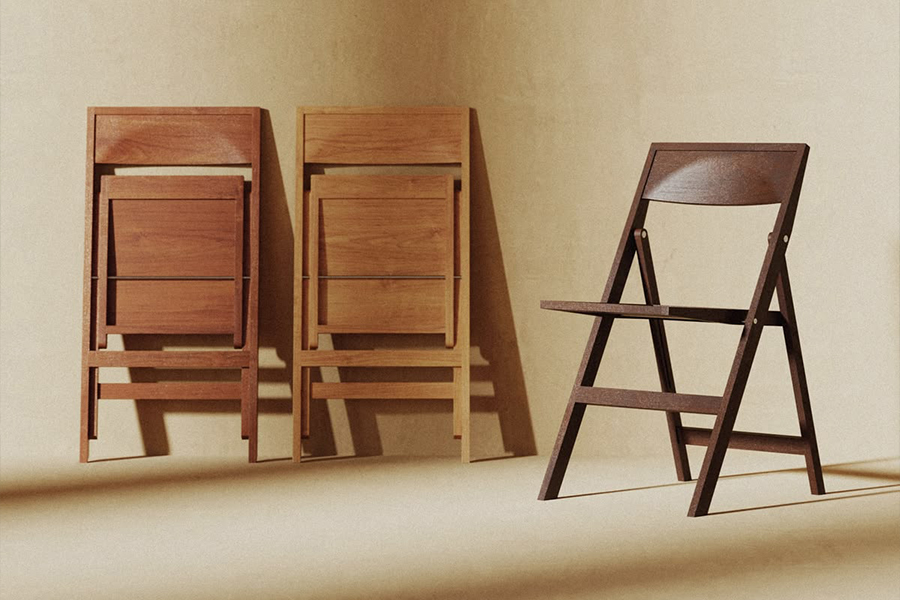
The folding chair is the most practical occasional seating solution available. It folds completely flat, stacks easily, stores in almost no space, and can be deployed in any room or outdoor area in seconds.
It is not designed for daily extended sitting the seat is usually firm and non adjustable, and the structure prioritises portability over ergonomic support. For a dinner party, a gathering, a temporary workspace, or any situation where you need more seating than the room is set up for folding chairs solve the problem cleanly.
Quality matters more than the product category suggests. A cheap folding chair that flexes, wobbles, or pinches fingers in the fold mechanism is worse than no folding chair at all. A well made one with a stable frame, a decent seat surface, and a smooth fold lasts years and earns its storage space.
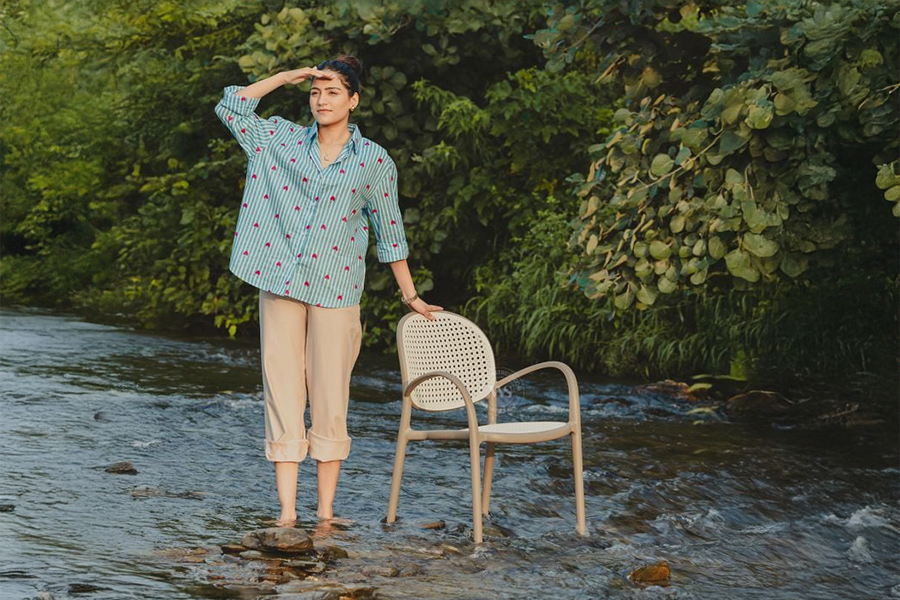
The main question with any outdoor chair is not aesthetics it's materials. What something is made of determines how it handles Indian outdoor conditions: direct sun, monsoon rain, humidity, and the drying effect of prolonged heat.
Teak is the benchmark outdoor wood its natural oil content means it weathers gracefully without treatment, though occasional oiling maintains the colour. Powder coated metal resists rust well if the coating is intact; chips and scratches need prompt attention before corrosion sets in underneath. Synthetic rattan not natural handles rain and sun without degrading; natural rattan outdoors in Indian conditions deteriorates within a season or two. Plastic and resin chairs require the least maintenance and handle moisture completely, at the cost of visual quality.
Among the types of chairs for outdoor use, the right choice depends on how much maintenance you're willing to do and how long you want the furniture to last. Teak costs more upfront and lasts longest. Resin costs least and asks nothing of you in return.
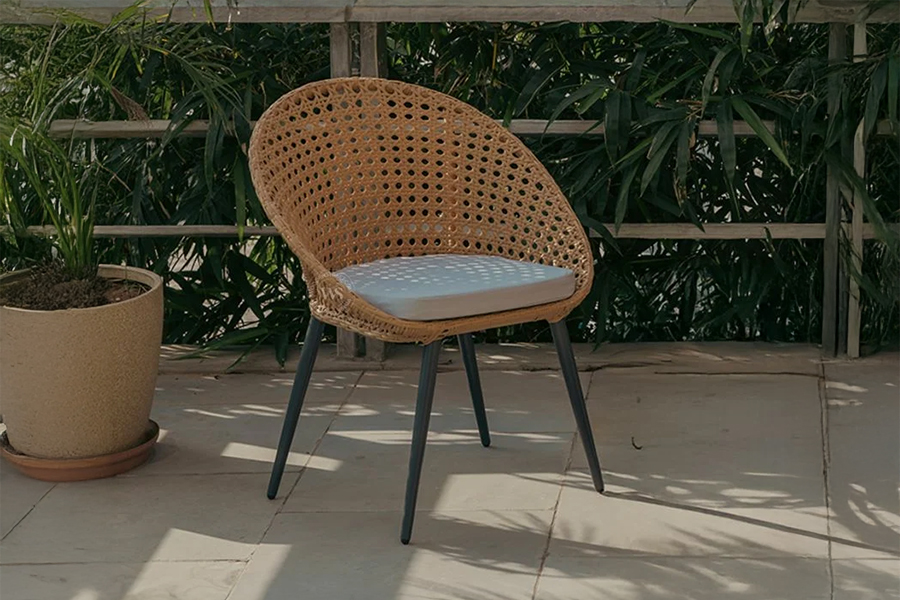
The balcony chair occupies a specific space in Indian homes the one outdoor area most apartment dwellers actually have. It needs to work harder than a garden chair because a balcony is typically used daily, not occasionally. It's where morning chai happens, where evenings are wound down, where a book gets read on the weekend.
That daily use means the balcony chair needs to be comfortable enough for genuine extended sitting, not just occasional perching. A flat plastic chair gets the job done but does nothing for the experience. A well chosen balcony chair a compact rattan armchair, a folding wooden chair with a cushion, a small rocker turns a balcony from a space you pass through into one you actively choose to spend time in.
Material still matters for weather resistance, but compactness matters too. Most Indian balconies are small, and a chair that takes up too much space makes the balcony feel like an obstacle course. Look for chairs with a small footprint that still allow the back to rest fully and the body to actually settle in.
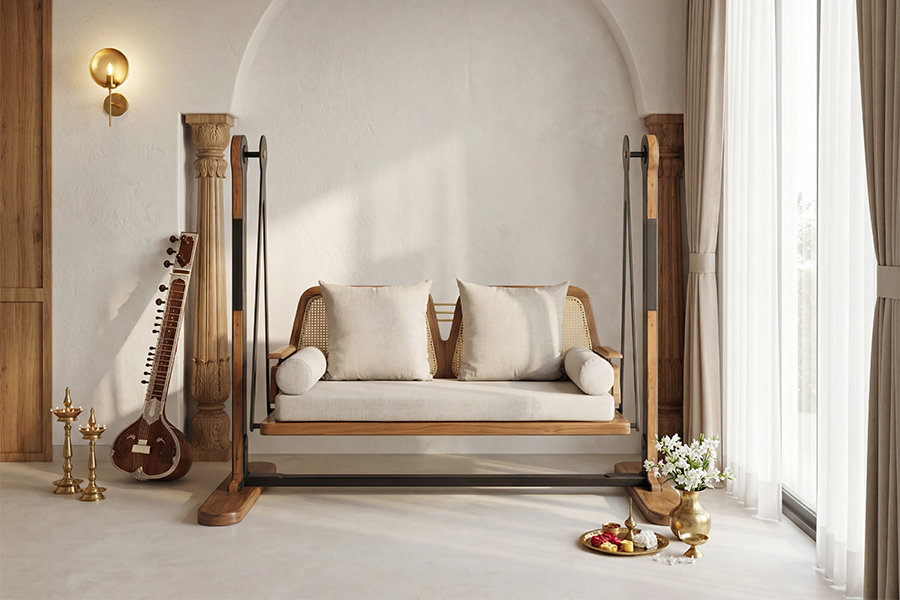
A swing chair is suspended from a ceiling beam, a wall mounted bracket, or a freestanding frame and moves freely. The motion is gentle and continuous, requiring no effort to maintain. You simply sit and it moves.
The effect of that motion is the same as a rocking chair rhythmic movement activates the vestibular system, stress decreases, alertness softens. For balconies, reading corners, and covered outdoor spaces, the swing chair creates an experience that no static chair replicates.
Practically, the suspension point matters more than the chair itself. A ceiling mounted swing chair needs to anchor into a solid beam or joist not just drywall. A freestanding swing frame takes care of that concern but requires more floor space. Verify the load rating of both the chair and the mounting before buying, and never exceed it.
For Indian balconies specifically, a hanging rattan swing chair has become one of the more popular additions in recent years and the popularity is earned. It transforms how a balcony feels within the first week of use.
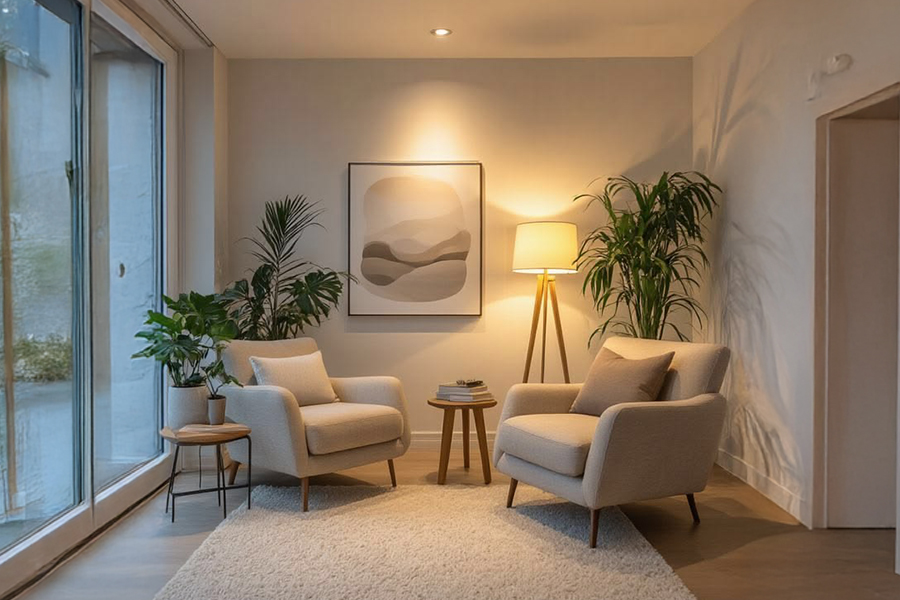
Seat height. Specifically, seat height relative to your own leg length.
This is the single most important measurement in chair comfort and the one almost nobody checks before buying.
A chair with a seat height that's too tall for the user puts the feet dangling above the floor, which transfers weight to the backs of the thighs and cuts circulation. Within twenty minutes, the legs go uncomfortable. Within an hour, they go numb.
A chair with a seat height that's too low drops the knees above hip level, which compresses the hip flexors and tilts the pelvis forward. The lower back takes the strain. Over extended sitting, this is the position that produces the kind of chronic back pain that people blame on "bad posture" without ever connecting it to the chair.
Standard dining chair seat height is around 45 to 48 cm. Standard office chair height is adjustable across a range. Lounge and accent chairs vary enormously and many imported designs are calibrated for average Western body proportions, not Indian ones.
Before buying any chair you'll sit in for extended periods: measure the distance from the floor to the back of your knee while standing. That measurement is roughly where your seat height should land. Check the product spec. If it's not listed, ask. A chair that fits your body is comfortable. A chair that doesn't regardless of price, padding, or how good it looks will be one you stop using.
Every chair on this list was designed around something specific a body position, a duration, a purpose, an environment. When the chair matches the use, it works. When it doesn't, no amount of good design or expensive upholstery fixes it.
Upright chairs for tasks and meals dining chairs, office chairs, bar stools, study chairs. Reclined chairs for rest and extended sitting lounge chairs, armchairs, recliners, rockers. Statement chairs for rooms that need a visual anchor accent chairs, wingbacks, egg chairs. Outdoor and casual chairs for spaces and occasions that standard chairs aren't built for.
And before any of that check the seat height. A well chosen chair that doesn't fit your body is just a good looking problem in the corner.
We will be back with the next blog soon; till then, stay tuned!
Read More :
Do you know types of Living Room Chairs
Image Source: Wooden Street, Google, Pinterest
A A dining chair is designed for upright, task-oriented sitting at a table. An accent chair is chosen for visual contrast and relaxed living room seating.
A An ergonomic office task chair with height adjustment and lumbar support - designed specifically for 4 to 8 hours of continuous daily use.
A A high-backed chair with forward-curving side panels - originally designed to block draughts; now one of the most recognisable traditional accent chair silhouettes.
A Depends on use - a lounge chair or recliner for maximum relaxation, an armchair for versatile daily sitting that balances comfort and posture.
A Teak - its natural oil content resists moisture, sun, and humidity without regular treatment, making it the most durable outdoor chair material in Indian conditions.
Trending Products
Top Picks from EveryoneArticles you will love to read
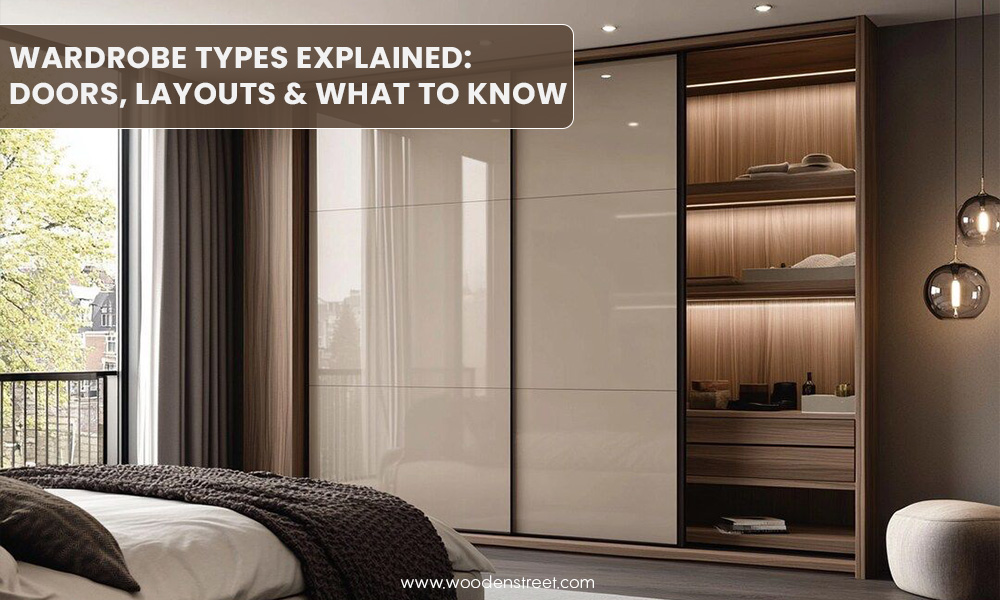
Not all wardrobes are created equal. This guide breaks down the most popular types of wardrobes, compares wardrobe material types, and explains door mechanisms, storage configurations, and space-planning considerations. Learn the pros, cons, and hidden factors buyers often overlook before investing in a wardrobe for their home
Continue Reading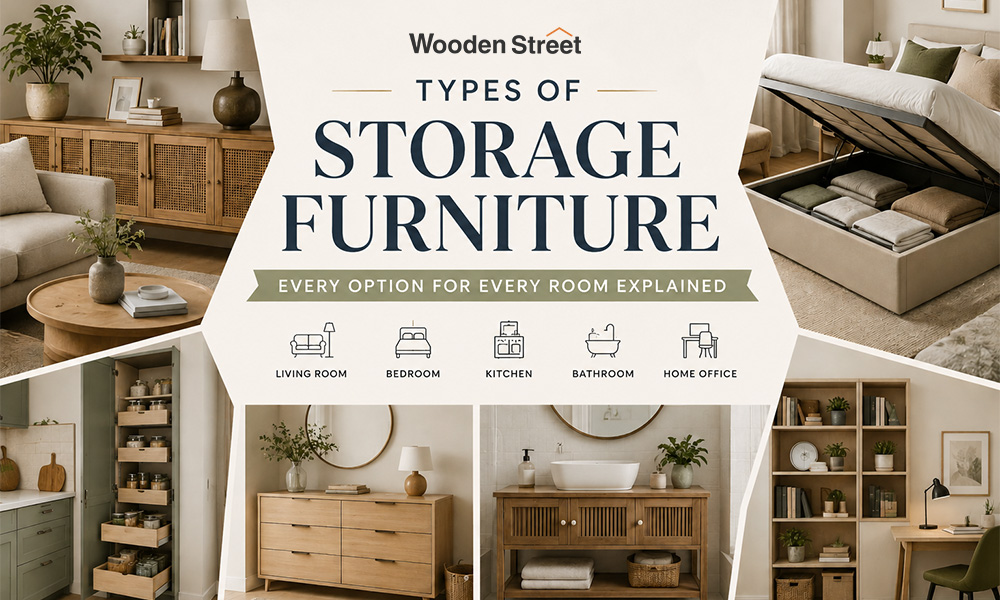
From cabinets and sideboards to storage beds and shelving units, understanding the different types of storage furniture can help maximize space and reduce clutter. This guide explores storage solutions for every room, highlighting their uses, benefits, and key considerations to help you choose the right furniture for your home.
Continue Reading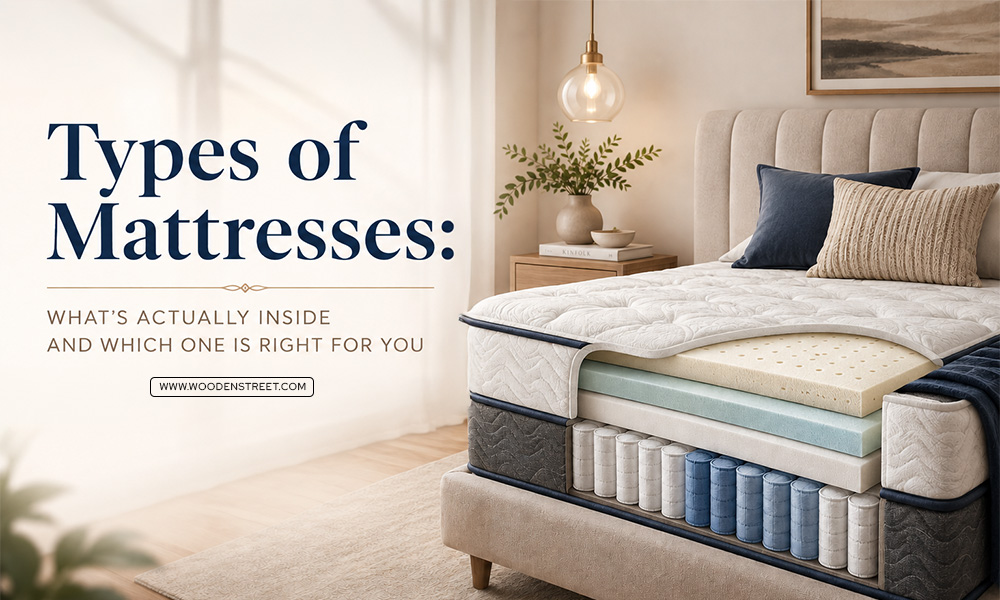
Not all mattresses feel or perform the same. This guide explores the most common types of mattresses, including memory foam, latex, spring, hybrid, and orthopedic options. Learn about different types of mattresses, their construction, comfort levels, durability, and how to choose the best type of mattress for your sleeping style and needs
Continue Reading
Understanding the types of wood for furniture can help you make a smarter investment. This guide compares popular furniture wood names, hardwood types for furniture, and other commonly used materials, explaining their appearance, durability, maintenance needs, and long-term performance so you know exactly what to expect before buying.
Continue Reading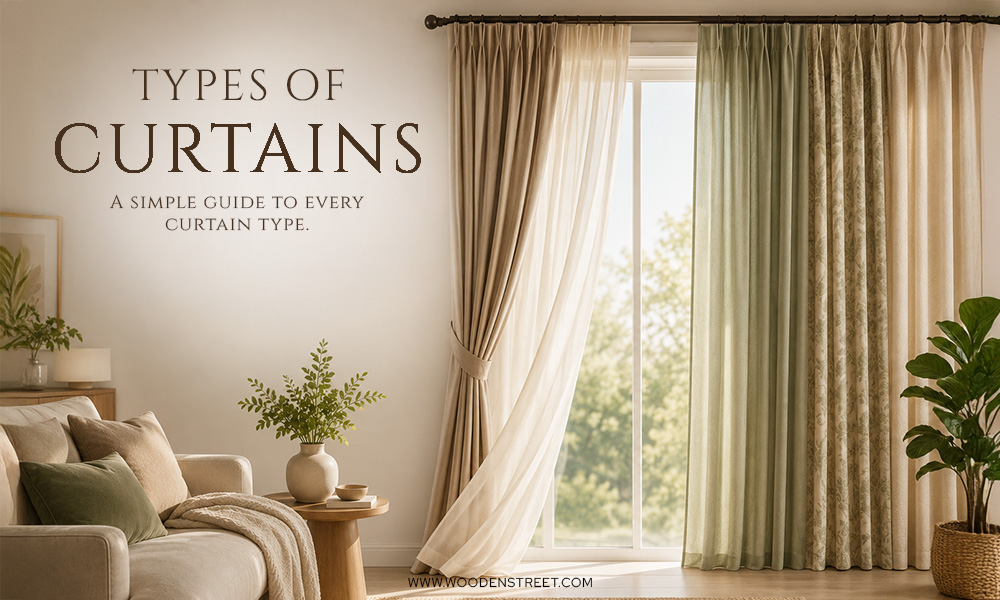
Choosing the right curtains involves more than picking a color. This guide explores different types of curtains, popular fabrics, and practical functions for bedrooms, living rooms, and other spaces. Learn about window curtains types, hanging styles, light control options, and the kinds of curtains best suited to your home’s needs
Continue Reading


