Every Door Mechanism in Wooden Furniture: How They Work, Where They Belong and How to Maintain Them

From hinged and sliding doors to lift-up and soft-close systems, furniture door mechanisms affect accessibility, space efficiency, and user experience. This guide explains how each mechanism works, the furniture types they suit best, and the maintenance practices that help ensure smooth operation and long-lasting durability.
All Types Of Door Mechanism in Wooden Furniture Explained
Table of Content
  1. The Mechanism Is What You Live With Every Day
  2. Category 1: Hinged Door Mechanisms
  3. Category 2: Sliding Door Mechanisms
  4. Category 3: Folding Door Mechanisms
  5. Category 4: Lifting Mechanisms
  6. Category 5: Flap-Down Mechanism
  7. Category 6: Tambour / Roll Mechanism
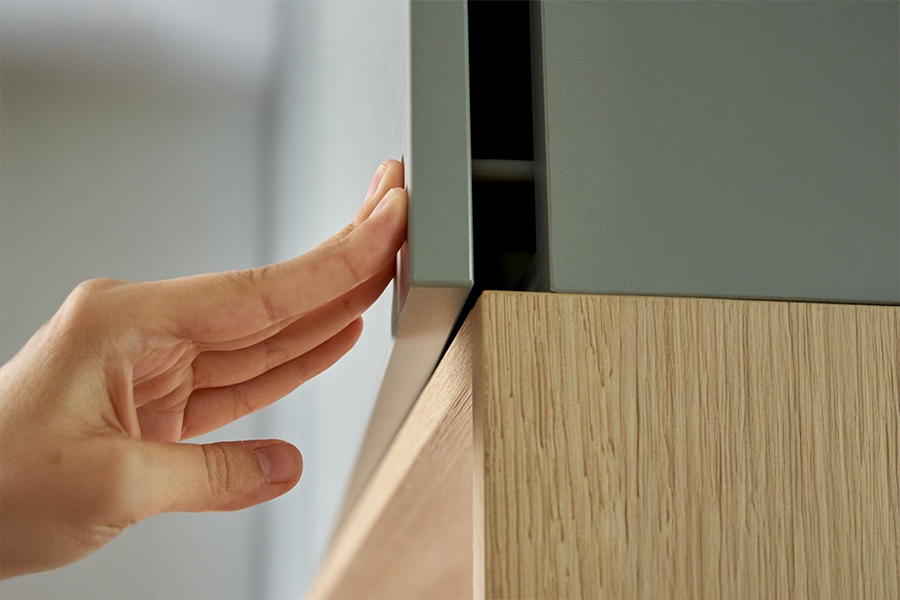
  8. Category 7: Push-Activated Mechanism
  9. Category 8: Passive Latching Mechanisms
  10. Special Door Panel Types
  11. How to Choose the Right Mechanism
  12. Complete Maintenance Reference

You open a wardrobe door a hundred times a week. You probably never think about what makes it open smoothly - or what makes it start squeaking, drooping, or slamming three years in. That thing you never think about? It is the door mechanism. And it matters far more than most people realise when buying wooden furniture.

This guide covers every single door mechanism used in wooden furniture - from the humble butt hinge to the satisfying snap of a push-to-open latch. You will know exactly how each one works, which piece of furniture it belongs to, and how to keep it going for years. Whether you are buying a new wardrobe, replacing a kitchen cabinet hinge, or just trying to figure out why your sideboard door will not stay shut, you are in the right place.
The Mechanism Is What You Live With Every Day

person opening a wooden wardrobe door smoothly showing how a good mechanism makes daily use feel effortless

The wood gives the furniture its beauty - the mechanism determines whether you enjoy using it or tolerate it.

You spend good money on a beautiful wooden wardrobe. The finish is perfect. The colour is exactly right. Then, six months later, a door starts squeaking every single time you open it. Or worse - it swings shut on your fingers. Or it just... droops.

That is a mechanism problem. And it was entirely avoidable.

This guide walks you through every door mechanism used in wooden furniture - what it does, where it works best, and how to keep it running smoothly. Whether you are buying new furniture or fixing what you already own, this is the only reference you need.

Category 1: Hinged Door Mechanisms

Hinges are the oldest and most reliable door mechanisms in furniture. Simple physics - a pivot point - and almost nothing to go wrong. But not all hinges are the same, and picking the wrong one is a surprisingly common mistake.
collection of hinged door furniture pieces showing different hinge types used on wardrobes and cabinets

Standard Butt Hinge

  • Use case: Main doors, solid wood panels, traditional and rustic furniture
  • Durability: Highest - no moving mechanism beyond the pivot; virtually never fails
  • Maintenance: Oil pivot annually; tighten screws every 12 months
  • Choose when: Panel is heavy, aesthetic is traditional, maximum longevity is the priority

brass butt hinge mounted on a solid sheesham wood cabinet door showing its simple and reliable pivot design

This is the grandfather of all hinges. No fancy parts, no adjustments, no fuss. A brass butt hinge on a sheesham door will still be working when everything else in the room has been replaced twice over. If you have heavy solid wood doors, this is your hinge - full stop.
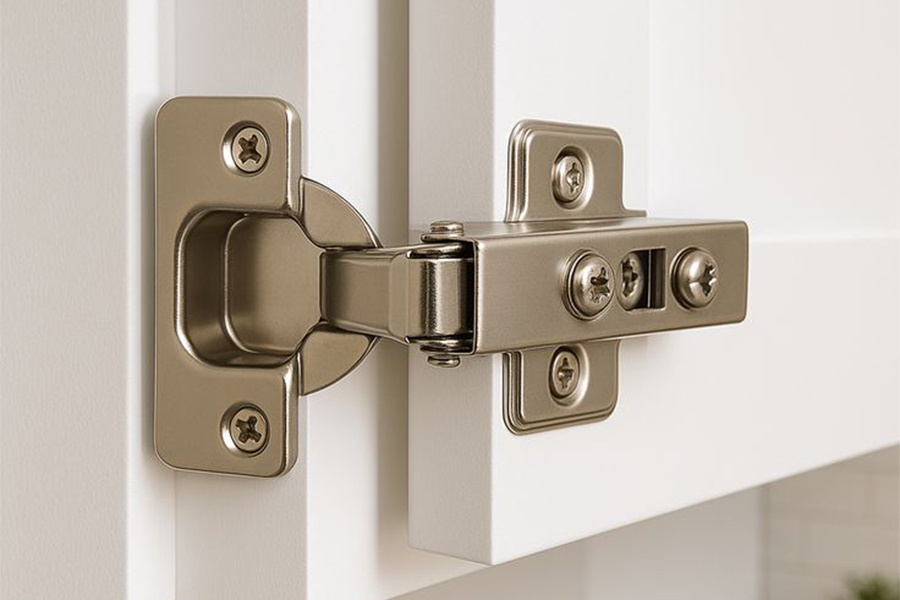
Concealed European Hinge (Cup Hinge)

  • Use case: Wardrobes, kitchen cabinets, all modern modular furniture
  • Durability: High - three-axis adjustment means misaligned doors can be corrected without replacing the hinge
  • Maintenance: Wipe clean; check adjustment screws every 6 months
  • Choose when: No visible hardware on the exterior is the design goal

concealed cup hinge fitted inside a wardrobe door showing how it stays fully hidden from outside view

This is the hinge inside almost every wardrobe and kitchen cabinet made in the last 30 years. You never see it from the outside, and if the door shifts slightly over time, you can nudge it back into place with a screwdriver. Three-axis adjustment is genuinely useful in real life.
Soft-Close Hinge

  • Use case: Bedroom wardrobes, children's furniture, kitchen cabinets - anywhere silent closing matters
  • Durability: Medium-high - damper cartridge is the only wear component; budget versions fail after 30,000–50,000 cycles
  • Maintenance: Replace damper cartridge when door no longer slows before closing - clip-in replacement on most systems
  • Choose when: Noise reduction and controlled closing are priorities

kitchen cabinet door with soft close hinge slowly pulling itself shut in the last few centimetres

Once you have lived with soft-close hinges, going back feels brutal. The door slows itself down for the last few centimetres and closes with almost no sound. The damper cartridge does wear out eventually, but it clips in and out in about 30 seconds.
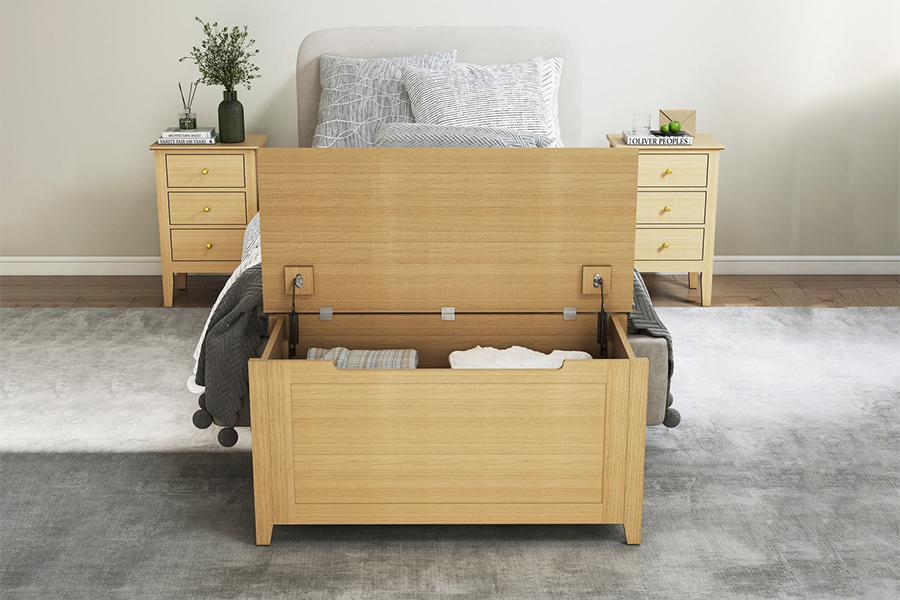
Piano / Continuous Hinge

  • Use case: Lightweight long panels, fold-down desks, blanket box lids, tool cabinet doors
  • Durability: Very high - load distributed across full door length
  • Maintenance: Wipe clean; apply light oil along the full barrel annually
  • Choose when: The door panel is long and lightweight and needs even support across its entire length

full length piano hinge running across a wide blanket box lid spreading the load evenly along the edge

Think of a blanket box lid - it is wide, it is used daily, and it only has two hinge points. Over time, those two points fail. A piano hinge runs the full width and spreads the load evenly. Much smarter engineering for lightweight long panels.
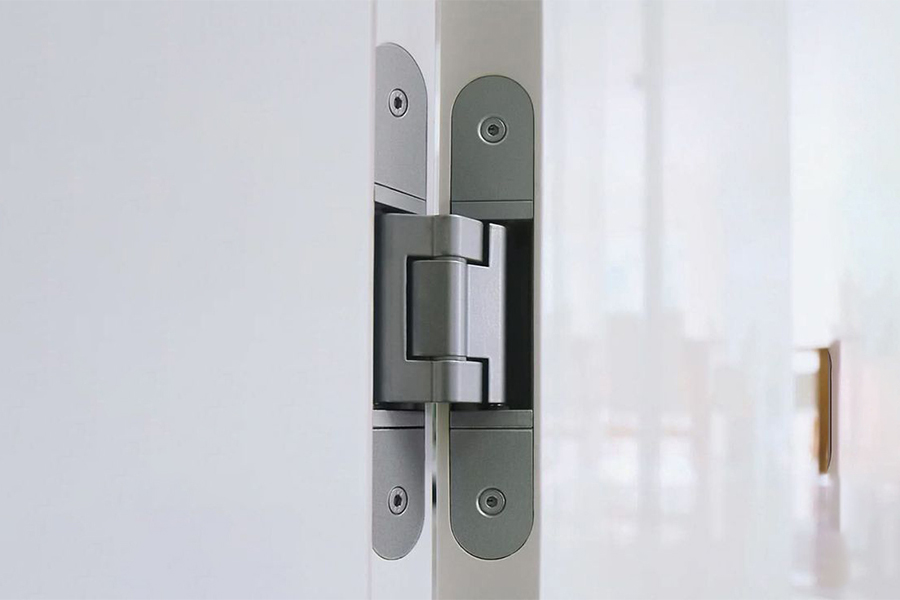
Pivot Hinge (Central Axis)

  • Use case: Statement cabinet doors, architectural furniture, high-end interiors
  • Durability: High - top and bottom pivot points distribute weight evenly; no side stress on the frame
  • Maintenance: Lubricate top and bottom pivot annually; check floor pivot for debris
  • Choose when: A door that rotates from its centre is the aesthetic or functional goal

statement cabinet door rotating from its centre point on a pivot hinge in a high end furniture piece

A pivot door is a genuinely different experience. It rotates from the centre rather than the edge, which means wider doors feel surprisingly light. On high-end or statement furniture, pivot hinges are as much a design feature as a functional one.

Category 2: Sliding Door Mechanisms

Sliding doors solve one very specific problem: you do not have enough floor clearance in front of the furniture for a door to swing open. In bedrooms, small apartments, and fitted wardrobes, sliding mechanisms are not a compromise - they are the right choice.
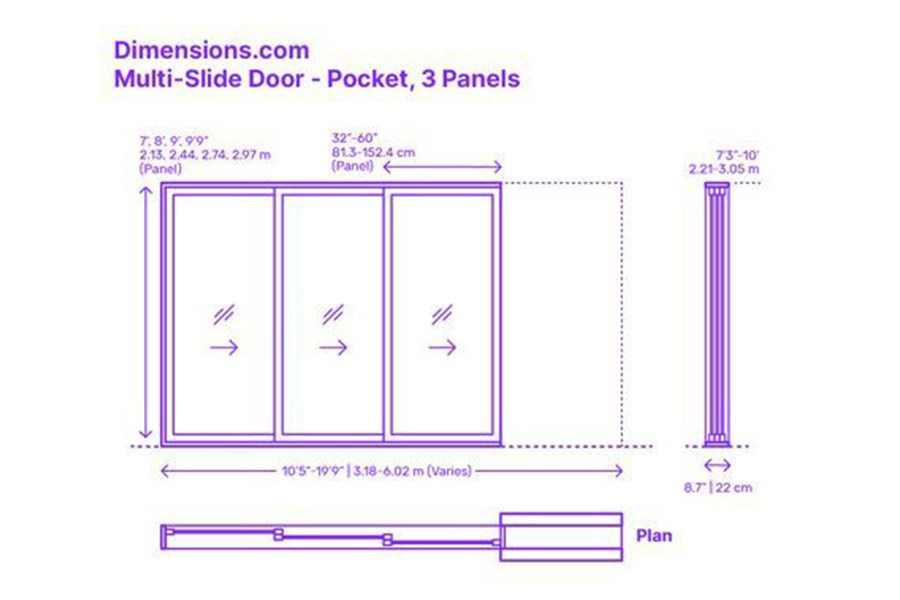
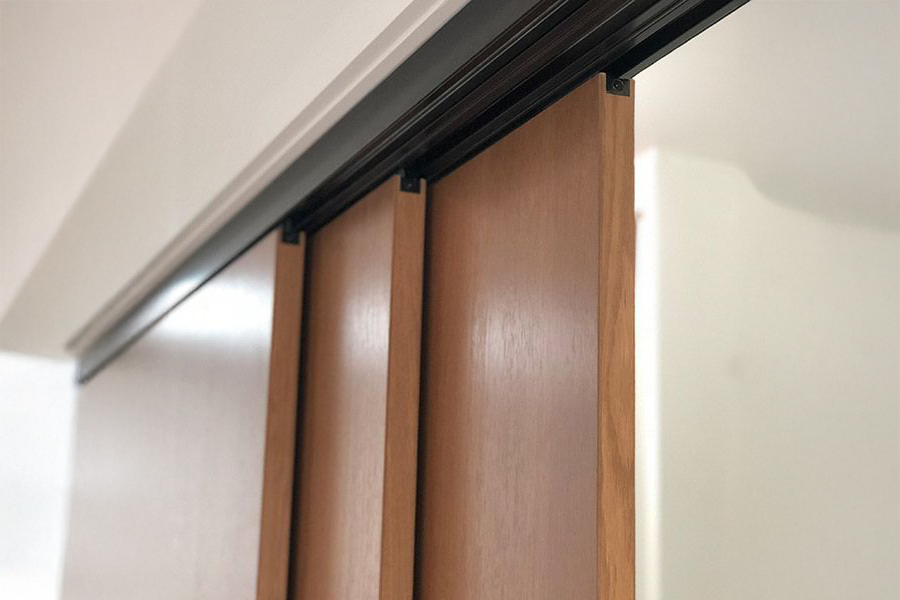
sliding door wardrobe in a compact indian bedroom where there is no space for a door to swing open

Standard Bypass Sliding Door

  • Use case: Wardrobes, large storage units, room dividers
  • Durability: High - rollers are the only wear component
  • Maintenance: Clean track channel every 3 months; dry PTFE spray on rollers annually
  • Choose when: Floor clearance in front of the furniture is limited

two panel bypass sliding wardrobe with doors passing each other on separate tracks in a bedroom

The most common wardrobe mechanism in the world. Two panels on separate track channels pass each other when you slide them. Simple, reliable, affordable. The only real maintenance is keeping the track clean - a surprising amount of dust and hair finds its way in there.
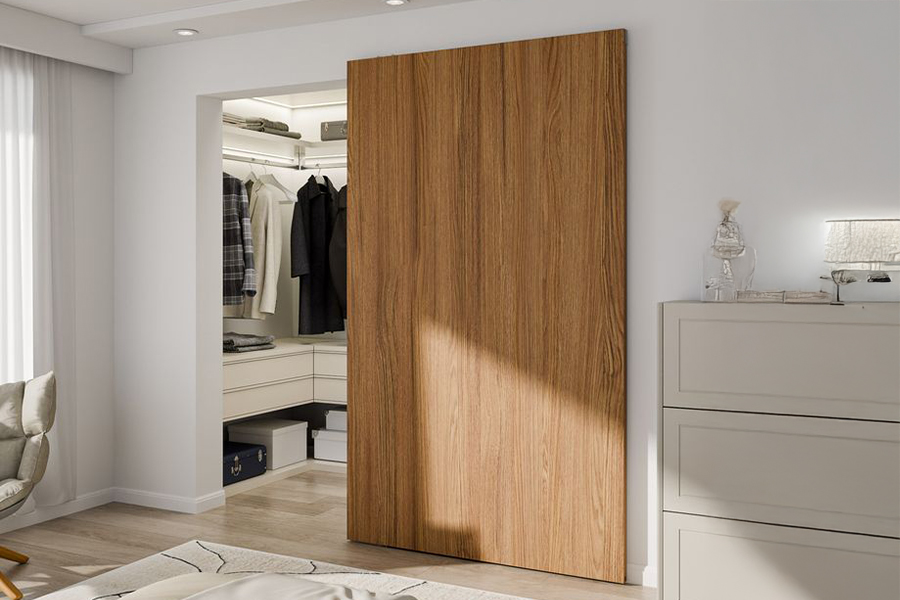
Flush-Fitted Sliding Door

  • Use case: Premium wardrobes, built-in bedroom furniture, high-end modular units
  • Durability: High - recessed track eliminates the proud edge; door sits completely flush when closed
  • Maintenance: Recessed track accumulates dust faster - clean with a narrow brush monthly; PTFE spray on rollers
  • Choose when: A completely flat, flush furniture face is the design priority

premium wardrobe with flush fitted sliding door sitting perfectly flat with no visible track gap at all

Standard bypass doors sit 10–15mm proud of the frame. You see the track. You see the gap. With a flush-fitted sliding door, the panel sits perfectly flat and the track disappears. Same function, dramatically cleaner look.
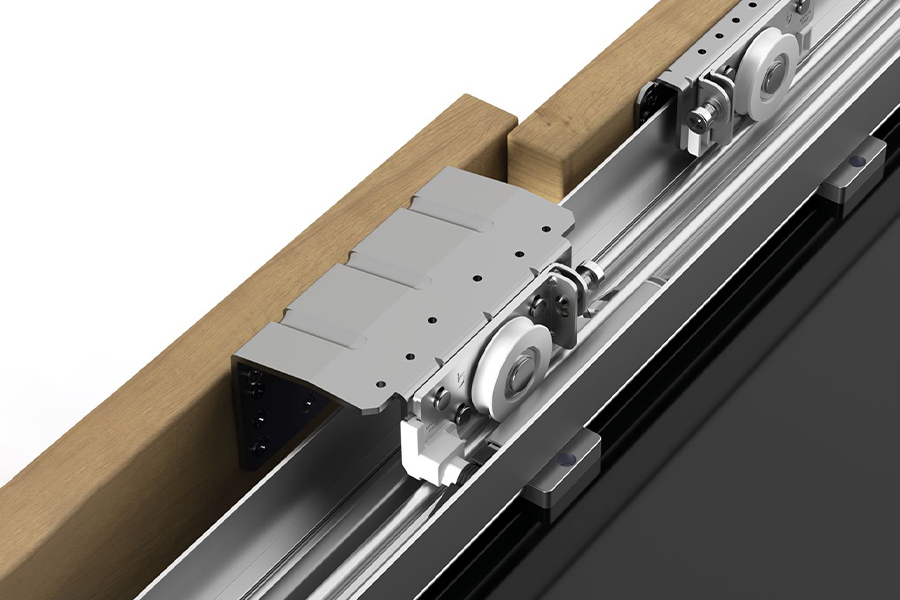
Soft-Close Sliding Door

  • Use case: Premium wardrobes, bedroom furniture, home office storage
  • Durability: High - hydraulic damper at each end of track absorbs impact
  • Maintenance: Same as standard sliding; dampers are non-serviceable but typically outlast the furniture
  • Choose when: Silent, controlled closing is required alongside space-saving sliding function

sliding wardrobe door gliding quietly to a stop at the end of the track with hydraulic damper control

Barn Door (Surface-Mounted Sliding)

  • Use case: Room dividers, feature wardrobe doors, industrial-aesthetic interiors
  • Durability: Very high - external track takes no structural load; hardware is exposed but extremely robust
  • Maintenance: Wipe track clean; check wheel bolts annually; no lubrication needed on most systems
  • Choose when: The track and hardware are deliberately part of the aesthetic

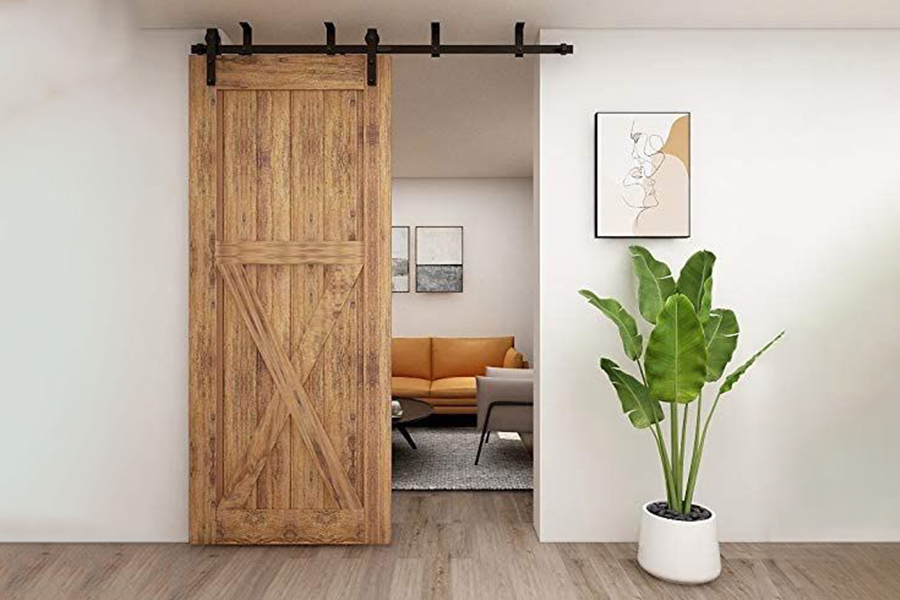
exposed black iron barn door track and wheels on a statement wardrobe in an industrial style interior

Barn door hardware is meant to be seen. The black iron track, the exposed wheels - it is all part of the design. If you want a piece of furniture that looks like it came from a converted mill, a barn door sliding mechanism is not just functional, it is the statement.
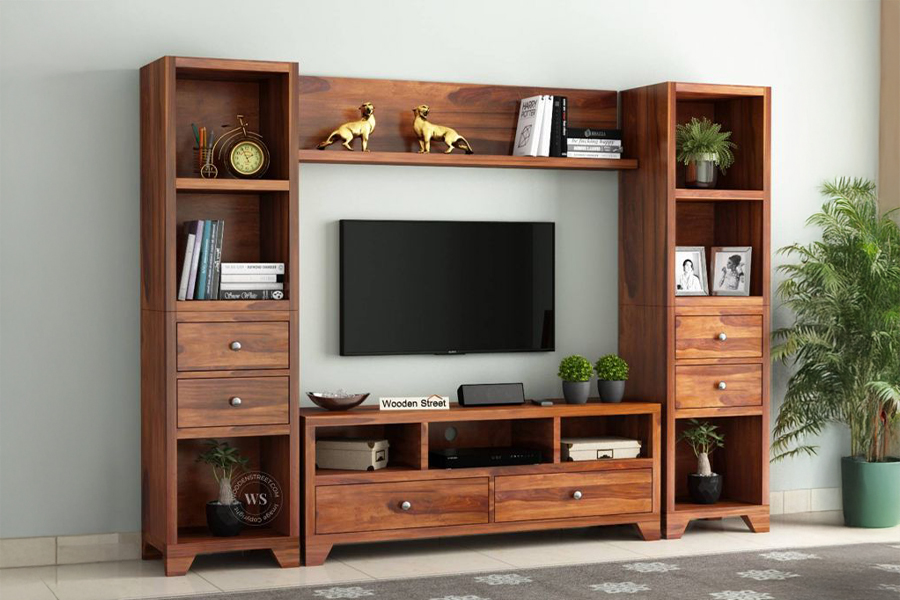
Pocket Door (Slides Inside the Panel)

  • Use case: TV units, sideboards, bar cabinets - door disappears completely when open
  • Durability: Medium - internal track inside the panel is harder to access for maintenance
  • Maintenance: Keep internal track dust-free with compressed air; hardest mechanism to service post-installation
  • Choose when: Full unobstructed access to the cabinet interior is needed without a door projecting into the room

tv unit with pocket door slid completely inside the panel giving full open access with nothing projecting out

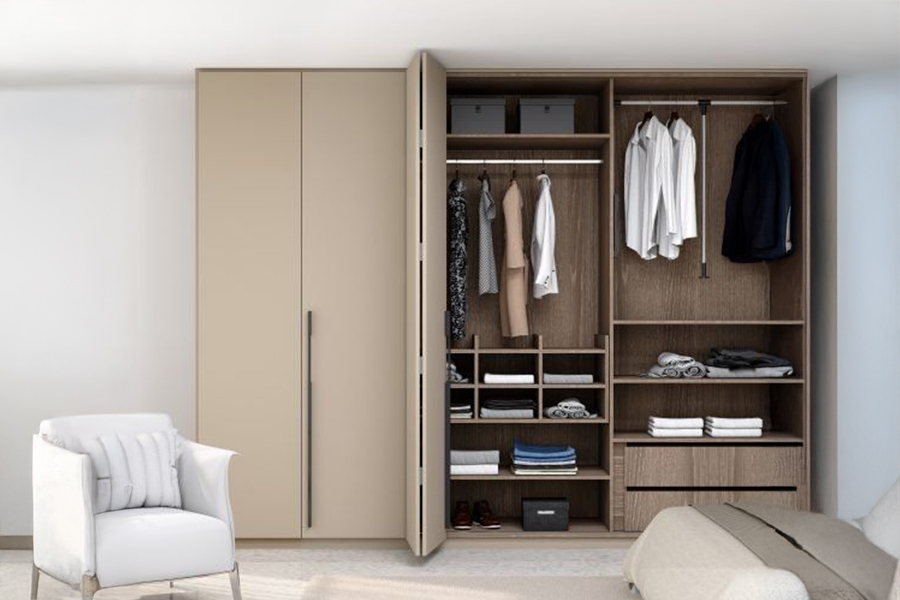
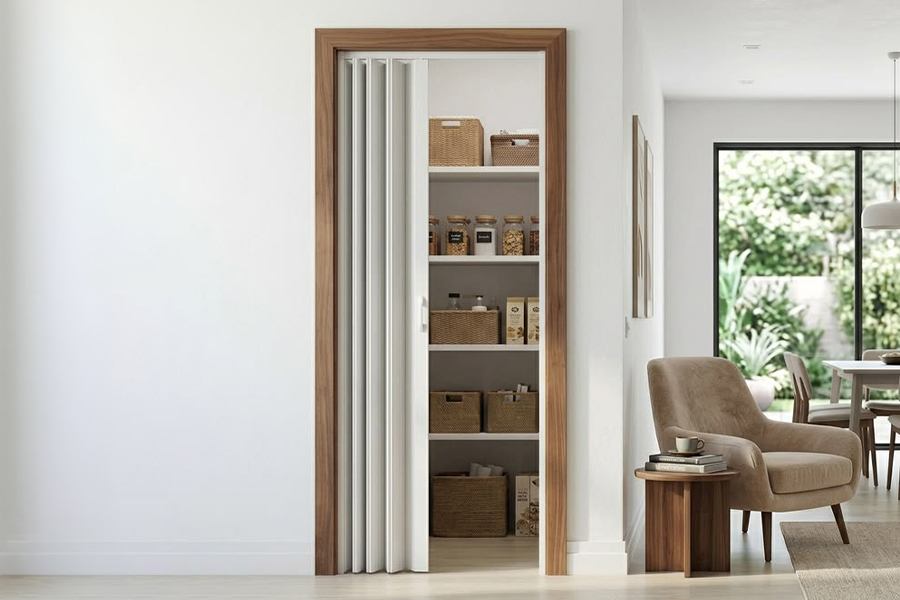
Category 3: Folding Door Mechanisms

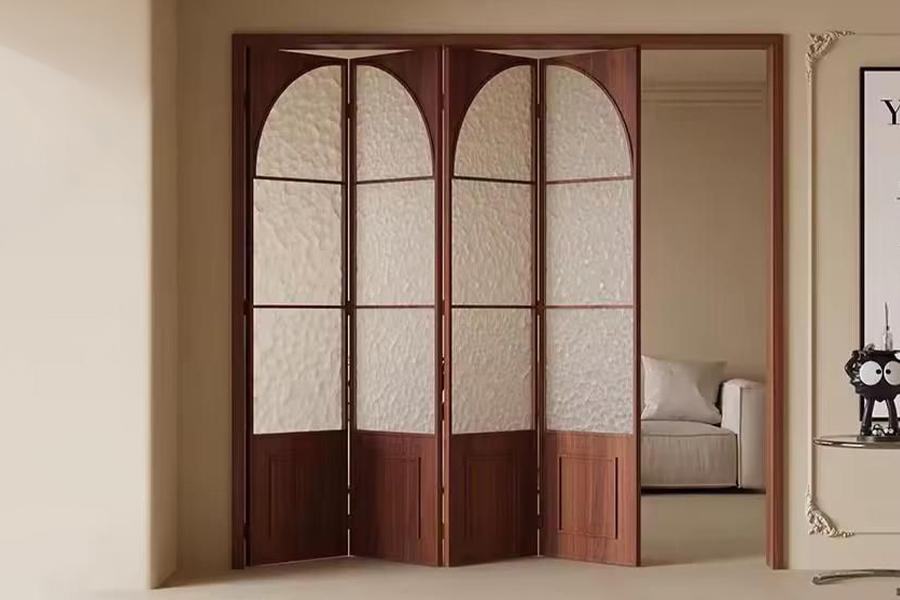
wardrobe with bifold and accordion door options shown side by side for a wide storage opening

Bifold Door

  • Use case: Wardrobes, storage units, laundry cabinets
  • Durability: Medium - pivot hinge connecting the two panels is the most common failure point
  • Maintenance: Lubricate pivot hinges every 6 months; realign top track guide if doors drift inward
  • Choose when: More access than sliding but less clearance than full hinged is needed

bifold wardrobe door folded open to the side giving wide access with only half the swing clearance needed

Accordion / Multi-Fold Door

  • Use case: Room dividers, wide wardrobe openings, open-plan homes
  • Durability: Medium - more pivot points mean more potential failure points; better suited to lighter panels
  • Maintenance: Lubricate each pivot point annually; inspect all track connections
  • Choose when: A very wide opening needs covering with minimal floor-clearance impact

multi panel accordion door folded across a wide wardrobe opening in an open plan indian home

Category 4: Lifting Mechanisms

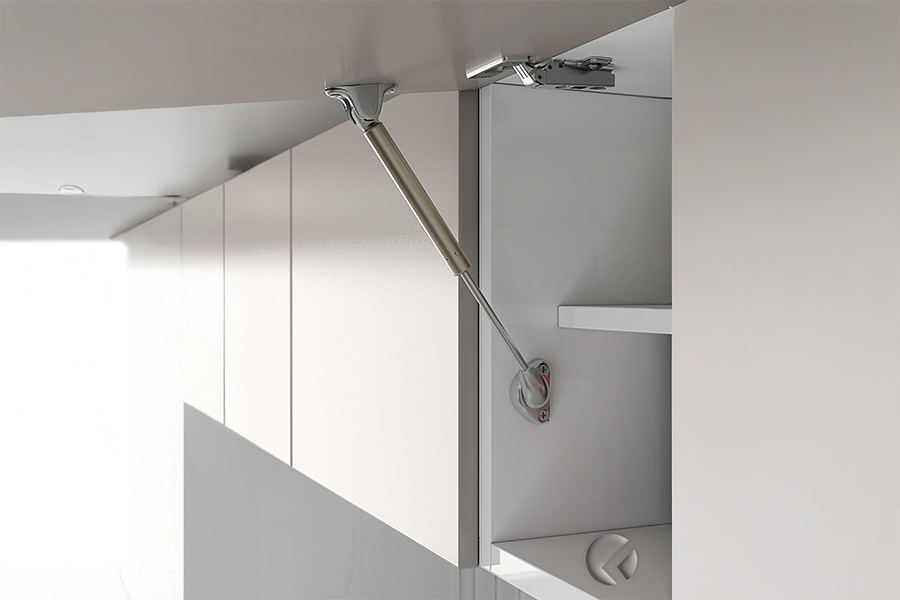
kitchen wall cabinet and overhead storage unit showing different gas piston lift up door mechanisms

Overhead Lift-Up (Gas Piston)

  • Use case: Kitchen wall cabinets, home office overhead storage, TV unit upper sections
  • Durability: High - quality pistons rated for 30,000+ cycles; budget pistons lose pressure within 1–2 years
  • Maintenance: Replace gas piston when door no longer holds itself open - clip-in replacement on most systems
  • Choose when: Cabinet is above head height and a downward-swinging door is impractical

overhead kitchen cabinet with gas piston holding the door open above head height without any support

Parallel Motion Flap-Up

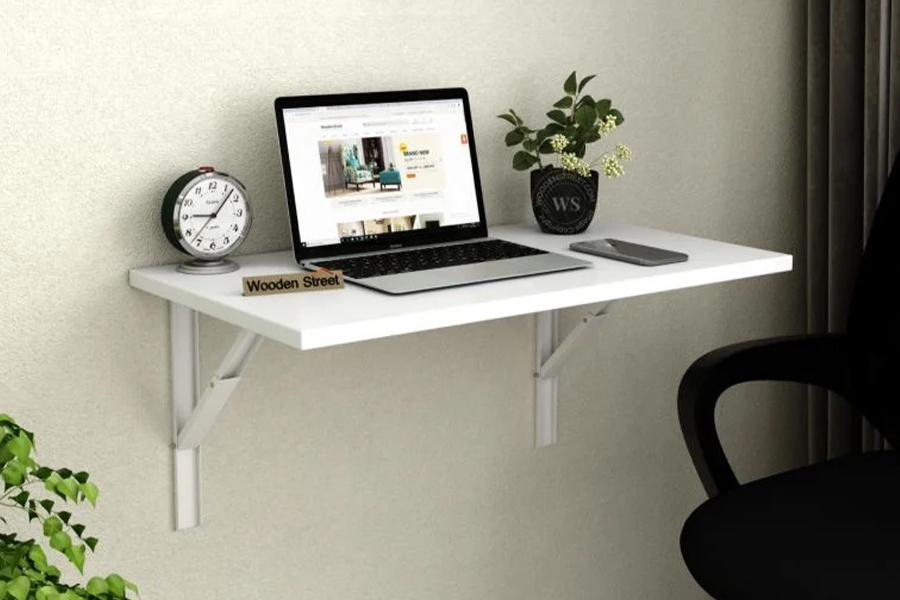
  • Use case: Fold-down desks, Murphy bed panels, bar cabinet fronts
  • Durability: Medium-high - parallel arm keeps door horizontal as it rises
  • Maintenance: Check arm pivot screws annually; lubricate with silicone spray
  • Choose when: The door panel doubles as a working surface when open

fold down desk panel rising with parallel arms keeping it horizontal to use as a flat working surface

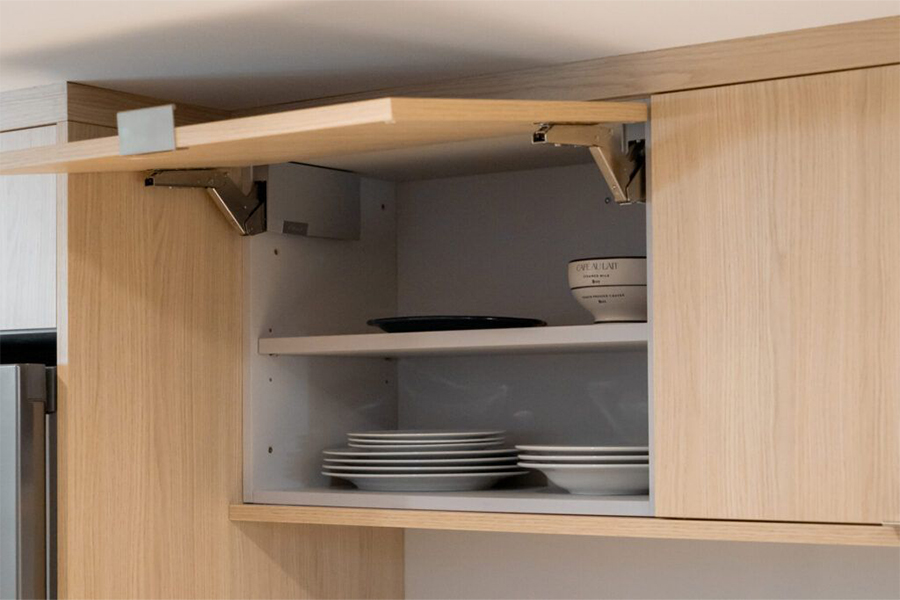
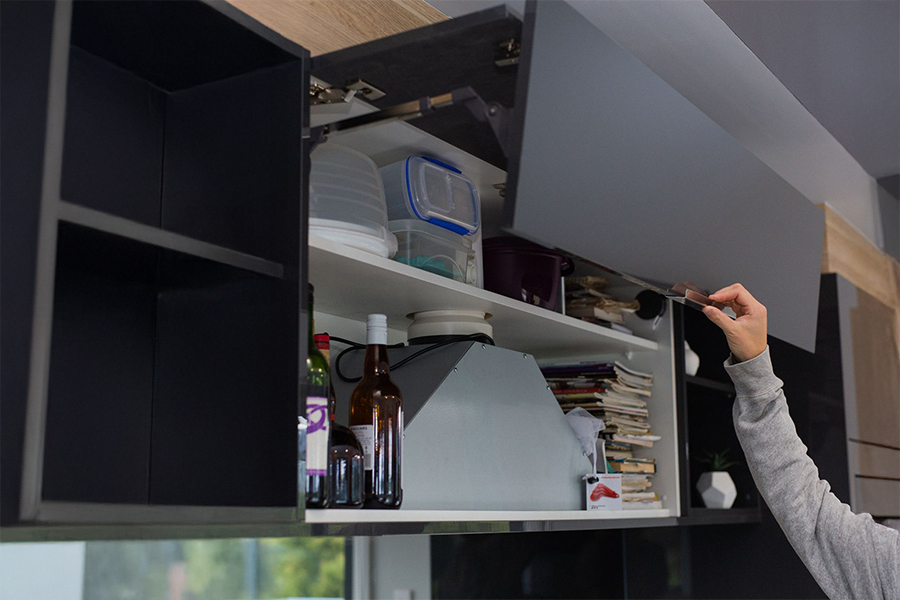
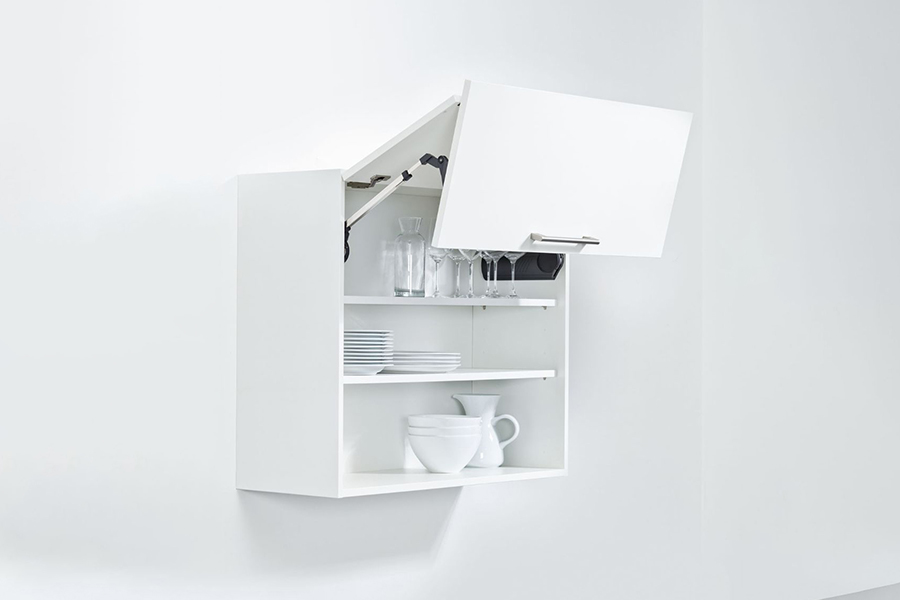
Vertical Bifold Lift

  • Use case: Overhead cabinets, kitchen wall storage, entertainment unit upper sections
  • Durability: Medium-high - combines lift and fold mechanisms; spring tension must be matched to door weight
  • Maintenance: Check spring tension annually; adjust if door feels too heavy or lifts too easily
  • Choose when: Overhead clearance above the cabinet is limited - the door folds rather than swinging fully upward

overhead cabinet with vertical bifold lift where the door folds up in two parts instead of swinging back

Category 5: Flap-Down Mechanism

Flap-Down Door

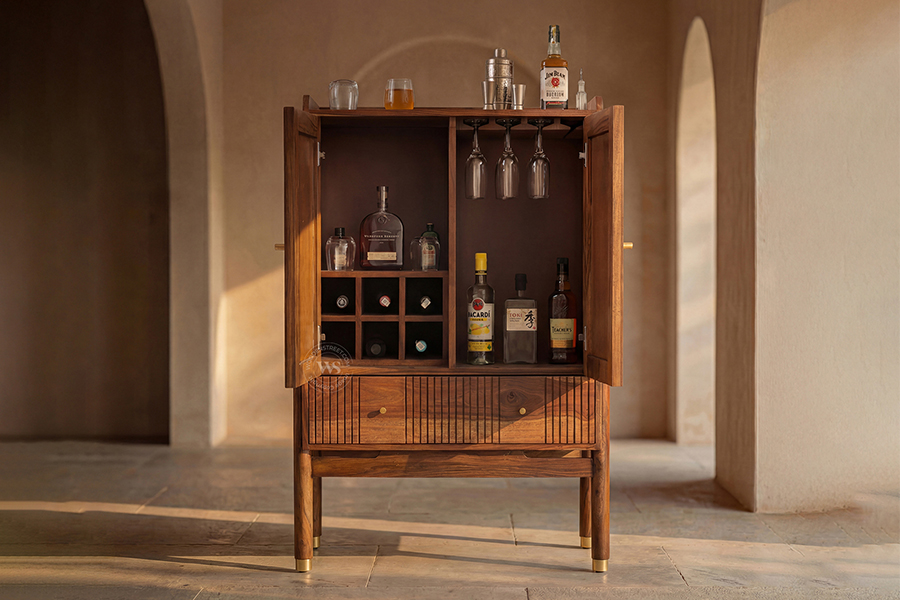
  • Use case: Bar cabinets (drops to become a serving surface), sideboard fronts, fold-down storage shelves
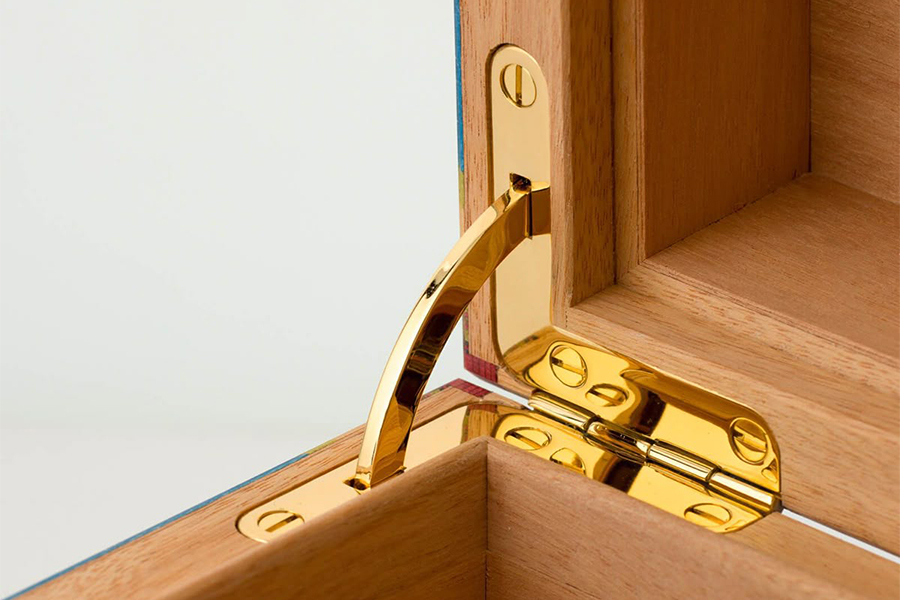
  • Durability: Medium-high - support chain or stay limits the drop angle; chain quality is the wear component
  • Maintenance: Check chain or stay attachment screws every 6 months; lubricate hinge pivot
  • Choose when: The door panel is more useful as a horizontal surface than as a door

bar cabinet front dropping down flat to become an instant serving surface with bottles on display inside

A bar cabinet with a flap-down front is one of those furniture moments that genuinely impresses people. The door drops forward, you have an instant serving surface, and the bottles inside are suddenly a display. The support chain is the weakest link - check those screws.
Category 6: Tambour / Roll Mechanism

Tambour / Roll-Up Door

  • Use case: Sideboards, bar cabinets, roll-top desks, kitchen tambour units
  • Durability: Medium - individual slats rarely break; track grooves accumulate dust and cause sticking over time
  • Maintenance: Clean track groove with a thin brush monthly; apply furniture wax to slat edges annually
  • Choose when: A door that disappears upward without projecting into the room is needed

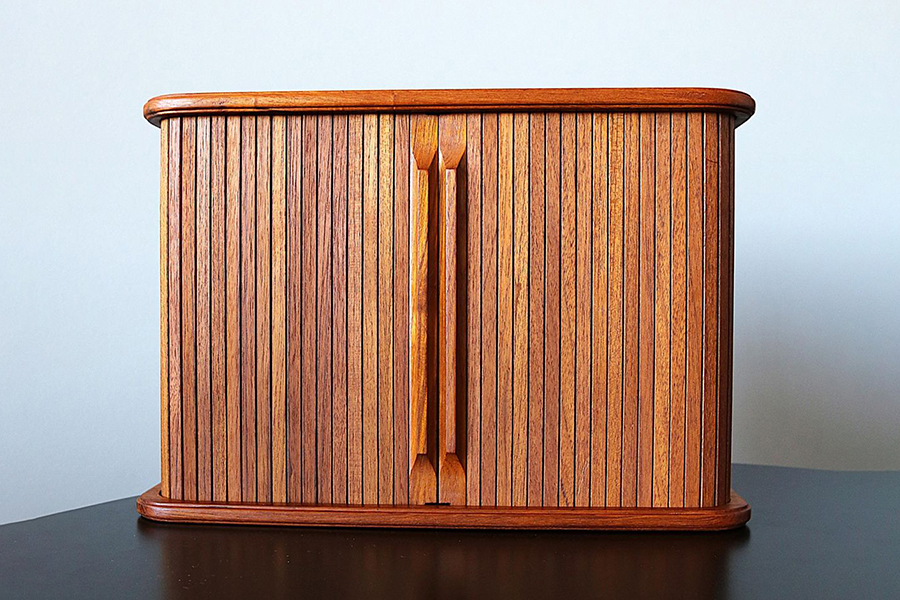
sideboard with tambour roll up door sliding upward into the panel and disappearing completely from view

Category 7: Push-Activated Mechanism

Push-to-Open Touch Latch

  • Use case: Handleless kitchen cabinets, modern wardrobes, bathroom furniture
  • Durability: Medium - touch latch has a finite click cycle; quality versions rated for 100,000+ clicks
  • Maintenance: Replace touch latch unit when it stops catching reliably - inexpensive clip-in component
  • Choose when: A completely handle-free furniture face is the design priority

handleless kitchen cabinet being opened with a light press on the flat door front showing no visible hardware

Category 8: Passive Latching Mechanisms

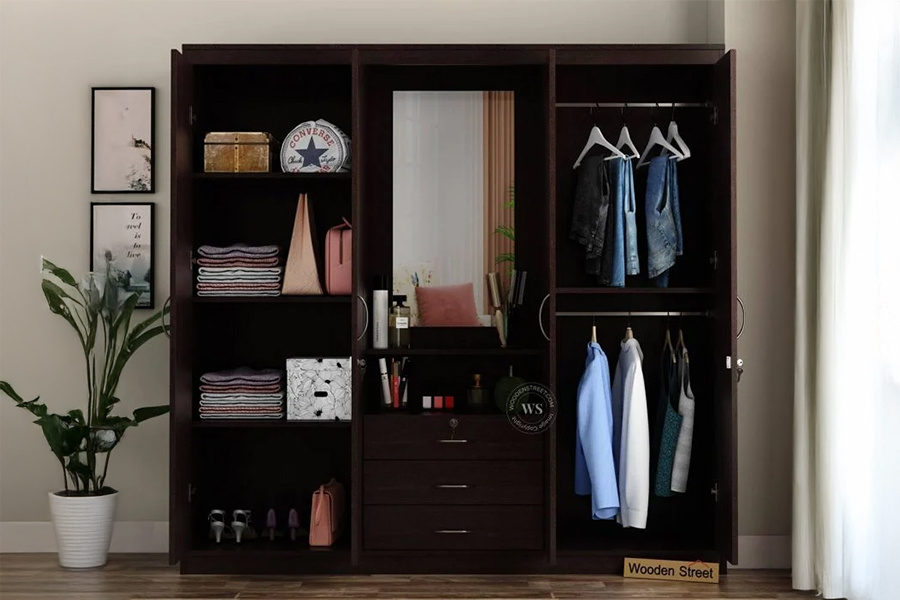
magnetic catch and roller catch shown on cabinet doors as simple passive closing solutions with no handle

Magnetic Catch

  • Use case: Works with any hinged door - keeps the door flush-closed without a handle
  • Durability: Very high - no moving parts; the magnet itself virtually never fails
  • Maintenance: Wipe the magnet plate clean; realign if door no longer closes flush
  • Choose when: A passive, silent closing solution is needed for any light hinged door

Roller Catch

  • Use case: Cabinet doors, lightweight wardrobe doors, decorative cabinet fronts
  • Durability: Medium - the roller spring wears over time and the catch becomes loose
  • Maintenance: Replace roller catch unit when the door no longer holds firmly
  • Choose when: A slightly more positive 'click' closure than a magnet is preferred

Ball Catch

  • Use case: Internal cabinet doors, furniture with thin door panels
  • Durability: Medium - the spring-loaded ball wears against the strike plate over thousands of cycles
  • Maintenance: Replace when the door no longer holds closed or closes too loosely
  • Choose when: A subtle positive engagement is needed without visible hardware

spring loaded ball catch fitted inside a cabinet door giving a subtle positive click when it closes shut

Special Door Panel Types

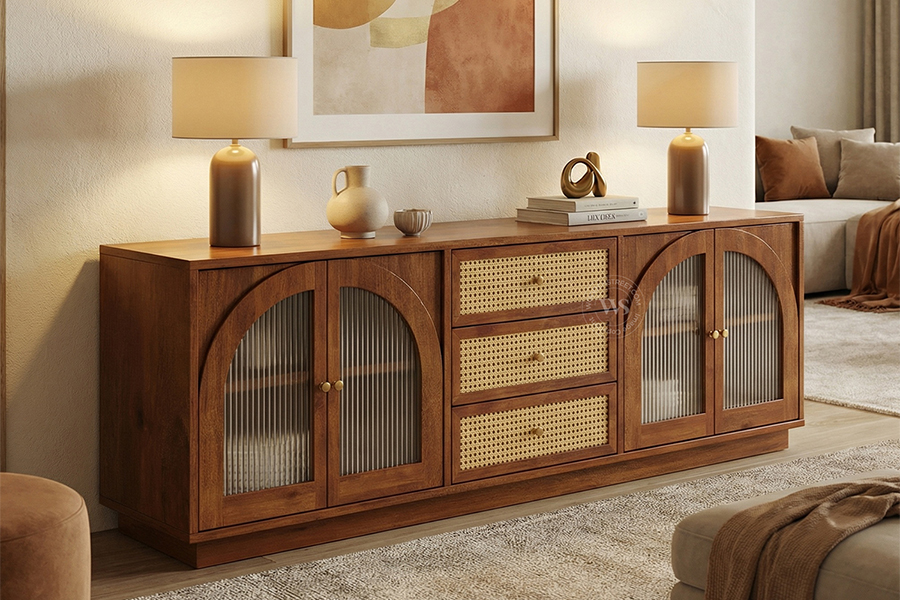
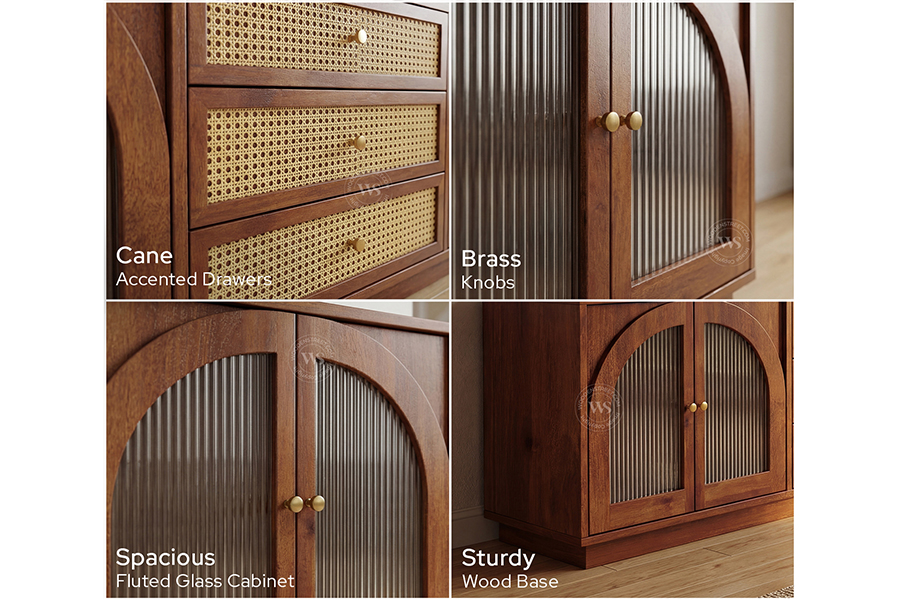
louvred glass and cane panel cabinet doors shown together as different decorative door panel options

Louvred Panel Door

  • Use case: Shoe cabinets, laundry storage, bathroom furniture - anything needing ventilation
  • Mechanism type: Works with any hinge type - the panel construction rather than the mechanism is the defining feature
  • Maintenance: Vacuum slat channels every 2–3 weeks; dust accumulates heavily in louvred channels

Framed Glass Door

  • Use case: Crockery units, display cabinets, bookshelf sections
  • Mechanism type: Uses standard hinges or sliding track - tempered glass essential
  • Maintenance: Clean glass with lint-free cloth; check frame joints annually

Frameless Glass Door

  • Use case: Premium display cabinets, contemporary kitchen cabinets
  • Mechanism type: Glass patch fittings and clips - must be tempered
  • Maintenance: Re-tighten clips and patch fittings every 12 months

Cane and Rattan Panel Door

  • Use case: Chest of drawers, sideboards, bedside tables, contemporary cabinets
  • Mechanism type: Works with standard hinges or sliding - the panel is the feature
  • Maintenance: Damp wipe only; teak oil on natural cane annually; avoid soaking

How to Choose the Right Mechanism

Situation

Best Mechanism

No floor clearance

Sliding: flush-fitted or bypass

Want flush furniture face

Flush-fitted sliding or push-to-open

Silent closing essential

Soft-close hinge or soft-close slider

Door doubles as a surface

Flap-down or parallel motion flap-up

Overhead cabinet above head height

Gas piston lift-up or vertical bifold lift

Statement aesthetic piece

Barn door, pivot hinge, or tambour

Ventilation needed

Louvred panel

Display contents

Framed or frameless glass

Handle-free look

Push-to-open touch latch

Heavy solid wood door

Butt hinge or pivot hinge

Complete Maintenance Reference

Mechanism

Frequency

Action

Butt and piano hinge

12 months

Oil pivot, tighten screws

Concealed European hinge

6 months

Check adjustment, wipe clean

Soft-close hinge

As needed

Replace the damper cartridge

Pivot hinge

12 months

Lubricate top and bottom pivot

Bypass sliding track

3 months

Clean channel, PTFE spray

Flush-fitted sliding

Monthly

Narrow brush clean, PTFE spray

Barn door track

12 months

Wipe track, check wheel bolts

Pocket door

6 months

Compressed air in the internal track

Bifold pivot

6 months

Lubricate the pivot hinge

Gas piston

As needed

Replace the piston unit

Vertical bifold spring

12 months

Check and adjust spring tension

Flap-down chain/stay

6 months

Check attachment screws

Tambour track

Monthly

Brush track, wax slat edges

Push-to-open latch

As needed

Replace the latch unit

Magnetic catch

As needed

Realign the magnet plate

Louvred panel

2–3 weeks

Vacuum slat channels

Cane panel

12 months

Damp wipe, teak oil

Final Thoughts

Door mechanisms are one of those things that nobody talks about when buying furniture - and everybody notices when they go wrong. A wardrobe that closes silently every single time feels like a luxury. A cabinet door that droops six months in feels like a disappointment. The difference between the two is almost always the mechanism, not the wood.

Now that you know what each mechanism does, where it belongs, and how to maintain it - you will never look at a furniture door the same way again. That soft-close hinge in the showroom? You will check if it is a budget damper or a quality one. That flush-fitted sliding wardrobe? You will notice the clean face and know exactly why it looks better than the standard version next to it.

Good furniture is meant to be used every day for years. The right door mechanism makes sure that daily use stays enjoyable - not something you just tolerate.

We will be back with the next blog soon. Till then, stay tuned!

Image Source: Pinterest, Google, and Wooden Street

FAQs

Q What is the difference between flush-fitted and standard bypass sliding doors?

A Standard bypass doors sit 10–15mm proud of the frame. Flush-fitted doors sit completely flat, creating a seamless, gap-free furniture face.

Q Which door mechanism needs the least maintenance?

A The magnetic catch - no moving parts, no wear. The butt hinge comes a very close second.

Q What is a pivot door on furniture?

A A pivot door rotates from a central top and bottom axis rather than from its side edge, making wide doors feel significantly lighter to open.

Q How does a tambour door work?

A Flexible wooden slats joined together roll along a curved track inside the furniture panel, disappearing completely when fully open.

Q Which mechanism is best for a wardrobe with limited floor clearance?

A A bypass sliding or flush-fitted sliding door - neither requires any floor clearance in front of the wardrobe to operate.

Q What is a soft-close hinge and is it worth the extra cost?

A A soft-close hinge has a built-in damper that slows the door in the final few centimetres. Worth every rupee - especially in bedrooms and children's rooms.

Q How do I maintain sliding wardrobe door tracks?

A Clean the track channel every three months and apply a dry PTFE spray to the rollers once a year. That is genuinely all it takes.

Q What is a flap-down door mechanism used for?

A Primarily bar cabinets - the door drops forward to become a serving surface. Also used in fold-down shelves and sideboard fronts.

0 Comments
Leave a Comment

Trending Products

Top Picks from Everyone

Articles you will love to read

Unique House Names in Sanskrit for New Homes - With Meanings
Arch Designs for Home Interiors: Hall, Kitchen, Living Room & Gate Ideas That Actually Work
Types of Sofas Explained: How to Choose the Right One for Your Living Room
Types of Space Saving Furniture: What Actually Works and What Just Looks Good in Photos
Types of Wood Finishes: What Each One Does, How It Looks and How Long It Lasts