



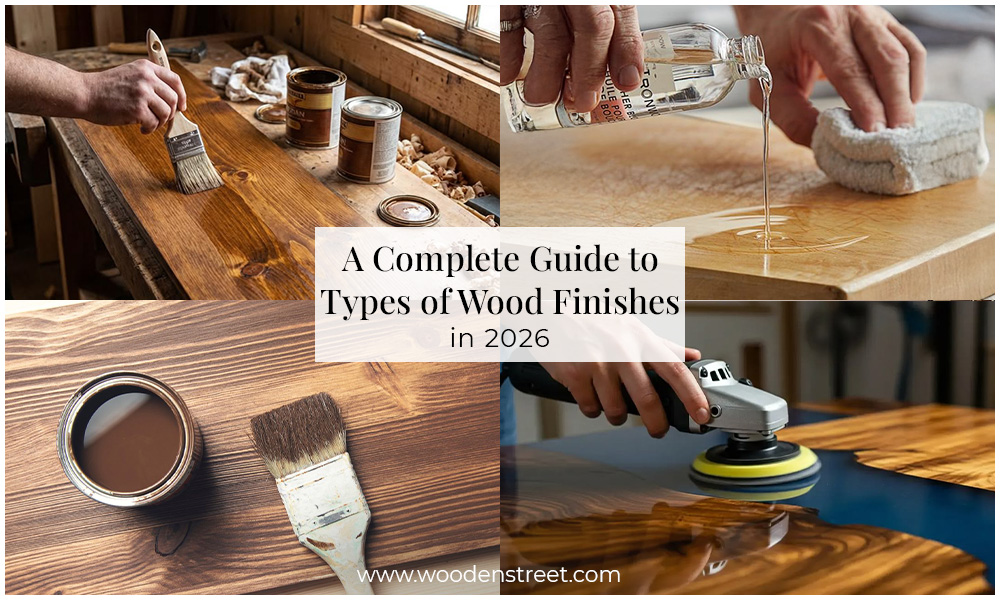
Choosing among the various types of wood finishes can significantly affect the look, feel, and lifespan of wooden furniture and surfaces. This guide explains how different finishes enhance grain, provide protection, and perform over time, helping you select the most suitable option for your aesthetic and practical requirements.
You spent good money on a solid wood table or a cabinet or a bed frame. And somewhere in the process, if someone mentioned about a finish, such as PU, lacquer, oil, wax, and you nodded like you knew what they were talking about.
Most people do not. And it matters more than most people realise, because the finish is not a cosmetic detail. It is what determines whether that piece of furniture looks the same in five years or looks destroyed.
The below guide covers every type of wood finish worth knowing - what it does, how it feels, how long it lasts, as well as which furniture it actually belongs on.
The wood gives the furniture its structure. The finish determines everything else - the colour, teh texture, the sheen, plus how well it survives daily use. A beautifully curated piece of teak with the wrong finish will feel cheap and fair early. A ordinary wood species with the right finish can look as well as perform excellently for decades.
When you run your hand across a dining table or notice that a cabinet has gone dull and scratched, that is the finish you are experiencing, not the wood.
These do not sit on top of the wood surface. They soak in. The result is a piece that looks and feels like actual wood rather than something coated.
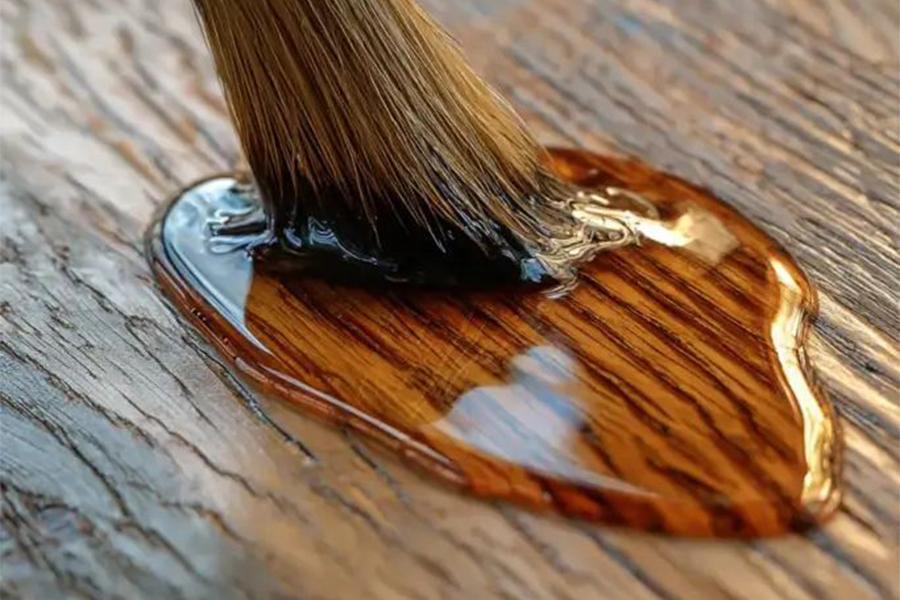
Oil soaks into the grain rather than forming a layer on top. The wood retains its natural feel completely - you touch wood, not a coating. It looks rich and alive in a way that surface finishes rarely match.
The trade-off is maintenance. Oil finishes need reapplication every six to twelve months depending on use. The upside is that re-oiling at home is genuinely easy - wipe on, leave, wipe off. No sanding, no professional help needed. Among the types of wood finishes suited to hands-on home maintenance, oil is the most forgiving.
Best for: solid wood dining tables, bedroom furniture, wooden floors in low-traffic areas.
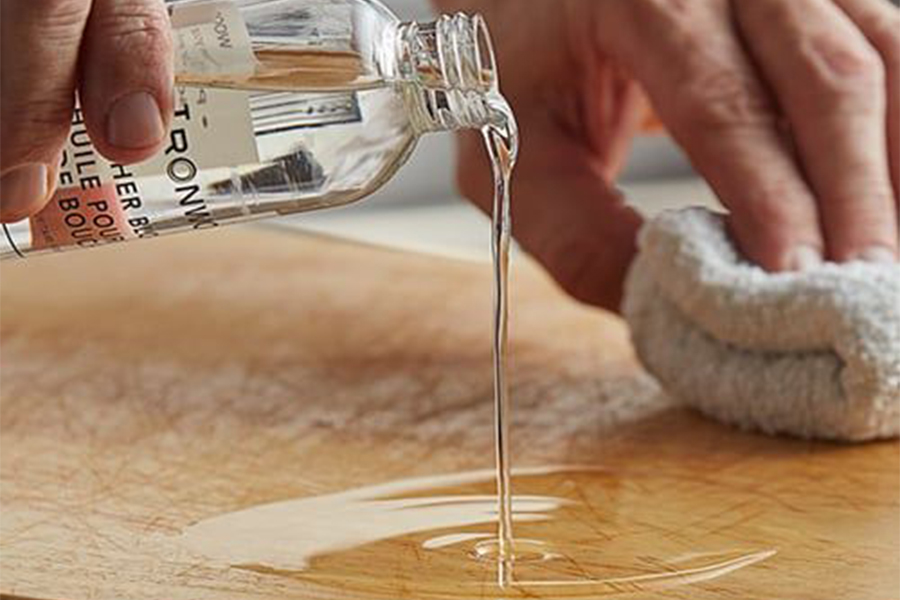
A non-drying, completely food-safe finish derived from petroleum. This is the standard for cutting boards and butcher blocks - nothing else comes close for food-contact surfaces. It will never go rancid the way culinary oils like olive or coconut oil do, which makes it the only sensible choice for anything that touches food regularly.
Needs frequent reapplication, but the process takes two minutes and costs almost nothing.
Best for: cutting boards, butcher blocks, wooden kitchen utensils.
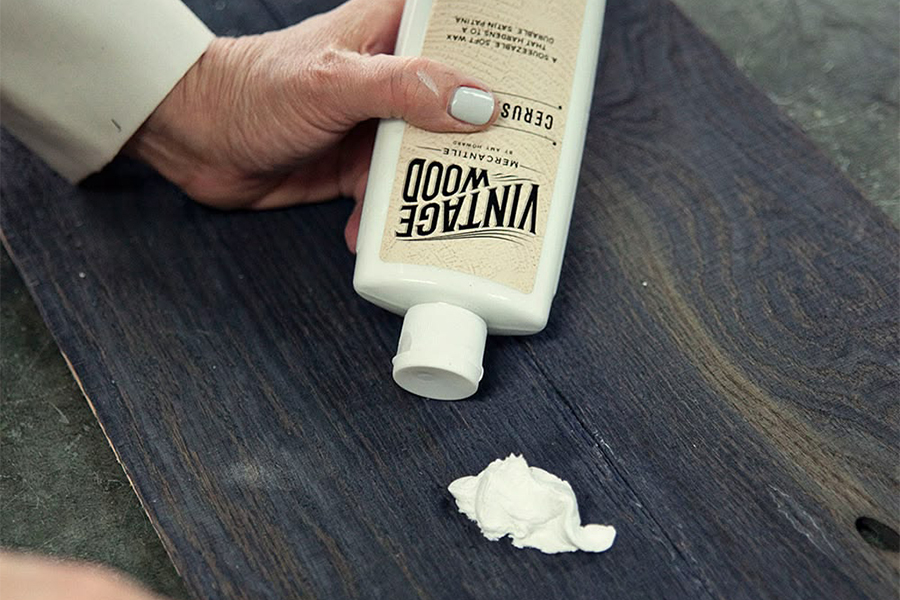
Wax sits just at the surface of the wood - not a thick coating, more of a very thin protective film. The result is a soft, low-sheen look that is the most natural-looking finish available. Nothing else makes wood look quite as understated and honest.
What it does not do: resist water or heat. A hot cup on a wax-finished table leaves a ring. A wet glass leaves a mark. Wax belongs on decorative pieces or furniture that does not take daily punishment.
Best for: antique pieces, display furniture, decorative wooden objects.
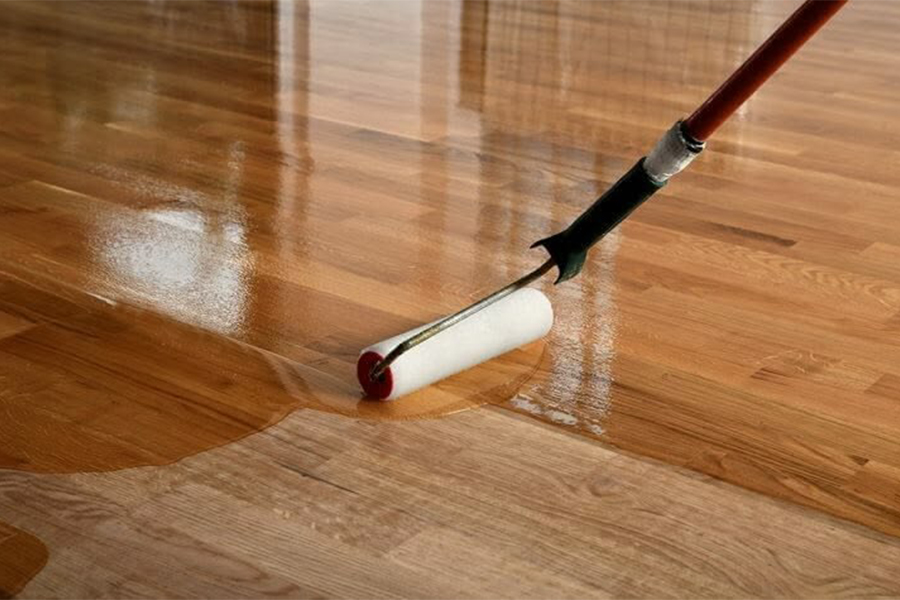
A modern hybrid that combines penetrating oils with hard waxes. It gives you the natural, matte look of an oil finish but cures to a significantly higher durability - better water resistance, better scratch resistance, longer intervals between maintenance.
Rubio Monocoat and Osmo are the two names that come up in every high-end custom furniture conversation right now, and for good reason. The finish is highly spot-repairable - damage a section and you can refinish just that area without redoing the whole piece. For anyone investing in quality furniture, this is worth the premium.
Best for: high-end custom furniture, wooden floors, dining tables where both look and longevity matter.
These form a protective film over the wood rather than penetrating it. More durable in most cases, but the wood feel is replaced by the feel of the coating itself.
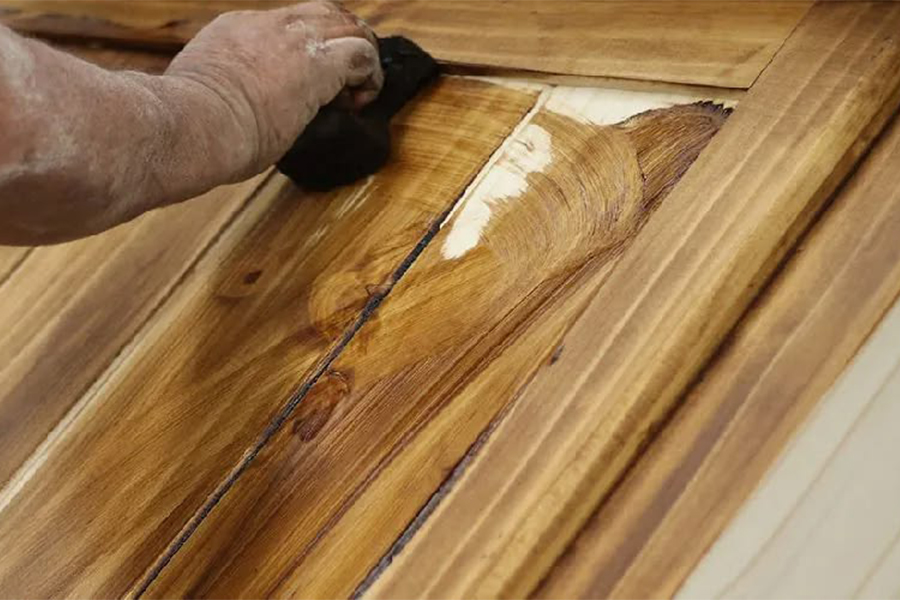
A hard, clear coating that dries fast and comes in gloss or matte. Lacquer gives a clean, smooth surface and looks sharp on contemporary furniture. The downside is that it yellows slightly over time - noticeably on light-coloured woods like maple or ash. It is also moderately durable, not the toughest option.
Best for: cabinetry, decorative furniture, contemporary pieces where fast drying and a clean finish matter.
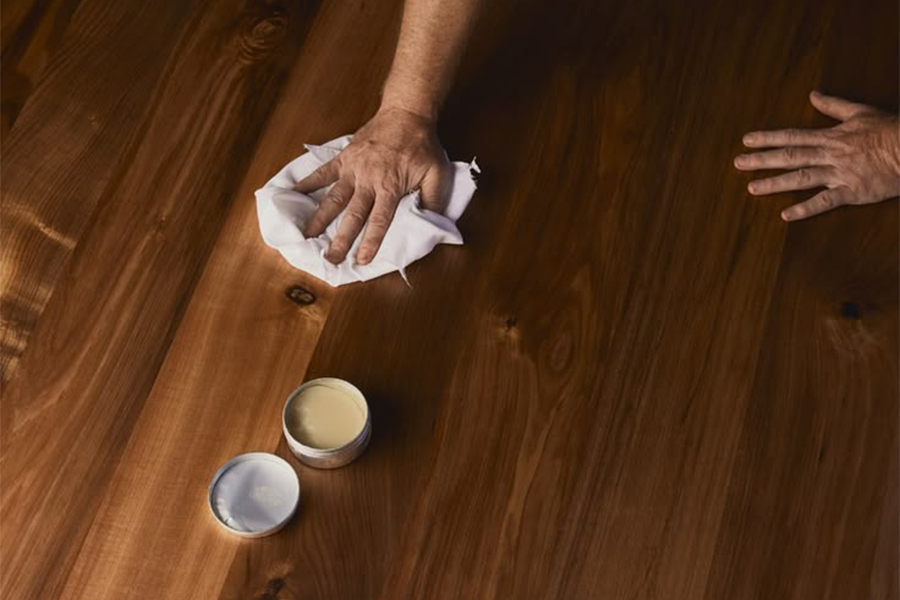
Thicker and more durable than lacquer, with a warm amber tone. Varnish is more water and heat resistant than most surface finishes, which is why it became the standard for dining tables and kitchen furniture long before PU entered the picture.
It takes longer to dry than lacquer and the amber tone shifts the colour of lighter woods slightly. On darker woods - teak, walnut, sheesham - the warmth of varnish is actually an advantage.
Best for: dining tables, kitchen storage furniture, any surface that sees regular water and heat exposure.
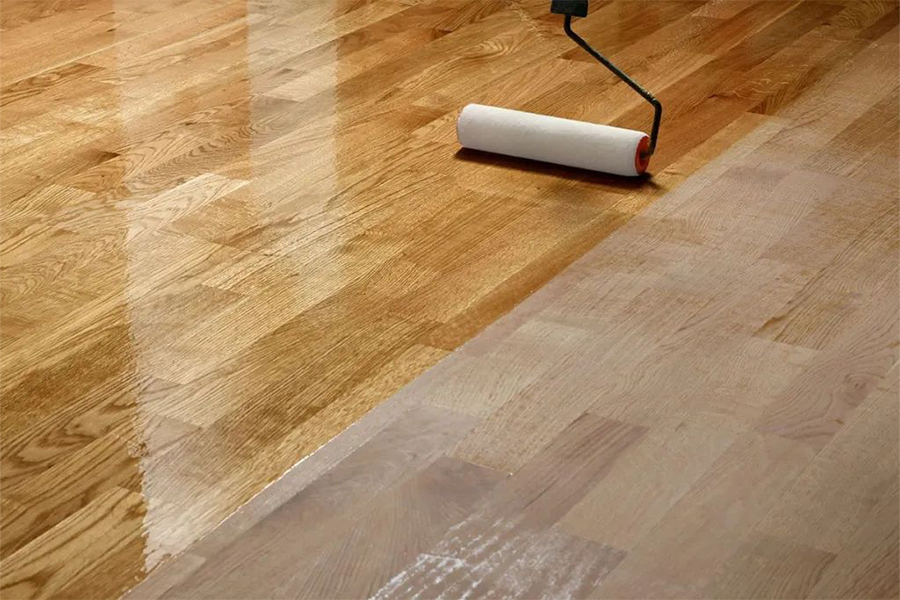
The most durable surface finish available and the one applied to the majority of modern Indian furniture. PU is highly resistant to water, heat, and scratches. It lasts for years without significant degradation under normal use.
At high gloss, PU has a plastic-like quality - the surface looks almost laminated rather than wooden. Many people find this visually cold. Matte and satin PU finishes are a far better choice for furniture where the wood grain should still read naturally.
Among the types of wood finishes in common use today, PU is the practical workhorse - not always the most beautiful, but consistently reliable.
Best for: daily-use furniture, children's furniture, office furniture, anything that needs maximum protection.
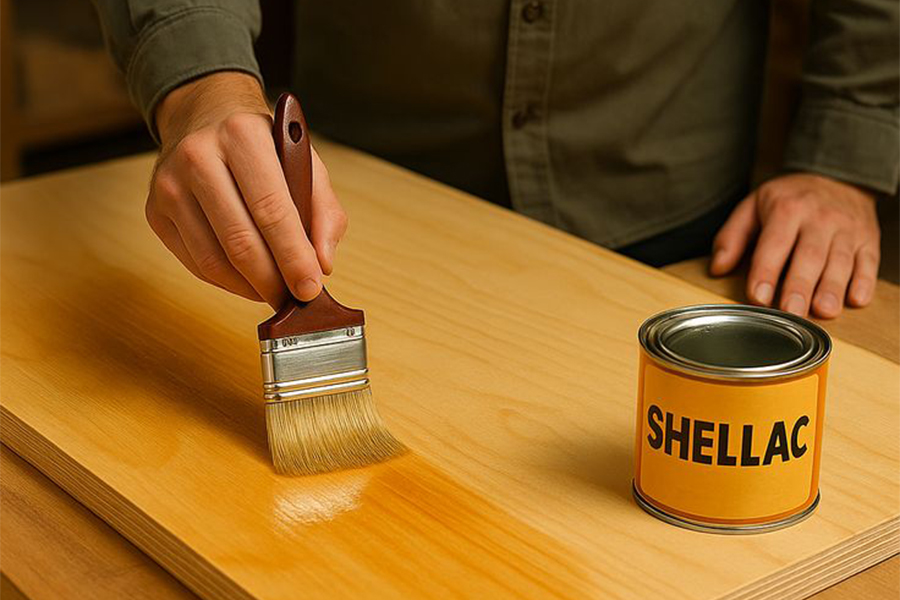
A natural resin secreted by lac bugs, dissolved in alcohol. The finish is warm, with a beautiful amber-orange tone and a sheen that synthetic finishes have never quite replicated. Shellac has been used in furniture finishing for centuries.
What it cannot do: handle water or heat. A wet glass marks it. A warm pan damages it. Shellac is for pieces that will not take that kind of use - antique restoration, ornamental furniture, display pieces where the warmth and depth of the finish is the point.
Best for: antique restoration, heritage furniture, decorative wooden pieces.
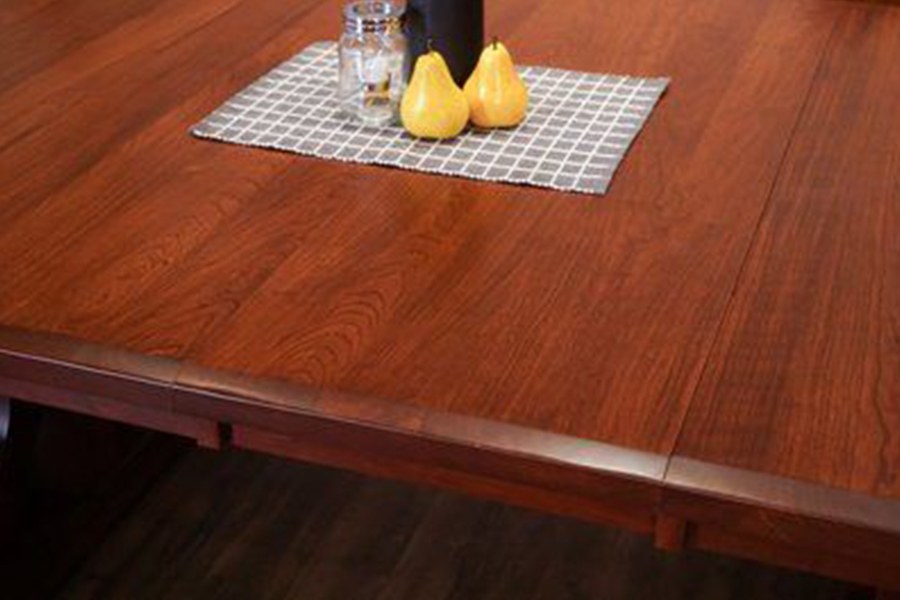
A two-part finish where a chemical catalyst triggers a curing reaction as compared to simple drying. The result is exceptional - harder, more chemical-resistant, and more moisture-resistant than standard varnish or lacquer. This is the finish specified for serious kitchen cabinetry in professional and high-end residential projects.
It requires spray equipment and proper ventilation to apply correctly. Not a DIY option. But the performance is genuinely in a different category from single-component finishes.
Best for: high-end kitchen cabinets, professional joinery, cabinetry in humid or high-use environments.
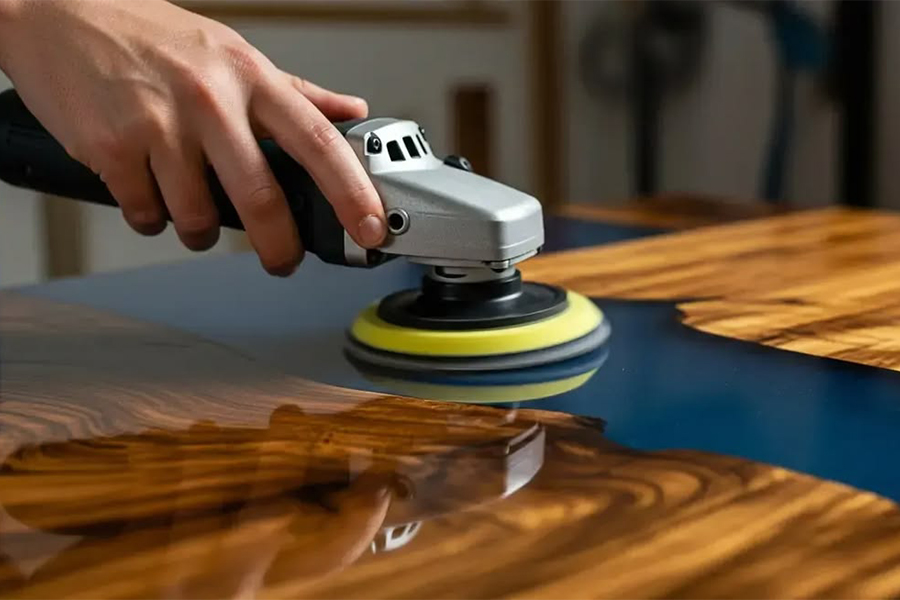
A two-part liquid that cures into a thick, extremely hard, glass-clear solid. Epoxy offers waterproofing that no other finish matches - it is completely impermeable. It is the finish behind the "river table" trend, where resin fills gaps or voids in live-edge slabs, and it is the standard for bar tops that take years of liquid abuse.
Mixed with metallic pigments or dyes, epoxy creates surfaces that look unlike any natural wood finish - more like jewellery than furniture. The aesthetic is specific and distinctive. You either want this look or you do not.
Best for: river tables, bar table tops, decorative resin-and-wood pieces.
These are applied before or instead of a protective finish to change how the wood looks rather than protect it.
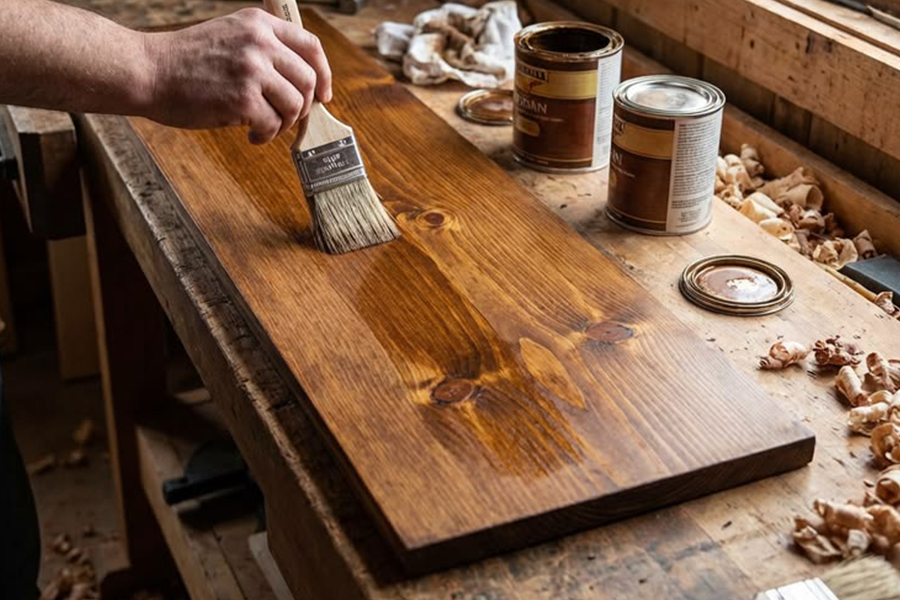
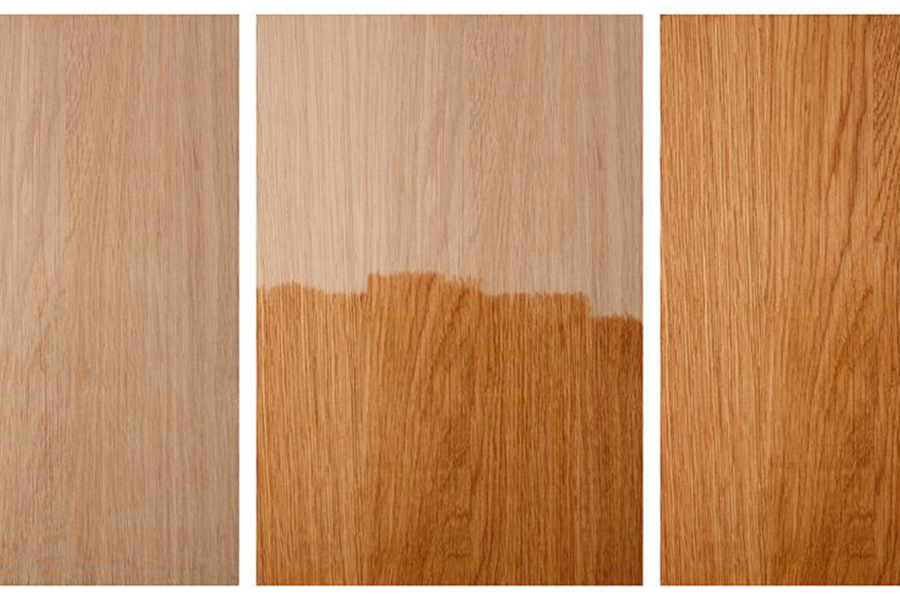
Changes the colour of the wood without concealing the grain. You can deepen a light wood to look like something richer, or shift the tone in a direction the species does not naturally go. Stain always goes on before the protective topcoat - it is not a finish on its own.
The grain remains visible throughout. If the grain is the point, stain works with it rather than against it.
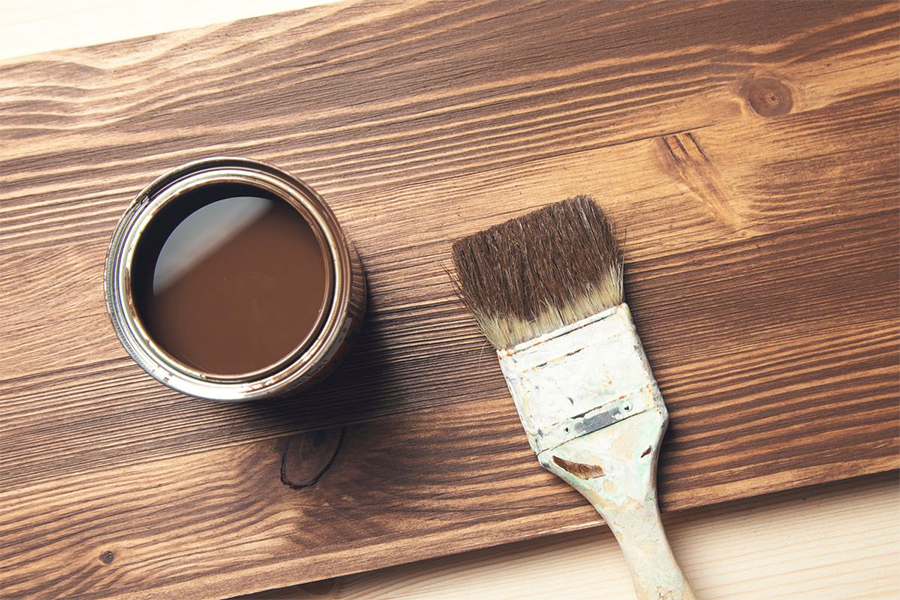
Fully opaque colour that conceals the grain entirely. Paint is the right choice when the wood species is not attractive enough to feature, or when the design goal is specific colour rather than a wood aesthetic. Painted feature, particularly in soft whites, warm greys, as well as nuted greens, is a core part of both Scandinavian and traditional Indian interiors.
There is no aesthetic hierarchy here. Paint is not a lesser choice than clear finishes. It is a different choice with a completely different outcome.
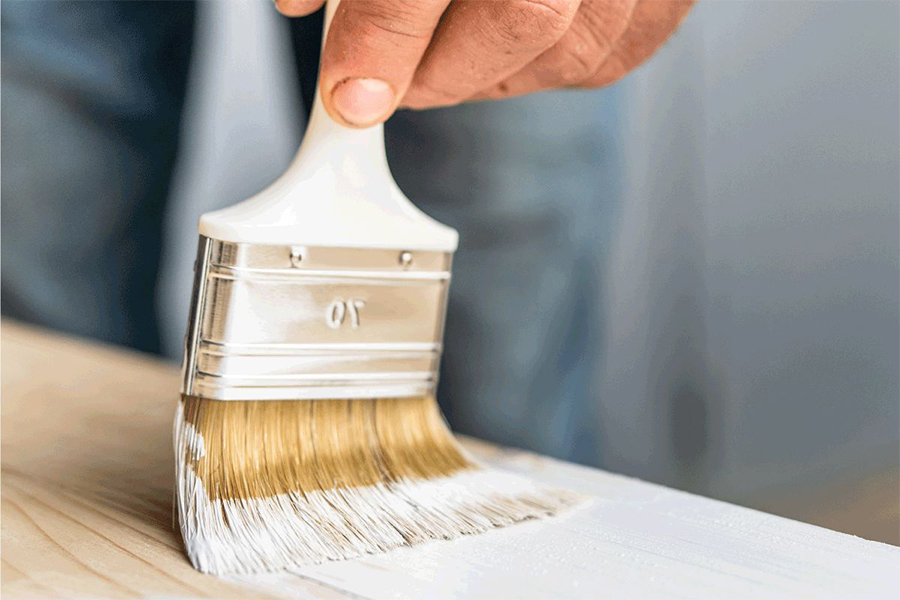
Diluted white pigment applied over bare wood. The white partially fills the grain and surface while still letting the wood texture show through. The result is a pale, weathered, almost bleached appearance.
Popular in coastal and Scandinavian interiors, and increasingly used in contemporary Indian spaces where the goal is lightness and calm rather than the rich warmth of natural wood tones.
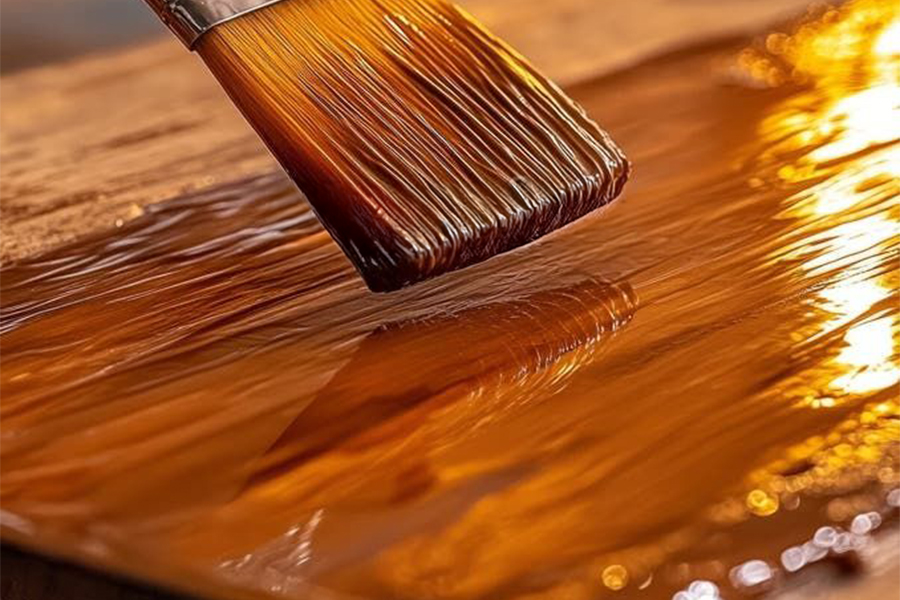
Different from pigment, which leave colour particles on the wood surface, dyes dissolve completely into the wood fibres. This means maximum grain clarity. The colour changes dramatically but nothing sits on top so as to obscure the texture.
Dyes produce more vibrant, saturated colour shifts than pigment stains. They are used when the grain must remain perfectly clear plus the colour must be rich and intense simultaneously.
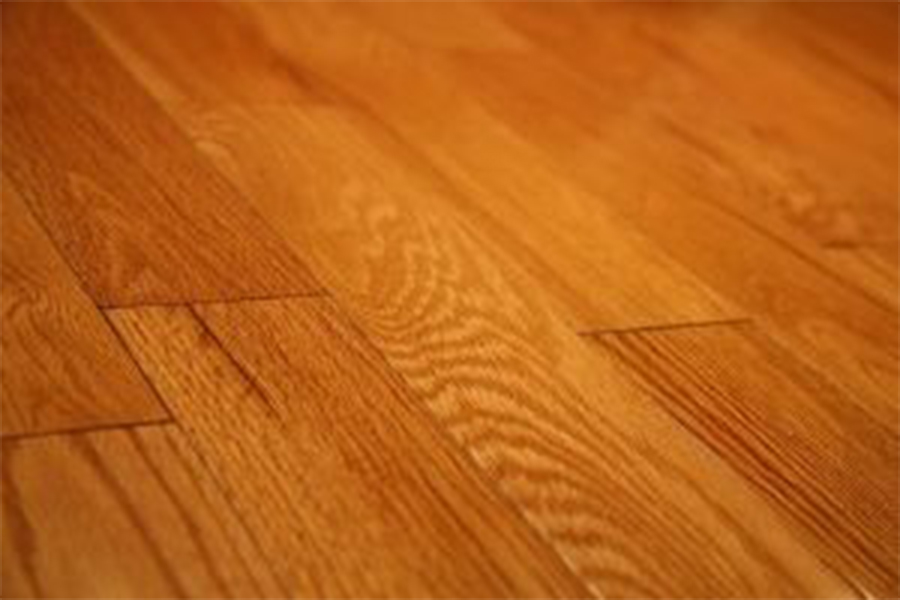
The sheen of a finish affects how the piece reads in a room as much as the colour does.
Matte hides surface imperfections and minor scratches - the low reflectivity means damage does not catch the light. It looks natural and understated. Satin is the most versatile everyday finish - enough sheen to look finished, not so much that it reads as plastic. Gloss amplifies colour depth and reflects light dramatically, making a piece look rich and lacquered, but every scratch and fingerprint is immediately visible.
For furniture that takes daily use, matte or satin almost always serves better than gloss. Gloss belongs on show pieces and cabinetry where the high-shine effect is the deliberate design choice.
If you want furniture that feels like real wood and you are comfortable with occasional maintenance - oil or hardwax oil. If you want maximum durability with zero maintenance - PU in matte or satin. If it is an antique or heirloom piece - shellac or wax. If it is a kitchen surface or cutting board - varnish, conversion varnish, or mineral oil. If you want to change the colour - stain, dye, or paint first, then protect with the appropriate topcoat.
The finish is not a finishing touch. It is the decision that determines how the piece ages.
Which wood finish are you currently living with - and is it holding up? Let us know in the comments section below.
We will be back with the next blog soon. Till then, stay tuned!
Image Source: Pinterest, Google, and Wooden Street
Read more - Know The Types of Wood Used in Furniture
A Polyurethane (PU) is the most durable for everyday furniture. Conversion varnish outperforms it in professional kitchen and cabinet applications.
A Varnish is thicker, more heat and water resistant, with an amber tone. Lacquer is thinner, dries faster, and stays clearer but is less durable.
A Hardwax oil for a natural look with good durability. PU in matte or satin for maximum protection with minimal maintenance.
A Wipe clean with a dry or lightly damp cloth. Re-apply oil every six to twelve months - rub in, leave for fifteen minutes, wipe off excess.
A Polyurethane - a hard, clear synthetic coating sprayed or brushed onto wood. Highly resistant to water, heat, and scratches. The most common finish on modern Indian furniture.
Trending Products
Top Picks from EveryoneArticles you will love to read
Not all space saving furniture delivers on its promise. This guide explores the most effective space-saving solutions, from multifunctional beds and foldable tables to smart storage units and compact furniture designs. Learn what genuinely improves everyday living and what may look impressive in photos but falls short in real homes
Continue Reading
Choosing the right curtains involves more than picking a color. This guide explores different types of curtains, popular fabrics, and practical functions for bedrooms, living rooms, and other spaces. Learn about window curtains types, hanging styles, light control options, and the kinds of curtains best suited to your home’s needs
Continue Reading
Selecting from the many kinds of dining table options requires balancing space, seating needs, and functionality. This guide breaks down dining tables by shape, dimensions, and extension mechanisms, helping you identify the most practical and visually appealing choice for your home.
Continue Reading
From classic analog pieces to modern statement décor, various types of wall clock design can dramatically influence a room's look and feel. This guide examines clock mechanisms, sizes, and styles, helping you understand which options suit different interiors and how they contribute to functionality and aesthetics
Continue Reading
From decorative accents to supportive seating accessories, the many kinds of cushions serve different functions throughout the home. This guide explores cushion types by fill material, shape, and purpose, helping you understand where each option works best for comfort, aesthetics, and everyday use.
Continue Reading


