Table of Content- The Real Reason Most Rooms Feel Poorly Lit
- Types of Light Fixtures and Where They Work Best
- Different Types of Light: Which Fixture for Which Room?
- Understanding the Layering Principle for Different Types of Light Fixtures in the Ceiling
- Ceiling Type and Fixture Compatibility
- Ceiling Height Changes Everything
- Quick Decision Checklist Before Buying
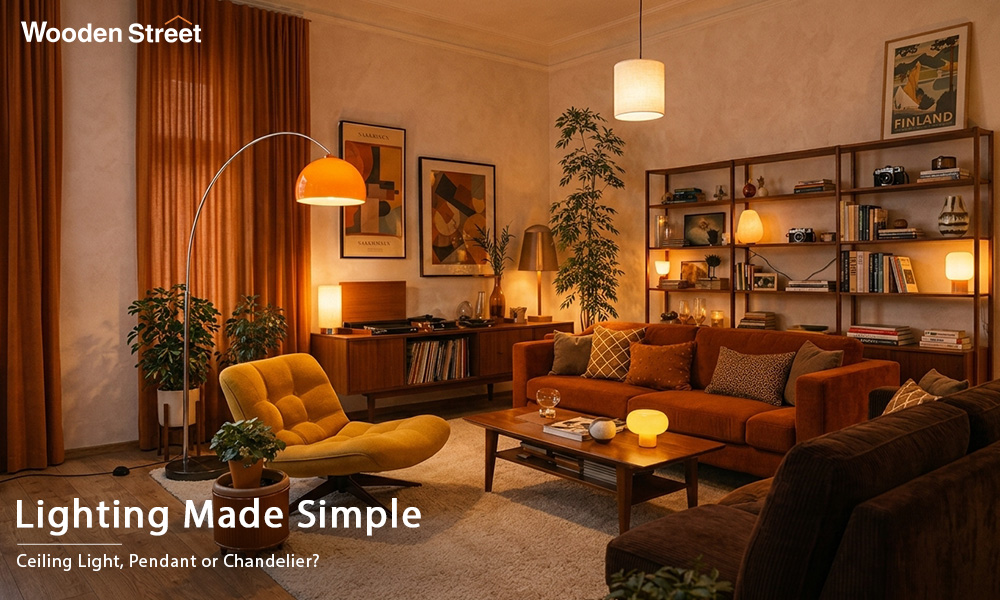
Lights are one of those shiny-brightening things that we often keep in the dark while setting-up a home. It’s just our habit that we are going to spend days choosing furniture, curtains, wall colours and décor pieces, but when it comes to lighting, most of us get tired by that time and simply pick-up whatever looks good. And later, when everything feels all set, the room still feels incomplete for some reason.
The reason behind this is that every lighting fixture comes with a different purpose to fulfil, a different job to do. For reference, a ceiling lights for living room works differently, a table lamp has a different purpose, and the same goes for pendants and chandeliers as well. And that’s how choosing the wrong fixture can make even a beautifully furnished room feel dull and low-lighted.
So, before you finalize bringing home any kind of random lighting fixture, just have some better understanding of the different types of light, where they should be installed and how they are gonna actually work. So in this blog, we are going to explore the most popular types of light fixtures in the ceiling, understand the different types of light available for every room and help you choose the right fixture for your home. So, before it gets dark, let's get started.
The Real Reason Most Rooms Feel Poorly Lit
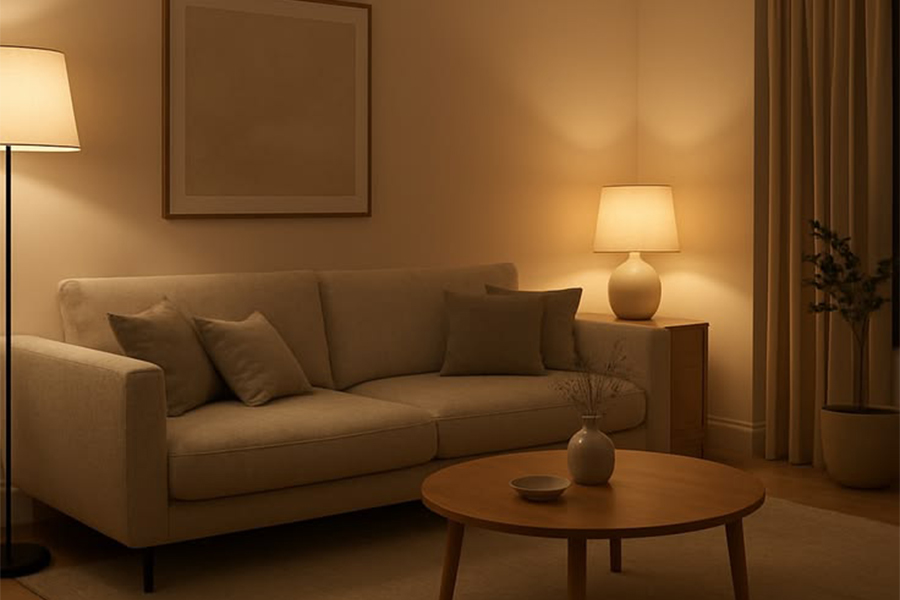
One of the biggest mistakes people make is assuming that one light is just enough to get everything done.
Let's say you have a living room. You install one bright ceiling light in the centre and think the work is done.
But during movie time, the light feels too harsh. While reading a book, one corner still feels dark. When guests arrive, the room lacks that welcoming feeling that you have seen in the movies or luxury homes. This happens because different types of light have different jobs.
Some lights brighten the entire room. Some lights help with specific tasks. Some lights simply make a room look amazingly stylish. When all these jobs are given to one fixture, lighting starts failing.
This is exactly why understanding the types of light fixtures in the ceiling and other supporting fixtures becomes important.
Types of Light Fixtures and Where They Work Best
Ceiling Light (Flush and Semi-Flush)
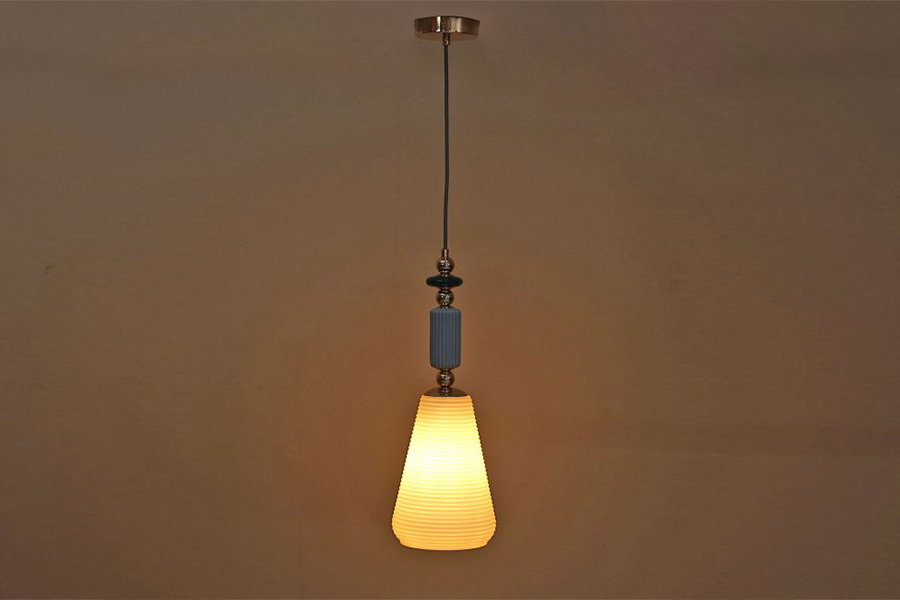
Among all the different types of light, ceiling lights are the most common. These are usually the first lights installed in Indian homes.
Flush ceiling lights sit very close to the ceiling and work really well in rooms with heights between 8 and 9 feet.
Semi-flush lights hang slightly lower and bring a little more visual appeal without occupying too much space.
These types of light fixtures in the ceiling are ideal for:
- Bedrooms
- Small living rooms
- Guest rooms
- Apartments with low ceilings
What do they do best? They spread light evenly throughout the room. Where do they fall short? They do not create much personality. A room with only a ceiling light often feels functional but not memorable. That is why many homeowners now combine these types of led light fixtures with warm table lamps or pendant lights.
Pendant / Hanging Light
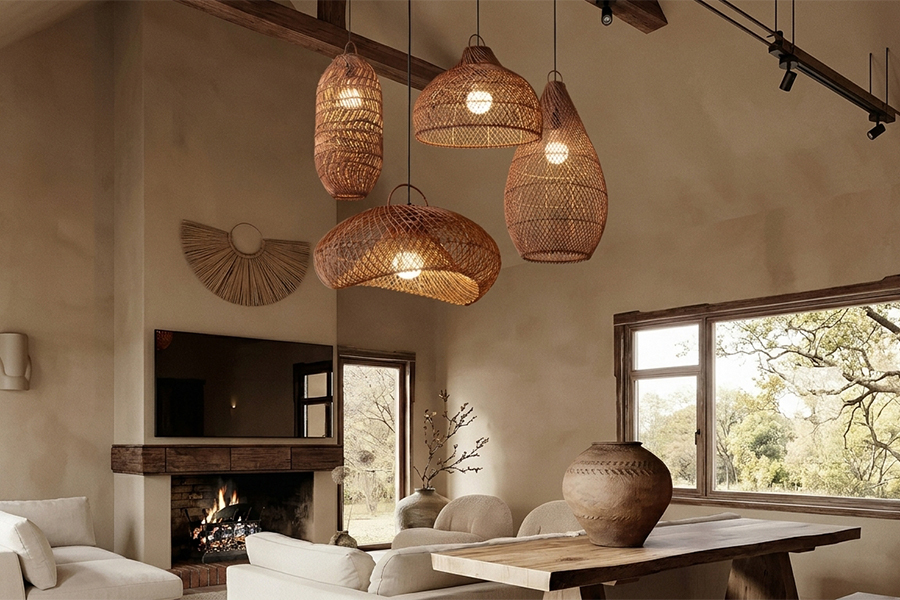
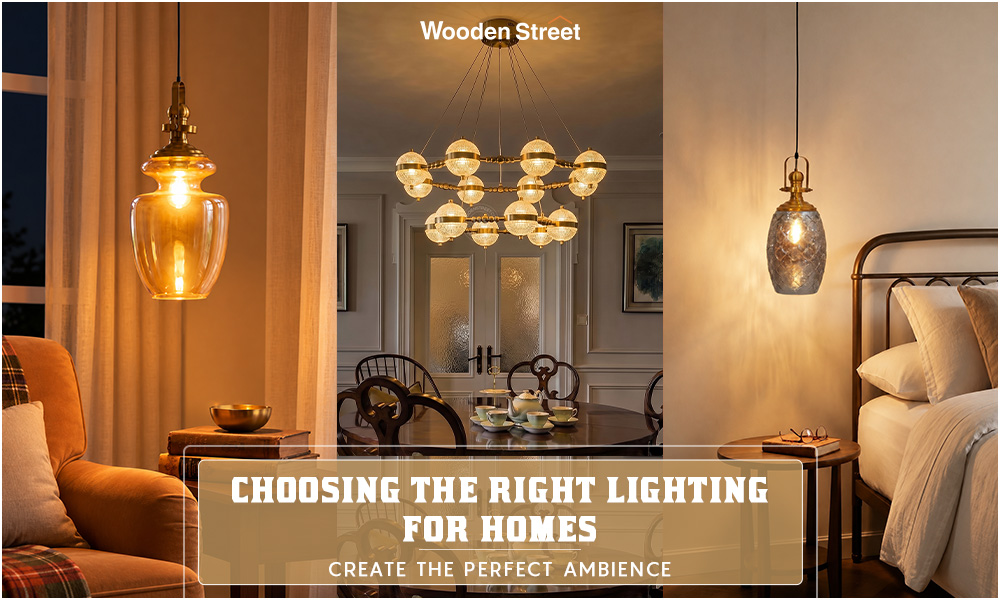
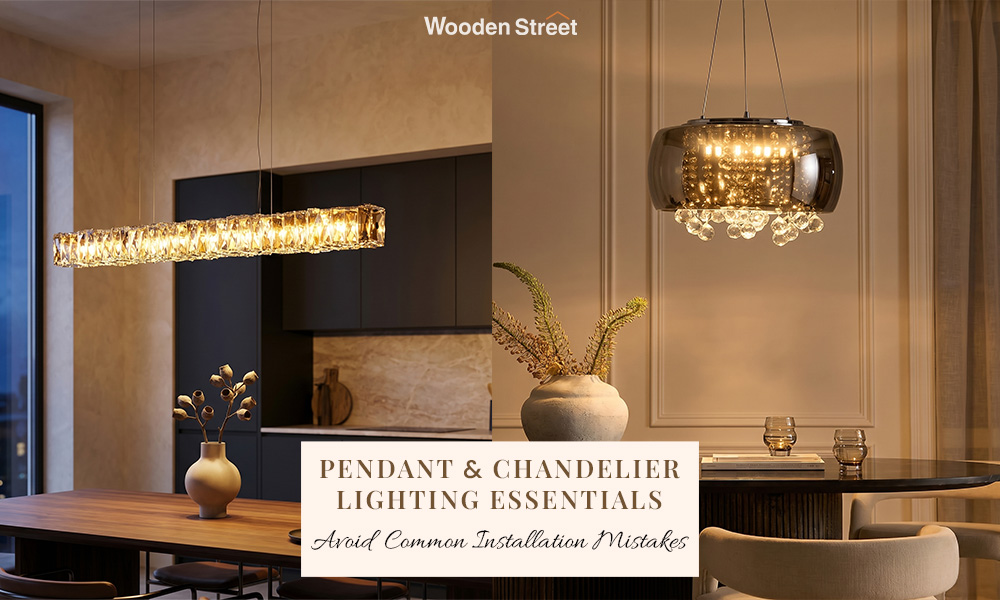
Before moving ahead, let's clear up one confusion. Many people think pendant lights and chandeliers are the same thing. They are not. A pendant usually hangs from a single cord, rod or chain. A chandelier has multiple branches, bulbs or decorative arms. A pendant is generally simpler. A chandelier is generally larger and more decorative.
Pendant lights work amazingly well above:
- Dining tables
- Kitchen islands
- Breakfast counters
- Bedside tables
For most Indian dining spaces, the bottom of the pendant should remain around 30 to 36 inches above the tabletop. If the ceiling is higher than usual, this can be adjusted slightly.
Among the different types of light available today, glass pendant lights are often the easiest way to add character without making the room feel overloaded.
Table Lamp
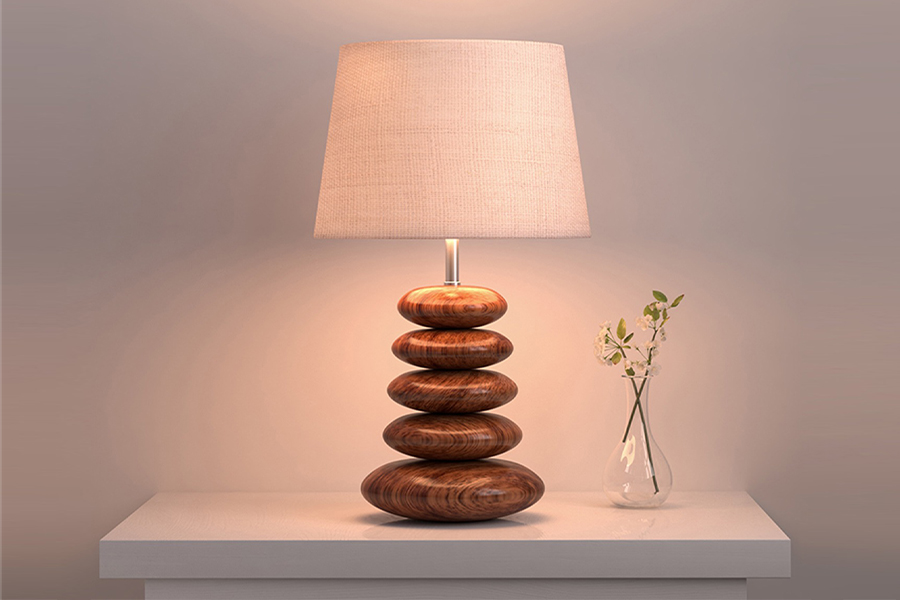
This is where many homeowners make another mistake. They assume a table lamp is only decorative. Actually, a table lamp performs a job that ceiling lights never can. Imagine your parents watching television in the evening.
The main ceiling light feels too bright. Switch it off completely and the room feels dark. This is where a table lamp works perfectly. It creates a softer atmosphere while still providing useful illumination.
A good table lamp consists of:
- A stable base
- A properly sized shade
- Correct placement
For best results, the bottom of the lampshade should sit roughly at eye level when seated. Among all the different types of light, table lamps are perhaps the most underrated.
They go really well with side tables, console tables and study desks, ensuring that your room looks completely amazing and much more useful.
Chandelier
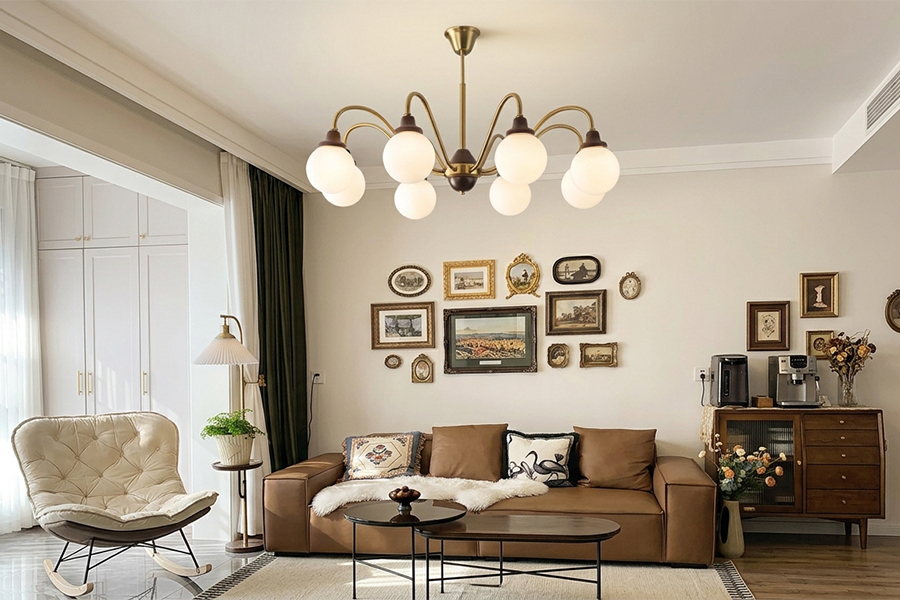
Now let's talk about the fixture everyone loves. The chandelier. As you have seen in the movies, chandeliers instantly attract attention. But not every room needs one. A simple sizing formula helps. Add the room length and width in feet.
Convert that number into inches.
For example:
12 ft × 14 ft room
12 + 14 = 26
A chandelier around 26 inches wide usually works well. For dining tables, chandeliers should generally be 30 to 36 inches above the table surface. For open rooms, maintain at least 7 feet of clearance from floor to fixture bottom.
A chandelier works beautifully in:
- Double-height spaces
- Formal living rooms
- Dining areas
- Entryways
However, many bedrooms simply want a chandelier because it looks attractive online. In reality, a pendant or semi-flush fixture may work much better.
Different Types of Light: Which Fixture for Which Room?
| Room |
Primary Fixture |
Secondary Fixture |
Avoid |
| Living Room |
Ceiling Light |
Table Lamp or Chandelier |
One light only |
| Bedroom |
Semi-Flush Ceiling Light |
Table Lamp |
Oversized Chandelier |
| Dining Room |
Chandelier or Pendant |
Wall Light |
Flush Ceiling Light Only |
| Study |
Ceiling Light |
Task Lamp |
Decorative Chandelier |
| Entryway |
Chandelier |
Wall Sconce |
Small Ceiling Fixture |
| Kitchen |
Ceiling Light |
Pendant Over Island |
Large Decorative Chandelier |
This simple approach helps you combine different types of light without creating confusion.
Understanding the Layering Principle for Different Types of Light Fixtures in the Ceiling
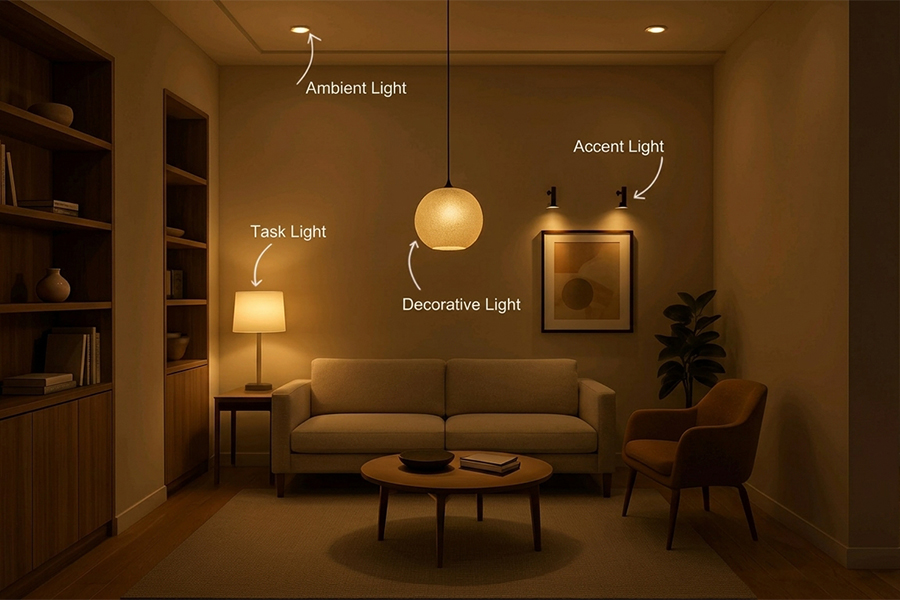
Before you finalize any lighting setup, it is important to understand three layers.
Ambient Lighting
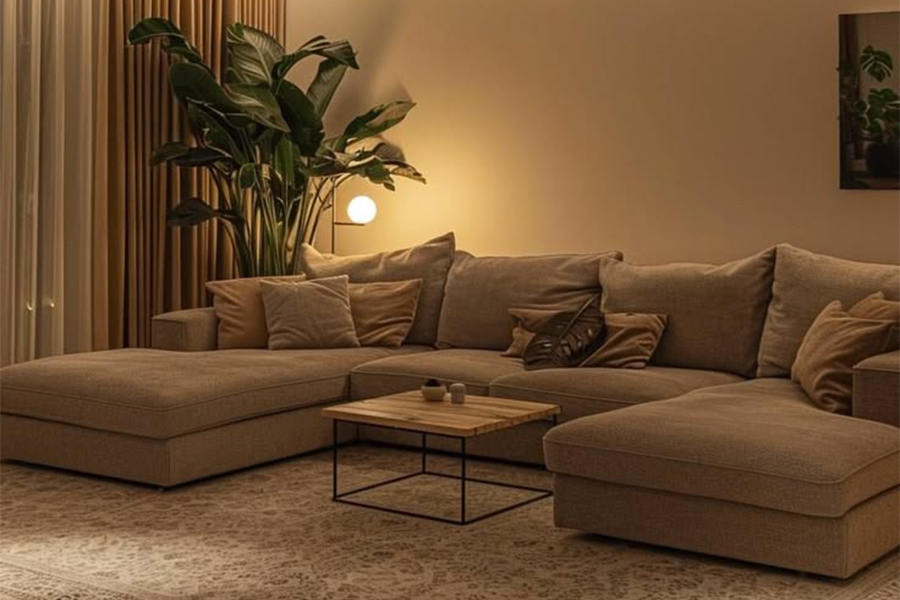
This is your main light source.
Usually:
- Ceiling lights
- Flush fixtures
- Semi-flush fixtures
These types of light fixtures in the ceiling brighten the entire room.
Task Lighting
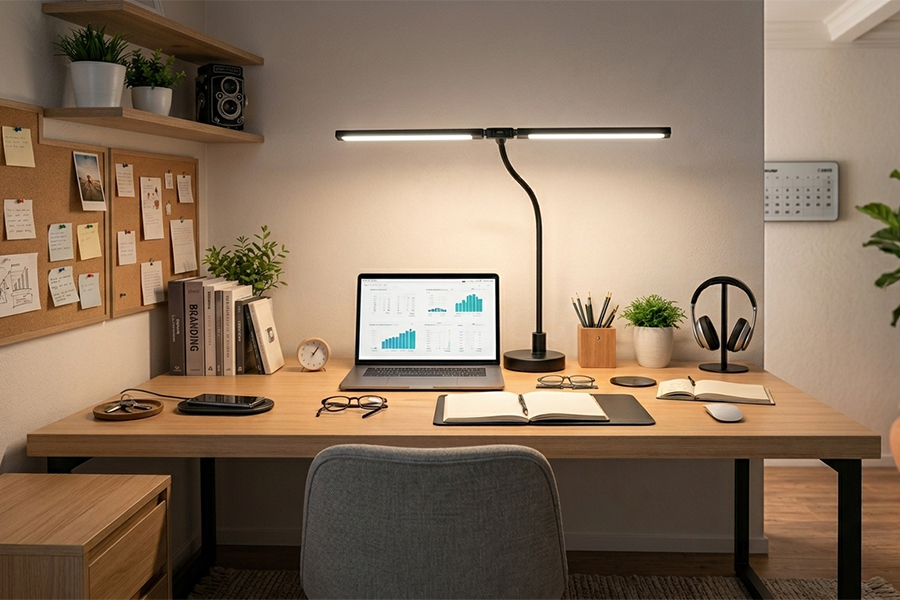
This helps you perform specific activities.
Examples include:
- Table lamps
- Reading lamps
- Study lamps
These types of led light fixtures make daily tasks much more easier.
Accent Lighting
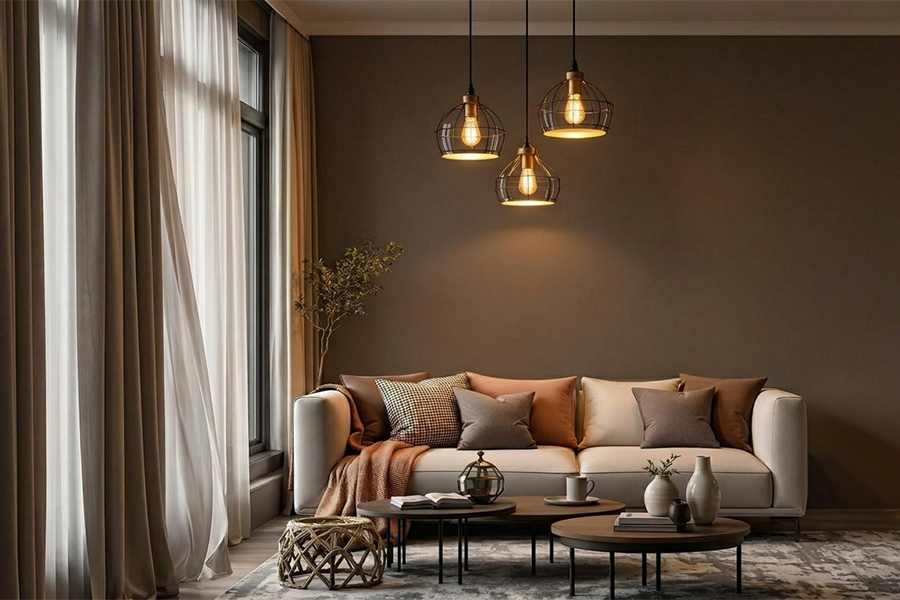
This is where the magic happens.
Accent lighting highlights certain areas and adds character.
Examples include:
- Pendant lights
- Chandeliers
These different types of light make the room feel complete.
Ceiling Type and Fixture Compatibility
This is something many buyers discover only after the fixture arrives. Not every ceiling supports every fixture.
Concrete Ceiling
The strongest option. Supports almost all types of light fixtures in the ceiling including heavy chandeliers.
False Ceiling
Requires more planning. Heavy fixtures should never depend only on gypsum board support. Proper anchoring into the structural ceiling is necessary.
Wooden Beam Ceiling
Less common but seen in villas and traditional homes. Weight distribution becomes very important here. Before ordering any chandelier, always ask your electrician:
- Ceiling type?
- Load capacity?
- Anchor point availability?
- Wiring location?
A five-minute discussion can prevent major installation issues later.
Ceiling Height Changes Everything
Many times people buy lighting first and measure later. The process should be the opposite. For ceilings around 8 feet:
For ceilings between 9 and 10 feet:
- Semi-flush fixtures
- Small pendants
For ceilings above 10 feet:
- Chandeliers
- Multi-pendant arrangements
As a simple rule:
Maintain at least 7 feet clearance between fixture bottom and floor in walkable areas. This single rule solves most hanging-height mistakes.
Quick Decision Checklist Before Buying
Before you finalize purchasing any lighting fixture, make sure you have checked:
✔ Room dimensions measured
✔ Ceiling height measured
✔ Ceiling type confirmed
✔ Fixture weight verified
✔ Hanging height calculated
✔ Furniture layout finalized
✔ Required lighting layer identified
✔ Primary and secondary fixture selected
✔ Installation point confirmed
✔ Electrical support checked
Once all these points are sorted properly, choosing between different types of light becomes much more easier.
Conclusion
So, after reading this blog, you must have realised that just like every furniture piece has its own purpose, every lighting fixture also has its own role to play in the decor of your home. Some types of light are meant to brighten the entire room, while some are designed to make specific corners more useful and comfortable.
So before you finalize-up any lighting setup, it is really very important to have a complete idea of your room size, ceiling height and daily requirements first. Once these things are clear, choosing between different types of light becomes much more easier. Whether it is a ceiling light, pendant, table lamp or chandelier, the right fixture in the right place can make the overall room set-up feel complete.
We will be back with the next blog soon. Till then, stay tuned!
Image Source: Pinterest, Google, and Wooden Street
FAQs
Q
What is the difference between a pendant light and a chandelier?
A
Think about a dining table in an Indian apartment. If there is one hanging fixture suspended from a single cord, that is generally a pendant. And if there are multiple arms, bulbs or decorative branches getting a much more bigger visual impact, then that is a chandelier. And that’s how both belong to different types of light but serve different purposes.
Q
Which light fixture is best for a low ceiling?
A
For homes with 8-foot ceilings, flush and semi-flush fixtures are going to work really well. These types of light fixtures in the ceiling also gets you good amount of illumination without making the room feel cramped.
Q
How many lights does a living room need?
A
In most cases, one ceiling light is not enough. A combination of ceiling lighting and one or two supporting fixtures creates much better results. This is where understanding different types of light becomes important.
Q
Can a table lamp be used as the primary light source?
A
Generally no. A table lamp is designed as task or supporting lighting. It works best alongside other types of led light fixtures rather than replacing them completely.
Q
What height should a pendant light hang at?
A
For dining tables, keeping the pendant around 30 to 36 inches above the tabletop works well in most Indian homes.
Q
Can a chandelier be installed on a false ceiling?
A
Yes, but proper support is required. The fixture should be anchored to the structural ceiling above rather than relying only on the false ceiling material.