
23 Jun 2026

How to Choose, Size and Hang a Chandelier or Pendant Without Getting It Wrong

Planning to buy a chandelier or pendant light? Explore chandelier sizing, pendant placement, ceiling load limits, style matching, and installation tips
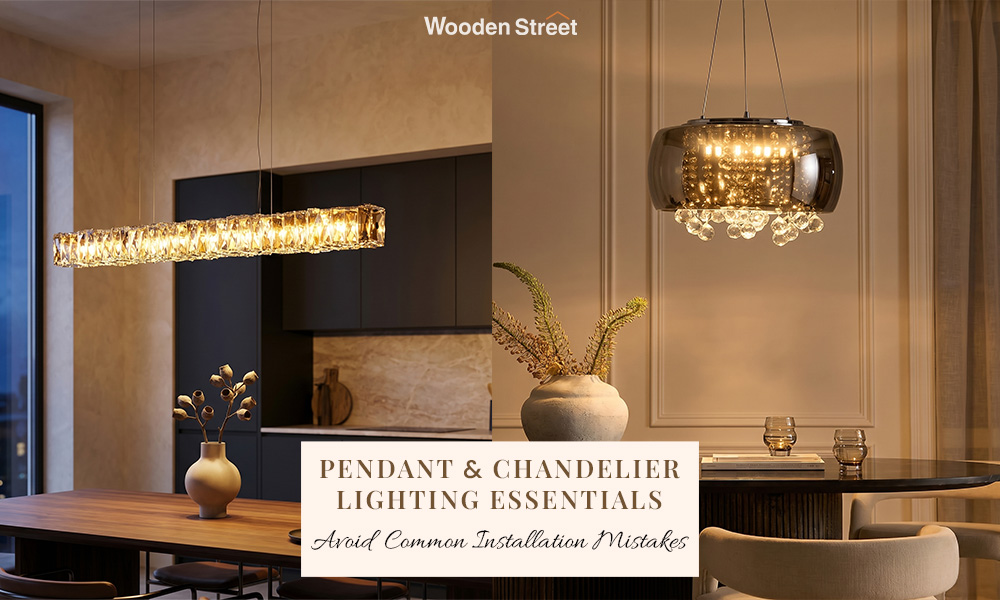
Pendant & Chandelier Lighting Essentials
Table of Content
  1. Why Statement Lights Get Bought Wrong More Than Any Other Fixture
  2. Chandelier vs Pendant vs Semi Flush: Settle This First
  3. The Sizing Formula
  4. Hanging Height: The Number That Makes or Breaks It
  5. Ceiling Load and Installation Reality
  6. Style Matching
  7. The Mistakes Worth Calling Out
  8. Maintenance Reality Before You Buy

You know that one house you have visited, a relative's new flat, a friend's recently done up home, a showroom you walked into once where the chandelier in the dining room just looked absolutely perfect? The whole room felt pulled together. The light sat exactly right above the table, the size felt made for that space, and the whole thing just worked. And then you have also been to homes where the statement light is hanging so high it looks like a smoke detector, or the chandelier is so small for the room that it looks like it got lost trying to find its spot. These two situations are really very common and both happen because nobody explained the rules before the purchase was finalized.

This guide is going to fix that. Whether you are picking a chandelier for the living room, a pendant above the dining table, or a cluster for an entryway, here is everything you need to know before you finalize anything, be it size, height, ceiling load, style matching, and the mistakes that are very easy to make and very hard to undo once the fixture is up.
Why Statement Lights Get Bought Wrong More Than Any Other Fixture

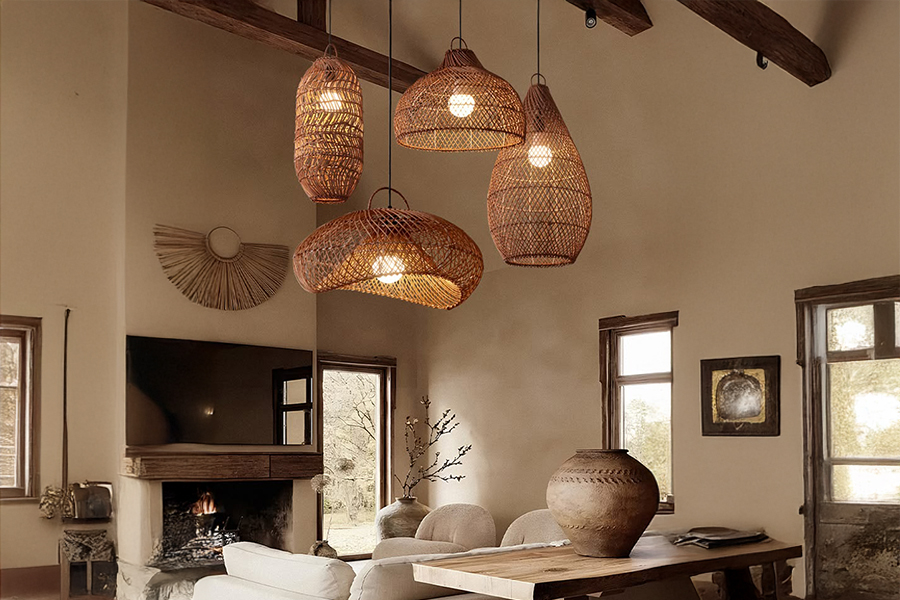
multiple woven rattan pendant lights hanging over a rustic wooden dining table

Most people get statement lighting wrong for two very specific reasons and both happen before the fixture even arrives:

  • Wrong size Either too small for the room, where the statement light ends up looking like an afterthought floating in the middle of a large ceiling, or too large, where it overwhelms everything around it and makes the room feel heavy and jam packed
  • Wrong hanging height This one is even more common. A chandelier hung too high loses all its impact and reads as a ceiling detail rather than a room feature. Hung too low, it becomes a hazard and blocks sightlines across the room entirely

Both of these are completely avoidable if you know the numbers before you finalize the purchase. And that is exactly what this guide is going to give you.
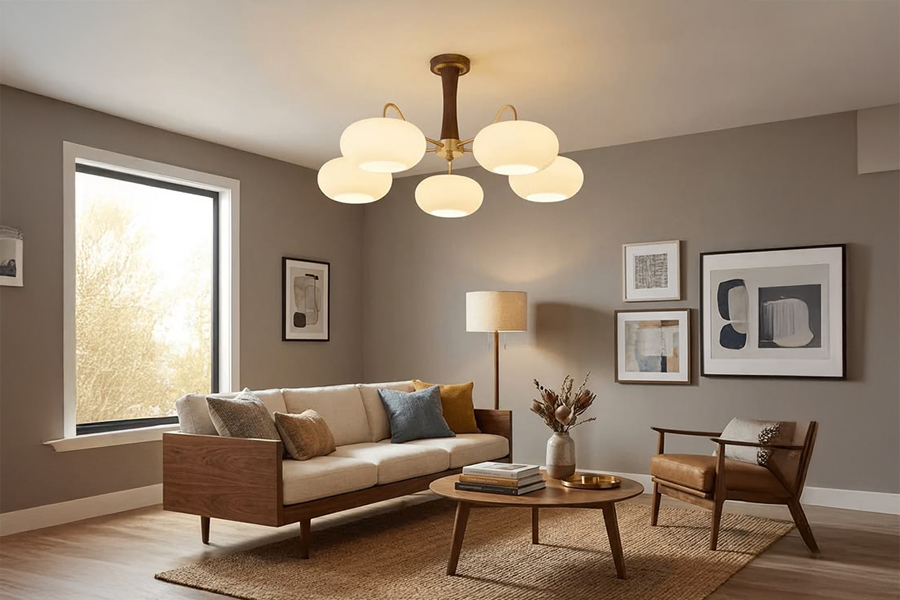
Chandelier vs Pendant vs Semi Flush: Settle This First

a contemporary semi-flush ceiling light with white globes in a living room

Before sizing is even discussed, it is important to know which fixture type actually suits your space because chandelier and pendant are used interchangeably by most buyers, and that confusion leads to wrong purchases:
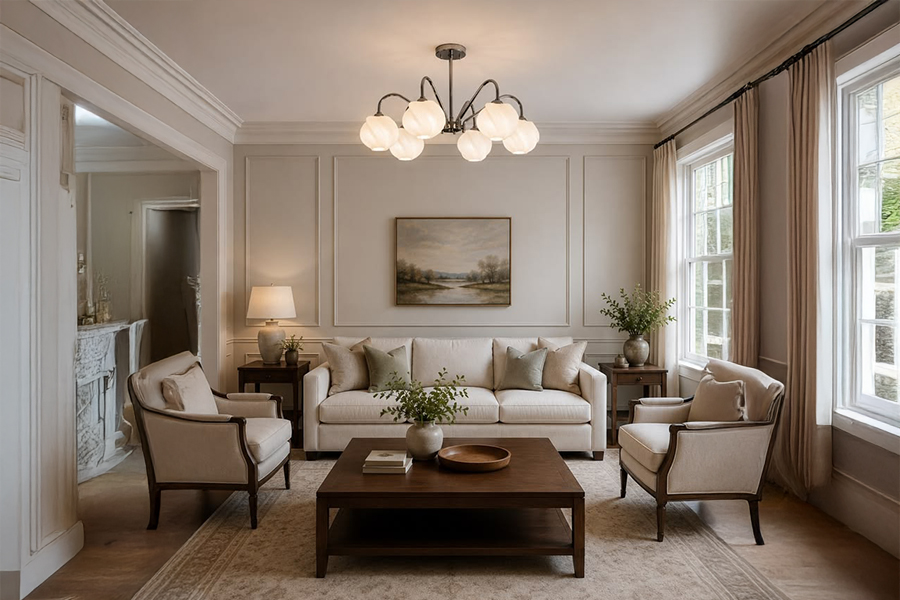
  • Chandelier A multi arm or multi tier statement lighting fixture, usually with a significant visual presence. Best for rooms with ceilings of 9 feet or above like living rooms, dining rooms, entryways, and staircases where there is enough vertical height to let it breathe
  • Pendant A single hanging fixture, suspended by a cord or rod, with one light source. Works above dining tables, kitchen islands, bedside positions, and in rooms where you want a focused statement light rather than an all over decorative one
  • Semi flush This is the one most buyers do not know exists, and it is the most important option for Indian flats where ceiling heights are often 8.5 to 9 feet. A semi flush mounts close to the ceiling but drops slightly, giving you the look of a statement lighting piece without the hanging height that a chandelier requires.

The Sizing Formula

For Chandeliers

  • The standard formula: add the room's length and width in feet, and convert that number to inches, that is the ideal chandelier diameter for that room
  • Example for a standard Indian living room of 12x10 ft: 12 + 10 = 22, so a chandelier of roughly 22 inches diameter is going to be correctly sized for that space
  • For a larger living room of 15x12 ft: 15 + 12 = 27, so go with a 26 to 28 inch diameter fixture
  • This formula is going to save you from the most common sizing mistake buying a 14 inch chandelier for a large room because it looked big in the showroom

For Single Pendants

  • The rule for a pendant above a dining table: the pendant diameter should be roughly half to two thirds the width of the table surface below it
  • Above a 4 seater dining table of 4 feet width: a pendant of 18 to 24 inches diameter is going to sit correctly
  • Above a kitchen island or a study desk: go smaller a 10 to 14 inch pendant gives a focused statement lighting effect without overpowering a smaller surface
  • For bedside pendant lights: 6 to 8 inches is enough; the job here is task light with a decorative element, not a statement light in the traditional sense

For Multi Pendant and Cluster Arrangements

  • One pendant works when the surface below is narrow or the room already has enough visual interest and needs a single clean focal point
  • Three pendants in a row work best above a long rectangular dining table of 6 feet or more space them evenly with 24 to 30 inches between each fixture so the statement lighting reads as intentional and not crowded
  • A cluster arrangement multiple pendants hanging at varying heights from a central canopy works in entryways, double height spaces, and living rooms where you want the statement light to be the first and only thing a visitor notices when they walk in.

Hanging Height: The Number That Makes or Breaks It

a multi-bulb frosted glass chandelier hanging above a cream sofa setup

Over a Dining Table

  • The bottom of the fixture should hang 28 to 34 inches above the table surface this is the range where the statement light gives proper illumination without blocking eye contact across the table
  • In rooms with higher ceilings of 10 feet or above, you can go up to 36 inches above the table without losing the intimate feel of the fixture

In an Open Room or Entryway

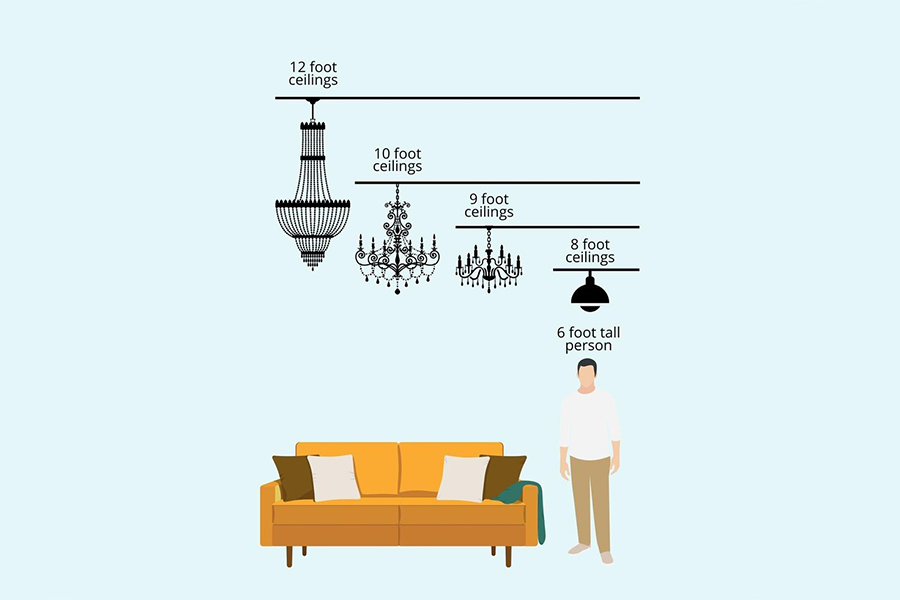
  • The clearance rule: the bottom of any hanging statement lighting fixture should be a minimum of 7 feet from the floor in any space where people walk underneath it
  • In entryways where the ceiling height allows, 7.5 to 8 feet of clearance is even better this is the height where a chandelier looks dramatic from the front door without becoming a hazard

In a Bedroom

  • This is the measurement most statement lighting guides completely miss: in a bedroom, the fixture height needs to be checked from the lying down position on the bed, not just from standing
  • If the chandelier is positioned above the bed and hangs low enough to be within your sightline when lying flat, it is going to feel obtrusive every single night. The bottom of a bedroom fixture should be a minimum of 7 feet from the floor, and if the bed is directly below it, go higher

Ceiling Load and Installation Reality

an infographic chart detailing proper chandelier sizes for different ceiling heights

This is the section that most buyers discover only after the fixture arrives and it is important to sort out before you finalize:
  • A standard false ceiling made of gypsum board can safely hold 10 to 15 kg without additional reinforcement. Most decorative pendants and smaller chandeliers fall within this range
  • Heavy statement lighting fixtures large metal chandeliers and crystal multi arm designs can weigh 20 to 40 kg or more and require a hook fixed directly into the concrete slab above the false ceiling, not into the gypsum board itself
  • Before you finalize any chandelier purchase, check the product weight, confirm your ceiling type with your contractor or electrician, and make sure the hook point is reinforced if needed. This is a safety step, not an optional one

Style Matching

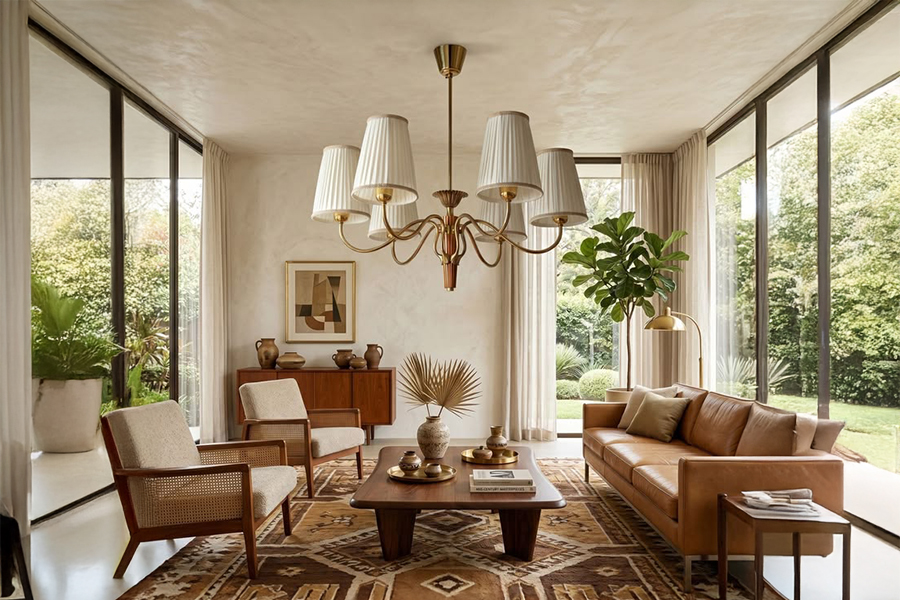
a large mid-century brass chandelier hanging over a brown leather sofa

A statement light must align with three things: ceiling height, room scale, and existing furniture style:

  • Industrial or raw finish interiors exposed filament pendants, black metal cluster arrangements, and cage style fixtures go really well with darker wood furniture and concrete or exposed brick finishes
  • Traditional or wooden heavy Indian interiors a warm brass or antique gold chandelier with fabric shades or amber glass is going to give the room a complete, pulled together look
  • Contemporary or all white setups a minimal geometric pendant or a simple globe cluster in matte white or chrome is going to work without competing with the clean lines of the rest of the room

The Mistakes Worth Calling Out

After seeing hundreds of homes and countless installations, some mistakes keep appearing again and again, such as:
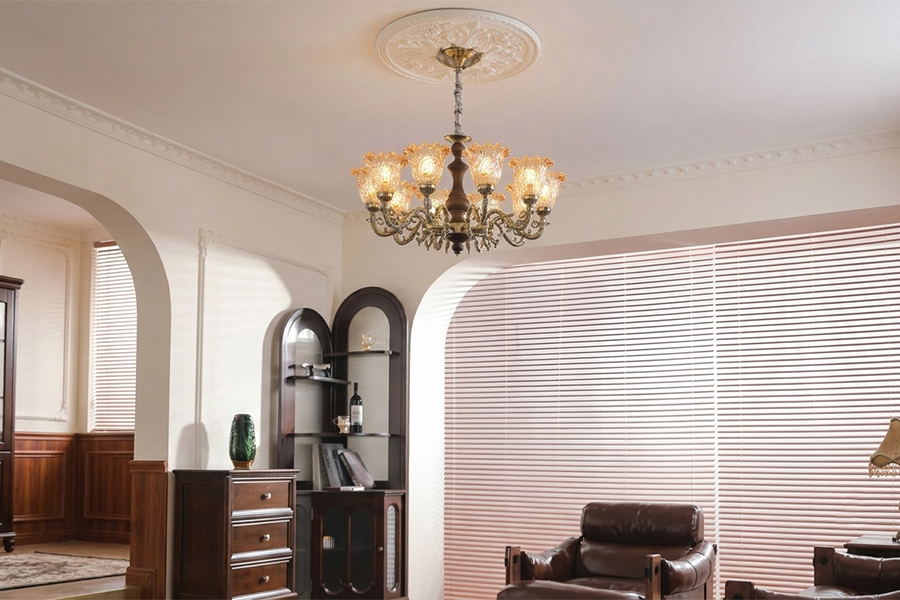
  • Too small for the room the single most common statement lighting mistake, and the one that makes a beautiful fixture look completely wrong
  • Hung too high a chandelier pulled up near the ceiling to "play it safe" loses all its purpose as a statement light and just becomes an expensive ceiling detail
  • Competing with too many other statement pieces a chandelier in a room that already has a bold sofa, a heavily patterned feature wall, and a large statement rug creates visual chaos. The statement light works when it is the statement. Not one of five

Maintenance Reality Before You Buy

an ornate traditional crystal and glass chandelier hanging in a wooden interior

Let's be honest. Chandeliers are beautiful, but they are not maintenance free. And it is important to know this before bringing one home. Crystal chandeliers usually need cleaning every few months because dust becomes visible quickly. The more decorative the fixture is, the more cleaning effort it demands.

If low maintenance is your priority, choose simpler statement lighting designs.

  • Glass globes.
  • Metal pendants.
  • Minimal chandeliers.

These are much easier to maintain compared to heavily detailed crystal options. A little practical thinking today can save a lot of frustration later.

Pre Purchase Checklist

Before you place the order, quickly tick these points:

  • Room dimensions measured properly
  • Ceiling height checked
  • Chandelier size calculated
  • Hanging height planned
  • Ceiling type confirmed
  • Electrician consulted
  • Load capacity verified
  • Furniture style matched
  • Statement light selected according to room scale
  • Maintenance expectations understood

Conclusion

A statement light done right is the one thing in a room that everybody notices first and nobody can quite explain why the space feels so complete. Done wrong, it is the one thing that makes even a well furnished room feel slightly off and you cannot stop noticing it once you see it. So before you finalize anything, measure the room, check the ceiling, confirm the height, and make sure the fixture is the only statement it needs to compete with. Get those four things right, and the chandelier or pendant you pick is going to do exactly what it was meant to do, i.e.,make the room feel completely, undeniably finished.

We will be back with the next blog soon. Till then, stay tuned!

Read More :

Image Source: Pinterest, Google, and Wooden Street

FAQs

Q How do I know what size chandelier to buy for my room?

A This is probably the biggest confusion people have while buying a statement light. The easiest way is to add your room's length and width in feet and convert that number into inches for the chandelier diameter. For example, if your room is 12 ft × 14 ft, then 12 + 14 = 26. So a chandelier around 24–26 inches will usually work really well.

Q How low should a chandelier hang in a dining room?

A The bottom of the fixture should be somewhere around 28 to 34 inches above the dining table surface. This gives you proper illumination across the table and keeps the statement light within the visual zone of the room without blocking sightlines

Q Can a chandelier be installed on a false ceiling?

A Yes, but with an important check before you finalize. A standard gypsum false ceiling holds 10 to 15 kg safely. If your chandelier weighs more than this, then the hook needs to be fixed into the concrete slab above the false ceiling, not into the gypsum board

Q What is the difference between a chandelier, pendant, and semi-flush light?

A A chandelier has multiple arms or tiers and hangs freely and it needs ceiling height to work. A pendant on the other hand is a single hanging fixture, which goes best above a dining table or island. A semi-flush mounts close to the ceiling with a short drop and it is the right statement light choice for Indian homes with ceilings of 8.5 to 9 feet where a hanging chandelier would sit too low

Q When should I use multiple pendants instead of one?

A You can use multiple pendants above a long dining table of 6 feet or more as three pendants spaced 24 to 30 inches apart is going to give a much better result than one large single pendant trying to cover the full length.

Q How do I clean a chandelier?

A Crystal and glass chandeliers need cleaning every 3 to 4 months, either by removing individual pieces or using a chandelier spray cleaner with the fixture switched off and fully cooled. In Indian homes where dust settles fast, skipping this makes the statement lighting look dull within weeks.

Q How do I match a chandelier to my interior style?

A Match to three things: ceiling height, room scale, and your existing furniture finish. Warm brass or antique gold goes really very well with traditional Indian wooden interiors. Exposed filament or black metal works with industrial or darker-toned setups. So the statement light should feel like it was always part of the room and not like it was added after everything else was done.

0 Comments
Leave a Comment

Trending Products

Top Picks from Everyone

Articles you will love to read

Mirrors & Lamps: Small Additions for a Big Makeover
Types of Office Chairs: What Each Is Built For and Who Actually Needs It
Buying a Chair: Three Questions That Matter More Than Any Feature List
Types of Wood Finishes: What Each One Does, How It Looks and How Long It Lasts
Before You Buy a Wardrobe, Open Your Current One
In Buying Guide18 Jun 2026
Before You Buy a Wardrobe, Open Your Current One

Many wardrobe purchases are driven by appearance rather than actual storage requirements. By examining what works and what falls short in your current wardrobe, you can make better decisions about capacity, shelving, hanging space, drawers, and organization features, ensuring your next wardrobe genuinely improves everyday functionality

Continue Reading