



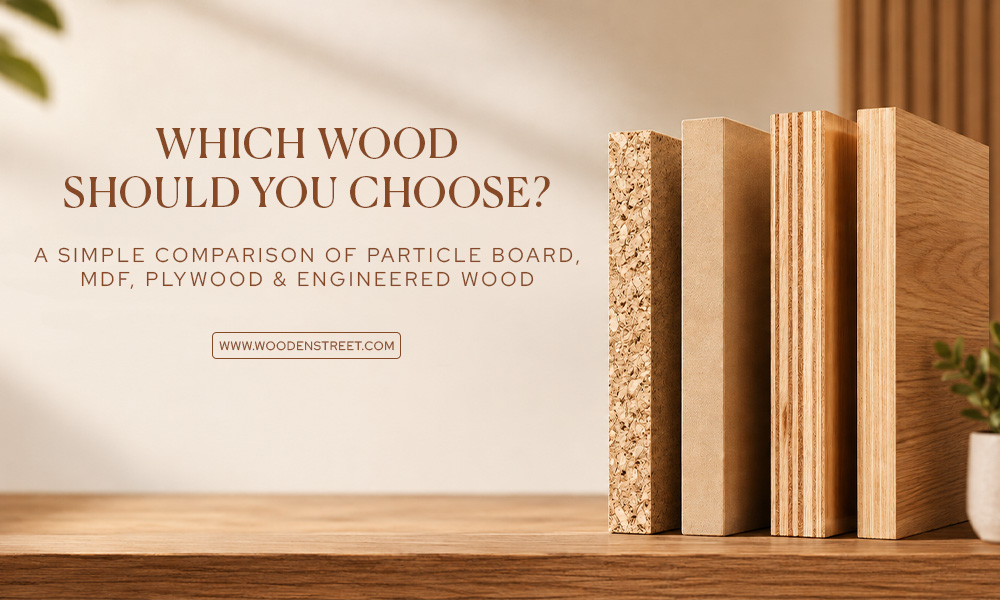
Choosing the right furniture material depends on durability, moisture resistance, strength, finish quality, and budget. This guide compares particle board, MDF, plywood, and engineered wood, explaining the advantages, limitations, and ideal uses of each material so you can make an informed decision for your home or project
A carpenter quotes you a price. The spec sheet says “engineereed wood.” The showroom brochure says “prelaminated particle board.” And your neighbour swears by plywood for everything. Before you sign off on an interior project worth lakhs, it helps to know what these terms actually mean not just what sounds good on paper. This guide cuts through the noise and tells you exactly what each board is, what it does well, where it fails, and which one your project actually needs.
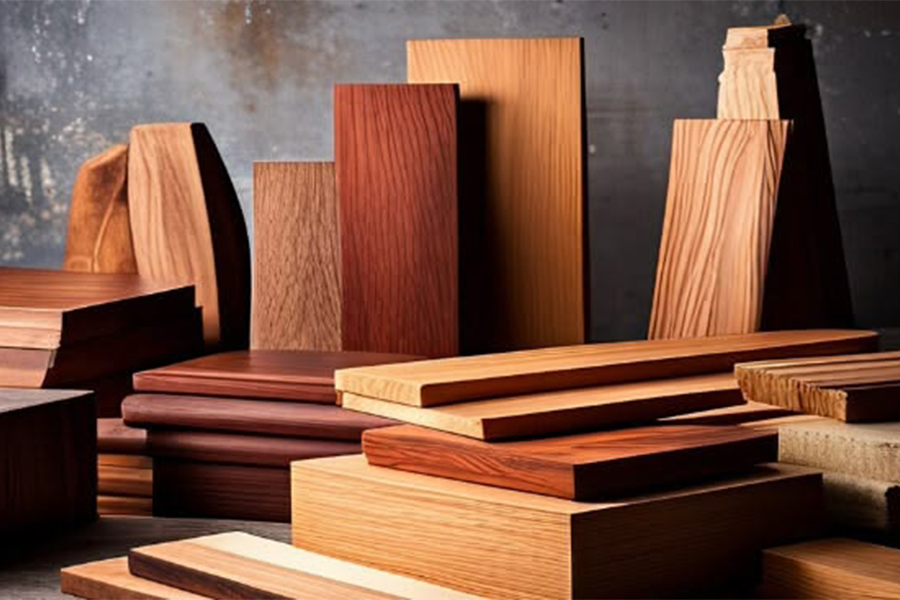
This is the confusion that causes most bad purchases. Engineered wood is not a specific board it’s a category. It refers to any material made by binding wood fibres, particles, veneers, or chips together using adhesives, heat, and pressure. Under this umbrella sits particle board, MDF, plywood, blockboard, and several others. When a furniture brand says “engineereed wood,” they could mean any of these materials. The word alone tells you nothing about quality, strength, or suitability. What matters is which type of engineered wood, and what grade.
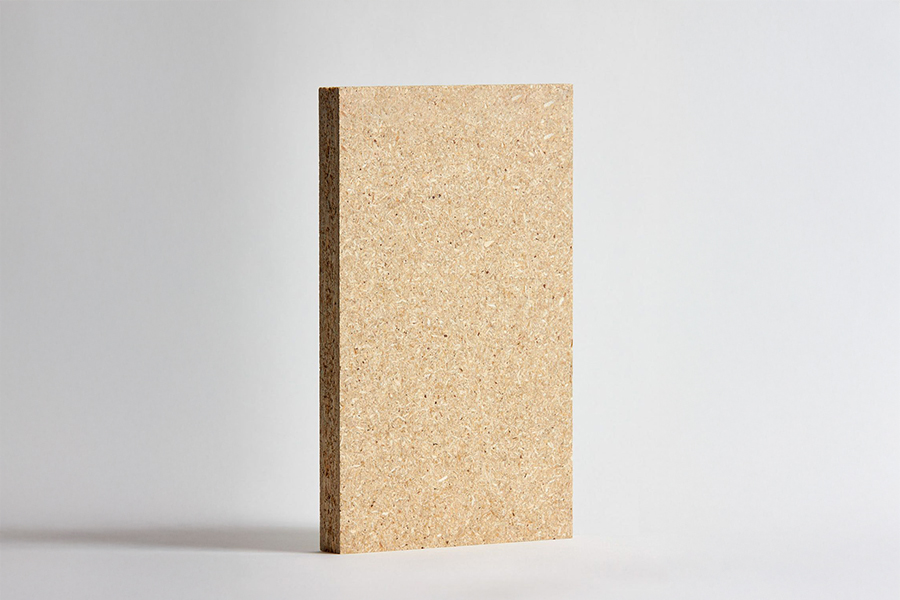
Particle board known in Hindi as bhusa ply or shaving board is made by compressing wood chips, sawdust, and industrial wood waste with synthetic resin under heat and pressure. The result is a flat, uniform board that is affordable, consistent in thickness, and easy to machine. It’s the most widely used material in budget and mid-range modular furniture in India. Its key weakness is moisture: particle board swells noticeably when it absorbs water, and once swollen, it does not recover. Interior-grade particle board should never be used in areas exposed to humidity without a sealed surface and laminate on all edges.
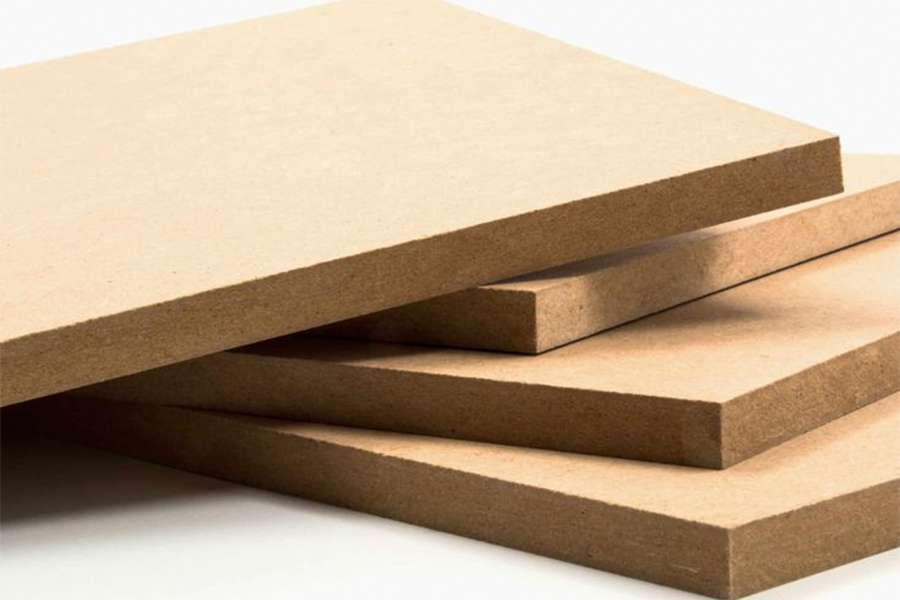
MDF is made from very fine wood fibres finer than particle board blended with resin and compressed under high heat. The result is an extremely smooth, dense, uniform board with no grain or voids. MDF machines beautifully: it can be routed into profiles, drilled cleanly, and painted to a glass-like finish without a primer coat. This makes it the preferred material for painted shutters, decorative panels, and carved facades. Standard MDF is not moisture-resistant, but moisture-resistant MDF grades (MR grade, HDMR, and boil-proof variants) are available for semi-wet areas. MDF does not hold screws at edges as well as plywood does.
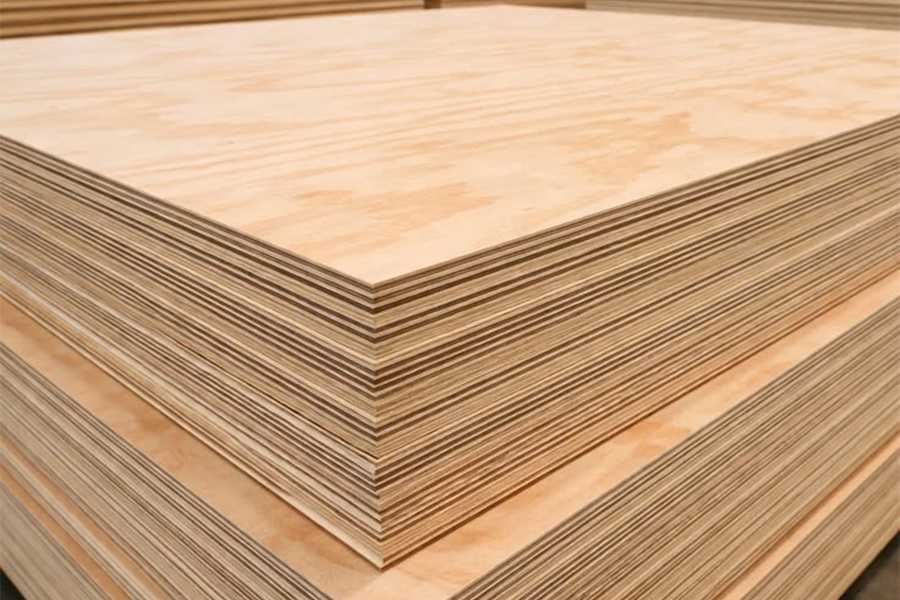
Plywood is made by gluing thin wood veneers together with each layer’s grain rotated 90 degrees to the one below it. This cross-grain construction is what gives plywood its structural strength it resists warping, handles load well, and holds screws firmly. Indian plywood is graded by its glue type: MR (moisture-resistant, for dry interiors), BWR (boiling water-resistant, for semi-exposed areas), and BWP (boiling waterproof, the highest grade for kitchens and bathrooms). Plywood is the material of choice for structural furniture that needs to last 15 to 20+ years.
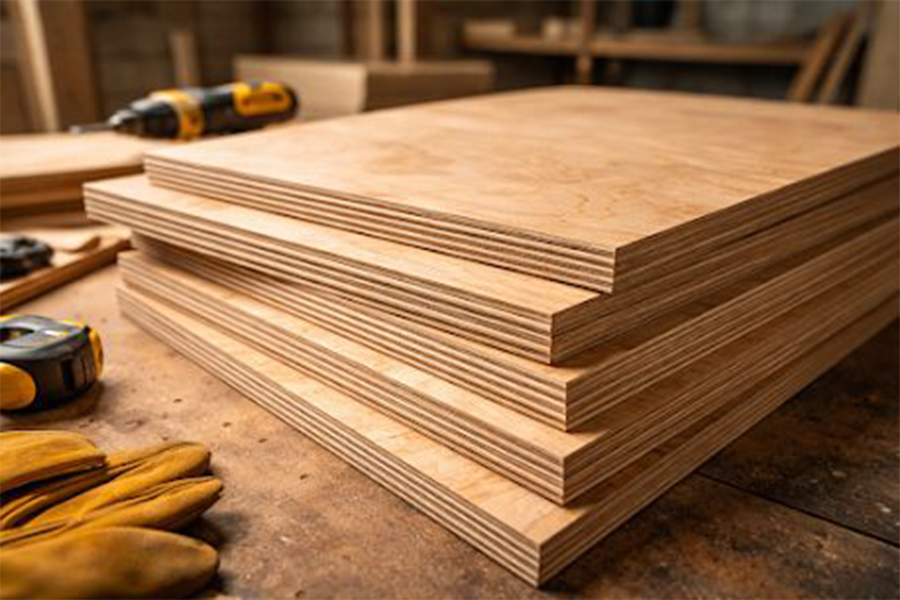
Engineered plywood sometimes called calibrated or commercial plywood refers to higher-grade plywood with consistent thickness, better core quality, and enhanced surface preparation for veneer or laminate application. Brands like Greenply, Centuryply, and Kitply produce engineered plywood with IS:303 and IS:710 grade certification. It costs more than standard commercial ply but offers greater dimensional stability and longer lifespan, making it the right choice for premium modular kitchen cabinets and structural furniture.
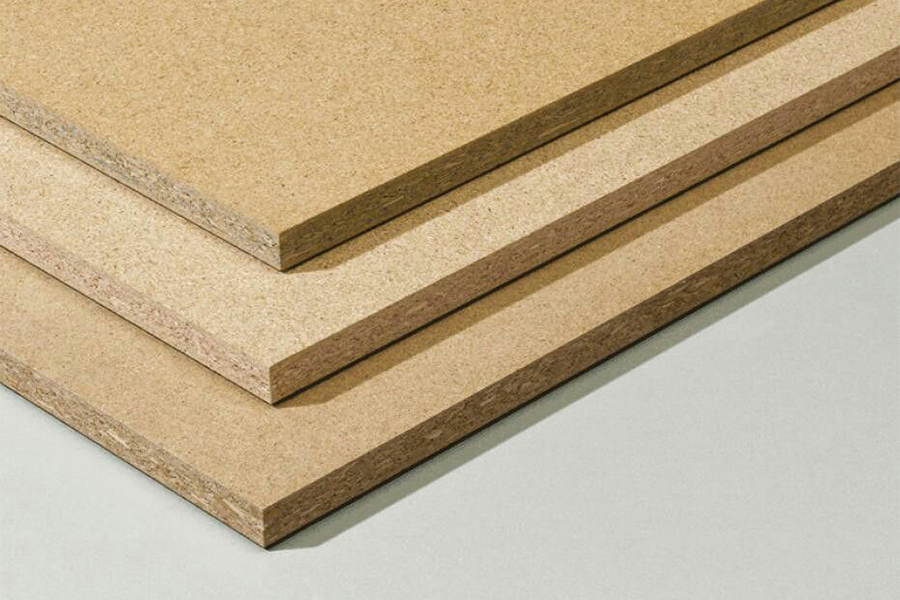
Prelaminated particle board (PLPB) is particle board with a melamine or paper laminate bonded to both faces at the factory. This means the surface finish is already applied no additional laminate or paint is needed on-site. It comes in a wide range of colours, textures, and wood grain finishes. PLPB is the backbone of most modular furniture in India at the ₹1,000–2,000 per sq ft range: affordable, clean-looking, and fast to install. Its limitation remains the same as plain particle board moisture at unsealed edges and drilled holes can cause swelling.
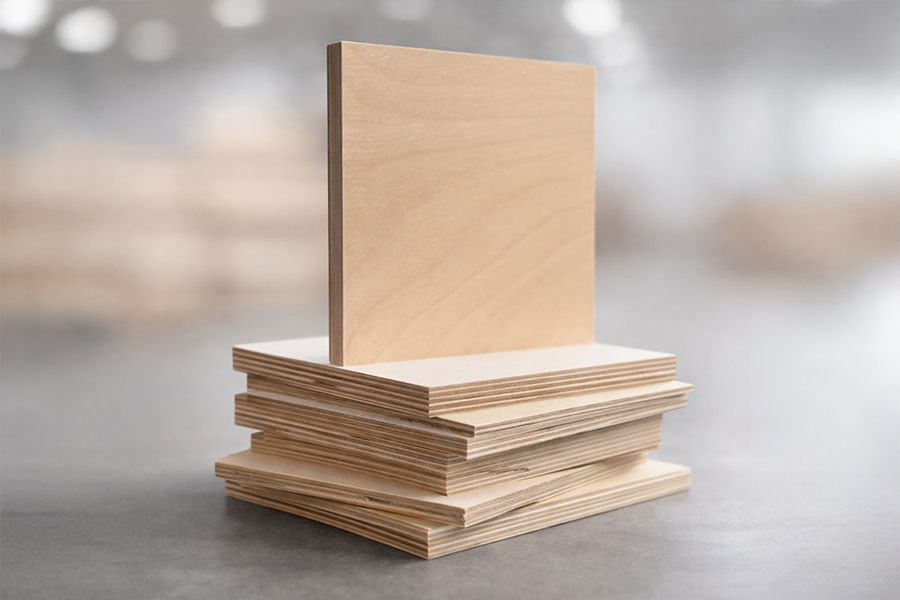
Prelaminated plywood carries the same factory-applied laminate finish as PLPB, but on a plywood substrate instead of particle board. This combines the screw-holding strength and structural integrity of plywood with the ready-to-use surface of a prelaminated board. It’s the premium version of pre-lam and is significantly more expensive, but appropriate for high-use furniture where both surface quality and structural durability are required.
Plywood wins outright. Its cross-grain layered construction distributes load across the full sheet without creating weak spots. MDF performs moderately well under consistent load but deflects (bows) over longer unsupported spans. Particle board has the poorest load-bearing capacity of the three shelves longer than 600mm in particle board will visibly sag under weight over time, which is why most serious modular kitchen cabinet makers avoid it for base units.
Standard versions of all three materials absorb moisture and degrade. The difference is in how fast and how badly. Particle board absorbs water fastest and swells irreversibly. Standard MDF is slightly better but not by much. Plywood particularly BWP/marine grade handles moisture exposure far better than either. For any furniture near water, only BWP-grade plywood or specifically moisture-resistant MDF variants should be used, with all edges properly sealed.
This matters enormously for hinge-mounted cabinet doors, drawer slides, and structural joints. Plywood holds screws exceptionally well in all directions. MDF holds screws reasonably well through the face but significantly worse at edges. Particle board has the weakest screw-holding capacity of all screws strip easily in particle board, especially at the edge, which is why high-use hinges in particle board cabinets loosen faster than in plywood equivalents.
Both particle board and MDF are heavier per sheet than equivalent-thickness plywood. A 19mm particle board sheet weighs around 30–35 kg per sheet; 19mm MDF is similar. 18mm plywood is lighter at 22–28 kg, making large furniture slightly easier to install and transport. Engineered plywood is similar in weight to standard plywood.
MDF has the smoothest surface of any board material it accepts paint directly without filler or primer and gives a truly flat, furniture-grade finish. Particle board needs lamination to achieve a decent surface. Plywood has a natural grain that telegraphs through paint unless filled and sanded, making it less suitable for painted shutters but ideal for laminate or veneer application.
In dry indoor conditions: particle board lasts 5–8 years before sagging or degradation is visible; MDF lasts 8–12 years; plywood lasts 15–25 years with proper use. In humid conditions: particle board may degrade within 2–3 monsoon seasons if any moisture reaches the core; MDF without moisture-resistant treatment can bubble and delaminate; BWP plywood remains structurally sound for decades.
Particle board is the cheapest substrate in the Indian market, followed by MDF, then standard commercial plywood, and finally engineered/calibrated plywood. However, cost-per-year-of-use tells a different story: cheap particle board furniture that needs replacement in 6 years often costs more in the long run than plywood furniture that lasts 20 years.
Particle board and MDF are widely available across urban and semi-urban markets in India, including as prelaminated boards in hundreds of colours and textures. Standard plywood is also widely available. Engineered plywood (certified calibrated ply from brands like Greenply, Centuryply, or Kitply) is available at hardware and plywood dealers in tier-1 and tier-2 cities but may need to be sourced specifically it won’t be the first thing a local carpenter reaches for.
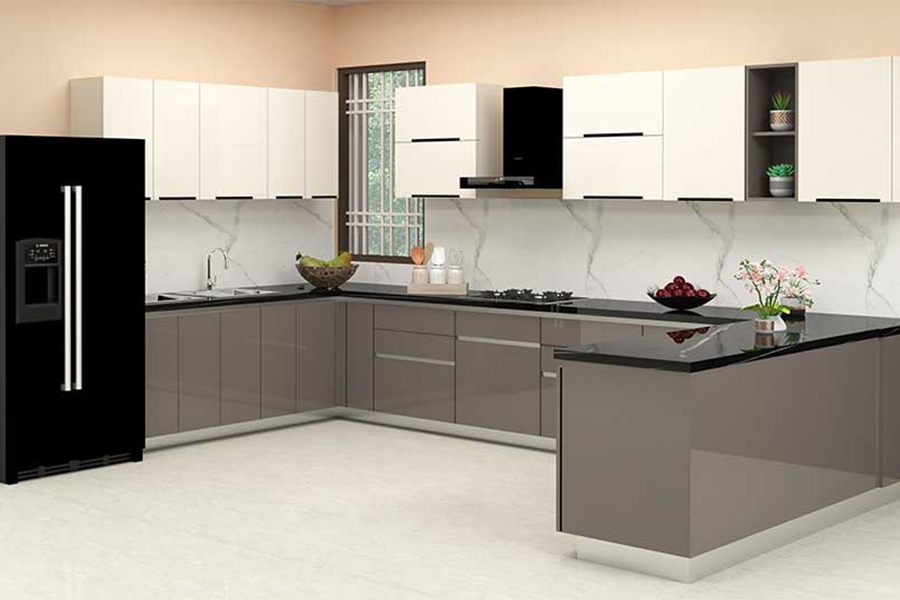
Kitchens are the one room where the particle board vs plywood debate has a clear answer: plywood, specifically BWP/marine grade. Kitchens have steam, spills, wet hands, and regular water exposure near sinks and appliances. BWP plywood holds up to all of this. Pre-lam particle board is commonly used in budget kitchen projects, but must have all cut edges sealed with edge-banding tape and PVC edging to prevent moisture ingress. Without proper sealing, particle board cabinets in Indian kitchens typically start swelling at the base and around hinges within 3–5 years.
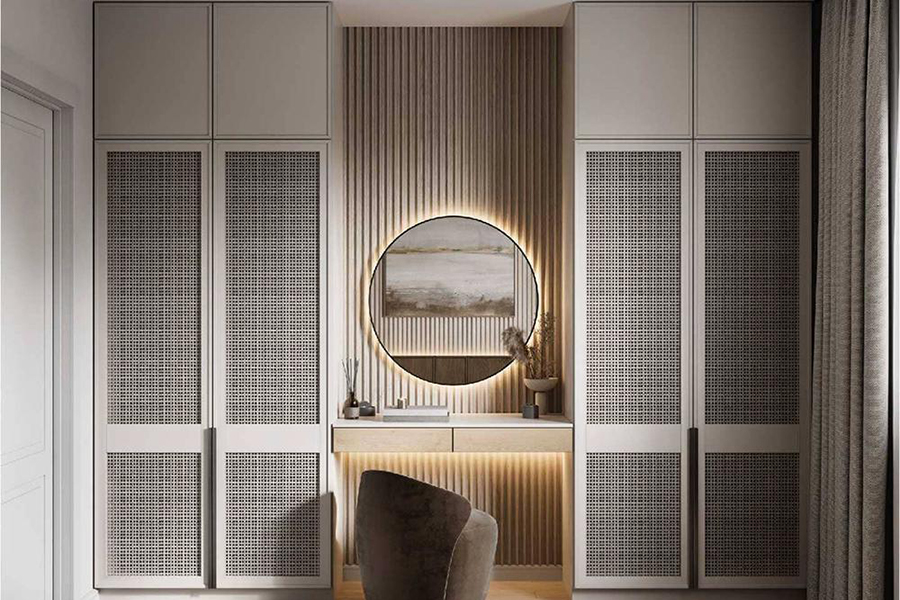
For wardrobe carcasses (the box structure), pre-lam particle board is a practical and cost-effective choice provided the room doesn’t have humidity issues. For wardrobe shutters particularly those with routed profiles, acrylic finishes, or membrane wrapping MDF is the correct substrate because its smooth, void-free surface accepts these finishes far better than particle board. A well-made wardrobe typically uses PLPB for the carcass and MDF for the shutters: each material in its correct role.
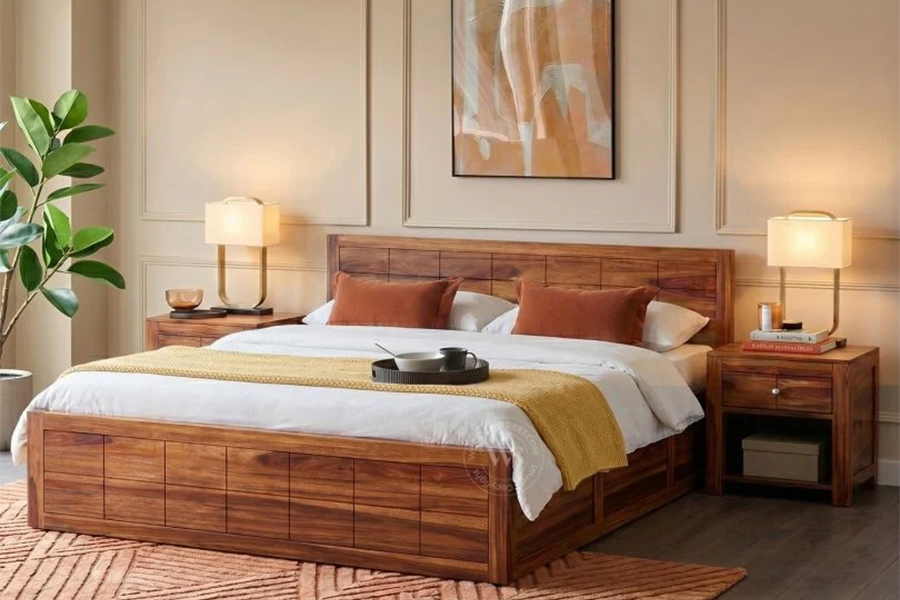
Bed frames carry repeated dynamic load not just static weight. Plywood or engineered plywood is the right material for structural members. Particle board bed frames are common in the ₹10,000–20,000 price range and functional for a few years, but the joints and screw holes in particle board weaken faster under regular use than plywood equivalents. For a bed you plan to use for 10+ years, specify plywood or solid wood for the frame regardless of what the showroom calls it.
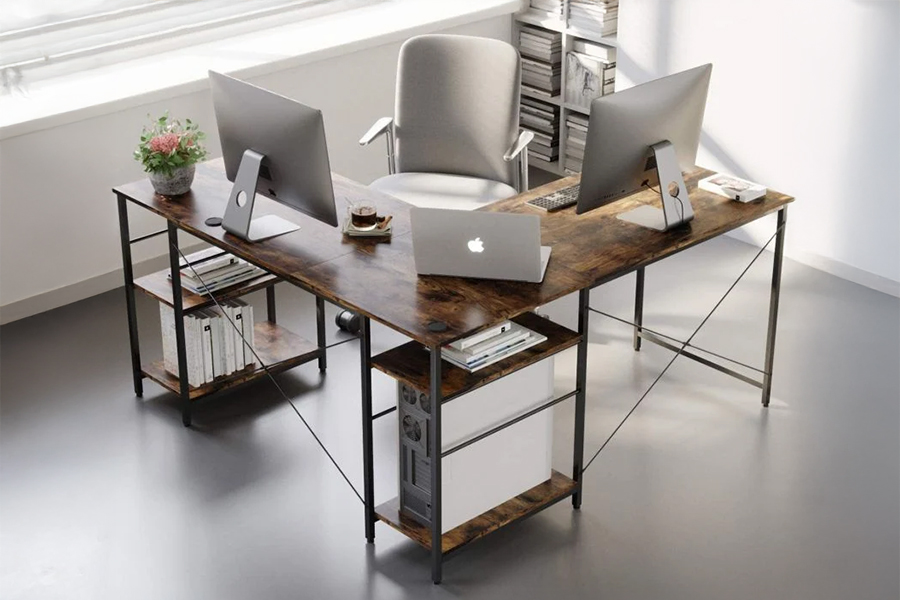
Study tables and office desks need a flat, hard-wearing surface and reasonable structural stability. Pre-lam particle board is the most common substrate in the modular office furniture market and works well here the surface load is moderate and moisture is not a regular concern. MDF with a lacquered or laminate top is an upgrade for workstations needing a smoother, more premium surface finish.
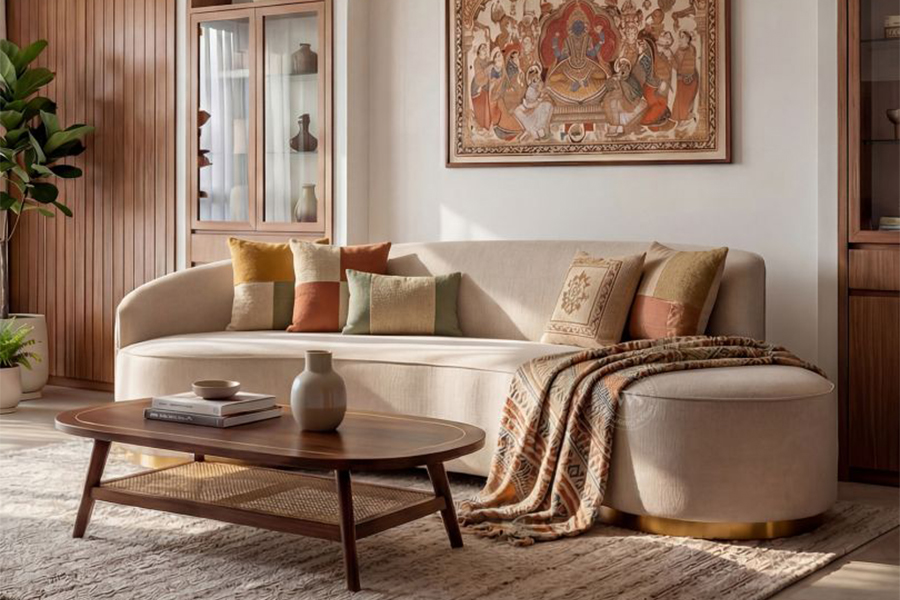
TV units and entertainment units carry moderate load and sit in dry conditions. This is one area where pre-lam particle board or MDF genuinely works well both are appropriate for the load, both finish cleanly, and neither will be exposed to the moisture conditions that cause their primary failure mode. If the unit has large open shelves carrying books or heavy equipment, switch to MDF or plywood for those specific shelves.
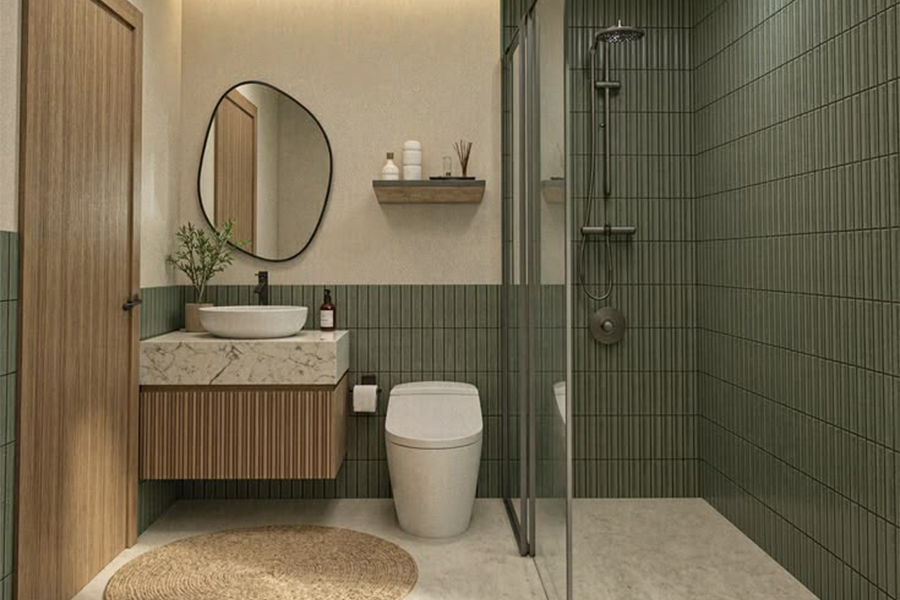
Bathroom vanities are exposed to daily water splashing, steam, and sustained humidity. Only BWP-grade plywood should be used as the substrate. Marine ply, which is BWP plywood with no voids in the core, is ideal. Particle board and standard MDF will fail not might, will in a bathroom environment within a few years. No laminate or paint coat can compensate for a water-vulnerable substrate in a genuinely wet area.
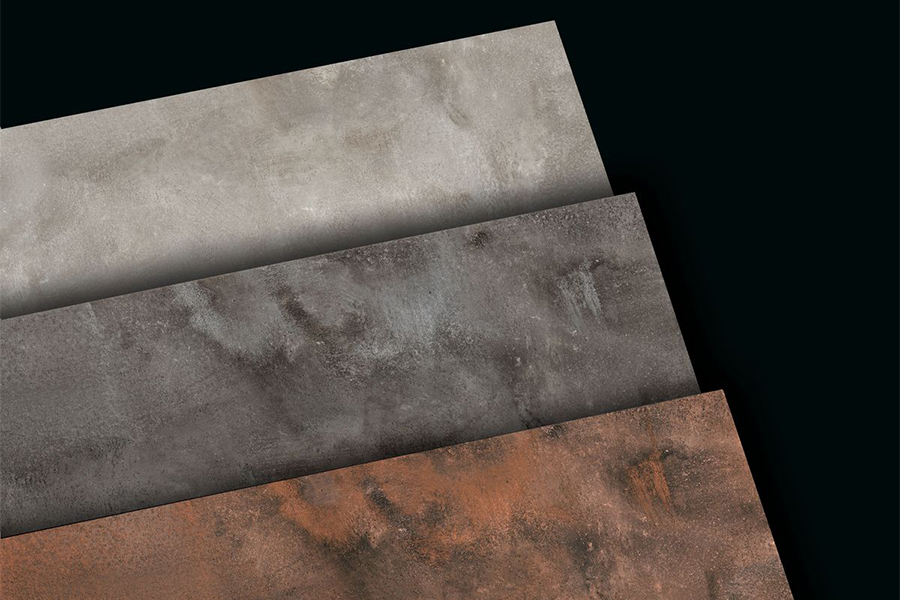
Prelaminated particle board (PLPB) is the most used substrate in Indian modular furniture. The laminate is bonded at the factory under controlled heat and pressure this is more durable and consistent than site-applied laminate. It comes in thicknesses of 12mm, 16mm, and 18mm, and in hundreds of colour and texture options. Brands like Greenply, Century Boards, and Action Tesa are the major Indian suppliers.
Prelaminated plywood applies the same factory-lamination process to a plywood substrate. It costs 40–60% more than PLPB for the same thickness and finish but offers the screw-holding capacity and moisture resistance of plywood underneath. Typically specified for premium kitchen projects, high-traffic commercial furniture, or humid environments where plywood is required but a clean factory finish is also desired.
Factory prelamination is generally more consistent than site-applied laminate. Site laminating involves applying high-pressure laminate (HPL) or decorative laminate with contact adhesive on-site, which can result in air bubbles, uneven bonding, or inconsistent finish. However, site lamination gives more flexibility in choosing laminate brands, textures, and thicknesses. For standardised modular work, pre-lam boards are faster and more consistent. For premium bespoke work, site lamination with quality HPL brands gives more control.
PLPB is best suited for: bedroom wardrobes in rooms without humidity issues, living room storage units and TV cabinets, kids’ room furniture, study room shelving, and office interiors. It is not suited for: bathrooms, kitchens without full edge-sealing, or any furniture that will bear heavy sustained loads like large bookshelves.
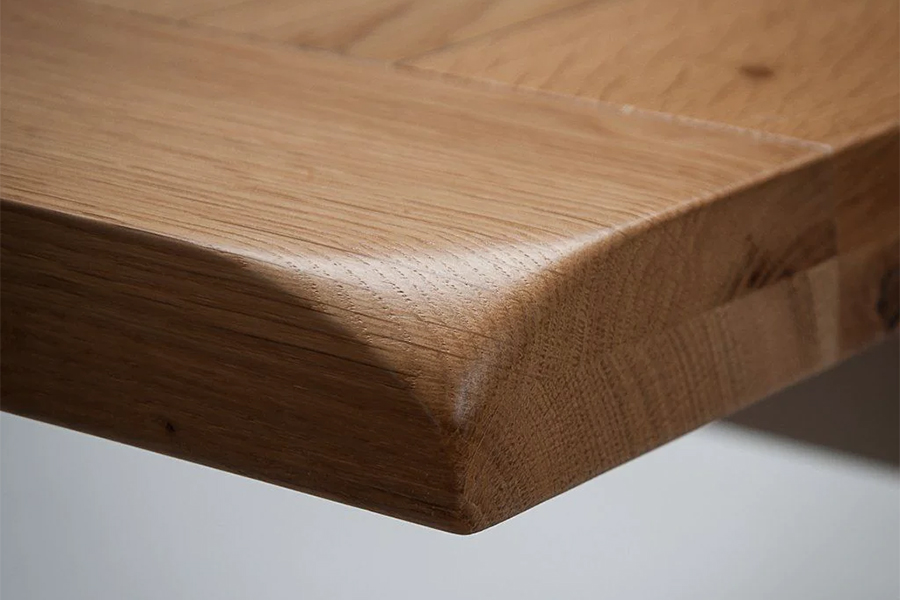
When a furniture brand especially an e-commerce listing says “engineereed wood,” it almost always means pre-laminated particle board. It rarely means plywood. The term is used broadly because it sounds more premium than “particle board.” This is not necessarily dishonest particle board is technically a type of engineered wood but it is deliberately vague. Before buying, ask specifically: what is the core substrate material, and what is the thickness and density of the board?
It depends entirely on which material it is. Plywood-based engineered wood furniture is highly durable. Particle board-based engineered wood furniture is serviceable for 5–8 years in dry conditions with careful use. For online furniture purchases in the ₹8,000–20,000 range, the substrate is almost always particle board. At this price point, that’s appropriate just don’t put it in a humid room or expect it to hold up like solid wood.
Solid wood is cut from a single piece of timber. It is stronger, more repairable, and develops character with age. It is also significantly more expensive, prone to warping in humid climates, and increasingly difficult to source in quality grades in India. Engineered wood boards are dimensionally more stable than solid wood in humid conditions, consistently available in standard sizes, and cost far less. For most Indian interiors, a well-specified engineered wood substrate with quality laminate outperforms cheap solid wood in daily use.
Ask for the board brand and ISI certification. A reputable manufacturer will specify the board source. Check the edge-banding quality furniture has PVC edge-banding on all exposed edges, not just the front face. Knock on the surface: hollow sounds suggest low-density particle board. Check hinge areas: quality furniture reinforces hinge positions with dowels or solid wood blocks. Look for the ISI mark IS:12823 on particle board and IS:303 or IS:710 on plywood.
Pre-lam particle board in 18mm thickness is the right call for budget interiors in dry rooms. It is fast to cut and install, finishes well without additional lamination, and costs 30–40% less than plywood. The carpenter must seal all cut edges with PVC edging and use confirmat screws or dowel joints rather than standard wood screws, which strip easily in particle board.
For mid-range wardrobes and living room furniture, use PLPB for the carcass and MDF for shutters or decorative elements. MDF can be routed, painted, membrane-wrapped, or given a lacquer finish that particle board cannot match. The combination of PLPB carcass and MDF shutters is the standard practice in most quality modular furniture manufacturers at the ₹1,200–1,800 per sq ft price point.
Any furniture that is meant to last 15+ years, sit in a kitchen or humid area, or carry significant structural load should use plywood ISI-certified BWR or BWP grade for kitchens and bathrooms, ISI-certified MR grade for dry interiors. Engineered plywood from certified brands adds dimensional consistency and better surface preparation for high-end veneer or lacquer finishes. Yes, it costs more. But a modular kitchen built on plywood at ₹1,800 per sq ft is still in perfect condition after 20 years; the same kitchen on unsealed particle board at ₹900 per sq ft may need partial replacement in 7.
The real confusion with engineered wood isn’t that people don’t know these materials it’s that the industry uses vague language to avoid making clear distinctions. “Engineereed wood” means nothing without specifying which type. “Premium board” is meaningless without knowing the grade and brand. “Waterproof” requires knowing whether that means MR, BWR, or BWP.
Once you understand the actual materials what particle board is, what MDF does, why plywood is specified for kitchens, and when pre-lam makes sense you can have a precise conversation with any carpenter or interior designer. You won’t be sold up unnecessarily, and you won’t cut corners where it genuinely costs you later. Buy the right board for the right application, specify the grade, and insist on certified material. That’s the whole job.
We will be back with another blog soon. Till then, stay tuned!
Read More :
Do you know types of Wood Used in Furniture
Image Source: Pinterest, Google, and Wooden Street
A BWP-grade plywood is the only reliable choice in genuinely humid or wet areas. For dry rooms, sealed PLPB works adequately
A Almost always prelaminated particle board. Ask the seller to confirm the exact substrate material, board brand, and thickness before buying
A PLPB is prelaminated particle board - particle board with factory-applied laminate on both faces. The core substrate is the same materiall
A Marine ply without question. Kitchens have steam, spills, and daily moisture. Particle board degrades irreversibly in these conditions over time
A Specify the board name, brand, ISI grade, and thickness. For example: ‘18mm Century BWP plywood for the carcass, 18mm PLPB for the shelves, 12mm MDF for the shutters
Articles you will love to read
Choosing the right bed is essential for comfort, sleep quality, and bedroom aesthetics. This comprehensive bed buying guide covers the advantages of different bed styles, popular bed types, materials, storage options, and important factors to consider before making a purchase. Whether you're furnishing a new home or upgrading your bedroom, this guide helps you find the perfect bed to match your space, lifestyle, and budget.
Continue Reading
Explore the real pros, cons, durability, and maintenance of mango wood furniture in this honest guide. Learn why mango tree wood furniture, mango hardwood furniture, mango tables, mango stools, mango wood beds, and mango dining tables are becoming popular choices for stylish and sustainable homes.
Continue Reading
Give old furniture a fresh new look with this beginner-friendly guide to repaint wood furniture at home. Learn about paint for painting wood, wooden polish colour options, painting timber furniture techniques, and expert tips for painting furniture with chalk paint to achieve stylish, durable, and professional-looking results.
Continue Reading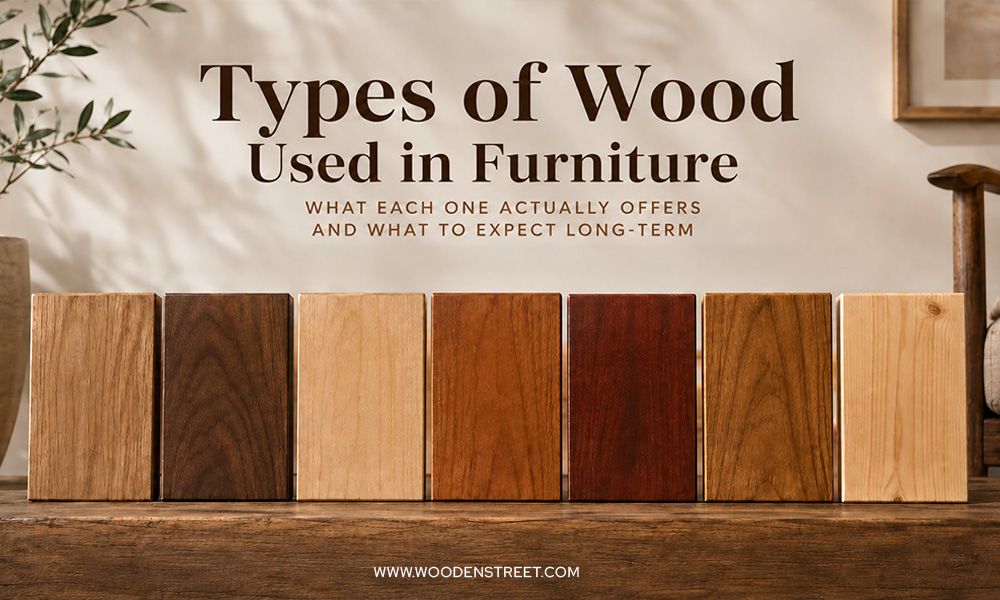
Understanding the types of wood for furniture can help you make a smarter investment. This guide compares popular furniture wood names, hardwood types for furniture, and other commonly used materials, explaining their appearance, durability, maintenance needs, and long-term performance so you know exactly what to expect before buying.
Continue Reading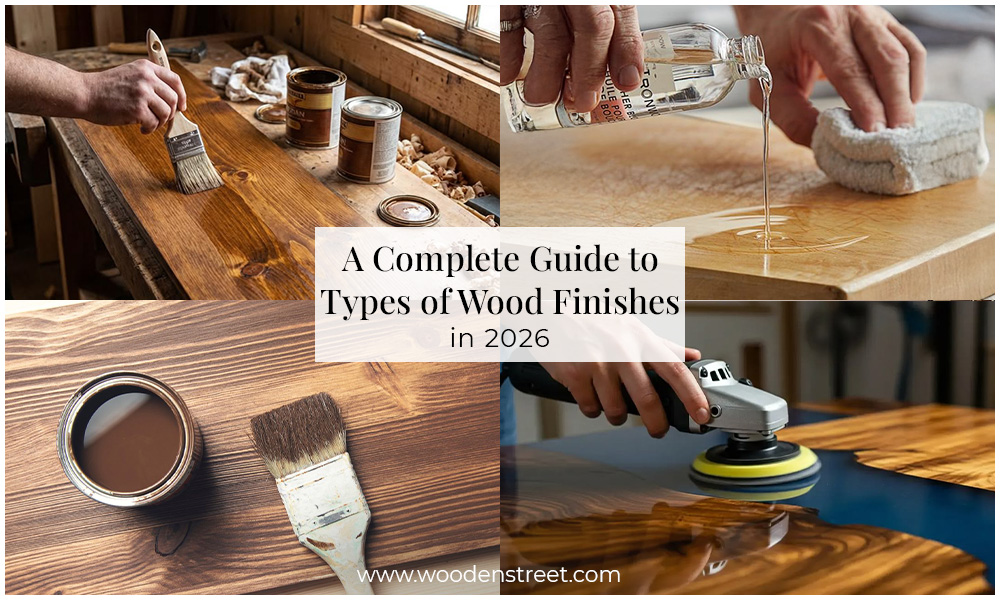
Choosing among the various types of wood finishes can significantly affect the look, feel, and lifespan of wooden furniture and surfaces. This guide explains how different finishes enhance grain, provide protection, and perform over time, helping you select the most suitable option for your aesthetic and practical requirements.
Continue Reading