

From decorative accents to supportive seating accessories, the many kinds of cushions serve different functions throughout the home. This guide explores cushion types by fill material, shape, and purpose, helping you understand where each option works best for comfort, aesthetics, and everyday use.
Most people think of cushions as finishing touches. The things you throw on a sofa at the end, pick a colour you like, and call the room done.
But walk into any well-designed Indian home - or any high-end interior in a boutique hotel lobby, a premium café, or a carefully put-together bedroom - and you'll notice something: the cushions were chosen with purpose. Different shapes in different spots. Different fills for different functions. Different covers that do different things to how the room feels.
That's not overthinking. That's understanding what a cushion is actually doing in a space - and there are many different kinds of cushions, each solving a distinct problem.
This guide covers all of them. Every placement, every shape, every fill material, and what the cover fabric communicates - so you stop grabbing whatever looks good on a website and start choosing what actually works.
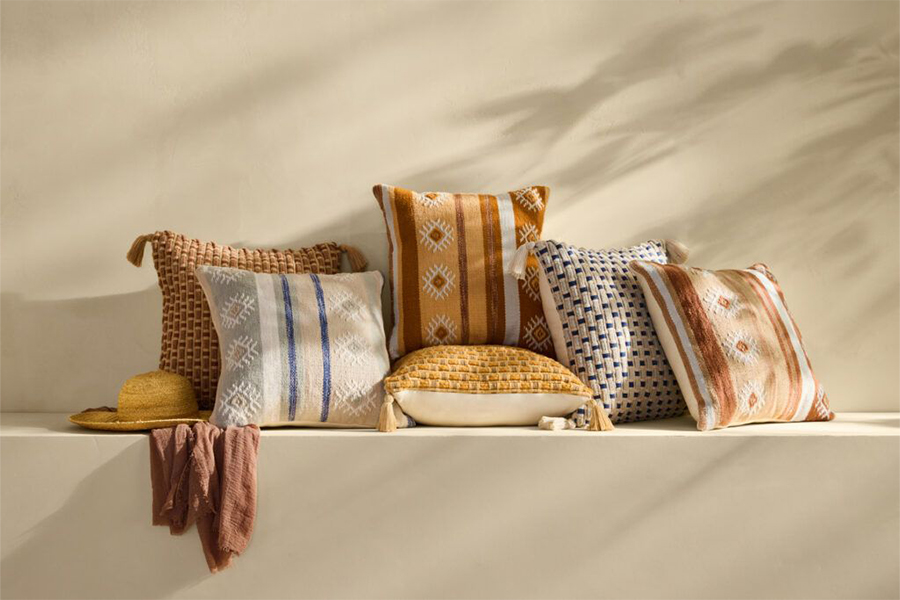
Before getting into specific types of cushions, this distinction is worth making clearly.
A throw cushion on a sofa, a floor cushion in a reading nook, and a lumbar cushion on an office chair are all cushions. They're all fabric-covered, all filled with something, and all called cushions in everyday conversation.
But they're solving completely different problems. The throw cushion is about colour, texture, and visual composition. The floor cushion is structural - it's actual seating. The lumbar cushion is a spinal support tool. The fill, the shape, the cover, and the firmness required are different in each case.
Choosing a cushion without knowing which of these jobs it needs to do is why people end up with decorative cushions that flatten within two months, floor cushions that aren't firm enough to sit on comfortably, and lumbar cushions that are too soft to do anything useful for the lower back.
Know the job first. Then choose the cushion.
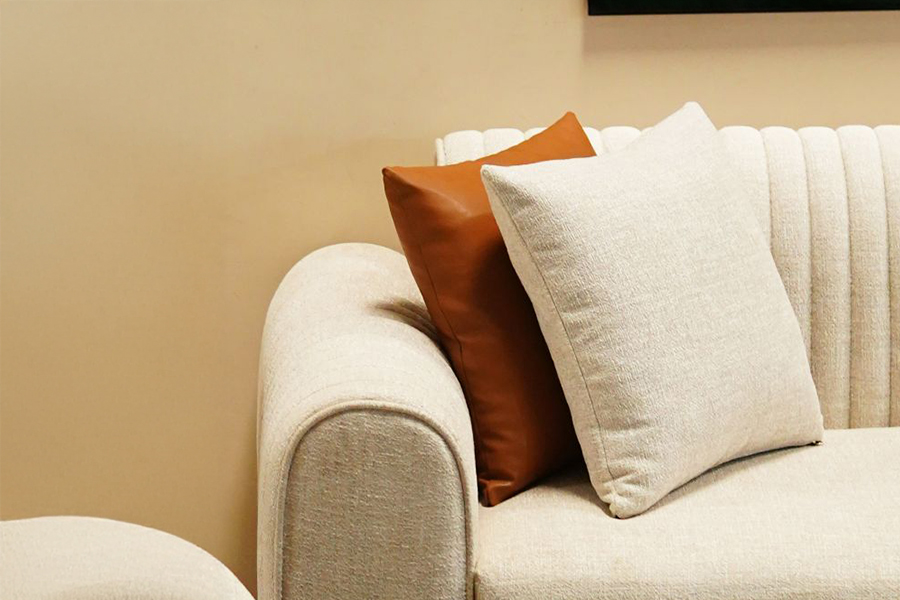
The throw cushion is the most visible cushion in any living room - and the most misused.
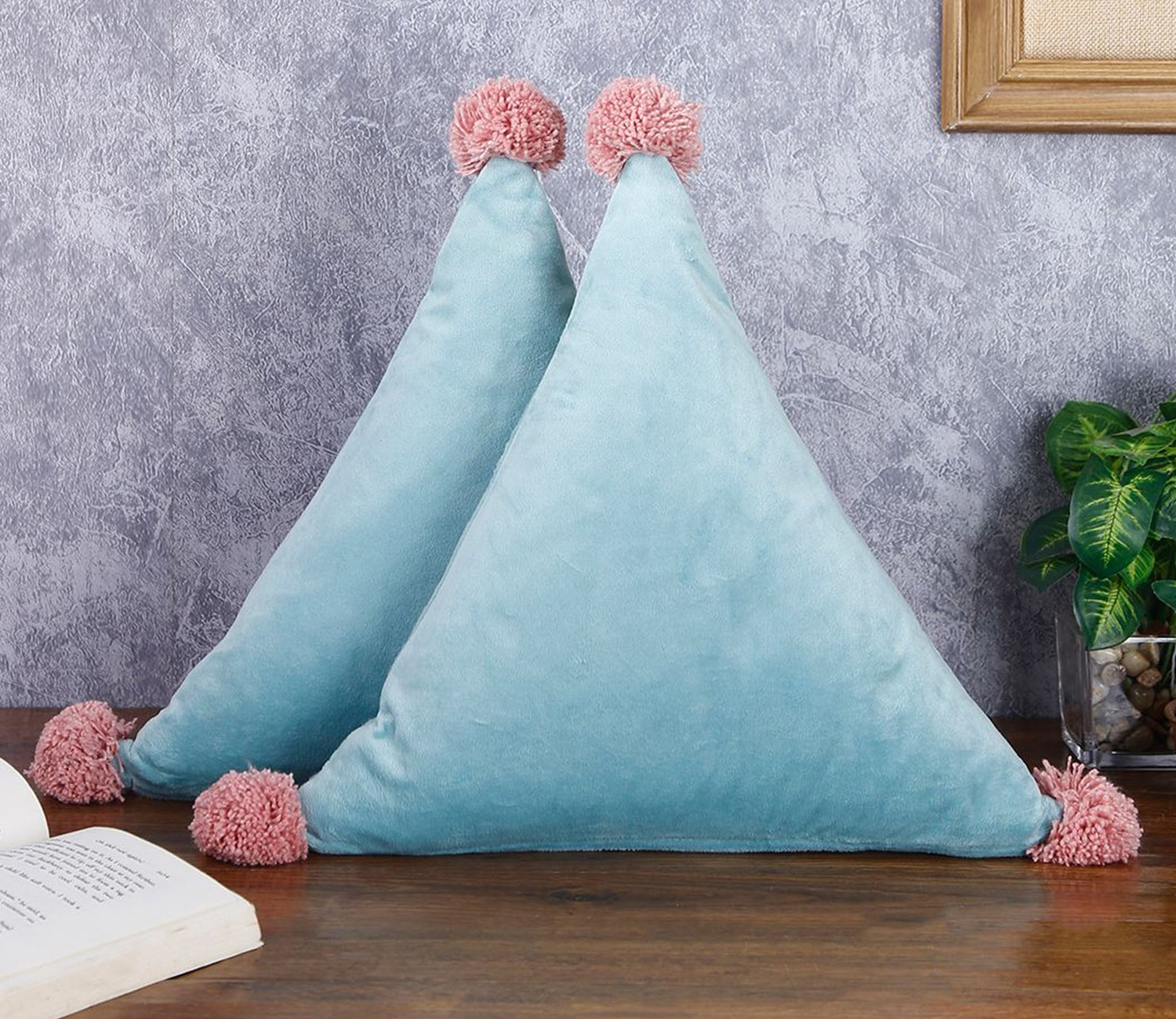
It sits on a sofa or bed, its primary function is decorative, and it is genuinely the fastest way to change a room's colour palette without replacing furniture. Swap four throw cushions on a neutral sofa and the room feels different. New season, new mood, same sofa. Interior designers use this trick constantly - it's not a hack, it's a legitimate design tool.
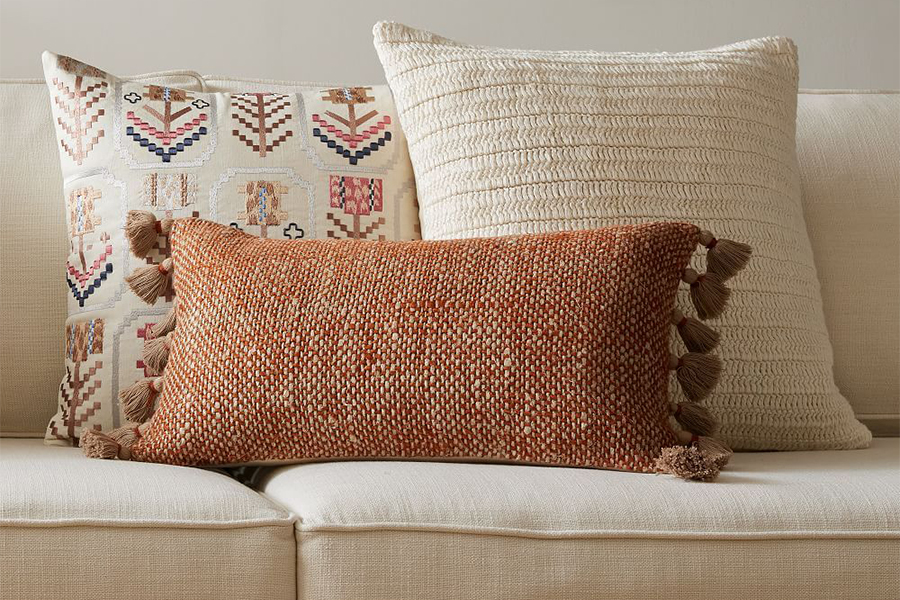
What makes a throw cushion work well: proportion and layering. A 45x45 cm cushion on a standard three-seater sofa is foundational. A 50x50 cm or 55x55 cm cushion sits slightly in front of it for depth. A third, smaller rectangular cushion or bolster in front creates a composed, layered look. This is how hotel lobbies and showrooms build cushion arrangements that look effortlessly put together - it's a specific stacking logic, not luck.
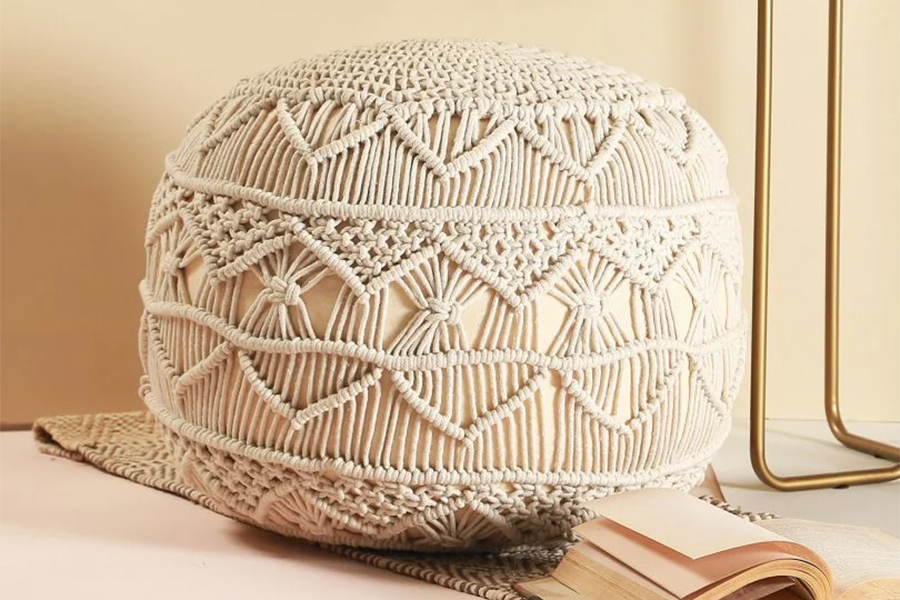
A floor cushion does something most cushions don't - it functions as actual seating. That means the fill and firmness requirements are completely different from a decorative throw cushion.
A floor cushion that's too soft compresses the moment someone sits on it, leaving the person on the floor rather than on the cushion. The fill needs to be substantial - buckwheat, high-density foam, or a thick polyester block - enough to hold its shape under body weight.
In practice, floor cushions work best in meditation corners where low, grounded seating is the intent, children's rooms where floor-level activity is normal, and casual living rooms with low furniture or a floor-seating setup common in many Indian homes. For guests during festivals or family gatherings where additional seating is needed without additional chairs - a set of firm floor cushions stacked against a wall when not in use solves the problem quietly and practically.
The size matters too. A floor cushion under 60 cm across is too small to sit on comfortably for more than a few minutes. 70 to 80 cm is the functional minimum for adult seating.
The lumbar cushion is the most functional type of cushion on this list - and the one most people buy the wrong version of.
The lumbar region of the spine has a natural inward curve. Sitting in most chairs and sofas - especially the deep, soft sofas popular in Indian living rooms - flattens or reverses that curve, loading the lower back progressively. The result, over months and years, is the familiar pattern of lower back discomfort that most people assume is just a consequence of sitting.
A lumbar cushion placed at the lower back supports that natural curve and keeps the spine from rounding. It works on an office chair, on a sofa during a long evening, in the car on a long drive, and at a dining table during an extended meal.
If you've been dismissing lower back pain as a posture problem, try a proper memory foam lumbar cushion for two weeks before drawing any other conclusions.
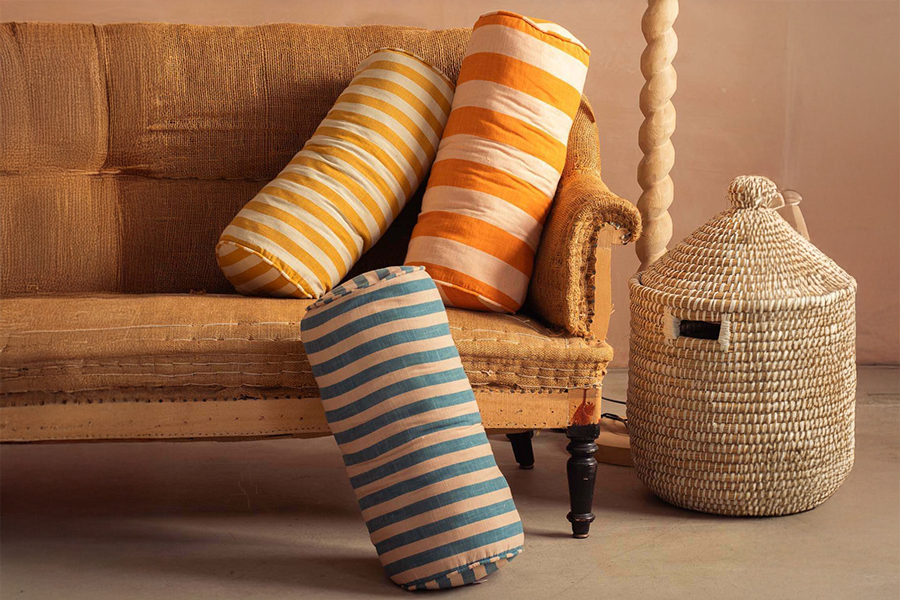
The bolster is long and cylindrical - 60 to 90 cm typically - and serves a specific structural role in furniture arrangements.
At the ends of a sofa, bolsters provide arm support and visual closure - they signal that the sofa arrangement is complete and intentional rather than trailing off at the sides. On a bed, a pair of bolsters sitting in front of the standard pillows adds layered visual depth and provides something to lean against while sitting up in bed. Along a daybed or bench with no backrest, a bolster running the length of the piece creates a backrest that didn't exist.
Proportion is the key rule: the bolster should not overpower the piece it sits on. For a standard two-seater sofa, a 60 cm bolster. For a three-seater or king-size bed, 80 to 90 cm. A bolster that's too long for the furniture looks like it was placed without thinking.
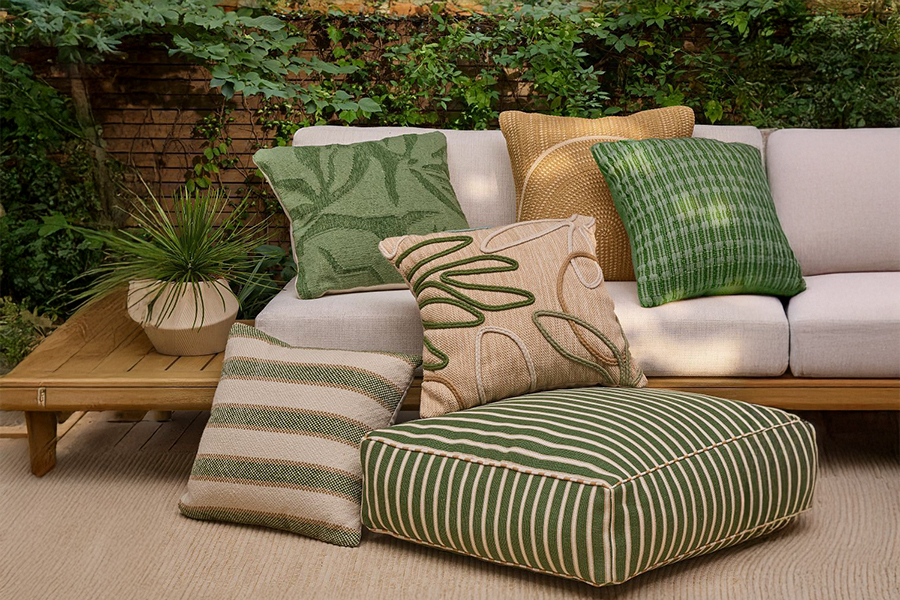
Standard indoor cushions used outside through an Indian monsoon season come out the other side with mould, compressed fill, faded covers, and a smell that no amount of sun-drying fully fixes. This is not a quality issue - it's a material specification issue. Indoor cushions are not built for outdoor conditions.
Outdoor cushions are a different product entirely. The cover fabric is UV-treated to resist the bleaching effect of direct sunlight, which in Indian summers is intense and prolonged. The fabric weave is tight enough to be water-repellent rather than water-absorbent. The fill is typically a quick-dry polyester that allows water to pass through rather than trapping it - so even if the cushion gets rained on, it dries within hours rather than days.
For balconies, garden furniture, poolside seating, and outdoor dining areas, specifying outdoor-rated cushions is not optional if you want them to last more than one season. The price difference over three to four years of replacement costs makes outdoor-rated cushions significantly more economical.
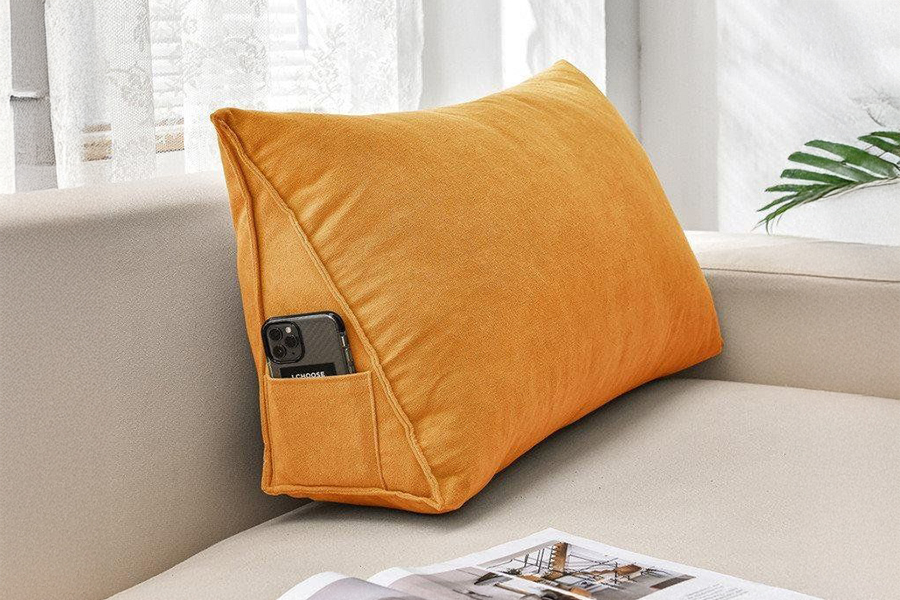
The wedge cushion is a firm, triangular block - thicker at one end, tapering to flat at the other - and it solves problems that standard rectangular cushions can't.
Propped under the upper back and head in bed, it elevates the torso at an angle that significantly reduces nighttime acid reflux - a common issue that many people manage for years with medication when a positional change would help. Placing it under the knees while lying flat, it relieves lower back pressure. Used as a reading backrest propped against a headboard or wall, the angled surface holds the body at a more comfortable upright angle than a standard pillow, which collapses and requires constant repositioning.
Post-surgery recovery, pregnancy, and chronic acid reflux are the three situations where a wedge cushion is most commonly recommended by medical professionals. But for anyone who reads in bed for more than twenty minutes at a time and ends up shifting positions every few pages - a reading wedge solves that discomfort completely.
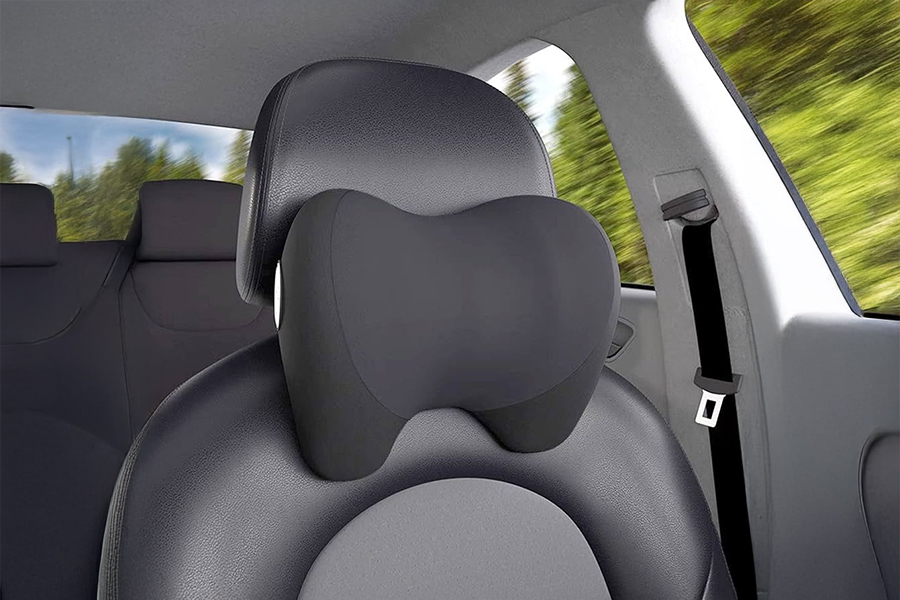
The car seat is one of the more ergonomically problematic places most people spend significant time - a fixed seat angle, minimal lumbar contouring in most standard vehicles, and vibration from the road that adds cumulative load to the spine over long commutes.
Car cushions are shaped specifically for this environment - ergonomic contours that follow the seated body's shape, a coccyx cutout on many models that relieves pressure on the tailbone during extended driving, and materials that manage the heat build-up that makes standard foam uncomfortable in Indian summers. Memory foam and gel-infused foam are the two fill types that perform best in this application - both manage heat better than standard polyester and hold their shape under sustained sitting.
For anyone who drives or commutes 45 minutes or more each way daily, the cumulative effect of poor car seat support is real and compounds over months. A good car cushion is not a comfort accessory - it's a functional intervention for a seating environment that most car manufacturers don't design optimally for extended use.
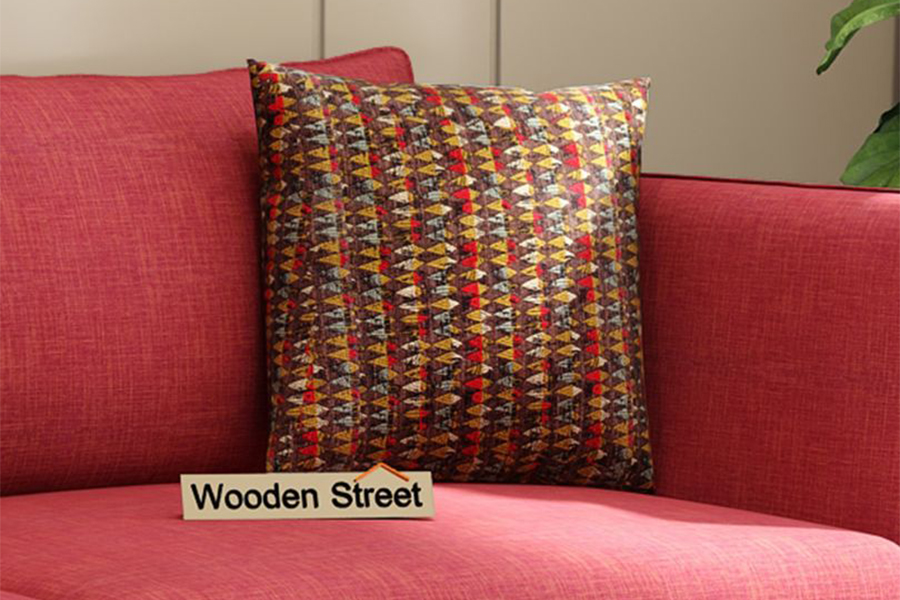
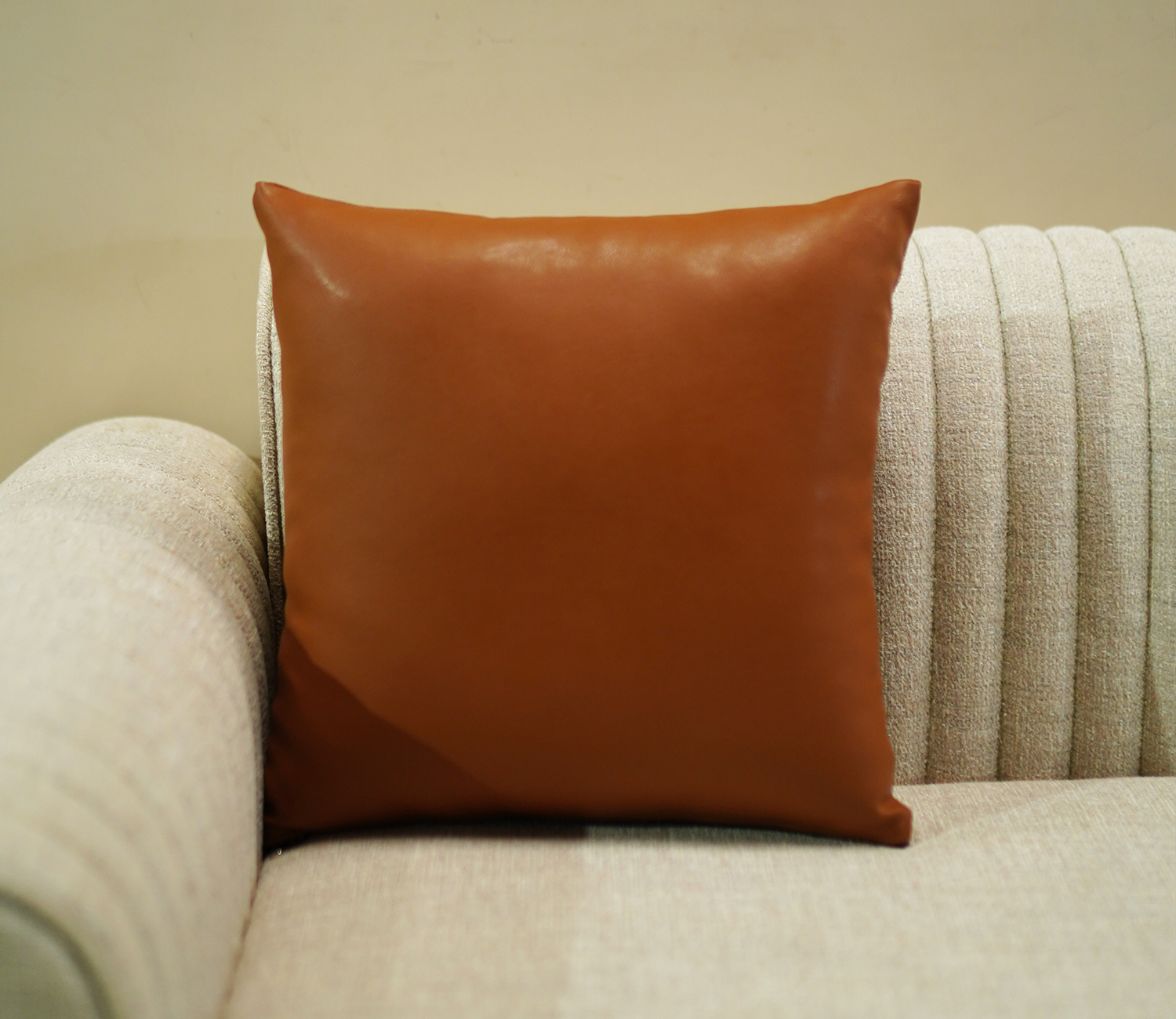
The square cushion is the structural foundation of any cushion arrangement - the piece everything else is built around. Standard sizes are 40x40 cm and 45x45 cm, with 50x50 cm for larger sofas and king-size beds.
Most sofa arrangements start here: two or three square cushions across the back of a sofa, at corners and centre, as the base layer. Everything else - rectangular cushions, bolsters, smaller accent pieces - is layered in front of or on top of these. In a bed arrangement, Euro shams (65x65 cm square cushions) sit behind standard pillows to create a layered backdrop.
The square is the workhorse of the sofa cushion types. It's the least visually interesting shape - and therefore the most versatile, because it creates a neutral foundation that any other shape or colour can build on without clashing.
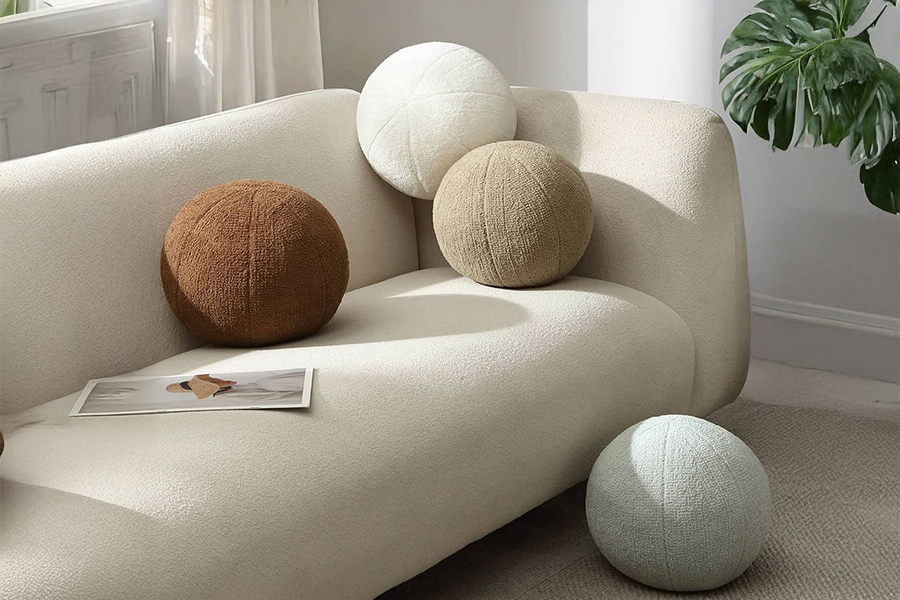
Round cushions do something that square cushions simply don't - they break up geometry.
A sofa filled entirely with square cushions has sharp corners at every edge. The eye reads it as structured and slightly rigid. One or two round cushions introduced into the arrangement soften the composition - they interrupt the grid, and the room feels marginally more relaxed and less formal as a result.
In children's rooms, round cushions in bold colours function as both seating and visual elements that suit the organic, less structured aesthetic of those spaces.
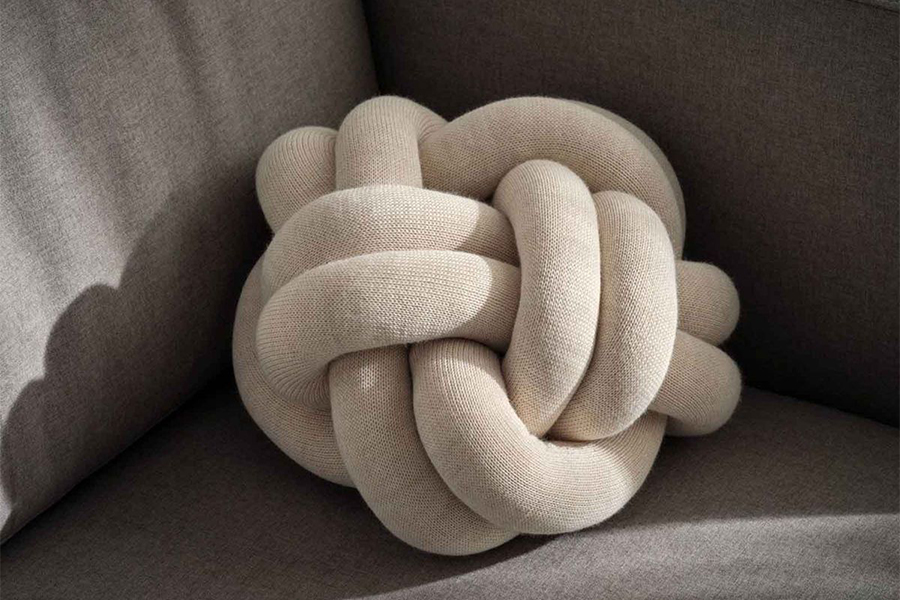
The knot cushion - stuffed fabric tubes twisted and tied into a knot form - is entirely sculptural. It does not stack, it doesn't mix into a layered arrangement, and it provides no lumbar or structural support.
What it does is command attention. Placed alone on a chair or at one end of a sofa, a knot cushion reads as a considered design choice - the kind of detail that makes a room look styled rather than just furnished. It works as a conversation piece and a texture accent, especially in rooms that are otherwise neutral and risk feeling flat.
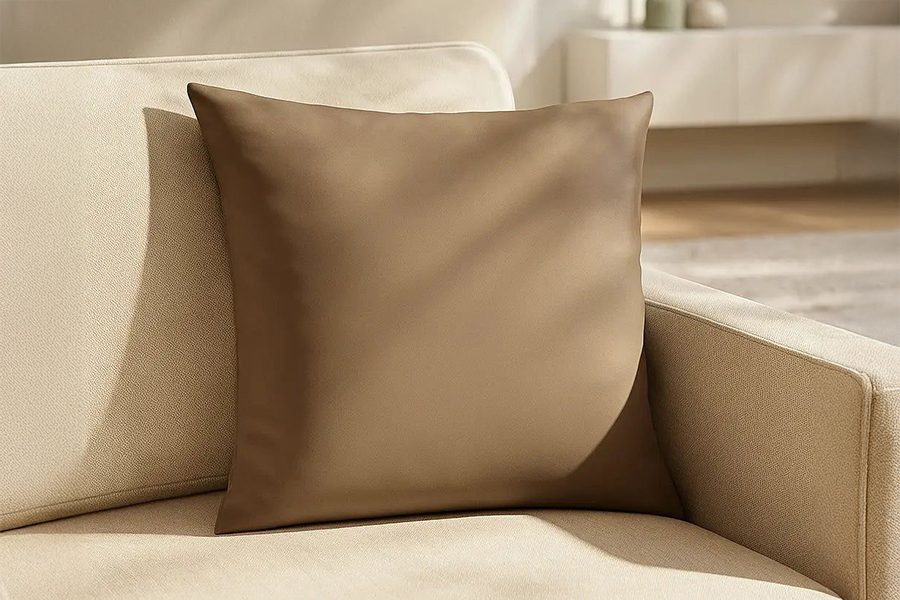
Polyester fibre is the most common fill in cushions across every price point in India - affordable, lightweight, washable in most cases, and available everywhere.
The limitation is longevity. Polyester fibre flattens under repeated compression. A throw cushion used daily without regular fluffing becomes noticeably thin within 6 to 12 months. This is why premium hotels fluff cushions daily - not for aesthetics, but because the fill requires it to maintain its loft.
For decorative throw cushions that are frequently refreshed and not heavily used, polyester fill is perfectly adequate and easy to maintain. For any cushion where consistent shape and support matter - lumbar cushions, floor seating, sofa seat cushions - it's the wrong fill from the start.
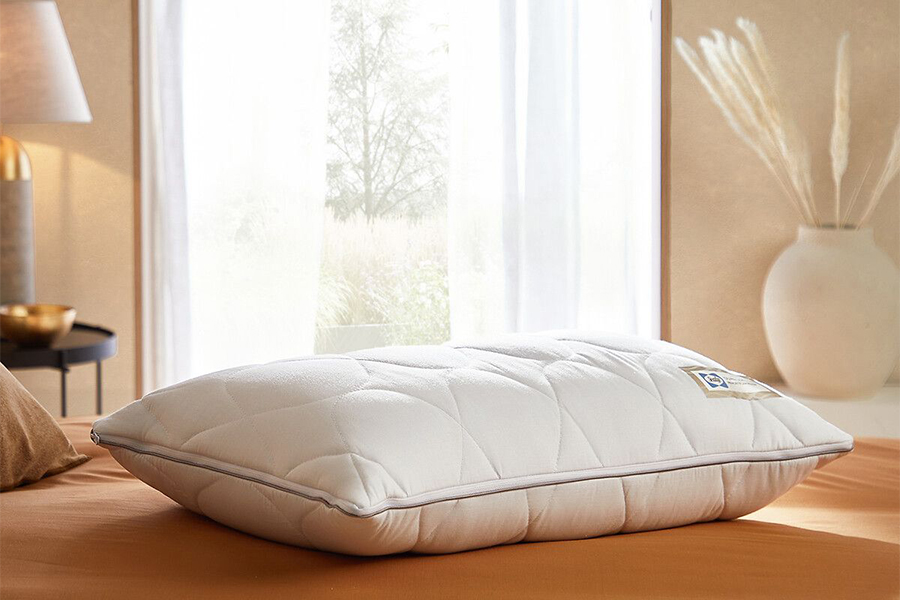
Memory foam is the right fill for any cushion where support consistency is the primary requirement. It compresses under pressure and springs back to its original shape when the pressure is removed - this cycle repeats without significant degradation for years, unlike polyester which permanently loses loft.
For lumbar cushions, this behaviour is what makes the fill functional. The cushion maintains the same support whether it's the first minute or the fourth hour of use. For car cushions and seat cushions generally, the same principle applies.
Memory foam is heavier and warmer than fibre fills - two characteristics that matter for certain applications. In Indian summers, a memory foam floor cushion in a room without AC becomes uncomfortable quickly due to heat retention. In air-conditioned spaces or cooler climates, it's a non-issue.
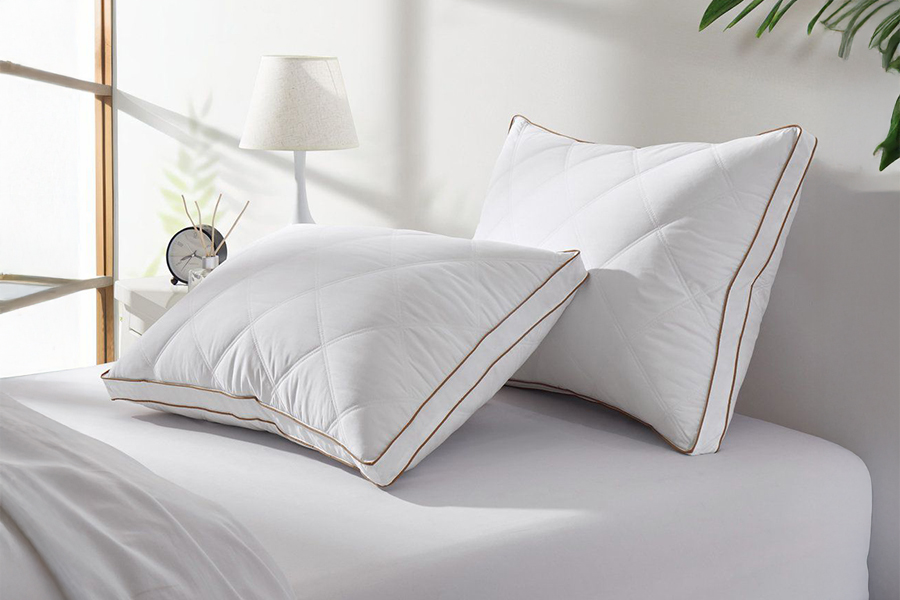
Down and feather fill is the gold standard for throw cushions where pure softness and luxury is the priority. The fill is light, breathable, and gives cushions the "choppable" quality - the ability to be plumped and shaped by hand into a deliberately informal, lived-in look - that no synthetic fill replicates as well.
Premium hotels and high-end residential projects specify down fill for this reason - the tactile experience of a well-maintained down cushion is genuinely different from anything synthetic.
The practical constraints are real. Down is expensive. It requires careful washing - incorrect care causes the fill to clump and lose its distribution. And anyone with a feather allergy cannot use it - the allergic reaction to down and feather proteins is well-documented and can be significant.
For non-allergic buyers who want the best-feeling decorative cushions and are willing to maintain them properly - down fill delivers something nothing else quite matches.
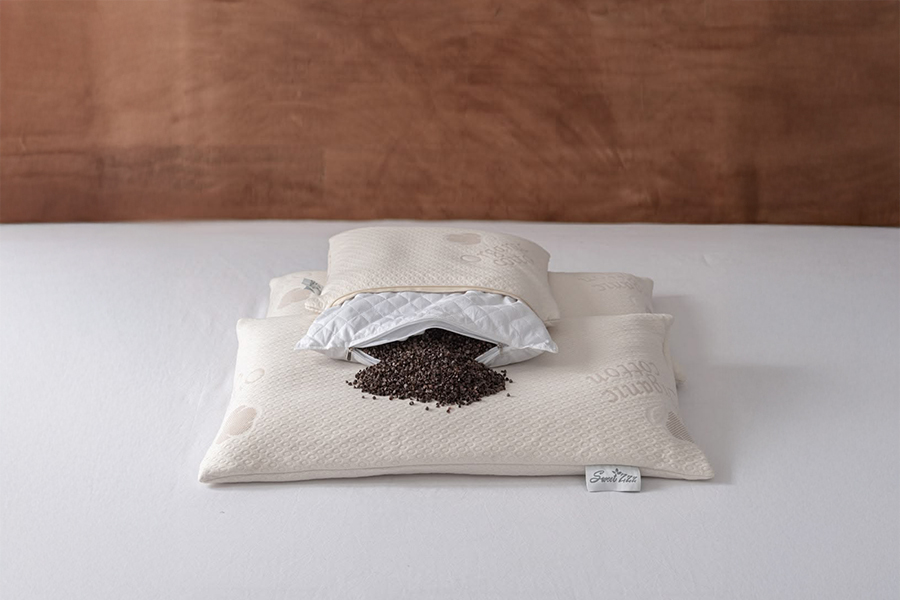
Buckwheat hulls are the dried outer casings of buckwheat seeds, and they've been used as a cushion fill in Japanese and Indian traditions for centuries - the Japanese sobakawa pillow is the most well-known application.
The fill is firm, supportive, and conforms to the shape of the body by allowing the hulls to shift and resettle rather than compressing as a foam block does. This body-conforming quality without the heat retention of foam makes buckwheat particularly suited to meditation cushions (zafu) and floor seating where sustained contact between body and cushion is the purpose.
The characteristic sound - a soft rustle when the cushion is moved or adjusted - is either entirely ignorable or mildly distracting depending on the person. For meditation and mindfulness practice, some practitioners find the sound grounding; others find it a distraction.
Buckwheat fill can be adjusted - adding or removing hulls through a zippered panel to change firmness. This adjustability is unique among fills and makes buckwheat meditation cushions particularly well-suited to individual tuning.
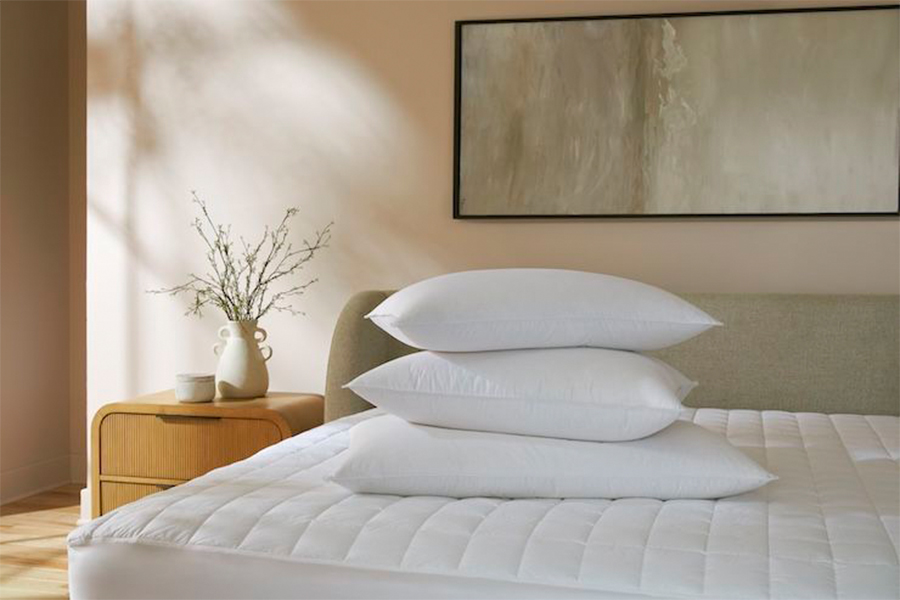
Microfibre fill is polyester engineered to mimic the properties of down - fine, soft strands that trap air and create loft similar to real down, without the allergens, the animal product, or the price.
A good microfibre fill gives throw cushions genuine plushness and the choppable quality that makes cushion arrangements look effortlessly styled. It's washable, hypoallergenic, and available across a wide price range - which makes it the fill choice for most mid-range and aspirational cushions where down's full cost and maintenance requirements aren't justified.
The gap between microfibre and real down is narrowing in quality terms, and for most decorative applications, a good microfibre fill is indistinguishable to the touch from moderately priced down fill. Where real down still wins is in breathability over long periods - but for throw cushions that are handled rather than slept on, that difference rarely matters.
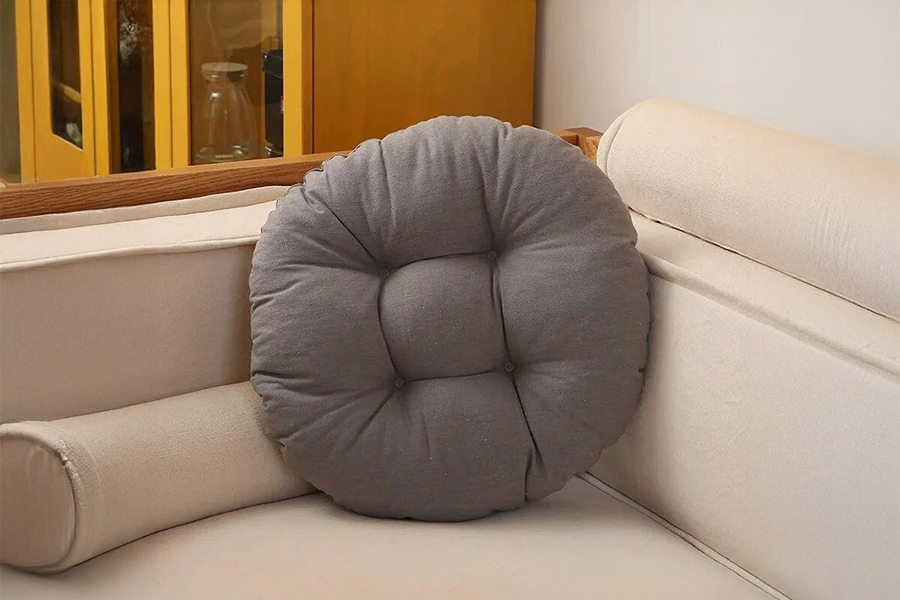
High-density polyurethane foam is the fill used inside sofa seat cushions - the main sitting surfaces, not the decorative cushions that sit against the back and arms.
This is structural foam, not comfort foam. Its job is to hold the seat's shape under body weight across years of daily use without sagging or forming permanent impressions. The density measurement - typically 35 to 50 kg/m³ for quality sofa cushions - determines how long it performs. Under 35 kg/m³, sagging begins within 18 to 24 months of regular use. Above 45 kg/m³, the cushion holds its shape for 7 to 10 years.
This is the spec that separates a sofa that still feels like new in year five from one that's visibly collapsed in year two. Most Indian furniture retailers don't display foam density figures - ask for it directly. If the answer is unavailable or vague, that tells you something.
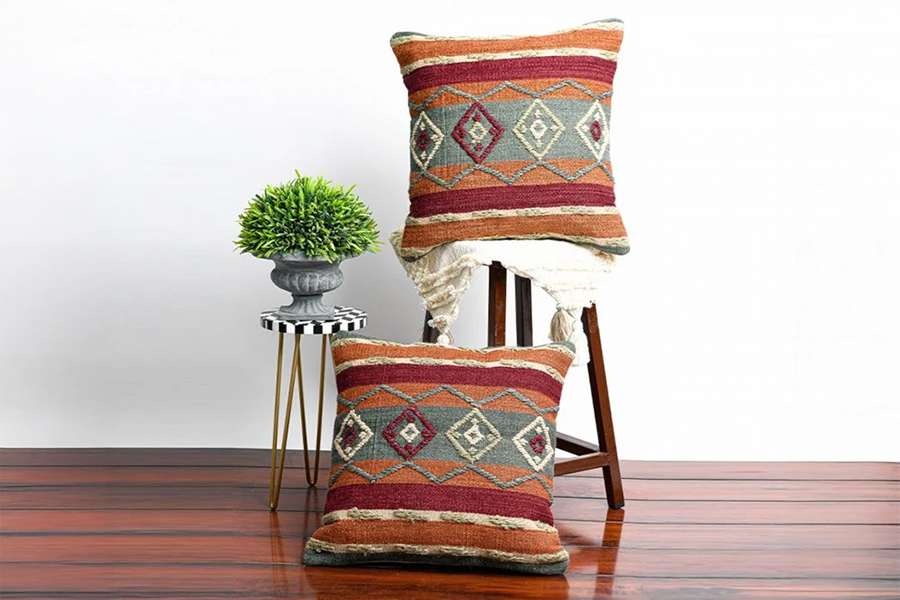
All of the fill types above can sit inside the same shaped cushion. What changes how the room reads entirely is the cover.
Velvet cover on a cushion - the room feels formal, rich, and seasonally warm. The same room with linen cushion covers reads casual, breathable, and relaxed. Cotton prints read everyday and accessible. Silk reads luxurious and slightly precious. Jute or canvas reads earthy and textured. The fill inside can be identical - the cover is what does the visual and atmospheric work.
This is why interior designers will specify a particular fabric for a cushion cover before deciding on the fill - the cover is the communication, the fill is the infrastructure.
For Indian homes specifically, the seasonal logic of cushion covers is practical as well as aesthetic. Heavy velvet covers in winter, linen and cotton covers in summer - the switch costs far less than new cushions and meaningfully changes how a room feels in the heat. This is a routine that hospitality interiors follow seasonally and that works just as well in residential settings.
The practical rule: buy cushion inserts and covers separately. It costs slightly more upfront but allows cover swaps without replacing the insert - which is both more sustainable and significantly more flexible over time.
A cushion is not a finishing touch - it's a functional and aesthetic decision that deserves the same consideration as any other piece in a room.
The placement dictates the job: throw cushions for visual composition, floor cushions for actual seating, lumbar cushions for spinal support, outdoor cushions for weather resistance, wedge and car cushions for specific postural needs. The shape dictates the arrangement logic: square as the foundation, round to break geometry, bolster for structural closure, knot for sculptural accent. The fill dictates longevity and function: polyester for affordable decorative use, memory foam for support consistency, buckwheat for firm floor seating, high-density PU foam for sofa seat integrity.
And the cover dictates the room. Get that relationship right - between where the cushion lives, what it's filled with, and what it's wrapped in - and a cushion stops being an afterthought and starts doing real work in the space.
We will be back with the next blog soon. Till then, stay tuned!
Image Source: Pinterest, Google, and Wooden Street
Read More - Explore All Types of Mattresses
A A throw cushion is square or rectangular and primarily decorative. A bolster is long and cylindrical - used for arm support, visual balance, and back support on beds and sofas.
A High-density memory foam holds its shape longest under daily use. High-density PU foam is the most durable for sofa seat cushions specifically. Both outlast polyester fibre significantly.
A A memory foam lumbar cushion - cylindrical or D-shaped - is placed at the lower back. The fill must be firm enough to maintain shape under pressure, not compress flat.
A Linen and cotton - both breathable, moisture-wicking, and comfortable in heat. Avoid velvet and heavy synthetics in summer; they trap warmth and feel uncomfortable in high temperatures.
Trending Products
Top Picks from EveryoneArticles you will love to read
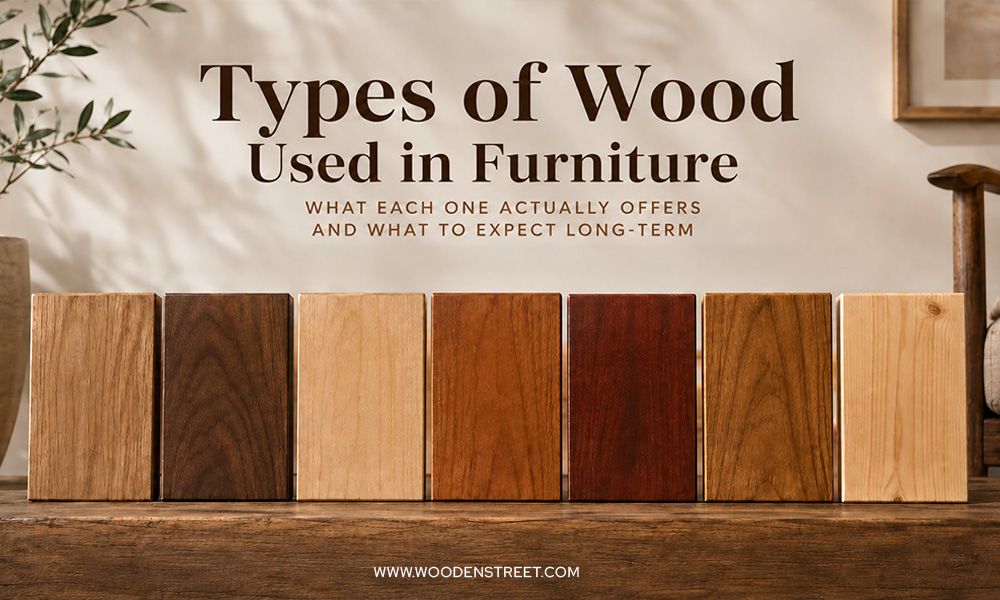
Understanding the types of wood for furniture can help you make a smarter investment. This guide compares popular furniture wood names, hardwood types for furniture, and other commonly used materials, explaining their appearance, durability, maintenance needs, and long-term performance so you know exactly what to expect before buying.
Continue Reading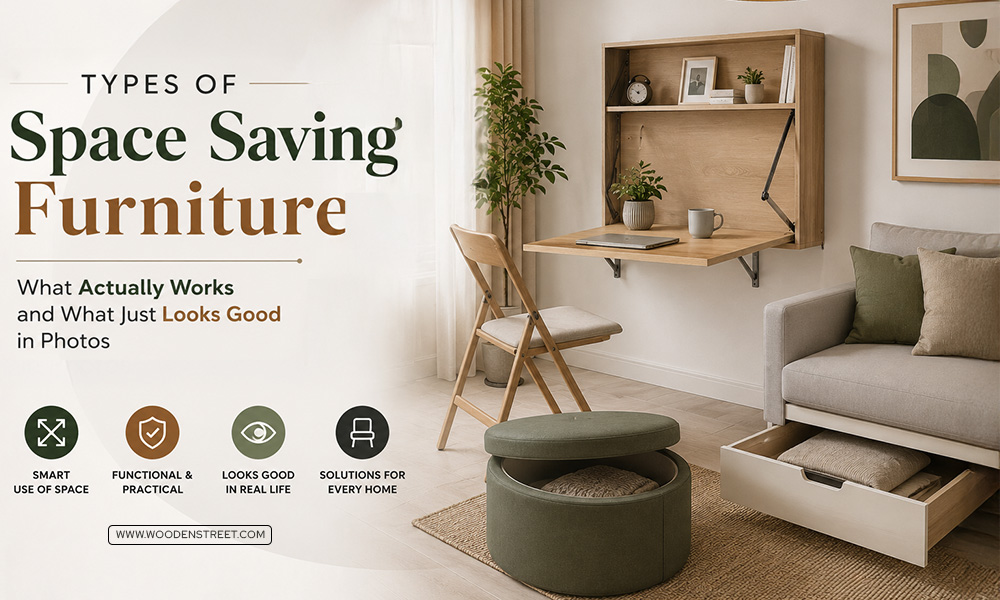
Not all space saving furniture delivers on its promise. This guide explores the most effective space-saving solutions, from multifunctional beds and foldable tables to smart storage units and compact furniture designs. Learn what genuinely improves everyday living and what may look impressive in photos but falls short in real homes
Continue Reading
Choosing the right curtains involves more than picking a color. This guide explores different types of curtains, popular fabrics, and practical functions for bedrooms, living rooms, and other spaces. Learn about window curtains types, hanging styles, light control options, and the kinds of curtains best suited to your home’s needs
Continue Reading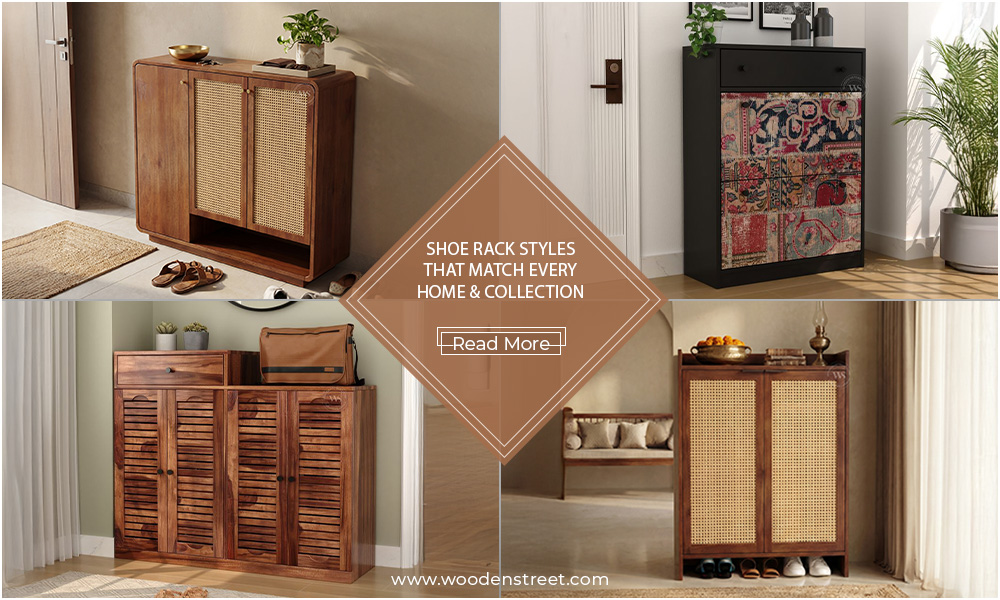
The right shoe rack can keep your entryway organized and clutter-free. This guide explores different types of shoe racks, from open shelves and closed cabinets to stackable and multifunctional designs. Learn about popular shoe rack types and discover which option best suits your collection, available space, and daily routine.
Continue Reading
Selecting from the many kinds of dining table options requires balancing space, seating needs, and functionality. This guide breaks down dining tables by shape, dimensions, and extension mechanisms, helping you identify the most practical and visually appealing choice for your home.
Continue Reading