




Understanding the difference between foam and spring mattress construction is key to choosing the right sleep surface. This guide compares comfort, spinal support, motion isolation, durability, cooling, and cost, helping you determine which mattress best suits your sleep style, back health, and budget
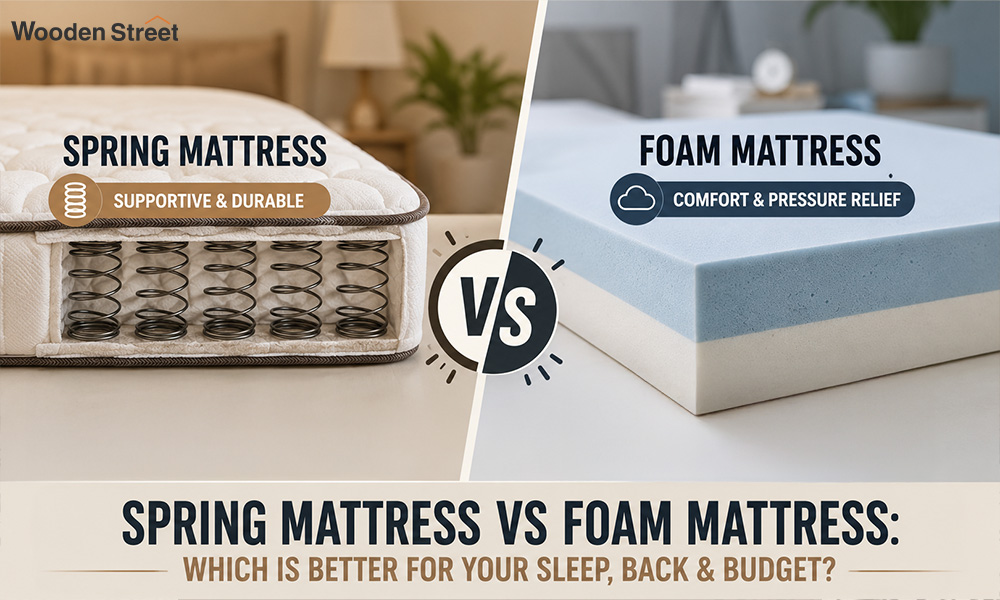
Standing in a mattress showroom, pressing your hand into one bed, then the next, hoping one of them just feels "right". Sound familiar? The spring mattress vs foam mattress debate confuses almost every mattress shopper. One hugs your body. The other pushes back. Both promise better sleep. Only one is right for you.
This guide breaks down everything, starting from construction, comfort, durability, price, to what actually works for your back, body weight, and sleep position, so that you can decide with confidence, not guesswork.
What Is a Foam Mattress?
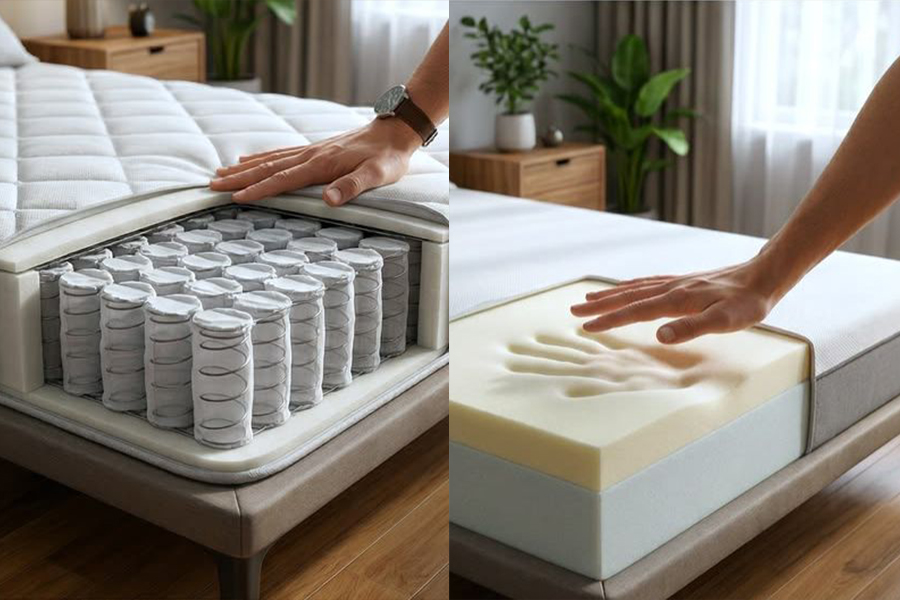
A foam mattress is built entirely from layers of foam. No coils, no metal. Typically, it has 2 to 5 layers of varying density: a soft comfort layer on top for pressure relief, and a firmer support layer beneath. This is the basic answer to what is foam mattress construction comes down to: layered density doing different jobs.
What Is a Spring Mattress?
A spring mattress, also called an innerspring mattress, uses a core of steel coils for support, topped with a thinner comfort layer of foam or fibre padding. The coil count, gauge, and type determine how the mattress feels. More coils generally means more targeted, responsive support.
Memory Foam
Memory foam slowly contours to body heat and pressure, cradling the sleeper. It offers excellent pressure relief but has a slower response time. It can take 5 to 8 seconds to bounce back after you move.
Polyurethane (PU) Foam
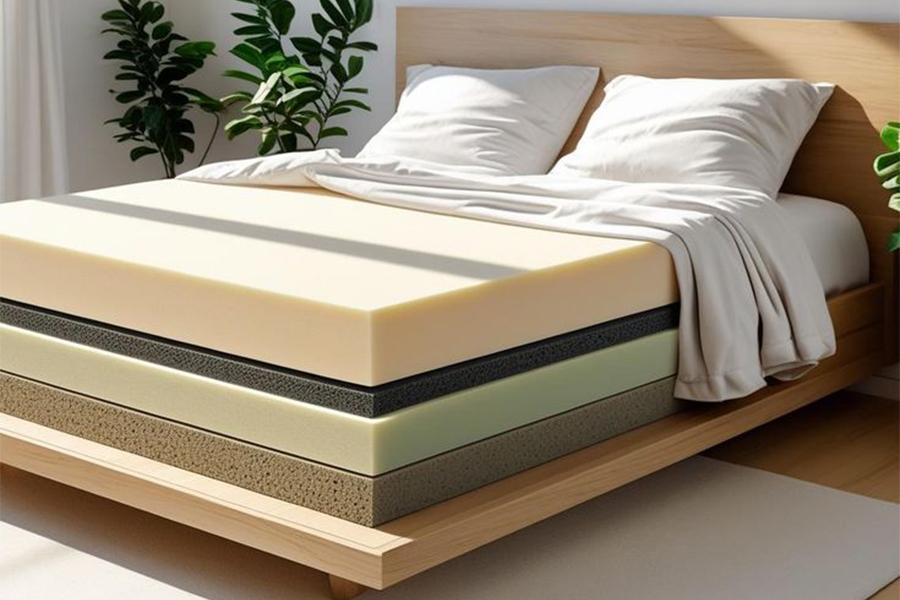
Often called "polyfoam," this is a common, more affordable foam used as a comfort layer or transition layer. It's bouncier than memory foam but less durable in lower densities, especially in budget mattresses.
Latex Foam
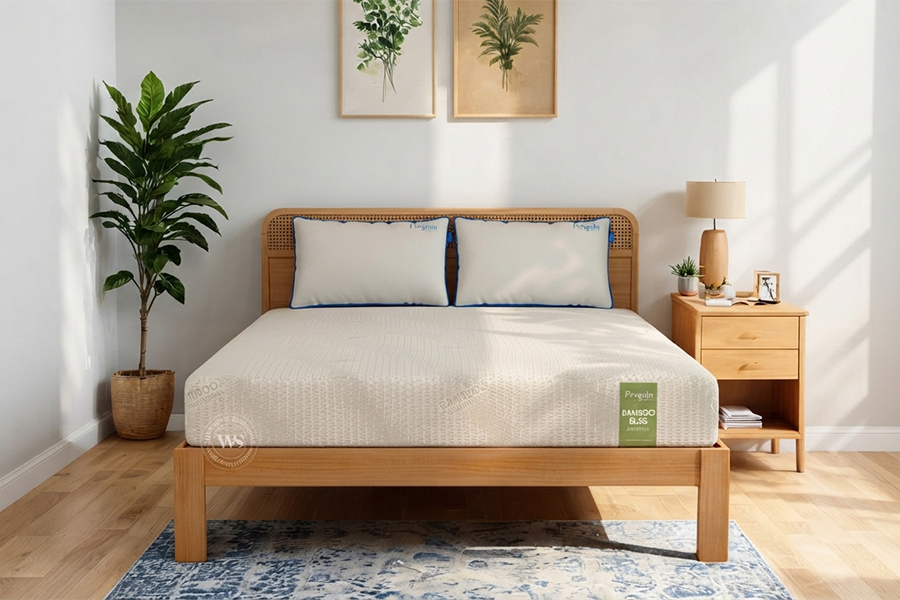
Made from natural or synthetic rubber, latex bridges the gap between memory foam's contouring and a spring's responsiveness. It rebounds in 1 to 2 seconds and typically lasts 12 to 15 years, which is notably longer than standard polyfoam.
HR (High Resilience) Foam
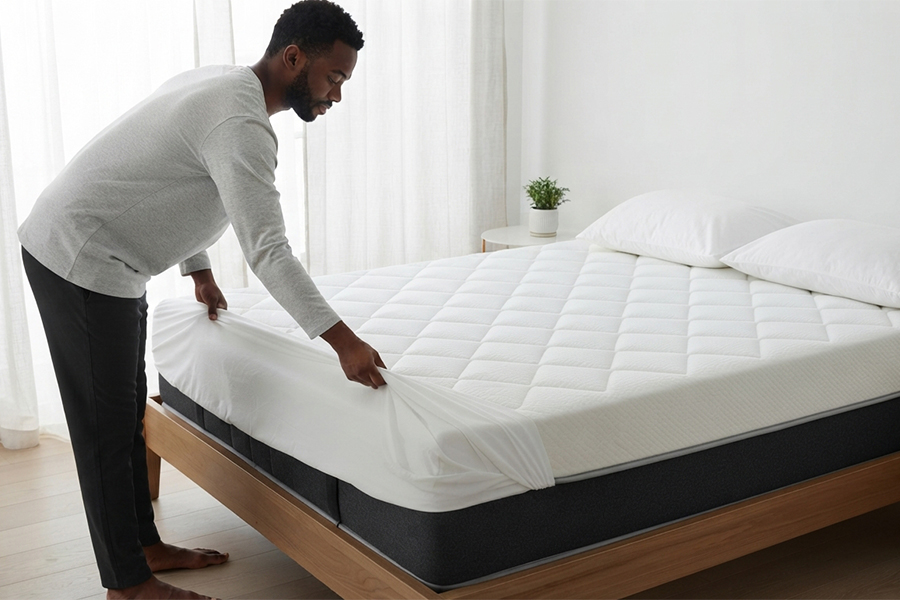
High-resilience foam is a denser, more supportive polyfoam used in support layers. It resists sagging better than standard polyfoam and offers a firmer, more durable feel without the slow sink of memory foam.
Bonnell Spring Mattress
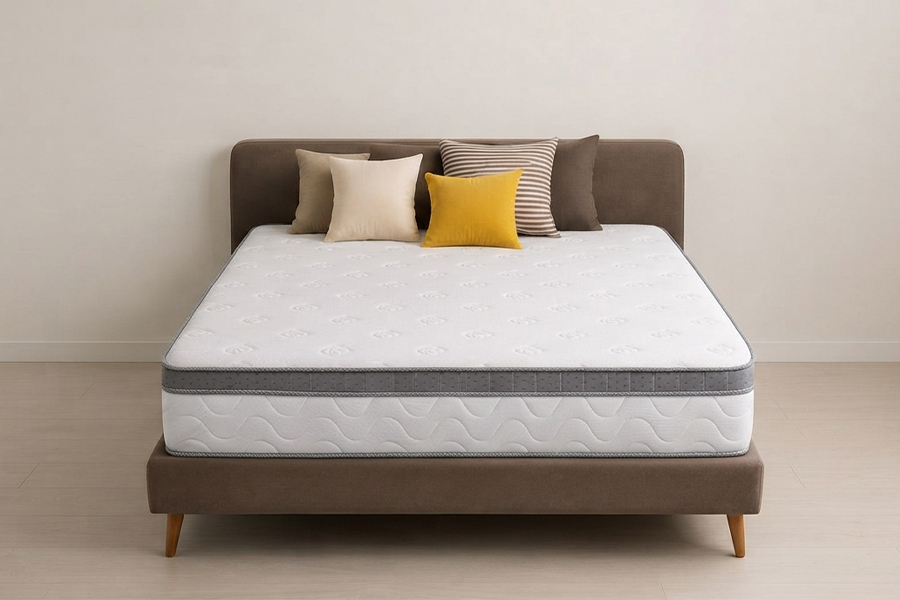
The most traditional coil type is hourglass-shaped springs interconnected in a continuous matrix. Affordable and durable, but the motion from one side travels noticeably across the surface.
Pocket Spring Mattress
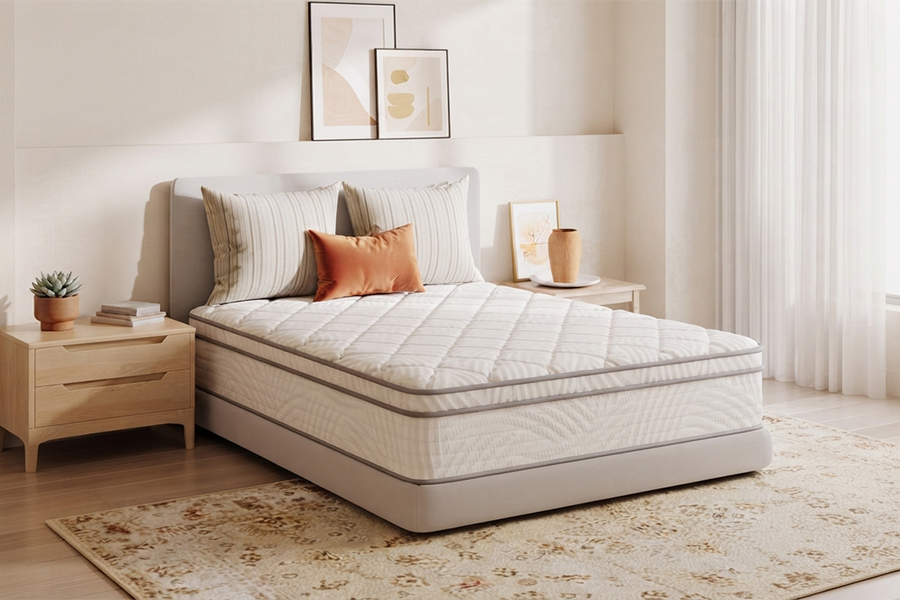
Each coil is individually wrapped in fabric and moves independently. This significantly reduces motion transfer, making pocket spring mattresses the better choice for couples.
Continuous Coil Spring
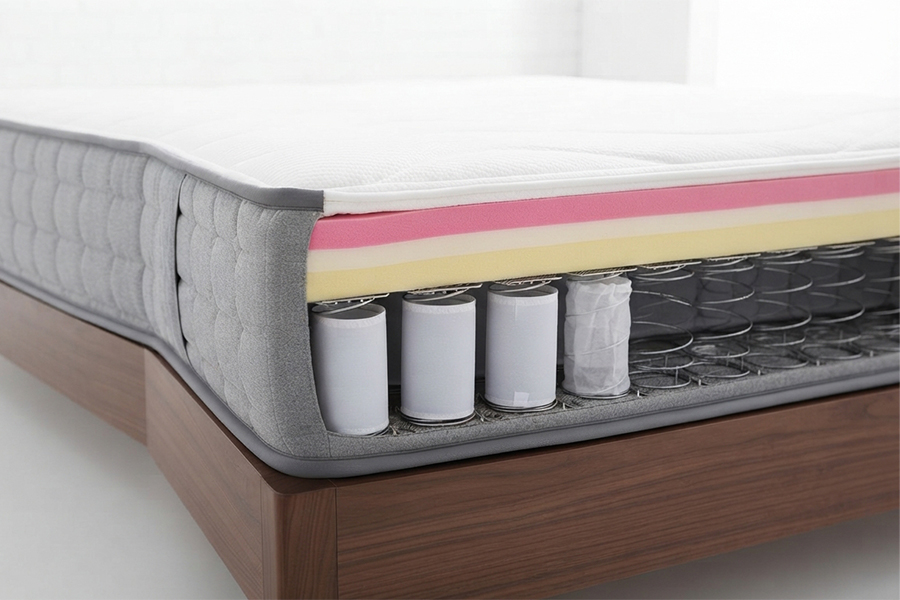
Rows of S-shaped coils made from a single continuous wire, connected by helical hinges. Offers stable, consistent support across the surface at a relatively affordable price.
Offset Coil Spring
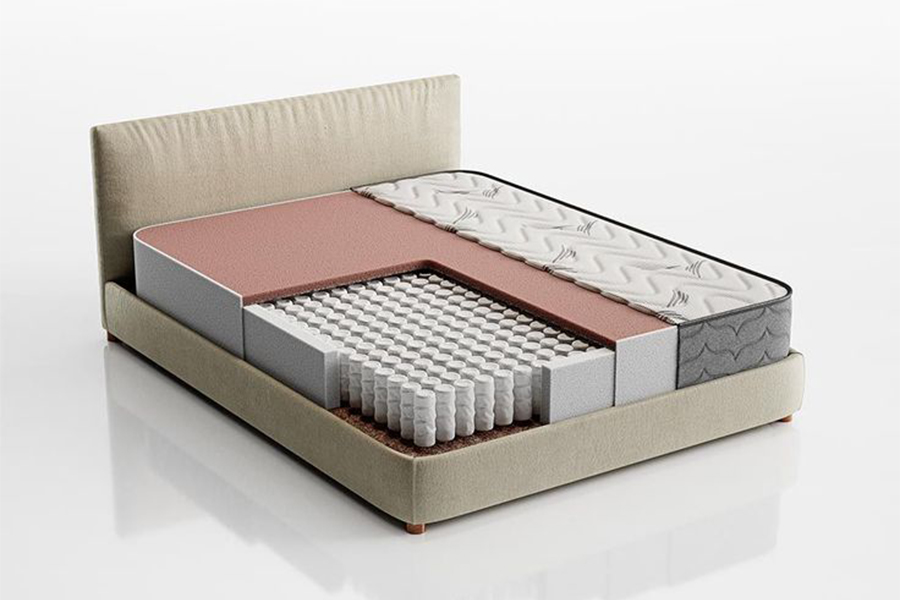
Hourglass-shaped coils with flat tops and bottoms, connected by helical wires. Stiffer and more durable than Bonnell coils, and commonly found in higher-end spring mattresses.
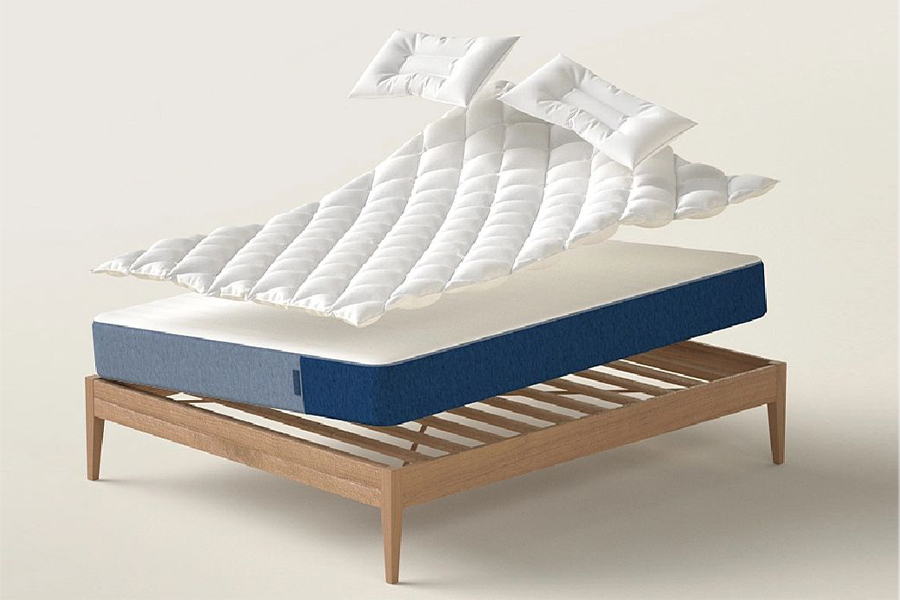
Here's the side-by-side difference between foam and spring mattress performance across the factors that actually matter.
Comfort and Pressure Relief
Foam contours closely to the body, cushioning shoulders, hips, and joints. Spring mattresses offer a flatter, more buoyant surface with less targeted cushioning, though high coil counts with good comfort layers narrow this gap.
Back and Spine Support
Foam supports the spine by distributing weight evenly across its contours. Springs provide firmer pushback, which some sleepers, especially heavier ones, find better for keeping the lumbar region lifted and aligned.
Motion Isolation
This is foam's biggest win. Memory foam can reduce motion transfer by 85-90%, while spring mattresses typically only manage 30-40%, with Bonnell coils being the worst performer for couples.
Breathability and Heat Retention
Spring mattresses win here. The open coil structure allows far more airflow than dense, closed-cell foam. Foam mattresses, particularly memory foam, are more prone to trapping body heat, especially in humid climates.
Noise
Foam mattresses are silent, with no moving parts. Spring mattresses, especially older or lower-quality coil systems, can develop squeaks and creaks as coils lose tension over the years of use.
Durability and Lifespan
High-quality foam, especially latex, tends to outlast basic spring mattresses. However, well-built pocket spring mattresses with quality coils can also last impressively long. Cheap versions of either type wear out faster.
Price and Value for Money
Spring mattresses generally have a more affordable entry price point, particularly Bonnell coil designs. Foam mattresses range widely. Basic polyfoam is cheap, while quality memory foam or latex costs significantly more.
Edge Support
Spring mattresses typically offer firmer, sturdier edges, which makes getting in and out of bed easier. Foam mattresses can feel like they're collapsing at the edges, especially in softer models.
Weight and Ease of Moving
Foam mattresses are generally lighter and easier for one person to move. Spring mattresses, with their metal coil core, tend to be heavier and often need two people to manoeuvre safely.
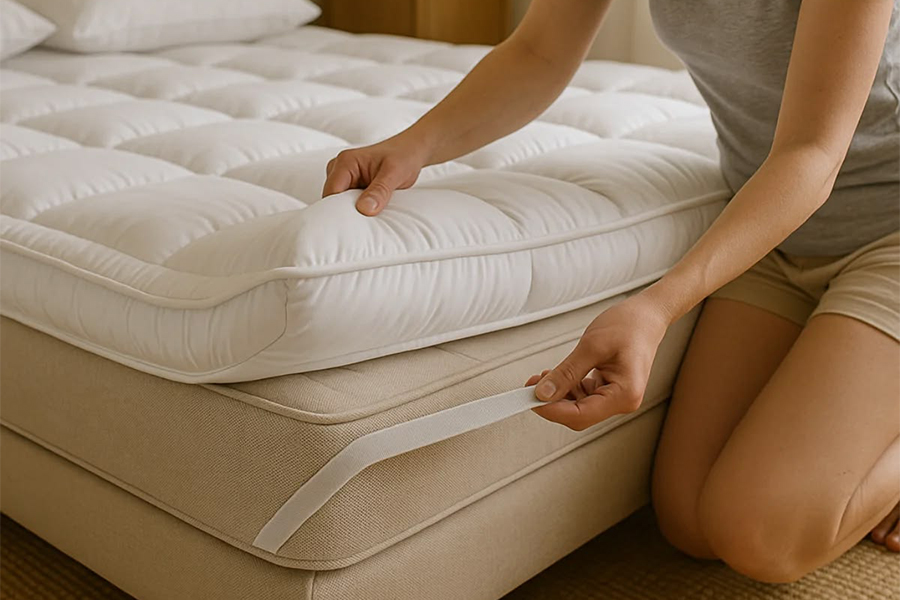
Superior Pressure Point Relief
Foam cushions shoulders, hips, and joints by distributing weight evenly across contact points, reducing pressure-related discomfort significantly for side sleepers in particular.
Excellent Motion Isolation
Foam absorbs movement instead of transferring it. If your partner moves or gets up at night, you're far less likely to feel it or wake up.
No Noise
With no springs or moving parts, foam mattresses stay completely silent for the life of the product, no matter how much you toss and turn.
Conforms to Body Shape
Foam moulds closely to your natural curves, cradling the body and supporting spinal alignment based on your individual shape rather than a fixed structure.
Hypoallergenic
Quality foam, particularly latex, resists dust mites and allergens better than open-structure spring systems, making it a strong pick for allergy-prone sleepers.
Multiple Firmness Options Available
From plush to extra-firm, foam mattresses come in a wide firmness range by adjusting layer density. There's genuinely something for every body type and preference.
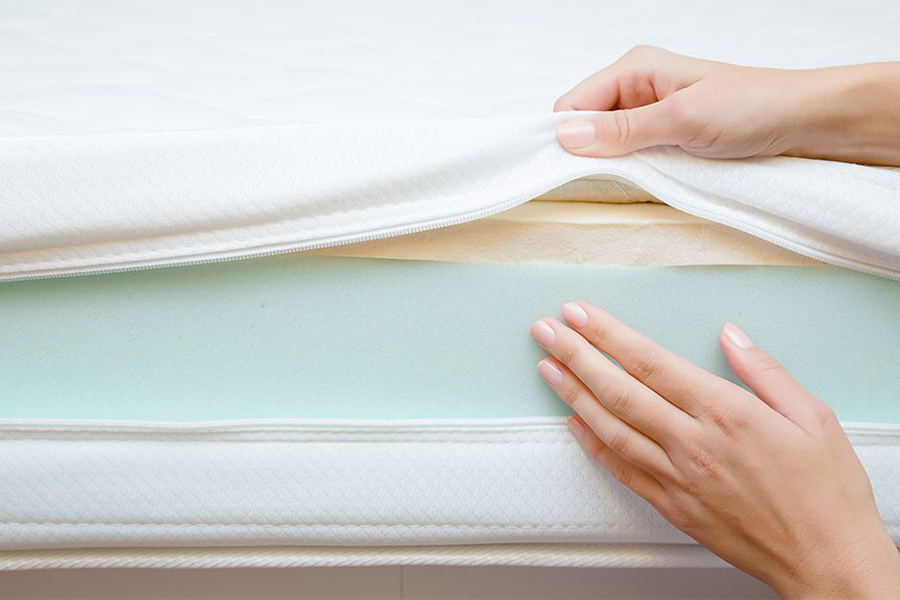
Retains Heat
Dense foam, especially memory foam, traps body heat more than open-coil designs. This can be uncomfortable in hot or humid conditions without cooling technology built in.
Less Bounce and Responsiveness
Foam's slow contouring response means it's not ideal for sleepers who need to move and change positions quickly throughout the night.
Initial Off-Gassing Smell
New foam mattresses can emit a temporary chemical smell from synthetic materials. It typically fades within a few days of airing out the mattress.
Can Feel Heavy to Move
While lighter than spring mattresses overall, dense foam layers in larger sizes can still be cumbersome for one person to manoeuvre alone.
Risk of Sagging Over Time
Lower-density foam, particularly cheap polyfoam, is prone to sagging and forming permanent body impressions faster than high-resilience or latex alternatives.
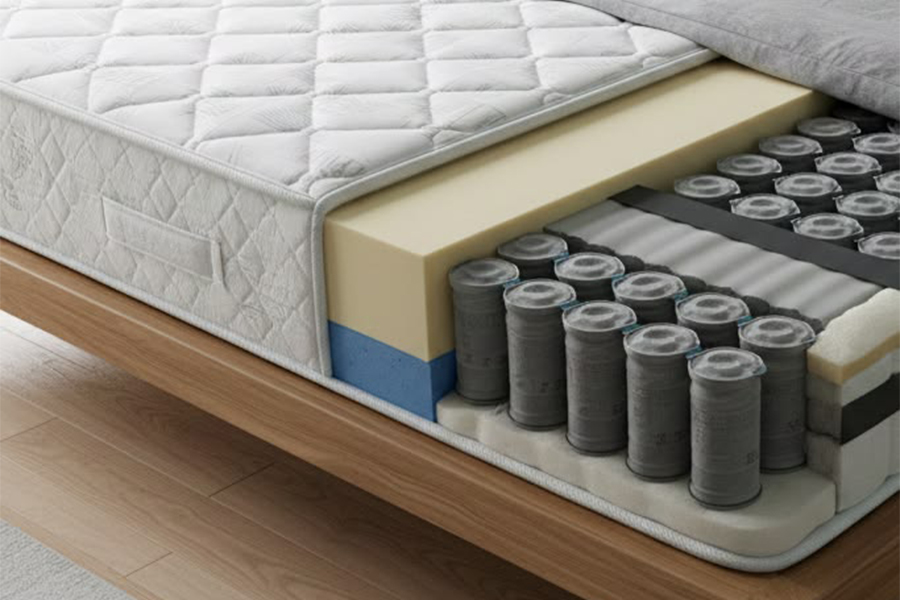
Strong Airflow and Breathability
The open coil structure allows air to circulate freely through the mattress core, keeping the sleep surface noticeably cooler than dense foam designs.
Good Bounce and Responsiveness
Springs react instantly to pressure and release, making it easy to move, change positions, or get up without feeling stuck.
Sturdy Edge Support
The coil structure provides firmer support right to the edge of the mattress, making it easier to sit or sleep near the border without sinking.
More Affordable Entry Price
Basic spring mattresses, especially Bonnell coil designs, are generally one of the most budget-friendly mattress options on the market.
Wide Variety of Firmness Levels
From soft pocket-coil designs to firm offset coil builds, spring mattresses offer a broad firmness range depending on coil type and comfort layer thickness.
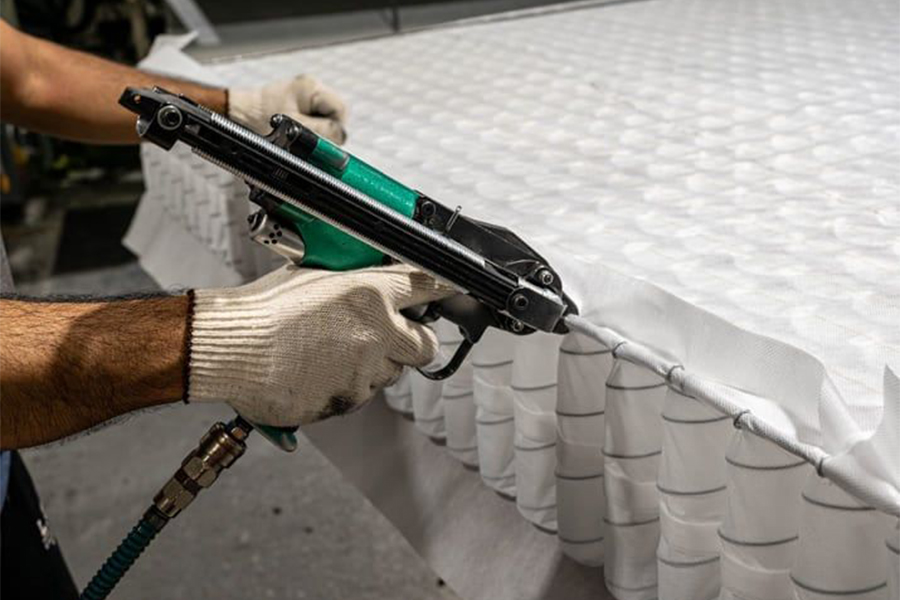
Motion Transfer Between Sleep Partners
This is one of the most significant disadvantages of spring mattress designs, particularly Bonnell coils, where movement on one side creates a noticeable ripple across the whole surface.
Can Get Noisy Over Time
As coils age and lose tension, springs can begin to squeak or creak, especially under shifting weight or with frequent movement.
Pressure Points Not as Well Cushioned
With less contouring than foam, springs can create uneven pressure on the shoulders and hips, particularly in mattresses with a thin comfort layer.
Shorter Lifespan if Coils Wear Out
Coils can lose resilience and begin sagging, typically within 6 to 8 years for standard spring mattresses, compared to the longer lifespan of quality foam or latex.
If you're asking if a spring mattress is good for back pain, or wondering whether foam wins instead, the honest answer depends on the type of pain and your body weight.
Lower Back Pain - Foam or Spring?
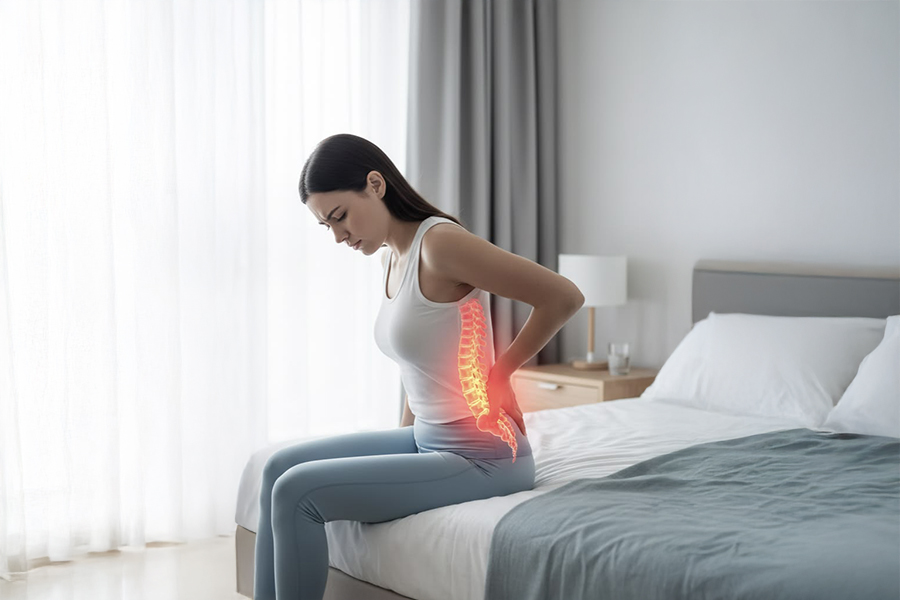
Medium-firm support generally works best for lower back pain. Foam contours and cushions the lumbar region, while firmer spring or offset-coil designs provide structural lift. Heavier sleepers often do better with spring; lighter sleepers often prefer foam.
Shoulder and Hip Pain
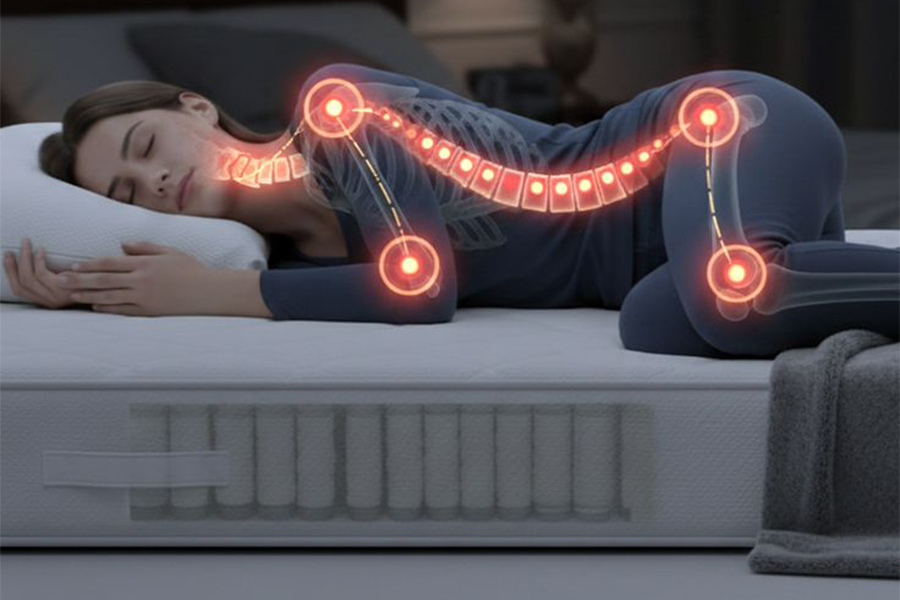
Foam tends to win here, especially for side sleepers. Its contouring relieves pressure at these joints far more effectively than the flatter surface of most spring mattresses.
Neck and Cervical Issues
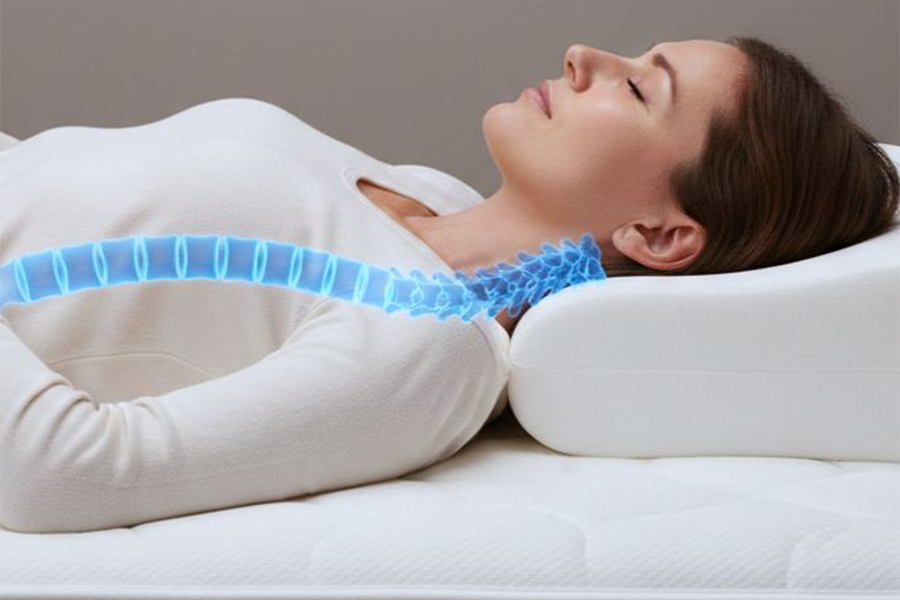
Support consistency matters most here. Both pocket spring and quality foam can work well, provided the mattress keeps the neck and spine aligned without excessive sinking.
Arthritis and Joint Stiffness

Softer foam, particularly memory foam or latex, often eases joint stiffness better by reducing pressure concentration at inflamed areas during sleep.
Side Sleepers

Foam is generally the better pick. Its contouring relieves pressure at the shoulders and hips, which bear the most weight in this position.
Back Sleepers

Both work well here. A medium-firm option, whether foam or spring, keeps the spine aligned without excessive sinking at the lower back.
Stomach Sleepers
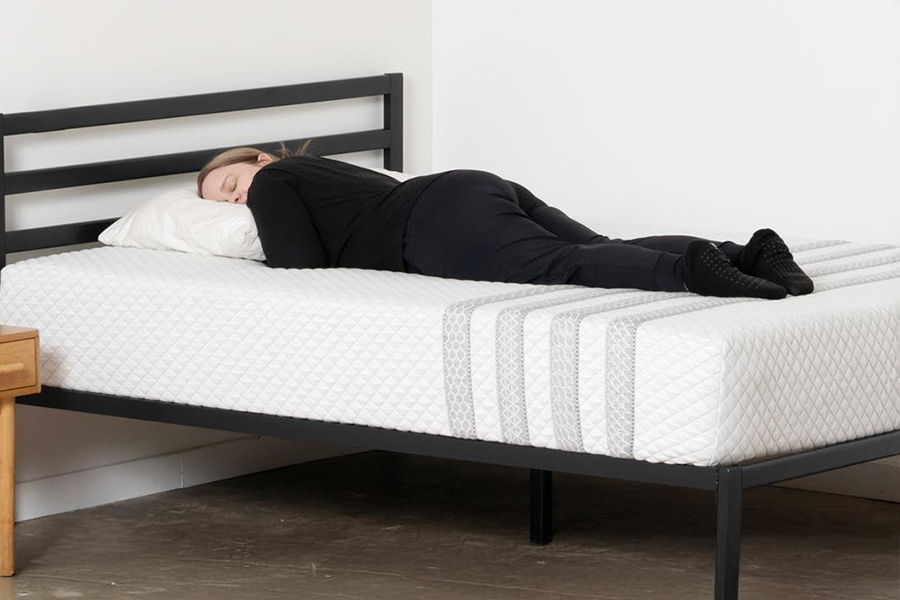
Spring or firm foam works best. This position needs firmer support to prevent the hips from sinking too deeply and straining the lower back.
Combination Sleepers

Spring mattresses, with their quicker bounce-back, make it easier to switch positions through the night. Latex foam is a good middle-ground alternative.
Lightweight Sleepers (Under 60 kg)
Softer foam works well, since lighter body weight doesn't compress the material as deeply. A soft to medium foam mattress offers excellent comfort.
Average Weight Sleepers (60-85 kg)
Both options work well at this weight range. Medium-firm foam or a quality pocket spring mattress both provide balanced comfort and support.
Heavier Sleepers (85-110 kg)
Firmer support becomes more important. High-density or HR foam, or a sturdy spring mattress with a strong coil count, prevents excessive sinking.
Very Heavy Sleepers (Over 110 kg)
Spring mattresses, particularly offset coil designs, or extra-firm high-resilience foam, are typically the better choice for sustained support without premature sagging.
Answer These 5 Questions Before You Decide
Your answers to these five questions will point you toward foam or spring far more reliably than guessing in a showroom.
Quick Decision Guide (Summary Table)
| If You... | Choose Foam | Choose Spring |
|---|---|---|
| Sleep hot | Look for gel/HR foam | Best natural choice |
| Share a bed | Best motion isolation | Choose pocket coil |
| Have back pain | Good for pressure relief | Good for firm support |
| Are on a tight budget | Mid to high cost | More affordable entry |
| Weigh over 90 kg | Needs HR/high-density foam | Naturally better support |
| Want a soft, hugging feel | Best choice | Feels firmer |
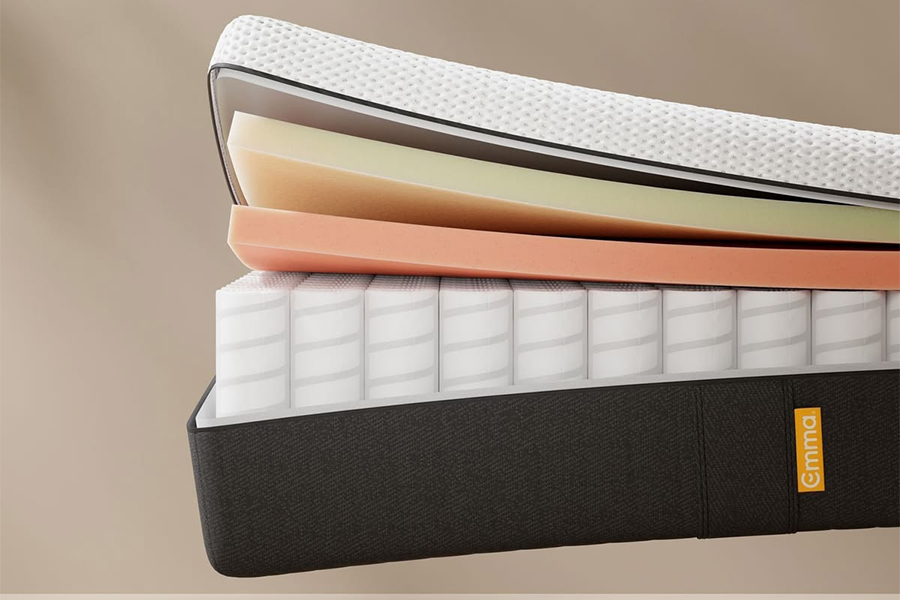
If you genuinely can't decide between spring mattress vs foam mattress, a hybrid combines both a coil support core with foam or latex comfort layers on top. You get the breathability and edge support of springs with the pressure relief of foam. Mattresses like the OrthoZen, which pairs a mesh-knitted breathable cover with AeroWAVE™ Technology for pressure redistribution and airflow, show how hybrid-style engineering bridges this exact gap. It's a strong middle-ground option if you want the benefits of both without picking just one.
Average Lifespan of Foam Mattresses
Standard polyfoam: 7 to 10 years. Memory foam: 8 to 10 years. Natural latex: 12 to 15 years without noticeable sagging, significantly longer than most other foam types.
Average Lifespan of Spring Mattresses
Standard spring mattresses typically last 6 to 8 years. Pocket spring designs with quality coils tend to last slightly longer than Bonnell coil mattresses, which sag faster under regular use.
What Affects Longevity for Both
Coil or foam quality, density, usage frequency, body weight, humidity, and maintenance all affect lifespan. Regular rotation, a good mattress protector, and avoiding excess moisture extend both mattress types significantly.
There's no universal winner in the spring vs foam mattress debate. Only the right choice for your body, sleep style, and budget. Foam wins on pressure relief, motion isolation, and quiet comfort. Spring wins on breathability, bounce, and edge support.
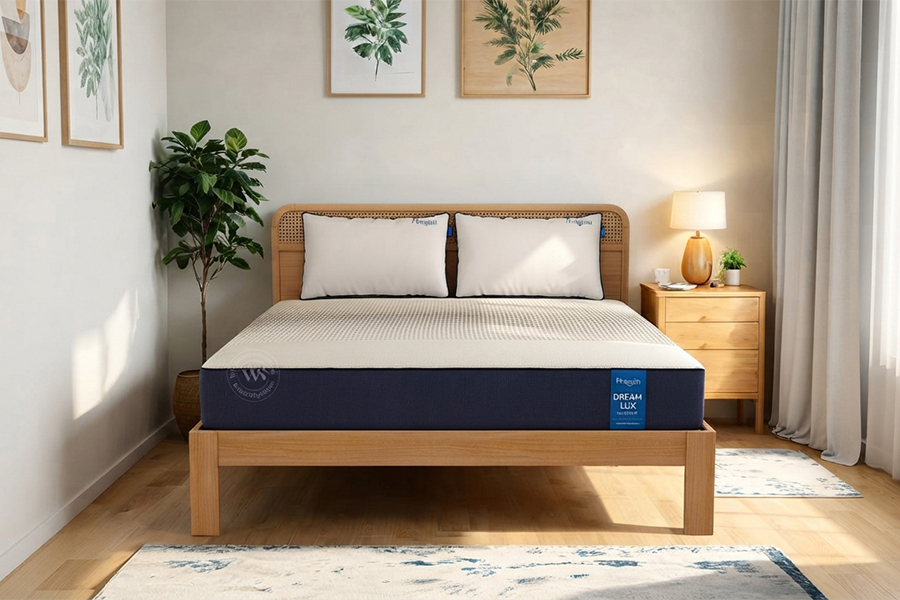
If you sleep hot, share a bed loosely, or want a firmer, traditional feel, spring is likely your match. If you want contouring comfort, sleep cooler naturally, or deal with joint pain, foam is the stronger pick. And if you genuinely want both, hybrid options like the OrthoZen or Dream Lux, built with AeroWAVE™ Technology for airflow and pressure redistribution, offer you a smart middle ground without forcing you to compromise.
Whichever you choose, prioritise quality materials and proper care. A good mattress, foam or spring, is only as good as the maintenance behind it.
We will be back with the next blog soon. Till then, stay tuned!
Read More :
How to Flip & Rotate Your Mattress
Image Source: Pinterest, Google, and Wooden Street
A Spring mattresses generally stay cooler due to open airflow. Gel-infused or open-cell foam options also help if you prefer foam's contouring.
A HR (high-resilience) foam is denser and bounces back faster than memory foam, offering firmer support without the slow-sink contouring feel
A Foam, especially memory foam, offers far better motion isolation. If you prefer spring, choose pocket coils to minimise motion transfer
A Yes. Spring mattresses work well on platform beds, though check the manufacturer's guidance, as some recommend slatted or box spring bases
A Visible sagging, body impressions that don't bounce back, new aches, or noisy springs all signal it's time for a replacement
A Spring mattresses or open-cell, gel-infused foam handle Indian humidity and heat far better than dense, traditional memory foam designs
Trending Products
Top Picks from EveryoneArticles you will love to read
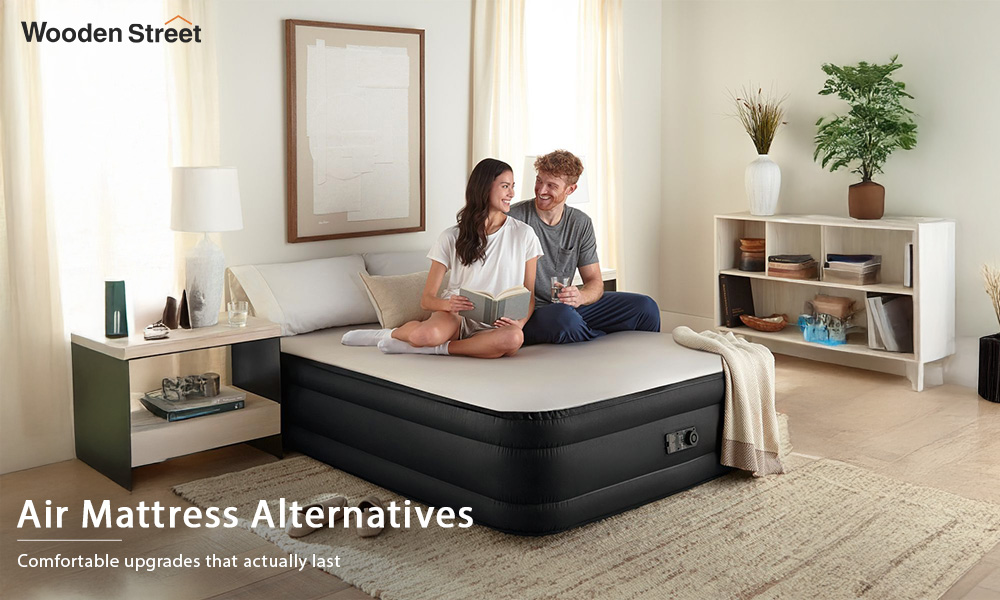
If your air mattress no longer feels comfortable or practical, it may be time for an upgrade. This guide explores smarter alternatives to air beds, inflatable beds, bed inflatable mattress setups, and blow up mattresses that offer better support, durability, comfort, and long-term value for guests or everyday sleeping.
Continue Reading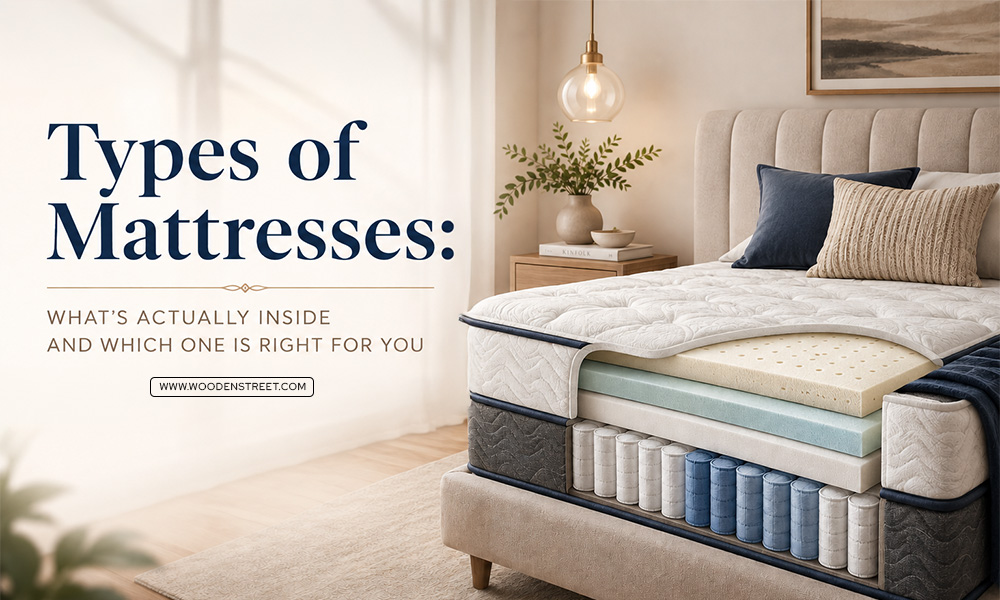
Not all mattresses feel or perform the same. This guide explores the most common types of mattresses, including memory foam, latex, spring, hybrid, and orthopedic options. Learn about different types of mattresses, their construction, comfort levels, durability, and how to choose the best type of mattress for your sleeping style and needs
Continue Reading
From decorative accents to supportive seating accessories, the many kinds of cushions serve different functions throughout the home. This guide explores cushion types by fill material, shape, and purpose, helping you understand where each option works best for comfort, aesthetics, and everyday use.
Continue Reading
Buying a sofa involves more than choosing a design you like. This guide covers the most important factors people often overlook, including dimensions, upholstery, frame quality, seating comfort, maintenance, and room layout, helping you make a practical investment that suits your lifestyle and space
Continue Reading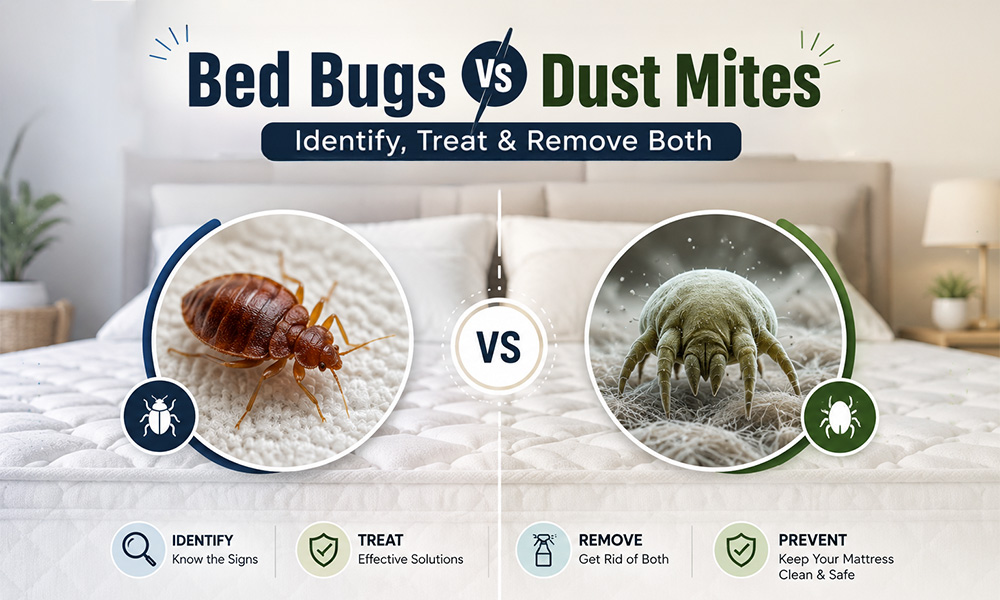
Bed bugs and dust mites are often confused, but they require different treatment approaches. This guide explains how to identify each, recognize the warning signs, and how to get rid of dust mites and bed bugs using effective cleaning, prevention, and mattress care strategies for a healthier sleeping environment.
Continue Reading


