Is Your Old Mattress Causing Morning Body Aches? 5 Signs to Check
If you wake up with neck pain, back pain, or body aches almost every morning, your mattress could be the real reason. Here, you are going to find five simple signs that help you understand whether it's time to replace your old mattress
Table of Content- Does the ache fade once you’re up and moving?
- Do you sleep noticeably better somewhere else?
- Can you see a dip where you usually sleep?
- Are you tossing and turning more than you used to?
- How old is your mattress, actually?
- So, how many did you check off?
You wake up, and before your feet even hit the floor, your lower back is already complaining. Sound familiar? That nagging neck ache after waking up, that dull, persistent body aches after waking up, it’s a story many of us know all too well.
For people who are constantly asking themselves, "why does my body ache when I wake up?", the answer might be closer than you think: it might not be you, but what you’re sleeping on. Your mattress, that silent partner in your sleep, could be the real culprit behind those morning groans.
It’s often a clear sign that your mattress is no longer giving you the support you need. We’re going to look at 5 signs that can help you quickly check if your old mattress is really very well past its prime and causing those aches. Let’s get started!
Does the ache fade once you’re up and moving?

- Many people worry about why their body aches in the morning. If your back pain “wakes up” with you, making you feel stiff and sore, almost like you’ve run a marathon in your sleep, and then loosens up quite comfortably by breakfast, that pattern points straight at your mattress, not an injury.
- Think about it: if it was an injury, the pain would likely stick around, or even get worse with movement. You wouldn’t suddenly feel much better just by getting out of bed and moving around. But if your body hurts in the morning and then gets much better as you go about your day, as you stretch and walk around the house, it’s a really very strong sign that your mattress isn’t giving your body the support it needs during those crucial hours of rest.
- Your spine might not be properly aligned throughout the night, leading to that persistent mid back ache after sleeping or general aching body in morning .
- That is why, this is one of the first things to check. It’s your body’s way of telling you that something is off with your sleep surface. For people who are constantly wondering "why does my body ache when i wake up?", this fading pain is a huge clue.
Do you sleep noticeably better somewhere else?

- Here, have a look at this common scenario: you go on a vacation, or you stay at a friend’s place, and you wake up feeling completely free of those usual morning aches. Your body aches and pains in the morning are gone. You might even think, "Wow, I slept really very well last night!"
- If your body feels better on any other bed whether it’s a hotel mattress, a firm guest bed at your cousin’s place, or even a comfortable sofa at a relative’s home, then your own bed is the common factor worth questioning.
- Many homeowners find this to be a telling sign. It’s not just a coincidence; it’s your body telling you comfortably that it’s getting better support and comfort elsewhere. This is a really very well clear indicator that your mattress at home is probably letting you down, causing that persistent body aches after waking up.
- For people who constantly experience body aches after waking up, this comparison can be quite revealing. It’s like your body is giving you a direct message: "This other bed works much better for me!" Whether it is a quick trip or a longer stay, if you come back home and the body hurts in the morning again, then you know where the problem lies.
Can you see a dip where you usually sleep?
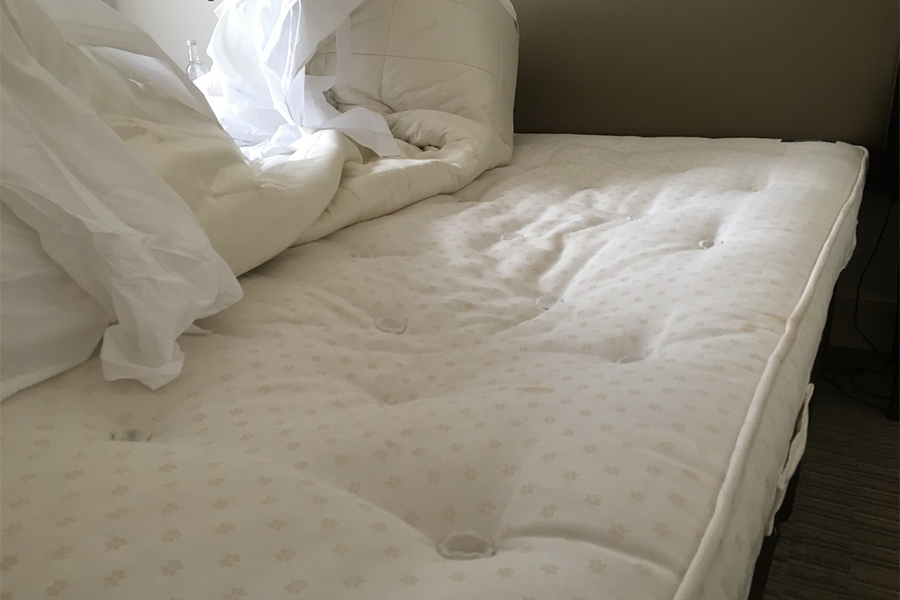
- Before buying any wall shelf, you check for its sturdiness, right? You want something that can hold your books, your little showpieces, and not give way. The same goes for your mattress!
- A visible sag or a body-shaped dent where you usually sleep means the mattress has stopped supporting your spine the way it used to. This is not just about comfort; it’s about alignment. When your mattress sags, it’s like a hammock for your body, pulling your spine out of its natural, healthy curve.
- This can lead to pressure points and, you guessed it, that nagging neck ache after waking up or a persistent mid back ache after sleeping. It doesn’t have to be a huge crater; even a slightly visible dip can cause problems.
- Many homeowners overlook this, thinking a little dip is normal, or that it’s just how mattresses are. Instead, it’s a really very well clear sign that the internal structure of your mattress is breaking down, and it’s no longer able to provide the firm, even support your body needs. That is why this visual check is quite important. For people who are experiencing body aches after waking up, this is a sign you can’t ignore.
Are you tossing and turning more than you used to?

- Your mattress may not be cushioning your pressure points anymore. If you find yourself constantly shifting positions throughout the night, trying to find a comfortable spot, it’s a really very strong indicator that your mattress isn’t doing its job.
- A good mattress should cradle your body, distributing your weight evenly and relieving pressure from areas like your shoulders, hips, and lower back. When it fails to do this, your body tries to compensate, leading to restless sleep and, inevitably, body aches after waking up.
- This constant tossing and turning means you’re not getting the deep, restorative sleep you need, and that can really very well contribute to that feeling of your body hurts after waking up.
- Many homeowners experience this, thinking it’s just stress or a bad day. Instead, it’s often your mattress failing to provide the proper support, making you search for comfort that’s just not there.
How old is your mattress, actually?

- Most mattresses start losing real support somewhere between 7 and 10 years, sometimes sooner depending on quality. It doesn’t have to look worn out to already be letting you down.
- Just like a car, a mattress has a lifespan, and it’s not meant to last forever. Even if it looks fine on the outside, the internal components like the springs, foam, or latex mattress can degrade over time.
- This degradation means it’s no longer providing the consistent support your body needs, leading to improper spinal alignment and those unwelcome body aches after waking up.
- Before purchasing a new one, consider its age. If it’s been more than 7-10 years, it’s probably time for a change, even if it doesn’t look completely free of wear and tear.
- For people who are constantly experiencing body aches and pains in the morning, the age of their mattress is a really very crucial factor to consider. It can become a part of different arrangements in your daily discomfort if you ignore it.
So, how many did you check off?

- If you nodded along to two or more of these signs, your mattress is probably part of the problem. It’s not about a hard sell; it’s about your well-being, your comfort, and your ability to wake up feeling completely free.
- You spend a third of your life on this thing, and a good night’s sleep is really very well priceless. If you’re constantly asking yourself, "why does my body ache when i wake up?" or "why does my body hurt when i wake up?" every single morning, then it’s worth a look at what Wooden Street’s Penguin Mattress collection has to offer.
- It’s not just about buying a new mattress but about investing in your health and comfort, making sure your body is getting the rest it truly deserves. Be it a persistent neck ache after waking up or a general aching body in morning, a good mattress can fulfill that requirement quite comfortably.
Conclusion
We’ve seen how a sagging mattress, insufficient support, or simply an old bed can make you go uneasy and your body hurts after waking up leading to those usual and general body aches in the morning. Instead of just living with the discomfort, it’s time to consider a change that can truly transform your mornings.
Wooden Street understands that a mattress is more than just a place to sleep; it’s a foundation for your health and well being. That is why, we offer a range of mattresses designed to provide the perfect balance of support and comfort. Whether you are looking for some orthopedic mattress to target specific pain points, or need a memory foam mattress that cradles up your body, or a natural latex mattress to get that on-point responsive support, Wooden Street’s Penguin Mattress collection has options that can help you wake up feeling refreshed and completely free of those aches. Our mattresses are crafted to ensure proper spinal alignment, reduce pressure points, and give you the restorative sleep you deserve.
For people who are constantly asking "how to get rid of body aches in the morning?" or "why does my body ache when i wake up?", our mattresses can get you rid of all these questions. Don't let a bad mattress be the reason your body hurts in the morning. It's time to choose comfort and Penguin Mattress that works much better for you.
We will be back with the next blog soon. Till then, stay tuned!
Read More :
Do you know ? What's Actually Inside your Mattresses
Image Source: Pinterest, Google, and Wooden Street